



A small yard and a pool sound like opposites until you see what fits in a 10 by 15 foot corner. Most people picture a full-size rectangle and give up, but plunge pools, stock tank pools, and spools were designed exactly for compact backyards. You do not need an acre. You need the right footprint.
This guide collects 20 small pool ideas for small yards, from deep plunge pools to galvanized stock tanks to spa-pool hybrids. Every idea includes a cost range and difficulty rating, plus the safety rules that apply to every pool no matter its size. It is written for homeowners with compact suburban or urban yards who want real water, not a kiddie pool.
Quick takeaways
- Plunge pools (around 8 by 12 feet) are the most popular small-yard choice: deep enough to cool off, small enough to heat cheaply.
- Stock tank pools are the budget path, often finished for a few thousand dollars with DIY labor.
- A spool gives you a hot tub and a pool in one footprint, with jets and a heater for year-round use.
- Every pool needs code-compliant fencing, GFCI-protected electrical, and a call to 811 before any digging.
- Dark interiors and good lighting make a small pool look twice its size at night.
1. Classic plunge pool
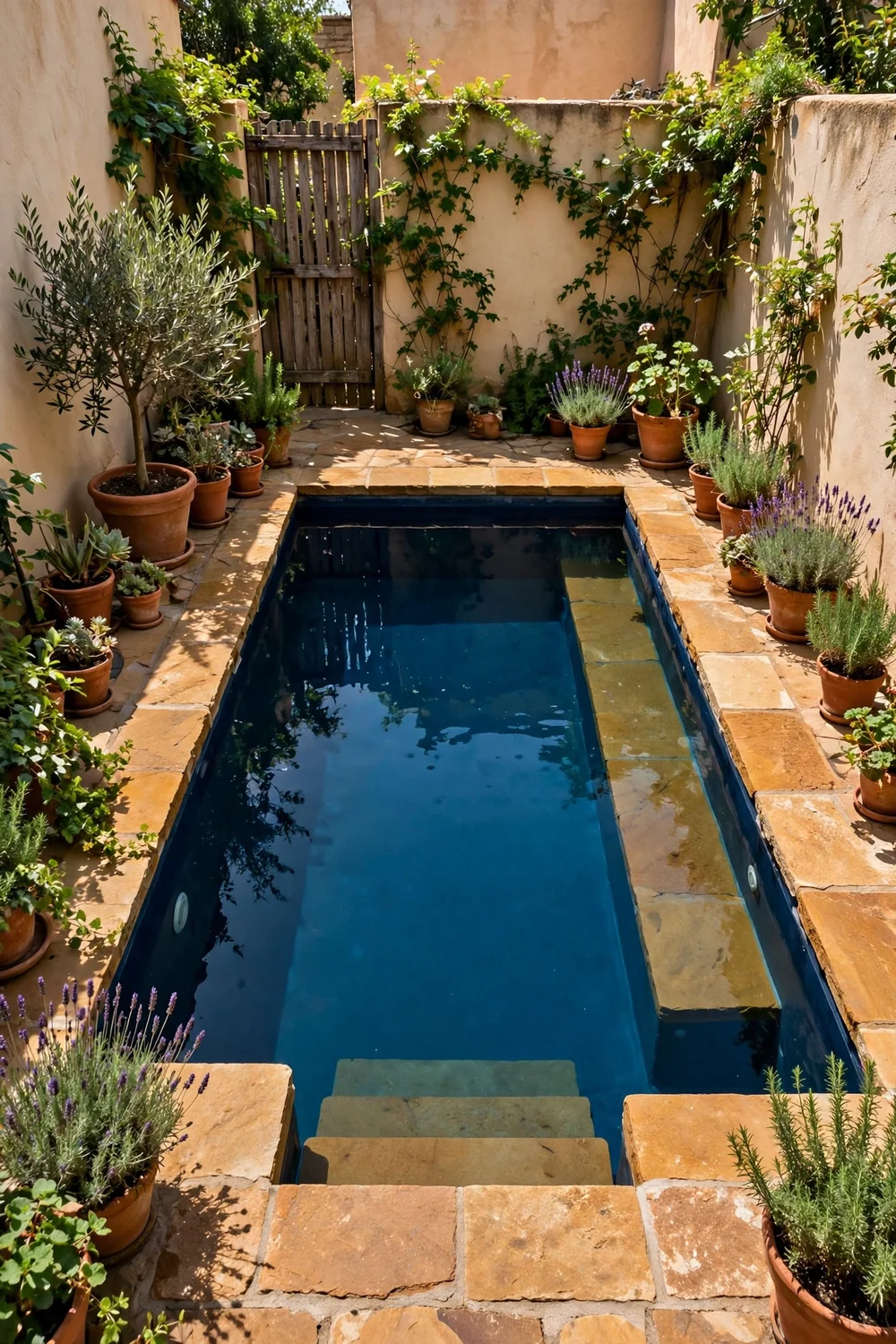
The plunge pool is the small-yard standard: roughly 8 by 12 feet, 4 to 5 feet deep, built for cooling off and floating rather than laps. A flat bottom and a built-in bench along one side keep the design simple and the cost down. Because it holds far less water than a full pool, it heats faster and costs less to run. Finish the coping in warm stone and add a small step entry. Try this: choose a dark plaster or pebble interior so the water reads deeper and richer. Cost: $$$ · Difficulty: Pro build
2. Galvanized stock tank pool

An 8-foot round stock tank from a farm supply store becomes a soaking pool with a pump, filter, and a little plumbing. Sand the interior smooth or line it, seal the seams, and set it on a level pad of pavers or compacted gravel. The metal heats up in direct sun, so partial shade or a light-colored exterior helps. Total project cost often lands in the low thousands with DIY labor. Try this: build a simple cedar deck collar around the rim so it looks built in, not borrowed from the barn. Cost: $ · Difficulty: DIY-friendly
3. Spool: spa and pool in one

A spool is bigger than a hot tub and smaller than a pool, usually 12 to 14 feet long, with powerful jets and a heater. You soak in winter, cool off in summer, and the whole thing fits where a patio set used to sit. Jets give you a massage current and the heater stretches the season for months. Because it is compact, a spool can often go on a reinforced patio pad. Try this: add a saltwater chlorine generator to cut the chemical smell and eye sting. Cost: $$$ · Difficulty: Pro build
4. Cocktail pool with perimeter bench

Cocktail pools run 10 to 15 feet long and 6 to 8 feet wide, with bench seating built into two or three sides. The design is social, not sporty: everyone sits, talks, and stays cool. Built-in benches mean you skip buying and storing pool loungers, which saves precious deck space. Underwater LED lights and a heater turn it into an evening hangout. Try this: face the benches toward your best view and away from the neighbors’ windows. Cost: $$$ · Difficulty: Pro build
5. Narrow lap lane along the fence

If you actually want to swim, a lap lane 6 to 8 feet wide and 25 to 40 feet long tucks along the fence line and leaves the rest of the yard free. Straight sides and a flat bottom keep construction simple. For lanes under 25 feet, add a swim jet system that creates a current to swim against. Pair it with low-profile furniture so sight lines stay open and the yard feels wider. Try this: run the lane parallel to your longest property line to squeeze out maximum swim distance. Cost: $$$ · Difficulty: Pro build
6. Corner-fit L-shape pool

An L-shaped pool wraps into the corner of the yard that a rectangle would waste. The short leg works as a wading or lounging zone while the long leg handles actual swimming. The shape leaves room beside it for a small patio or a garden bed, so the layout feels planned rather than squeezed. Custom forming costs more than a plain rectangle, but it solves the hardest lots. Try this: put the steps in the inside corner of the L where they stay out of the swim path. Cost: $$$ · Difficulty: Pro build
7. Precast drop-in plunge pool

Companies now cast complete concrete plunge pools in a factory and crane them into a prepared hole, which cuts installation from months to weeks. You pick the size and finish from a catalog instead of designing from scratch. The shell arrives waterproofed and ready for plumbing and coping. Because the design is standardized, pricing is more predictable than custom gunite. Try this: confirm crane access to your backyard before you fall in love with a model; tight lots may need a smaller shell. Cost: $$$ · Difficulty: Pro build
8. Shipping container pool
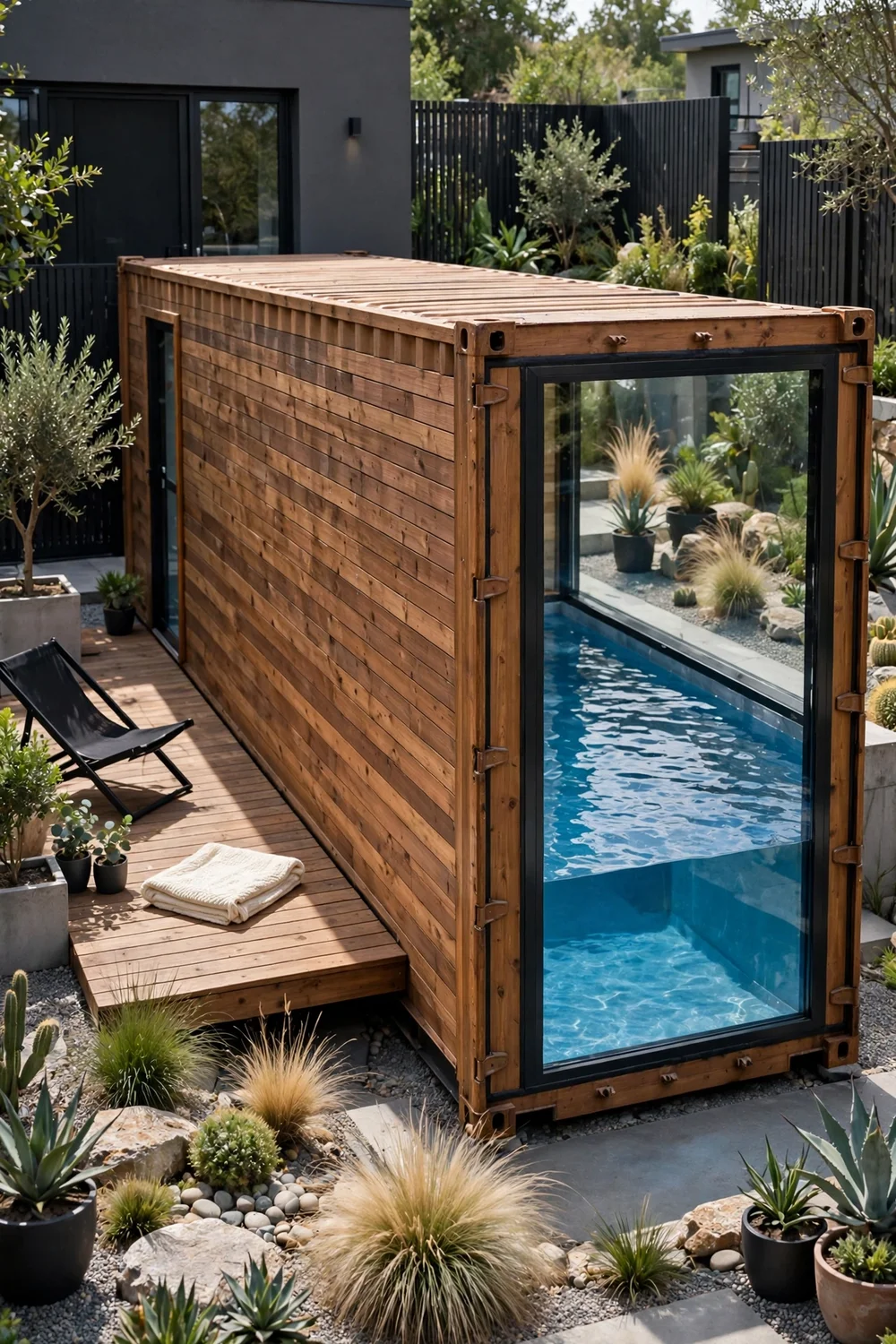
A converted shipping container, usually 8 by 20 feet, arrives as a finished pool with filtration built in. It can sit above ground, half-buried, or fully in-ground, and the steel walls need no forming or curing time. Clad the exterior in wood or composite siding and it reads as modern architecture, not cargo. Above-ground placement also sidesteps most excavation. Try this: add a glass end panel or window so swimmers get light and the pool becomes a design feature. Cost: $$$ · Difficulty: Pro build
9. Semi-inground pool with wood deck wrap
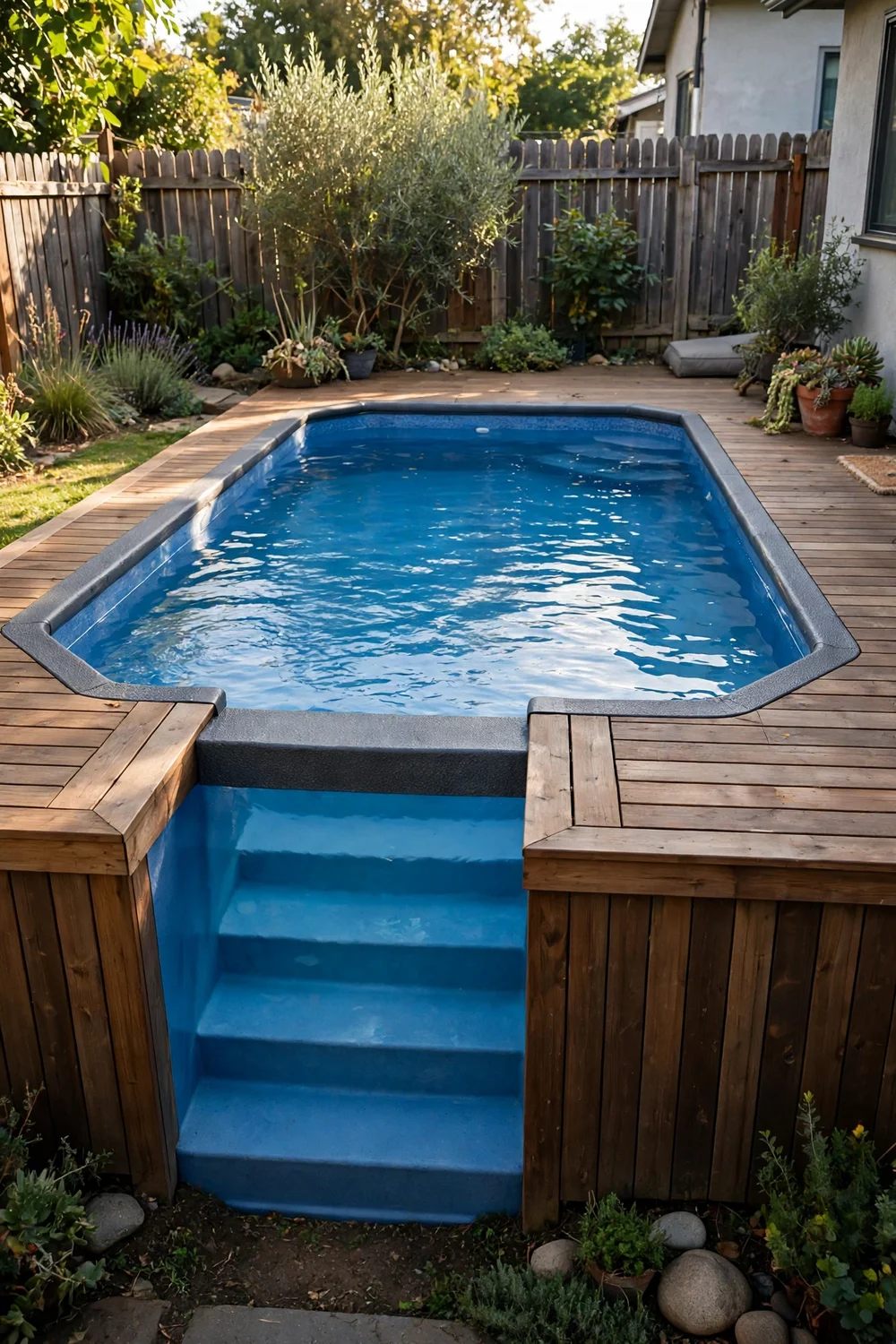
Set the pool so its top 2 to 3 feet sit above grade, then wrap it in a wood or composite deck that meets the coping. You dig half as deep, which saves serious money on rocky or high-water-table lots, and the raised edge doubles as casual seating. The deck hides equipment and plumbing underneath with access panels. Stain the wrap to match your existing deck for one continuous look. Try this: run deck boards horizontally around the pool to make the whole structure look lower and longer. Cost: $$$· Difficulty: Pro build
10. Sun shelf pool with in-water loungers
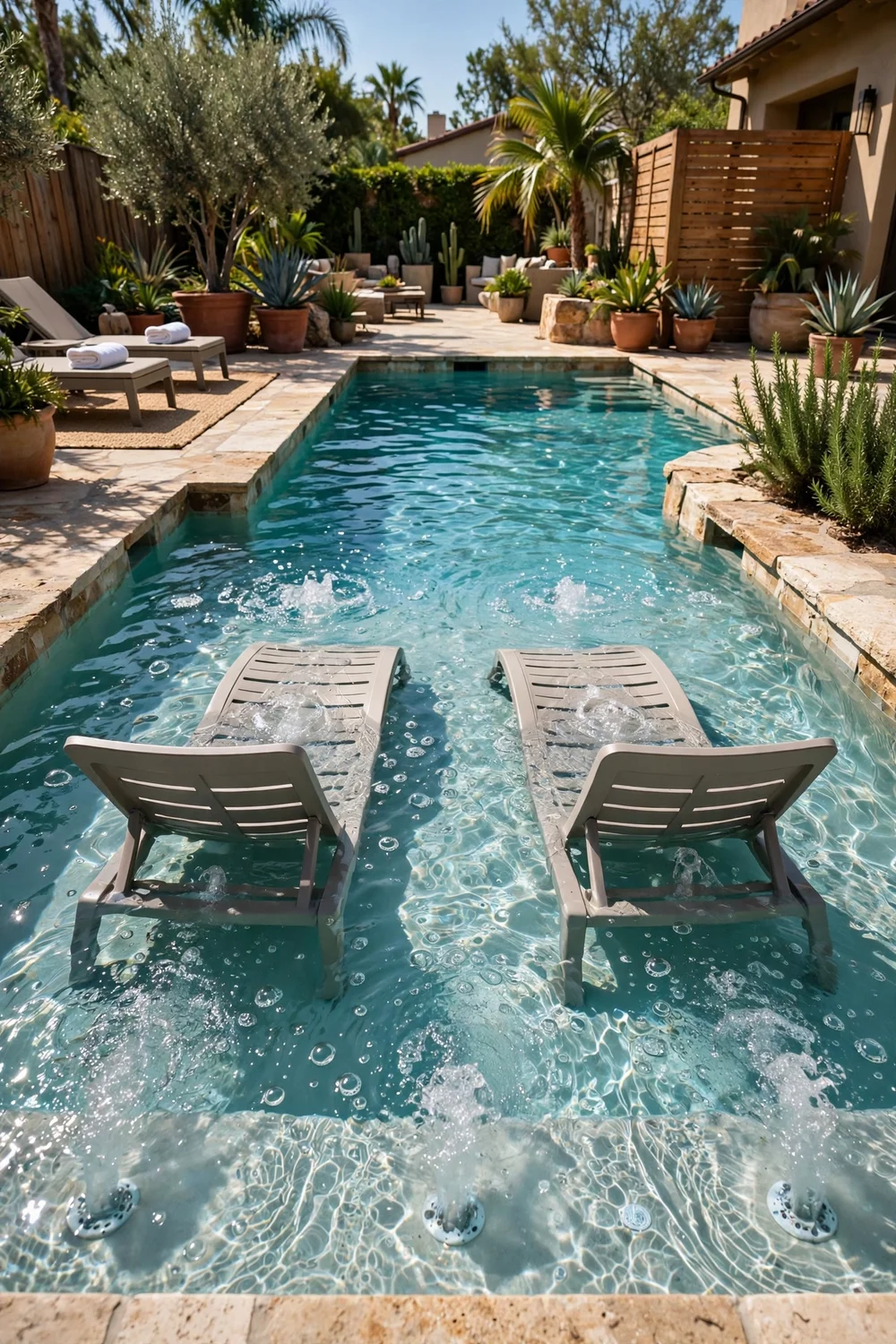
A sun shelf is a shallow ledge, 6 to 12 inches deep, built into one end of the pool where loungers sit half-submerged. You get the resort look and a safe play zone for small kids in one feature. Even in a compact pool, a 6 by 8 foot shelf changes how the whole thing feels. Add bubblers on the shelf for the sound and shimmer of moving water. Try this: pick loungers designed for in-water use so they do not float away or bleach out. Cost: $$$ · Difficulty: Pro build
11. Swim spa with adjustable current

A swim spa fits in as little as 7 by 12 feet and generates a continuous current you swim against in place. It installs on a reinforced concrete pad, often in a single day, with no excavation at all. Separate temperature zones let one end run warm for soaking while the swim end stays cool. It is the smallest footprint that still gives you a real workout. Try this: test the current strength in a showroom before buying; weaker units frustrate strong swimmers. Cost: $$$ · Difficulty: Pro install
12. Above-ground pool with full deck surround
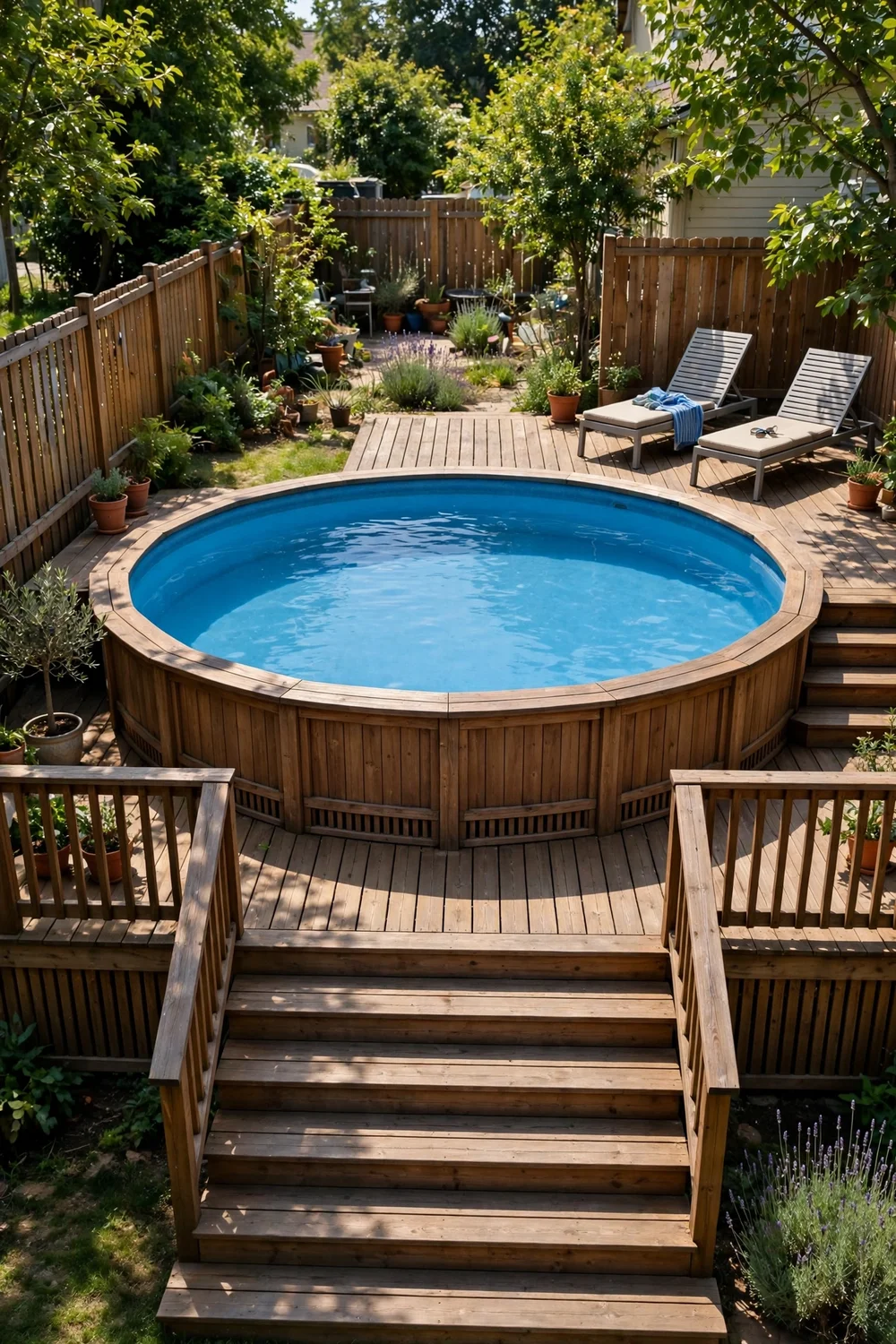
A round or oval above-ground pool stops looking temporary once a proper deck wraps around it with wide steps and skirting. The deck gives you a real entry, hides the wall, and creates lounging space the pool alone cannot. This is the fastest route to swimming: a weekend plus deck time. For deck and skirting designs that make these pools look permanent, see these above ground pool ideas and these budget Intex pool ideas. Try this: build the deck at coping height on one side and lower on the other to create tiered seating. Cost: $$ · Difficulty: DIY-friendly to Moderate
13. Courtyard fountain-style pool

Set a square pool in the center of the yard like a courtyard fountain, with decking or gravel on all four sides. Built-in perimeter benches replace separate seating, so the pool itself is the gathering spot. A central bubbler or small spillway gives you the sound of moving water without a separate feature. This layout suits homes where the yard is wider than it is deep. Try this: run the bench height a little high and hide the pump and filter in the hollow bench base. Cost: $$$ · Difficulty: Pro build
14. Pool with attached raised spa

A raised spa attached to the pool’s edge spills water over into the main body, giving you a waterfall, a hot tub, and a visual focal point in one structure. The spa shares the pool’s equipment, which keeps costs lower than two separate systems. The raised wall also works as extra seating around the pool. Tile the spillway in a contrasting color so the water feature stands out. Try this: light the spillway from below so the falling water glows at night. Cost: $$$ · Difficulty: Pro build
15. Geometric pool with sheer-descent waterfall

Crisp rectangles and L-shapes with a sheer-descent waterfall read as modern architecture, and strong geometry makes a small pool look intentional. One sheet of falling water from a raised bond beam is enough; you do not need a rock grotto. Keep planting minimal at the corners and let the waterline tile do the decorating. Precision stone coping finishes the gallery look. Try this: use large-format porcelain pavers on the surrounding deck to echo the pool’s clean lines. Cost: $$$ · Difficulty: Pro build
16. Deep round soak pool

A round pool 10 to 12 feet across and 5 feet deep holds fewer square feet of yard than any rectangle with the same water volume. The circle feels communal, with everyone facing inward, and the curved wall needs no corner detailing. Stone or brick coping suits the shape and hides the bond beam. Add a simple handrail for easy entry and exit. Try this: center a round pool under a string-light canopy to make it the evening focal point. Cost: $$$· Difficulty: Pro build
17. Raised bond beam seating wall

Raise one wall of the pool 18 inches above the deck and cap it with wide coping, and you have seating for six without buying a single chair. The wall also blocks wind and gives the pool a finished, architectural edge. Tile the raised face in mosaic or stacked stone for texture. This works especially well on sloped yards where one side needs retaining anyway. Try this: run low-voltage strip lighting under the coping cap so the wall glows after dark. Cost: $$$ · Difficulty: Pro build
18. Short pool with a swim jet add-on

When the yard only allows a 15-foot pool, a swim jet unit mounted at one end creates a current strong enough for real exercise. The unit retrofits to many existing small pools, so it is also an upgrade path if you already have a plunge pool. Variable speed controls let swimmers of different levels share it. It needs a dedicated electrical circuit, so plan that with an electrician. Try this: pair the jet with a heater and you have a year-round swim setup in a tiny footprint. Cost: $$$· Difficulty: Pro install
19. Tropical privacy pool

Ring a small pool with layered tropical planting: tall palms or bamboo at the back, banana plants mid-height, and ground cover at the base. The greenery hides fences, softens noise, and makes a 12-foot pool feel like a resort courtyard. Choose non-invasive clumping bamboo and keep root barriers in mind near the pool shell. Drip irrigation keeps it lush without daily hand watering. Try this: leave one side open to the house so you keep a sight line to the water for kid safety. Cost: $$$· Difficulty: Moderate
20. Dark-interior mosaic pool
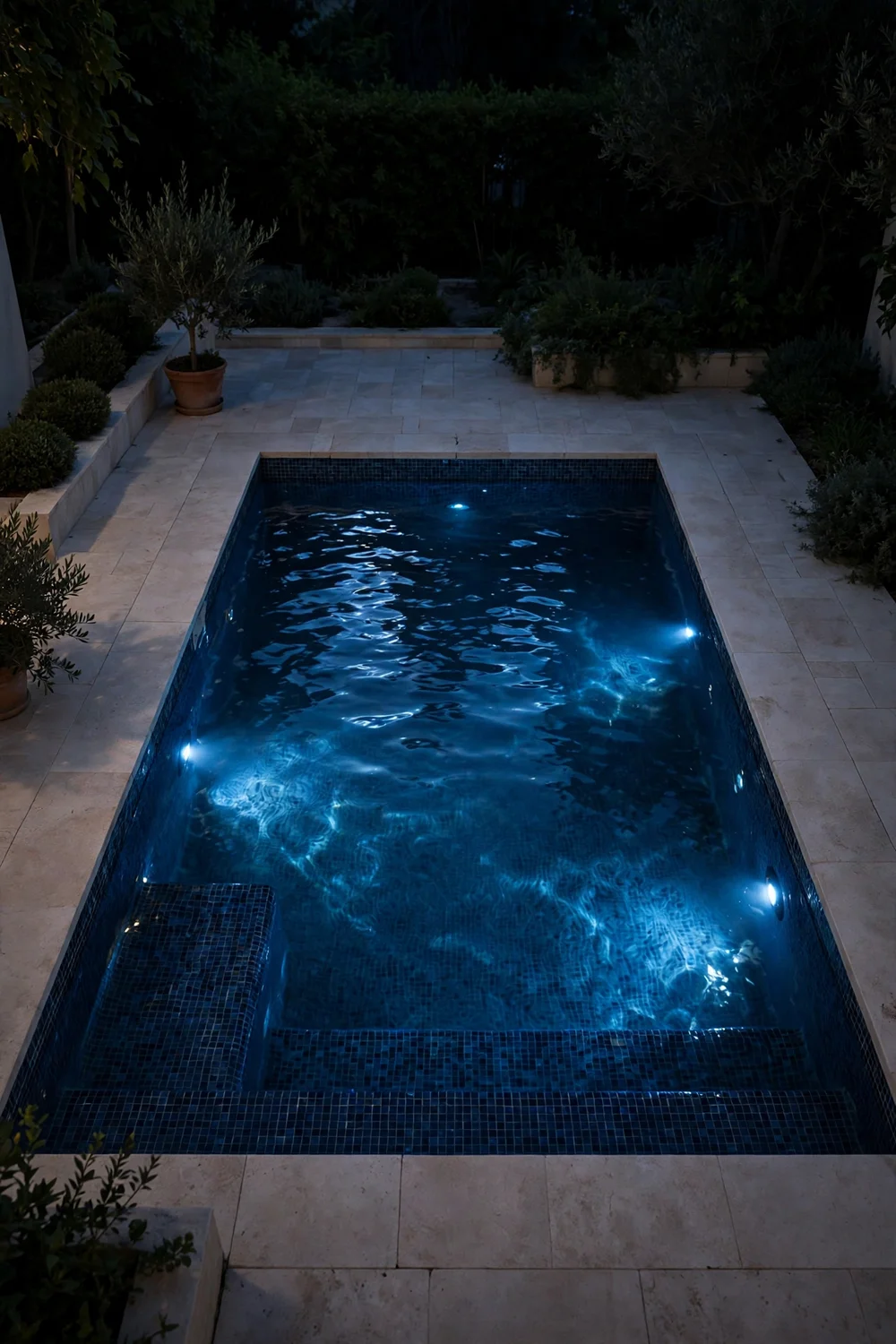
Dark blue or charcoal mosaic tile turns pool water a deep lagoon color and hides the small footprint entirely. At night, underwater LEDs reflect off the dark surface for a mirror effect you cannot get with white plaster. Mosaic costs more per square foot than plaster, but a small pool needs fewer square feet, which is exactly where the math works in your favor. Keep the surrounding deck light so the pool stays the star. Try this: use a single accent tile band at the waterline to keep the mosaic budget in check. Cost: $$$ · Difficulty: Pro build
Which small pool fits your yard
Pick by budget, timeline, and how you swim. This table compares the most common small-yard options side by side.
Cost ranges are typical US estimates from pool builder roundups and vary by region and site conditions; always get local quotes before budgeting.
Small pool safety essentials
A small pool carries the same risks as a big one, so the same rules apply. The Pool Safely campaign from the US Consumer Product Safety Commission recommends four-sided fencing that isolates the pool from the house and yard, with self-closing, self-latching gates. Check your local code for the exact fence height and latch rules before you fill the pool.
Keep water and electricity separated: pool pumps, lights, and heaters need GFCI protection and a licensed electrician, never DIY wiring near water. Call 811 before you dig so utility lines get marked; it is free and required in most states. Never dive into a plunge or cocktail pool, since 4 to 5 feet is not diving depth, and store pool chemicals locked away from children and pets. If your pool sits near a patio entertaining zone, these clean and simple backyard patio layouts help you plan safe walkways around the water.
Frequently asked questions
What is the smallest practical pool for a small yard?
A plunge pool around 8 by 12 feet is the smallest size most builders recommend for real use: deep enough to cool off and float, small enough to fit a compact yard and heat affordably. Stock tank pools at 8 feet round and swim spas at 7 by 12 feet go even smaller if soaking or stationary swimming is the goal.
How much does a small plunge pool cost?
Typical US estimates put a custom plunge pool between $20,000 and $35,000 installed, depending on region, access, and finishes. Precast drop-in models can come in lower since the shell is standardized. Always get at least three local quotes, since excavation and access drive the final number.
Are stock tank pools safe?
They can be, with the right setup: a level compacted base, a properly sized pump and filter, regular water testing, and the same fencing and supervision rules as any pool. The metal sides conduct heat, so shade the tank and check water temperature on hot days. Never let small children use one unsupervised.
Do I need a fence around a small pool?
Yes. Most US local codes require a barrier around any pool deeper than 18 to 24 inches, and the CPSC recommends four-sided fencing with self-closing, self-latching gates that separate the pool from the house. Portable and inflatable pools fall under these rules too in many areas, so confirm with your local building department.
Can I install a small pool myself?
Stock tank pools and above-ground kits are realistic DIY projects for handy homeowners. Anything involving excavation, concrete, gas lines, or pool electrical needs licensed professionals: a bad dig can hit utilities and unpermitted electrical near water is dangerous. When in doubt, hire it out.
How deep should a plunge pool be?
Most plunge pools run 4 to 5 feet deep, which lets adults stand comfortably and float without touching. Shallower designs around 3.5 feet suit pure soaking and cut water and heating costs further. Anything marketed for diving needs much greater depth and a proper diving envelope, so do not dive in a standard plunge pool.
A small yard does not rule out a pool; it just rules out the wrong pool. Pick the idea that matches your budget and how you will actually use the water, lock in the safety basics from day one, and your compact backyard can swim like a much bigger one.


