

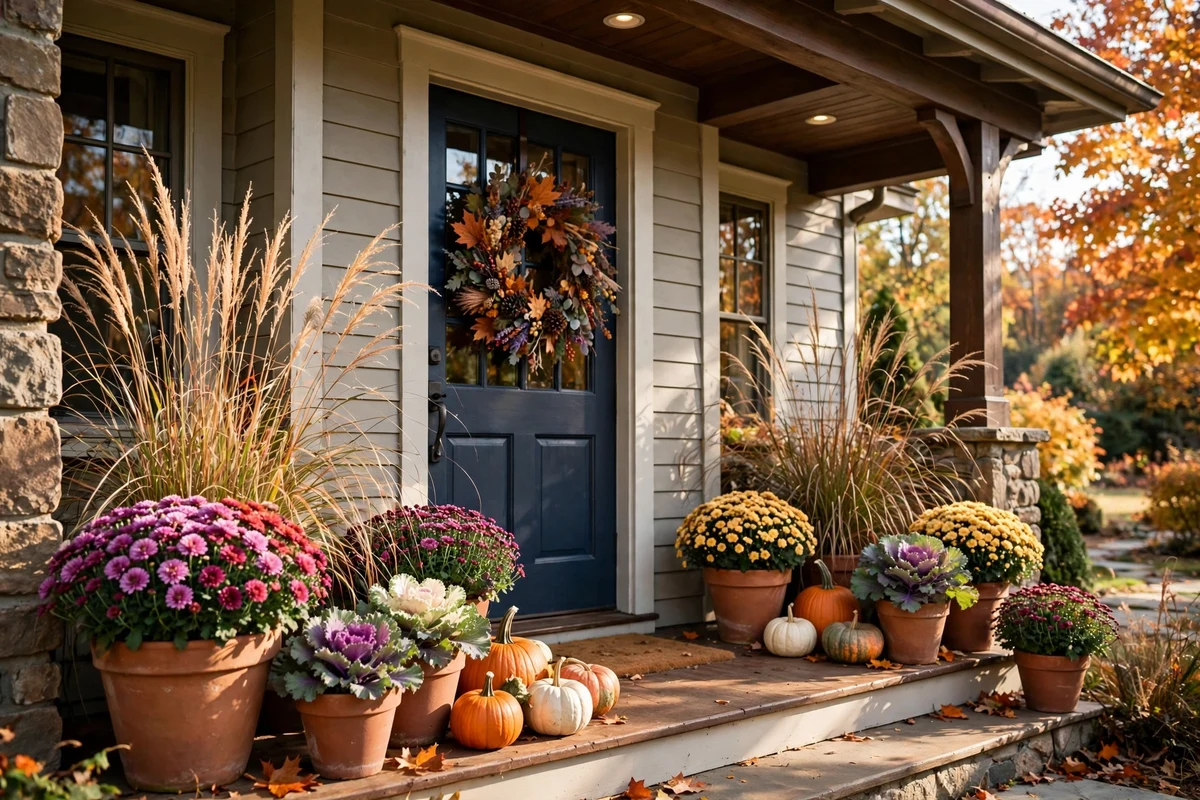
I used to think a fall planter meant sticking a mum in a pot and calling it done. Then I learned the thriller-filler-spiller formula from a garden center workshop, and my porch planters went from sad to stunning in one season.
This guide gives you 30 fall porch planter ideas, each one a complete container design you can build yourself. Every idea follows the same professional formula: something tall, something full, and something that trails. Pick one, grab a pot, and plant it this weekend.
1. Classic Mum Trio in Terracotta
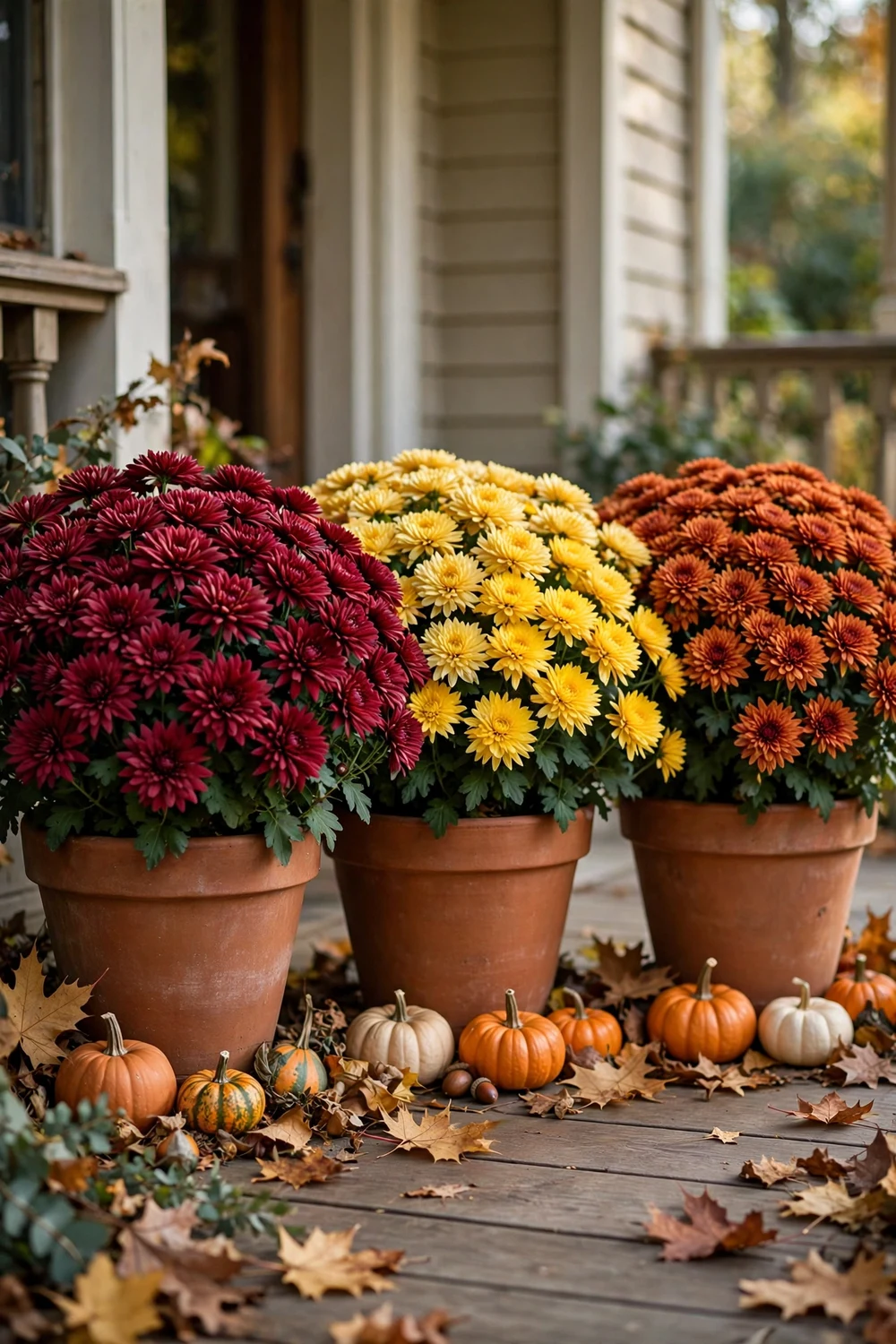
Three 10-inch terracotta pots with mums in burgundy, gold, and rust never fail. Group them in a triangle by your door with the tallest in back, and tuck a small pumpkin at the base of each. Terracotta breathes, which mums like, and the warm clay color suits every fall palette. Water every two to three days since clay dries fast. Try this: buy mums with tight buds for three extra weeks of bloom. Cost: $$. Difficulty: Easy.
2. Purple Fountain Grass Statement

One dramatic planter beats five small ones. Plant purple fountain grass as the thriller in a 16-inch black pot, ring it with coral mums as filler, and let chartreuse sweet potato vine spill over the edge. The dark pot makes the colors pop, and the grass reaches 36 inches for real presence. Fountain grass is an annual in cold zones, so enjoy it for the season. Try this: plant the grass slightly off-center for a natural, windswept look. Cost: $$. Difficulty: Easy.
3. Ornamental Kale and Pansy Duo

Purple ornamental kale ringed with golden pansies is the prettiest cold-hardy pairing there is. Plant one kale in the center of a 14-inch cream ceramic pot and circle it with eight to ten pansies. Both survive light frosts, and the kale’s color deepens as temperatures drop. This combination often looks good into December with just basic watering. Try this: deadhead pansies weekly to keep them blooming. Cost: $$. Difficulty: Easy.
4. White Pumpkin Topper Planter

Nestle a white baby boo pumpkin right into your planter for an instant fall finish. Fill a galvanized pot with trailing ivy and silvery dusty miller, then set the pumpkin on top of the foliage like a crown. The white pumpkin bridges the gap between the plants and the season. Swap it for a fresh one if it softens. Try this: choose a pumpkin with a strong curved stem since it becomes the focal point. Cost: $$. Difficulty: Easy.
5. Birch Branches and Berry Stems

Cut branches give you 40 inches of height for the price of a walk in the woods. Push five to seven red twig dogwood stems and orange berry branches into a tall weathered-wood planter filled with soil, then plant orange mums around their bases. The bare branches read as modern sculpture against the soft blooms. Mist the branches occasionally to keep berries plump. Try this: cut stems at different heights for a natural fan shape. Cost: $$. Difficulty: Easy.
6. Copper Pot with Amber Heuchera

Amber heuchera’s caramel-colored leaves look like fall foliage that never drops. Plant three heuchera in a 12-inch hammered copper pot with trailing carex grass spilling over one side. Heuchera is perennial in most zones, so the pot keeps giving next year. The copper develops a lovely patina outdoors. Try this: drill drainage holes in the copper pot if it has none, since heuchera hates wet feet. Cost: $$. Difficulty: Easy.
7. Galvanized Bucket of Mums

A tall galvanized bucket reads as farmhouse without trying. Plant deep red mums in a 14-inch bucket and push dried wheat stems in behind them for height, setting the whole thing where the porch meets the steps. The metal is practically indestructible and looks better with a little weathering. Drill three half-inch drainage holes in the bottom before planting. Try this: line the bucket with landscape fabric to keep soil from washing out of the holes. Cost: $$. Difficulty: Easy.
8. Black Urn with Grasses

Matte black urns make fall colors look richer by contrast. Fill a 16-inch urn with tall ornamental grass as the thriller, purple asters as filler, and trailing ivy as the spiller. The classic urn shape suits traditional homes, while the black finish keeps it current. Choose a frost-proof resin urn so it survives freeze-thaw cycles. Try this: flank the door with a matching pair for a formal, symmetrical entry. Cost: $$. Difficulty: Easy.
9. Wooden Crate Planter Box

A wooden crate lined with burlap becomes a planter box with real presence. Line a 24-inch crate with landscape fabric, fill it with potting soil, and plant orange mums, ornamental kale, and trailing vines in a row. The rectangular shape fits neatly against porch railings where round pots waste space. Seal the wood with exterior stain for extra seasons. Try this: plant the tallest items at the back so the crate reads like a tiny garden bed. Cost: $$. Difficulty: Easy.
10. Blue and White Porcelain with Kale

Blue and white porcelain brings a collected, classic note to fall. Plant cream ornamental cabbage in a 14-inch chinoiserie-style planter and let variegated ivy trail over the rim. The cool blue pattern keeps the warm fall plants from feeling heavy. Use a cachepot setup (nursery pot inside) so the decorative planter never sits in water. Try this: repeat the blue and white in a door wreath ribbon to tie the entry together. Cost: $$. Difficulty: Easy.
11. Rustic Barrel with Millet

Half whiskey barrels are the workhorses of big fall planters. Plant tall millet grass in the center for a 48-inch thriller, ring it with purple asters, and tuck mini pumpkins into the soil at the edges. The barrel’s volume means less frequent watering, and the scale suits wide farmhouse porches. Half barrels run about $40 at garden centers. Try this: fill the bottom third with upside-down nursery pots to save on soil. Cost: $$. Difficulty: Moderate.
12. Hanging Basket of Pansies

Do not forget the airspace. Hang a 14-inch basket of golden and purple pansies with trailing ivy from your porch beam, where it adds color at eye level. Pansies bloom happily in cool weather and tolerate light frosts. Water hanging baskets daily since they dry out faster than ground pots. Try this: hang the basket where it gets morning sun but afternoon shade to extend the blooms. Cost: $$. Difficulty: Easy.
13. Stone Planter with Autumn Sedum
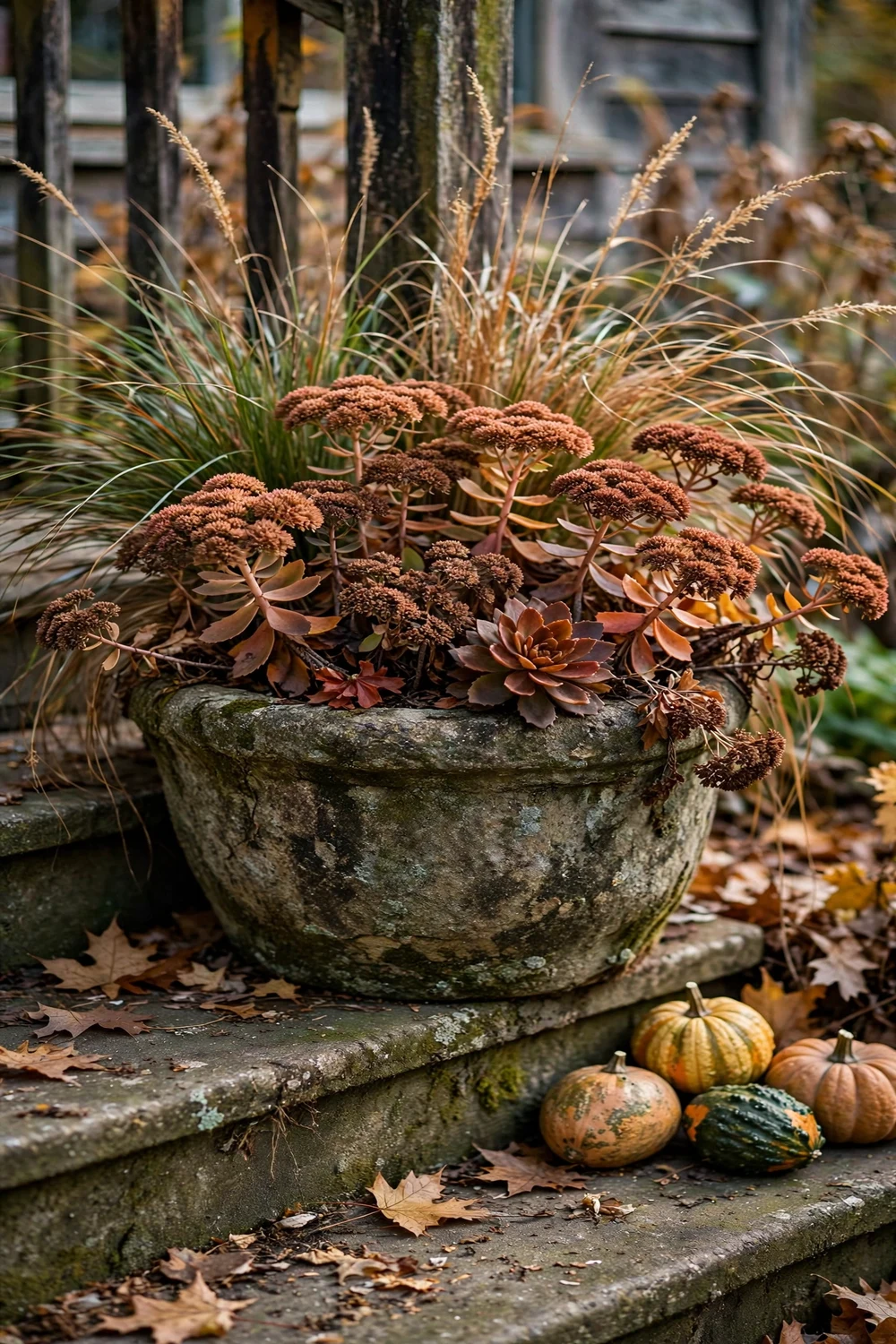
Autumn sedum earns its name in October, when its flower heads turn russet and copper. Plant it in a weathered stone trough with a tuft of ornamental grass, and let gourds lean against the base. Sedum is perennial and drought-tolerant, so this planter practically cares for itself. The stone ages beautifully and never needs replacing. Try this: leave the dried sedum heads standing through winter for structure and bird interest. Cost: $$. Difficulty: Easy.
14. Wagon Planter of Gourds

A small vintage wagon overflowing with gourds is pure harvest joy. Fill the wagon bed with colorful gourds, tuck in a few mums in nursery pots, and add dried corn stalks standing at the back. Kids love pulling this one around the yard. Line the wagon with plastic before adding soil if you plant directly in it. Try this: park the wagon at an angle to the door so it reads as a display, not an obstacle. Cost: $$. Difficulty: Easy.
15. Tall Fluted Planter Pair

Tall, narrow planters give small porches height without eating floor space. Plant spiky cordyline as the thriller in each 30-inch fluted planter, add orange mums as filler, and let creeping jenny spill down the sides. The vertical lines make the entry feel grander. Anchor the pair symmetrically on either side of the door. Try this: add a sugar pumpkin at the base of each planter to connect the planting to the ground. Cost: $$. Difficulty: Easy.
16. Wicker Basket with Dried Hydrangeas

Dried hydrangeas in blush and tan tones bring softness that fresh flowers cannot. Arrange the dried heads in a large wicker basket with preserved maple leaves and mini pumpkins tucked around the rim. Nothing here needs water, so the arrangement lasts all season and stores for next year. Keep it under cover since rain mats dried blooms. Try this: cut hydrangea heads in late summer and dry them upside down for the truest colors. Cost: $$. Difficulty: Easy.
17. Concrete Cube with Boxwood

Modern homes need fall planters too. Set a round boxwood ball in a concrete cube and ring its base with orange pansies for a shot of seasonal color. The geometric shapes suit contemporary exteriors, and the boxwood stays green all winter. Water boxwood deeply before the first freeze. Try this: swap the pansies for red berries in December to carry the planter into the holidays. Cost: $$. Difficulty: Easy.
18. Vintage Toolbox Planter
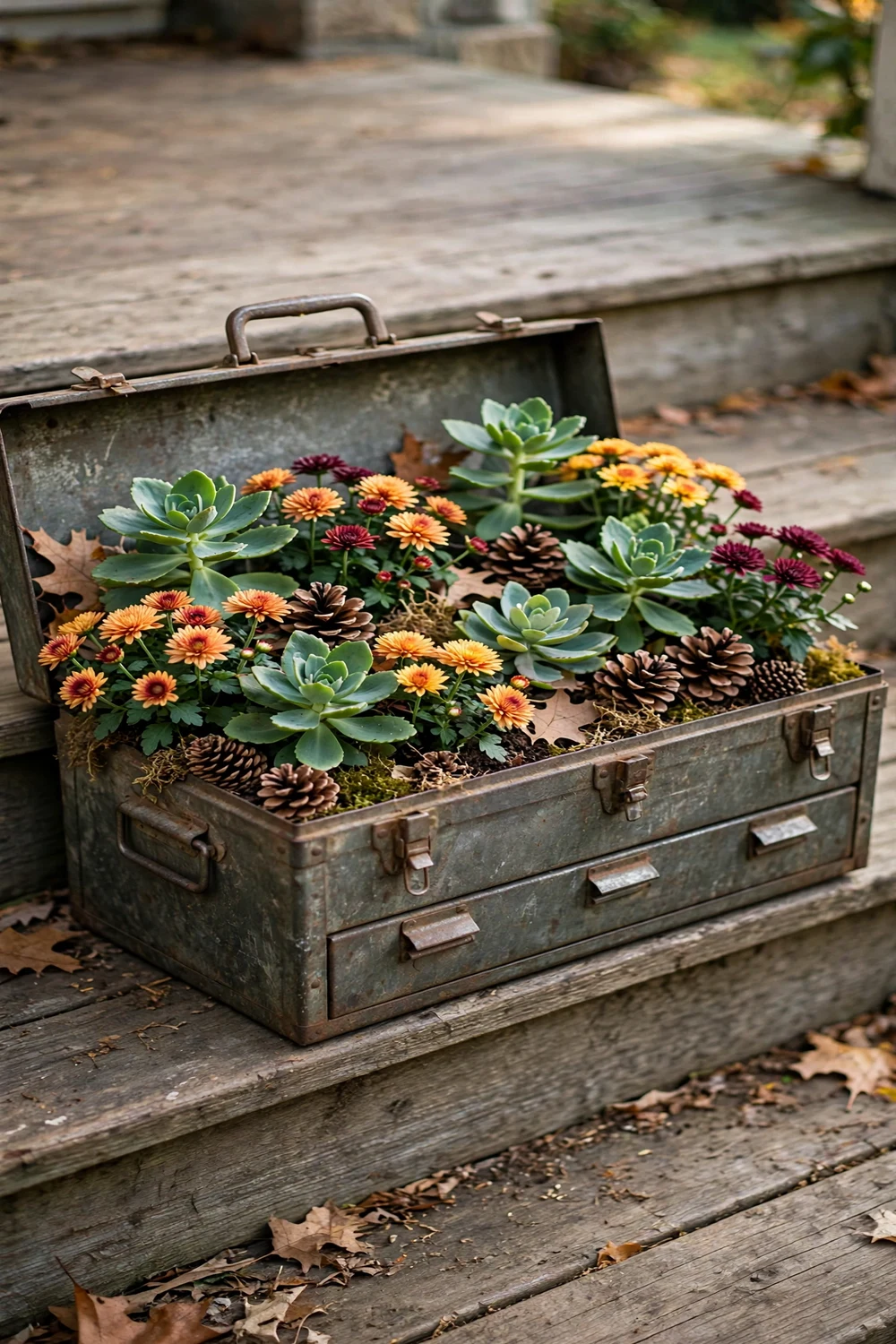
An old metal toolbox makes a planter with a story. Fill it with cold-hardy sedum, mini mums, and pinecones, and set it on your steps where guests will notice it. The long, low shape is perfect for narrow steps. Drill drainage holes in the bottom and add a layer of gravel first. Try this: leave the toolbox’s patina and rust as is; the wear is the charm. Cost: $$. Difficulty: Easy.
19. Copper Trough with Cabbage
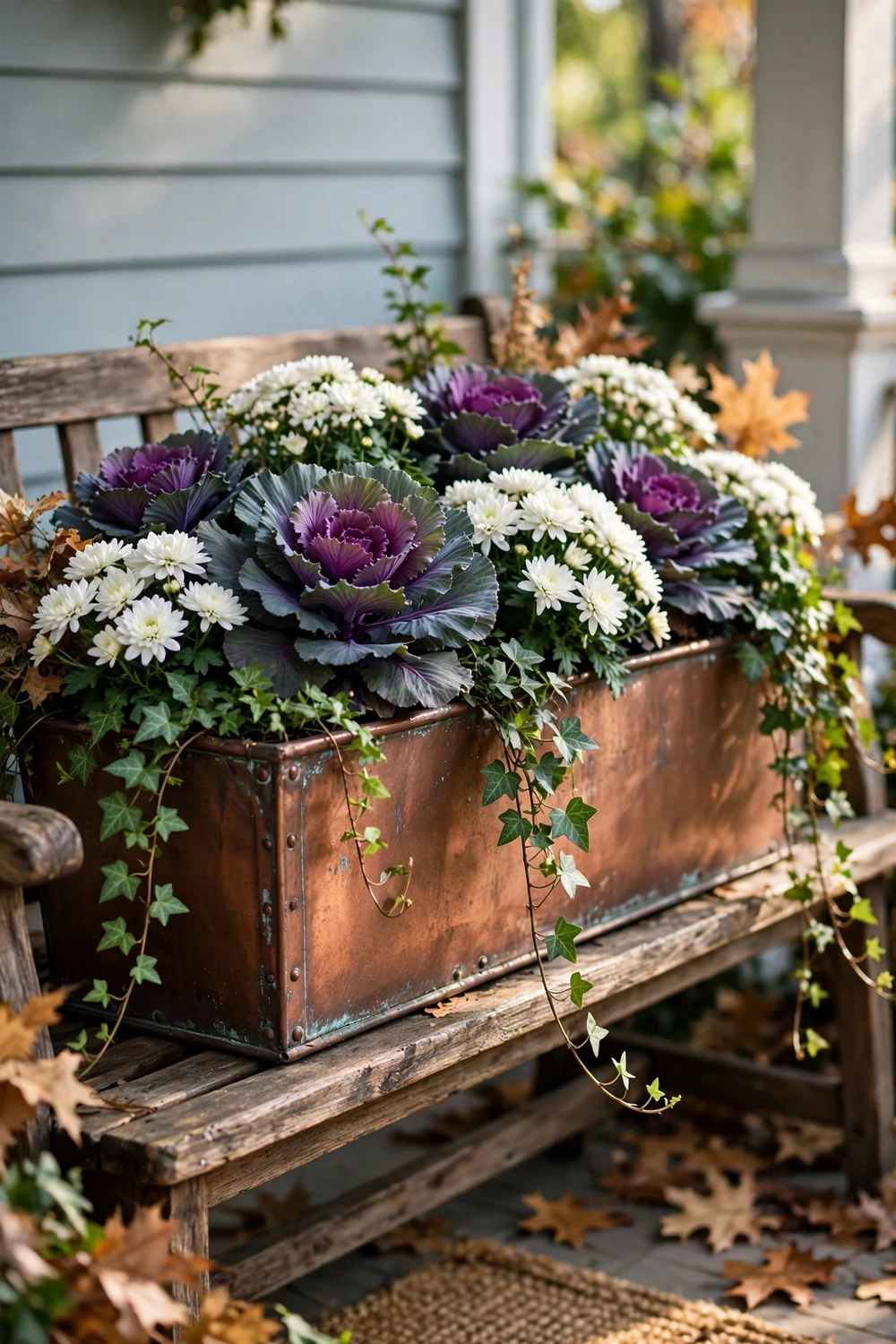
A long copper trough on a porch bench is quietly luxurious. Plant a row of purple ornamental cabbage down the center, flank it with white mums, and let ivy trail off both ends. The repeating rhythm of the cabbages looks professionally designed. Cabbage colors intensify after frost, so this planter peaks in late October. Try this: raise the trough on a bench or stand so the trailing ivy has room to cascade. Cost: $$. Difficulty: Easy.
20. Clay Pot Trio Cluster

Three clay pots in descending sizes, each with a different planting, make a charming cluster. Use mums in the largest, ornamental grass in the middle, and a trailing vine in the smallest, arranged on a step like stairs. The repetition of the clay ties them together while the plants vary. Terracotta is inexpensive, so this is a budget-friendly big look. Try this: turn the middle pot on its side with the vine spilling out for a playful touch. Cost: $$. Difficulty: Easy.
21. Lantern Cage Planter
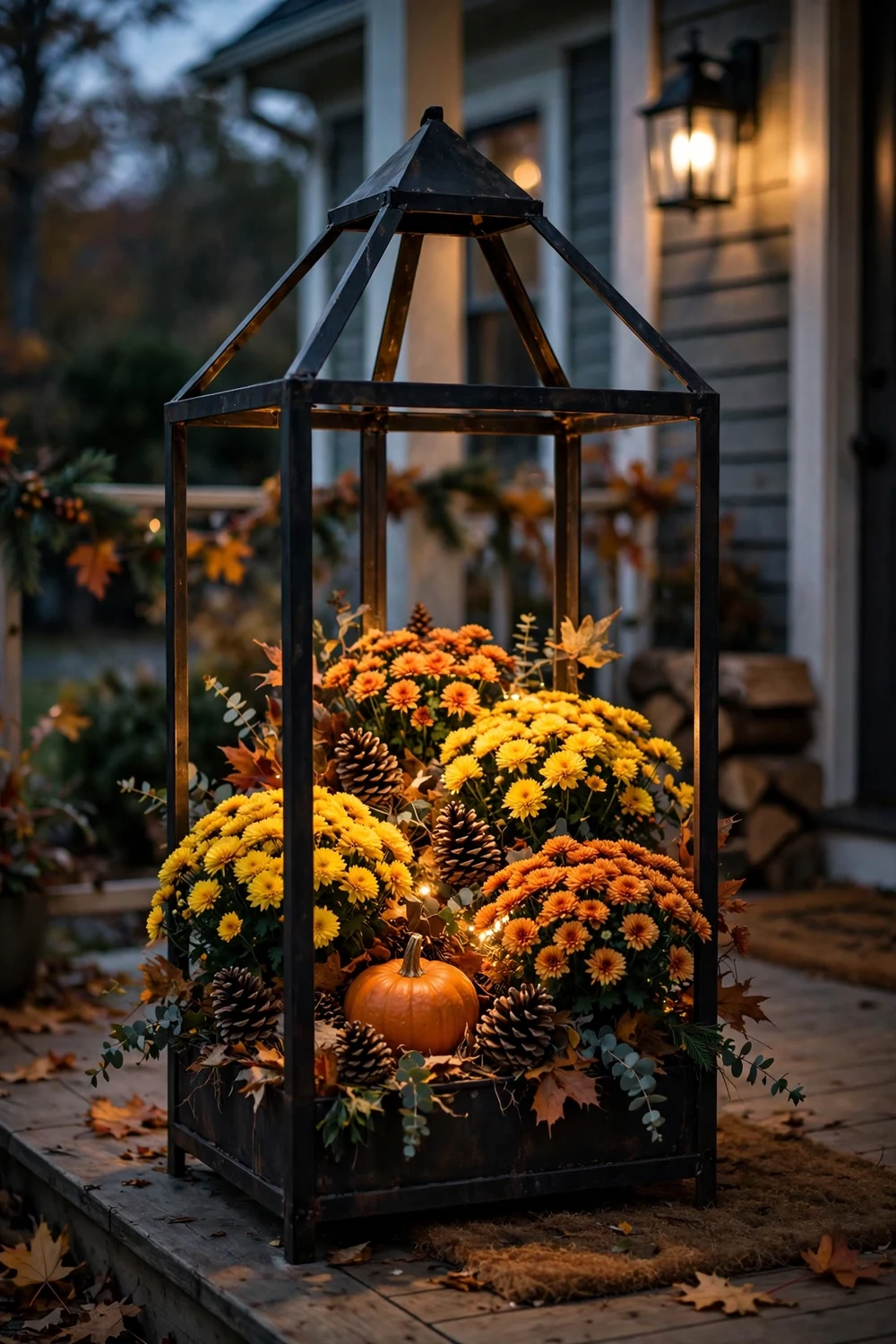
An oversized open lantern frame becomes a planter with built-in architecture. Set a potted mum inside the frame, surround it with pinecones, and top it with a small pumpkin. At dusk, add a flameless candle beside the pot for a glow through the metalwork. The frame protects the arrangement from wind too. Try this: use only flameless candles inside the frame near dried materials. Cost: $$. Difficulty: Easy.
22. Repurposed Chair Planter

A vintage chair with its seat replaced by a planter is the kind of piece neighbors photograph. Remove the seat, fit a wooden box planted with mums, kale, and trailing vines into the frame, and set pumpkins around the chair legs. It works as both planter and sculpture. Seal the box with exterior paint to protect it. Try this: paint the chair in a contrasting color like deep teal so it stands out against fall tones. Cost: $$. Difficulty: Moderate.
23. Milk Can with Wheat

A vintage milk can with dried wheat is farmhouse shorthand for fall. Stand tall wheat bundles in the can, ring the base with orange mums in small pots, and set pumpkins alongside. The can’s height gives you 40 inches of vertical interest for almost no money. Farm auctions and antique malls usually have milk cans under $30. Try this: tie a burlap bow around the can’s neck for a finished look. Cost: $$. Difficulty: Easy.
24. Tiered Plant Stand
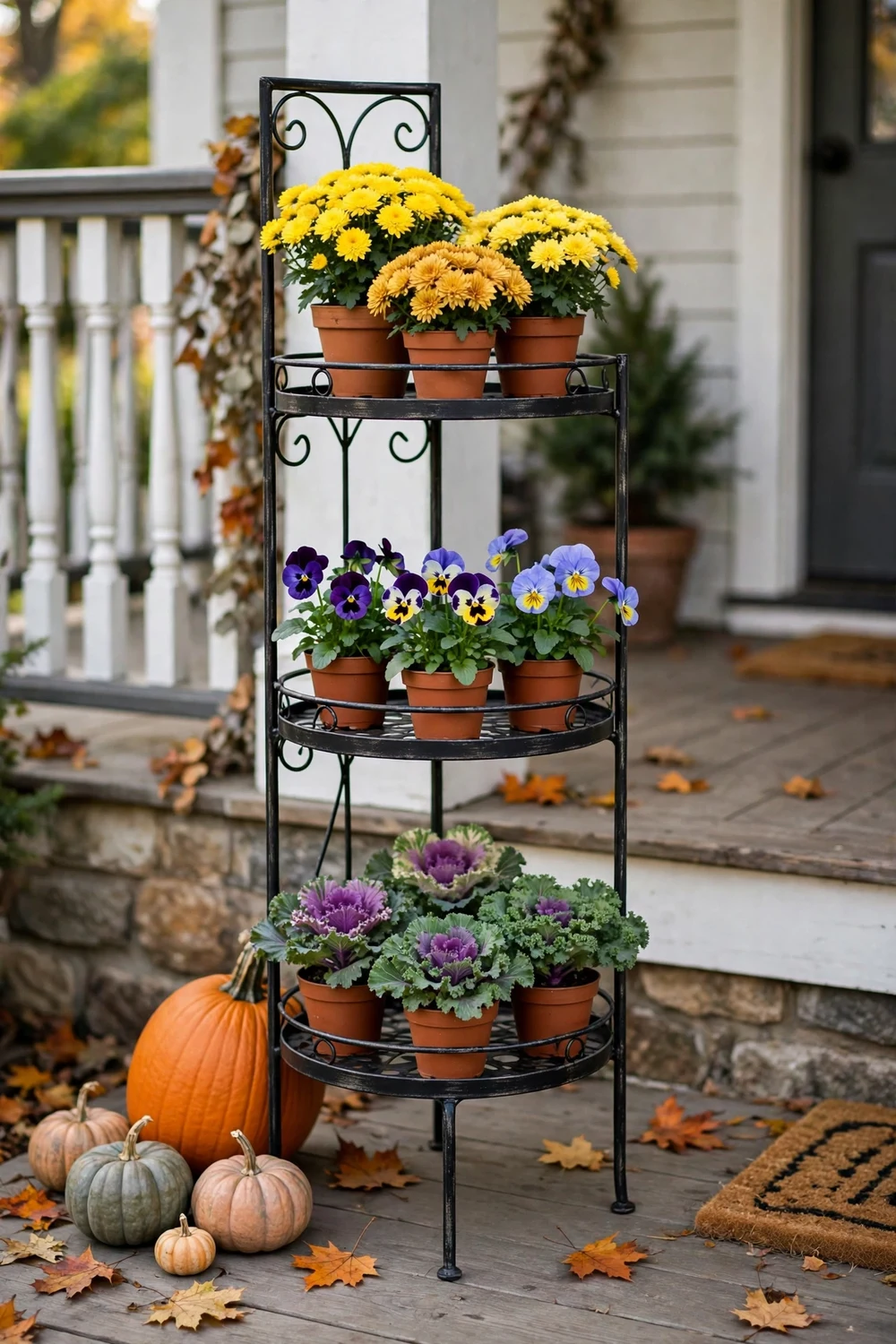
A three-tiered stand turns nine small pots into one vertical garden. Fill each level with 4-inch pots of mums, pansies, and ornamental kale, mixing colors across the tiers. The stand fits in a two-foot footprint, perfect for apartment porches and small stoops. Water the top tier first since drips feed the levels below. Try this: put the brightest colors on the middle tier, right at eye level. Cost: $$. Difficulty: Easy.
25. Pumpkin Shell Planter
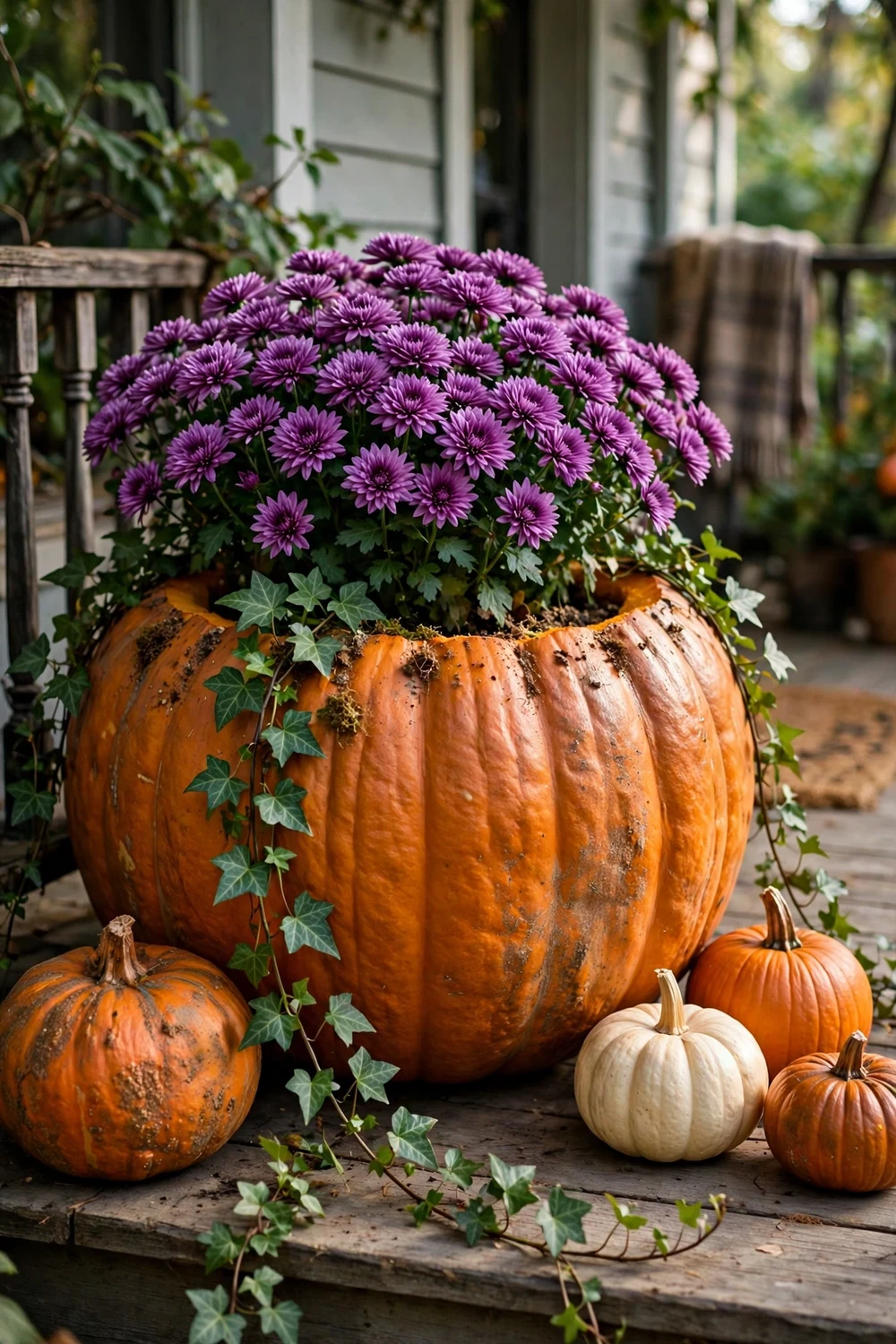
Hollow out a large pumpkin and plant it like a pot. Scoop a six-inch pumpkin clean, poke drainage holes in the bottom, add soil, and plant purple mums with trailing ivy spilling over the edge. The living pumpkin lasts three to four weeks, which is plenty for the heart of the season. Set it on a saucer to protect your porch. Try this: choose a flat-bottomed pumpkin so it sits steady. Cost: $$. Difficulty: Easy.
26. Evergreen Base for Fall-to-Winter

Plant a dwarf evergreen now and decorate around it twice. Center a small arborvitae or spruce in a 16-inch pot, surround it with orange mums, red berries, and pinecones for fall, then swap the mums for winter greens in December. The evergreen is the investment; the seasonal accents are cheap. This is the smartest planter on the list. Try this: choose a dwarf variety rated two zones colder than yours so it survives the pot. Cost: $$. Difficulty: Easy.
27. Dried Floral Arrangement

A dried arrangement in a brown urn lasts the whole season with zero watering. Push dried maple and oak stems, berry branches, and dried grasses into floral foam inside the urn, then nestle white faux pumpkins at the base. The muted browns and creams suit elegant, neutral porches. Store it whole in a dry spot and it returns next year. Try this: spray the arrangement with a matte sealer to keep leaves from crumbling. Cost: $$. Difficulty: Easy.
28. Fall Herb Planter

Rosemary, sage, and thyme are pretty enough for a decorative planter and useful in the kitchen. Plant the herbs in a rustic trough with small orange mums and a mini pumpkin tucked in for color. Snip herbs as you cook through the fall. Bring the trough near the door before hard frosts to extend the harvest. Try this: label the herbs with small wooden markers so guests know they are edible. Cost: $$. Difficulty: Easy.
29. Monochrome Burgundy Planter
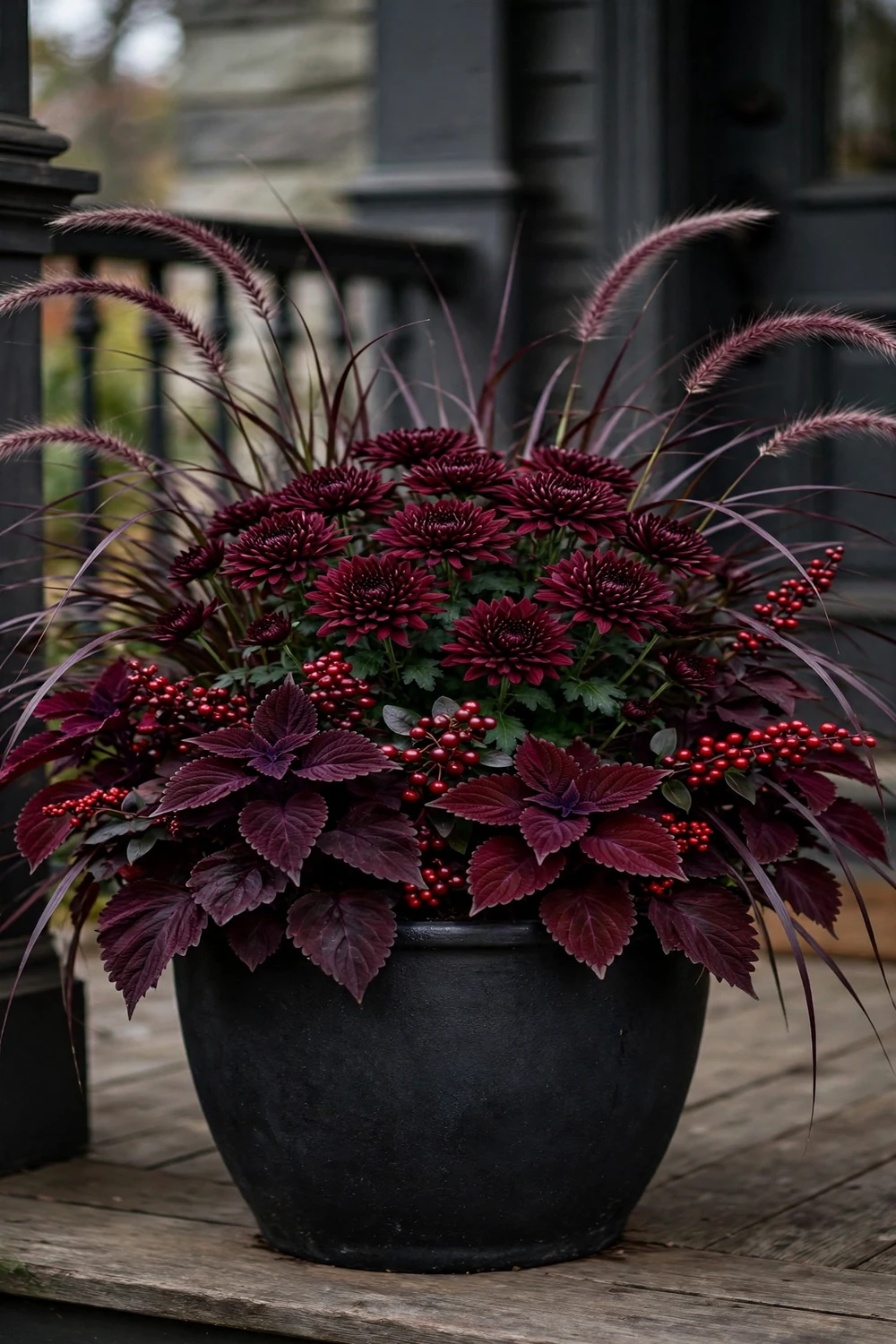
One color, done well, is more striking than a rainbow. Fill a black pot with burgundy mums, dark fountain grass, burgundy coleus, and deep red berries. The monochrome scheme looks intentional and moody, perfect for modern or dramatic exteriors. Vary the textures so the single color stays interesting. Try this: add one chartreuse accent, like a small sweet potato vine, to make the burgundy glow. Cost: $$. Difficulty: Easy.
30. Dwarf Sunflower Statement
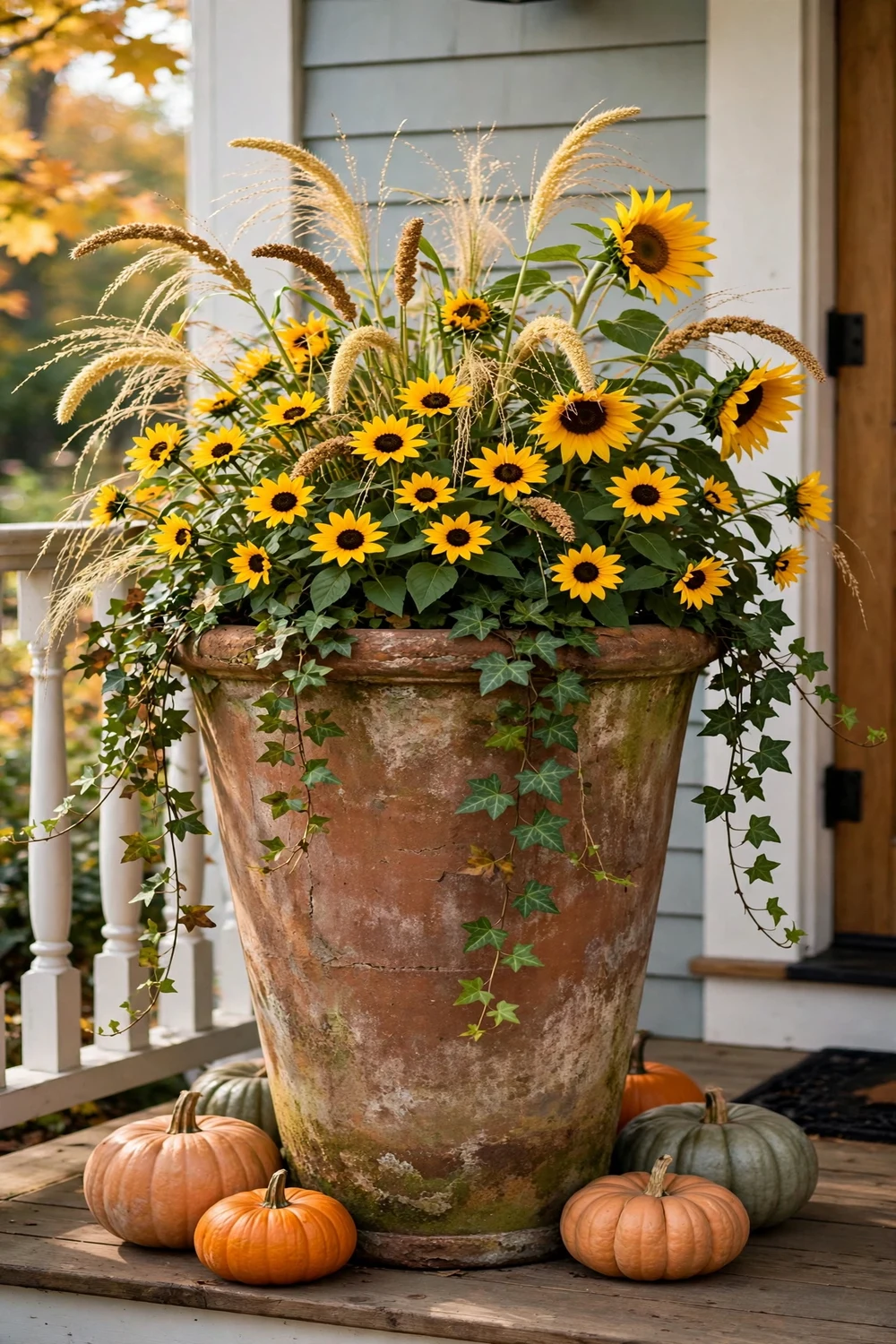
Dwarf sunflowers bring late-season cheer that mums cannot match. Plant three dwarf sunflowers in a tall aged-terracotta pot with millet grass behind them and ivy trailing over the rim. The golden faces track the sun and bloom for weeks in early fall. Deadhead spent blooms to keep new ones coming. Try this: choose a pollen-free variety if the planter sits near the front door. Cost: $$. Difficulty: Easy.
The thriller-filler-spiller formula, explained
Every professional-looking container follows the same recipe. The thriller is one tall element in the center or back: ornamental grass, branches, or a small evergreen. The filler is mid-height color around it: mums, kale, pansies. The spiller trails over the edge: ivy, sweet potato vine, creeping jenny. Get those three roles right and the specific plants almost do not matter. For the rest of your porch, these simple fall porch decor ideas coordinate with any planter on this list, and these fall window box ideas extend the same techniques to your windows.
Mistakes to avoid with fall planters
The most common mistake is skipping drainage holes, which drowns roots in the first heavy rain. Drill them in every decorative container. Second, do not plant summer annuals in October and expect them to thrive; choose cool-season plants like mums, kale, and pansies. Third, remember that mums are toxic to dogs and cats if eaten, so keep planters out of reach of curious pets; the ASPCA’s plant database has the full list. Finally, water containers even in fall: pots dry out faster than garden beds, especially in wind.
Frequently asked questions
What is the best formula for a fall planter?
Use thriller-filler-spiller: one tall element (grass, branches), mid-height color (mums, kale, pansies), and one trailer (ivy, sweet potato vine). It works in any pot, any style.
When should I plant fall containers?
Early to mid-September in most of the US. That gives plants time to root before cool weather, and garden centers have the best selection then.
How often should I water fall planters?
Check the top inch of soil every two to three days. Containers dry faster than garden beds, and fall wind is surprisingly drying. Water in the morning so foliage dries by evening.
Which fall planter plants survive frost?
Ornamental kale, cabbage, and pansies handle light frosts and often look better after them. Mums tolerate light frost but not hard freezes. Bring tender plants inside before the first hard freeze.
Can I reuse my fall planter soil next year?
Yes, with refreshing. Remove old roots, mix in fresh compost, and add slow-release fertilizer in spring. Replace soil entirely every two to three years.
Are mums safe around pets?
Chrysanthemums are toxic to dogs and cats if ingested, causing drooling and stomach upset. Keep mum planters where pets cannot chew them, or choose pet-safe pansies and herbs instead.
Conclusion
A stunning fall planter is just a pot, three kinds of plants, and one free afternoon. Pick the idea that matches your porch, plant it this weekend, and enjoy it every time you come home.


