


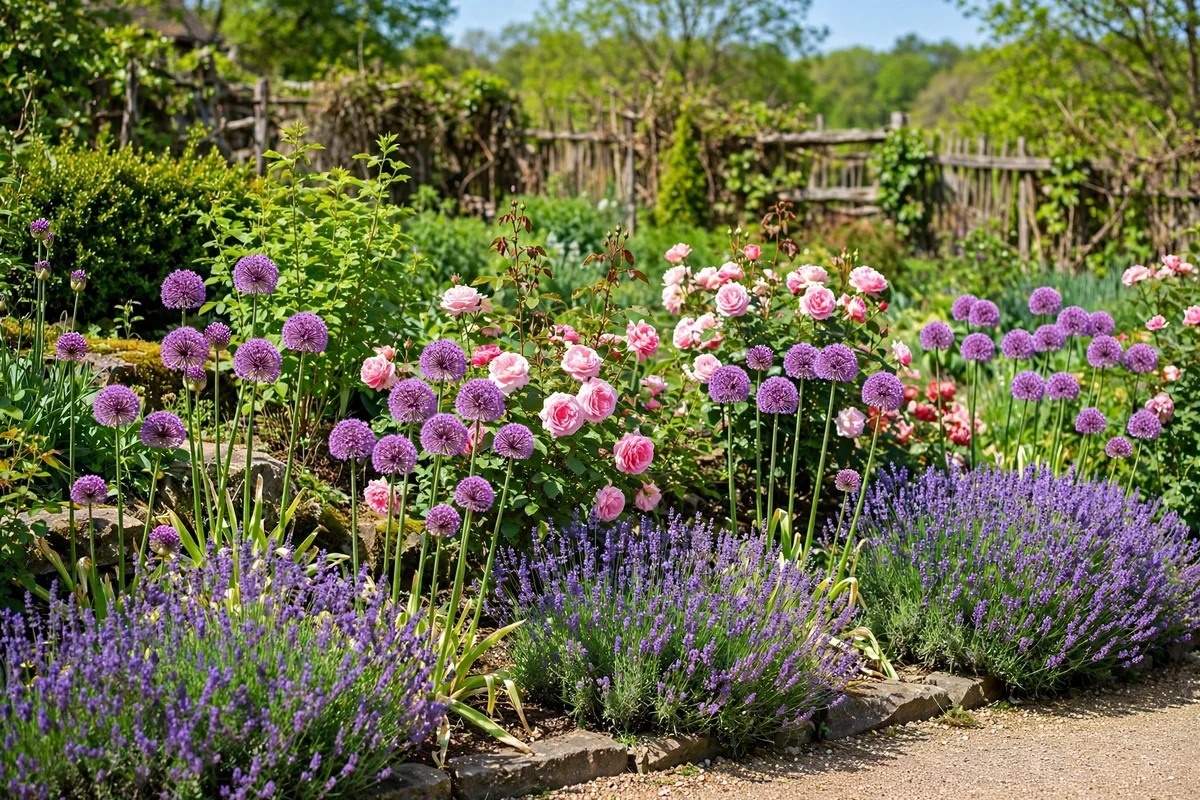
Alliums are the exclamation points of the spring garden. One planting of bulbs in October, and by late May you get purple globes floating above the border on stems too tall to ignore. I planted my first dozen ‘Purple Sensation’ bulbs skeptically, and three springs later they still come back stronger with zero fuss from me.
These 20 allium garden ideas cover planting combinations, placement tricks, and variety choices for sun-loving borders, cottage gardens, and containers. Every idea includes the variety name, spacing, and bloom timing so you can plant once and enjoy the show for years.
Quick takeaways
- Plant allium bulbs in fall, 4 to 6 weeks before the ground freezes, at 2 to 3 times the bulb’s depth.
- Group bulbs in clusters of 10 to 15 for drifts that read as intentional, not spotty.
- Pair alliums with perennials that leaf out late, like hostas, to hide the yellowing foliage.
- Alliums are toxic to dogs and cats, so keep curious pets from chewing bulbs or leaves.
- Call 811 before you dig new beds to have underground utility lines marked for free.
1. Giant ‘Globemaster’ drama row

Nothing announces spring like a row of ‘Globemaster’ flower heads the size of softballs. Plant 12 bulbs 8 inches apart along a path edge or the front of a fence, and each 30-inch stem carries a dense 8-inch violet globe in late May. The effect is architectural, almost sculptural, and it photographs beautifully for anyone who pins garden ideas. Stake only in exposed windy spots; the stems are thick enough to stand on their own in most gardens. Leave the dried heads standing through summer for seed-head interest.
Try this: underplant with low creeping thyme so the base stays green after allium foliage fades.
Difficulty: Easy | Cost: Under $30 for 12 bulbs
2. ‘Purple Sensation’ drifting through roses

Roses leaf out slowly in spring, and alliums fill that awkward gap perfectly. Tuck groups of 7 ‘Purple Sensation’ bulbs between rose bushes, 6 inches deep and 6 inches apart, and their 24-inch purple globes hover above the young rose foliage in late May. The allium bloom finishes just as the first rose buds open, handing the border over without a gap. Both want full sun and well-drained soil, so they share bed prep. This pairing is a classic in English-style borders for good reason.
Try this: choose ‘Purple Sensation’ over taller varieties here so the globes sit just above the rose leaves, not lost behind them.
Difficulty: Easy | Cost: Under $25 for 15 bulbs
3. ‘Schubertii’ starburst at the front of the border
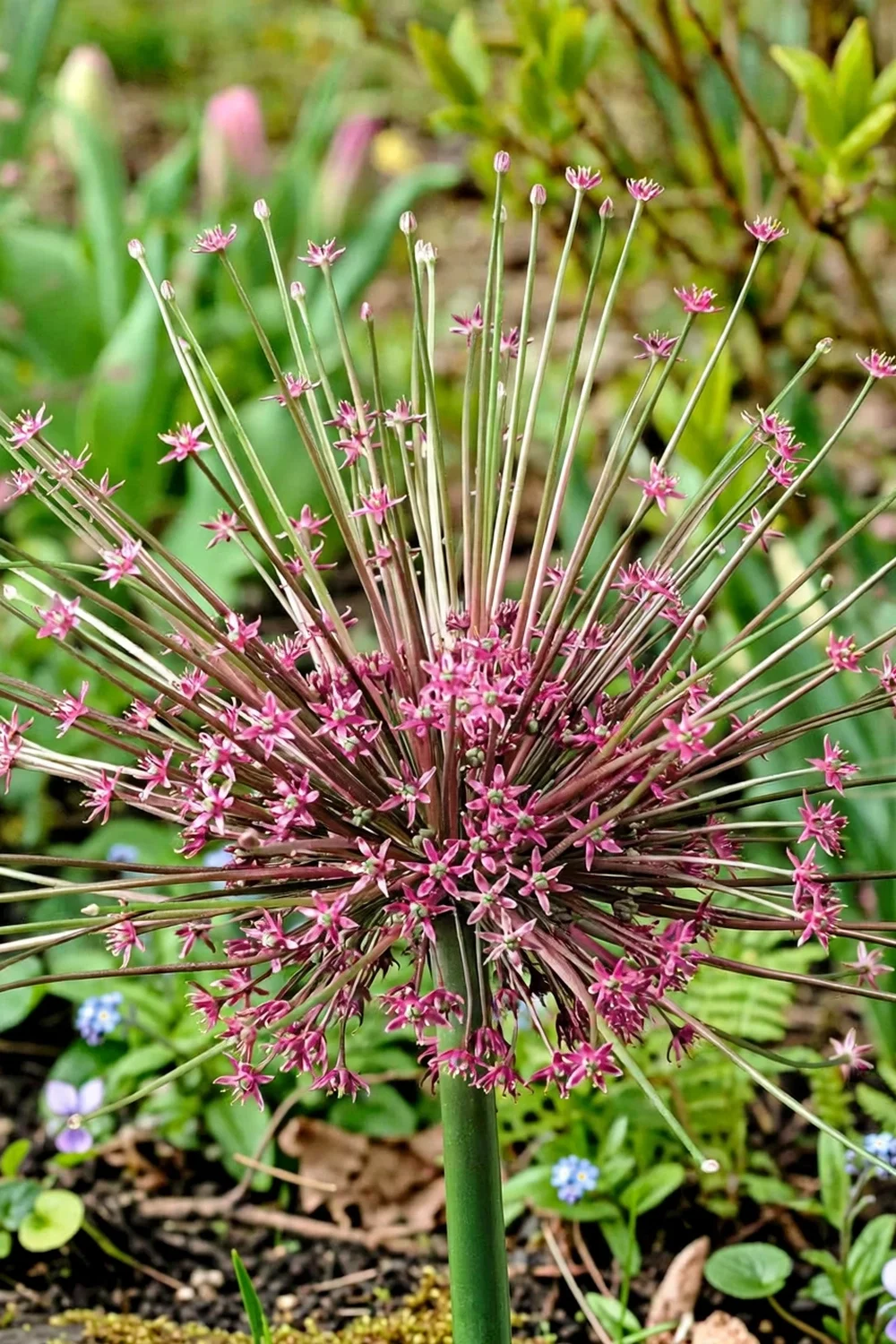
Allium schubertii does not make a globe; it makes a firework. Each 12-inch stem carries a loose pink starburst up to 10 inches wide, with tiny florets on stems of different lengths. Plant 10 bulbs near the front of the border where the detail can be seen up close, 5 inches deep and 6 inches apart. They bloom in early June and the seed heads dry into silver-tan sculptures that last for months. Kids love these, and so do photographers. Give them sharp drainage, since the bulbs are smaller and rot faster than big globe types.
Try this: plant schubertii where you walk daily, like beside the front steps, so you catch the starburst stage.
Difficulty: Easy | Cost: Under $25 for 10 bulbs
4. Alliums rising through ornamental grass
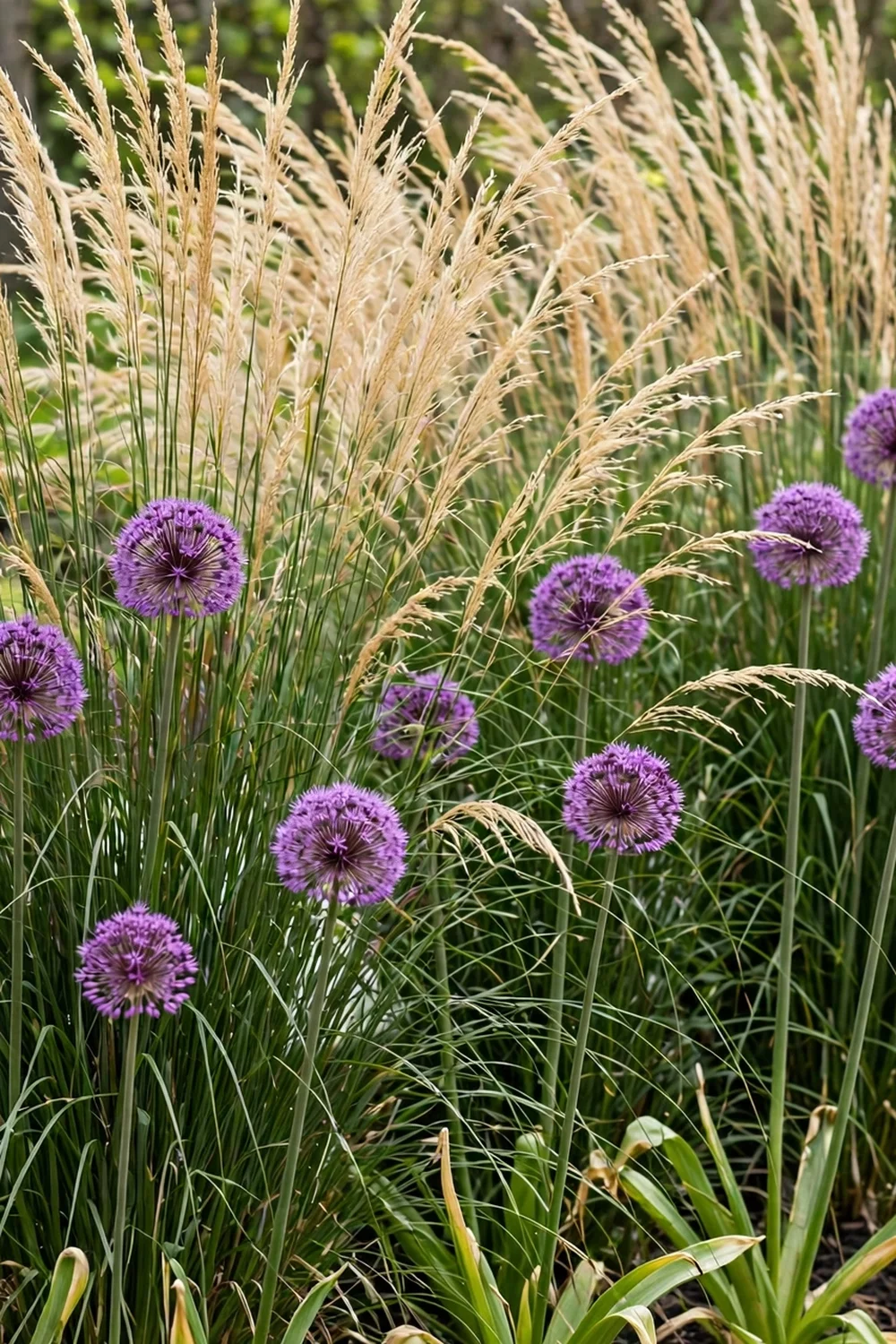
Karl Foerster feather reed grass and purple alliums are the power couple of modern borders. Plant allium ‘Purple Sensation’ bulbs in a drift of 15 directly in front of three grass clumps, and the violet globes float at exactly the height where the grass blades arch. The grass hides the allium’s yellowing basal leaves completely, solving the plant’s one ugly phase. Both are drought-tolerant once established and need no dividing for years. Cut the grass to 6 inches in late winter, just before allium shoots appear.
Try this: add three ‘Globemaster’ at the back of the drift for two tiers of purple height.
Difficulty: Easy | Cost: Under $40
5. White ‘Mount Everest’ edging a hosta bed
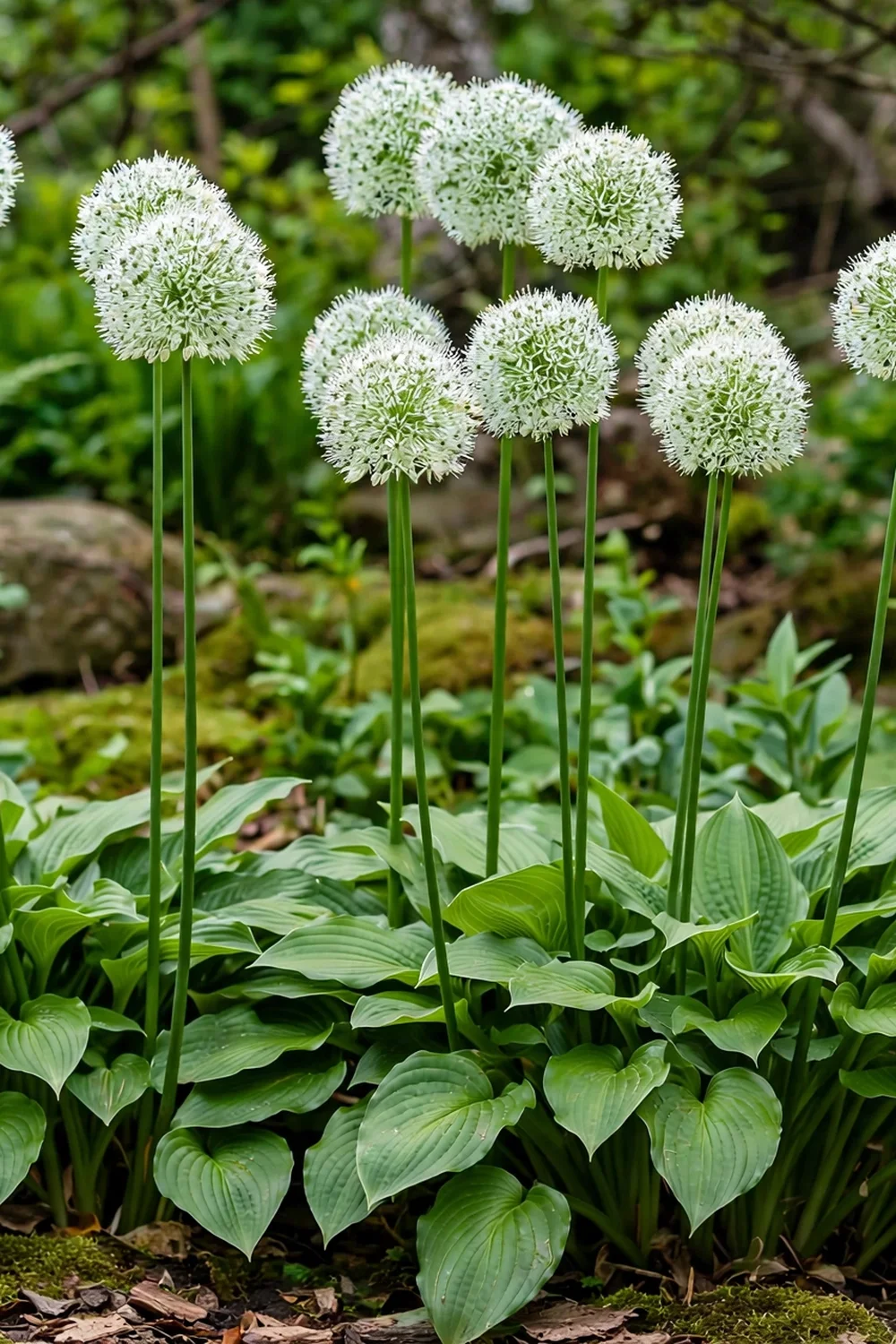
White alliums solve the dark-corner problem at the edge of shade beds. Plant 10 ‘Mount Everest’ bulbs along the sunny side of a hosta border, 6 inches deep, and their 36-inch white globes shine above the unfurling hosta leaves in late May. The hostas then expand and swallow the fading allium foliage by June. This works at the transition line where a bed meets lawn or path, giving the border a crisp light edge. White shows up at dusk too, stretching the garden’s viewing hours.
Try this: pair with blue hostas like ‘Halcyon’ for a cool white-and-blue scheme.
Difficulty: Easy | Cost: Under $30 for 10 bulbs
6. Alliums with lavender for purple harmony

Two purples at two heights make a border feel designed. Plant ‘Purple Sensation’ bulbs behind a row of lavender ‘Hidcote’, and the allium globes rise 2 feet above the lavender’s fragrant gray mounds in late May and June. Both demand full sun and sharp drainage, so a slightly raised bed or a slope suits them. The lavender keeps the bed interesting after the alliums finish, and bees work both plants all day. Shear lavender lightly after its first bloom to keep the mounds tight around the allium stems.
Try this: use gravel mulch around both plants to keep crowns dry and the color palette clean.
Difficulty: Easy | Cost: Under $45
7. Alliums tucked among peonies
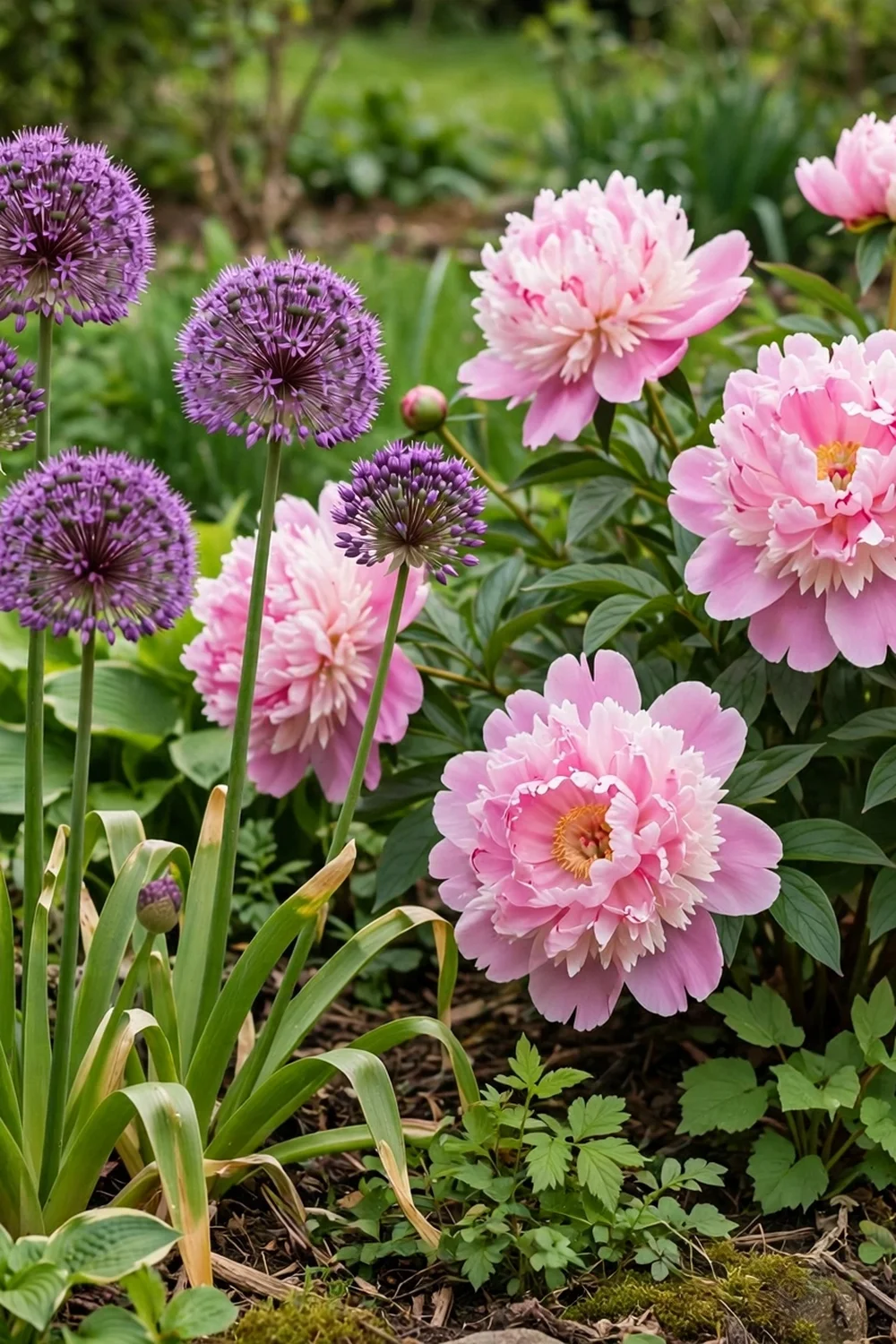
Peonies bloom for just two or three weeks, and alliums stretch their moment. Plant 9 allium bulbs in a loose ring around each peony clump, 8 inches from the peony crown so you never disturb its roots. The purple globes open a week before the peony buds and carry the eye while you wait. Peony foliage then fills the space as the alliums fade, hiding everything. Never dig near established peonies in fall; plant the alliums at the same time you plant the peony, or slide bulbs in carefully with a narrow trowel.
Try this: pick early peony varieties like ‘Coral Charm’ so the overlap with allium bloom is at its longest.
Difficulty: Easy | Cost: Under $25
8. Alliums with Salvia ‘May Night’

Salvia ‘May Night’ blooms at exactly the same moment as mid-season alliums, which makes this the easiest combo on the list. Plant allium bulbs 6 inches behind a row of salvia, and the round violet globes hover over indigo-blue spikes in a two-tone purple haze through late May. Cut the salvia back by half after its first flush and it reblooms, covering the alliums’ exit. Both plants are deer-resistant and unbothered by heat, so this border survives neglect that would ruin fussier pairings.
Try this: repeat this pairing in three spots along the border for rhythm instead of one lonely clump.
Difficulty: Easy | Cost: Under $40
9. Moon garden row of white alliums

White flowers earn their keep after sunset. Plant a 10-foot row of white alliums, mixing ‘Mount Everest’ and white ‘Schubertii’, along a path you use in the evening. The globes catch the last light and seem to float above the darkening garden. Add white nicotiana or moonflower nearby for scent, since alliums give no fragrance themselves. Keep the row simple: mulch with pale gravel, skip competing colors, and let the white do all the work. This is the lowest-effort high-impact idea here.
Try this: place a small solar path light at each end of the row to frame the white globes at night.
Difficulty: Easy | Cost: Under $35
10. Alliums rising from catmint
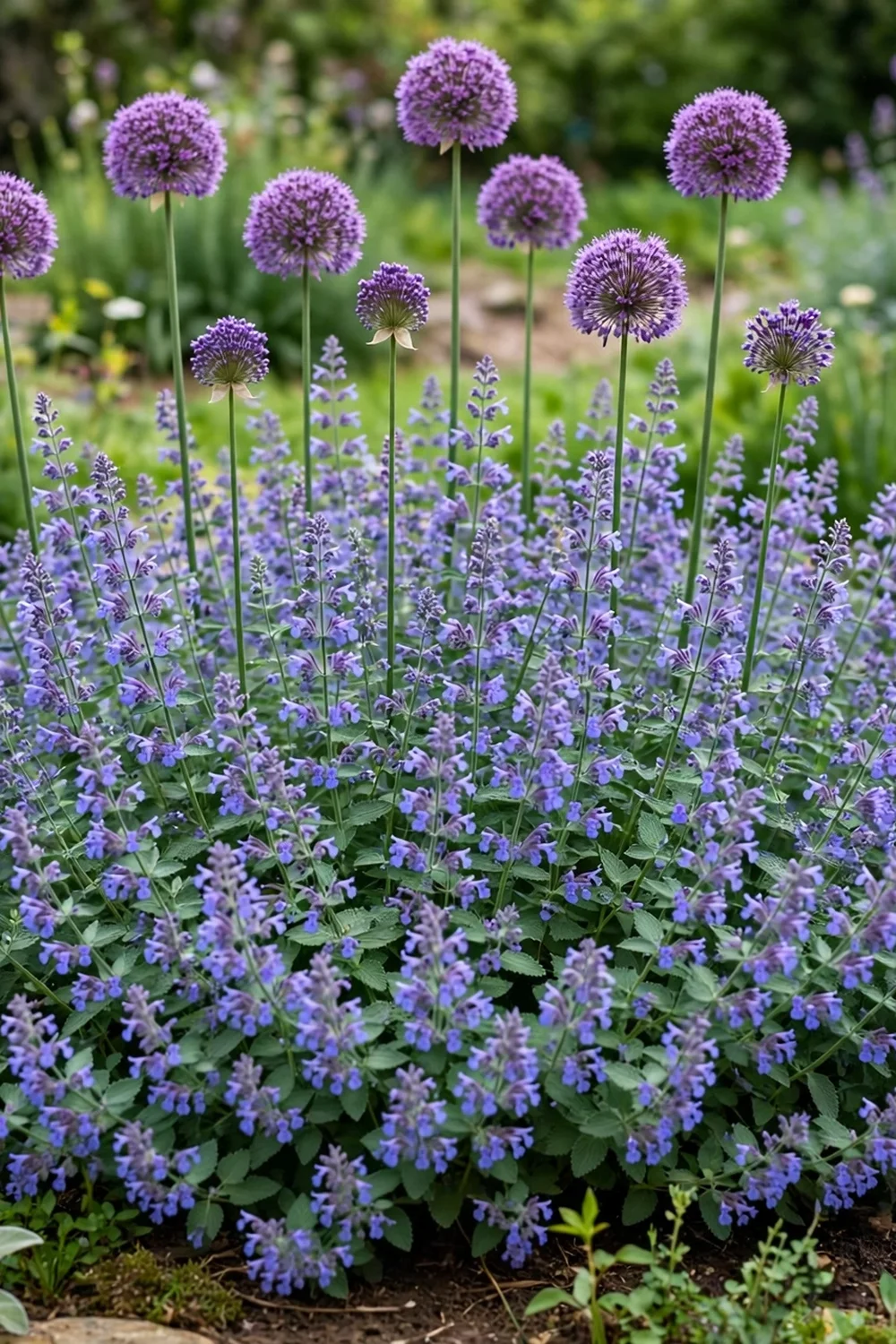
Catmint ‘Walker’s Low’ is the perfect skirt for alliums. Plant allium bulbs straight through the center of established catmint clumps in fall; the bulbs push up through the catmint’s blue haze in May and bloom above it. The catmint hides every trace of yellowing allium leaves, and its long bloom season means the spot never looks empty. Shear the catmint by a third after its first bloom and it flushes again. Both plants laugh at poor soil and drought, so this combo suits the hellstrip by the sidewalk.
Try this: use drumstick allium (A. sphaerocephalon) here for small maroon ovals that bloom later, in July.
Difficulty: Easy | Cost: Under $25
11. Cottage garden tangle with foxgloves

Cottage gardens forgive mess, and alliums love the company. Scatter 20 mixed allium bulbs through a bed of foxgloves, lupines, and old roses, letting the purple globes punctuate the pink spires. Plant in generous drifts rather than lines; cottage style wants abundance, not geometry. The alliums’ vertical lines keep the soft mounds of cottage perennials from looking shapeless. Let some alliums self-seed and you get free volunteers in charmingly random spots next year. Just remember foxgloves are biennial, so replant them every other year to keep the partnership going.
Try this: add white alliums to the mix so the purple does not dominate the pastel cottage palette.
Difficulty: Easy | Cost: Under $35
12. Alliums in patio containers

Small allium species thrive in pots, bringing the globe look to balconies. Plant 7 bulbs of Allium ‘Millenium’ or drumstick allium in a 14-inch terracotta pot, 4 inches deep, and set it in full sun on the patio. ‘Millenium’ blooms in midsummer with rosy-purple balls on 15-inch stems, extending the allium season past spring. Water the pot through fall so roots establish, then move it against the house wall for winter in cold zones. Top the soil with gravel mulch to keep the crown dry and the pot looking tidy.
Try this: plant pansies over the bulbs in fall for winter color; the alliums push right through in spring.
Difficulty: Easy | Cost: Under $25
13. Staggered-bloom succession bed
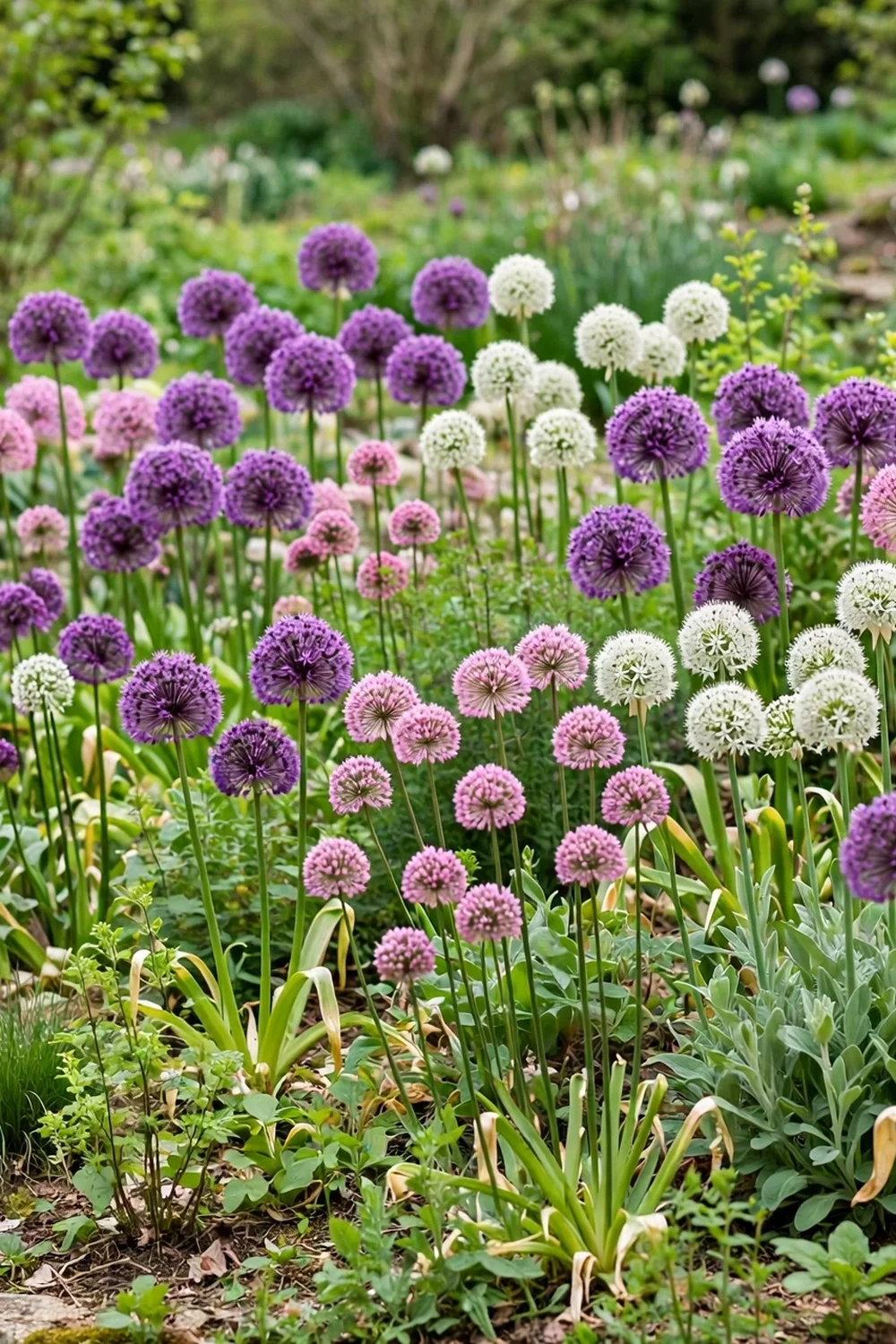
One allium variety gives you three weeks of flowers; five varieties give you three months. Plant early ‘Purple Sensation’ for late May, ‘Globemaster’ for June, schubertii for early June texture, drumstick allium for July, and ‘Millenium’ for August, each in its own drift of 10 or more. Label every drift with a plant marker at planting time, because bare fall soil makes everything look the same. Water the whole bed well after planting and then ignore it; succession beds are designed to run themselves. This is the closest thing to a no-maintenance flower bed that actually works.
Try this: sketch the bed on paper before ordering bulbs so early and late varieties interleave instead of clumping by season.
Difficulty: Moderate | Cost: $50 to $80
14. ‘Christophii’ starbursts over sedum
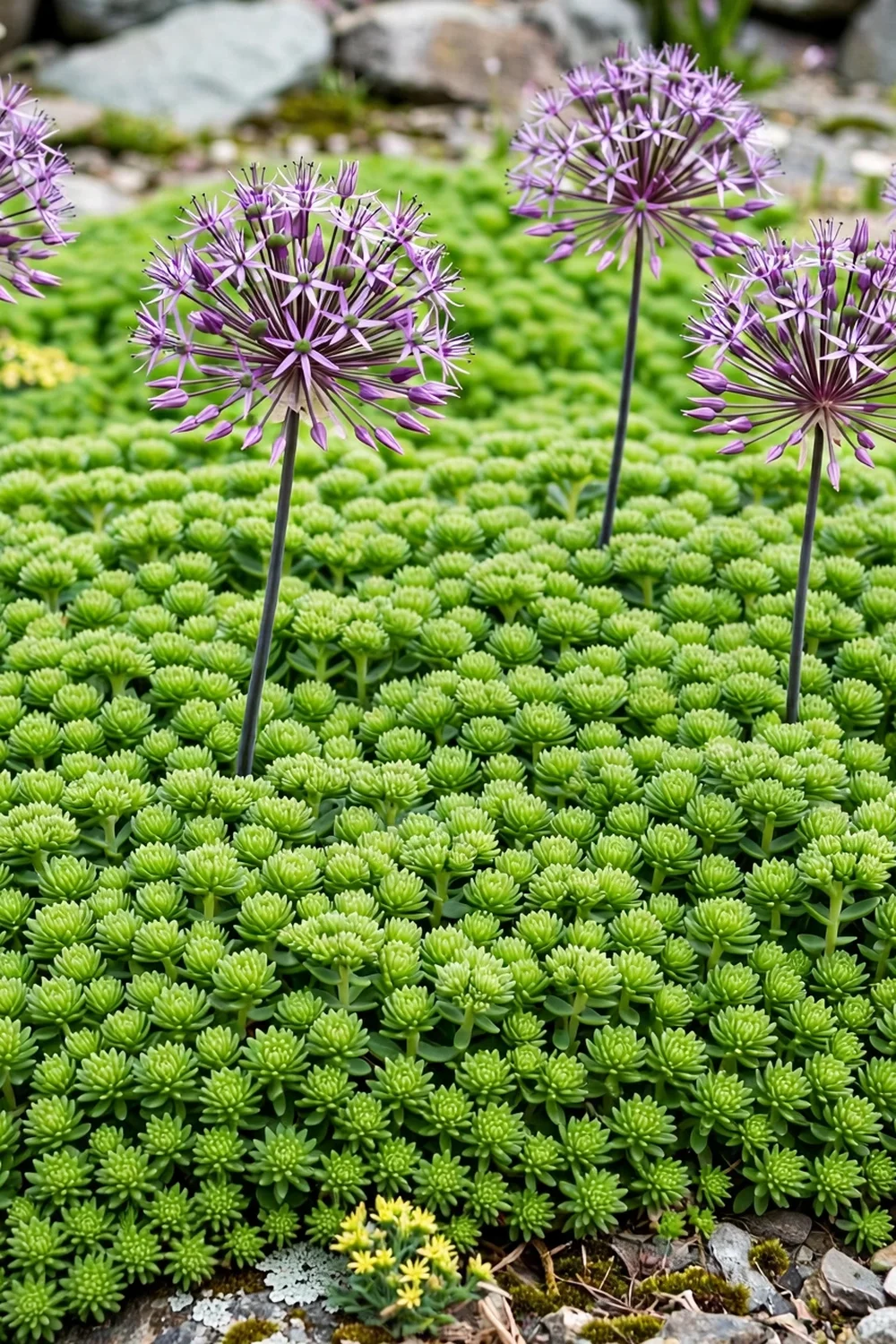
Allium christophii makes the biggest starburst of the family, up to 12 inches across, and it loves the same dry sunny spots as sedum. Plant 8 christophii bulbs 6 inches deep through a carpet of Sedum ‘Autumn Joy’, spacing them 10 inches apart. The metallic-lilac stars float above the sedum’s green rosettes in June, and the sedum’s pink fall flowers take over the show later. Both plants demand sharp drainage, so this pairing suits rock gardens, slopes, and the top of retaining walls. The dried christophii heads last in the garden until winter.
Try this: leave the dried heads standing; they look like copper sculptures against fall sedum color.
Difficulty: Easy | Cost: Under $30
15. Rock garden alliums

Rock gardens give alliums the drainage they crave and the contrast they deserve. Plant small species like Allium karataviense, with its broad blue-gray leaves and soft pink globes, between boulders where soil stays lean and gritty. The wide leaves look sculptural against stone even before the May flowers open. Mix in karataviense, schubertii, and christophii for a sequence of shapes from April to June. Never let mulch pile against the bulbs in a rock garden; trapped moisture rots them faster than anything else.
Try this: top-dress with crushed granite instead of bark so the planting reads as alpine, not suburban.
Difficulty: Moderate | Cost: Under $35
16. Spring succession with tulips and daffodils
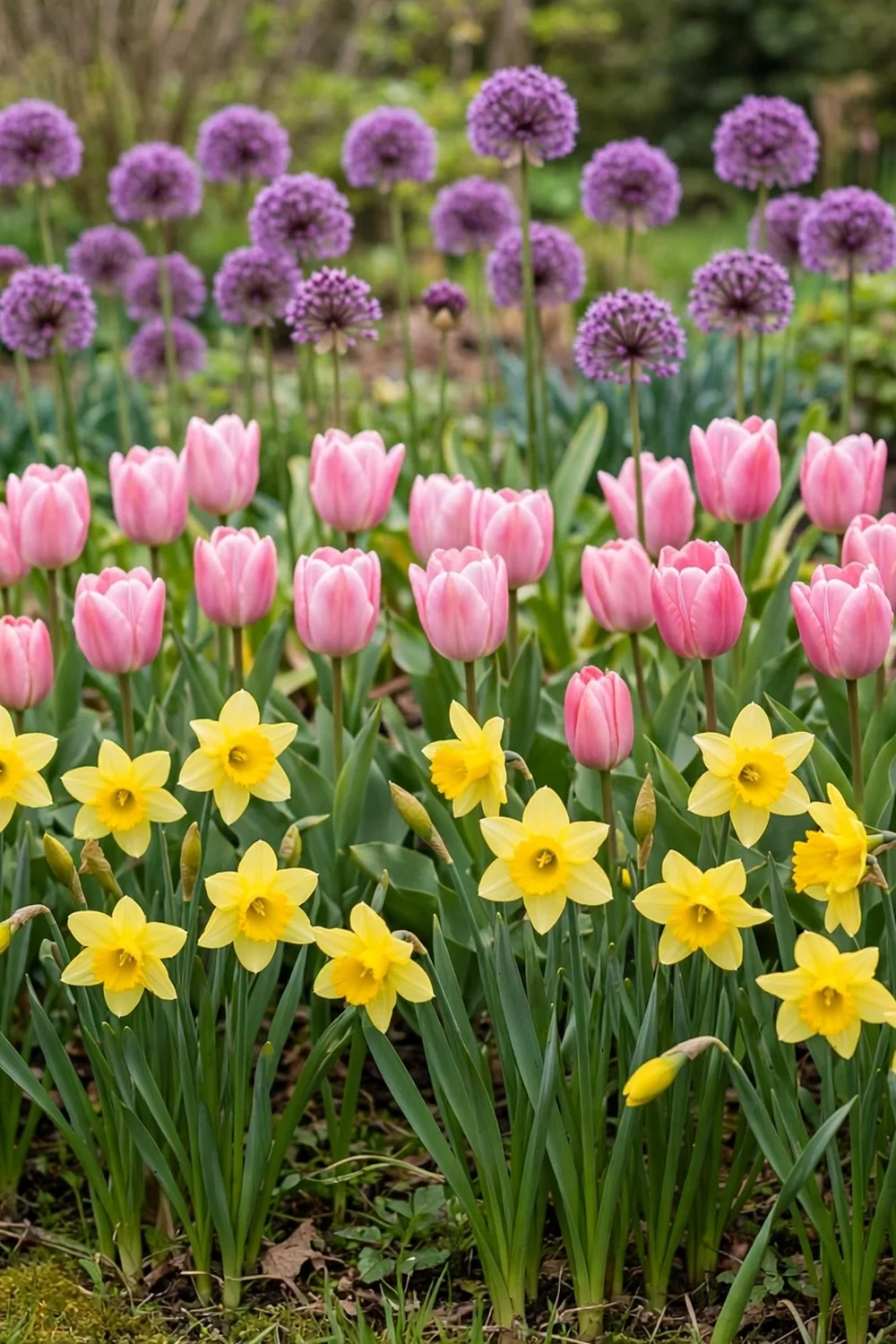
Layer bulbs by bloom time and one bed flowers for two full months. Plant daffodils deepest at 8 inches for April, tulips at 6 inches for early May, and alliums at 5 inches for late May, all in the same bed in overlapping drifts. The allium stems rise through the dying tulip foliage, hiding the mess gardeners usually hate. Use 15 bulbs of each for a 6-foot bed; fewer looks spotty. Mark the bed with a discreet stake so nobody digs into it during summer planting.
Try this: choose single late tulips in pink so their color hands off cleanly to purple alliums.
Difficulty: Easy | Cost: $40 to $60
17. Pollinator strip with verbena

Allium flowers are magnets for bees, butterflies, and hoverflies, so they anchor a pollinator strip beautifully. Plant 15 ‘Purple Sensation’ bulbs down the center of a sunny 3-foot-wide strip, flanked by verbena bonariensis and coneflowers. The alliums feed early pollinators in May, the verbena takes over in July, and the coneflowers run into fall. Skip pesticides on this strip entirely; the whole point is a safe buffet. Leave all stems standing through winter for overwintering insects, cutting back in early spring.
Try this: add a shallow dish of water with pebbles nearby so visiting bees can drink safely.
Difficulty: Easy | Cost: Under $40
18. Fence-line backdrop planting

A plain fence becomes a gallery wall with tall alliums in front of it. Plant 20 ‘Globemaster’ or ‘Gladiator’ bulbs in a single sweeping drift along the fence base, 8 inches out from the wood so air circulates. The 3 to 4-foot stems put the globes at eye level from across the yard, and a dark-stained fence makes purple pop dramatically. This is the highest-impact use of twenty bulbs I know. Amend the soil along the fence with compost at planting, since fence lines are often compacted and dry.
Try this: stain or paint the fence a dark color the fall before planting for maximum contrast.
Difficulty: Easy | Cost: Under $40
19. Formal bed with boxwood topiary

Alliums bring welcome looseness to formal gardens. Plant rings of 8 ‘Purple Sensation’ bulbs around each boxwood ball or cone in a parterre bed, keeping 12 inches between bulb and boxwood roots. The strict geometry of the clipped boxwood makes the round allium heads look deliberate rather than wild. Boxwood keeps the bed structured all winter after the alliums vanish. Feed the boxwood in spring and the alliums benefit from the same slow-release fertilizer. Trim boxwood in late spring after the alliums finish, never while the globes are at their peak.
Try this: edge the bed with low boxwood hedging to complete the formal frame.
Difficulty: Moderate | Cost: Under $50
20. Alliums with chartreuse euphorbia

Chartreuse euphorbia makes purple alliums glow. Plant Allium ‘Purple Sensation’ bulbs behind Euphorbia polychroma, whose acid-yellow bracts open in April and hold into June. The complementary colors vibrate against each other in the best way, and both plants want the same sunny, well-drained spot. Euphorbia’s evergreen-ish foliage then covers the alliums’ retreat. Wear gloves when cutting euphorbia; its milky sap irritates skin and eyes. This combo needs no staking, no deadheading, and no apologies.
Try this: repeat the pairing at both ends of a border to bookend the spring display.
Difficulty: Easy | Cost: Under $35
Allium varieties at a glance
How to plant allium bulbs for the biggest display
Fall planting decides spring success. Get bulbs in the ground 4 to 6 weeks before the first hard frost so roots establish before winter. Dig each hole 2 to 3 times as deep as the bulb is tall, set the bulb pointy-end up, and space large varieties 8 inches apart. Plant in clusters of 10 to 15, never in lonely singles, because alliums read as confetti rather than statements when scattered. Water once after planting and then let fall rain take over. If your soil holds water after rain, plant on a slight mound or add grit to the hole; soggy winter soil rots bulbs faster than cold ever will.
New to planning bulb combinations? These companion planting charts help you map what goes where in a bed: 12 Companion Planting Charts for Raised Beds.
Mistakes that waste good allium bulbs
The classic error is planting too shallow, which leaves bulbs exposed to freeze-thaw cycles that heave them out of the ground. Measure the depth; guessing costs blooms. The second mistake is cutting the foliage after bloom. Those yellowing leaves are feeding next year’s flower, so let them die back naturally and hide them behind later perennials instead. Third, planting in shade: alliums need full sun, six hours minimum, or stems flop and flowers stay small. Finally, overwatering in summer dormancy. Once the foliage dies back, the bulbs want to stay dry; a bed with summer irrigation set to daily will rot them.
For more purple in the same borders, these long-season perennials keep color coming after the alliums finish: 20 Best Purple Perennials.
Pet and digging safety
All plants in the onion family, including ornamental alliums, are toxic to dogs and cats. The ASPCA lists onion species as causing red blood cell damage if chewed in quantity, so keep bulbs out of reach during fall planting and discourage pets from chewing leaves. Details are on the ASPCA’s listing: ASPCA onion toxicity details. If you are digging a brand-new bed, call 811 a few days ahead so local utilities mark buried lines for free. Clemson University’s extension guide covers fall bulb planting depth and timing: Clemson HGIC spring-flowering bulbs guide.
To keep the whole garden blooming in sequence after the alliums fade, plan around these long-bloomers: Long Blooming Perennials for a Colorful Garden.
Frequently asked questions
When should I plant allium bulbs?
Plant in fall, about 4 to 6 weeks before the ground freezes, which is usually September through November depending on your zone. Fall planting gives roots time to establish before winter. Spring planting is possible in mild climates but produces weaker first-year blooms.
How deep do I plant allium bulbs?
Plant each bulb 2 to 3 times as deep as the bulb is tall, with the pointed end up. A 2-inch bulb goes about 5 to 6 inches deep. Space large globe varieties 6 to 8 inches apart and smaller species 4 to 6 inches apart.
Do alliums come back every year?
Yes, most ornamental alliums are reliable perennials in zones 4 through 9. They naturalize and multiply slowly if the foliage is left to die back naturally. Avoid summer irrigation over dormant bulbs, since wet soil causes rot.
Why is my allium foliage turning yellow before it blooms?
Yellowing lower leaves are normal; allium foliage often starts dying back as the flower opens. It looks untidy, which is why experienced gardeners plant alliums behind or through perennials like hostas, catmint, or ornamental grasses that hide the fading leaves.
Are alliums toxic to dogs and cats?
Yes. All members of the onion family, including ornamental alliums, are toxic to dogs and cats and can damage red blood cells if eaten. Store bulbs securely and keep pets from chewing the leaves.
Can I grow alliums in containers?
Yes, smaller species like Allium ‘Millenium’, drumstick allium, and karataviense do well in pots at least 12 inches deep with drainage holes. Use gritty potting mix, water through fall for root growth, and protect the pot from hard freezes in cold zones.
Order bulbs in early fall, plant them in generous drifts, and let them do what they do best. Come May, those purple globes will make the whole border look like you planned it for years.
More ideas you’ll love: 25 Spring Porch Ideas, and 12 Perennial Flowers for a Spring to Fall Garden.


