



My summer window boxes always give up by early September. The petunias turn leggy, the soil dries out between waterings, and the whole front of the house starts looking tired. If yours are fading too, fall is the easiest refresh of the year.
These 20 fall window box ideas use cool-season plants, harvest accents, and a few foraged finds to carry your boxes from early fall straight through Thanksgiving. I plant mine the weekend after Labor Day, and most combos here cost less than a nursery run.
1. Orange mums and mini pumpkins
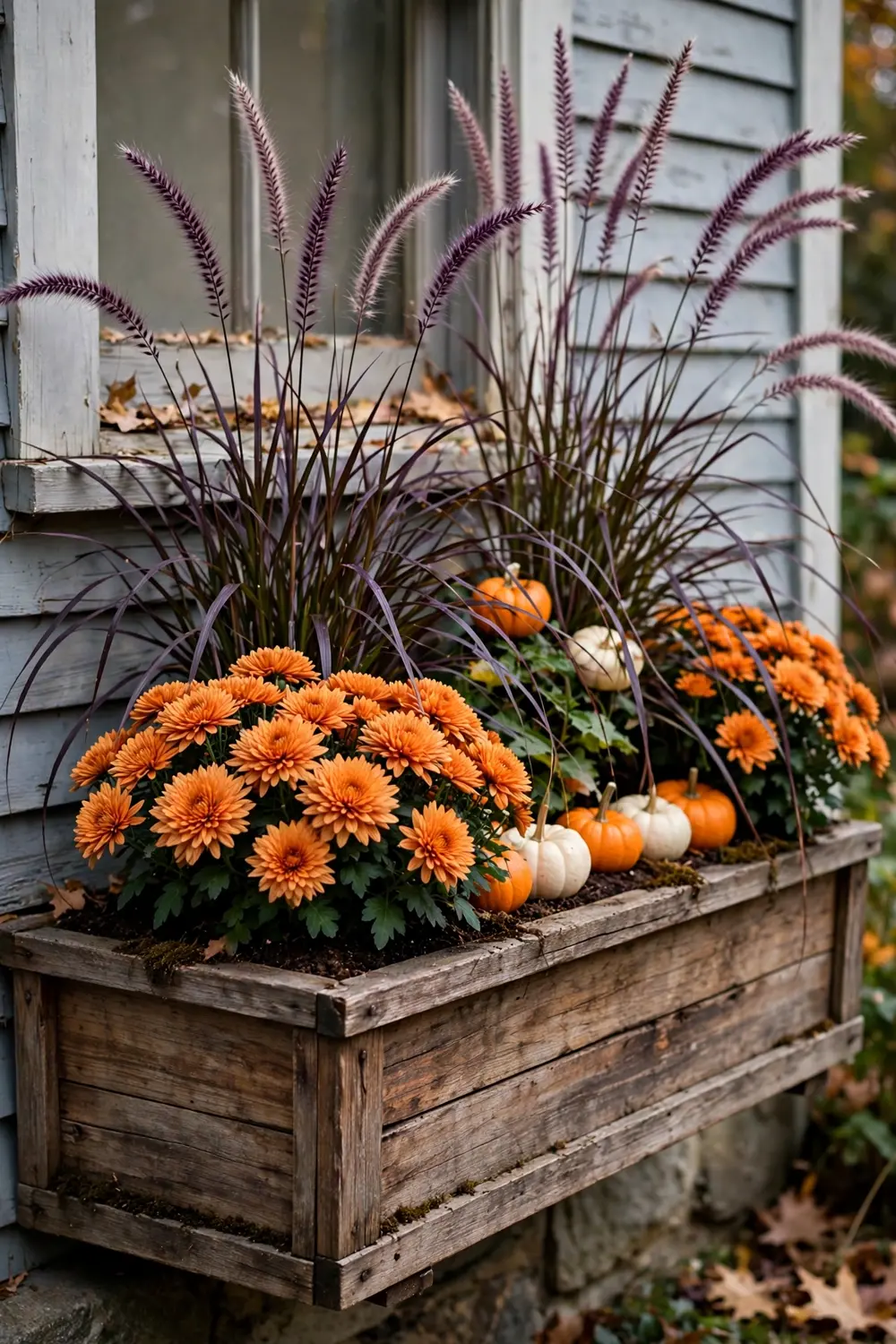
This is the combo everyone recognizes as fall, and it works because the colors are doing all the heavy lifting. Buy your mums with tight buds, not open blooms, so you get four to six weeks of color instead of ten days. Tuck two or three mini pumpkins (orange and white mix well) into the soil between plants so they sit at bloom height.
Try this: water mums from the base, not the blooms. Wet flowers brown fast in cool weather. Cost: $$. Difficulty: easy.
2. Burgundy mums with purple fountain grass
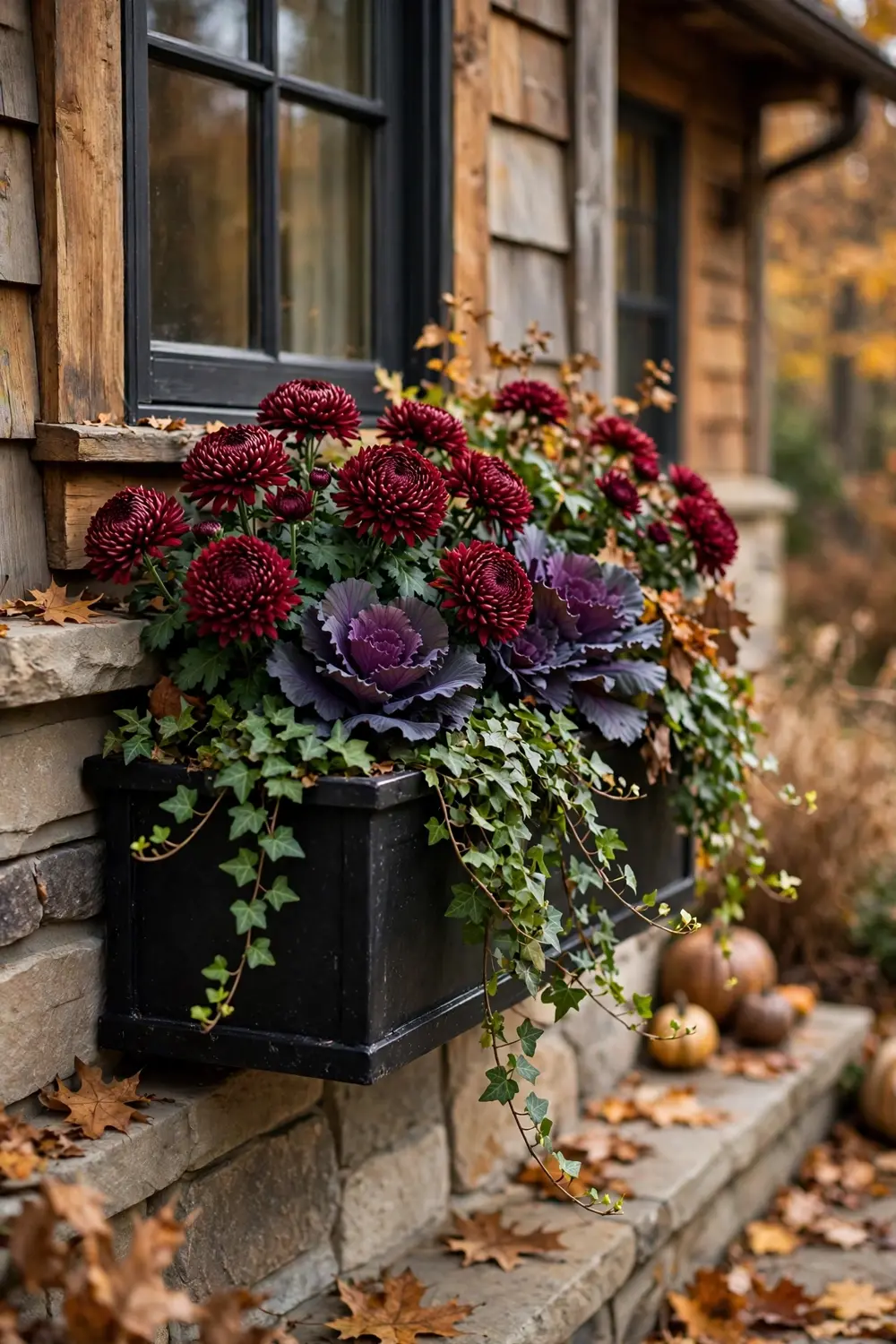
If orange feels too loud for your house color, go moody instead. Burgundy mums against a black or dark bronze box look expensive and intentional. One clump of purple fountain grass in the center gives the whole box height and movement, and its plumes catch the light on windy afternoons. The deep tones also hide fading blooms better than bright colors do.
Try this: deadhead spent mum flowers every few days to keep the color coming into November. Cost: $$. Difficulty: easy.
3. White pumpkins, purple pansies, and dusty miller

This one looks like a designer did it. White baby boo pumpkins, purple pansies, and silvery dusty miller read as calm and polished, especially against dark siding or brick. Pansies handle light frost without blinking and often bloom again in spring, so this box keeps paying you back. The silver foliage ties the white and purple together.
Try this: use an odd number of baby boo pumpkins (three or five) for a natural look. Cost: $$. Difficulty: easy.
4. Ornamental kale and cabbage with trailing ivy
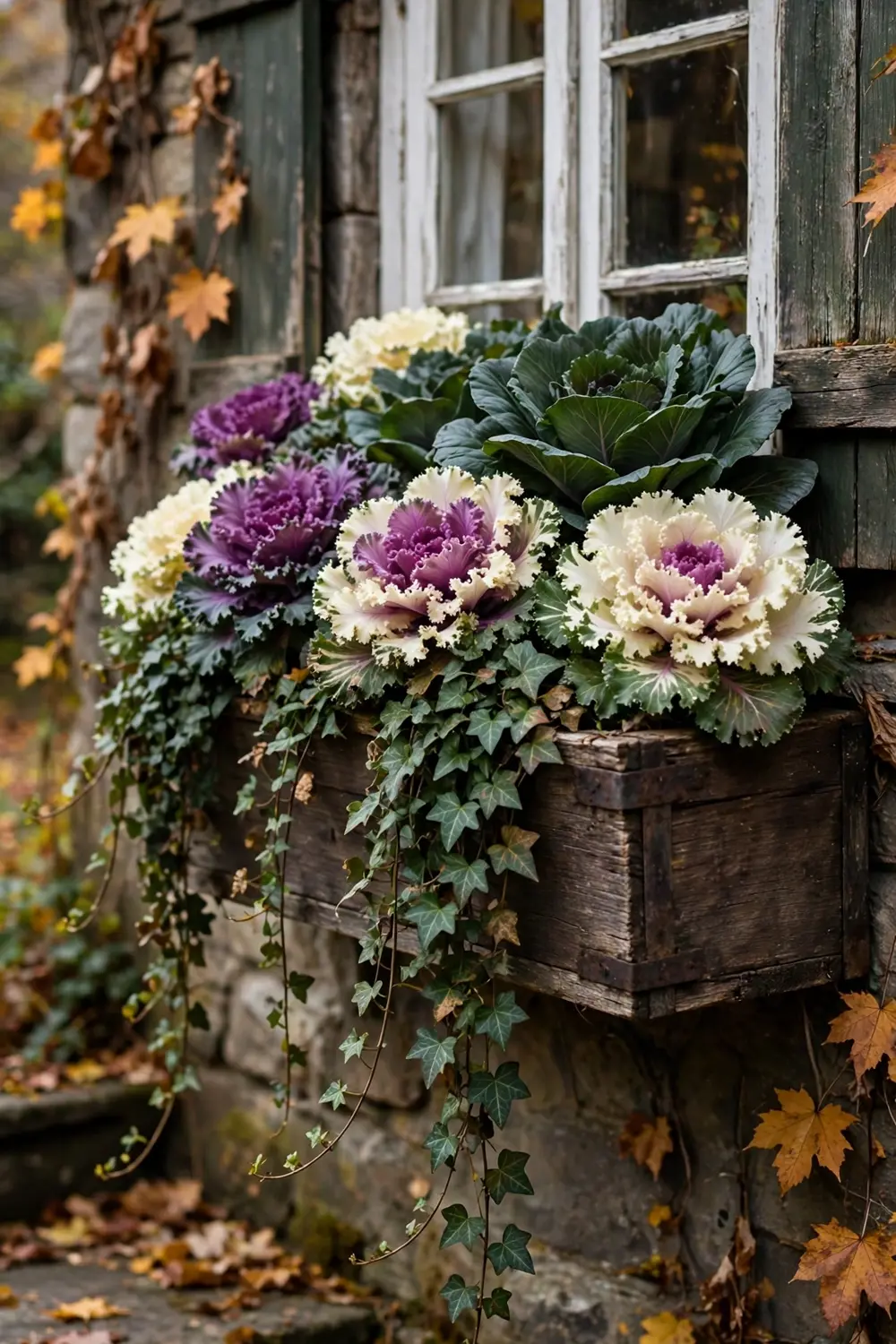
Ornamental kale is the lowest-maintenance fall plant you can buy. Its colors actually get richer after the first frost, while your neighbor’s mums are turning crispy. Mix purple, cream, and pink rosettes, then let plain trailing ivy spill over the front edge to soften the box. No deadheading, no fussing, no replanting mid-season.
Try this: plant kale slightly high in the box so water drains away from the crown. Cost: $$. Difficulty: easy.
5. Heirloom gourds with dried corn stalks

Skip flowers entirely and go full harvest. Bumpy, warty heirloom gourds in green, yellow, and orange are sculptural enough to carry a box on their own. Stand three to five dried corn stalks behind them for height, and tuck pinecones into the gaps. This arrangement costs almost nothing if you grow gourds or buy them at a farm stand, and it never wilts.
Try this: press a wooden skewer into each gourd’s base and push it into the soil so they stay upright in wind. Cost: $$. Difficulty: easy.
6. Red celosia and golden marigolds

For early fall when it is still warm, celosia and marigolds beat mums. Celosia’s feathery plumes come in red, orange, and pink, and they keep blooming in heat that makes mums sulk. Golden marigolds fill the middle, and lime green sweet potato vine trails over the front for contrast. Plant this box in early September and it bridges the gap until true cool-season plants take over.
Try this: pinch marigold seed heads to stretch blooms another two weeks. Cost: $$. Difficulty: easy.
7. Yellow mums with ornamental peppers
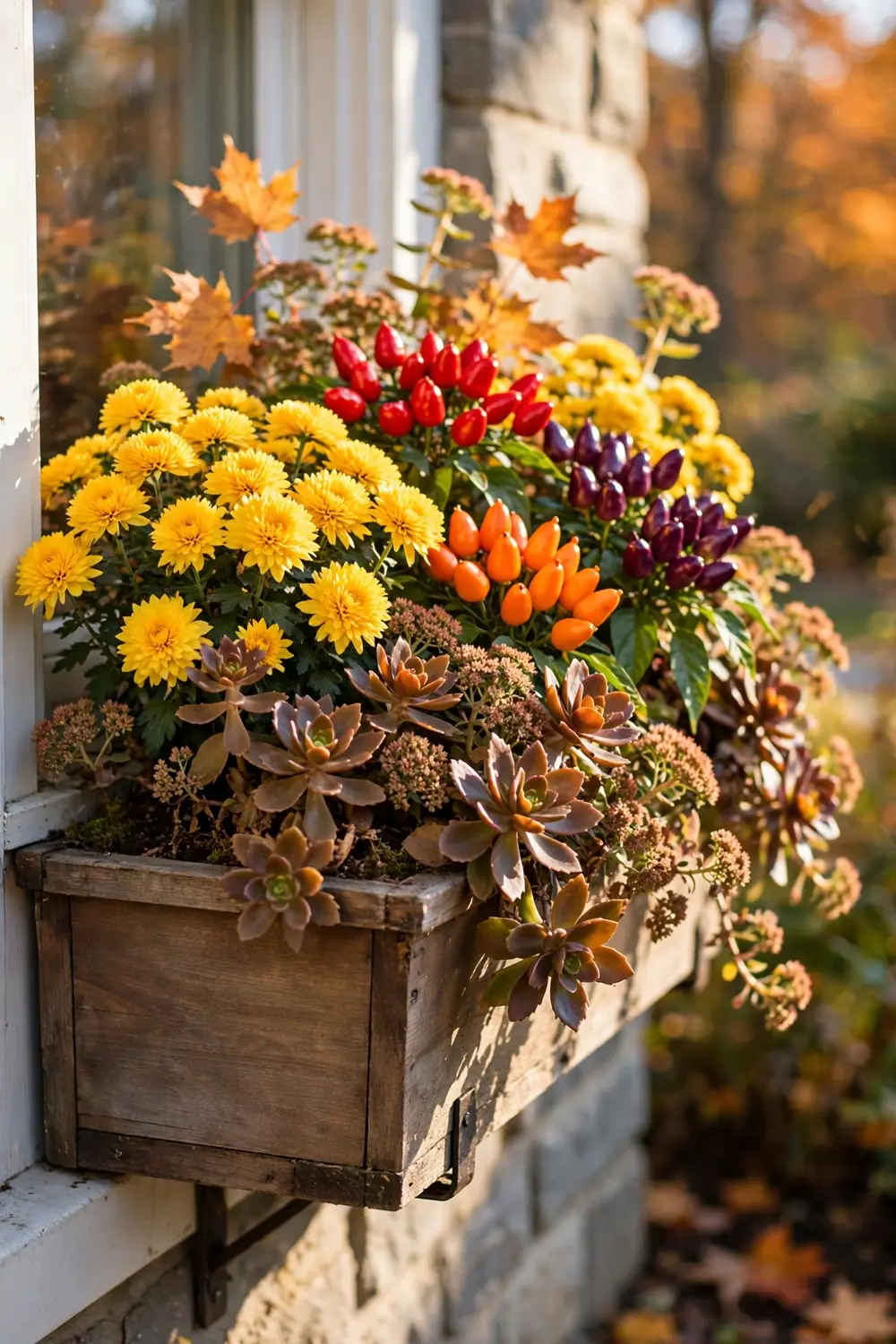
Ornamental peppers are the most underrated fall plant. The little fruits come in red, orange, purple, and yellow on one plant, and they hold their color for months. Pair them with golden yellow mums and bronze sedum, and the box glows in afternoon sun. A heads-up: these peppers are extremely hot and purely decorative, so keep them away from curious kids.
Try this: place peppers toward the back where their upright fruit clusters show over the mums. Cost: $$. Difficulty: easy.
8. All-white autumn box
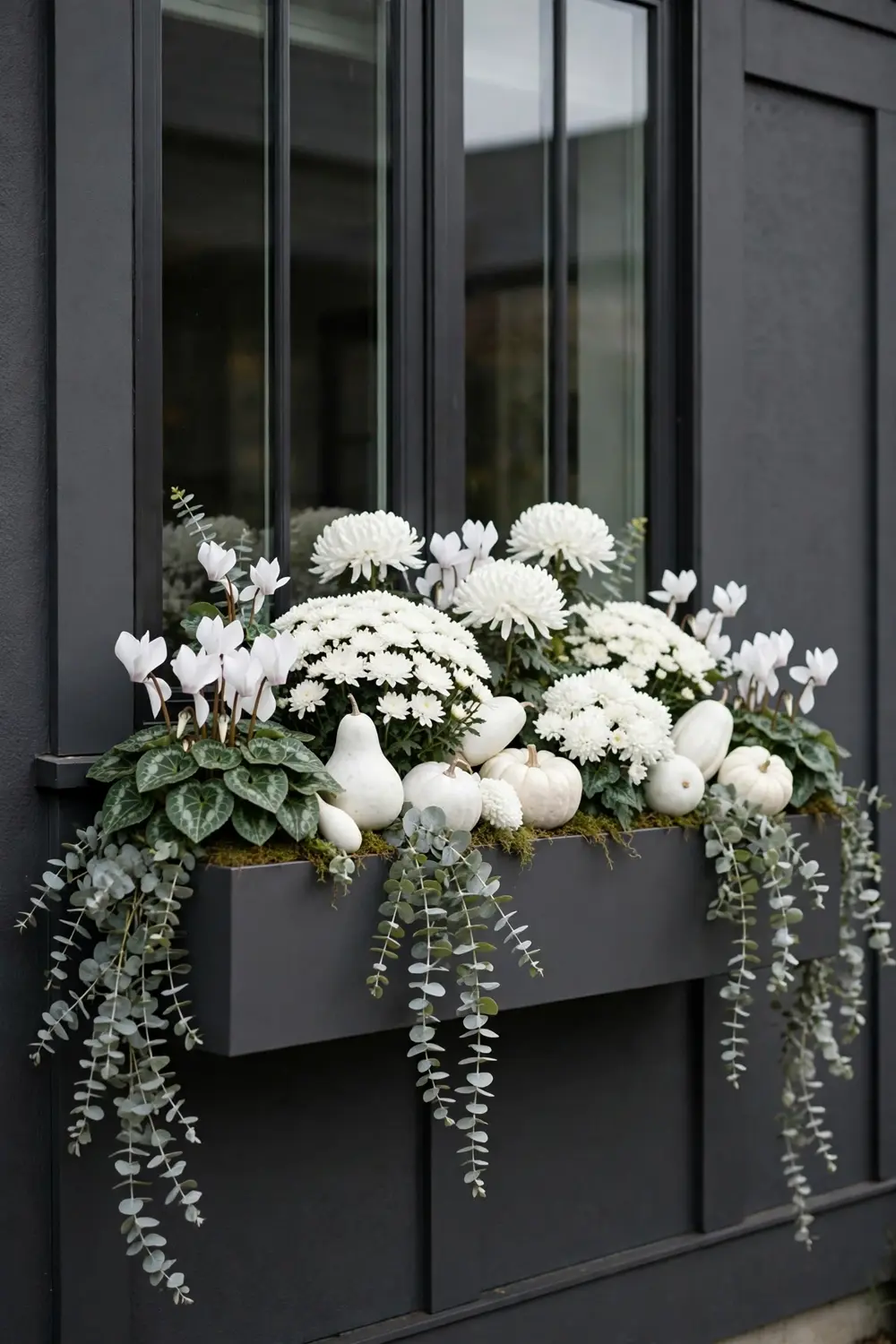
White is having a moment in fall decor, and it translates beautifully to window boxes. White mums, white gourds, white cyclamen, and trailing eucalyptus make a box that looks clean against any house color. It also photographs well for anyone pinning their porch. The trick is mixing textures (blooms, smooth gourds, fine foliage) so all-white does not read as flat.
Try this: add one silvery plant like dusty miller so the whites separate visually. Cost: $$. Difficulty: easy.
9. Birch branches and pinecones

Forage your height instead of buying it. Tall white birch branches pushed into the back corners give a box instant architecture, and they cost nothing if you have birch or can buy bundles at a craft store. Fill the middle with red mums, spruce sprigs, and gathered pinecones. This look carries straight into December with barely any changes.
Try this: cut branches to three different heights so they fan out instead of standing in a row. Cost: $$. Difficulty: easy.
10. Asters and sedum for pollinators

Fall is when migrating pollinators are hungriest, and a window box of asters, sedum, and goldenrod becomes a fueling station. New England asters bloom in purple and pink right when little else does. Sedum’s flat flower heads give bees a landing pad, and goldenrod adds soft yellow plumes. You get a box that is pretty and genuinely useful to wildlife.
Try this: skip the pesticides on this box entirely. Bees will find it within days. Cost: $$. Difficulty: easy.
11. Burgundy coleus and creeping jenny
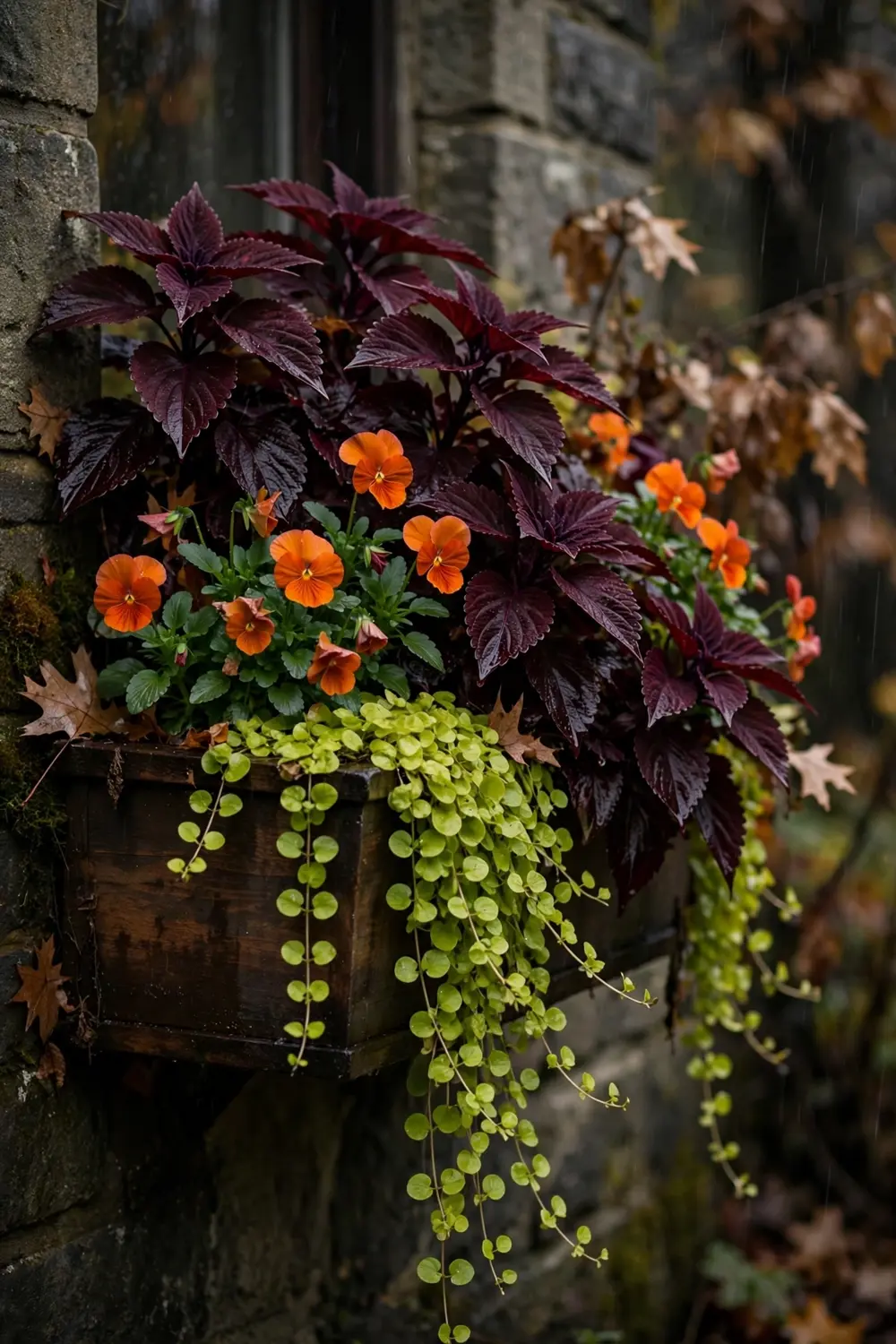
Coleus is not just a summer plant. Burgundy and rust varieties hold their color into fall and give you foliage depth that flowers cannot. Pair dark coleus with bright orange pansies, then let lime green creeping jenny cascade over the front. The contrast between the near-black leaves and the lime trailer is what makes this box stop traffic.
Try this: take coleus cuttings before the first hard frost to root indoors for next year. Cost: $$. Difficulty: easy.
12. Ornamental grasses with fairy lights

This is the box that gets noticed after dark. Tall ornamental grasses give you height and movement, amber mums fill the base, and a string of battery fairy lights woven through the grasses turns the whole thing into a lantern at dusk. Use a timer so the lights come on at sunset and you never have to think about them.
Try this: choose warm white lights, not multicolor. Warm light flatters fall colors. Cost: $$. Difficulty: easy.
13. Apples and cinnamon harvest box

Perfect for a kitchen window. Nestle glossy red apples among bronze mums, add bundles of cinnamon sticks tied with twine, and hang a few dried orange slices from short branches. It smells faintly amazing on warm afternoons and looks like a harvest market display. Swap the apples every two weeks so they stay firm and fresh-looking.
Try this: use crabapples if you can find them. They are smaller and hold up longer outdoors. Cost: $$. Difficulty: easy.
14. Succulent fall box for warm climates

If you live where October still feels like summer, mums will struggle. Succulents will not. Pack a box with rosette succulents in dusty rose, blue-gray, and copper tones, top the soil with copper-colored gravel, and add two small pumpkins for the seasonal nod. Water every ten days or so. This box looks good for months with almost no attention.
Try this: bring the box under cover if a cold snap is forecast. Succulents hate wet cold. Cost: $$. Difficulty: easy.
15. Dried hydrangea and wheat
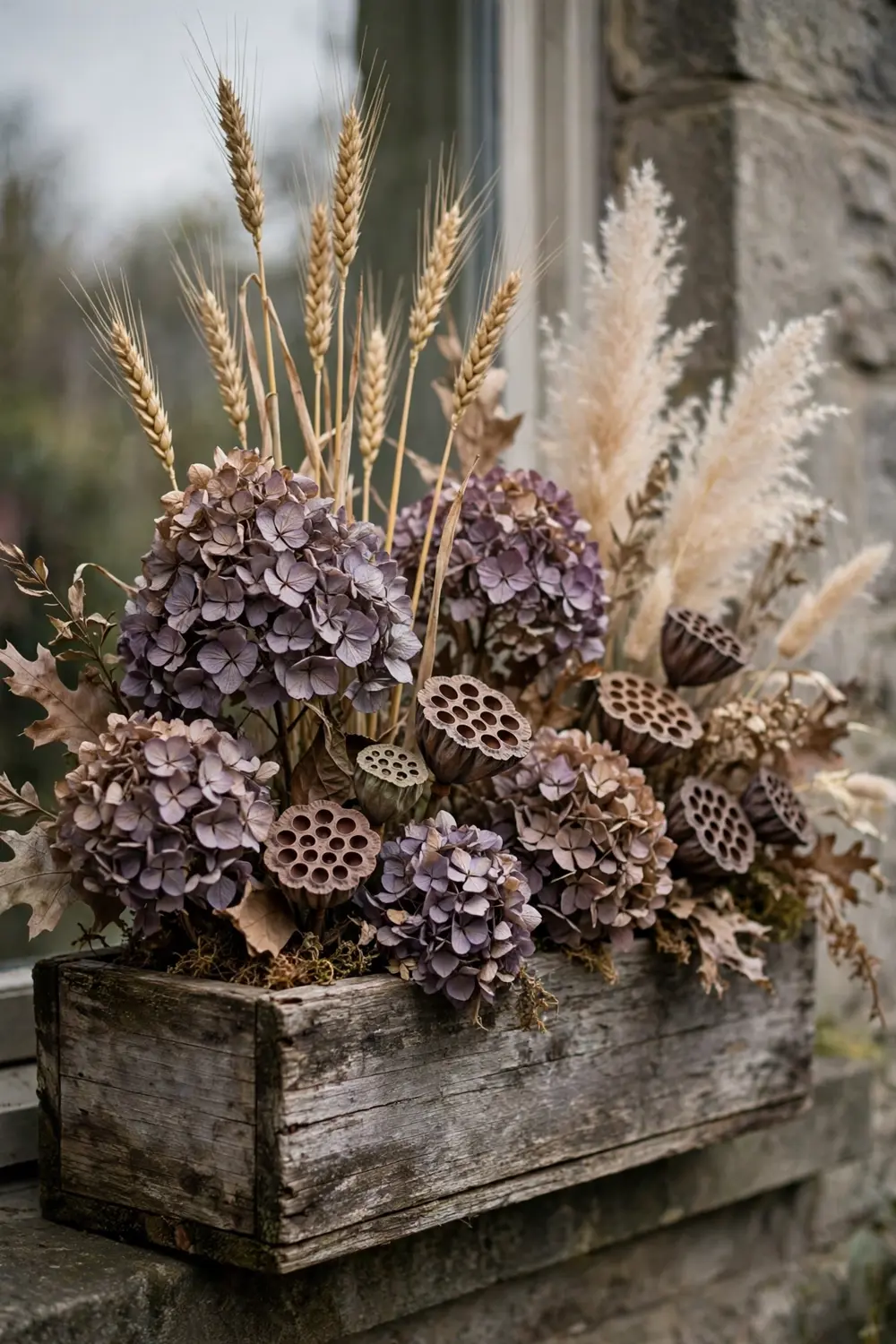
The cheapest box on this list is also one of the prettiest. Cut hydrangea heads from your own bushes as they fade to mauve and tan, add tall wheat stalks and pampas plumes, and you have a full box for nearly zero dollars. Dried arrangements do not need watering, do not wilt, and look good straight through winter with no changes.
Try this: spray dried hydrangeas lightly with hairspray to keep the petals from shattering in wind. Cost: $$. Difficulty: easy.
16. Chrysanthemum ombre

One flower, five shades, zero effort wasted on coordination. Buy mums in a gradient (cream, peach, coral, rust, burgundy) and plant them in order across the box. The ombre effect looks deliberate and modern, and it works with any house color because the warm tones blend into each other. This is a great trick if choosing color combos stresses you out.
Try this: place the darkest shade in the center and fade outward for a focal point. Cost: $$. Difficulty: easy.
17. Purple and orange contrast

Purple and orange are opposites on the color wheel, which is why this combo pops so hard from the street. Deep purple ornamental cabbage and violet pansies against vivid orange marigolds and mini pumpkins make a box that reads clearly from the curb. Keep the ratio about two-thirds orange to one-third purple so it stays festive instead of chaotic.
Try this: repeat the purple in at least two spots so it looks intentional, not accidental. Cost: $$. Difficulty: easy.
18. Evergreens that carry into winter
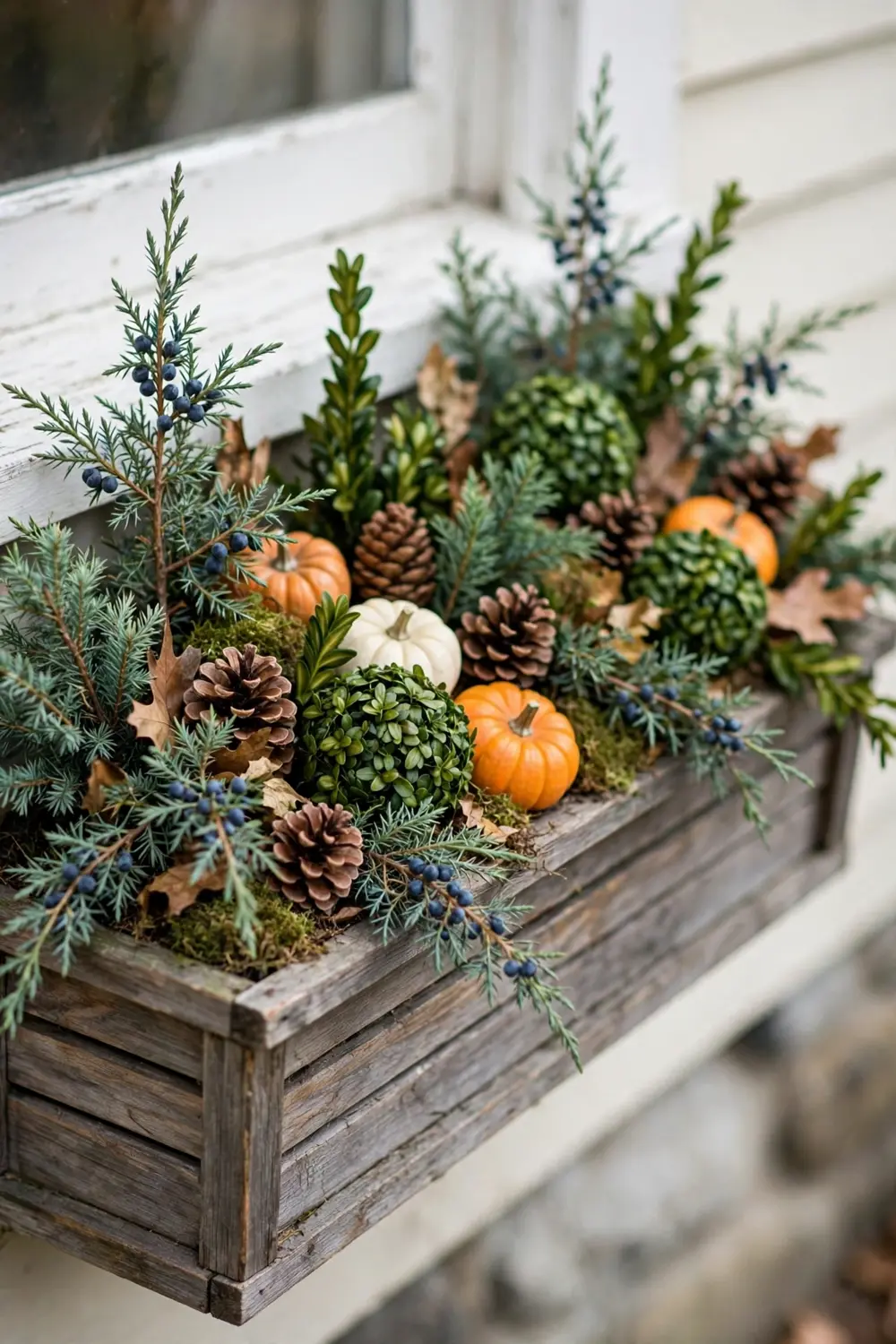
Plant once, decorate twice. Build your box around small dwarf evergreens, boxwood balls, and juniper, then add pumpkins and pinecones for fall. After Thanksgiving, pull the pumpkins and swap in red berries or a bow, and the same box becomes your winter display. You save the cost and effort of a full replant in December.
Try this: water evergreens well before the ground freezes so they go into winter hydrated. Cost: $$. Difficulty: easy.
19. Vintage crate and galvanized buckets
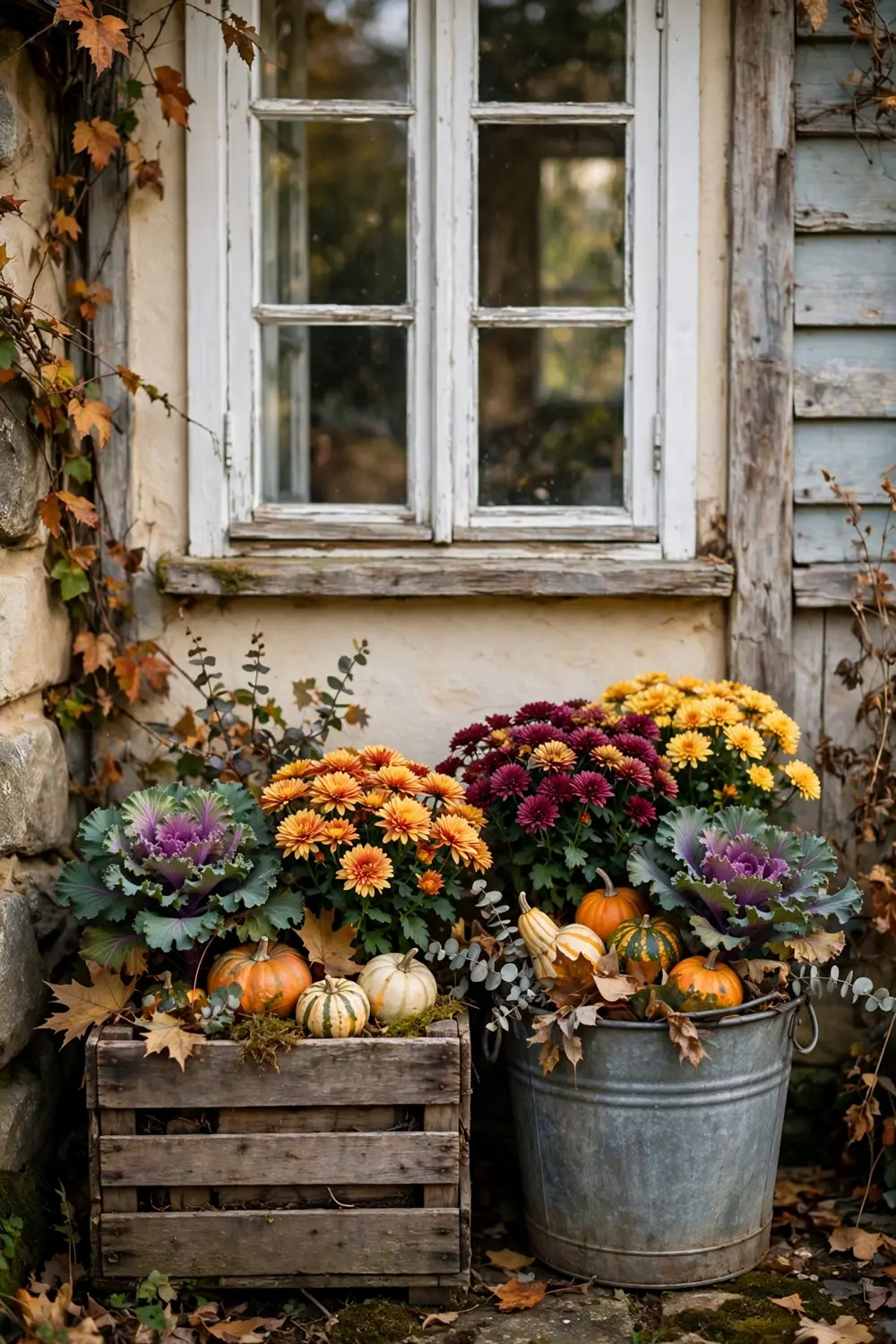
No built-in window box? No problem. A weathered wooden crate or a pair of galvanized buckets under the window, filled with mums, ornamental kale, and gourds, gives you the same curb appeal with more character. Line metal buckets with coco fiber or drill drainage holes so roots do not sit in water. This look suits farmhouse and cottage exteriors especially well.
Try this: raise buckets on bricks so the arrangement sits at true window-box height. Cost: $$. Difficulty: easy.
20. Layered with spring bulbs
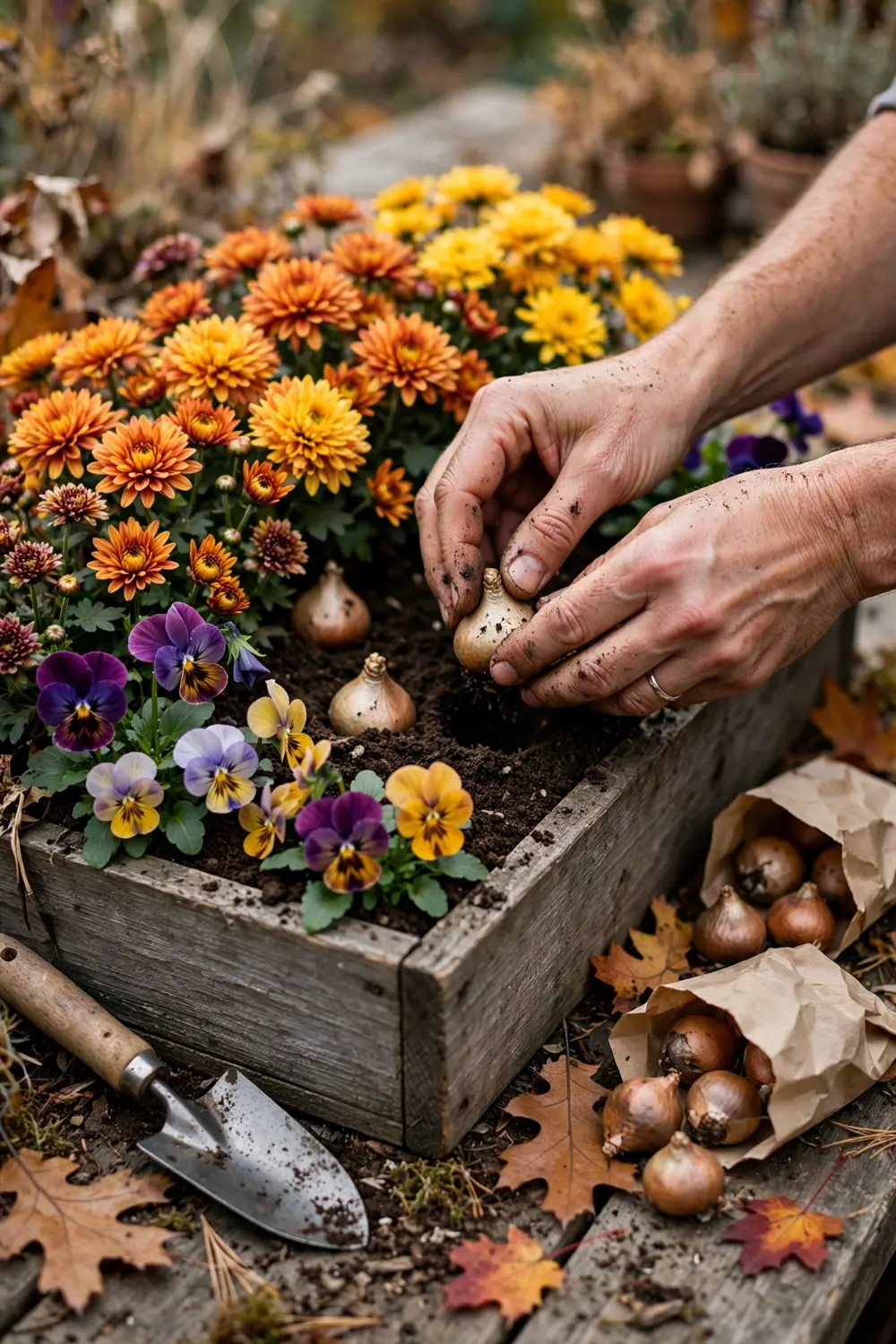
This is the planner’s box. When you plant your fall arrangement, tuck daffodil, tulip, and crocus bulbs six inches deep under the mums and pansies. The fall display covers them all season, and in March the bulbs push up through the fading plants for a free spring show. It takes five extra minutes in October and pays off for months.
Try this: label which box has bulbs so you do not dig them up during spring cleanup. Cost: $. Difficulty: easy.
How to arrange a fall window box like a designer
Every good box follows the same formula. Put one tall “thriller” in the back center (fountain grass, corn stalks, birch branches). Fill the middle with “fillers” (mums, kale, peppers). Finish with “spillers” along the front edge (ivy, creeping jenny, sweet potato vine). That is it. If your box looks flat, you are missing height. If it looks chaotic, you are missing repetition. Pick three to four plant types and repeat them instead of buying one of everything.
Soil matters more in fall than summer because roots are fighting cold. Dump out tired summer soil, refill with fresh potting mix, and check that drainage holes are clear. Water deeply once after planting, then check the top inch of soil before watering again. Cool air slows evaporation, so fall boxes usually need water every two to three days, not daily. For more outdoor styling ideas, see these small front porch decor ideas that pair well with a dressed-up window.
Fall window box mistakes to avoid
The most common mistake is buying mums in full bloom. They look great at the nursery and fade within two weeks. Buy tight buds. The second mistake is overcrowding. Plants need air circulation in cool, damp weather or they rot. Leave two inches between root balls. The third is skipping drainage. A box with no drainage holes turns into a swamp after one October rainstorm. Drill holes if you have to.
Two more to watch. Do not plant tender summer leftovers and hope for the best; a single frost kills them and the box looks worse than empty. And check your USDA hardiness zone before buying perennials you hope will survive winter in a box. Above-ground boxes freeze harder than the ground does, so treat zone ratings as one zone colder. If you enjoy reusing containers through the seasons, these summer front porch flower pot ideas show the same boxes styled for warm weather.
A quick note on pets and fall plants
A few classic fall plants are not pet-friendly. Chrysanthemums are the big one: they are toxic to dogs and cats if chewed, causing drooling, vomiting, and skin irritation. Ornamental peppers are extremely hot and will burn a curious mouth. If your window boxes sit low enough for a dog to reach, or if cats patrol your sills, choose pet-safe fillers like ornamental kale, asters, and pansies instead. The ASPCA toxic plant database lets you check any plant before you buy it. For more yard-wide inspiration, browse these rustic garden decor ideas to tie the whole space together.
Fall window box FAQ
When should I plant my fall window box?
Early to mid-September in most of the US, about six to eight weeks before your first expected frost. That gives roots time to settle before cold hits. In warm climates (zones 9 and 10), you can plant through October.
How often do fall window boxes need water?
Check the top inch of soil. In warm September weather, water daily. Once nights cool down, every two to three days is usually enough. Boxes under eaves get no rain, so do not assume a storm watered them.
Will mums survive frost in a window box?
A light frost (around 32°F) will not kill established mums, especially if you cover the box overnight with a sheet. A hard freeze in the low 20s will finish them. Buying mums with tight buds in September gives you the longest show.
Can I reuse the soil from my summer window box?
Yes, but refresh it. Mix in a third fresh potting soil or compost, since summer plants used up most of the nutrients. If last season had disease problems, replace the soil entirely.
What is the best way to arrange plants in a window box?
Tall plants in the back, medium fillers in the middle, trailing plants along the front edge. Repeat three to four plant types rather than using one of everything, and leave two inches between root balls for air flow.
Are fall window box plants safe for pets?
Not all of them. Mums are toxic to dogs and cats, and ornamental peppers can burn mouths. Ornamental kale, pansies, asters, and dusty miller are safer choices for low boxes pets can reach. Check the ASPCA plant database before buying.
Start with one box this weekend and see how easy it is. I redid mine in under an hour with three bags of plants from the garden center, and the whole front of the house looked different by dinner. Fall is short, so plant now and enjoy it.


