


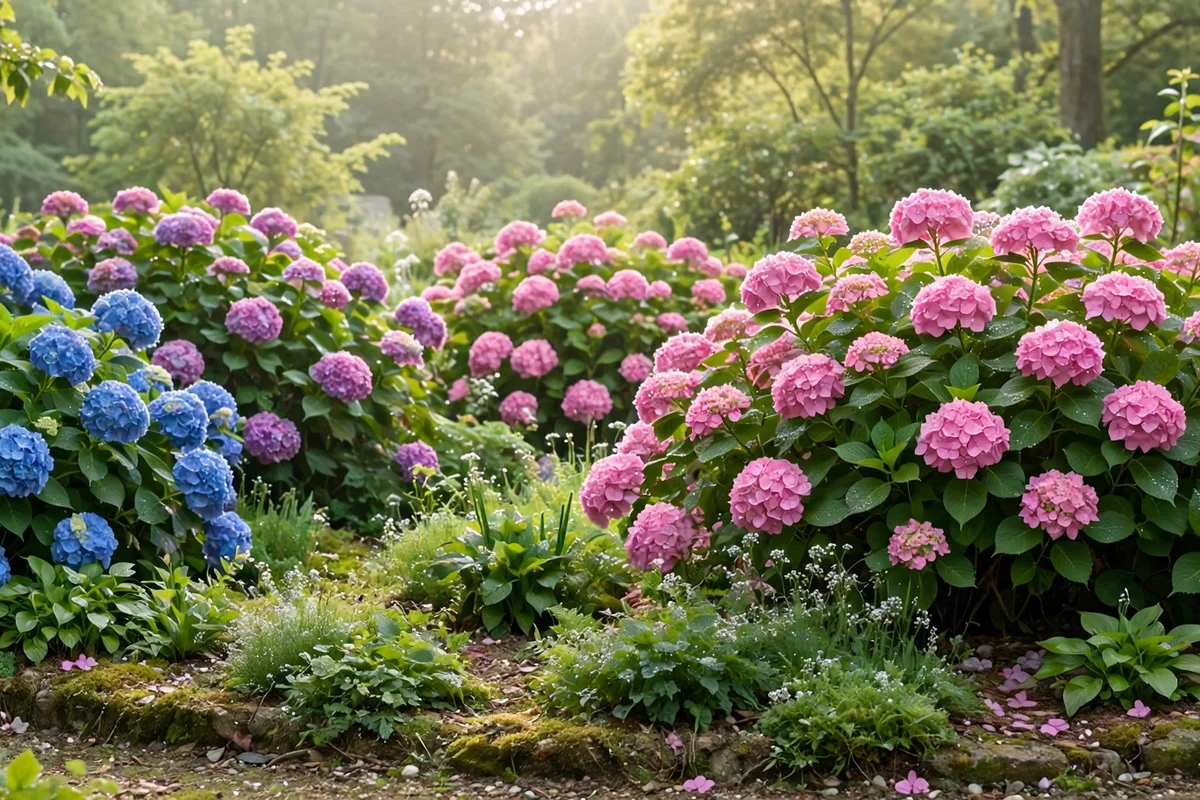
A yard full of hydrangeas looks like it belongs in a magazine, but most gardens get there by accident: one lonely shrub by the mailbox, another half-shaded under a tree, none of them quite thriving. I planted my first three hydrangeas wherever there was an empty hole, and they sulked for two years. The difference between a struggling shrub and a garden that stops traffic is placement, pairing, and picking the right type for each spot.
These 18 hydrangea garden ideas cover every corner of a yard, from walkway edging and privacy hedges to containers, shade nooks, and evening lighting. Each idea includes a “Try this” tip and a difficulty label, plus the hydrangea type that works best. Whether you have a big backyard or a small patio, you will find a plan that fits your space and your sun.
- Match the hydrangea type to the spot: paniculatas for sun, bigleaf and oakleaf for shade, climbing hydrangea for walls and arches.
- Plant in groups of three or five, spaced for mature size, for a designed look instead of scattered singles.
- Only bigleaf hydrangeas (macrophylla) change bloom color with soil pH: acidic soil gives blue, alkaline gives pink.
- Water deeply and mulch heavily the first year; most hydrangeas fail from drought stress, not disease.
- Pruning timing depends on the type, so identify your hydrangea before you cut.
1. Edge a walkway with endless summer blues
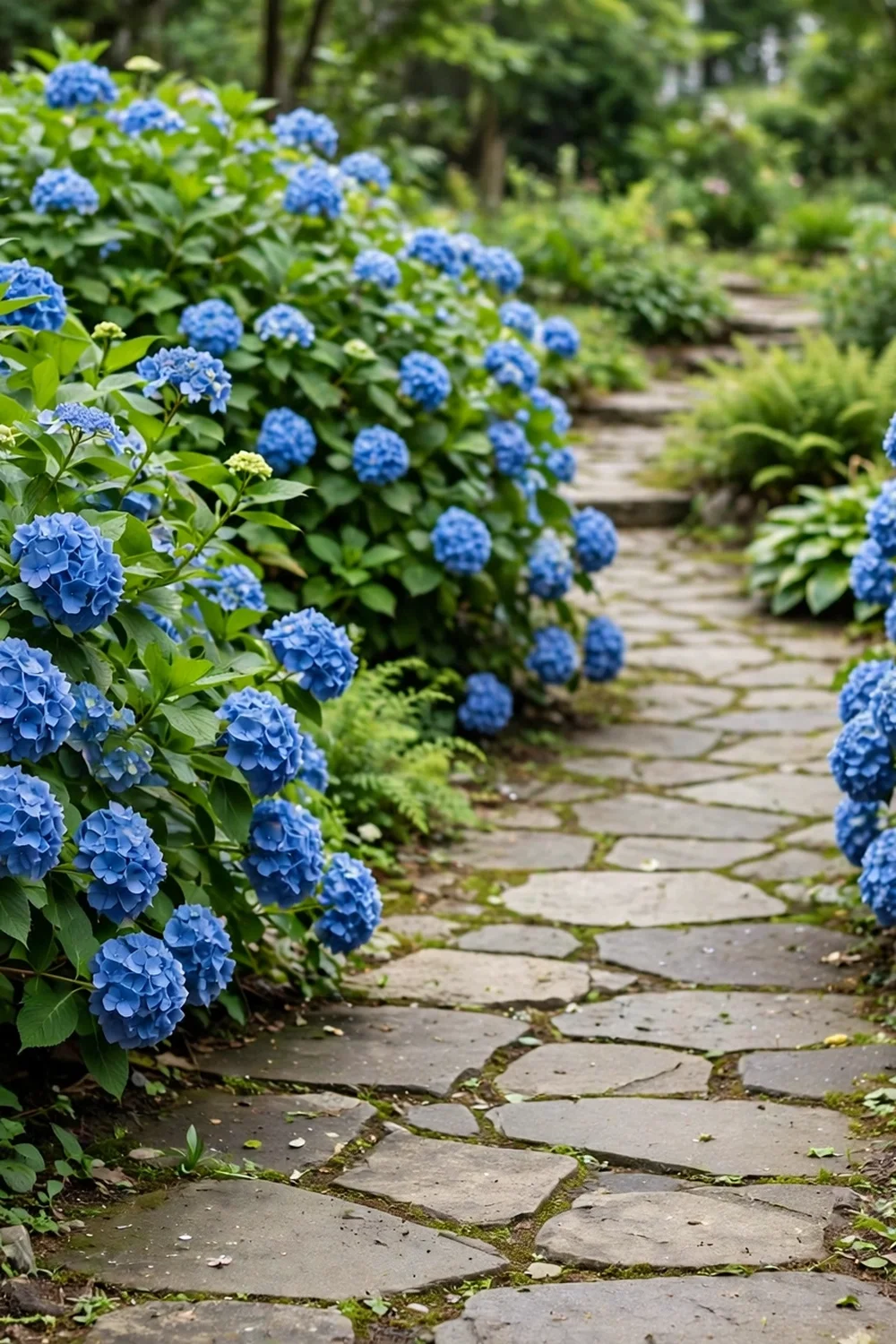
A row of blue mophead hydrangeas along a path is the fastest way to make a garden feel intentional. Use reblooming bigleaf types like ‘Endless Summer’ so you get flowers from early summer into fall, not just one June flush. Space plants 3 to 4 feet apart to allow for mature width, and keep them at least 2 feet back from the path edge so blooms do not block the walk. Acidic soil keeps the blue color strong; test your soil pH and add aluminum sulfate if blooms drift pink. A thick layer of pine bark mulch helps keep soil acidic and moist.
Try this: Plant in odd numbers and curve the row slightly. A gentle curve looks far more natural than a ruler-straight line. Difficulty: Easy. Cost: $$
2. Build a low-maintenance privacy hedge

For privacy with flowers, a hydrangea hedge beats a fence. Panicle hydrangeas like ‘Limelight’ or ‘Quick Fire’ grow 6 to 8 feet tall, handle full sun, and bloom on new wood, so a bad winter never costs you a season of flowers. Plant them 4 to 5 feet apart in a single row for a loose screen, or stagger two rows for faster coverage. They lose their leaves in winter, so pair them with evergreens behind if you need year-round screening. Prune in late winter to shape; paniculatas forgive hard pruning and bloom anyway.
Try this: Choose ‘Little Lime’ (3 to 5 feet) if a full-size hedge would swallow a small yard. Difficulty: Easy. Cost: $$
3. Train a climbing hydrangea over an arch
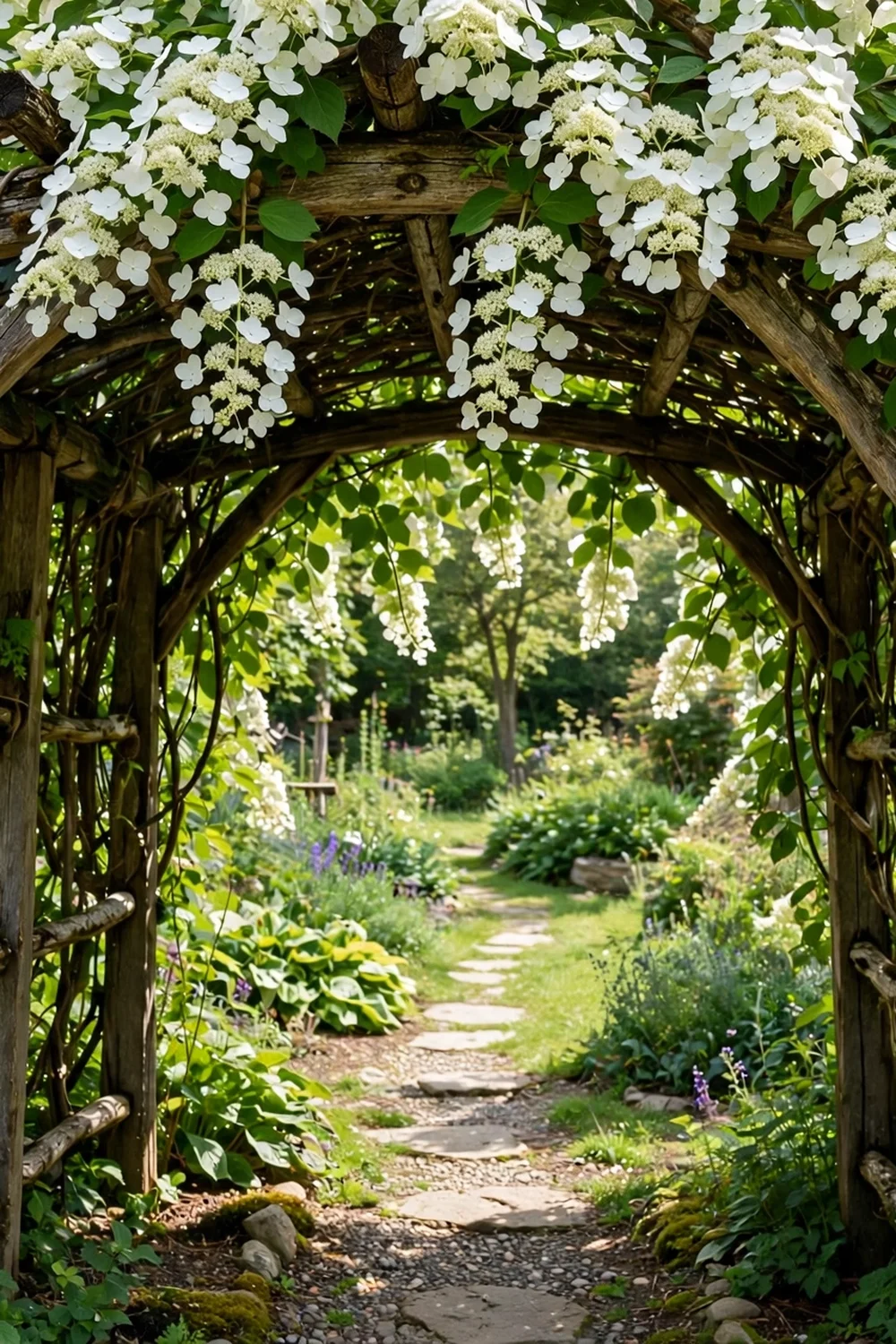
Climbing hydrangea (Hydrangea anomala petiolaris) turns an ordinary arch, pergola, or bare wall into a flowering doorway. It climbs with aerial rootlets, so give it a sturdy wooden or metal structure and guide the young stems for the first two seasons. Be patient: it spends its first few years building roots and then takes off. White lacecap blooms appear in early summer and the peeling cinnamon bark looks good in winter. One plant can cover a 6-foot arch in 5 to 7 years. It prefers part shade and consistent moisture while establishing.
Try this: Tie new stems loosely to the arch with soft garden twine until the rootlets grip on their own. Difficulty: Moderate. Cost: $$
4. Fill vintage pots on the patio
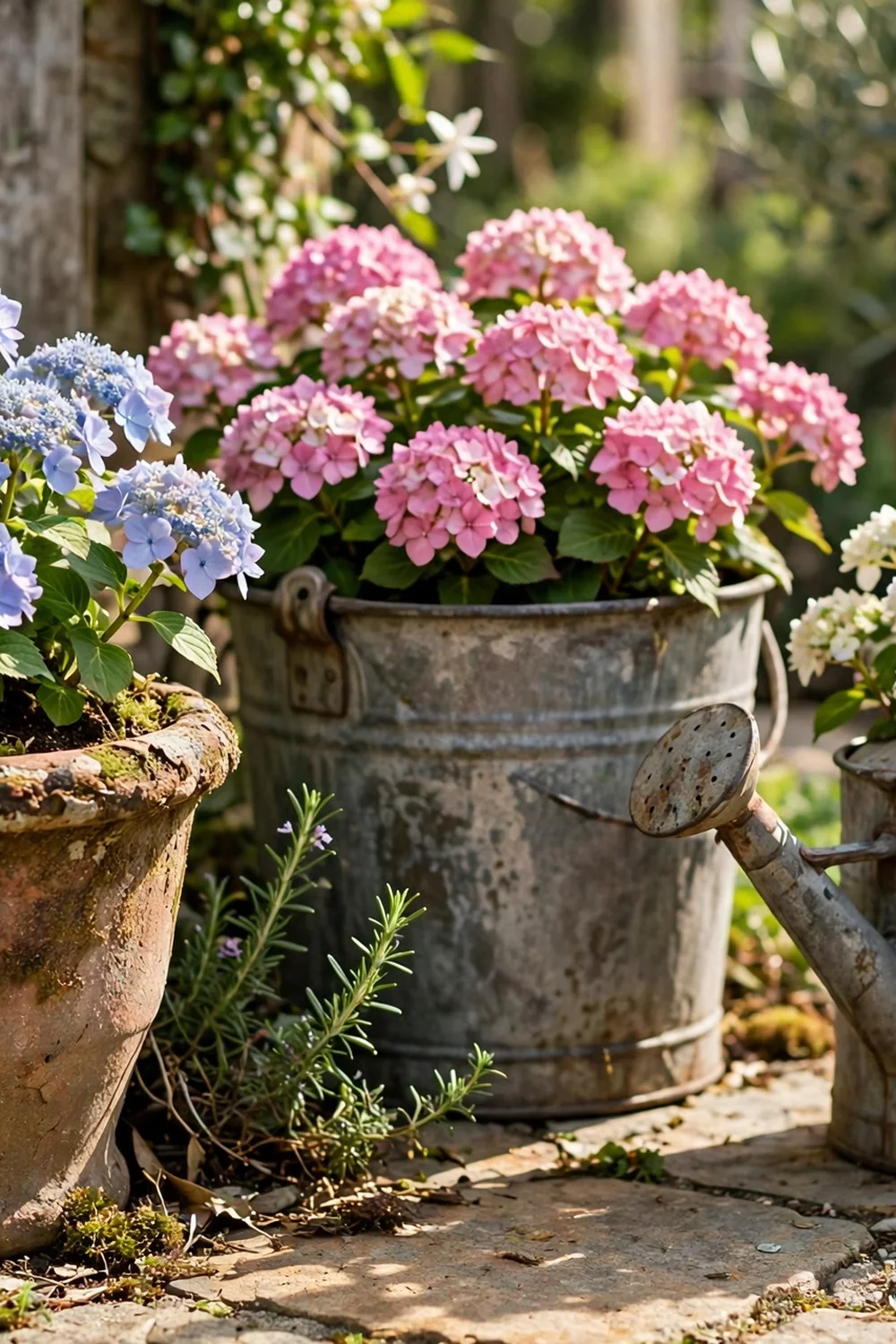
No garden beds? Hydrangeas do beautifully in containers, and a cluster of pots makes a patio feel like a garden. Choose compact varieties like ‘Bobo’ or ‘Buttons ‘n Bows’ that stay 2 to 3 feet tall. Use the largest pots you can manage, at least 16 inches across, because containers dry out fast and hydrangeas are thirsty. A mix of quality potting soil with compost holds moisture well. Water daily in summer heat. Group pots in odd numbers and vary the heights for a collected look. In cold climates, move pots to a sheltered spot or bury them in the ground for winter.
Try this: Set pots on wheeled plant caddies so you can chase the shade on scorching afternoons. Difficulty: Easy. Cost: $$
5. Make a woodland shade nook

That shady corner under the trees where grass refuses to grow is prime hydrangea territory. Oakleaf hydrangeas (Hydrangea quercifolia) thrive in dappled shade and give you four seasons: white summer blooms, red fall foliage, and peeling bark in winter. Underplant with ferns, hostas, and heuchera for layered texture. Keep new plantings watered through the first summer; tree roots compete hard for moisture. A 3-inch mulch layer of shredded leaves mimics the forest floor they love. This is the lowest-maintenance hydrangea planting you can make once it is established.
Try this: ‘Ruby Slippers’ stays compact at 3 to 4 feet, perfect for smaller shade gardens. Difficulty: Easy. Cost: $$
6. Soften a bare foundation

Foundation plantings hide plain concrete and make a house look settled. Hydrangeas work well here because they stay full and leafy from spring to fall. Plant them at least 3 feet from the wall so air circulates and you can get behind them for maintenance. Choose varieties that mature at the height of your windowsills, not above them; ‘Annabelle’ types stay around 4 feet. Mind the roof overhang: foundations under wide eaves stay dry, so run a soaker hose or drip line. Mulch well to keep soil cool against the warm wall.
Try this: Mix in one evergreen for every three hydrangeas so the foundation does not look bare in winter. Difficulty: Easy. Cost: $$
7. Plant a white moonlight garden
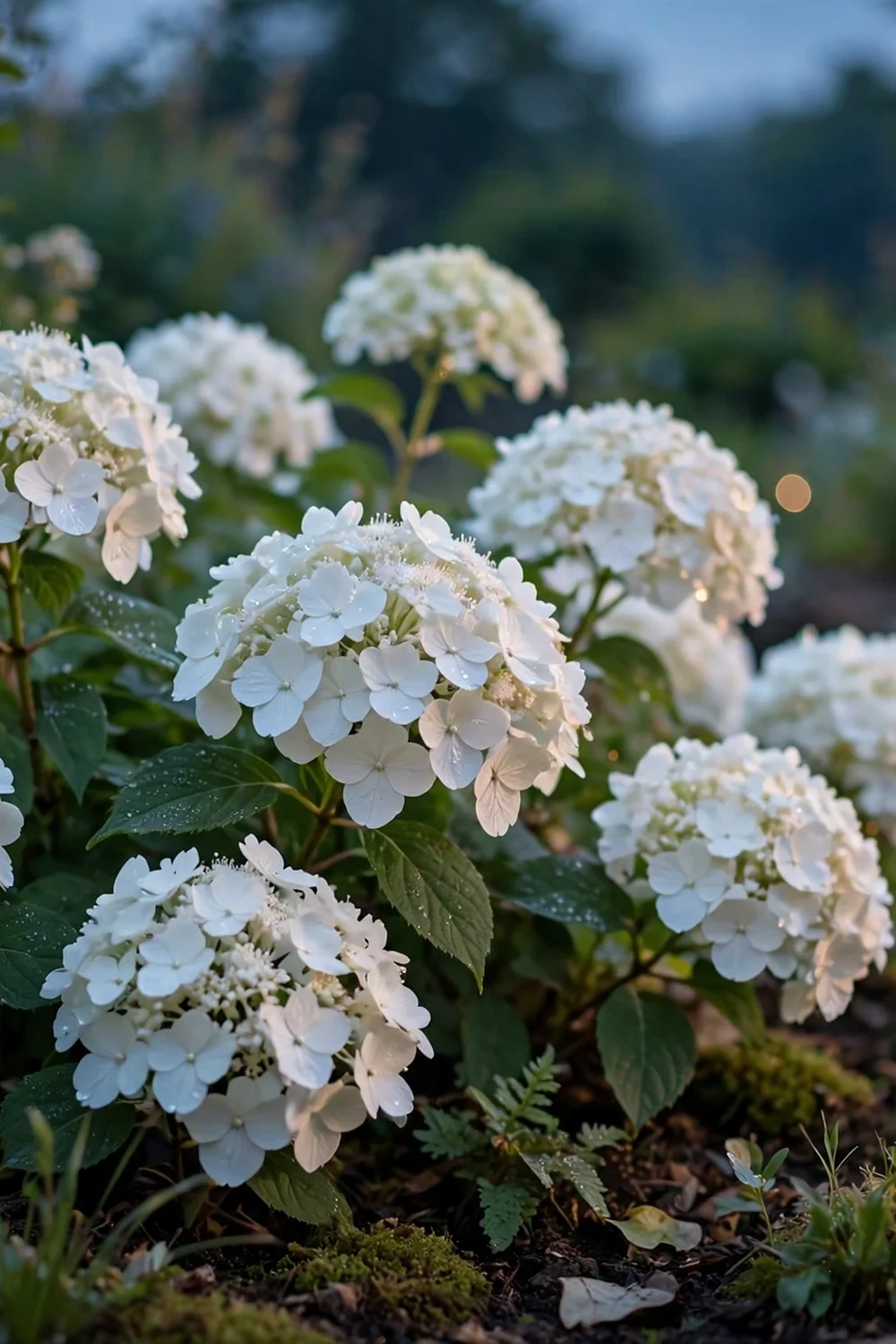
White hydrangeas glow at dusk, which makes them perfect for a garden you enjoy in the evening. Group ‘Annabelle’, ‘Incrediball’, or white paniculatas near a patio or bedroom window where you will see them after dark. White blooms show up even in deep shade and pair beautifully with silver foliage plants like dusty miller or Japanese painted fern. The effect is strongest when the bed has a dark backdrop, such as an evergreen hedge or a dark fence. Add one soft landscape light and the whole bed comes alive at night.
Try this: ‘Annabelle’ blooms on new wood, so even a harsh winter cannot ruin the show. Difficulty: Easy. Cost: $$
8. Frame the front door symmetrically
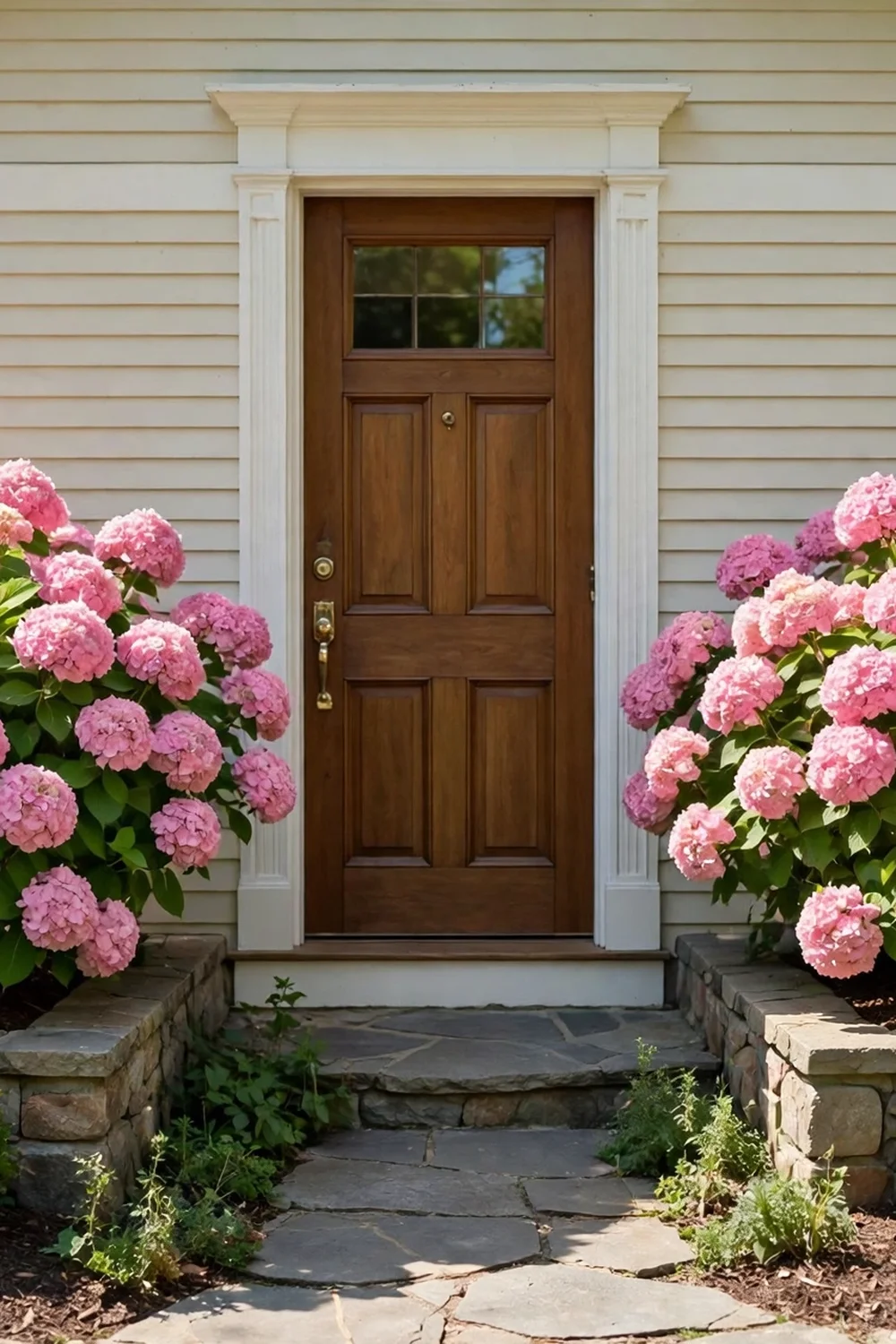
Two matching hydrangeas flanking the front door create instant curb appeal. Use the same variety on both sides and keep them pruned to the same size so the symmetry reads clearly. Dwarf bigleaf types work for smaller entries; full-size paniculatas suit larger homes. This is a formal look, so deadhead spent blooms and keep the mulch tidy. A pair of matching planters with compact hydrangeas achieves the same effect on a porch with no beds at all. Water consistently; entry plantings bake in reflected heat from walkways.
Try this: Pick one bloom color and stick to it. Mixed colors at the entry look busy instead of welcoming. Difficulty: Easy. Cost: $$
9. Build a cottage border with companions
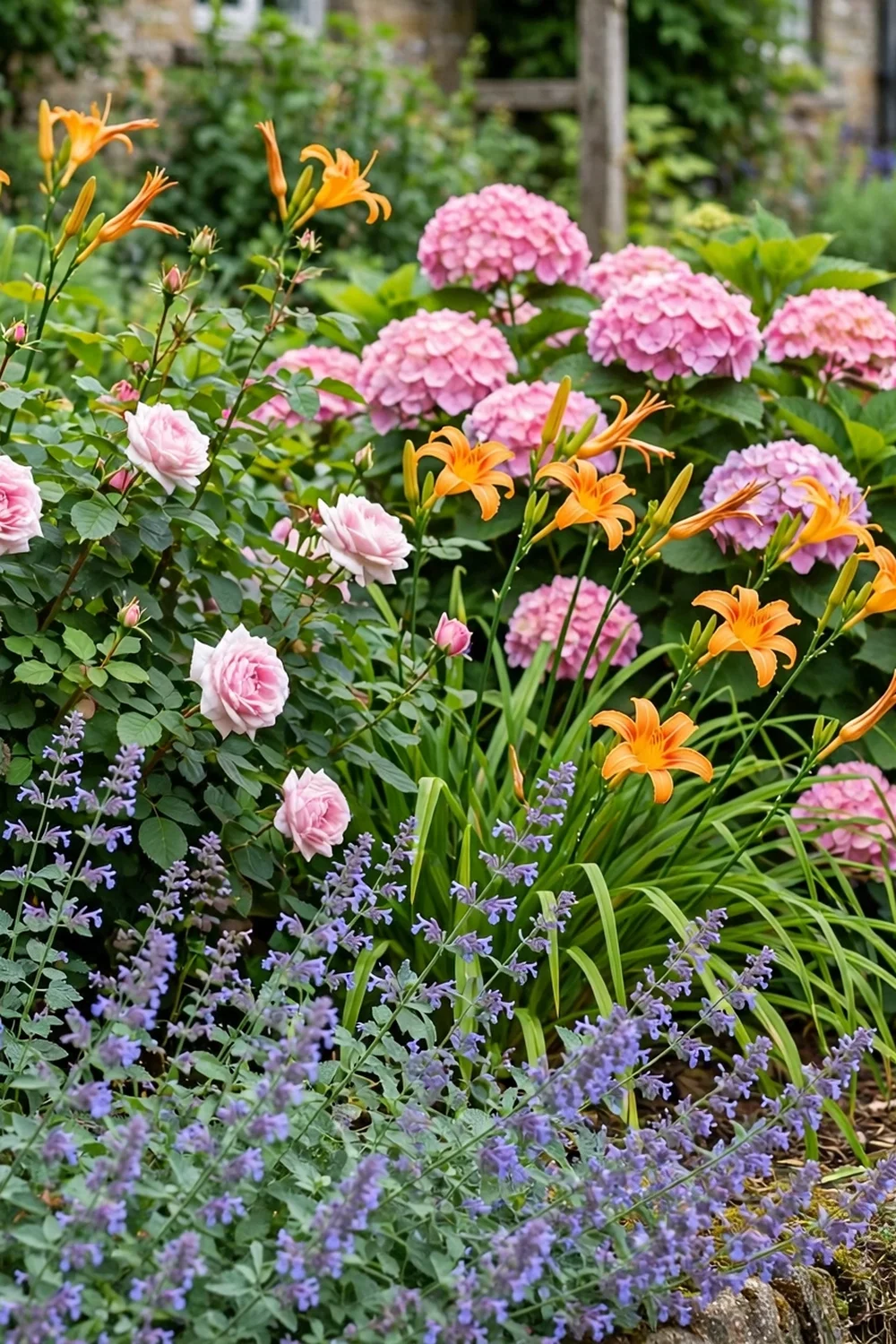
Hydrangeas anchor a cottage border the way roses anchor a formal one. Plant bigleaf or panicle hydrangeas as the middle layer, then fill around them with catmint, daylilies, roses, and hardy geranium for the loose, abundant cottage look. The hydrangeas give structure and long bloom time; the companions fill gaps and add contrasting flower shapes. Space hydrangeas 4 feet apart and let the perennials weave between them. Deadhead the companions to keep color coming while the hydrangeas carry the show from midsummer on.
Try this: Repeat one companion, like catmint, along the whole border to tie it together visually. Difficulty: Moderate. Cost: $$$
10. Back a sunny border with paniculatas

Most hydrangeas want afternoon shade, but panicle types love full sun, which makes them the perfect tall backdrop for a sunny perennial border. Plant ‘Limelight’, ‘Pinky Winky’, or ‘Vanilla Strawberry’ along the back, 5 to 6 feet apart. Their cone-shaped blooms start white or lime and age to pink and burgundy, giving you months of changing color. In front, use sun-loving perennials like coneflower, salvia, and ornamental grasses. Prune the hydrangeas back by a third in late winter to keep them from flopping over the smaller plants.
Try this: The blooms dry beautifully on the plant; leave them standing for fall and winter interest. Difficulty: Easy. Cost: $$
11. Stage tiered pots by the seating area

Cluster hydrangea pots at different heights around your outdoor chairs and the seating area feels like a garden room. Use plant stands, overturned crates, or steps to create tiers. Mix bloom colors in the same family, blues with purples or pinks with whites, for a coordinated look. Dwarf varieties stay proportionate to furniture. Keep a watering can nearby because pots near seating get noticed fast when they wilt. This is also the easiest hydrangea idea to rearrange: move pots around until the composition feels right.
Try this: Add one fragrant plant, like gardenia or jasmine, to the cluster. Scent makes the seating area feel complete. Difficulty: Easy. Cost: $$$
12. Shift bloom color with soil pH
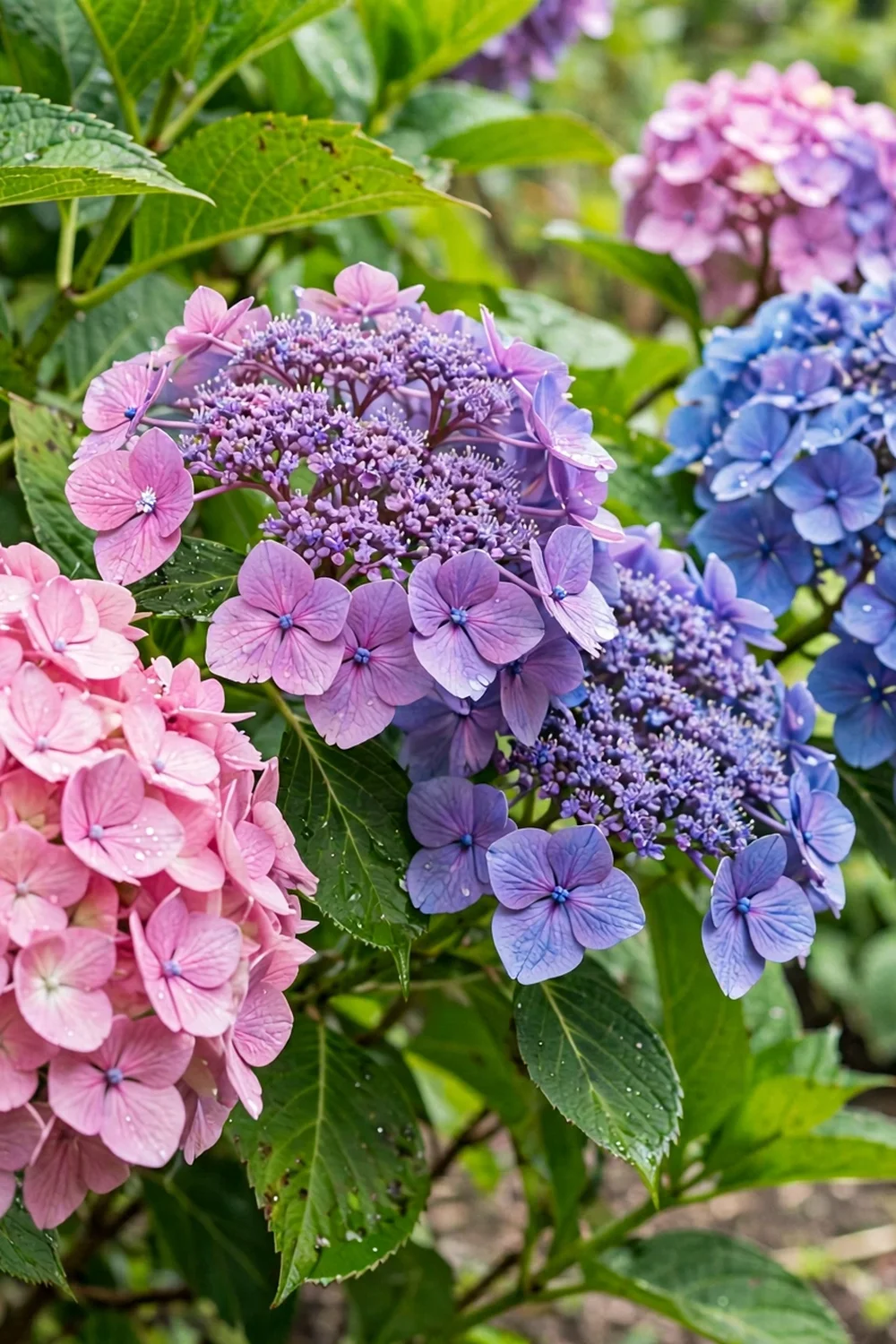
Bigleaf hydrangeas are nature’s litmus test: acidic soil (pH below 6.0) produces blue blooms, alkaline soil (pH above 7.0) produces pink. Test your soil first so you know your starting point. For bluer flowers, apply aluminum sulfate in spring according to the package rate; for pinker flowers, add garden lime. Color changes take a full growing season, so be patient. This only works on Hydrangea macrophylla and serrata. Panicle, oakleaf, and smooth hydrangeas follow their own genetic color script no matter what you do to the soil.
Try this: Keep a photo log each June. Comparing bloom color year to year shows whether your amendments are working. Difficulty: Moderate. Cost: $$
13. Grow a dedicated cut-flower bed

If you love hydrangea arrangements indoors, give them their own bed. Plant 5 to 7 shrubs of long-stemmed varieties like ‘Annabelle’ or paniculatas in a sunny spot with great soil, spaced for cutting access from all sides. Harvest in the morning when blooms are fully open but not papery, cutting stems long. For dried arrangements, let blooms dry on the plant until they feel papery, then cut. A cutting bed means you never have to strip your landscape shrubs bare. Water and mulch it like a vegetable garden; production plantings are thirsty.
Try this: Seared stem ends in boiling water for 30 seconds help cut hydrangeas drink better and last longer. Difficulty: Easy. Cost: $$$
14. Cover a slope with a mass planting

A steep bank that is miserable to mow becomes a flower-covered hillside with a mass hydrangea planting. Use tough, spreading types: paniculatas for sunny slopes, oakleaf for shady ones. Plant in a loose grid 4 to 5 feet apart and mulch heavily between them the first year to suppress weeds while they fill in. The dense canopy eventually shades out most weeds on its own. Their fibrous roots also help hold soil. Avoid bigleaf types on exposed windy slopes; they dry out fast and their blooms scorch.
Try this: Run a single soaker hose line along the top of the slope. Gravity carries water down to every plant. Difficulty: Moderate. Cost: $$$
15. Dress up the mailbox or gate
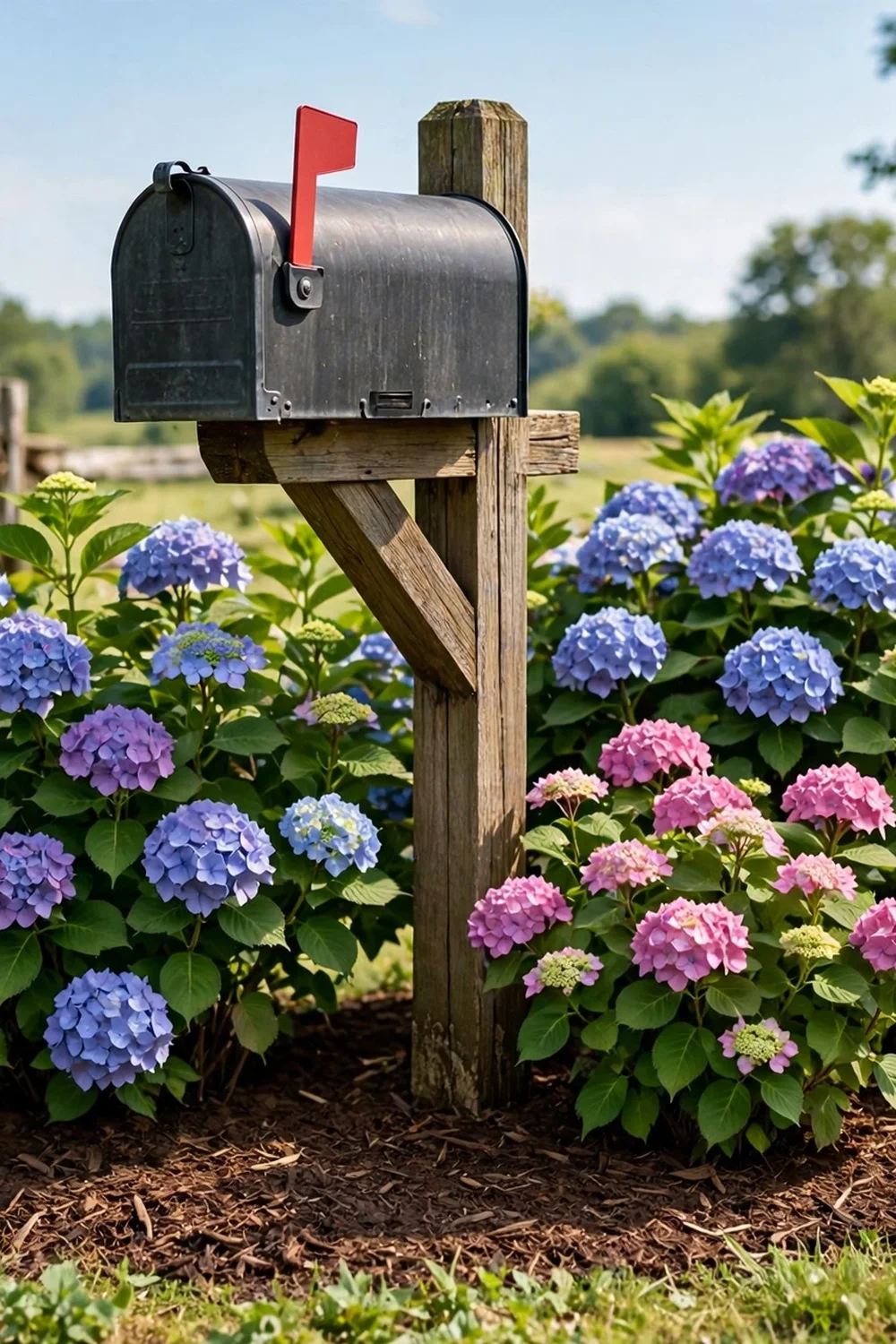
The mailbox strip is small, visible, and usually neglected, which makes it perfect for one great hydrangea. A compact variety like ‘Bobo’ or ‘Little Lime’ fits the tight space and needs little pruning. These spots are often hot and dry from reflected pavement heat, so choose a sun-tolerant paniculata and mulch deeply. One healthy shrub with a ring of low annuals around it looks professionally designed. Keep it trimmed back from the box itself so the mail carrier has clear access.
Try this: Add a small bag of compost to the planting hole. Mailbox soil is usually compacted and poor. Difficulty: Easy. Cost: $$
16. Ring a small patio with dwarf varieties

Small patios need small shrubs, and dwarf hydrangeas deliver full-size blooms on 2 to 3-foot plants. Ring the patio edges with ‘Bobo’, ‘Little Lime Punch’, or ‘Buttons ‘n Bows’, spacing them 2 to 3 feet apart. They define the space without crowding the furniture or blocking sightlines. Because the planting is close to where you sit, you will notice wilt fast, which is actually an advantage: it trains you to water on time. Dwarf types need the same deep watering and mulch as their bigger cousins.
Try this: Underplant with low creeping thyme or sweet alyssum to hide the mulch line and add a second layer. Difficulty: Easy. Cost: $$$
17. Light the blooms for evenings

Hydrangea blooms catch landscape lighting beautifully, especially white and pale blue varieties. Place one low-voltage spotlight at the base of a large shrub, aimed up into the blooms, and the whole plant glows after dark. Solar spotlights work fine and need no wiring; just make sure the solar panel gets daytime sun. Light from below also throws dramatic shadows on a fence or wall behind the plant. Keep lights subtle: one or two well-placed fixtures beat a runway of path lights. This extends your garden’s season into every summer evening.
Try this: Warm white light (2700K) flatters blooms best. Cool white can make them look washed out. Difficulty: Easy. Cost: $$
18. Screen a fence or utility box

Every yard has something ugly: a fence, a utility box, an AC unit. Hydrangeas hide them fast. For a fence, plant a loose row of paniculatas or bigleaf types 3 feet out from the fence line so air circulates behind them. For a utility box or AC unit, use a U-shaped planting that leaves the front open for service access. Check mature width before you plant; a shrub that swallows the thing it is hiding will get hacked back and look worse. This is function-first gardening, and hydrangeas do it prettier than almost any other shrub.
Try this: Leave 2 to 3 feet of clearance around AC units. They need airflow to work efficiently. Difficulty: Easy. Cost: $$$
Choose the right hydrangea type for your spot
Most hydrangea disappointment comes from planting the wrong type in the wrong place. Here is the short version. Bigleaf hydrangeas (Hydrangea macrophylla) give the classic blue and pink mopheads, want morning sun and afternoon shade, and bloom on old wood, so prune them right after flowering. Panicle hydrangeas (H. paniculata) handle full sun, bloom on new wood, and forgive almost any pruning mistake. Smooth hydrangeas (H. arborescens, like ‘Annabelle’) take shade and cold and bloom on new wood. Oakleaf (H. quercifolia) owns the shade garden with four-season interest. Climbing hydrangea (H. anomala petiolaris) needs a structure and patience. When in doubt, match your sun first and your zone second. The NC State Extension plant profile for bigleaf hydrangea lists mature sizes and hardiness details worth checking before you buy.
If a seating area is part of your plan, these garden nook seating ideas show how to place chairs and benches so you can actually sit among the blooms.
Mistakes that ruin a hydrangea garden
Three mistakes cause most hydrangea failures. First, pruning at the wrong time: cutting bigleaf hydrangeas in fall or spring removes the old wood that carries next year’s blooms. Identify your type before you cut, or skip pruning entirely for a season. Second, planting in hot afternoon sun: bigleaf types scorch, wilt daily, and bloom poorly. Morning sun with afternoon shade is the safe default. Third, shallow watering: a daily sprinkle wets the leaves and invites disease while the roots stay dry. Water deeply at the base, two to three times a week in the first year, and mulch 3 inches deep to hold moisture. Fix these three and most hydrangeas thrive on benign neglect.
Hostas are classic shade companions for hydrangeas, and these hosta gardening tricks help you grow lush partners for a woodland planting. Mapping out bigger beds? These companion planting charts make it easy to plan plantings where every plant supports its neighbors.
A note on pets: hydrangeas are toxic
This one matters if you share your garden with dogs or cats. All parts of hydrangea plants contain compounds that can cause stomach upset, vomiting, and lethargy if chewed or eaten in quantity, according to the ASPCA’s plant database. Most pets leave them alone because the leaves taste bitter, but puppies and curious cats are the exception. Plant hydrangeas where pets do not dig or chew, keep fallen blooms picked up, and teach a solid “leave it.” If your pet eats a large amount, call your vet or animal poison control rather than waiting to see what happens.
Frequently asked questions
Where is the best place to plant hydrangeas?
Most hydrangeas do best in morning sun with afternoon shade, in rich, well-draining soil that stays evenly moist. Bigleaf and oakleaf types prefer shade; panicle types handle full sun. Avoid low spots where water pools after rain, because soggy roots rot. Also avoid planting directly under roof drip lines, where pounding rain compacts the soil and damages blooms.
Do hydrangeas need full sun or shade?
It depends on the type. Panicle hydrangeas bloom heaviest in full sun (6 or more hours). Bigleaf, smooth, and oakleaf hydrangeas prefer part shade, ideally morning sun with protection from hot afternoon rays. In northern climates all types tolerate more sun; in southern climates afternoon shade is almost mandatory. Too little light means few blooms; too much means scorched leaves.
How do you keep hydrangeas blooming all summer?
Choose reblooming bigleaf varieties or panicle types, which naturally flower over a long season. Deadhead spent bigleaf blooms to encourage the next flush on reblooming types. Water consistently; drought stress shuts down blooming fast. Feed lightly in spring with a balanced slow-release fertilizer and avoid heavy nitrogen, which grows leaves at the expense of flowers.
Why are my hydrangea blooms pink instead of blue?
Only bigleaf hydrangeas change color with soil chemistry. Pink blooms mean your soil is neutral to alkaline (pH 7.0 or above). For blue flowers, lower the pH below 6.0 with aluminum sulfate applied in spring, and mulch with pine bark or pine needles. Test your soil first, apply amendments at label rates, and expect the color to shift over a full growing season, not overnight.
When should you prune hydrangeas?
Prune bigleaf and oakleaf hydrangeas right after they finish blooming in summer, since they set next year’s buds on old wood. Prune panicle and smooth hydrangeas in late winter or early spring, since they bloom on new wood and actually benefit from hard pruning. If you are unsure which type you have, the safest move is to not prune for one season and watch when it blooms.
Are hydrangeas toxic to dogs and cats?
Yes. Hydrangeas contain cyanogenic compounds that can cause vomiting, diarrhea, and lethargy if pets eat the leaves or flowers. Most cases are mild because the plant tastes bitter and pets stop chewing, but large amounts are dangerous. Keep hydrangeas out of pet play areas, clean up fallen blooms, and contact your veterinarian if your pet eats a significant quantity.
My first three hydrangeas are still alive, by the way, now sitting in the right spots with the right companions. Start with the idea that matches your sun and space, plant in groups, water deeply that first year, and let them do what hydrangeas do best. By next summer, your yard will be the one people slow down to look at.


