

Most wedding planning guides hand you the same order of events: a single-file walk down the aisle, a seated dinner, a first dance, a sparkler exit. If that script never felt like you, the fix is smaller than starting over. You keep the parts that matter to you and swap the rest for choices that fit how you actually celebrate.
This guide covers 10 nontraditional wedding ideas across the ceremony, the venue, the food, and the party, each with a real cost range and a difficulty label. It is written for couples planning a wedding that feels personal, whether your guest list is 20 or 200.
Quick takeaways
- Pick two or three swaps, not ten. A wedding with one clear twist reads as intentional, while a wedding with a twist at every turn reads as scattered.
- Ceremony swaps cost the least. Walking in together, private vows, and a friend officiant need almost no added budget.
- Food and venue swaps move the budget most. Brunch menus and food trucks often lower catering costs, while extra rentals and live entertainment add to them.
- Tell guests what to expect. A short note on the invitation or wedding website about timing, dress code, and food setup prevents confusion on the day.
- Check venue rules first. Open flames, ceiling rigging, outside caterers, and amplified sound all need a yes from the venue before you book anything else.
How to pick your nontraditional ideas
Start with the moment you care about most. If the ceremony matters most, spend your swaps there and keep the reception simple. If the party matters most, keep the ceremony short and put your budget into food and entertainment. One strong swap per part of the day is plenty.
Next, test each idea against three questions. Does the venue allow it? Does it work for your oldest and youngest guests? Does it fit the budget after rentals, staffing, and cleanup? An idea that fails any of the three needs a simpler version, not a bigger budget. A brewery ceremony with no seating plan, for example, works better once you add rented chairs and a shaded backup area for rain.
1. Walk in together, guests seated in a circle

Skip the single-file processional. Both partners enter together, while guests sit in a full circle or a loose spiral around the ceremony spot. Every guest sees faces instead of backs. This setup works in gardens, galleries, and backyards, and needs a flat area plus a few spare chairs. Keep one gap open in the circle as an entrance and a camera lane.
Try this: place a small rug or a ring of petals in the center to mark the ceremony spot, so guests instinctively leave the middle open.
Cost: $ (under $500 added) | Difficulty: Easy
2. Paint a unity canvas during the ceremony
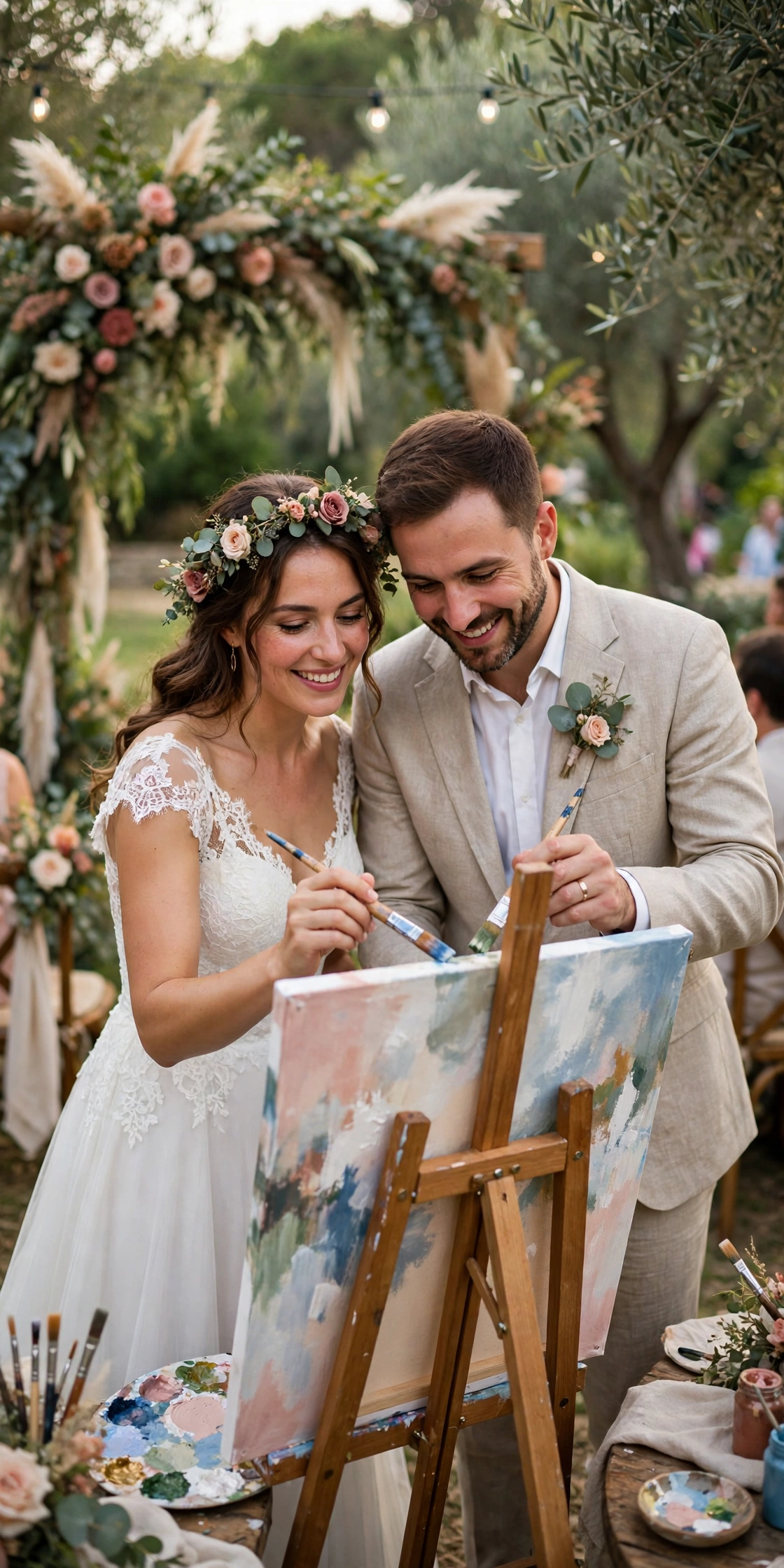
Trade the unity candle for a canvas you finish together in under five minutes. Each partner picks one color, and you take turns adding brushstrokes while a short reading or a song plays. The result hangs in your home after the wedding, which gives the ritual a life past the ceremony. Buy a stretched canvas, two or three acrylic colors, and a tabletop easel, and test the paint flow at home so the ceremony version stays quick and tidy.
Try this: paint over a faint pencil outline of your initials, so the finished piece reads clearly from across a room.
Cost: $ (under $500 added) | Difficulty: Easy
3. Ask a friend to officiate

A friend who knows your story tells it better than a stranger reading a script. Ask someone calm under pressure, then give them eight to ten weeks to write a ceremony of about 15 minutes. Check your county marriage license rules early, since some places require ordination or a one-day deputy authorization, and the paperwork deadline varies by location. Rehearse once at the venue so your officiant knows where to stand and how loud to speak.
Try this: have your officiant write three short stories about you and cut the weakest one, so the ceremony stays warm without running long.
Cost: $ (under $500 added) | Difficulty: Moderate
4. Exchange private vows at the first look
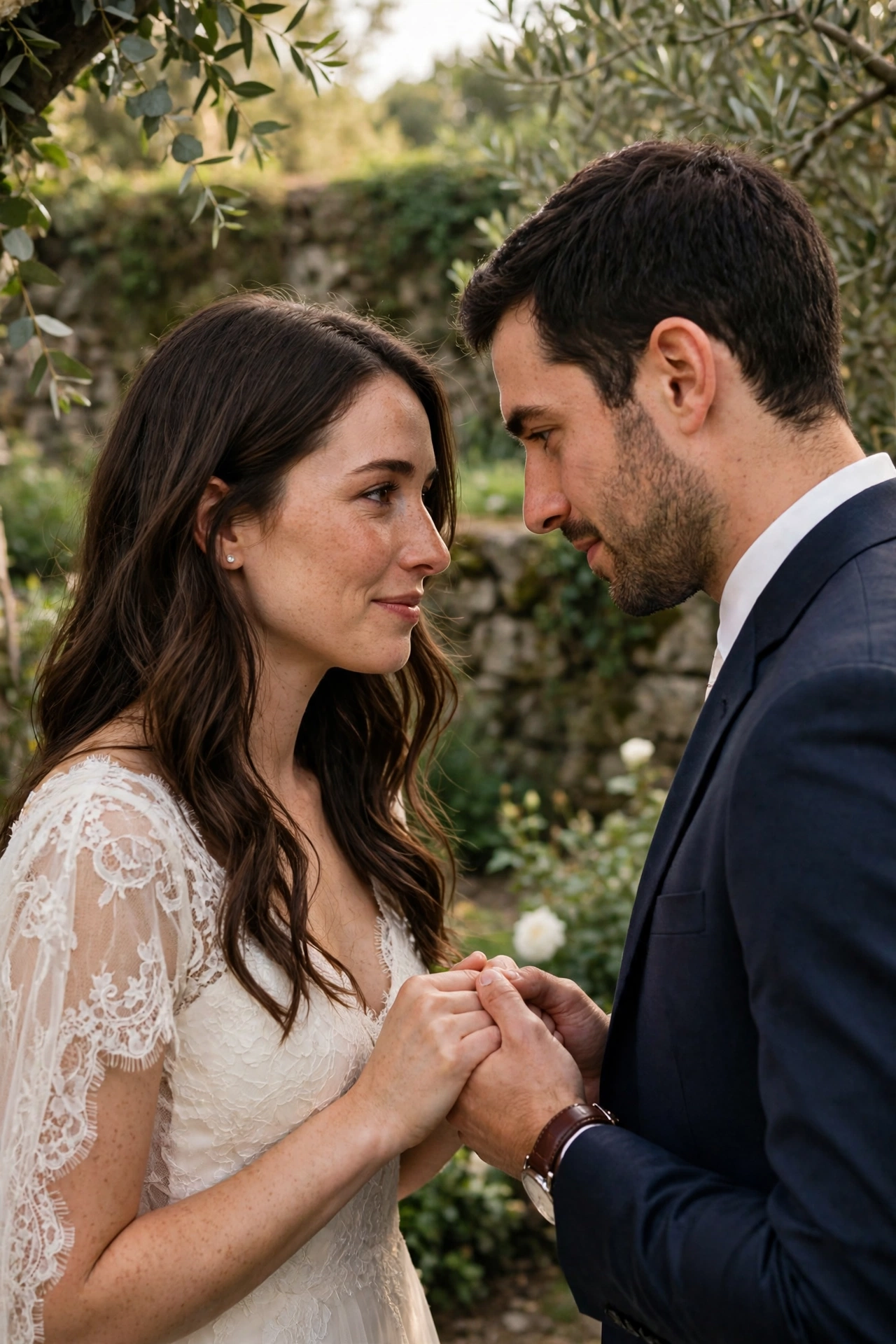
Public vows suit some couples and freeze others. If speaking in front of a crowd feels wrong, exchange your full vows privately during the first look, then keep the ceremony version to a short ring exchange and a single promise each. You get the emotional moment without an audience, and guests still witness a real commitment. Photographers can step back for this part, or you can ask for two quiet minutes with no cameras at all.
Try this: read your vows from a small booklet instead of a phone, since paper photographs better and never locks or dims mid-sentence.
Cost: $ (under $500 added) | Difficulty: Easy
5. Get married somewhere that is not a ballroom

A brewery, art gallery, greenhouse, or family backyard changes the whole feel of a wedding before a single decoration goes up. These spaces bring their own character, so you spend less on decor. Confirm the practical points before you fall for a space: enough restrooms, a rain plan, parking, and a sound limit or curfew. Some raw spaces need rented chairs, tables, lighting, and a generator, which can erase the savings on the rental fee.
Try this: visit the space at the same hour as your planned ceremony, so you see the real light and noise.
Cost: $$ ($500 to $2,000 added) | Difficulty: Moderate
6. Serve dinner from food trucks

Two food trucks parked near the reception give guests a choice and a talking point, and truck menus often cost less per guest than a plated dinner. Book one savory truck and one dessert truck, stagger their serving windows so lines stay short, and print a small menu card for each table. Ask each truck about minimum spends, power needs, and how many guests they serve per hour, since a single slow truck can stall the whole evening.
Try this: open the dessert truck an hour after dinner ends, so guests gather again instead of drifting toward the exit.
Cost: $$ ($500 to $2,000 added) | Difficulty: Moderate
7. Host a brunch wedding

A morning ceremony followed by brunch suits couples who want daylight, lower catering bills, and an early finish. The menu writes itself: an omelet station, a pancake or waffle bar, fruit, pastries, and a coffee bar with decaf clearly marked. Brunch venues often charge less than Saturday evening slots, and guests with kids or long drives home appreciate a reception that ends by early afternoon. Tell guests the dress code plainly, since morning light calls for different shoes.
Try this: add one savory station and one sweet station plus coffee, since two lines move faster than three at brunch.
Cost: $ (under $500 added) | Difficulty: Easy
8. Throw a carnival-style reception

A carnival reception trades a formal dance floor opening for games guests can join at their own pace. Set up ring toss, balloon darts, and a bean bag toss along one edge of the space, add cotton candy and popcorn, and hire a magician for the first hour. This format works well for mixed-age guest lists, since kids, teens, and adults all find something to do without waiting for the dance floor to fill.
Try this: give each guest five paper tickets at the door, and let unspent tickets enter a small prize drawing at the end of the night.
Cost: $$ ($500 to $2,000 added) | Difficulty: Moderate
9. End the night with a silent disco
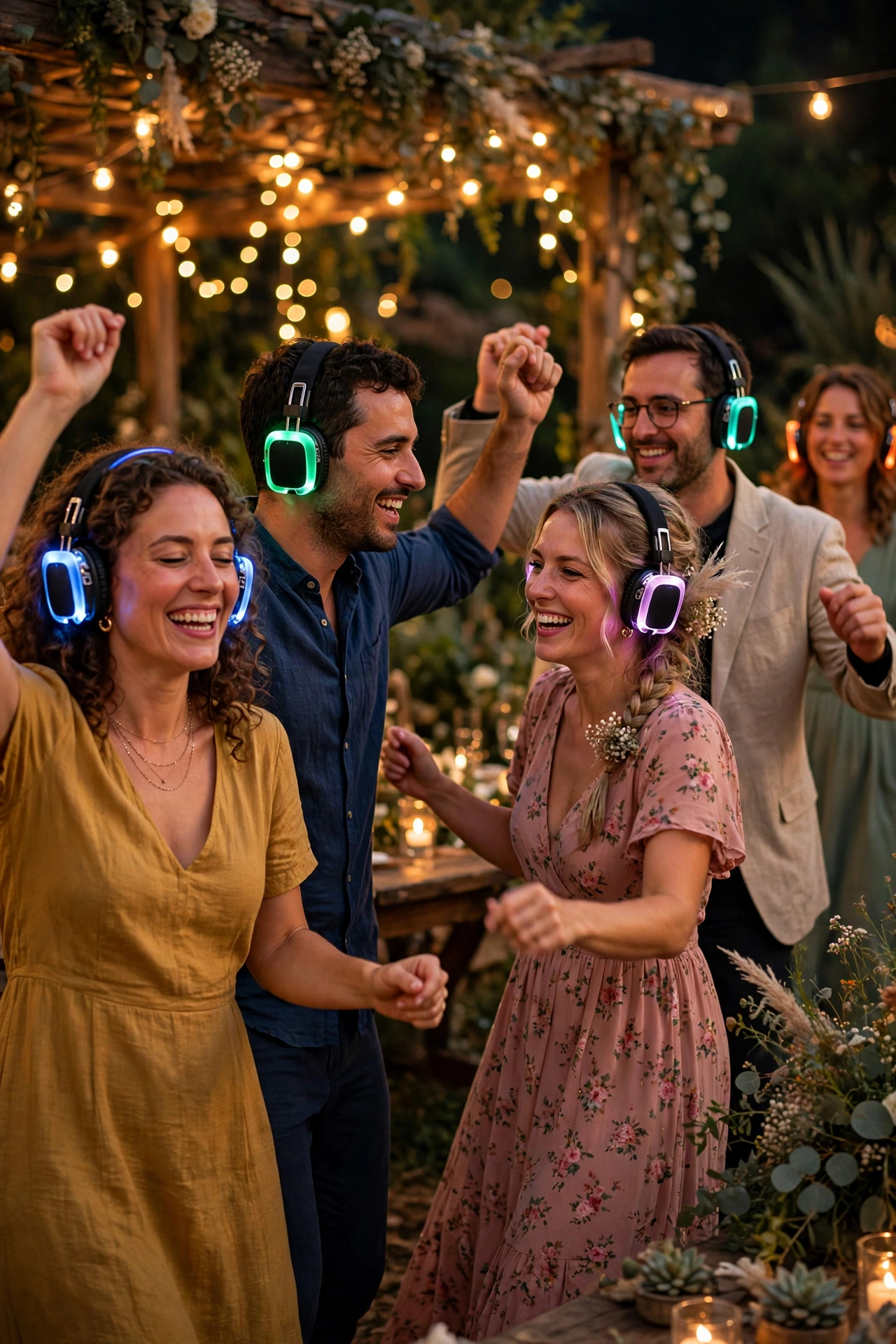
A silent disco solves two common reception complaints: music too loud for conversation, and a playlist nobody agrees on. Guests wear rented wireless headphones with two or three channels: current hits, throwbacks, and slow songs. People switch channels with a tap, and anyone who wants to talk slips the headphones off. Rentals usually price per headset with a minimum order, and venues welcome the format because it keeps sound inside the room.
Try this: put the channel list on a small sign at the headphone table, and ask a friend to host one channel live for the first 30 minutes.
Cost: $$ ($500 to $2,000 added) | Difficulty: Easy
10. Hire a live painter and a guest art wall

A live painter captures your ceremony or first dance on canvas while guests watch the painting take shape, and you take home a keepsake no photo can match. Book at least six months ahead, since experienced wedding painters fill calendars early, and confirm the canvas size, the scene, and the delivery time. Pair the painter with a second blank canvas where guests add one brushstroke each as your guest book.
Try this: ask the painter to work from ceremony photos for the final details, so the piece finishes cleanly instead of rushed.
Cost: $$$ (over $2,000 added) | Difficulty: Easy
At a glance: cost and difficulty
| Idea | Added cost | Difficulty | Best for |
|---|---|---|---|
| Walk in together, circle seating | $ | Easy | Intimate ceremonies |
| Unity painting | $ | Easy | A keepsake ritual |
| Friend officiant | $ | Moderate | A personal ceremony |
| Private vows | $ | Easy | Shy speakers |
| Non-ballroom venue | $$ | Moderate | Built-in character |
| Food trucks | $$ | Moderate | Casual food lovers |
| Brunch wedding | $ | Easy | Daylight and lower bills |
| Carnival reception | $$ | Moderate | Mixed-age guests |
| Silent disco | $$ | Easy | Noise limits |
| Live painter and art wall | $$$ | Easy | A lasting keepsake |
Cost key: $ means $1 to $10, $$ means $11 to $99, $$$ means $100 to $999, $$$$ means $1,000 and up.
Mistakes to avoid
Stacking too many swaps tops the list. A circle ceremony plus food trucks plus a silent disco plus a carnival already gives guests plenty to learn, and adding a fifth twist turns the day into a set of instructions. Pick your swaps, then protect the rest of the timeline.
Skipping the guest briefing runs second. Guests need to know the ceremony start time, the dress code for grass or gravel, whether dinner is a truck line or a seated meal, and when the night ends. Put those four facts on the invitation or the wedding website, not just in a group chat. Finally, never assume a venue allows a swap. Outside caterers, open flames, ceiling rigging, sparklers, and late amplified sound each need a written yes before you pay a deposit.
Safety notes for nontraditional weddings
Keep real candles at least 12 inches from fabric, dried flowers, paper decor, and table runners, and use battery candles near dried or paper items. The National Fire Protection Association publishes a candle safety guide with the clearance rule and other basics.
For more on candle safety, see the NFPA candle safety guide.
Tape down every cord that crosses a walkway or the edge of a dance floor, and keep cords away from food truck serving lines and game areas. Anchor tall frames, heavy signs, and freestanding decor with hardware rated above the load, and check the venue rules on open flames and ceiling rigging before you hang anything overhead. The U.S. Consumer Product Safety Commission runs an anchor-it program with guidance on securing heavy items.
For anchoring guidance, see the CPSC Anchor It! program.
For buffet, potluck, or food truck service, keep cold dishes chilled and hot dishes heated, and clear perishable food promptly instead of leaving it out all evening. Keep small items such as game tickets, loose beads, and tiny favors away from toddlers.
Related reading
If your reception needs a focal point behind the head table or the cake table, these backdrop styles pair well with a relaxed format.
See 15 Beautiful Wedding Reception Backdrops for a Room Guests Photograph All Night for flower walls, greenery walls with neon signs, and budget paper flower walls.
A nontraditional format still needs invitations that explain it, including a brunch start time or a food truck dinner note.
See 21 Gorgeous Wedding Invitation Card Design Ideas for Every Style and Budget for card styles, paper choices, and envelope ideas.
If your wedding falls in autumn, a fall palette keeps a nontraditional venue looking planned instead of improvised.
See 10 Stunning Wedding Fall Colors for rust, terracotta, burgundy, and plum palettes.
A carnival reception borrows its game ideas from party games, so a games list helps you pick booths guests already enjoy.
See Funny Games for Bridal Shower Ideas for group games that work for mixed-age crowds.
Several swaps in this guide save money, and a budget party plan shows where else a celebration can trim costs without feeling thin.
See Galentines Party Ideas on a Budget for low-cost party planning ideas that transfer to wedding details.
Frequently asked questions
Do we need permission for a friend to officiate our wedding?
It depends on your state and county. Some places accept any ordained person, some require registration with the county clerk, and some offer a one-day deputy authorization. Check your county marriage license rules before invitations go out, and confirm who signs and returns the license after the ceremony, since an unsigned license causes real paperwork trouble.
Will a nontraditional wedding cost less than a traditional one?
Not automatically. Swaps move costs around instead of erasing them. Brunch menus and food trucks often lower catering costs, while live painters, extra rentals for a raw venue, and game booths add new lines. Set a separate budget for your swaps, get written quotes for each one, and compare the total against a traditional quote before you commit.
How do we tell guests about an unusual wedding format?
Put four facts on the invitation or wedding website: the ceremony start time, the dress code for the ground and the weather, how dinner works, and when the night ends. Guests handle almost any format well when they know what to expect, and they struggle most when a surprise format meets the wrong shoes or an empty stomach.
What if older guests dislike the changes?
Keep the comfort basics solid and most guests relax. Provide real seating with backs, shade or heat as the weather needs, a clear timeline, food options beyond one adventurous truck, and a quiet corner for conversation. A nontraditional wedding still works for traditional guests when nobody has to stand, wait hungry, or guess what happens next.
Can we mix traditional and nontraditional parts?
Yes, and most couples do. Keep the traditions that matter to you, such as a first dance or a family blessing, and swap only the parts that feel wrong. A traditional vow exchange followed by food trucks, or a classic ceremony followed by a silent disco, reads as a personal wedding rather than a themed event.
Final thoughts
Pick the swaps that match the way you and your guests actually celebrate, tell everyone what to expect, and let the rest of the day stay simple. A wedding feels nontraditional when its choices trace back to the couple, not when it collects the most unusual ideas in one evening.