


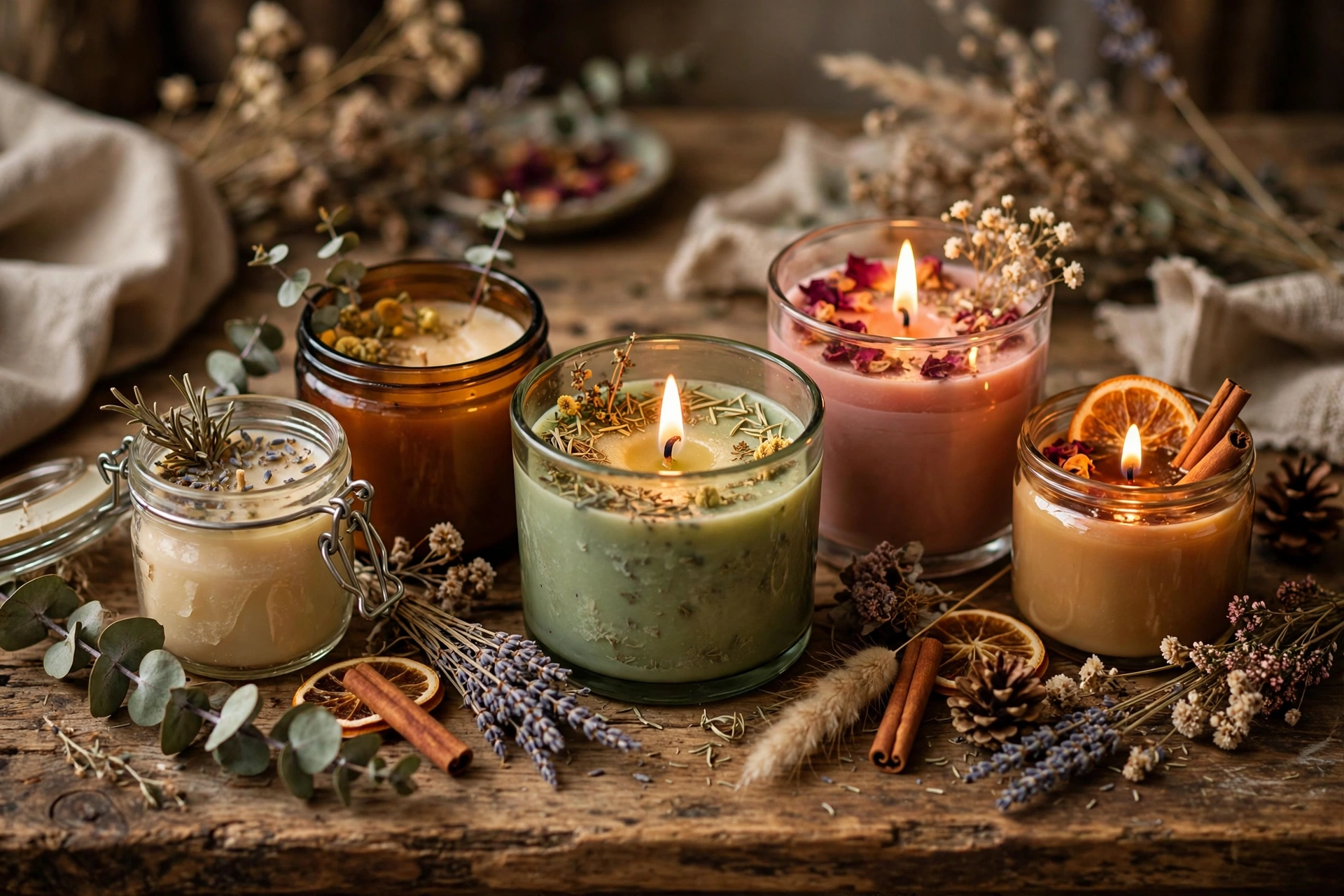
There is a particular kind of pride that comes from lighting a candle you made yourself. I remember my first batch — a slightly lopsided lavender soy candle in a jam jar, the wick leaning a little to the left, frosting on the top like it had been dusted with powdered sugar. It was imperfect in every technical sense. It also smelled incredible, cost me about two dollars, and I lit it every single evening for a month.
That is the thing about homemade candles: the barrier to entry is almost comically low. Melt wax, add scent, pour, wait. No special equipment beyond a pot and a thermometer, no artistic talent required, and the whole project costs less than one store-bought “luxury” candle. Within a weekend you can make a dozen of them, and they make the kind of gifts people actually keep and use. Below are 25 easy DIY homemade scented candle ideas I have made, researched, and gifted over the years. They range from the dead-simple classic (a lavender soy jar candle anyone can pour in 20 minutes) to prettier showpieces (rose petals, seashells, layered ombre wax), with scent recipes, costs, and a safety tip for every project. Each idea includes a practical tip so your candles burn clean and smell strong.
- Soy wax is the best beginner wax: it melts low, holds scent well, and cleans up with soap and water.
- Use 6–10% fragrance oil by weight (about 1 oz per pound of wax) for a strong, safe scent throw.
- Always melt wax in a double boiler — never over direct heat — and never leave melting wax unattended.
- Let candles cure at least 24 hours (soy does best with 1–2 weeks) before the first burn.
- Trim the wick to 1/4 inch before every burn and let the melt pool reach the jar edges on the first light.
1. Classic Lavender Soy Jar Candle
Difficulty: Easy | Cost: $10-$25
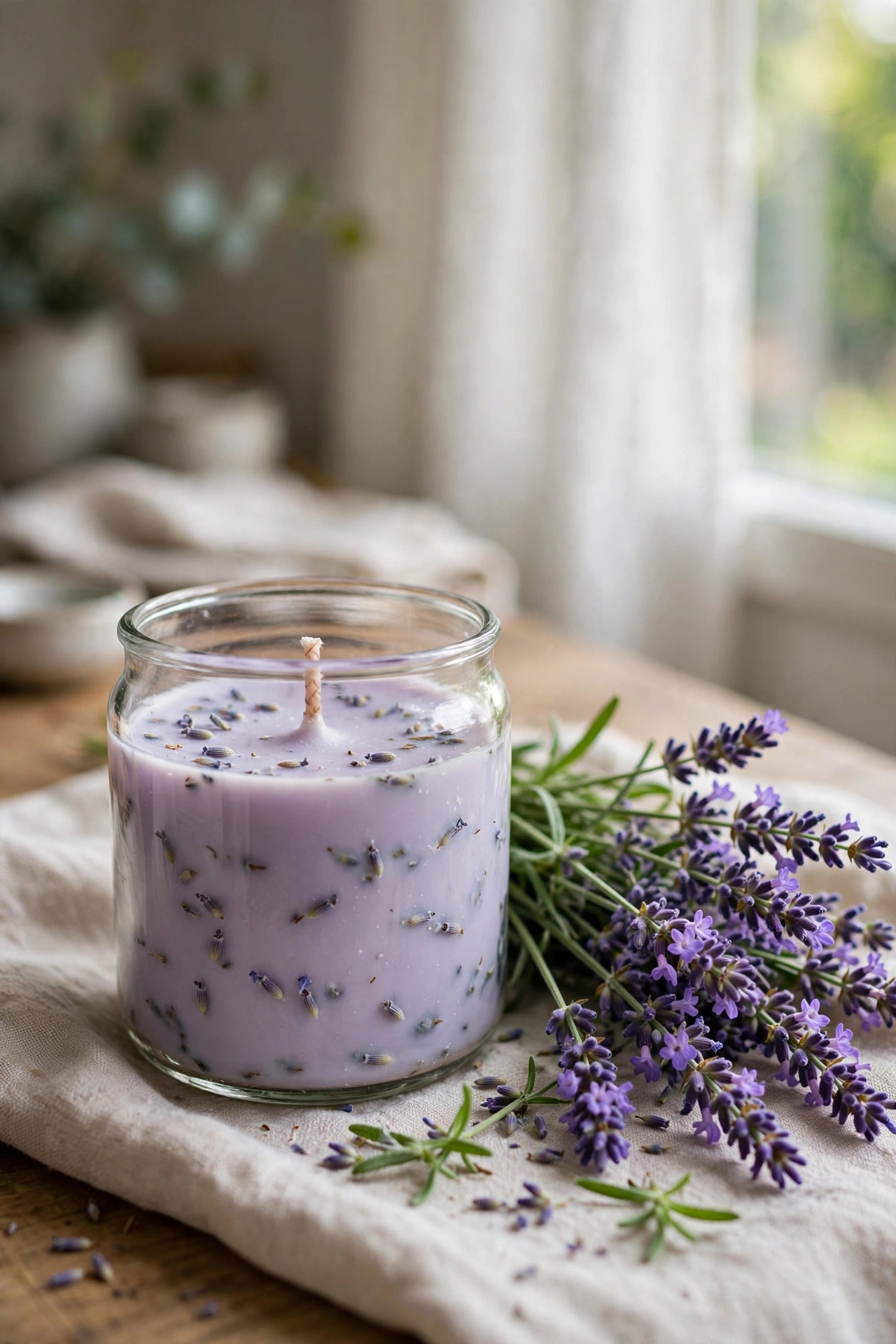
The one every candle maker starts with. Melt soy wax to 185°F, stir in lavender fragrance oil at 6–10%, pour at 135°F into a wicked jar, and cure. Twenty minutes of work, smells like a Provençal summer.
Never poured before? CandleScience’s beginner tutorial walks through melting, fragrance loads, and pour temperatures — the exact details that prevent beginner mistakes.
Try this: pour your soy wax a little cooler (around 125–130°F) and wrap the jar in a towel while it sets. Slow cooling dramatically reduces the white frosting that shows up on soy tops.
2. Vanilla Beeswax Pillar Candle
Difficulty: Easy | Cost: $10-$25
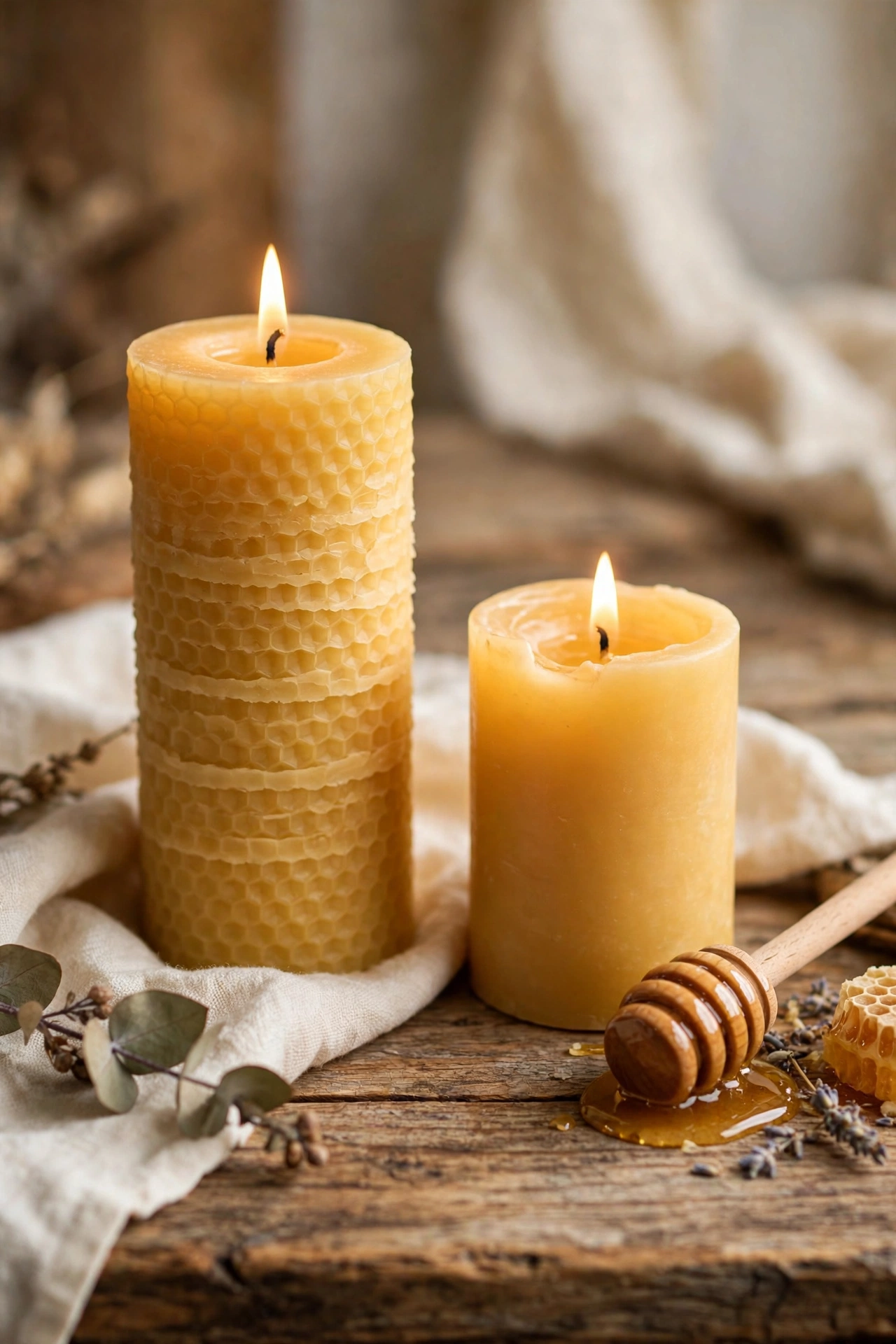
Beeswax has its own warm honey scent even before you add anything, which makes a vanilla beeswax pillar smell like a bakery wrapped in sunshine. Use a pillar mold or even a cleaned tin can, melt beeswax pellets low and slow (beeswax melts hotter than soy, around 145°F), and add a touch of vanilla fragrance. Pillars need a full 48 hours to harden before unmolding.
Try this: beeswax is stickier than soy, so lightly coat your mold with a non-stick spray or silicone mold release. Wrestling a stuck pillar out of a metal mold will test your patience like nothing else.
3. Coffee Mug Candle
Difficulty: Easy | Cost: $15-$30
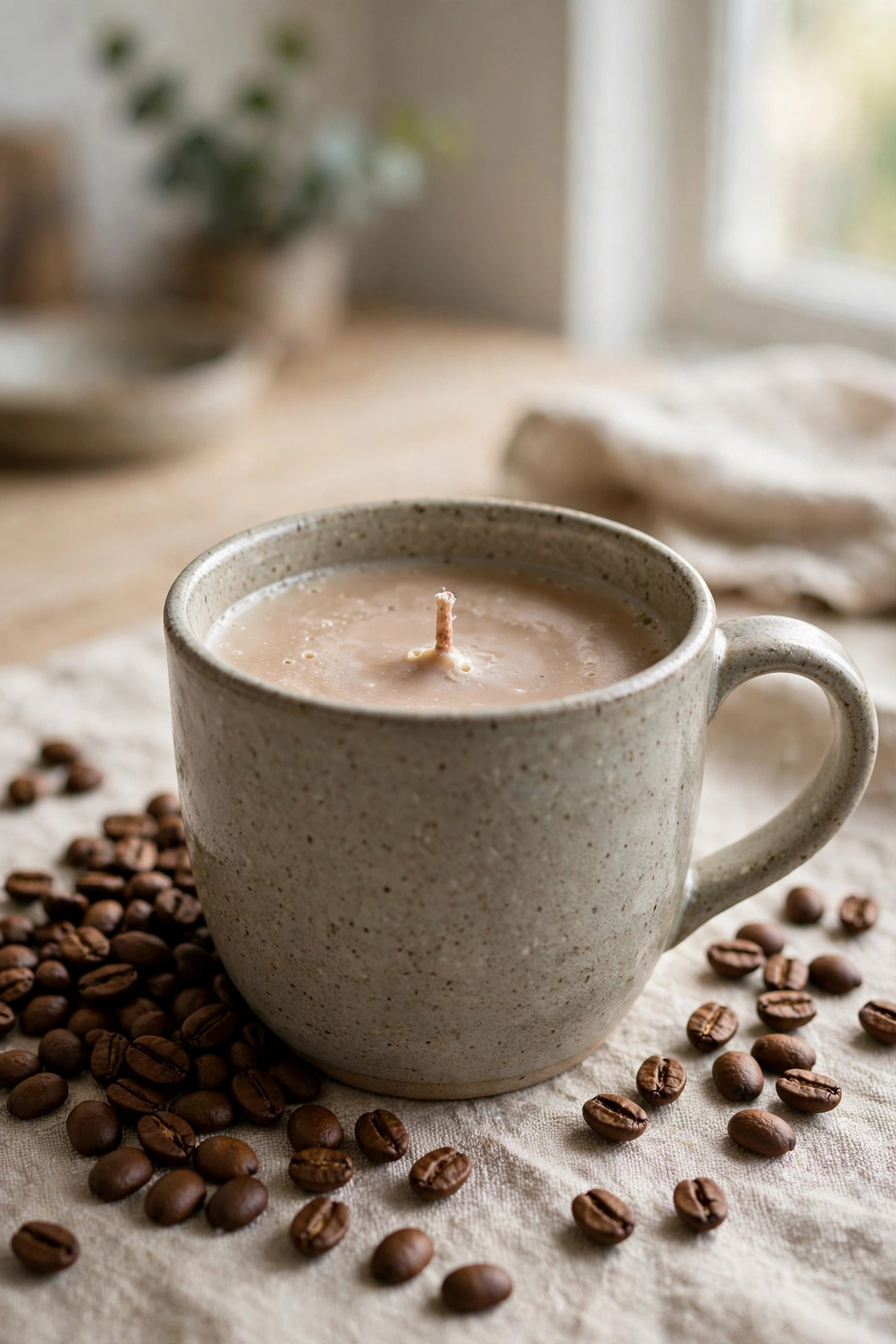
A thrifted coffee mug becomes the coziest candle vessel you will ever own. Coffee-scented wax (espresso or hazelnut fragrance oil) poured into a chunky mug is pure morning energy, and the thick ceramic keeps the wax warm so the scent throws beautifully. It is also the perfect use for that chipped-but-beloved mug you cannot throw away.
Try this: tape the wick to a pencil laid across the mug rim to keep it centered. Mugs are narrow, and an off-center wick will melt one side faster and leave wax stranded on the other.
4. Cinnamon Spice Fall Candle
Difficulty: Easy | Cost: $10-$25
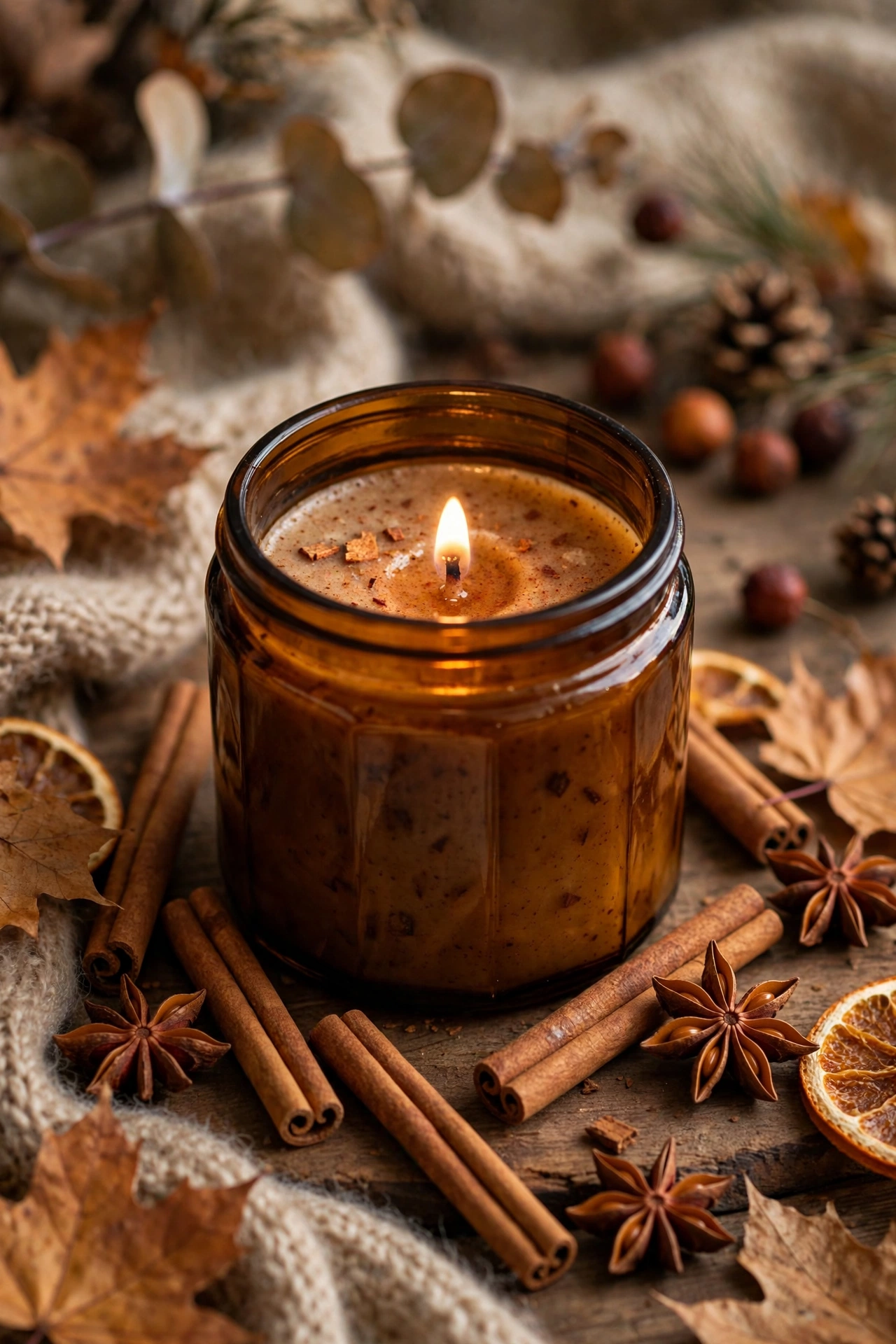
Cinnamon, clove, and a whisper of nutmeg in an amber jar is autumn in candle form. This is the candle that makes guests walk in and say “it smells like fall in here.” Use a warm spice blend at the full 10% load — spice scents are what punch through a big living room. Tie cinnamon sticks around the jar with twine for gifts.
Try this: keep actual cinnamon sticks and star anise OUT of the melt pool — decoration around the jar only. Anything flammable touching the flame is a fire risk, no matter how pretty it looks.
5. Citrus Orange Peel Candle
Difficulty: Easy | Cost: $15-$30
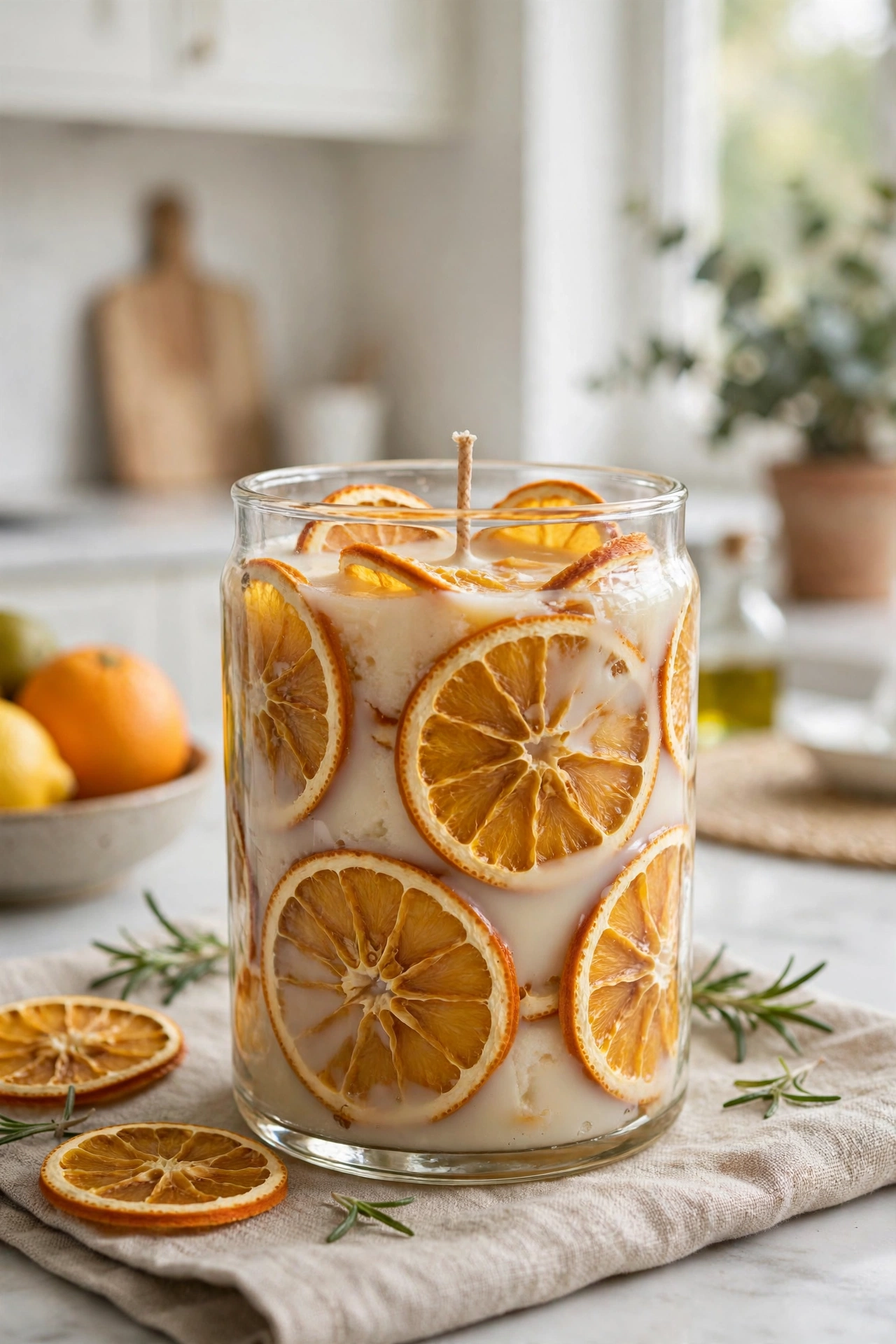
Bright, clean, and cheerful — a citrus candle with dried orange slices pressed against the inside of the jar looks like bottled sunshine. Sweet orange and bergamot essential oils blend beautifully here. Press the dried slices against the glass right after pouring (while the wax is still liquid but cooling) so they set in place as it hardens.
Try this: citrus essential oils have a lighter scent throw than fragrance oils. If you want it to fill the room, use a citrus fragrance oil instead — or blend the two for a natural-but-strong result.
6. Eucalyptus Mint Tin Candle
Difficulty: Easy | Cost: $10-$25
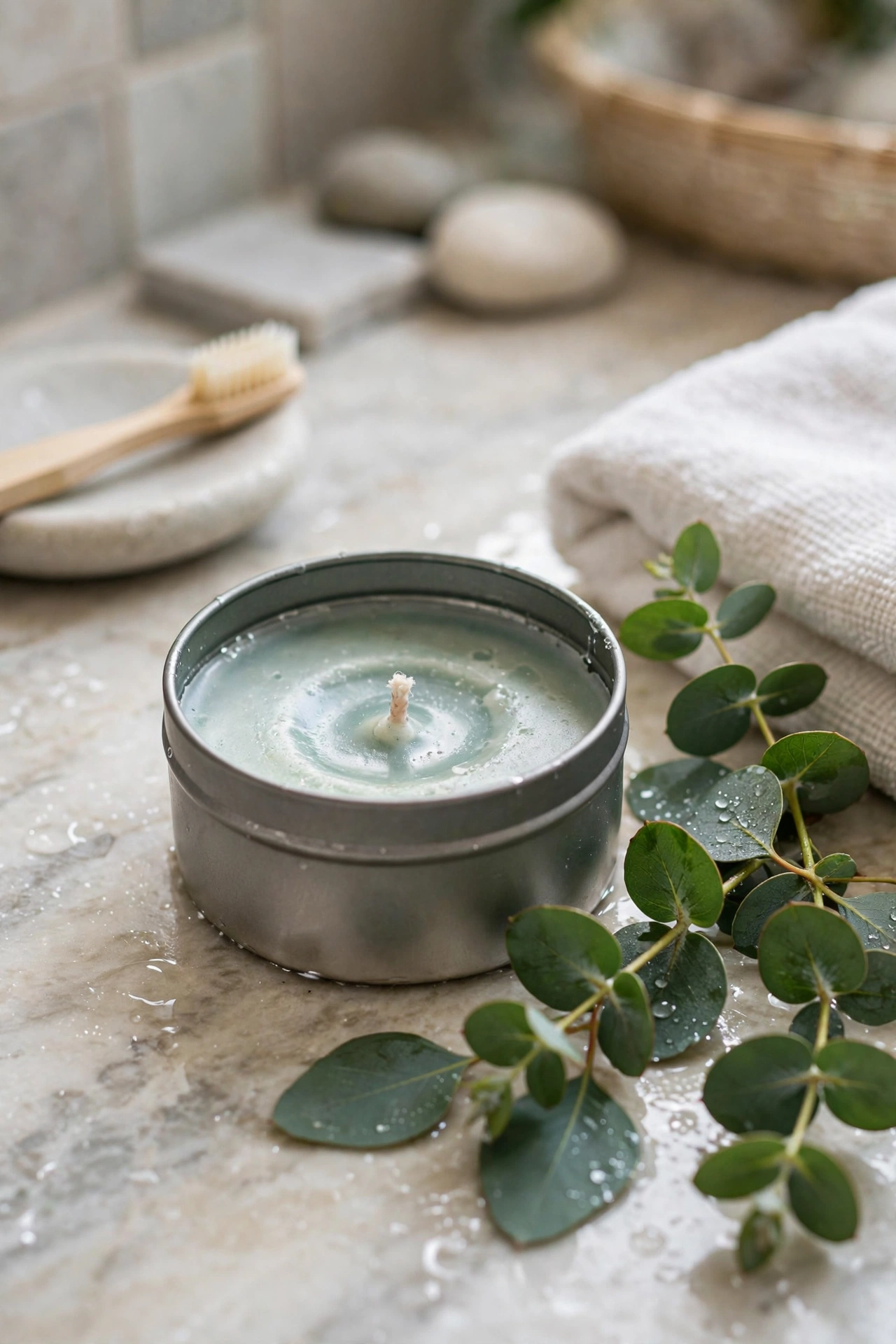
Small, portable, and perfect for bathrooms and desks: a eucalyptus-mint candle in a travel tin. The crisp, clean scent cuts through stuffy rooms and makes a tiny bathroom feel like a spa. Tins heat up more than glass, so keep the wax level a half inch below the rim and never carry a lit tin by its edges.
Try this: tins are great for testing new scents because they use so little wax. Pour one tin of any experimental blend before committing a whole jar — your nose will thank you.
7. Rose Petal Embedded Candle
Difficulty: Easy | Cost: $10-$25
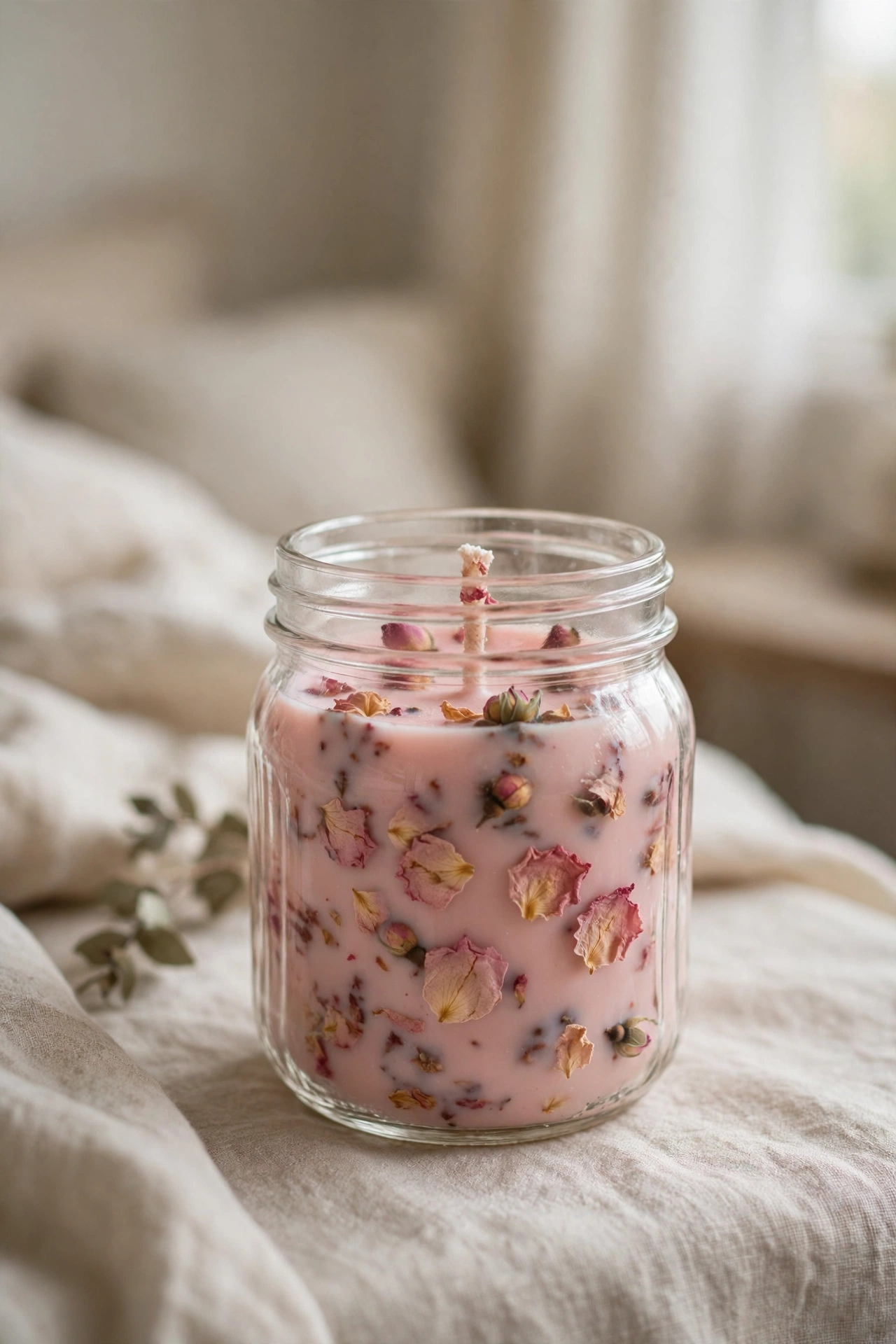
Dried rose petals suspended in blush-pink wax — the most romantic candle you can make. Pour half the wax, let it set tacky, arrange petals, pour the rest. Rose and peony oils complete it. For date nights and Valentine’s gifts, pair with these black romantic bedroom ideas for full film-noir mood.
Try this: use fully dried petals, never fresh. Fresh petals hold moisture that can cause sputtering, mold, or an uneven burn — dried is both prettier and safer.
8. Wooden Wick Crackling Candle
Difficulty: Easy | Cost: $15-$30
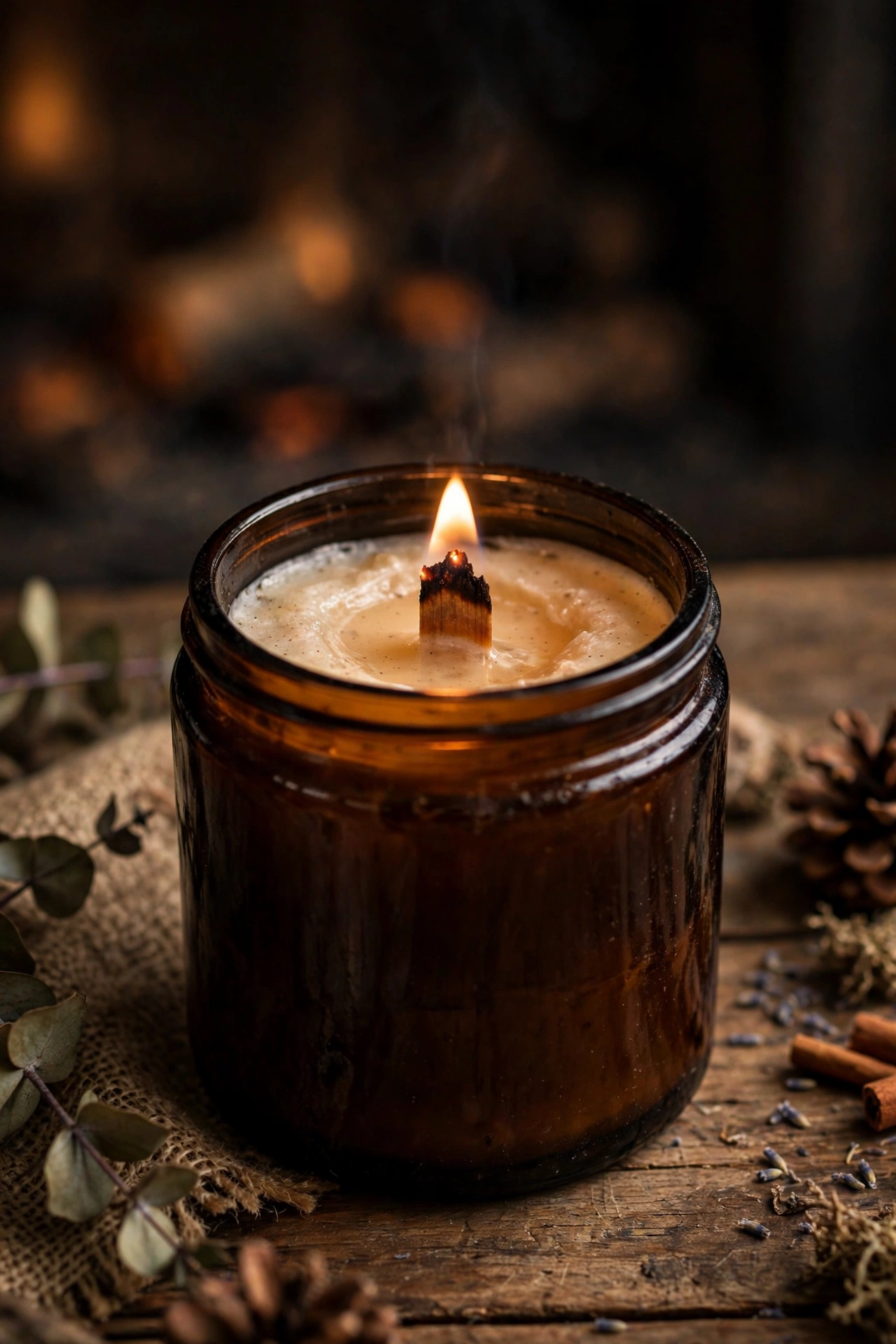
A wooden wick crackles softly like a tiny fireplace as it burns — it is the closest thing to a hearth you can put on a coffee table. Wooden wicks need different technique: trim shorter (about 1/8 inch) and pour the wax a touch hotter for adhesion. The crackle plus a smoky cedar scent is pure cabin magic.
Try this: wooden wicks are fussier about lighting — tilt the jar and let the flame catch the full width of the wick for 20 seconds. A half-lit wood wick will drown itself and refuse to stay lit.
9. Layered Ombre Pastel Candle
Difficulty: Easy | Cost: $10-$25
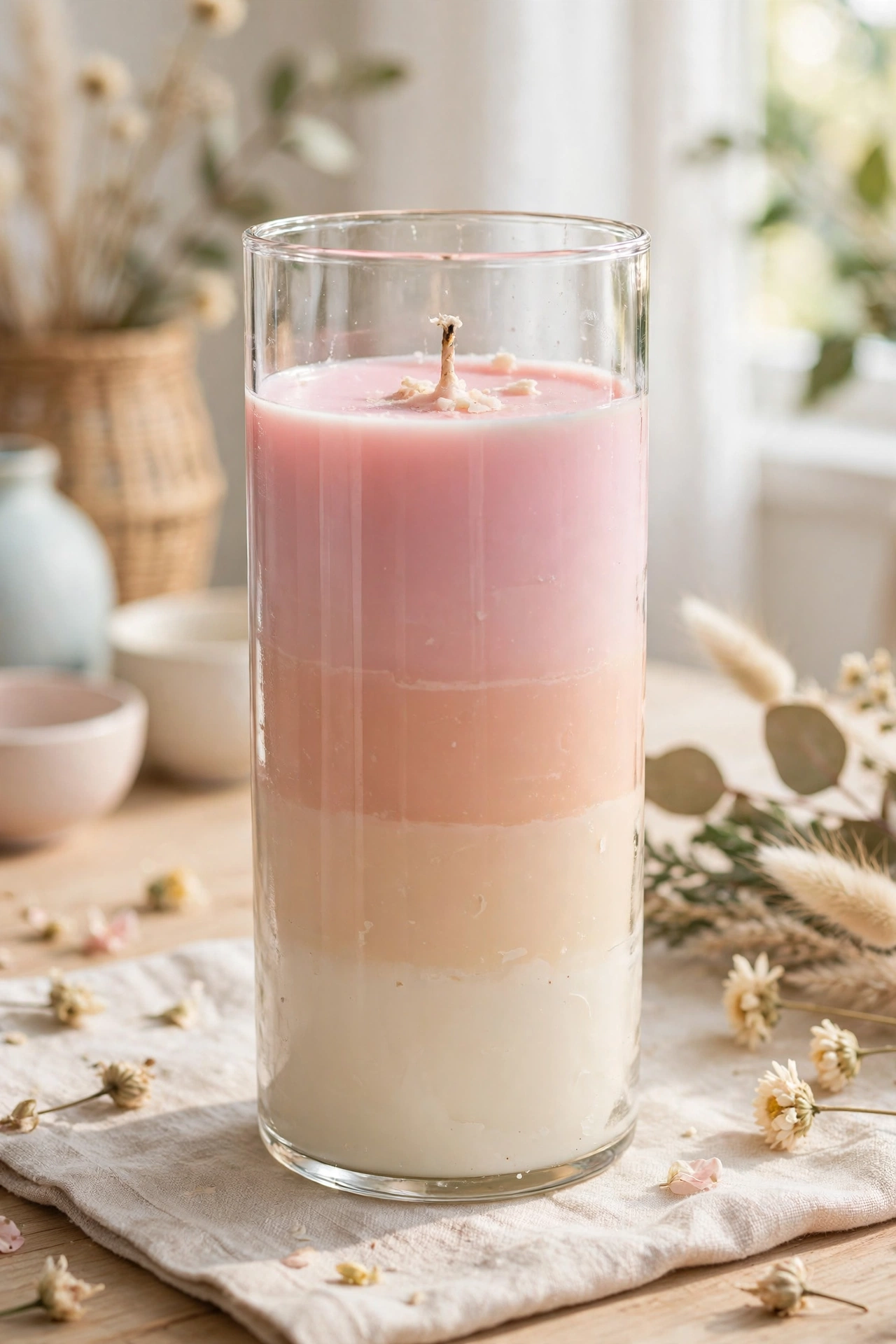
Three or four pastel layers — blush pink melting into peach melting into cream — turn a simple jar candle into a piece of art. Pour each layer, let it set firm but warm (30–45 minutes), then pour the next. Use one scent throughout so layers blend aromatically while staying visually distinct.
Try this: poke a few tiny relief holes in each set layer with a skewer before pouring the next. It releases trapped air and bonds the layers so they do not separate into rings later.
10. Dried Flower Botanical Candle
Difficulty: Easy | Cost: $10-$25
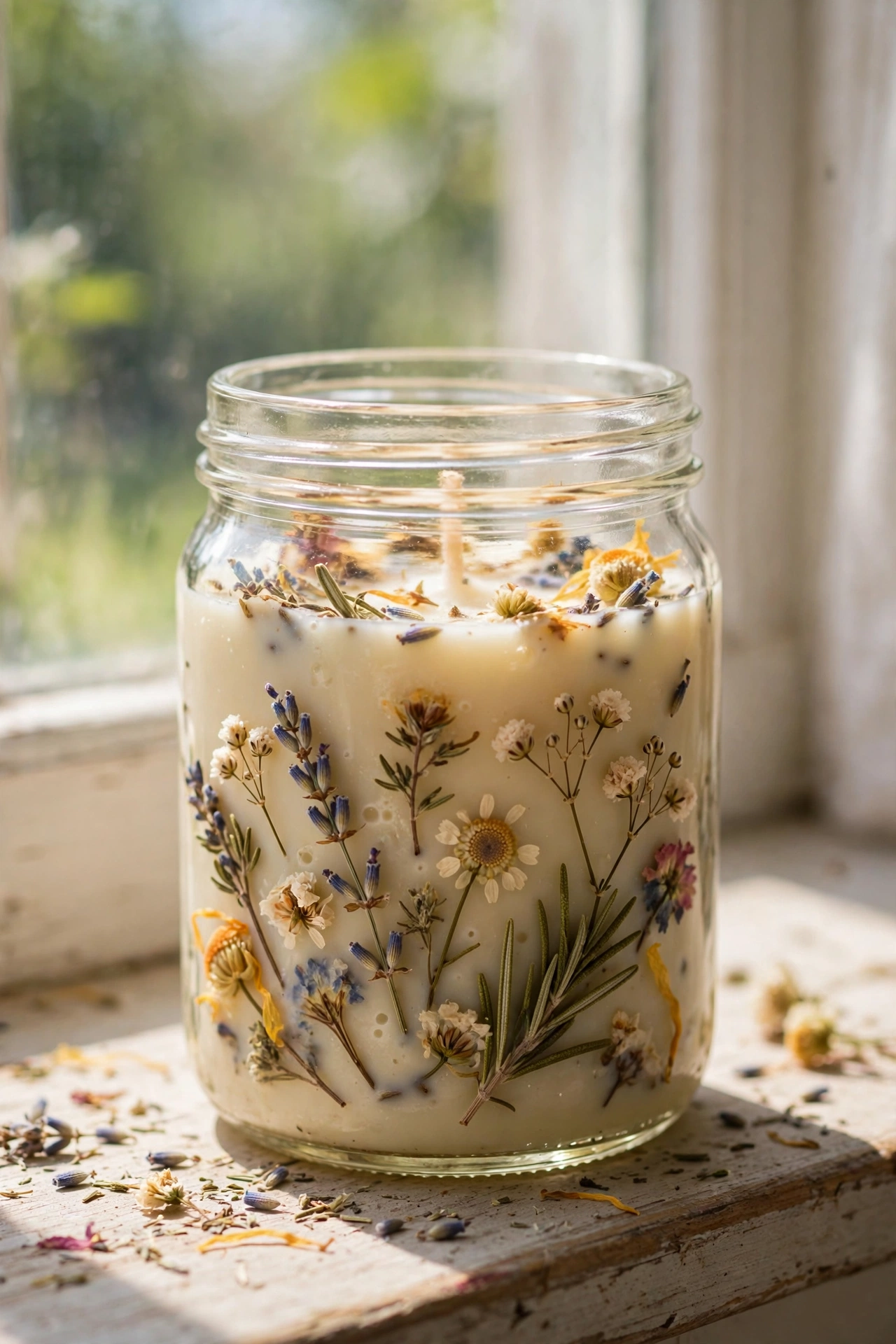
Press tiny dried wildflowers — baby’s breath, lavender buds, chamomile — into the top of a cream-colored candle and it looks like a meadow captured in wax. The trick is restraint: a light scattering reads elegant, a heavy handful reads compost. Work quickly while the top is still soft, pressing each flower in with tweezers.
Try this: keep all botanicals at least half an inch from the wick. Dried flowers near the flame can catch, so the pretty zone is the outer ring of the candle top, never the center.
11. Vintage Teacup Candle
Difficulty: Easy | Cost: $15-$30
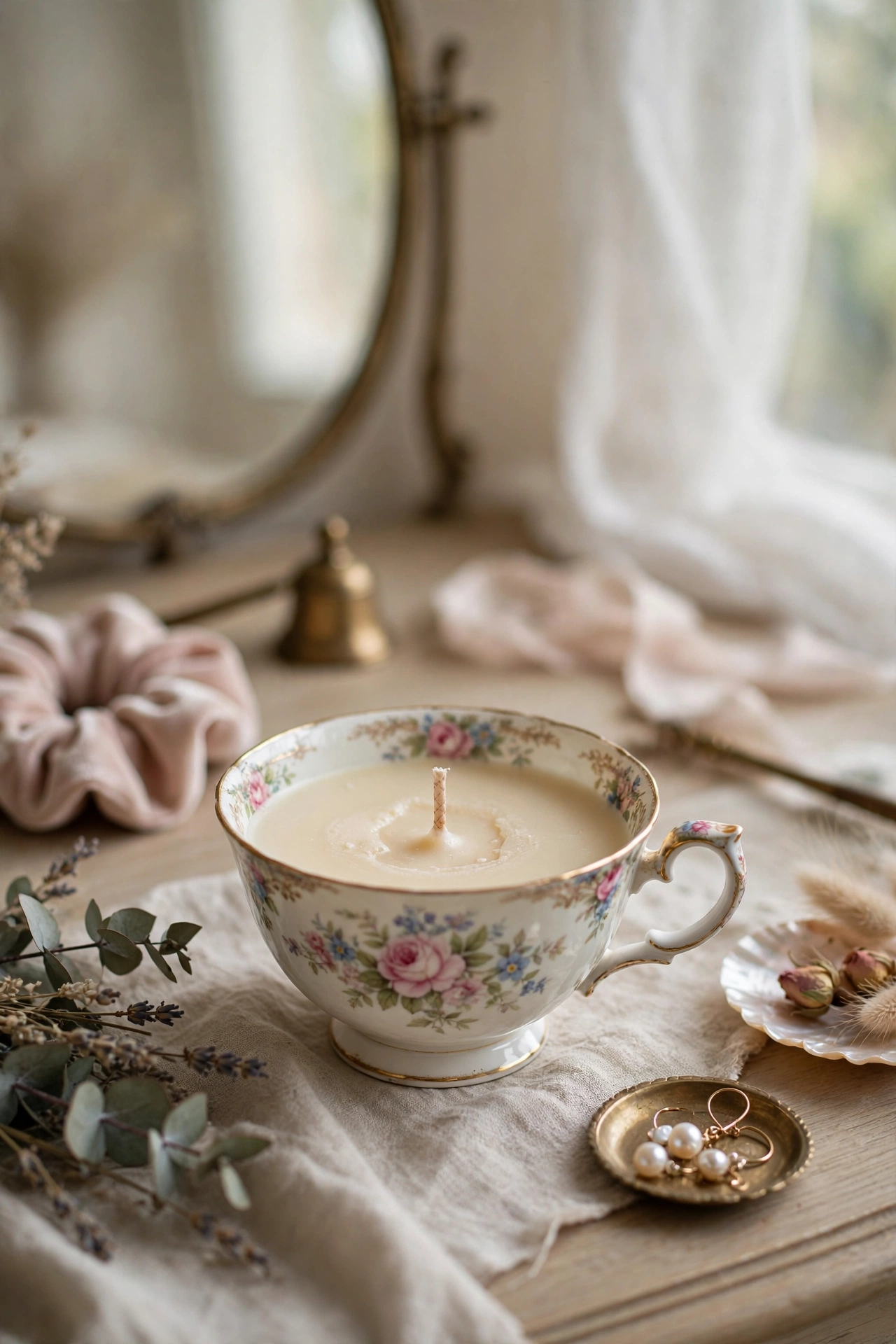
Flea-market teacups were made for this. A delicate floral teacup filled with rose or Earl Grey-scented wax is the prettiest candle you will ever give someone, and mismatched cups mean every one is unique. Check that the cup has no cracks (pour in a little hot water first to test), and keep the wax an inch below the rim since teacups are shallow.
Try this: pair the candle with its saucer when gifting — the saucer catches any wax drips and turns the gift into a complete little set.
12. Mason Jar Farmhouse Candle
Difficulty: Easy | Cost: $10-$25
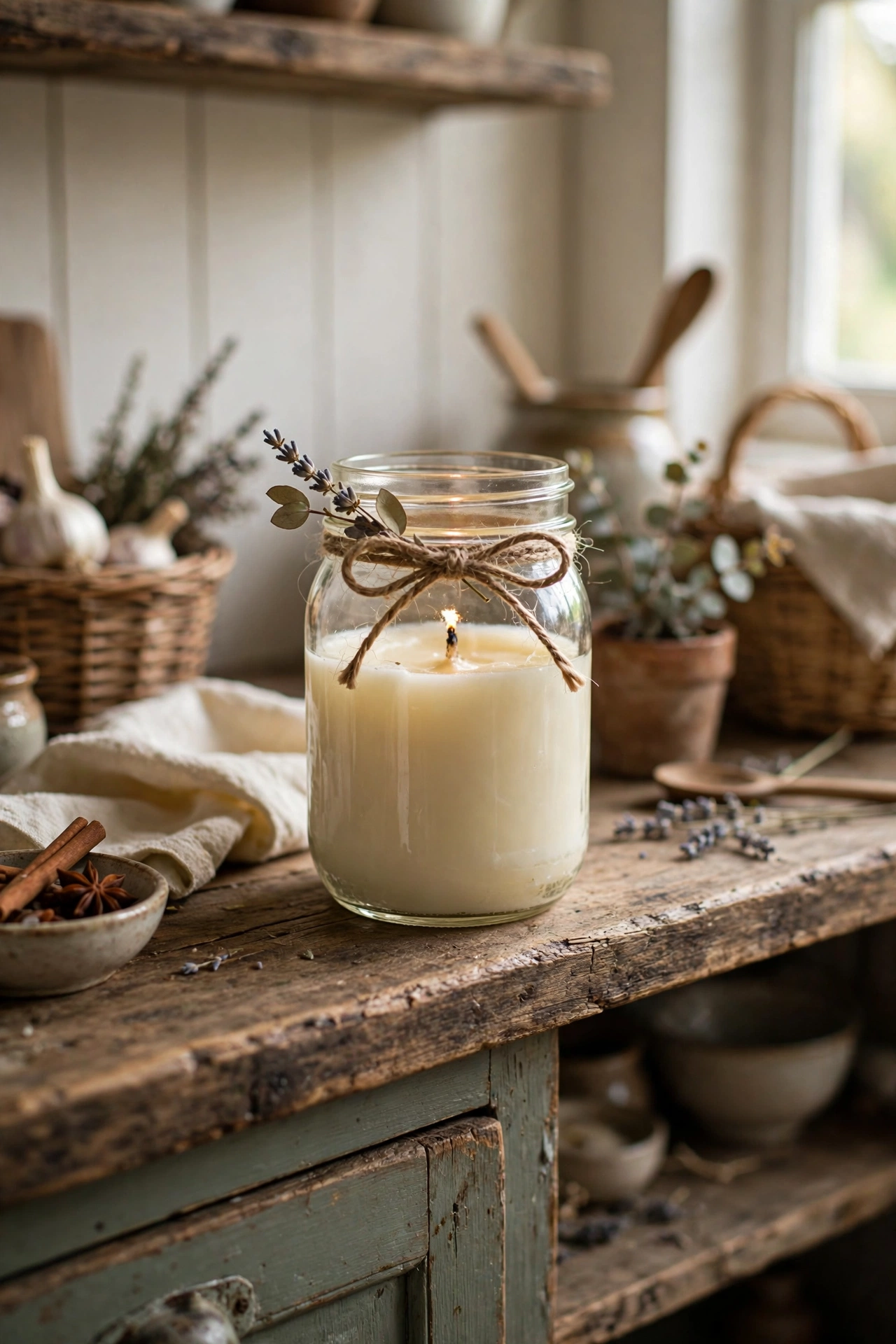
The farmhouse classic: a mason jar, a simple clean scent like fresh linen or apple orchard, and a twine bow around the neck. Mason jars are practically designed for candles — thick glass, wide mouth, cheap and everywhere. This is the candle you make ten of at Christmas and hand to everyone on your list.
Try this: use the wide-mouth half-pint jars for the best scent throw. The wider the melt pool, the more fragrance releases — narrow jars look cute but smell quieter.
13. Seashell Beach Candle
Difficulty: Easy | Cost: $10-$25
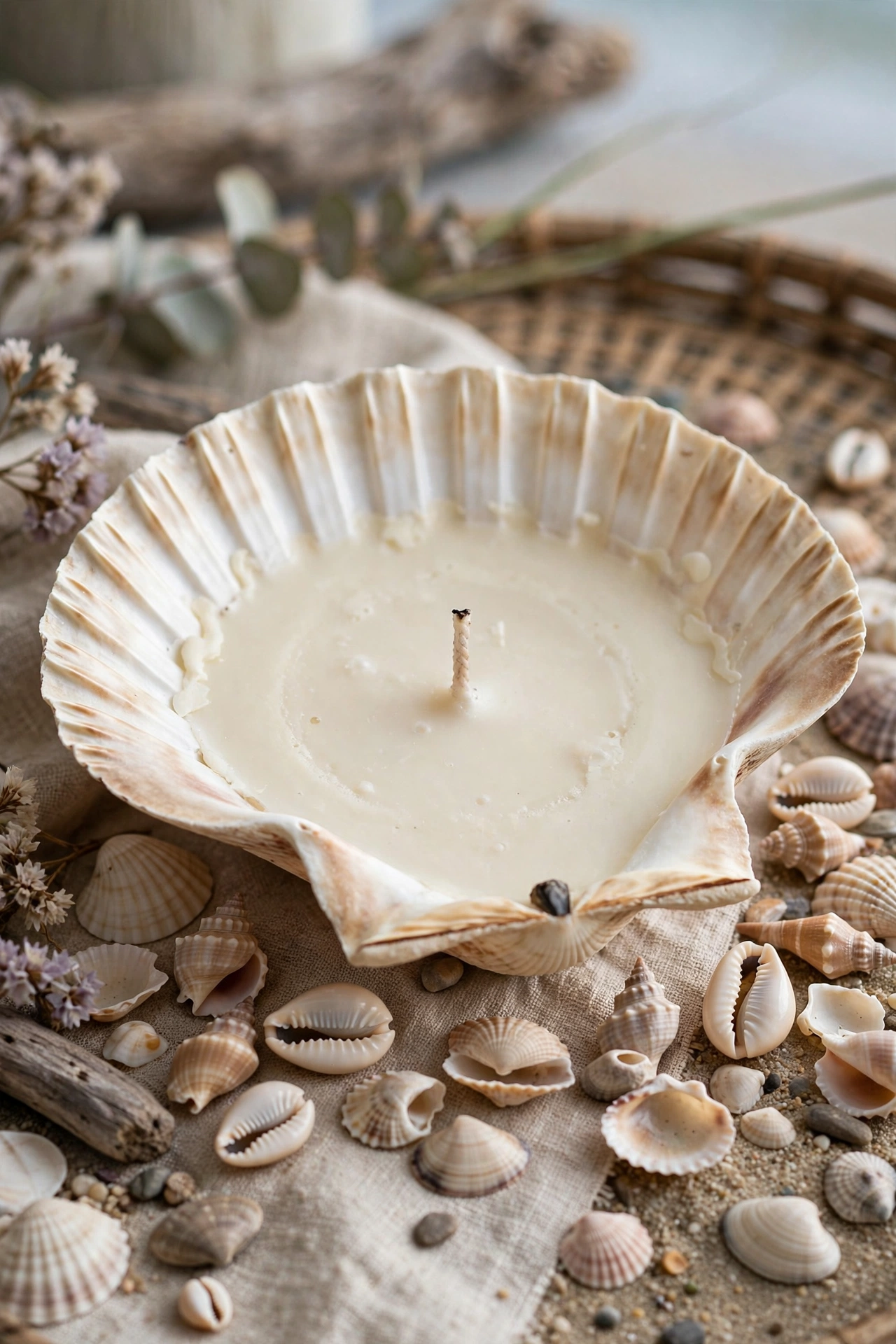
A big scallop shell filled with ocean-breeze or coconut-scented wax is a vacation you can light. Set the shell in a small bowl of sand or rice to keep it level while pouring, and use a short wick since shells are shallow. These are stunning as a set of three down a summer tablescape — and they cost almost nothing if you collect the shells yourself.
Try this: seal any tiny holes or cracks in the shell with a dab of hot glue before pouring. Shell wax leaks are a mess you only want to clean up once.
14. Pine Forest Holiday Candle
Difficulty: Easy | Cost: $15-$30
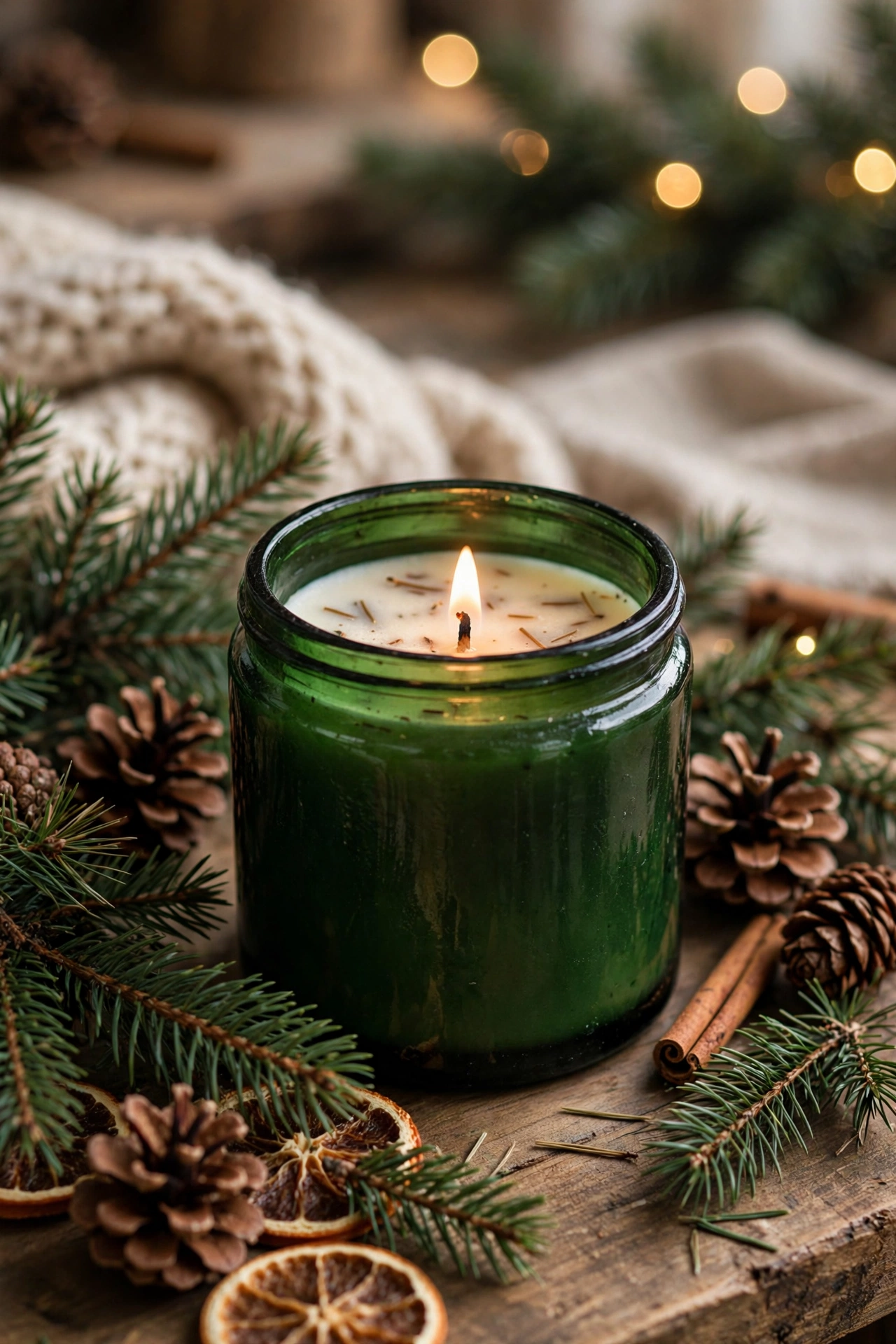
Fraser fir or balsam fragrance in a deep green jar is December in a container — it smells like bringing the tree inside without the needles everywhere. This is the candle to make in November so it cures in time for the holidays. A sprig of real pine tucked under the twine bow on the outside of the jar is the finishing touch.
Try this: pine scents are strong, so drop to 6–7% fragrance load instead of the full 10. Over-scented pine smells like cleaning product; properly dosed, it smells like a forest.
15. Apple Pie Kitchen Candle
Difficulty: Easy | Cost: $10-$25
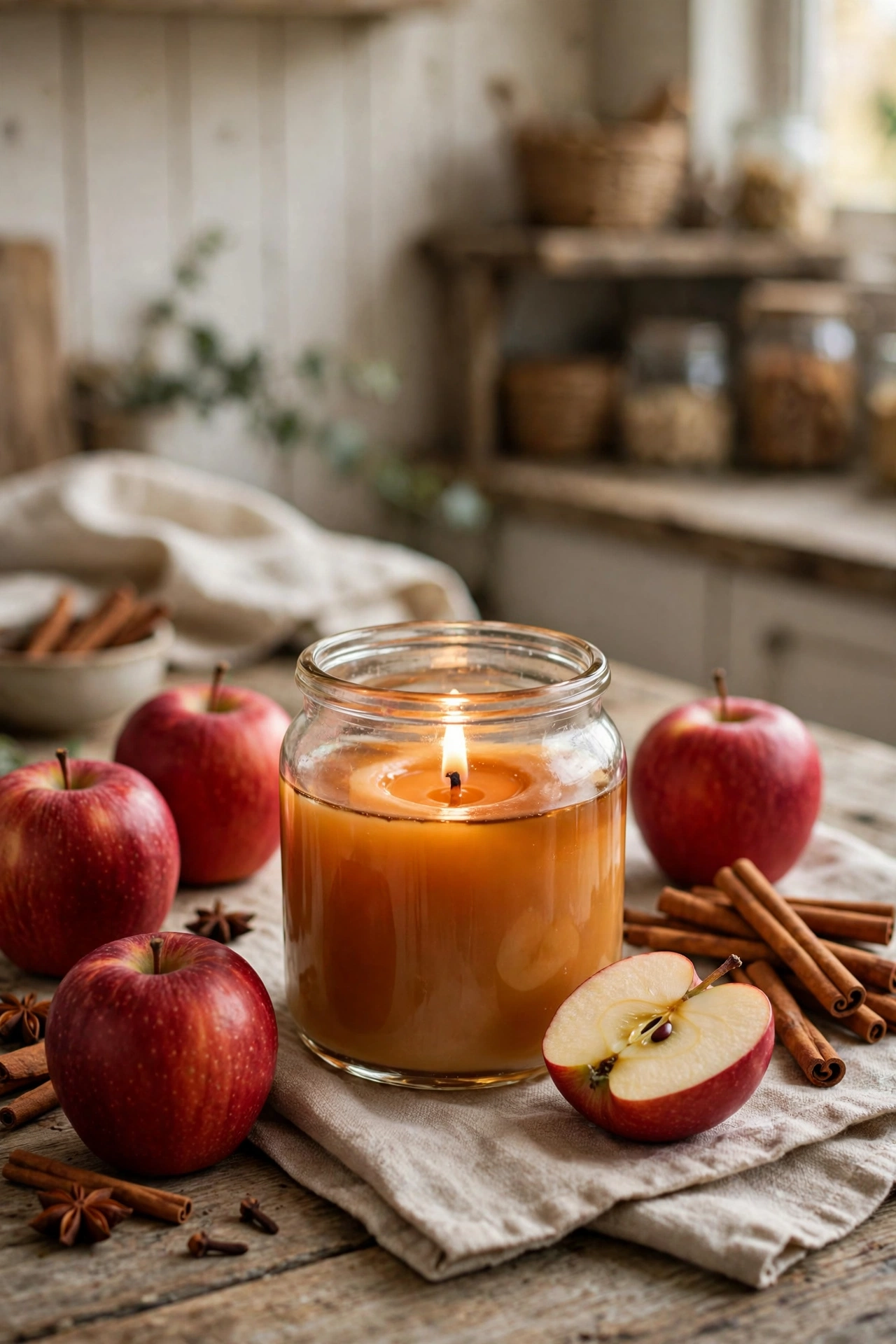
Warm apple, brown sugar, and a hint of crust-like vanilla — an apple pie candle makes the whole kitchen smell like someone is baking, even on a Tuesday night with takeout. Bakery scents are the strongest throwers in candle making, so this one will fill an open-plan space easily. It is also the scent guests compliment most, in my experience.
Try this: bakery fragrances can discolor wax to a warm tan over time. Embrace it — pour in amber or cream jars where the color change looks intentional instead of surprising.
16. Chocolate Vanilla Dessert Candle
Difficulty: Easy | Cost: $10-$25
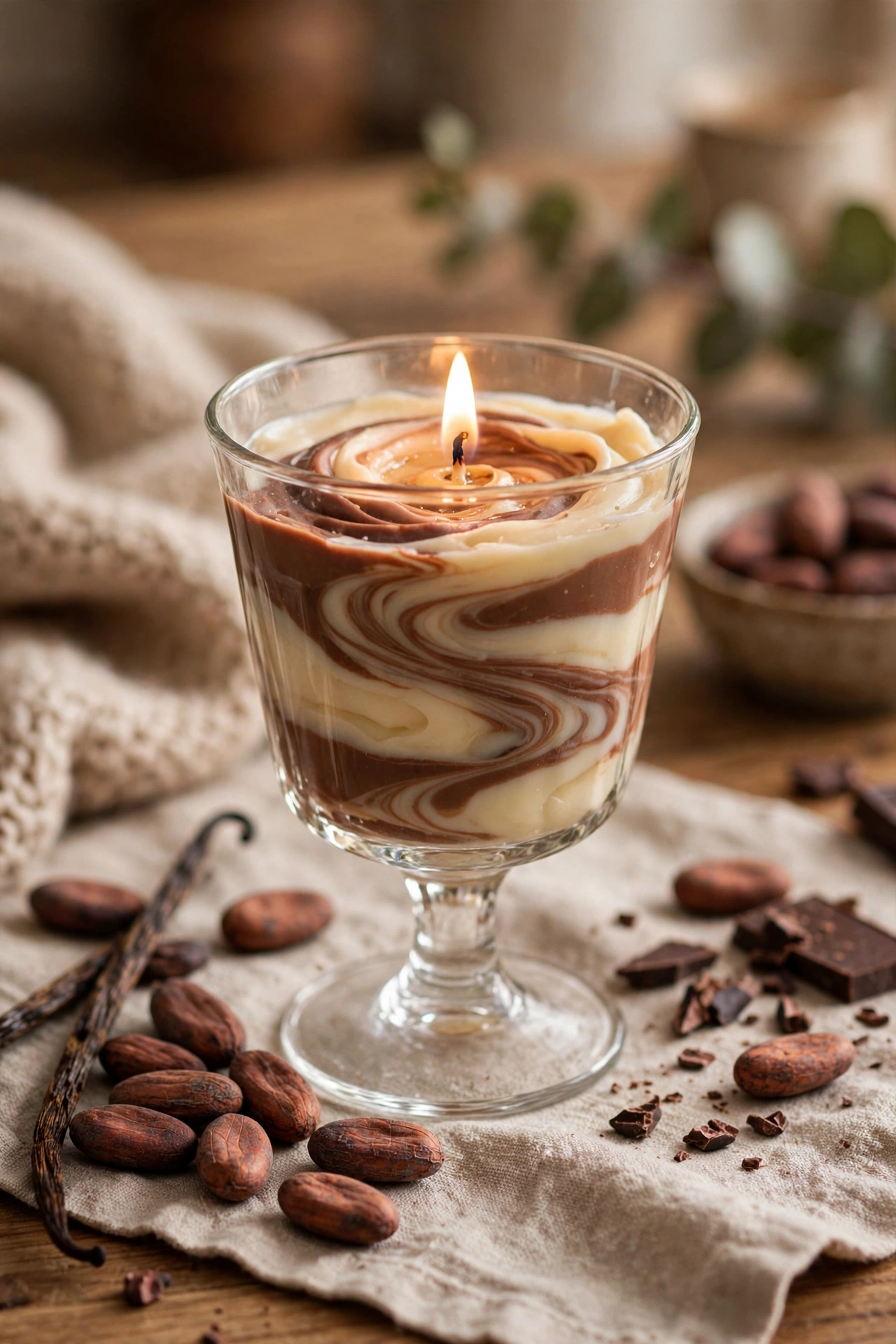
Swirled chocolate and vanilla wax in a dessert glass looks good enough to eat — which is exactly why you should label it clearly if kids are around. Pour the vanilla base, then drizzle melted chocolate-colored wax in ribbons and swirl once with a skewer. The scent is pure indulgence: cocoa, cream, and warm vanilla that makes a living room feel like a patisserie.
Try this: one swirl only. Over-swirling muddies the colors into a uniform brown; a single confident drag gives you those beautiful marbled ribbons.
17. Lemongrass Kitchen Fresh Candle
Difficulty: Easy | Cost: $15-$30
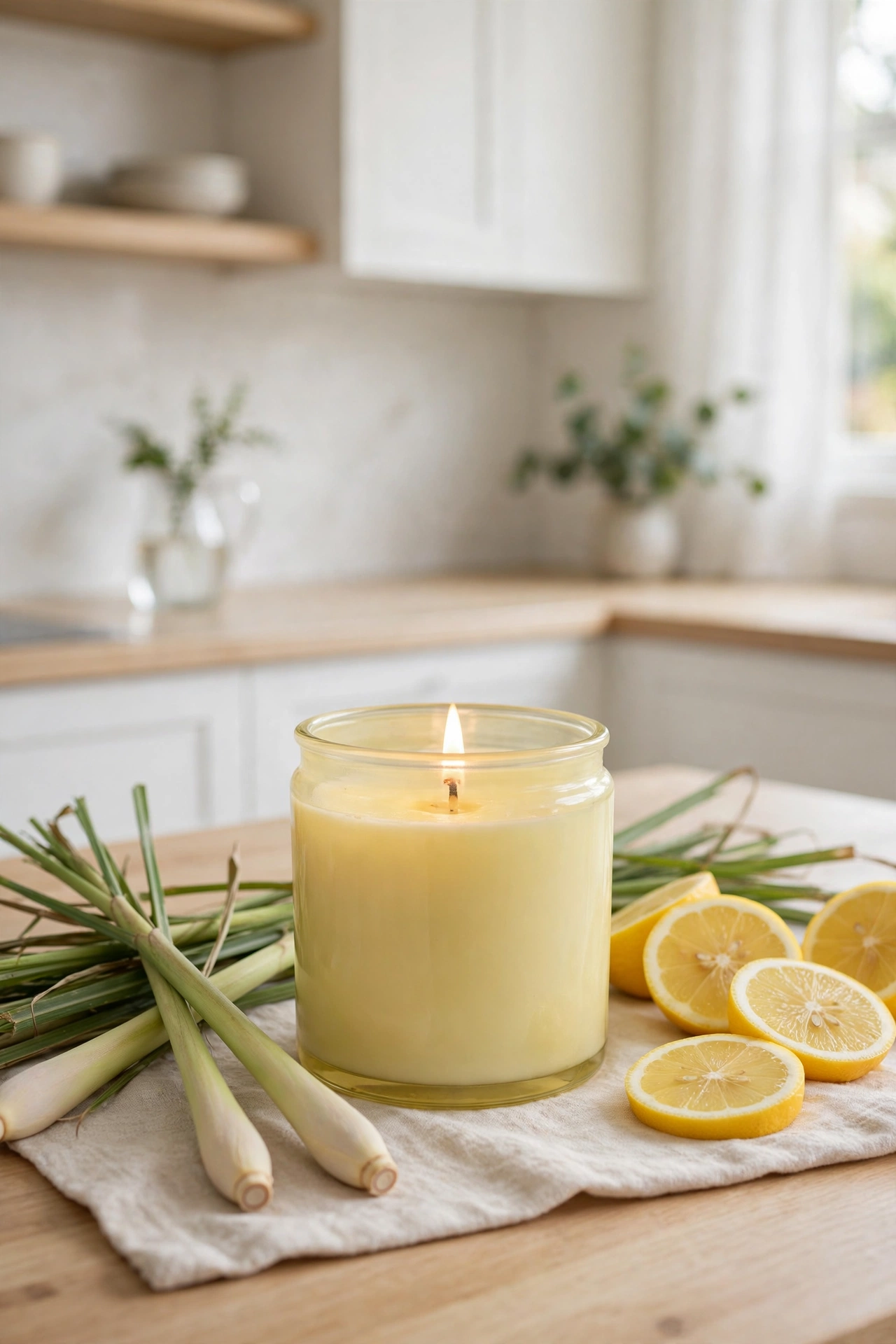
Every kitchen needs a candle that fights cooking smells, and lemongrass is the champion. Crisp, green, and clean, it neutralizes last night’s fish tacos better than any spray. Keep one on the counter and light it while you cook — by dessert, the kitchen smells like a spa instead of a fryer.
Try this: citrus-herb scents fade faster than bakery or spice scents, so burn this one sooner rather than later. It is at its brightest in the first month after curing.
18. Sandalwood Study Candle
Difficulty: Easy | Cost: $10-$25
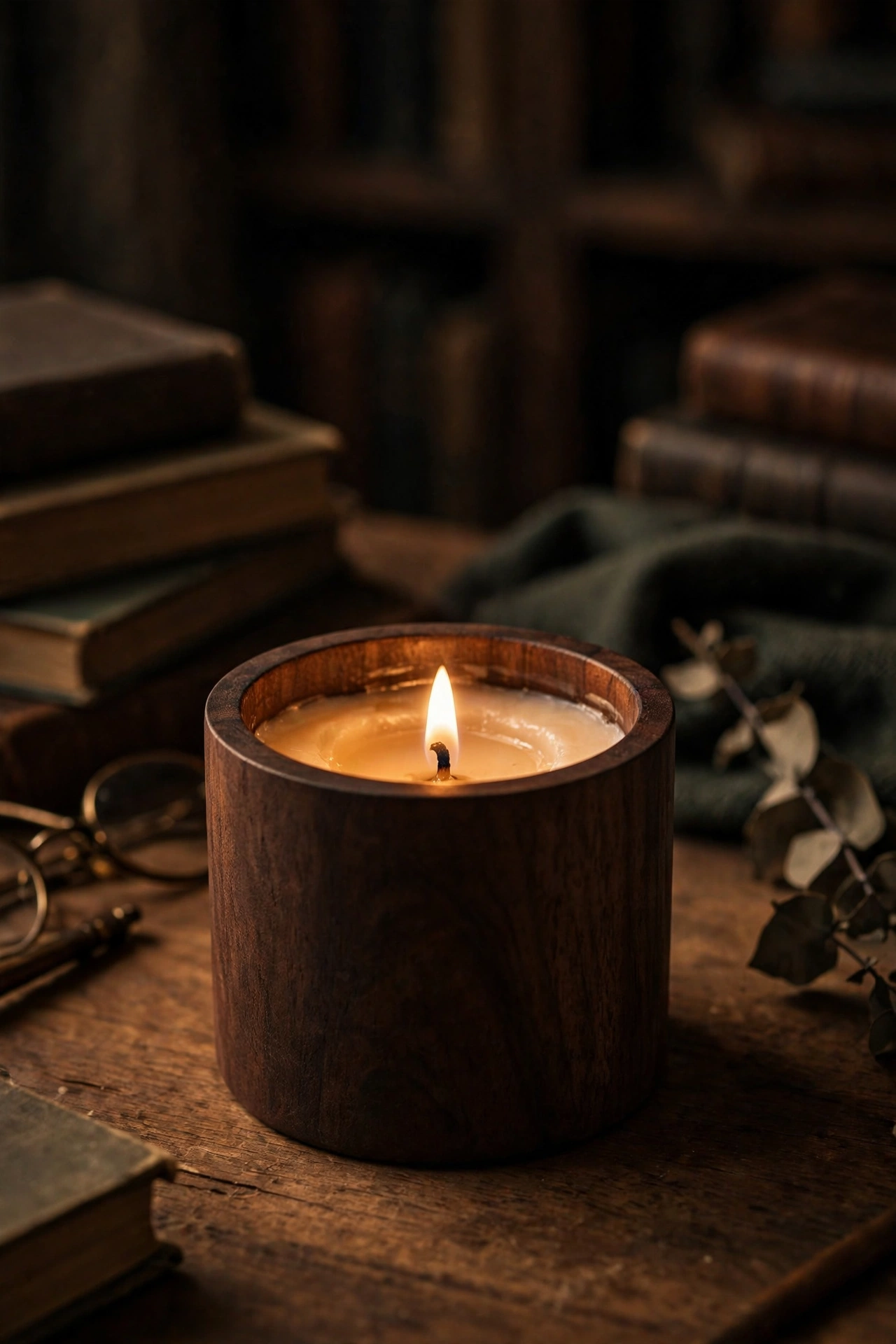
Warm, woody, quietly masculine — sandalwood is the scent of a well-read study. Grounding rather than sweet, it works in a home office without distracting. Blend with amber for depth, and style it in a cozy library reading nook where it feels right at home.
Try this: woody scents benefit from a longer cure — give sandalwood candles a full two weeks. The scent deepens and rounds out noticeably compared to burning at 24 hours.
19. Pumpkin Spice Seasonal Candle
Difficulty: Easy | Cost: $10-$25
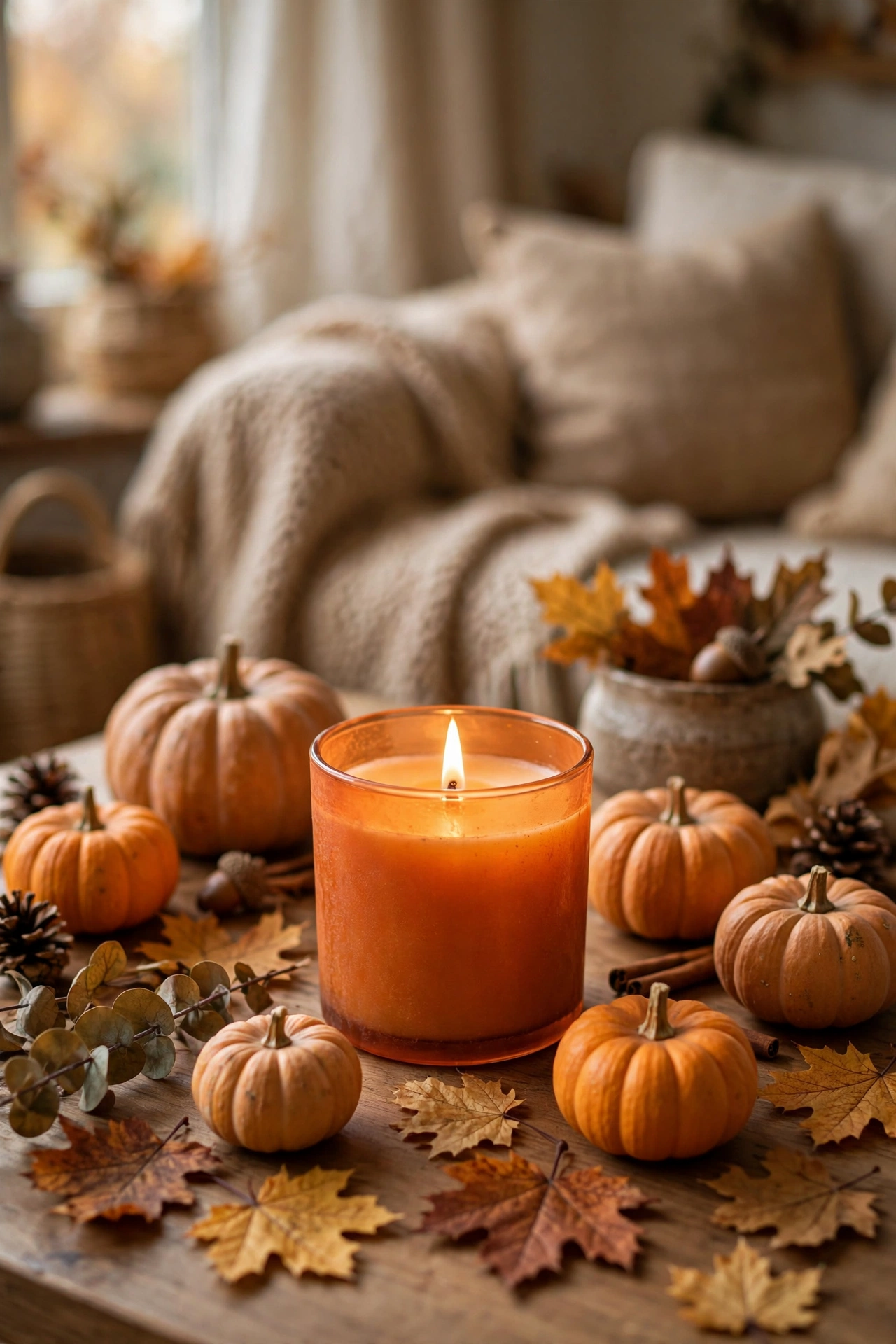
Pumpkin, cinnamon, nutmeg, vanilla in a warm orange jar — the queen of fall candles. Make a big batch in September; people request these by name. Style a row along the mantel using these fall mantel decorating ideas — pure October magic. Mini pumpkins around the jar, never in the wax.
Try this: pour these in early fall even if you will not burn them until later. Spice fragrances are among the best agers — a month of cure makes pumpkin spice richer and smoother.
20. Peppermint Winter Candle
Difficulty: Easy | Cost: $15-$30
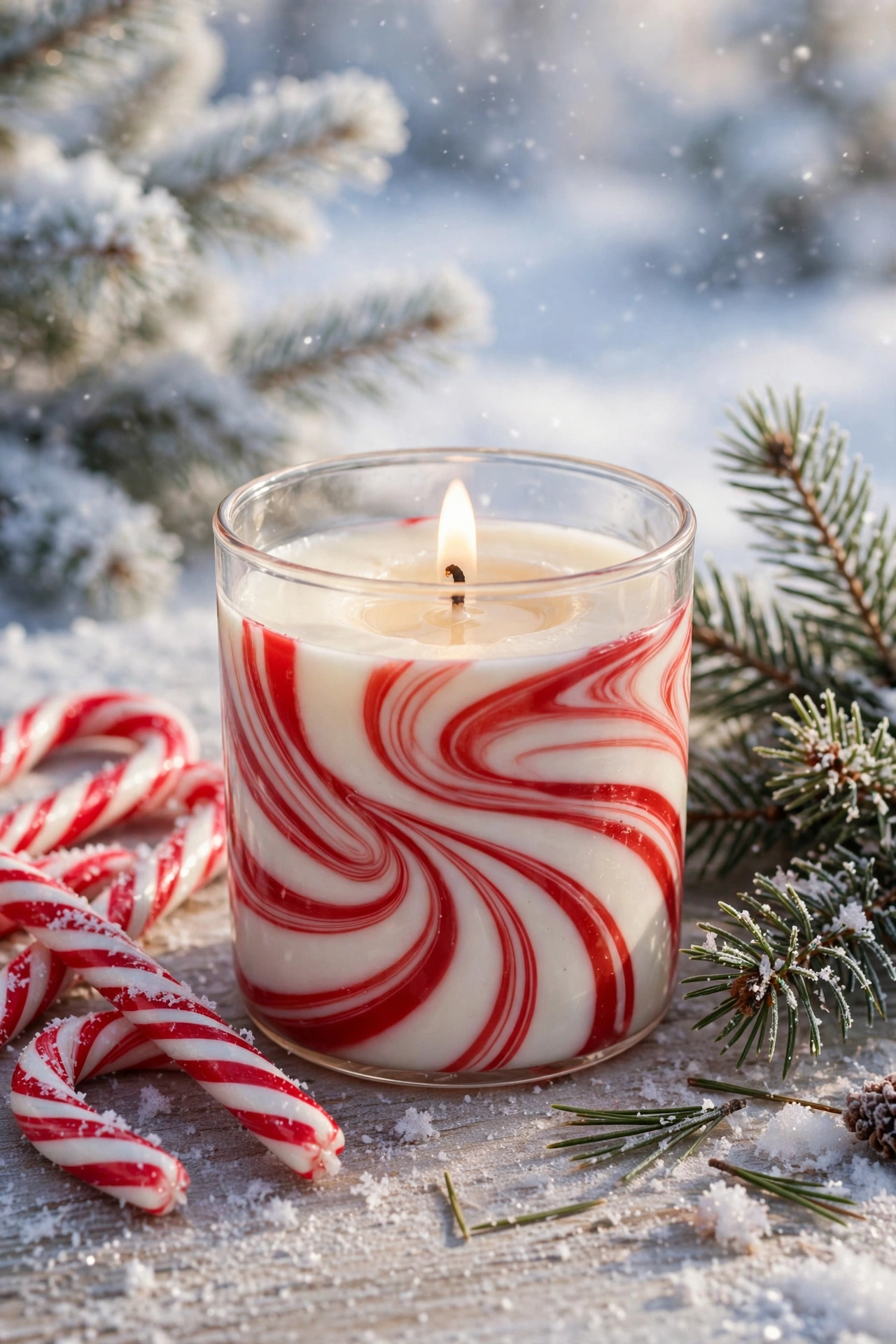
Crisp peppermint in a red-and-white swirled jar is Christmas morning energy. Peppermint is one of the strongest essential-oil scents, so a little goes a long way — 5–6% is plenty, and more can smell medicinal rather than festive. Pair it with a touch of vanilla to round the sharp edges into something cozy.
Try this: peppermint oil can make wax set faster than expected. Have your jar wicked and ready before you stir it in, and pour promptly.
21. Honey Vanilla Beeswax Candle
Difficulty: Easy | Cost: $10-$25
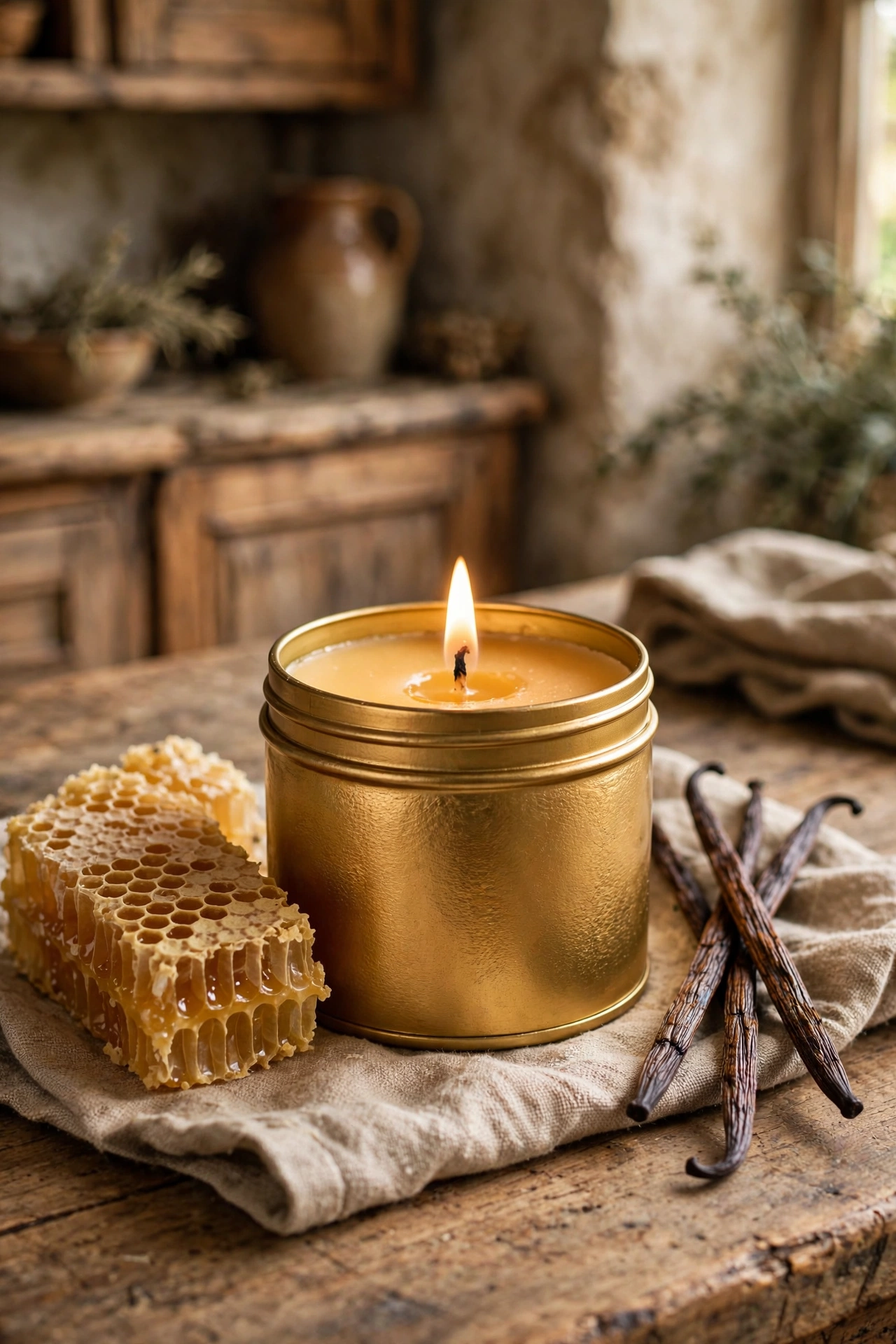
Beeswax plus honey plus vanilla is the warmest, most comforting scent combination in this whole list — like a hug in candle form. The natural golden color of beeswax means you do not even need dye; it glows amber on its own. A piece of real honeycomb on the lid (for gifting, unlit display only) makes it unforgettable.
Try this: beeswax shrinks more than soy as it cools, so expect a dip around the wick. Plan a second pour — melt a little extra wax and top up the well for a perfectly level surface.
22. Rosemary Herb Garden Candle
Difficulty: Easy | Cost: $10-$25
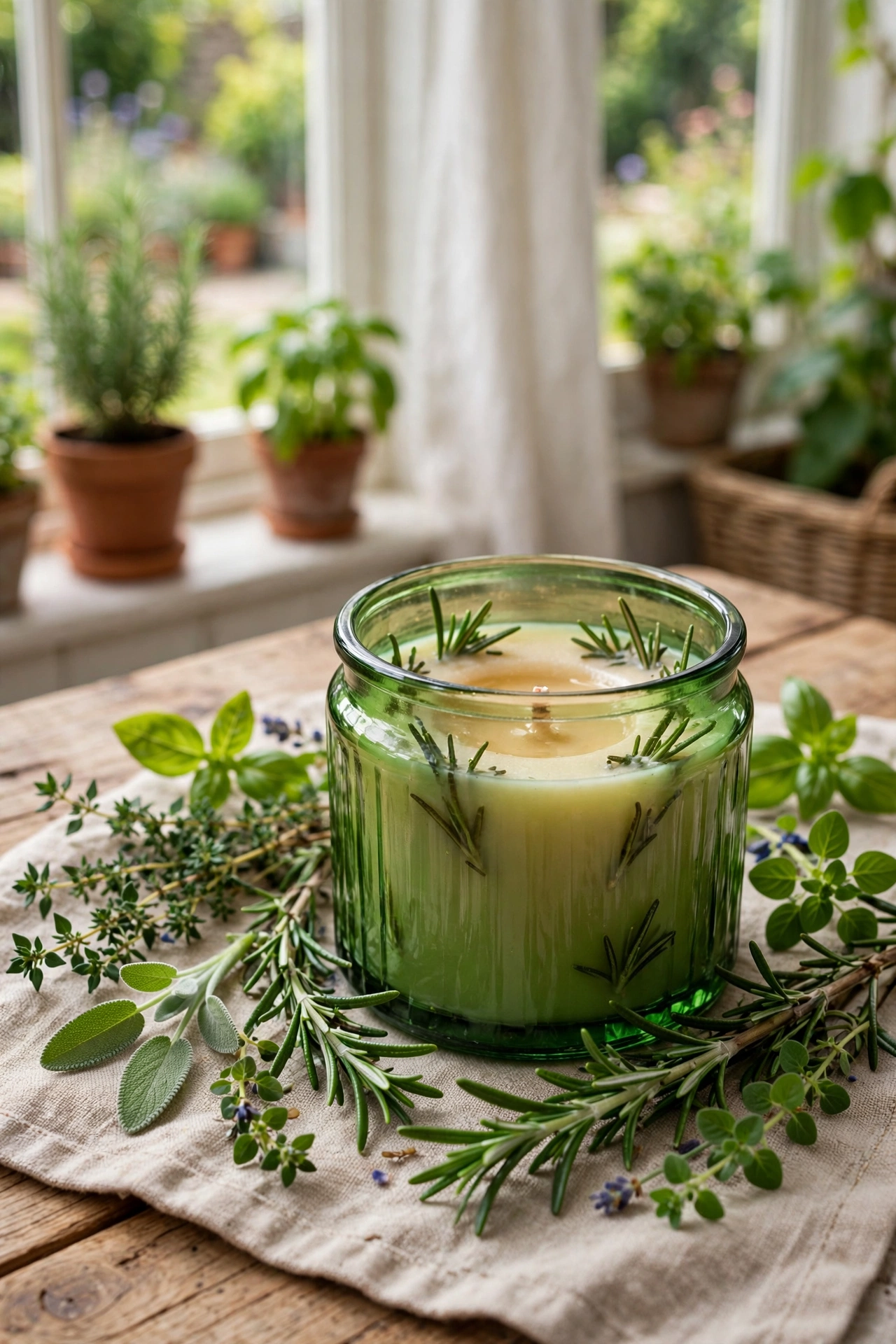
Herbaceous and sophisticated — rosemary smells like a garden after rain, and it doubles as a natural mosquito deterrent on summer patios. For herb-candle basics with kitchen equipment, CandleScience’s candle-making guides cover the techniques without special gear.
Try this: rosemary essential oil is potent — start at 5% and test-burn before making a batch. Herb scents go from fresh to overpowering faster than any other category.
23. Floating Flower Candle Centerpiece
Difficulty: Easy | Cost: $15-$30
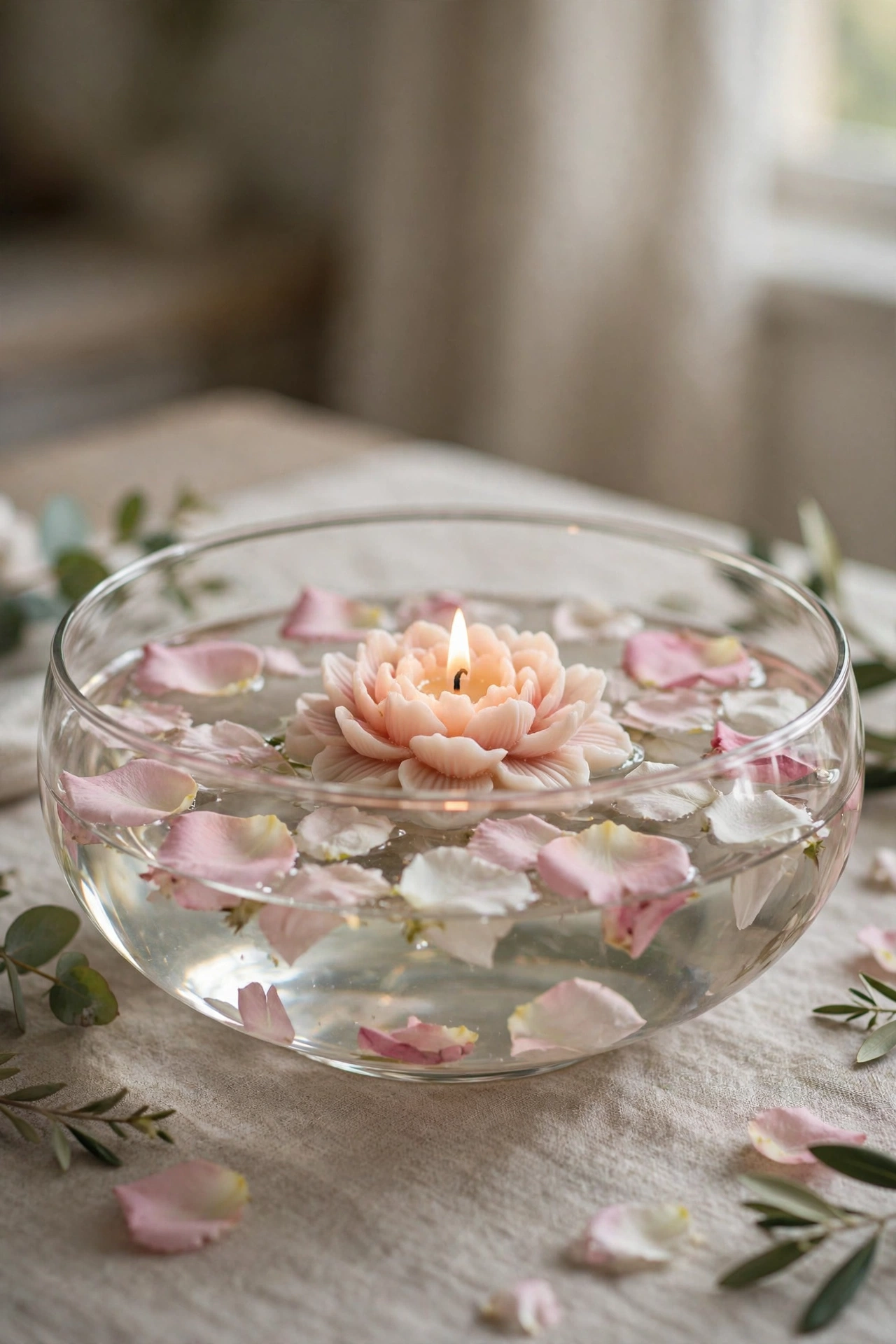
Tiny disc candles that float in a bowl of water with flower petals are the easiest elegant centerpiece ever made. Pour wax into small silicone molds (bottle caps work in a pinch), add a short wick, and float them in a wide glass bowl. They are perfect for dinner parties, weddings, and anywhere you want candlelight without a forest of jars.
Try this: use distilled water in the bowl. Tap water minerals can leave spots on the glass, and distilled keeps the whole centerpiece crystal clear.
24. Recycled Crayon Rainbow Candle
Difficulty: Easy | Cost: $10-$25
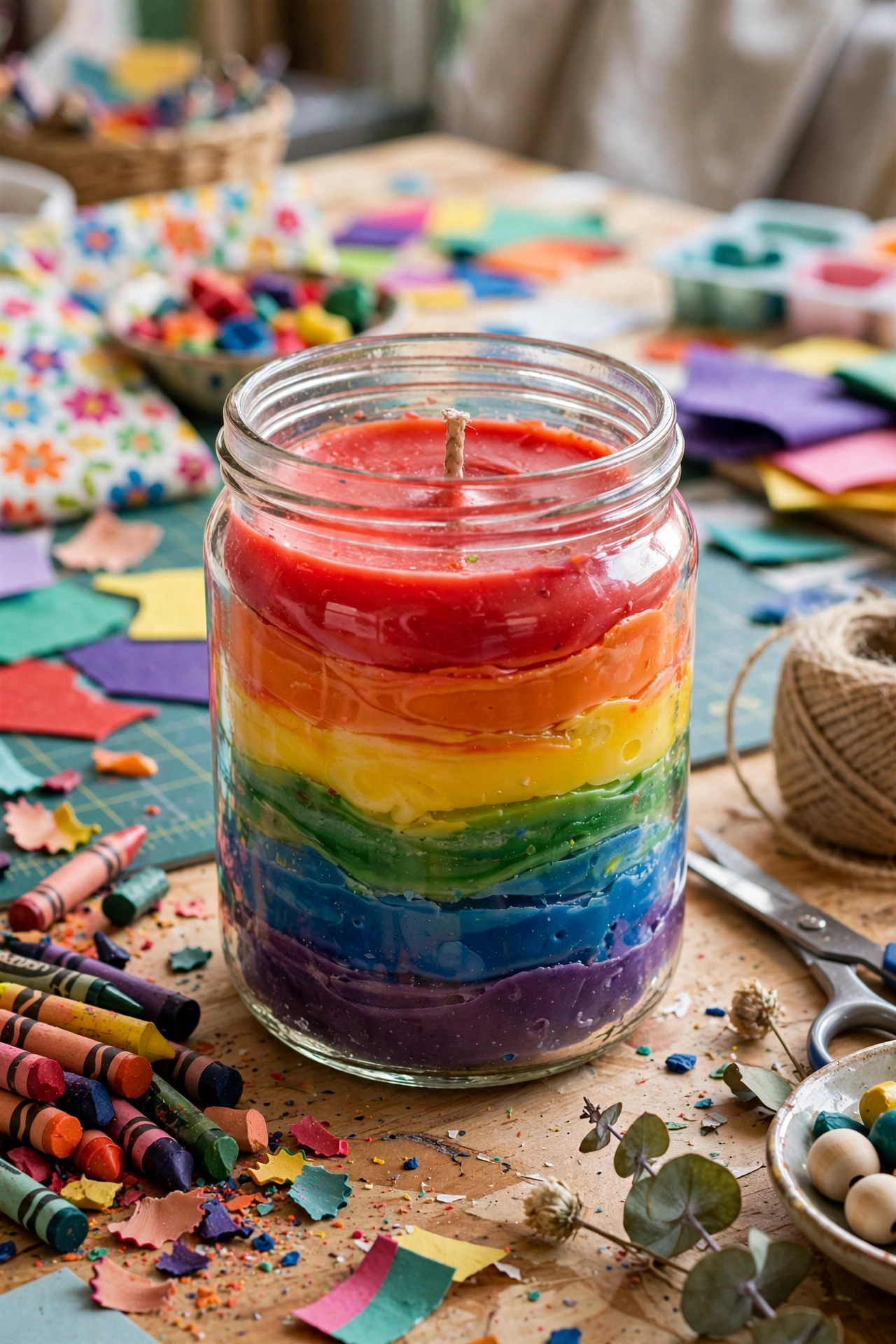
The ultimate kid-friendly project: melt down broken crayons (paper peeled off) into rainbow layers for a candle no child will forget making. Each color gets its own quick melt and pour. A fair warning — crayon wax is paraffin, not candle-grade, so these are decorative and short-burning rather than everyday candles. But as a craft? Unbeatable.
Try this: this is a supervised-adults-handle-the-hot-wax project. Kids can pick colors, peel crayons, and choose the jar — grown-ups do all the melting and pouring.
25. Candle Gift Set
Difficulty: Easy | Cost: $10-$25
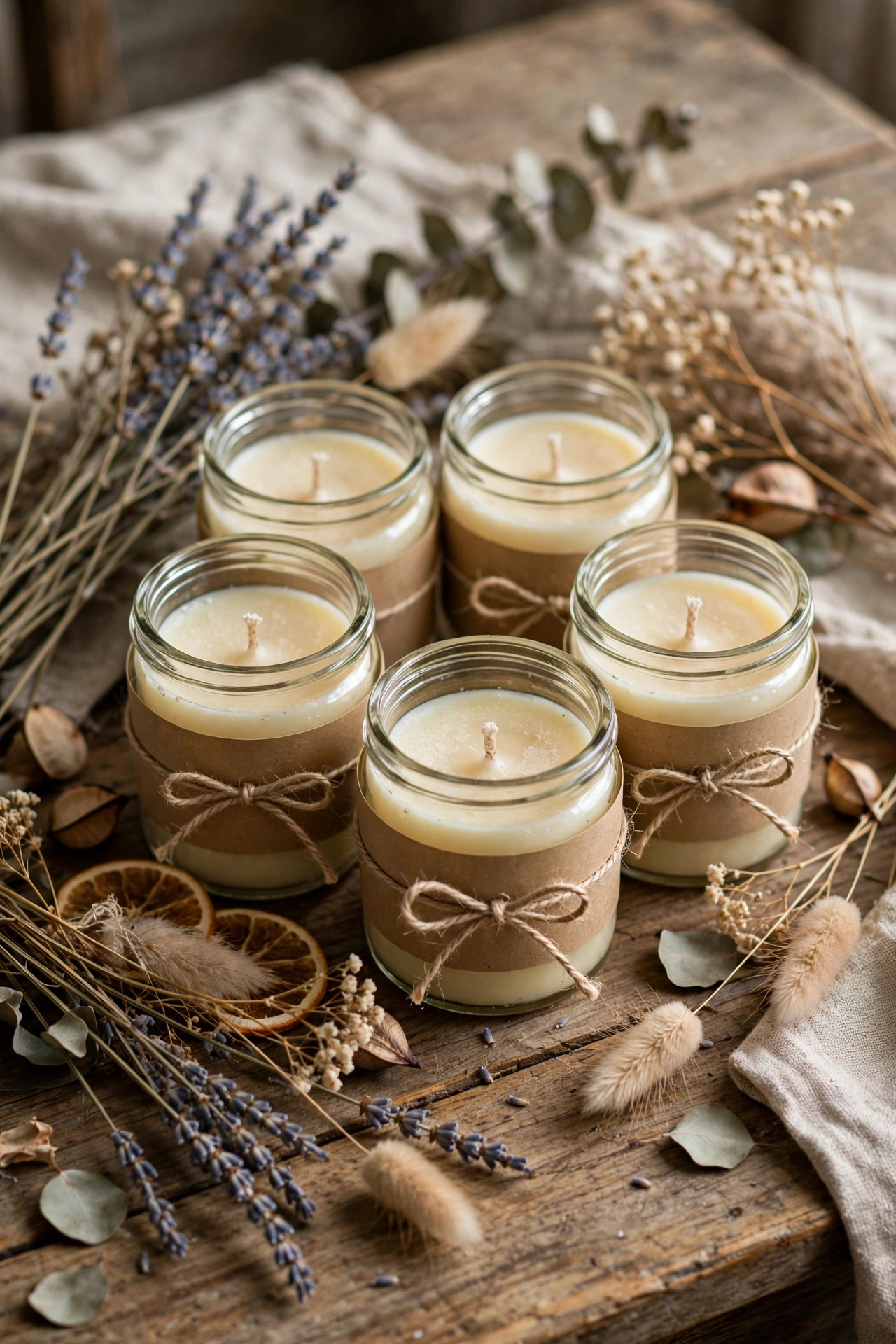
Three small candles in complementary scents — say lavender, vanilla, and eucalyptus — wrapped in twine with kraft paper labels is a gift that looks like it came from a boutique. The secret is consistency: same jars, same label style, different scents. Make them in assembly-line batches and you will have gifts ready for every birthday, hostess, and holiday that comes up.
Try this: write the scent and the pour date on each label. It looks professional, helps the recipient know what they are getting, and reminds you which batches need to be burned sooner.
Quick-Pick Cheat Sheet
Not sure which candle to pour first? This cheat sheet matches the most popular options to their difficulty, cost, and best use:
| Candle | Best For | Est. Cost | Difficulty |
|---|---|---|---|
| Lavender soy jar | First-ever pour | $2–$4 | Beginner |
| Mason jar farmhouse | Gifts in bulk | $2–$4 | Beginner |
| Coffee mug candle | Cozy mornings | $2–$5 | Beginner |
| Beeswax pillar | Natural purists | $5–$10 | Intermediate |
| Layered ombre | Showpiece gift | $4–$7 | Intermediate |
| Vintage teacup | Elegant gifts | $3–$8 | Beginner |
| Wooden wick | Crackling ambiance | $4–$8 | Intermediate |
| Pumpkin spice | Fall favorite | $3–$5 | Beginner |
| Rose petal | Romantic occasions | $4–$7 | Intermediate |
| Candle gift set | Holiday gifting | $6–$12 | Beginner |
Frequently Asked Questions
What is the best wax for homemade scented candles?
Soy wax is the best choice for beginners: it melts at a low temperature, holds fragrance well, burns cleanly, and cleans up with soap and water. Beeswax is a wonderful natural alternative with its own honey scent, but it melts hotter and can be trickier to wick. Avoid paraffin if you want a cleaner burn — it is petroleum-based and produces more soot.
How much fragrance oil should I add to my candle?
Use 6–10% fragrance oil by weight — about 1 ounce of fragrance per pound of wax. Going above 10% can cause sweating, poor burning, or even a fire risk, so always stay within your wax supplier’s recommended maximum. Essential oils are weaker than fragrance oils; you will need more drops for a noticeable scent, and some (like cinnamon or clove) can irritate skin and should be handled carefully.
Why is my homemade candle tunneling, and how do I fix it?
Tunneling happens when the first burn is too short — the wax “remembers” the small melt pool and never melts fully again. Always let the first burn last until the melt pool reaches the jar edges (about one hour per inch of diameter). It can also mean your wick is too small for the container; size up one wick and test-burn again before making a whole batch.
How long should homemade candles cure before burning?
Wait at least 24 hours so the wax fully hardens, but soy candles smell noticeably stronger after 1–2 weeks of curing — the fragrance needs time to bind with the wax. Beeswax benefits from a few days minimum. Store curing candles at room temperature away from sunlight, and resist the urge to test-burn early; patience is the cheapest way to get a stronger scent throw.
Can I reuse old candle jars and leftover wax?
Yes. Freeze old jars for a day or two and the leftover wax pops right out; wash with hot soapy water before reusing. Leftover wax scraps can be remelted into new candles — just strain out old wick bits through cheesecloth. Never pour melted wax down the drain; let drips harden and throw them away, since wax solidifies in pipes.
Final Thoughts
Candle making is one of those crafts that rewards you far out of proportion to the effort. An hour of melting and pouring gives you weeks of beautiful scent, a shelf of gifts that people genuinely love, and a new party trick (“oh, I made that”) that never gets old.
Start with the classic lavender soy jar — it is cheap, forgiving, and nearly impossible to mess up. Once you have one good pour under your belt, the whole list opens up: seasonal scents for the holidays, teacup candles for gifts, a crackling wooden wick for cozy nights in. Light that first homemade candle, and try not to feel a little bit proud. You will fail.


