



A pond sounds like a big-project thing, but a patio pond can be a single barrel, a ceramic pot, or a galvanized trough. No digging, no permits, and you can have water plants blooming by next weekend.
These 15 DIY patio pond ideas all fit on a patio, balcony, or small yard. I started with a half-barrel pond on my own patio three years ago, and the water lilies bloomed the very first summer. Every idea below covers the container, the plants, and how to keep the water clear.
• Any watertight container of 15 to 20 gallons or more can become a patio pond.
• Mix three plant types: oxygenators, floaters, and marginals.
• Partial shade keeps algae down and water cooler.
• Moving water from a small solar pump cuts mosquito breeding.
• Fill with rainwater when you can; tap water works after sitting 24 hours.
1. Half whiskey barrel pond
The classic patio pond. Line a half oak barrel with pond liner or a purpose-made plastic insert, add 3 inches of gravel, and plant a miniature water lily. Barrels hold 50 to 80 liters, which is enough water to stay stable through hot spells.

Try this: Raise the barrel on bricks. The air gap underneath slows rot and keeps the wood drier.
Cost: $$| Difficulty: Easy | Time: 2 hours
2. Galvanized trough pond
Long, low galvanized troughs suit narrow patios and balconies. Line the inside with pond liner or paint it with a non-toxic sealant so zinc does not leach into the water. Plant marsh marigold and water mint along one end for a natural look.

Try this: Troughs heat up fast in full sun, so give this one afternoon shade or float extra plants for cover.
Cost: $$$| Difficulty: Easy | Time: 2 hours
3. Glazed ceramic pot pond
A large glazed ceramic pot, 20 inches or wider, makes a handsome centerpiece pond. Glaze is already waterproof, so there is no liner to fuss with. One dwarf water lily plus a few floating plants is all it needs.

Try this: In freezing climates, empty the pot before winter. Trapped ice can crack even thick glaze.
Cost: $$| Difficulty: Easy | Time: 1 hour
4. Belfast sink pond
Reclaimed Belfast or butler sinks are deep, heavy, and perfect for small ponds. Plug the drain with a rubber bung, add gravel and a couple of oxygenating plants, and you have a cottage-style water feature with real character.

Try this: Check salvage yards and online marketplaces. Sinks with small chips sell cheap and work just as well.
Cost: $$| Difficulty: Easy | Time: 1 hour
5. Plastic storage bin pond
A large dark storage tote becomes a pond in minutes: rinse it, add gravel and plants, fill with water. Bury it to the rim in a garden bed or hide the sides with stones and grasses. It is the cheapest way to try pond keeping before you invest more.
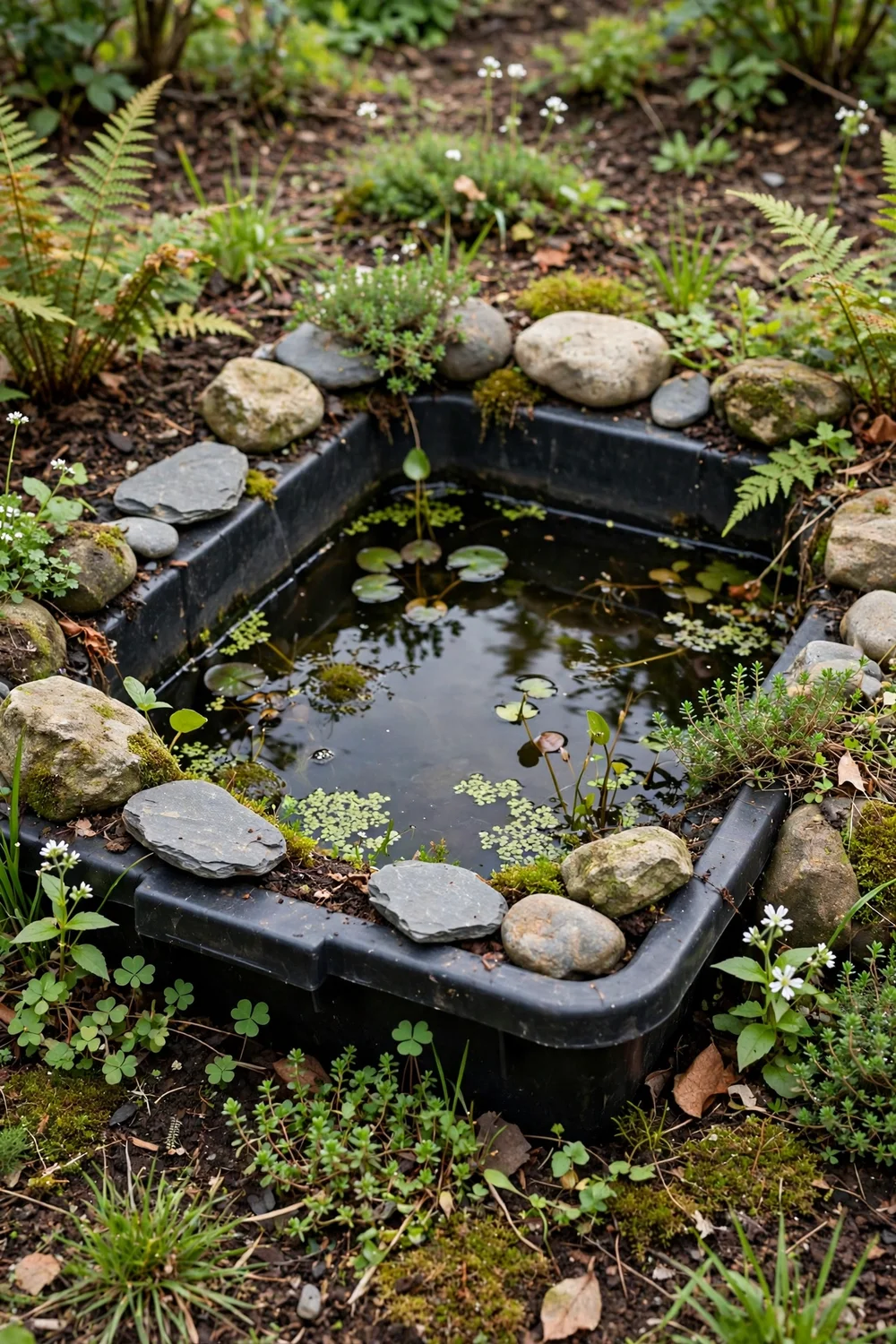
Try this: Choose a dark-colored bin. Light plastic grows algae faster because sunlight reaches the water.
Cost: $$| Difficulty: Easy | Time: 1 hour
6. Bucket or pail pond
A galvanized bucket or large metal pail holds enough water for two or three small plants. It takes almost no space, which makes it ideal for balconies and apartment patios. Group three buckets of different heights for a tiered look.

Try this: Add one floating plant per bucket. Shade on the surface is what keeps tiny ponds from turning green.
Cost: $$| Difficulty: Easy | Time: 30 minutes
7. Zinc bath pond
Vintage zinc baths are wide and shallow, which suits marginal plants that like wet feet. Line any rusty spots with pond liner patches, then plant iris and rushes around the edges with open water in the middle for visiting birds.

Try this: Sand and seal rust spots before planting. Loose rust stains the water and can harm small pond life.
Cost: $$| Difficulty: Easy | Time: 2 hours
8. Brick-edged mini pond
Dig a shallow wide hole, drop in a flexible pond liner, and edge the rim with bricks or reclaimed stone to hide the liner. It reads as a natural pond rather than a container, and the brick rim gives frogs and hedgehogs a way in and out.
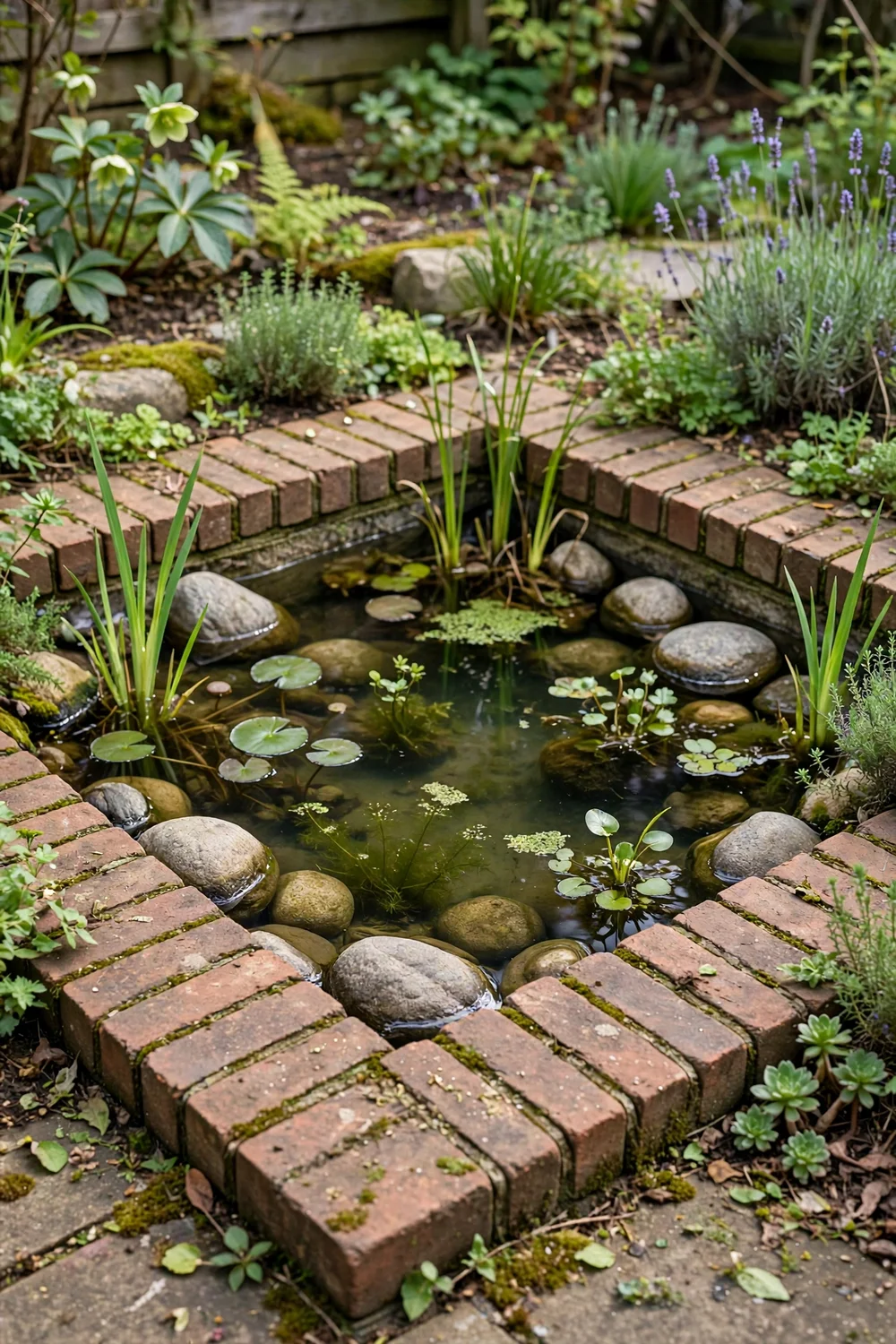
Try this: Call 811 before you dig, even for a shallow hole. This is the one idea on the list that breaks ground.
Cost: $$| Difficulty: Moderate | Time: 1 day
9. Solar fountain pond
Add a small solar fountain pump to any container pond and you get a bubbling centerpiece. The moving water adds oxygen, slows algae, and discourages mosquitoes. Birds visit far more often once they hear the trickle.

Try this: Anchor the pump with a suction cup or a stone. A wandering pump sprays water out of the container.
Cost: $$| Difficulty: Easy | Time: 1 hour
10. Tiered pot waterfall
Stack two or three pots so water pumped from the bottom pot spills from the top one into the ones below. A tiny submersible pump does the work. The sound of falling water masks traffic noise, which is why this is a favorite for city patios.
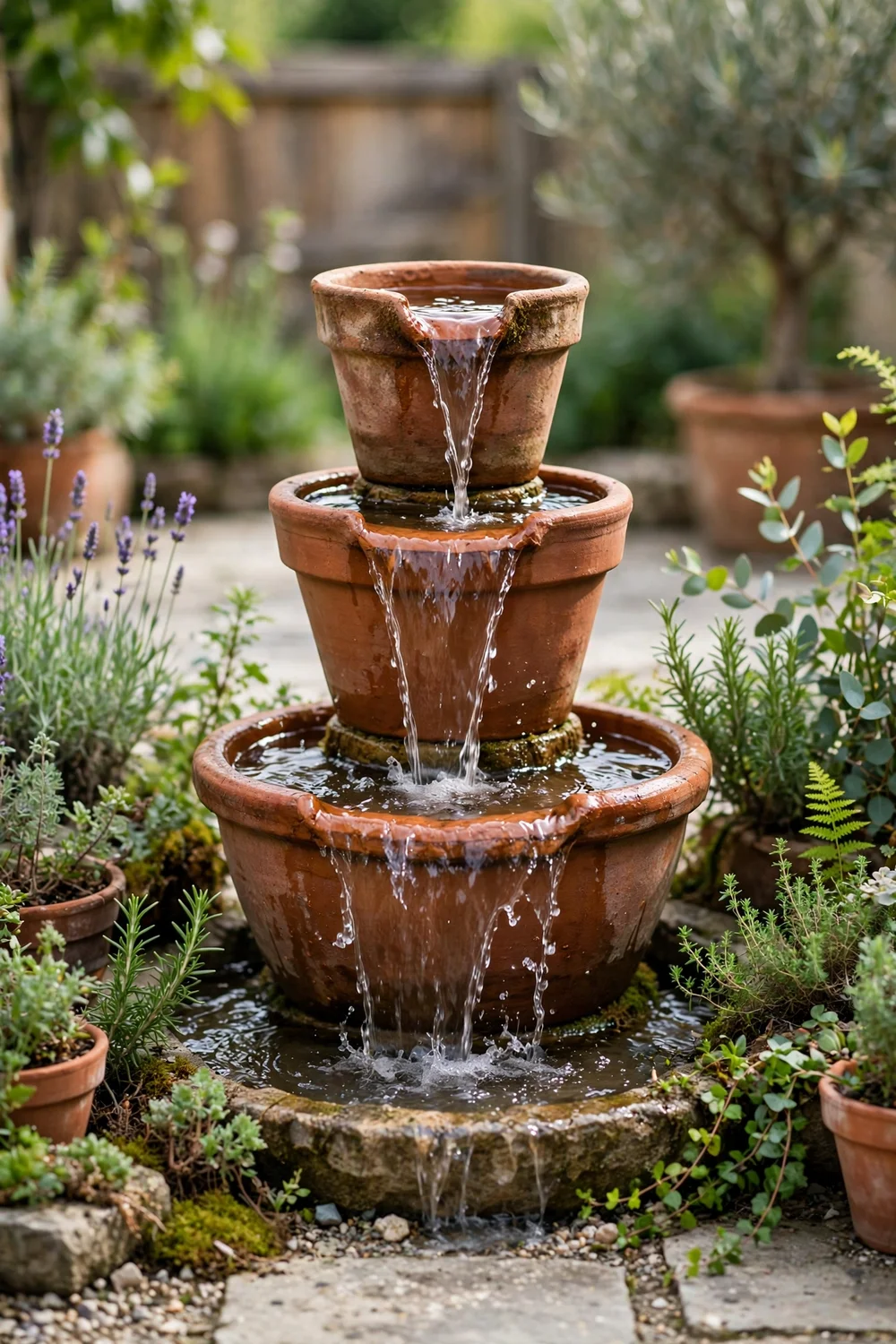
Try this: Plug the pump into a GFCI-protected outdoor outlet and route the cord where nobody trips on it.
Cost: $$$| Difficulty: Moderate | Time: 3 hours
11. Bog filter pond
Split a container into two zones: a planted gravel bed where water flows through roots, and an open water area. The plants filter the water naturally, so it stays clear with no chemicals. Cattails, iris, and arrowhead are the workhorse plants here.

Try this: Make the planted zone about a third of the total surface. That ratio keeps nutrients in check.
Cost: $$$| Difficulty: Moderate | Time: 1 day
12. Raised wooden planter pond
Build or buy a square wooden planter, line it with EPDM pond liner, and fill it with water plants. The raised height is easy on the back and keeps the pond out of reach of toddlers. Cedar boards last years without treatment.

Try this: Fold the liner over the outside of the frame and staple it under a cap rail. Hidden staples look cleaner and hold better.
Cost: $$$| Difficulty: Moderate | Time: 1 day
13. Washing-up bowl starter pond
The smallest serious pond: a large washing-up bowl with gravel, one oxygenator, and one floating plant. It is a great first project for kids and renters. Wildlife finds even tiny ponds fast; expect insects and maybe a frog within weeks.

Try this: Sink the bowl so its rim is level with the soil. Ground-level rims let frogs and insects climb in easily.
Cost: $$| Difficulty: Easy | Time: 30 minutes
14. Stacked stone waterfall pond
Pile flat stones into a short waterfall at one end of a lined container, with a small pump recirculating water over the top. The waterfall oxygenates the water and the stone hides all the equipment. It looks far more expensive than it is.
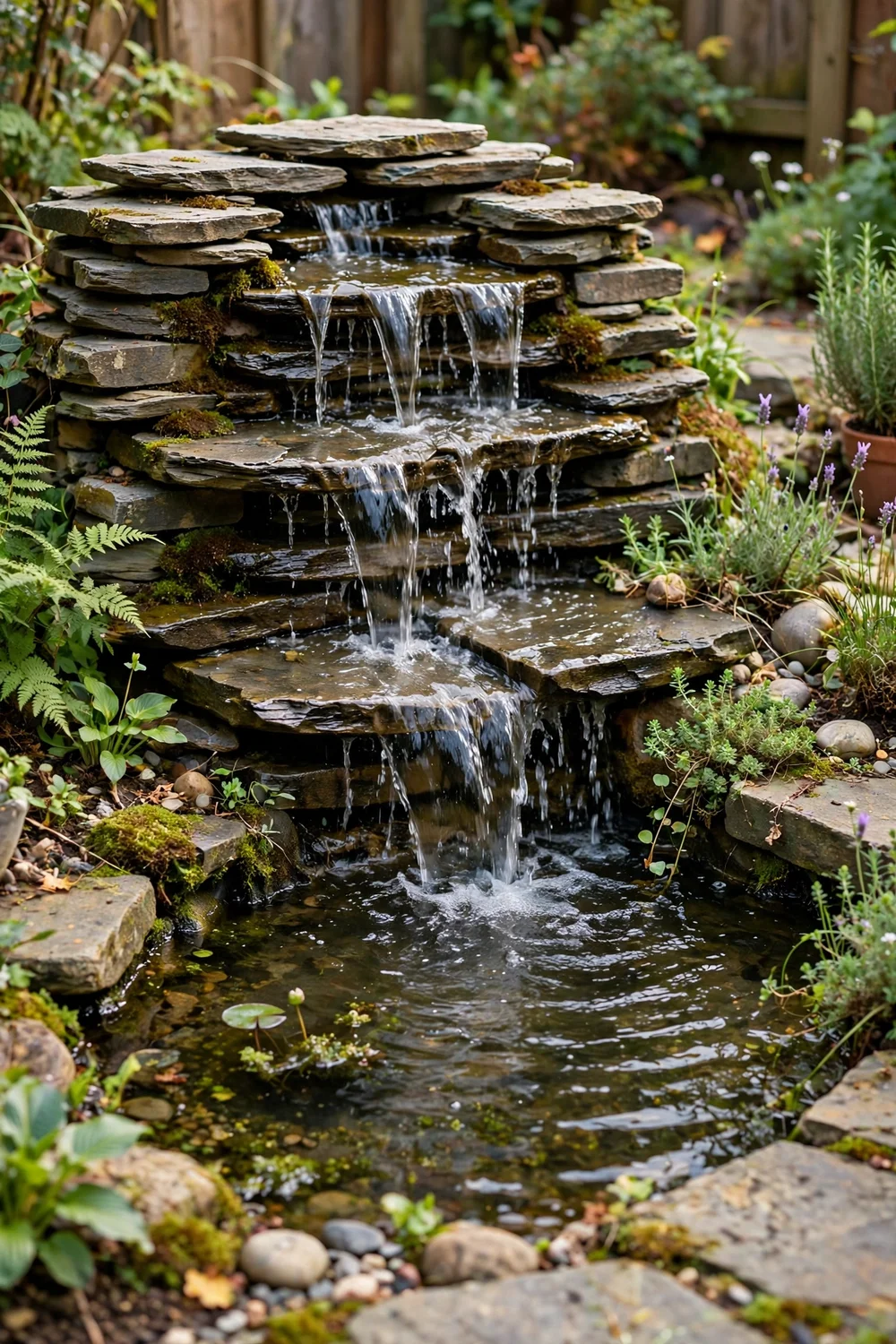
Try this: Test the stone stack dry first and mark each stone’s position. Rebuilding it wet is frustrating.
Cost: $$$| Difficulty: Moderate | Time: 1 day
15. Wine barrel wildlife pond
Dedicate a half barrel to wildlife: no fish, just native plants, a sloping stone beach at one edge, and a log for perching. Frogs, dragonflies, and birds will find it on their own. Do not move animals in; they arrive when the habitat is right.

Try this: Use rainwater to fill it. Tap water’s treatment chemicals slow down the tiny organisms that make a pond thrive.
Cost: $$| Difficulty: Easy | Time: 2 hours
Patio pond ideas compared
Patio pond safety notes
Keep pond water healthy and mosquito-free: change part of the water regularly, add moving water with a solar pump, and avoid overfeeding fish if you keep any. If you dig for the brick-edged pond, call 811 first to mark utility lines. Plug electric pumps into GFCI-protected outdoor outlets and keep cords out of walkways. Choose fish-safe, non-toxic sealants and liners, and skip plants treated with systemic pesticides if wildlife will visit. Shallow ponds are safer for households with toddlers; a sturdy cover or raised design adds protection.
For the seating area around your pond, see these garden nook seating ideas. To style the rest of the space, browse these rustic garden decor ideas and bohemian garden ideas.
Frequently asked questions
What is the best container for a patio pond?
Half whiskey barrels, galvanized troughs, and large glazed pots work best because they hold 15 to 80 gallons, which keeps water temperature stable. Whatever you use must be watertight, non-toxic, and deep enough for your plants’ roots.
Do patio ponds need a filter?
Not always. A balanced mix of oxygenating, floating, and marginal plants plus a small solar pump keeps most container ponds clear. Add a filter if you keep fish or if the water turns green repeatedly.
How do I keep mosquitoes out of my patio pond?
Moving water is the best defense: a small solar fountain or pump stops mosquitoes from laying eggs. You can also add mosquito dunks containing Bti, a natural bacteria safe for plants, pets, and wildlife.
Can I use tap water in a patio pond?
Yes, but let it sit for 24 hours so chlorine evaporates, or use a dechlorinator from an aquarium store. Rainwater is better because it has no treatment chemicals.
What plants grow in a small container pond?
Dwarf water lilies, water lettuce, water hyacinth, hornwort (an oxygenator), and marginals like marsh marigold and dwarf iris. Pick one or two of each type so the pond stays balanced.
Will a patio pond survive winter?
In mild climates, hardy plants survive with the pond left full. Where winters freeze hard, move tropical plants indoors, sink hardy containers deeper, or empty glazed pots so ice cannot crack them.
A quick note on ponds and sources
The mini-pond planting approach above follows guidance from the Kent Wildlife Trust’s mini pond guide. For mosquito control around any standing water, see the CDC’s mosquito prevention guidance.
Pick the container that fits your space and start this weekend. Even a bucket pond brings dragonflies, birds, and blooms to a patio that used to hold nothing but a chair.
For a full overview of water options beyond ponds, see these water features for stunning garden design.
If you enjoyed this, you’ll love our 8 Pond Ideas for Small Gardens.


