


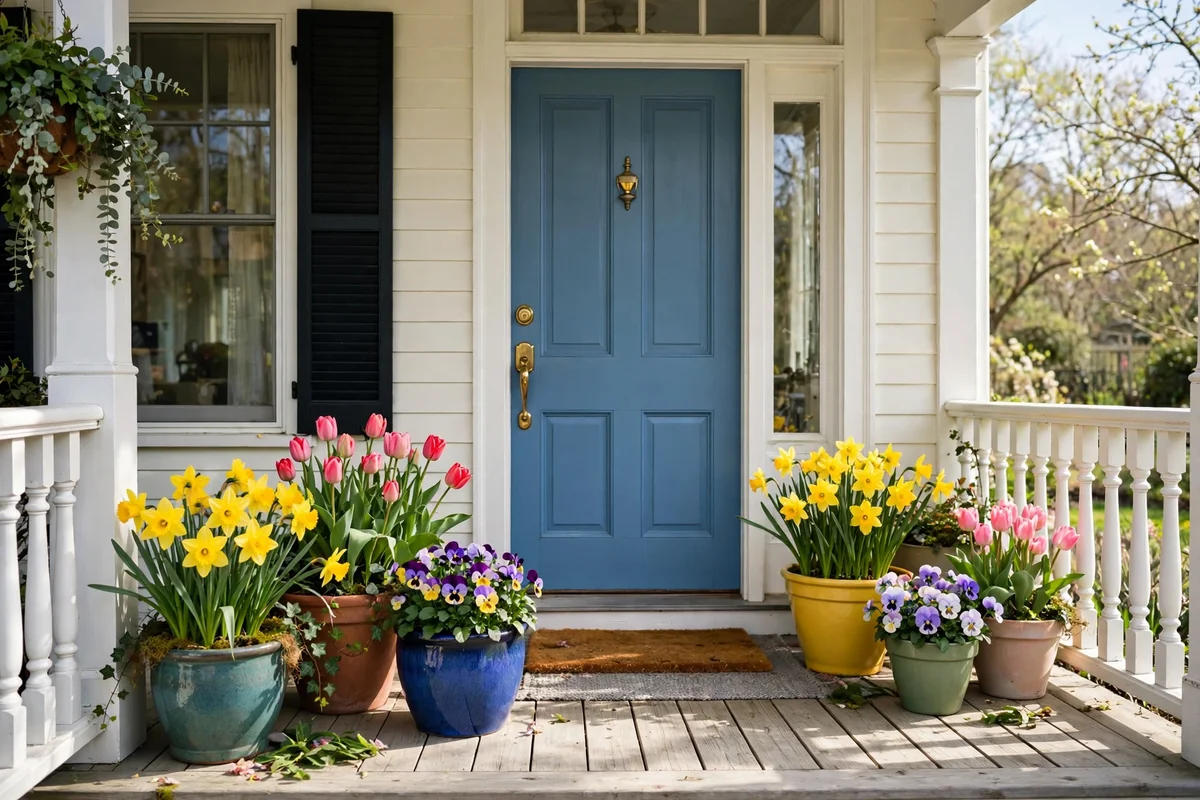
Spring containers are the fastest way to make a porch feel alive again. Pansies shrug off a late frost, bulbs you planted last fall are ready to show off, and a single afternoon of planting buys you two months of color.
I plant my first pansy pots the same weekend I put away the snow shovel, and that small ritual never fails to lift the whole house. These 12 spring planter ideas use bulbs, pansies, and spring annuals in the classic thriller-filler-spiller formula, so every pot looks full from the day you plant it.
Quick takeaways
- Build each pot as thriller (tall bulb or branch), filler (pansies, violas, primroses), spiller (ivy, creeping Jenny).
- Pansies and violas handle light frost, so they are the safest early-spring filler.
- Daffodils, tulips, and hyacinths are toxic to dogs and cats. Keep planters out of pets’ reach.
- Deadhead spent blooms weekly to keep pansies flowering into early summer.
- Missed fall bulb planting? Buy potted bulbs budding at the nursery and drop them straight into containers.
1. Tulip and pansy layer cake
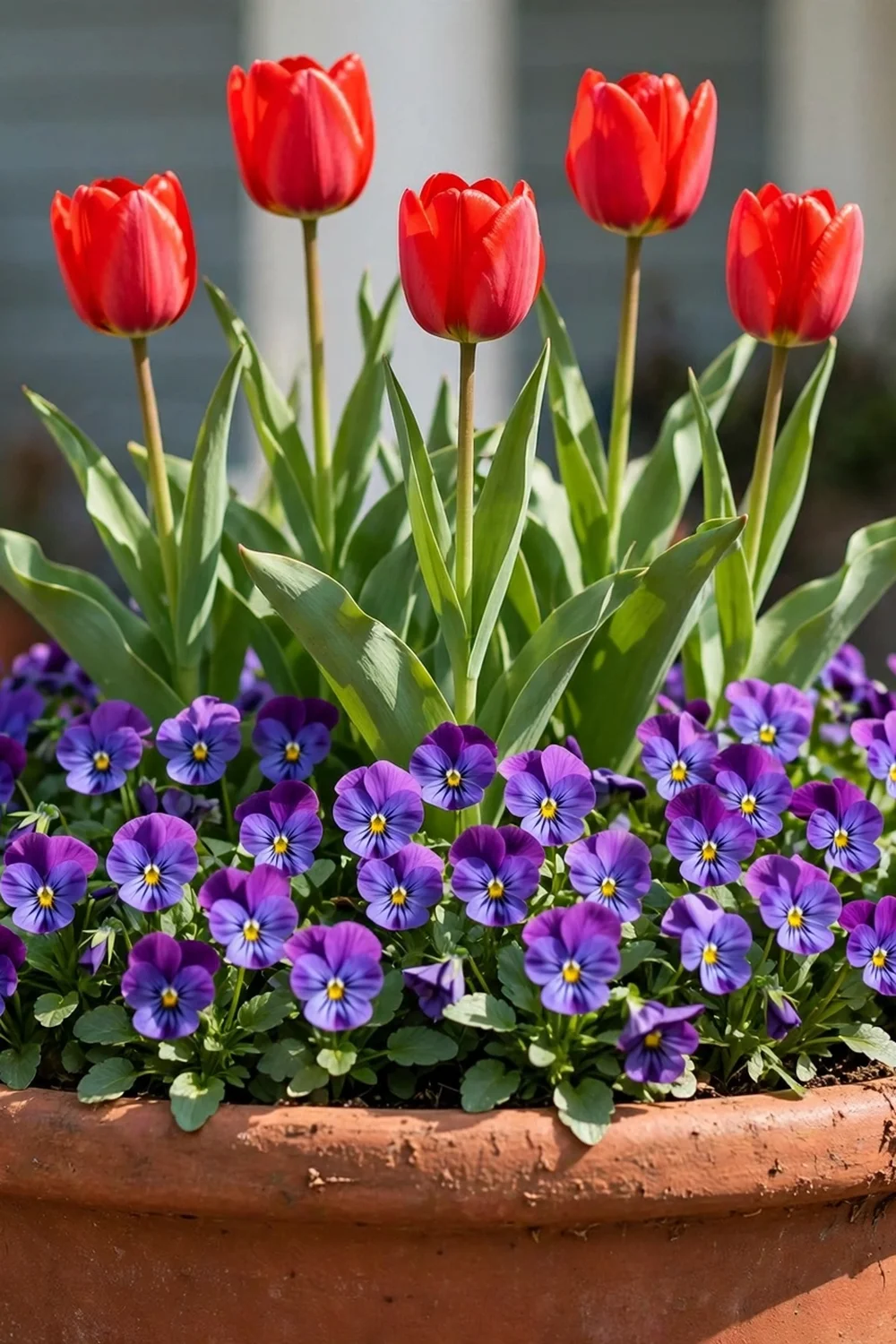
This is the classic for a reason. Plant tulip bulbs 6 inches deep in fall (or buy budding potted tulips in spring), then tuck pansies over the top as a living mulch. The pansies give instant color while the tulips push up through them. Purple pansies under yellow or red tulips make the strongest contrast. A 14-inch pot holds 5 tulips and 6 pansies comfortably.
Try this: choose early, mid, and late tulip varieties in one pot for three weeks of blooms instead of one.
Cost: $$· Difficulty: Easy
2. Sunny daffodil and viola pot
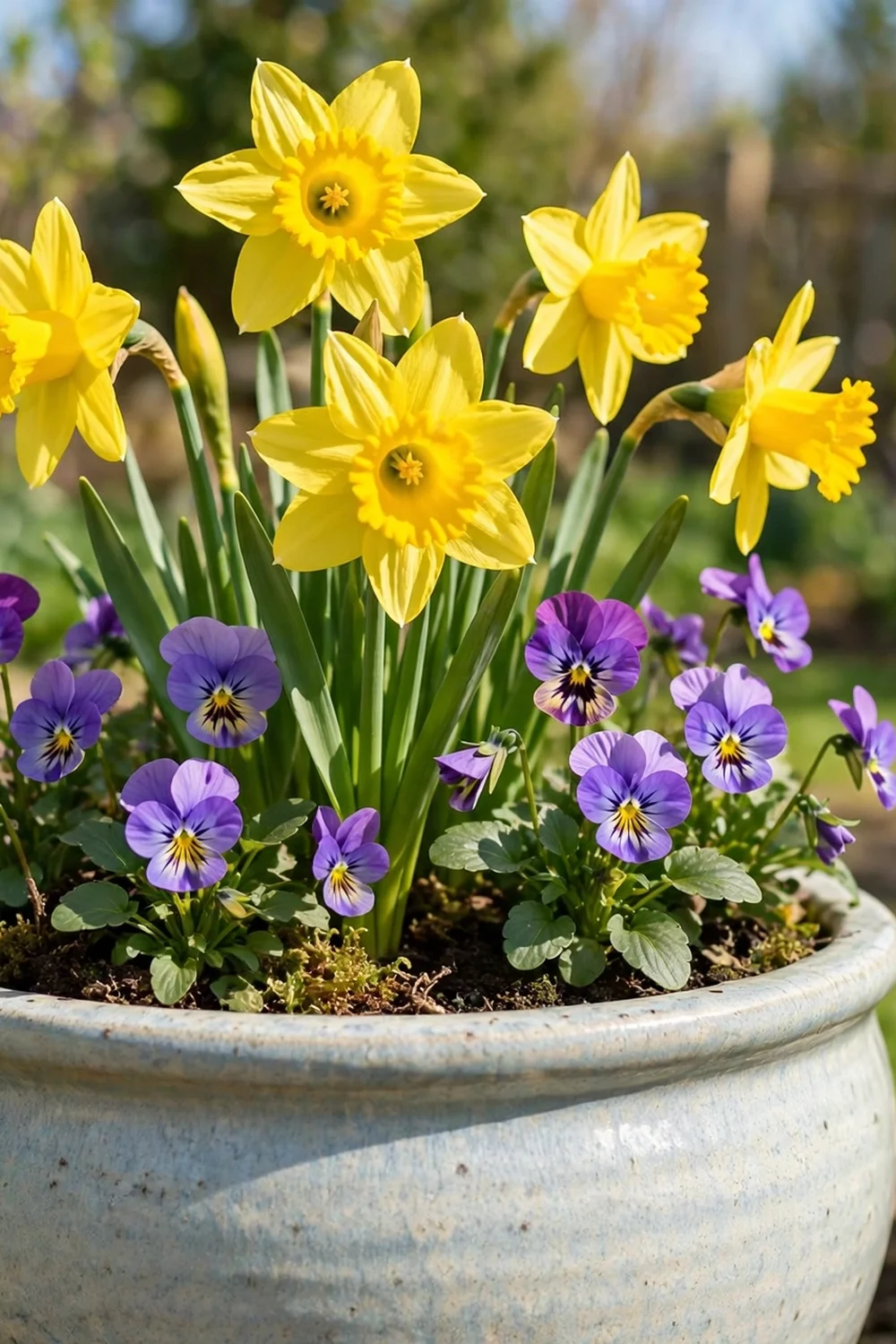
Yellow daffodils over a carpet of purple violas read as pure spring. Daffodils are the most reliable spring bulb: deer leave them alone and they return yearly. Violas are pansies’ smaller cousins and bloom even harder in cool weather. Keep this pot in full sun so the daffodil stems stay sturdy. Remember daffodil bulbs and flowers are toxic to pets, so site this one away from curious dogs.
Try this: plant miniature daffodils like ‘Tete-a-Tete’ in small pots. They suit containers better than tall varieties.
Cost: $$· Difficulty: Easy
3. Fragrant hyacinth entry pot

Place this where you will walk past it daily, because hyacinths are the best-smelling spring bulb. Three hyacinth bulbs in a 12-inch pot, ringed with white pansies, perfume the whole entryway. Pink hyacinths with white pansies look soft; deep blue with yellow pansies look bold. Hyacinth bulbs irritate skin, so wear gloves when handling them.
Try this: bring the pot onto a covered porch during heavy rain. Wet blooms flop faster.
Cost: $$· Difficulty: Easy
4. Grape hyacinth and primrose mini vignette
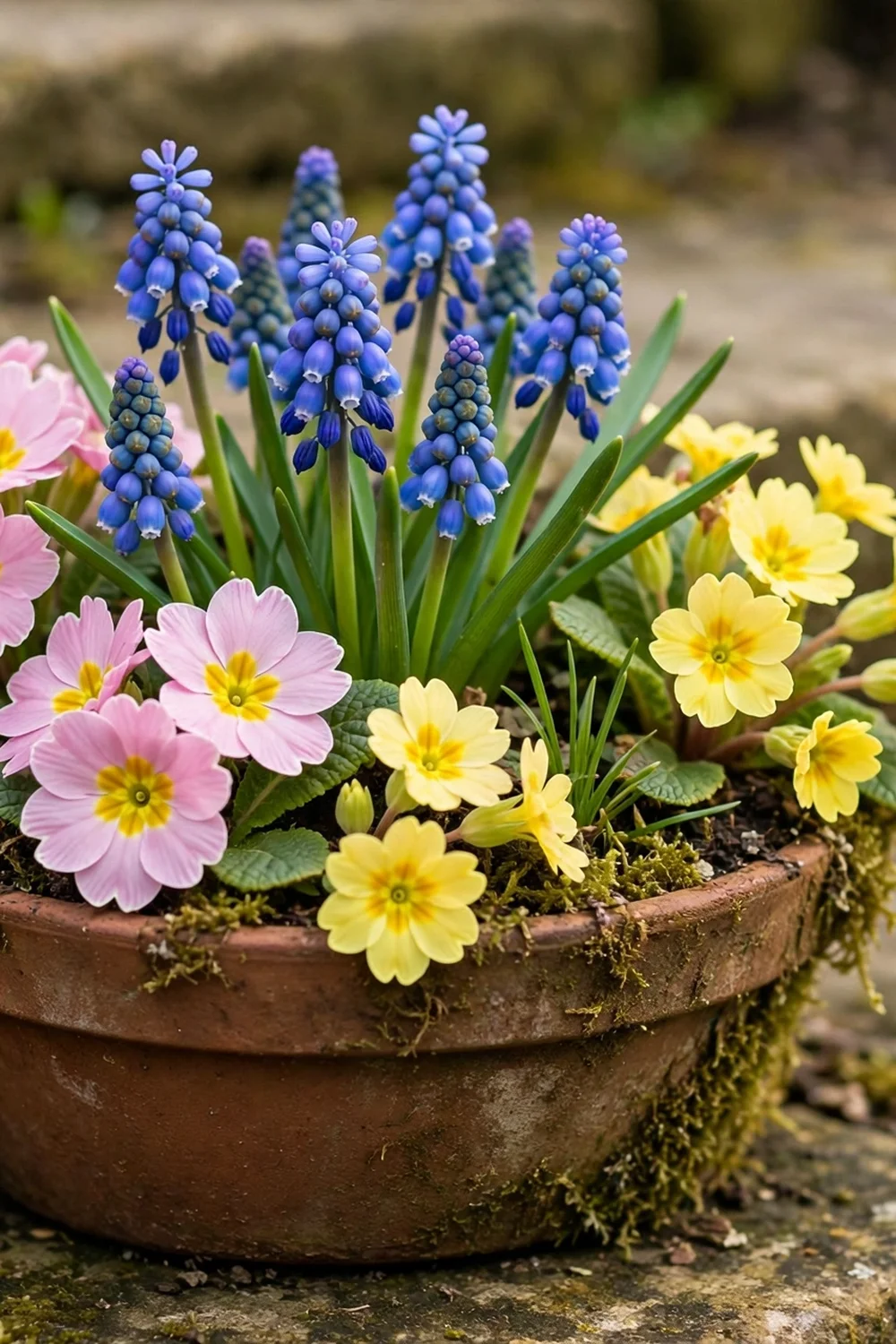
Small pots deserve spring too. Grape hyacinths (muscari) multiply freely and their blue spikes pair perfectly with primroses in pink, yellow, or blue. Use a 10-inch pot, cluster the muscari in the center, and ring with four primroses. Set it on steps or a bistro table where the detail shows at close range.
Try this: after bloom, plant the muscari bulbs out in the garden. They naturalize and return every year.
Cost: $$· Difficulty: Easy
5. Pastel ranunculus and pansy pot

Ranunculus blooms look like tissue-paper roses and come in the prettiest pastels. Pair blush-pink ranunculus with cream and lavender pansies for a soft, romantic pot. Ranunculus prefers cool weather and fades as heat arrives, so plant early and enjoy the show while it lasts. Deadhead both plants to stretch the display.
Try this: soak ranunculus corms in room-temperature water for 3 hours before planting. They sprout faster.
Cost: $$· Difficulty: Easy
6. Pansy and ivy urn

A tall urn needs height and drape. Mass pansies in the top for a dome of color and let English ivy trail over the rim to soften the hard edge. The ivy stays green long after the pansies fade, so the urn never looks empty. Water urns more often than ground-level pots; elevation dries them out faster.
Try this: tuck a few variegated ivy starts among green ones. The mixed foliage looks intentional, not weedy.
Cost: $$· Difficulty: Easy
7. Bulb lasagna layers
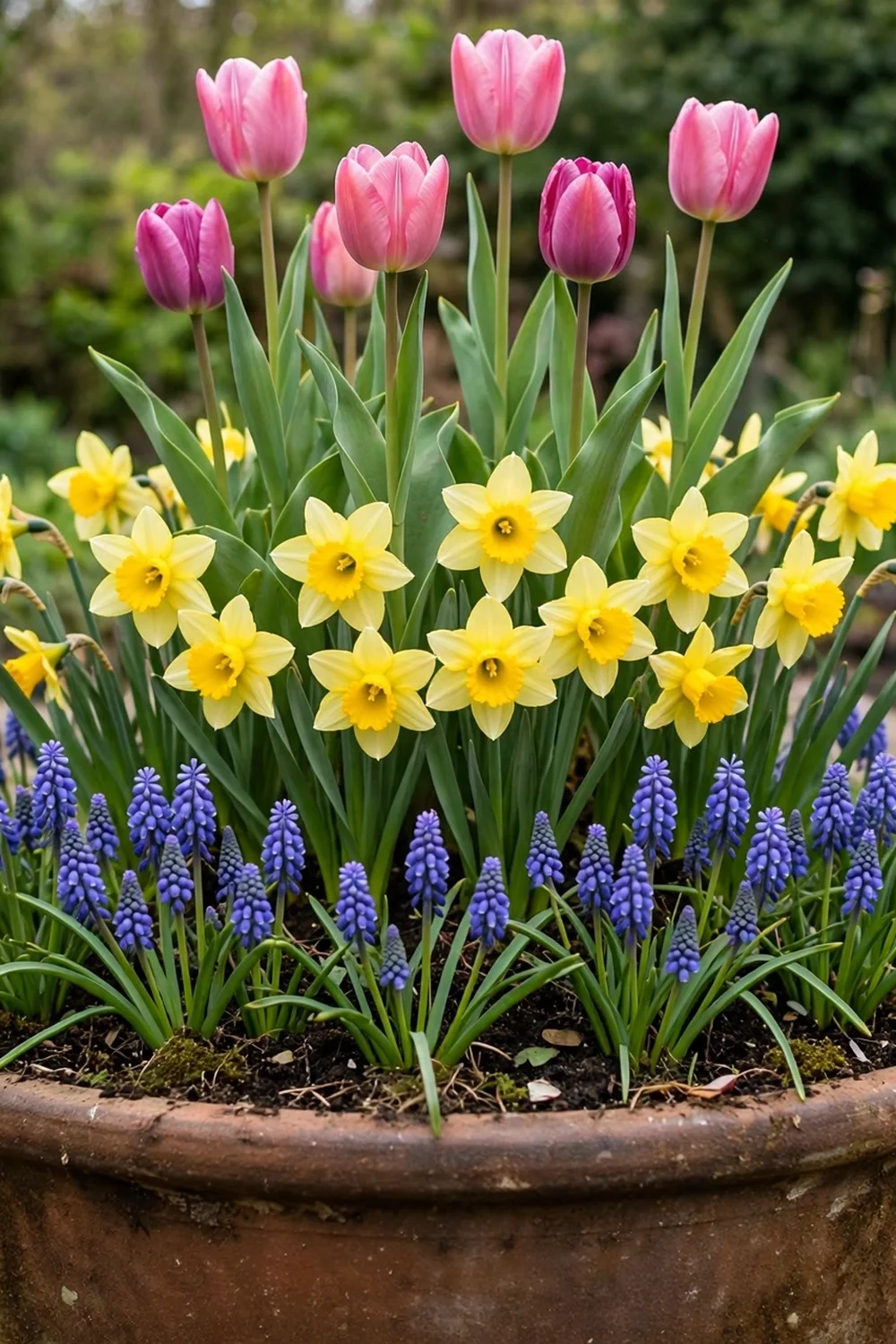
Plant three bulb layers in one deep pot for a sequence of blooms. Bottom layer: late tulips at 8 inches. Middle: daffodils at 5 inches. Top: grape hyacinths at 3 inches, then pansies on the very top. Each layer blooms in turn from March into May. Use a pot at least 14 inches deep so every layer has room.
Try this: label the pot with the varieties and depths on a plant tag. Next fall you will thank yourself.
Cost: $$· Difficulty: Moderate
8. Forsythia branches and pansy pot
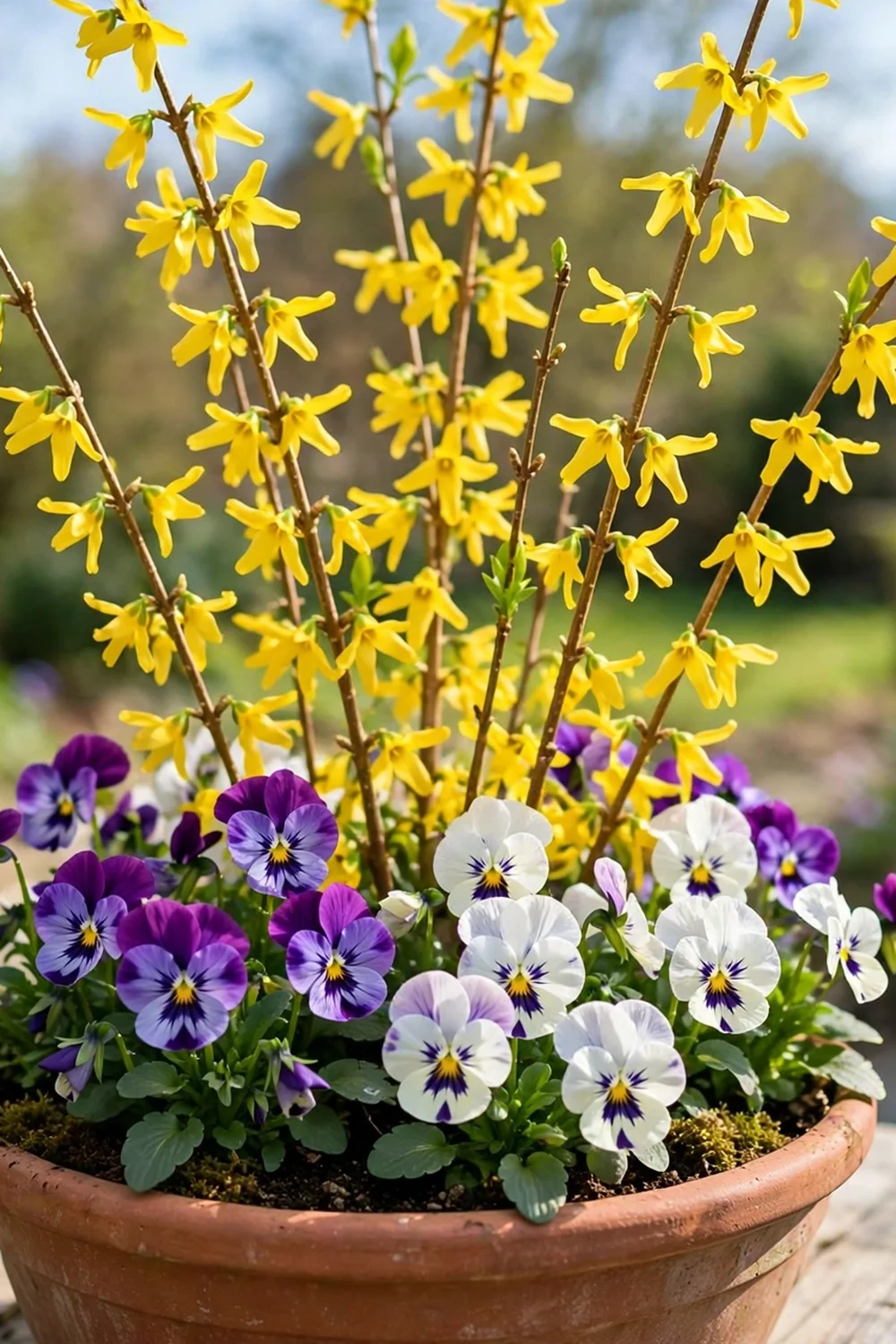
Cut budding forsythia branches and push them deep into a large pot of pansies for instant height. The yellow blooms open indoors-out within days and last two weeks. This is the quickest thriller there is: no waiting, no forcing. Replace the branches with a tall grass or spike plant once they fade.
Try this: cut branches at an angle and smash the bottom inch with a hammer. They drink more water that way.
Cost: $$· Difficulty: Easy
9. Tulip and creeping Jenny spiller
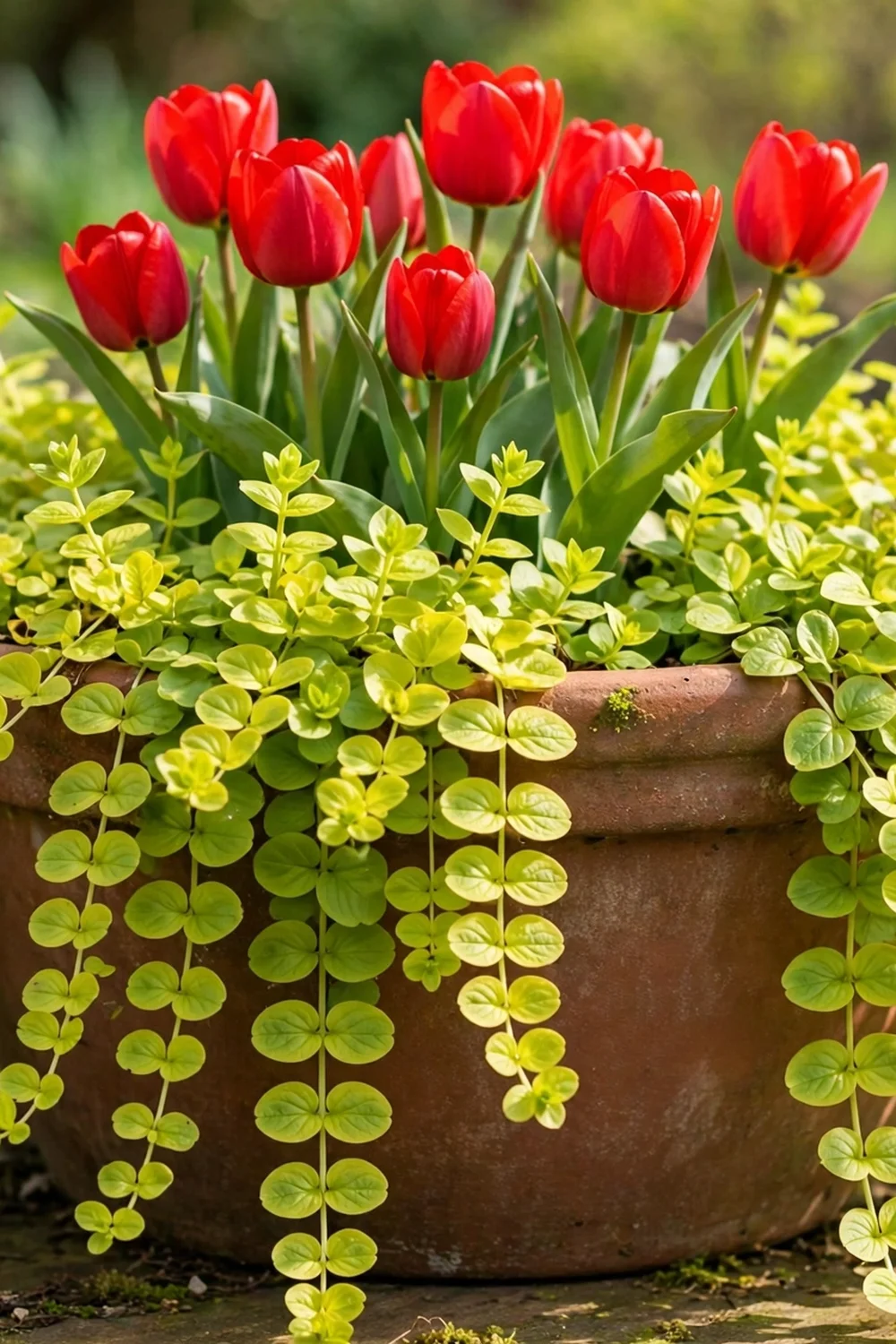
Chartreuse creeping Jenny spilling over the rim makes tulip colors pop, especially reds and purples. Plant tulips in the center and ring the edge with Jenny starts. It roots fast in cool weather and trails 18 inches by May. Trim it back if it starts swallowing the pansies.
Try this: save creeping Jenny cuttings in water indoors over winter. They root in days and cost nothing.
Cost: $$· Difficulty: Easy
10. Primrose and fern shade planter

North-facing porches get spring color too. Primroses bloom happily in shade, and a small fern adds texture that lasts all season. Keep the soil evenly moist; shade pots dry slower, but ferns sulk if they dry out completely. White primroses brighten dark corners best.
Try this: group three shade pots together. One shaded pot looks lonely; three look designed.
Cost: $$· Difficulty: Easy
11. Pansy and ornamental kale late-spring pot
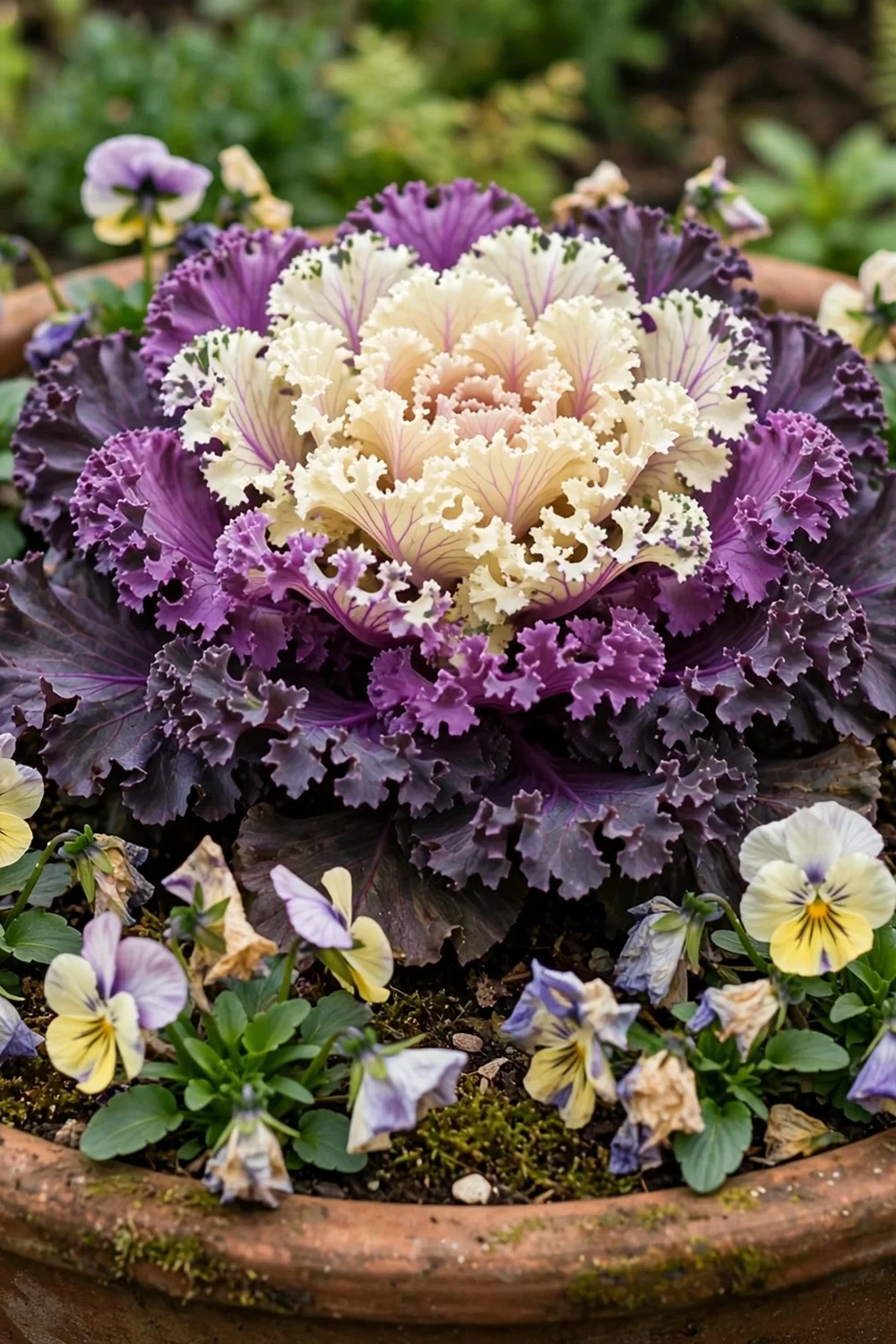
When early plantings tire in May, ornamental kale carries the pot into June. Its ruffled purple and cream leaves look like flowers themselves and handle warming weather better than pansies. Plant kale in the center as the pot matures and let it take over as the pansies fade. One plant fills a 12-inch pot.
Try this: plant kale 6 weeks before your last frost date. It sweetens in cool weather and colors up fast.
Cost: $$· Difficulty: Easy
12. Strawberry and pansy edible pot

Strawberry plants leaf out early and their white spring flowers are pretty in their own right. Ring them with pansies for color while you wait for berries. Use a wide, shallow pot so runners have somewhere to go, and keep it in full sun. You will pick the first berries just as the pansies finish.
Try this: mulch with straw once berries form. It keeps fruit clean and deters slugs.
Cost: $$· Difficulty: Easy
Spring planter planning table
Match the recipe to your light and your patience. Instant-gratification pots use nursery plants; layered bulbs reward fall planning.
Pet safety note for spring bulbs
Many favorite spring bulbs are toxic to pets. Daffodils, tulips, and hyacinths can cause vomiting, diarrhea, and more serious symptoms in dogs and cats if chewed, with the bulbs being the most concentrated part. The ASPCA maintains a searchable list of toxic and non-toxic plants worth checking before you plant. Keep bulb planters on high tables or behind barriers where curious pets cannot reach them, and store spare bulbs in closed containers. If a pet eats part of a bulb, call your vet or animal poison control right away.
For year-round container ideas beyond spring, see our summer front porch flower pot ideas and our winter-to-spring planter transition ideas. Cottage-style flower lovers will also like our easy cottage garden flowers.
Frequently asked questions
When should I plant spring containers?
Plant pansies, violas, and primroses as soon as daytime temperatures stay above freezing; they tolerate light frost. Bulbs go in the previous fall, but you can buy budding potted bulbs at nurseries in spring and drop them straight into containers for instant results.
How do I make spring planters last longer?
Deadhead spent pansy and viola blooms weekly, water when the top inch of soil is dry, and feed lightly every two weeks with balanced fertilizer. Move pots to afternoon shade as temperatures climb to stretch the season.
Can I reuse the bulbs from my spring planters?
Yes for daffodils and grape hyacinths: let the foliage yellow naturally, then plant the bulbs in the garden. Tulips often bloom weakly in year two, so many gardeners treat them as annuals in containers and replant fresh each fall.
What is the thriller-filler-spiller formula?
It is a simple container design rule: one tall thriller plant for height, mounding filler plants for bulk, and trailing spiller plants to cascade over the edge. It works for nearly every pot on this list.
Are spring bulbs safe around pets?
No. Daffodils, tulips, and hyacinths are toxic to dogs and cats. Keep bulb planters out of pets’ reach and check the ASPCA’s toxic plant list before planting. If a pet eats bulb material, contact your vet promptly.
Start with one pot by the front door this weekend. Pansies are cheap, the planting takes twenty minutes, and every time you come home for the next two months, spring will be the first thing that greets you.


