


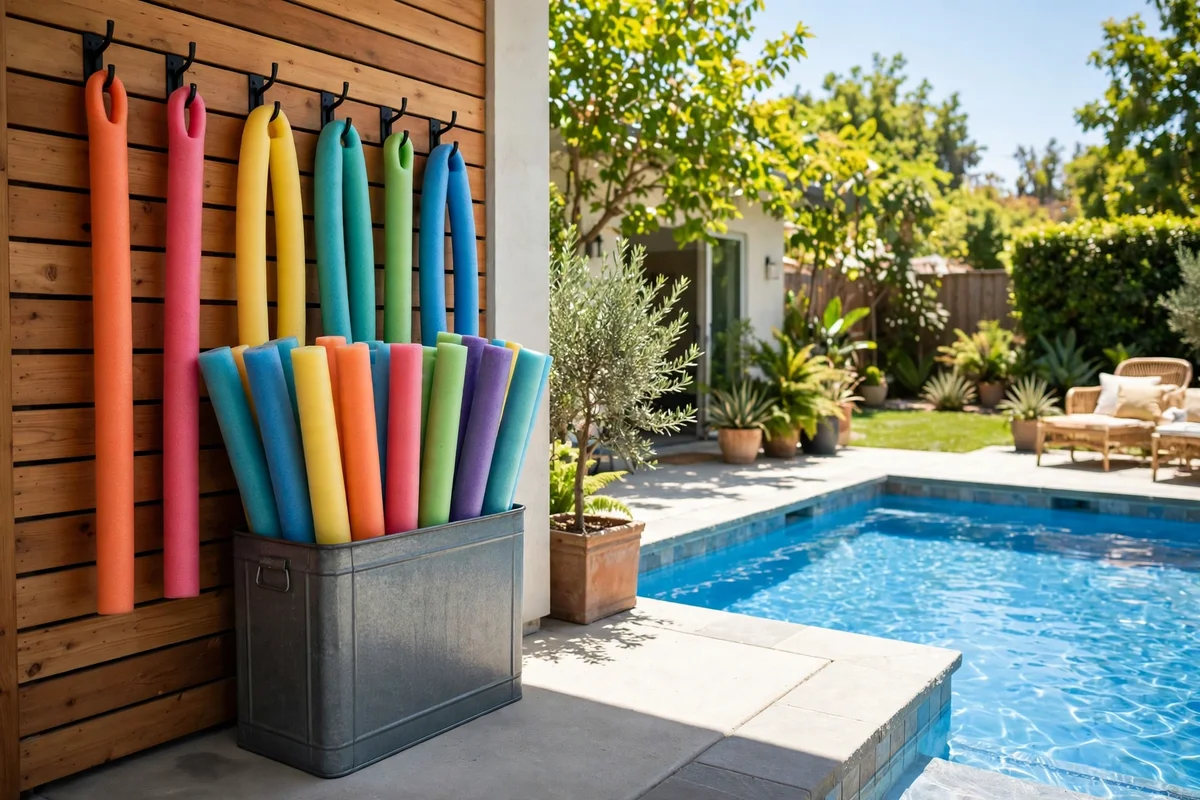
Pool noodles are the one pool toy that never seems to have a home. They slide off the deck, blow across the yard, and end up stuffed behind the shed where the sun eats them alive. Last summer I counted eleven noodles wedged behind our garage, half of them cracked and faded from sitting in the weather.
This list fixes that. These 15 DIY pool noodle storage ideas use cheap materials, simple tools, and builds most people finish in under an hour. They work for garages, sheds, patios, and pool decks, and every idea keeps noodles dry, shaded, and easy to grab.
- Store noodles upright in a tall container with drainage holes so water escapes and air moves around them.
- Keep noodles out of direct sun. UV breaks down foam fast, which is why stored noodles outlast ones left on the deck.
- Wall straps, bungees, and rope loops are the cheapest fixes at under $10 for the whole setup.
- Rolling carts and bins work best if you move gear between the pool and the shed.
- Let noodles dry before storing them. Trapped water breeds mildew inside closed bins.
1. Rolling laundry cart corral

A rolling laundry cart is one of the fastest noodle holders you can buy. The tall sides keep noodles upright, the mesh or slatted walls let air move through so they dry, and the wheels let you roll the whole thing from the pool to the garage in seconds. Pick a cart with a sturdy frame because a full load of wet noodles gets heavy. Most standard carts hold eight to twelve noodles without tipping.
Try this: strap a cheap mesh laundry bag to the side of the cart for goggles, dive toys, and sunscreen.
Cost: $$. Difficulty: Easy, no tools needed.
2. Sideways pallet noodle rack

Stand a wooden pallet on its side, screw it to a garage or shed wall, and slide noodles into the gaps between the slats. The vertical slots hold each noodle separately so they do not crush each other, and the open back lets air circulate. Sand any rough spots before you load it, because splinters snag foam. One pallet holds six to ten noodles depending on the slat spacing, and the whole rack sits almost flat against the wall.
Try this: paint the pallet with exterior paint in a bright color so the rack looks intentional instead of improvised.
Cost: $$. Difficulty: Easy, 30 minutes with a drill.
3. Stacked laundry hamper tower

This dollar-store trick builds a tall noodle tube for under $10. Cut the bottoms out of two laundry baskets, stack them on top of an uncut basket with the openings facing each other, and zip-tie the rims together all the way around. Drop noodles in from the top and they stand in a neat column. Spray paint the baskets first if you want them to match your patio furniture, and let the paint cure a full day before loading noodles.
Try this: drill a few small holes in the bottom basket so rain drains out instead of pooling.
Cost: $. Difficulty: Easy, 45 minutes.
4. Overhead cargo net in the shed

A cargo net screwed to the ceiling joists turns dead air space into noodle storage. Lay noodles across the net and they rest above head height, completely out of the way. This works best in sheds and garages with exposed joists, and it keeps the floor clear for mowers and bikes. Use a net with a tight weave and screw hooks rated for at least 50 pounds, since a dozen waterlogged noodles weigh more than you expect.
Try this: toss beach towels and life vests up there too. The net holds anything light and bulky.
Cost: $$. Difficulty: Easy, 30 minutes.
5. Wall-mounted bungee straps
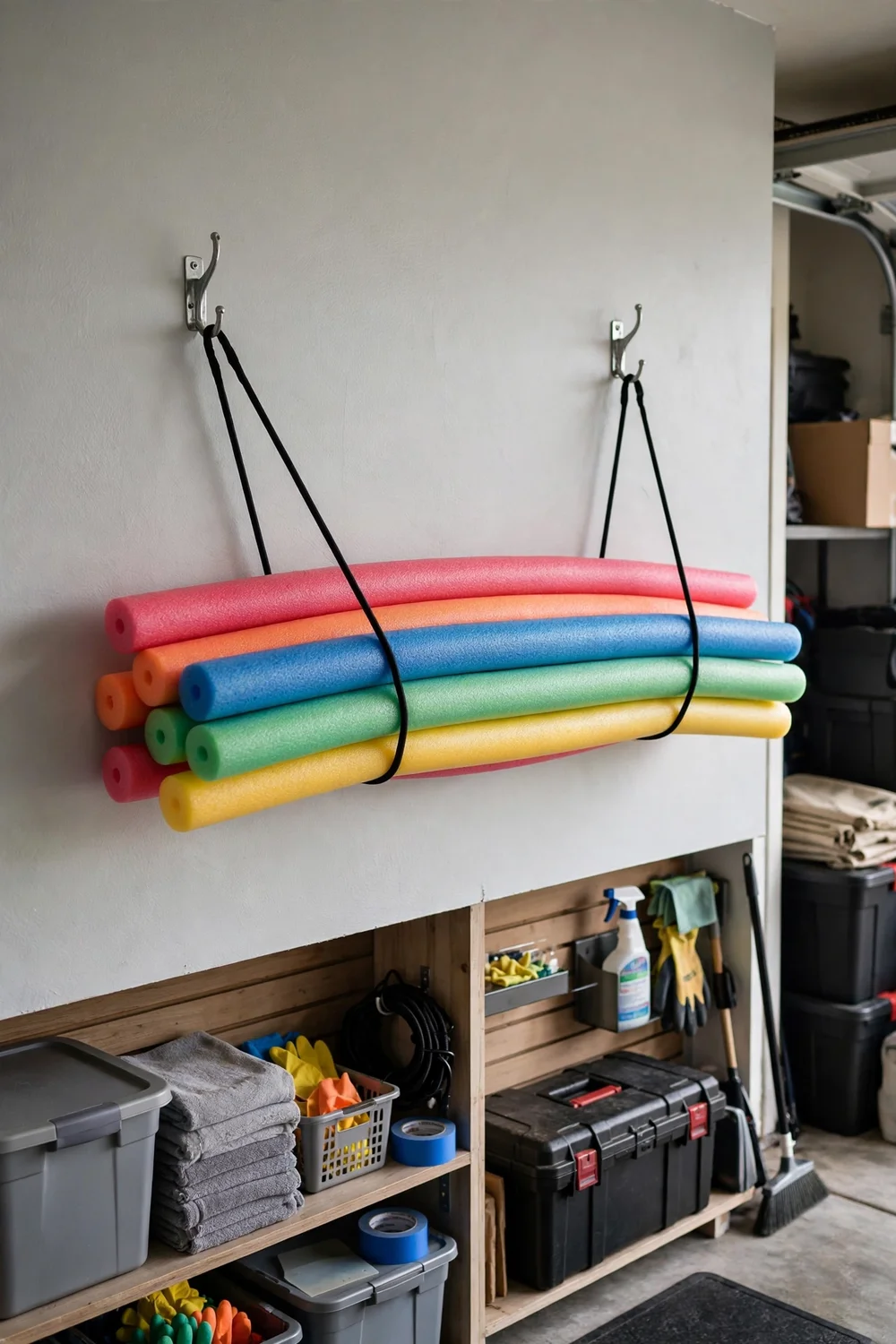
Two screw hooks and a bungee cord make a horizontal noodle cradle on any wall. Space the hooks about four feet apart, loop the bungee through, and slide noodles in so they rest in the cord’s sag. The noodles stay visible and grabbable, which means kids actually put them back. Mount the hooks into studs if you plan to hold more than five noodles, because foam plus water weight adds up fast.
Try this: mount two cradles, one high for adults and one low so small kids can reach their own noodles.
Cost: $. Difficulty: Easy, 15 minutes.
6. Upright PVC pipe rack
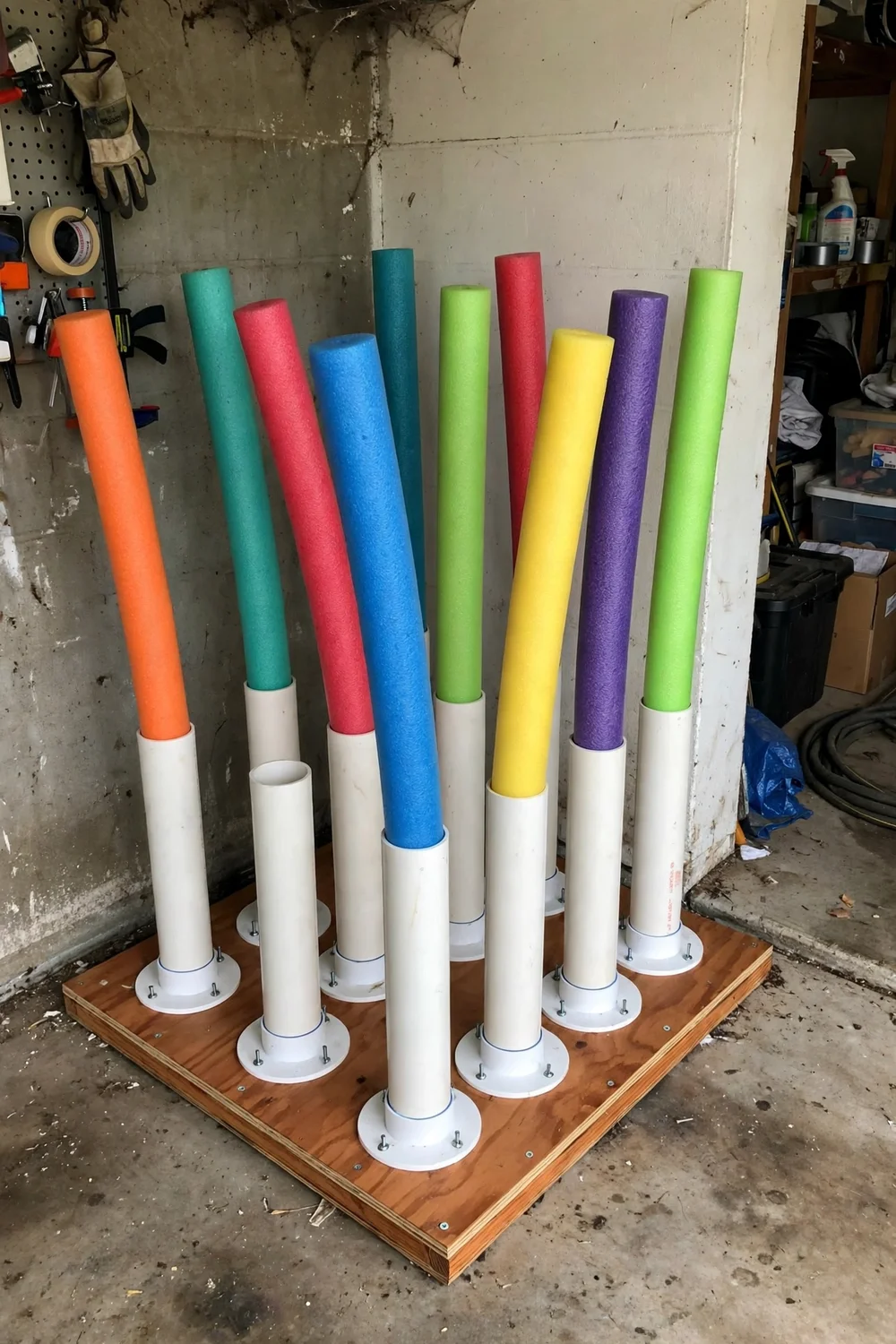
Cut 4-inch PVC pipe into 3-foot sections and screw the bottoms to a plywood base. Each tube holds one or two noodles upright like arrows in a quiver, and the smooth plastic never snags foam. This rack looks tidy in a garage corner and stops noodles from flopping over each other. Cap the bottom of each tube or drill drainage holes, and wipe the tubes out once a season so grit does not grind into the foam.
Try this: use 6-inch pipe if you store jumbo noodles. Standard 4-inch pipe fits regular noodles best.
Cost: $$. Difficulty: Moderate, one hour with a saw.
7. Ventilated trash can holder

A tall outdoor trash can makes a simple upright noodle bin. Drill a dozen half-inch holes in the bottom for drainage, then stand noodles inside. The lid is optional: leave it off in summer for airflow, snap it on in winter to keep leaves and critters out. Choose a can with smooth sides so noodles slide in and out without catching, and pick a color that blends with your fence or deck.
Try this: bolt two cans together side by side with zip ties for double the capacity in the same footprint.
Cost: $$. Difficulty: Easy, 20 minutes.
8. Fence rope loops

Screw short loops of rope or clothesline to a fence and slide noodles through horizontally. The loops keep noodles straight, off the ground, and exposed to breeze on both sides, so they dry faster than in any bin. Space the loops about three feet apart and use weatherproof rope that will not rot by August. This is one of the cheapest options on this list and it works on any sturdy fence.
Try this: add a second row of loops lower down for short noodles and water dumbbells.
Cost: $. Difficulty: Easy, 20 minutes.
9. Hanging mesh bags on hooks
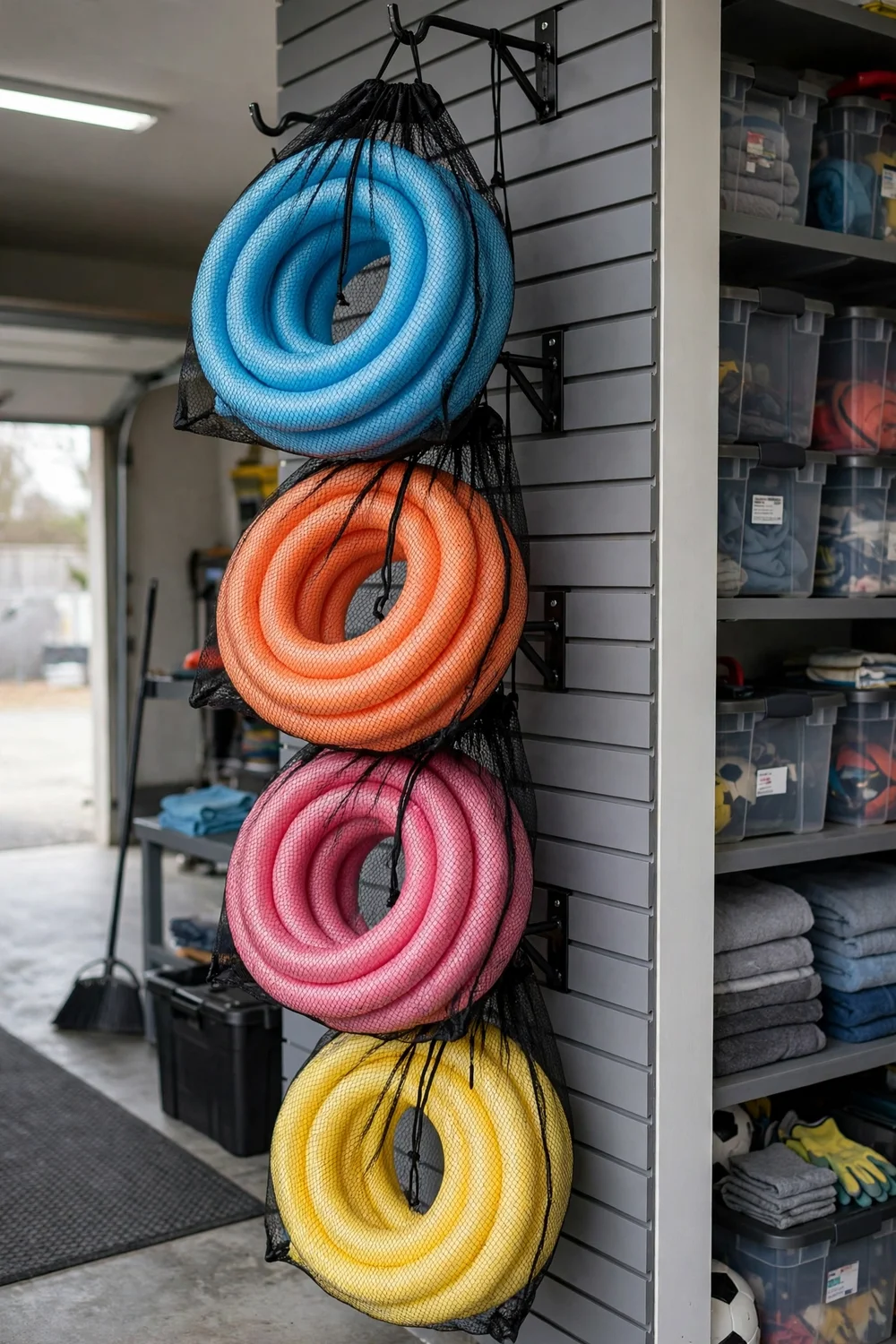
Hang large mesh laundry bags from heavy-duty wall hooks and coil one or two noodles into each bag. The mesh lets water drip out and air flow in, which keeps mildew away, and the bags keep long noodles from uncoiling across the floor. Command-style hooks work on smooth walls for renters, but screw-in hooks hold more weight for a permanent setup. Label each bag with a paint pen if kids share noodles.
Try this: use the same bags for pool toys, kickboards, and beach balls to clear the whole corner at once.
Cost: $$. Difficulty: Easy, 15 minutes.
10. Under-bench Velcro straps
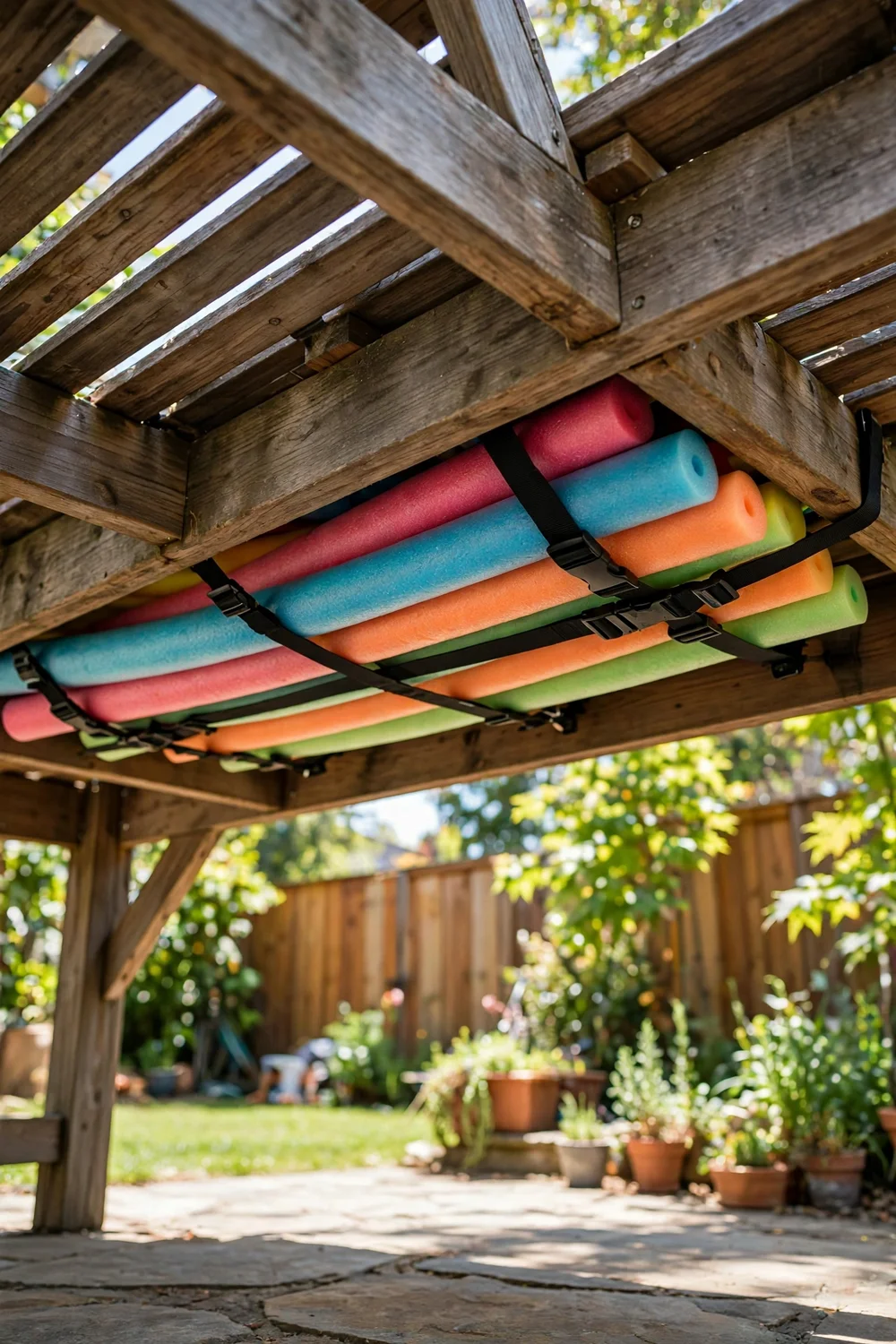
The space under a deck bench or storage bench is wasted space, so put it to work. Screw adjustable Velcro straps to the underside of the bench and thread noodles through them. The noodles stay hidden, shaded, and off the ground, and the straps release with one pull when it is swim time. Make sure the bench is deep enough that noodle ends do not poke out into walkways, because foam corners still hurt shins.
Try this: strap noodles to the underside of a patio table too. It works the same way and costs nothing extra.
Cost: $. Difficulty: Easy, 15 minutes.
11. Repurposed planter box holder

An old wooden planter box doubles as a noodle holder that actually looks good on a patio. Stand noodles upright inside the box and they read as garden decor instead of clutter. Line the inside with a plastic bag or pond liner first so soil stains and moisture do not rot the wood from the inside. If the box still has drainage holes, even better: rain passes straight through and the noodles stay dry.
Try this: plant trailing flowers in a smaller pot set on top of the noodles. The box keeps working as a planter all season.
Cost: $$. Difficulty: Easy, 20 minutes.
12. Bungee cradle between posts

Stretch two or three bungee cords between two deck posts, a fence and a post, or any two fixed points, and you get an instant outdoor noodle cradle. Lay noodles across the cords and gravity settles them into a tidy bundle. This is ideal right beside the pool because wet noodles drip onto the deck instead of into a closed bin. Use UV-resistant bungees, since cheap cords go brittle after one summer in the sun.
Try this: hang the cradle at waist height so kids can grab noodles without climbing.
Cost: $$. Difficulty: Easy, 10 minutes.
13. Shed door organizer bags
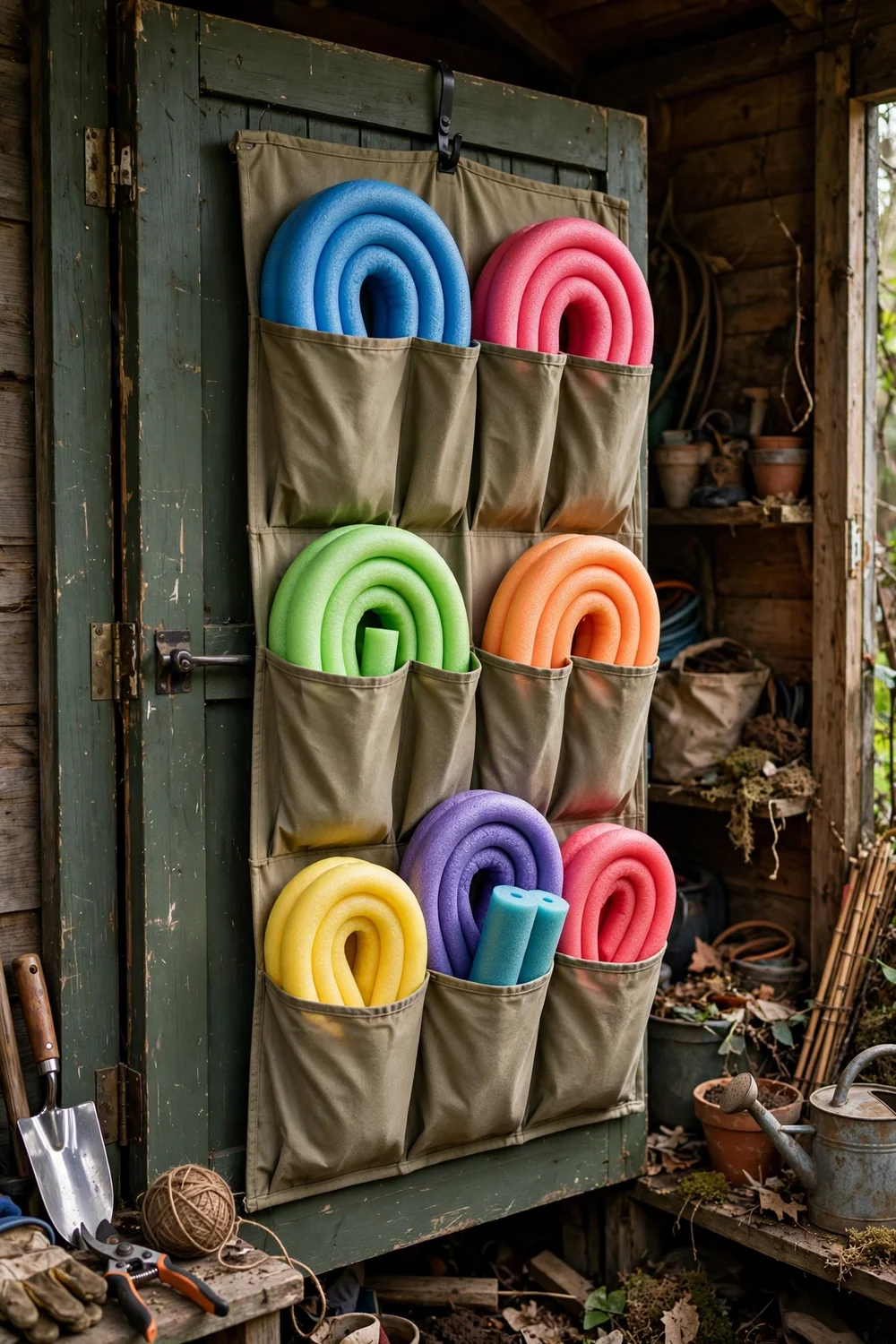
An over-the-door shoe organizer with tall pockets works on the inside of a shed or garage door. Roll each noodle into a loose coil and tuck it into a pocket. The clear pockets make it obvious which noodle is where, and the door stays usable because everything hangs flat. Choose an organizer with reinforced stitching, because a coiled noodle pushes outward harder than a pair of shoes does.
Try this: use the small pockets for swim goggles, nose clips, and repair patches so everything pool-related lives in one spot.
Cost: $$. Difficulty: Easy, 5 minutes.
14. Rolling storage bench

A deck storage bench with a hinged lid hides noodles completely and gives you extra seating. Lay noodles flat inside, stack them in alternating directions to fit more, and close the lid to protect them from sun and rain. Drill small ventilation holes in the back panel so trapped moisture escapes. This costs more than the other ideas, but it is the tidiest option for patios where you entertain.
Try this: add small caster wheels to a wooden bench you already own instead of buying a new one.
Cost: $$. Difficulty: Easy to moderate, one to two hours.
15. Corner bungee triangle
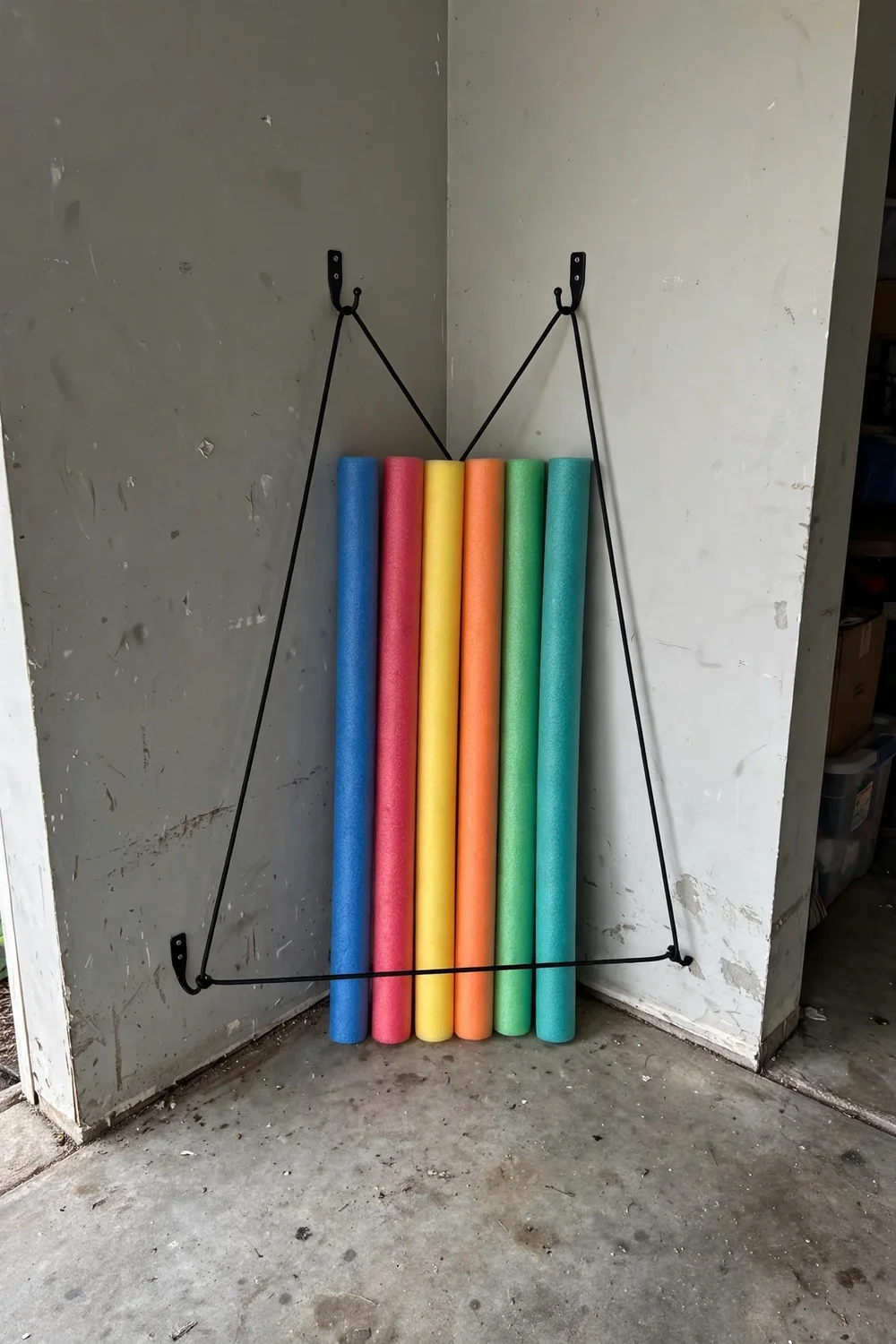
Corners are the hardest spot to use in a garage, so turn one into a noodle corral. Screw three hooks into the two walls that meet at the corner, string a bungee cord between them in a triangle, and stand noodles inside the triangle. The cord flexes to fit whatever you load, from two noodles to twelve. This uses zero floor space beyond the corner itself, which makes it a strong pick for packed garages.
Try this: run a second triangle higher up the wall for fishing rods, brooms, and other long gear.
Cost: $. Difficulty: Easy, 15 minutes.
Cheap pool noodle storage compared
How to make pool noodles last longer in storage
Sunlight is the main killer. Foam breaks down under UV, so noodles stored in a shaded garage or under a bench lid last seasons longer than ones left on the deck. Let noodles dry before they go into any closed container. Shake them out or stand them upright for an hour after swimming, because trapped water leads to mildew and that sour smell. Keep them away from sharp tools and rough concrete edges. Foam tears easily, and a torn noodle takes on water and sinks.
If your noodles serve an above-ground pool, these budget Intex pool ideas keep the rest of your setup cheap too.
Storage mistakes that ruin pool noodles
The most common mistake is folding noodles in half to fit a short bin. The crease becomes permanent and the noodle never floats straight again. Storing them flat under heavy boxes crushes the foam the same way. Another mistake is leaving noodles in a hot car trunk all summer. Heat warps foam, and a warped noodle is uncomfortable to hold. Skip airtight plastic totes with no ventilation unless the noodles are bone dry, because sealed damp foam grows mildew within days.
For the rest of the yard, these backyard playground landscaping ideas keep play zones just as tidy.
Safety notes for pool noodle storage
Two things matter here. First, cut foam with a sharp serrated knife and cut away from your body, since dull blades slip. Second, pool noodles are toys, not safety devices. The U.S. Consumer Product Safety Commission runs Pool Safely, which reminds parents that no pool toy replaces supervision or proper barriers around water. Store noodles where small children cannot grab them and head to the water alone, and keep chewed foam away from dogs, because swallowed foam can block a dog’s digestive tract.
Pool noodle storage FAQs
What is the cheapest way to store pool noodles?
Rope loops on a fence or bungee straps on a garage wall cost under $10 and take about 15 minutes to install. Both hold noodles off the ground, let them dry in the breeze, and keep them easy to grab. The stacked laundry hamper tower is the cheapest upright option at under $10 for three dollar-store baskets and a pack of zip ties.
Can pool noodles stay outside all year?
They can, but they will not last. UV light breaks down foam, and freeze-thaw cycles crack it. Noodles left outside year-round often need replacing every season or two. Store them in a shed, garage, or lidded bench over winter and they can last several summers.
How do you keep pool noodles from fading?
Keep them out of direct sun when they are not in use. UV fades the bright colors and weakens the foam at the same time, so shade does double duty. A storage bench with a lid or a spot inside the garage protects both the color and the structure.
Should pool noodles be stored wet or dry?
Dry, always. Shake each noodle out after swimming and let it air dry for an hour before it goes into a bin or bag. Storing wet noodles in a closed container traps moisture and leads to mildew. Open-air storage like fence loops or mesh bags is more forgiving if noodles go in damp.
Do pool noodles melt in a hot garage?
They do not melt at normal garage temperatures, but extreme heat softens and warps foam. A metal shed in full sun can get hot enough to deform noodles left pressed against the walls. Store them away from the hottest wall or add ventilation to the shed.
How many pool noodles fit in a trash can?
A standard 32-gallon trash can holds about eight to twelve regular noodles standing upright. Jumbo noodles take more room, so expect six to eight. Drill drainage holes in the bottom so rainwater escapes instead of sitting under the noodles.
Good storage is the difference between buying new noodles every June and using the same set for years. Pick the idea that fits your space, keep the noodles dry and shaded, and swim season gets a little easier every single year.


