



The pool shell is finished, the water is in, and the edge still looks raw. That unfinished rim is where coping comes in. Coping is the band of material that caps the top of the pool wall, covers the joint between the pool and the deck, and stops water from getting behind the shell. Pick the wrong one and you get hot feet in July, a slick edge after every splash, and cracks within a few seasons. When we redid our pool edge, the sample boards lived on the kitchen table for a week while we argued about color.
This guide covers 10 pool coping ideas by material and edge shape, with honest costs, grip notes, and upkeep, so you can match the edge to your pool shape, your climate, and your deck. It is written for homeowners building a new inground pool or replacing a worn edge, and every idea notes whether it is a pro job or something a skilled DIYer can take on.
Quick takeaways
- Coping caps the pool wall and keeps splash water out from behind the shell.
- Bullnose suits families, square cantilever suits modern pools, and drop face gives a thick, solid edge.
- Light travertine and limestone stay cooler under bare feet than dark granite.
- Textured or tumbled finishes grip better when wet; polished stone can slip.
- Budget for sealer on natural stone and for expansion joints on poured concrete.
1. Classic bullnose travertine
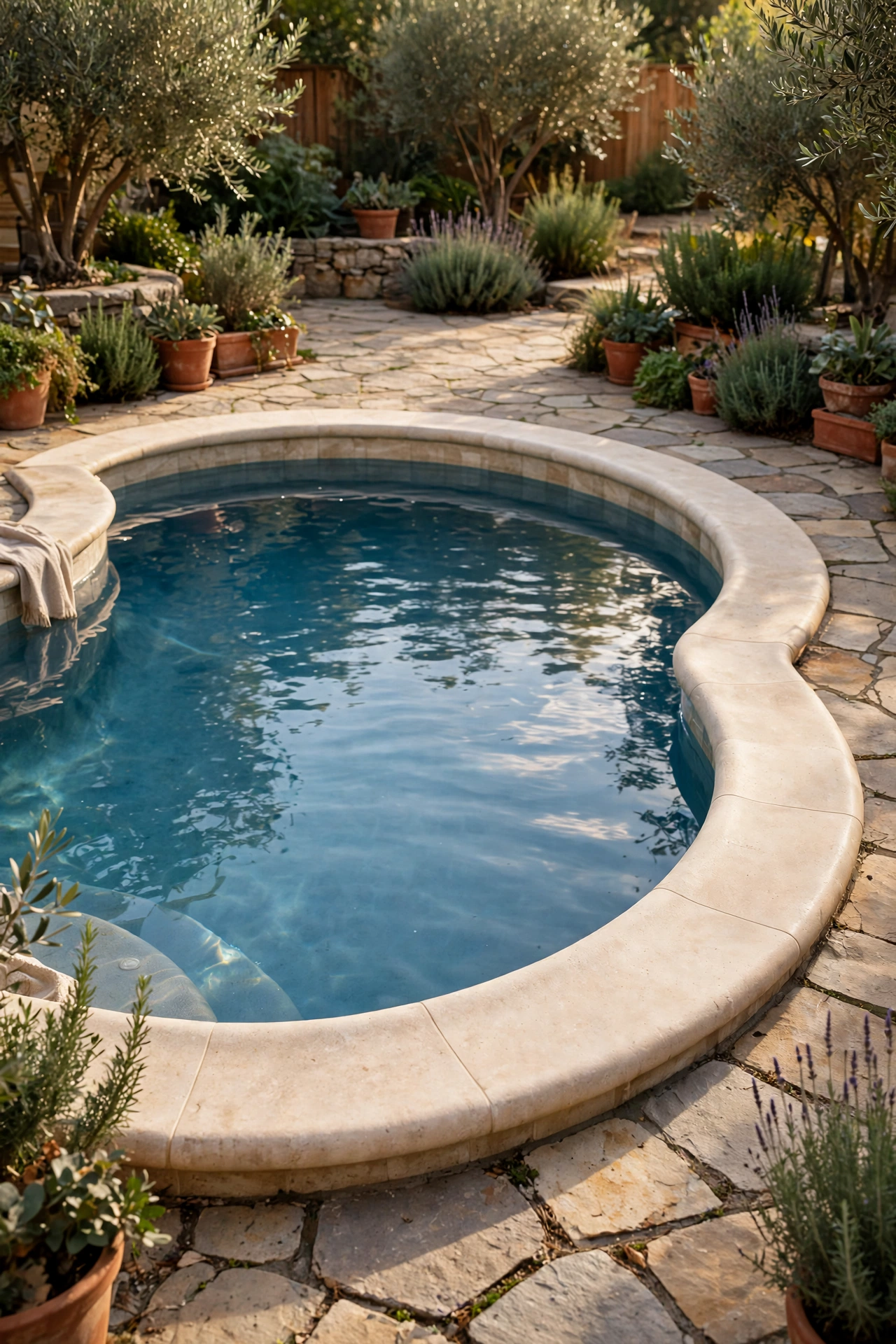
Bullnose travertine is the rounded edge most people picture on a resort pool. The curve softens the rim where swimmers climb out and sit, which matters with kids in the water every day. Travertine stays cooler than most stone in direct sun, and the tumbled finish gives wet feet something to hold onto. Pair it with travertine pavers in the same tone for a calm, matched surround, or let it stand out against a darker deck. Seal it once a year to slow stains from sunscreen and leaves.
Try this: Order a few sample pieces and wet them before you decide, since travertine darkens when wet.
Cost: $$$. Difficulty: Pro job.
2. Square-edge cantilever concrete

Cantilever concrete is poured so the deck edge extends slightly over the pool wall, forming a sharp 90 degree line. The look is clean and modern, and it makes a rectangular pool read wider. Stamping or staining adds pattern and color without changing the profile. It is often the lowest installed cost of any coping, with basic cantilever work commonly running 6 to 15 dollars per linear foot before deck finishes. The trade-off is cracking: the pour needs proper expansion joints and a skilled crew, or hairline cracks show up fast.
Try this: Ask your contractor where the joints will fall and how they will be sealed.
Cost: $$. Difficulty: Pro job.
3. Drop-face limestone
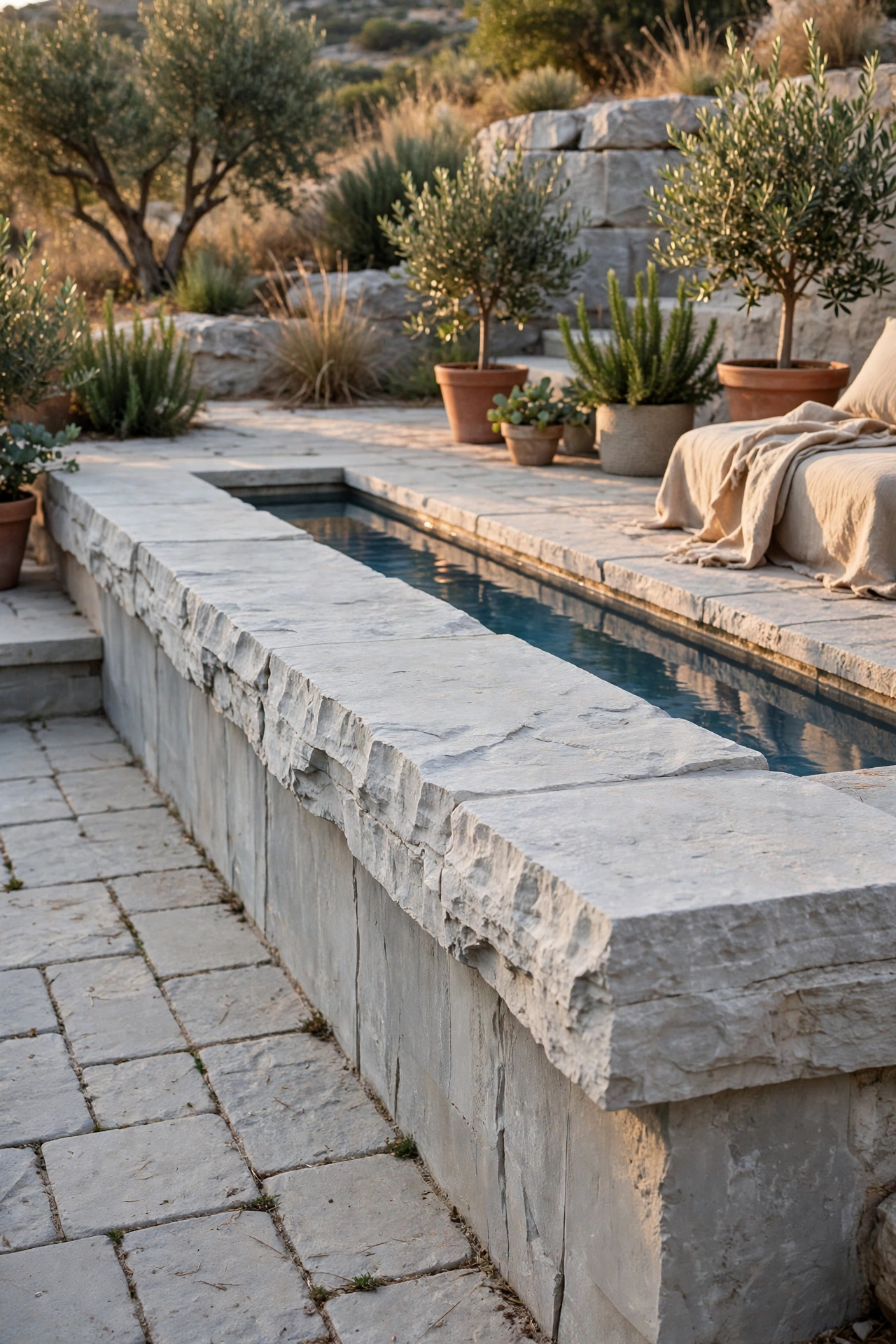
Drop-face limestone hangs a deeper vertical face over the pool wall, so the edge reads like a solid block of stone instead of a thin cap. The effect suits contemporary pools and any design where the rim should carry some weight. Limestone comes in soft grays, warm tans, and pale creams, and an acid-etched or honed finish adds grip without changing the color much. It is a porous stone, so a quality sealer is part of the deal, and reapplying it keeps the face from staining. Check the stone’s freeze rating before using it in a cold climate.
Try this: Use a 60 to 70 mm drop on a raised pool wall for a chunky, finished look.
Cost: $$$. Difficulty: Pro job.
4. Tumbled bluestone
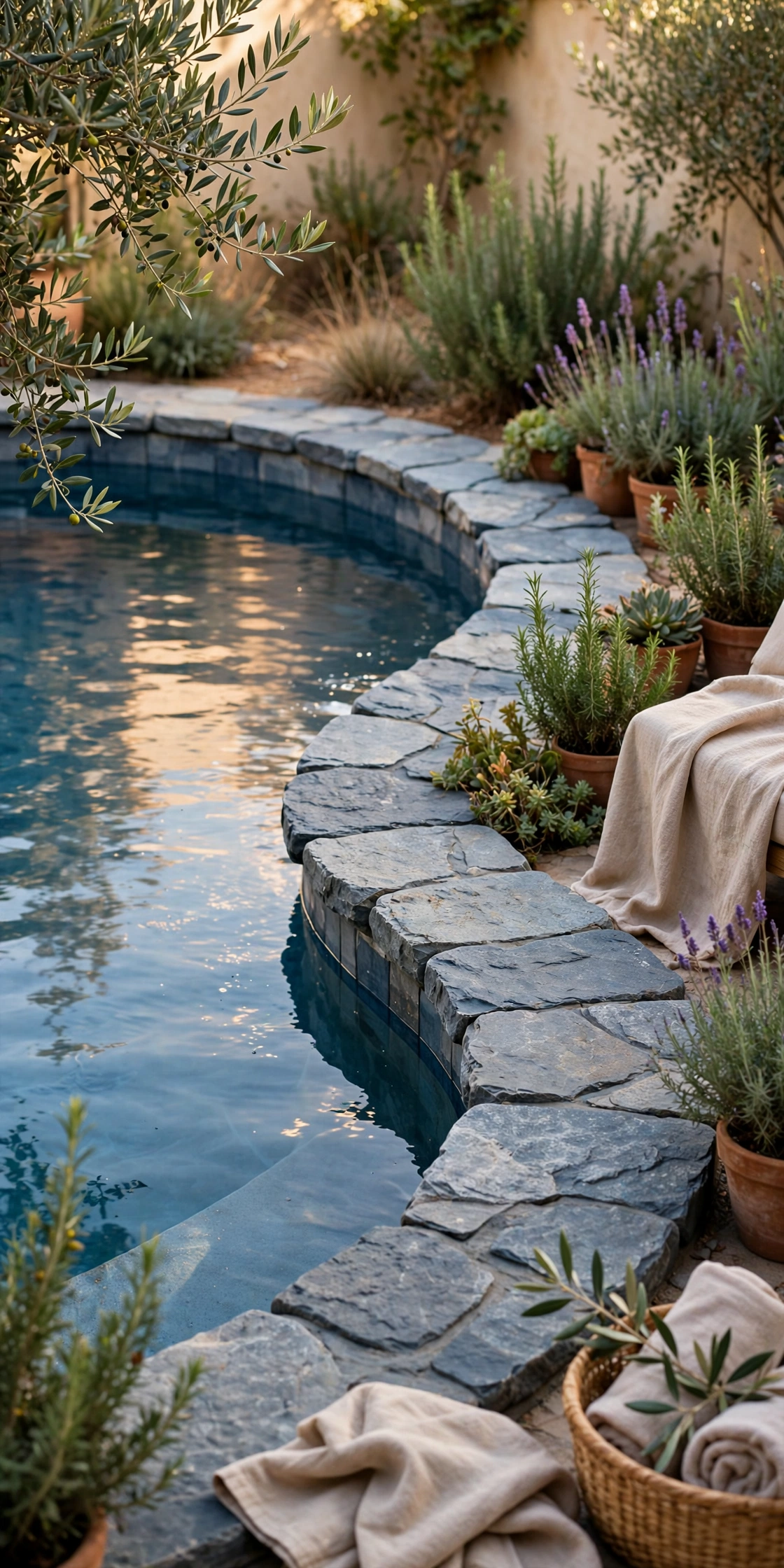
Bluestone brings a cool gray-blue tone and a natural cleft texture that grips well under wet feet. Tumbling softens the edges and corners, so the stone feels less sharp than sawn bluestone while keeping its rugged character. It works with modern gray decks and with rustic planting alike, which makes it a safe pick when the rest of the yard is still undecided. Bluestone is dense and hard wearing, but it still needs sealing in most climates, and darker pieces can run warm in full afternoon sun. Keep the pieces consistent in thickness so the rim sits level.
Try this: Pair bluestone coping with gray pavers and green planting for a calm, coastal feel.
Cost: $$$. Difficulty: Pro job.
5. Dark granite
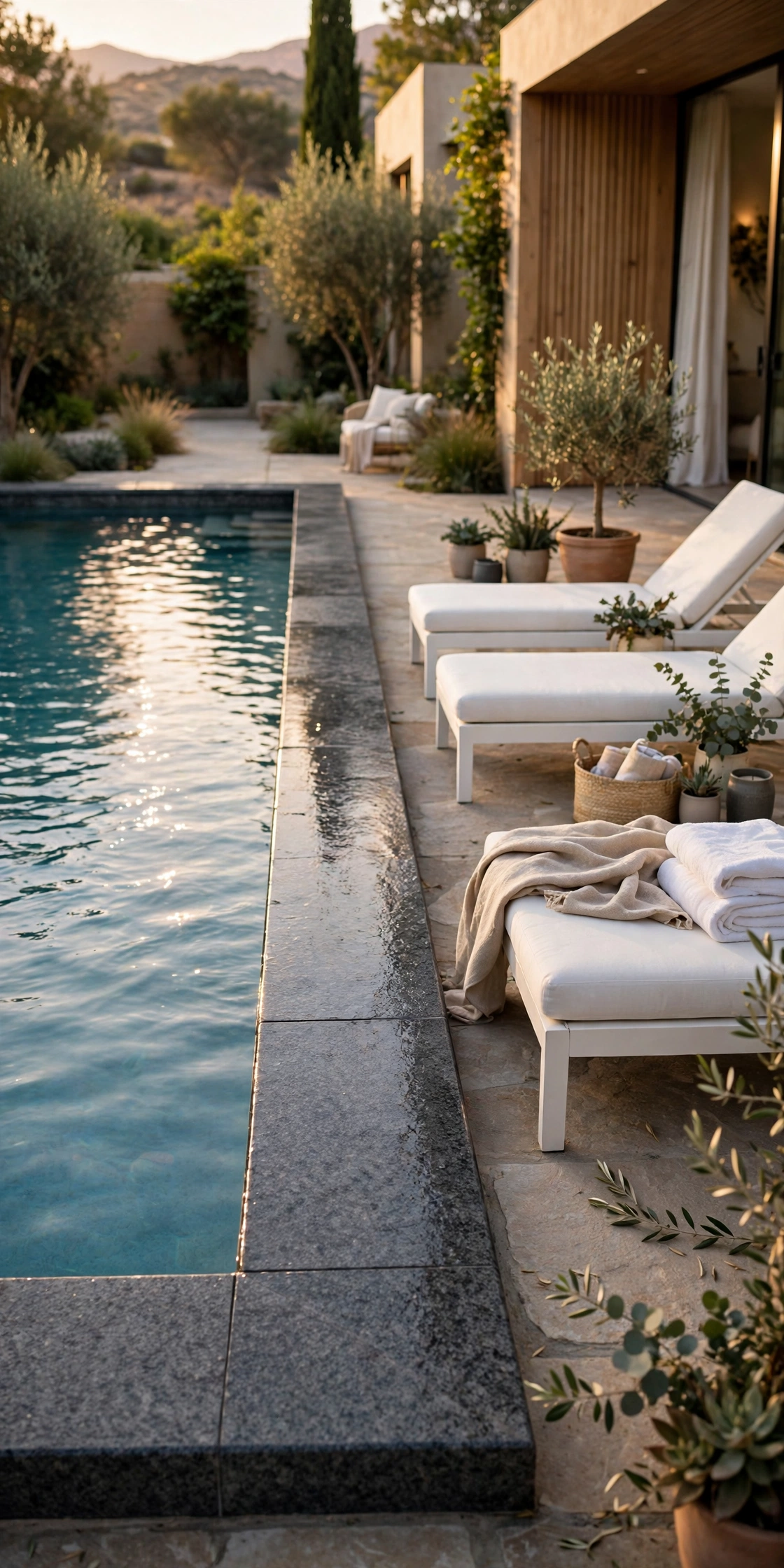
Granite is the hardest wearing coping stone you can buy, which is why it shows up on busy family pools and commercial-style builds. A leathered or flamed finish keeps the grip up while the stone itself shrugs off chips, stains, and freeze cycles better than softer stone. Dark gray and black granite give a sharp, high-end frame, especially against light waterline tile. The catch is heat: dark stone in full sun gets hot fast, so reserve it for shaded edges or mix it with lighter decking. Installed cost runs at the top of the range.
Try this: Use granite on the steps and skimmer areas that take the most wear, and a cooler stone elsewhere.
Cost: $$$. Difficulty: Pro job.
6. Porcelain paver coping
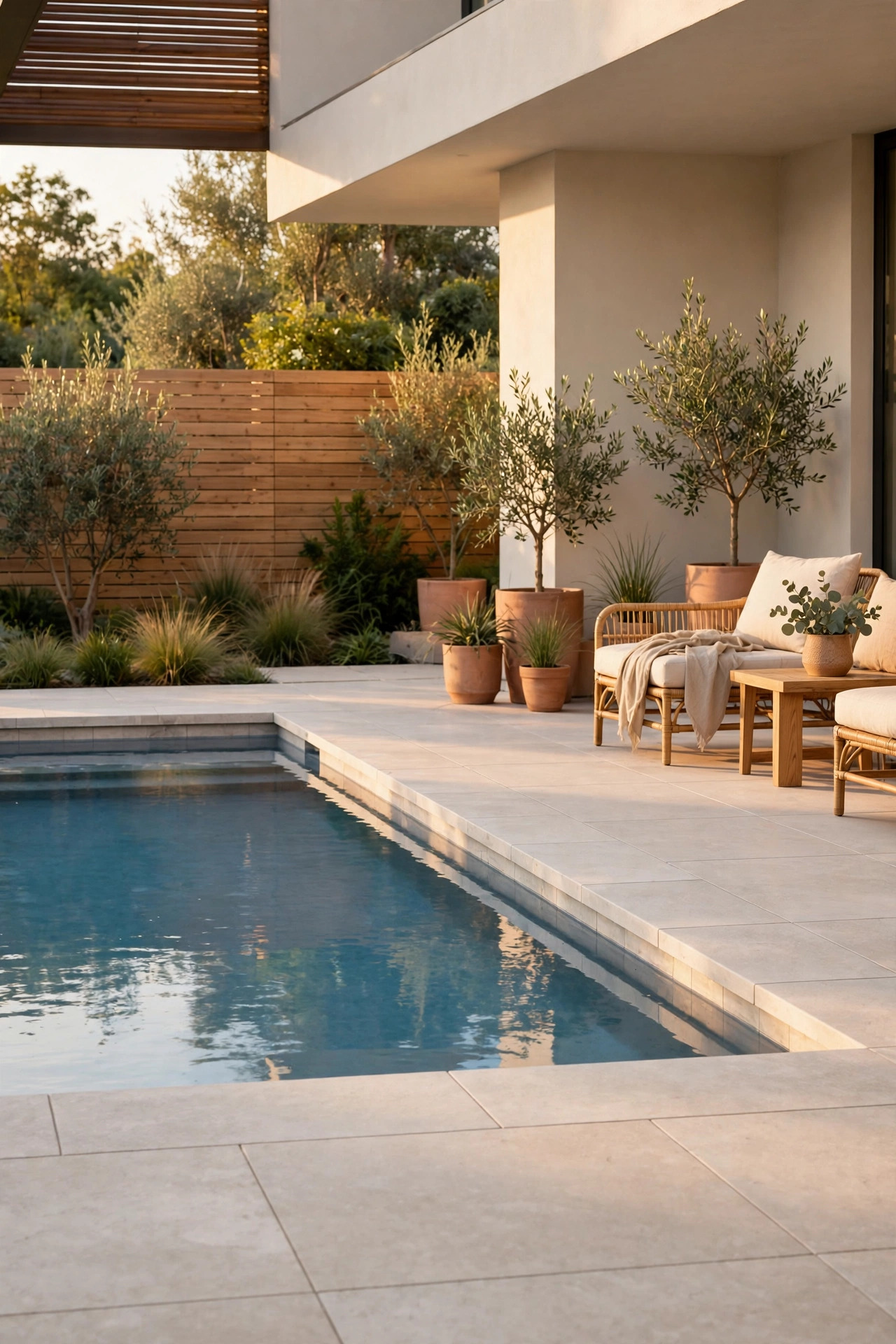
Porcelain coping gives you a consistent color and a surface that resists stains, fading, and pool chemicals with almost no upkeep. It comes in stone looks, concrete looks, and wood looks, so you can match a modern house without paying for natural stone. The pieces are thin and hard, which means the installer needs experience cutting and setting them, and the finish matters: pick a grip-rated, textured surface, since a glossy porcelain edge turns slick when wet. Porcelain also handles freeze cycles well, which suits cold climates. It costs more than basic concrete but less than most premium stone.
Try this: Check the slip rating on the exact tile you buy, since ratings change by finish.
Cost: $$$. Difficulty: Pro job.
7. Brick coping
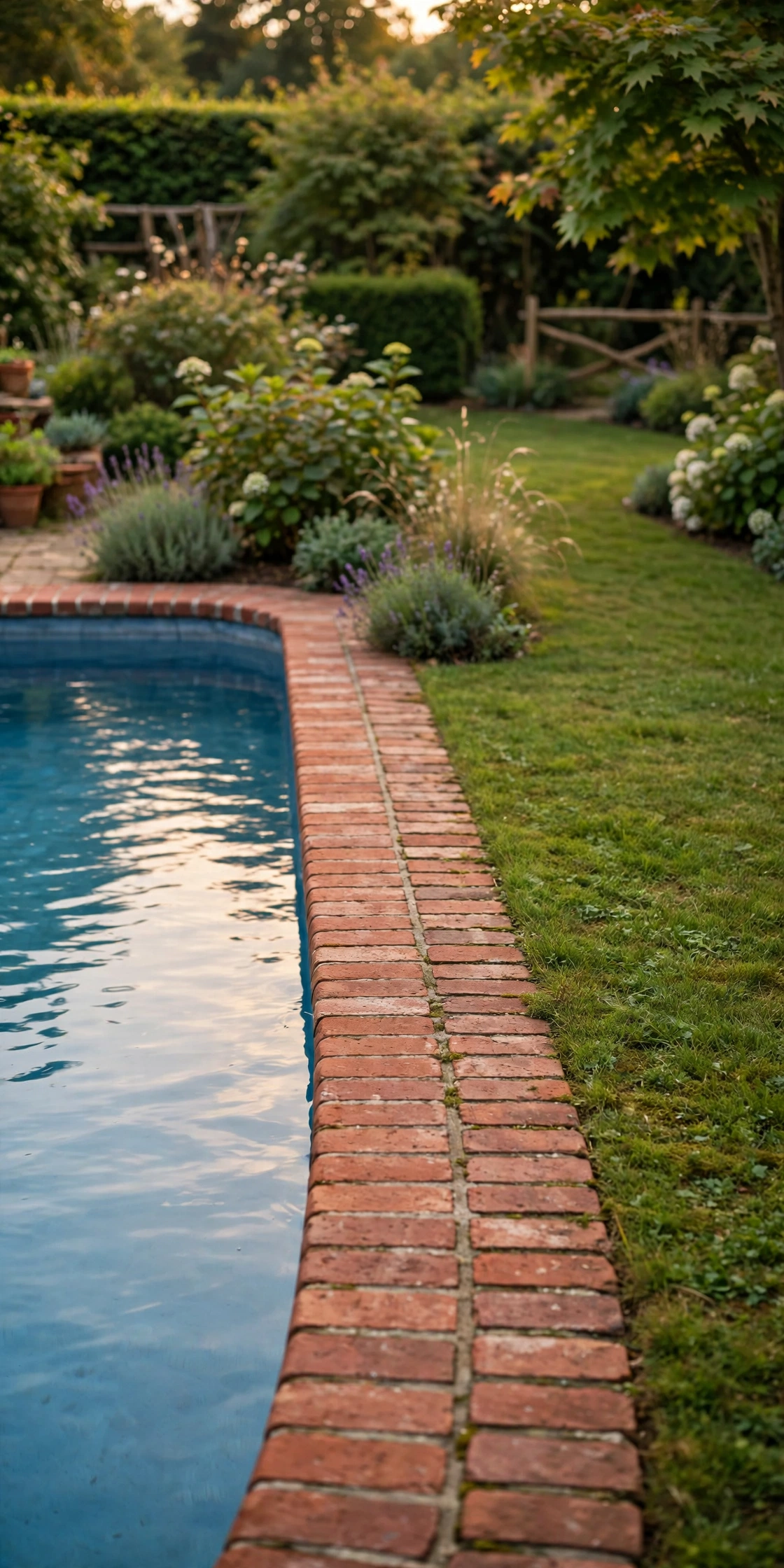
Brick coping suits traditional homes, cottage gardens, and any pool where a warm, handmade feel beats a sleek one. Laid in a running bond or herringbone pattern, brick gives strong grip and a color range from soft red to deep brown that ages well. It is one of the more budget-friendly coping options, and single bricks are easy to replace if one cracks. Brick does fade in harsh sun and needs sealing to slow that, and the mortar joints need pointing now and then. Keep the brick course level with the deck so no lip trips bare feet.
Try this: Use a soldier course of bricks standing on end at the edge for a raised, defined rim.
Cost: $$. Difficulty: Moderate to Pro.
8. Warm sandstone
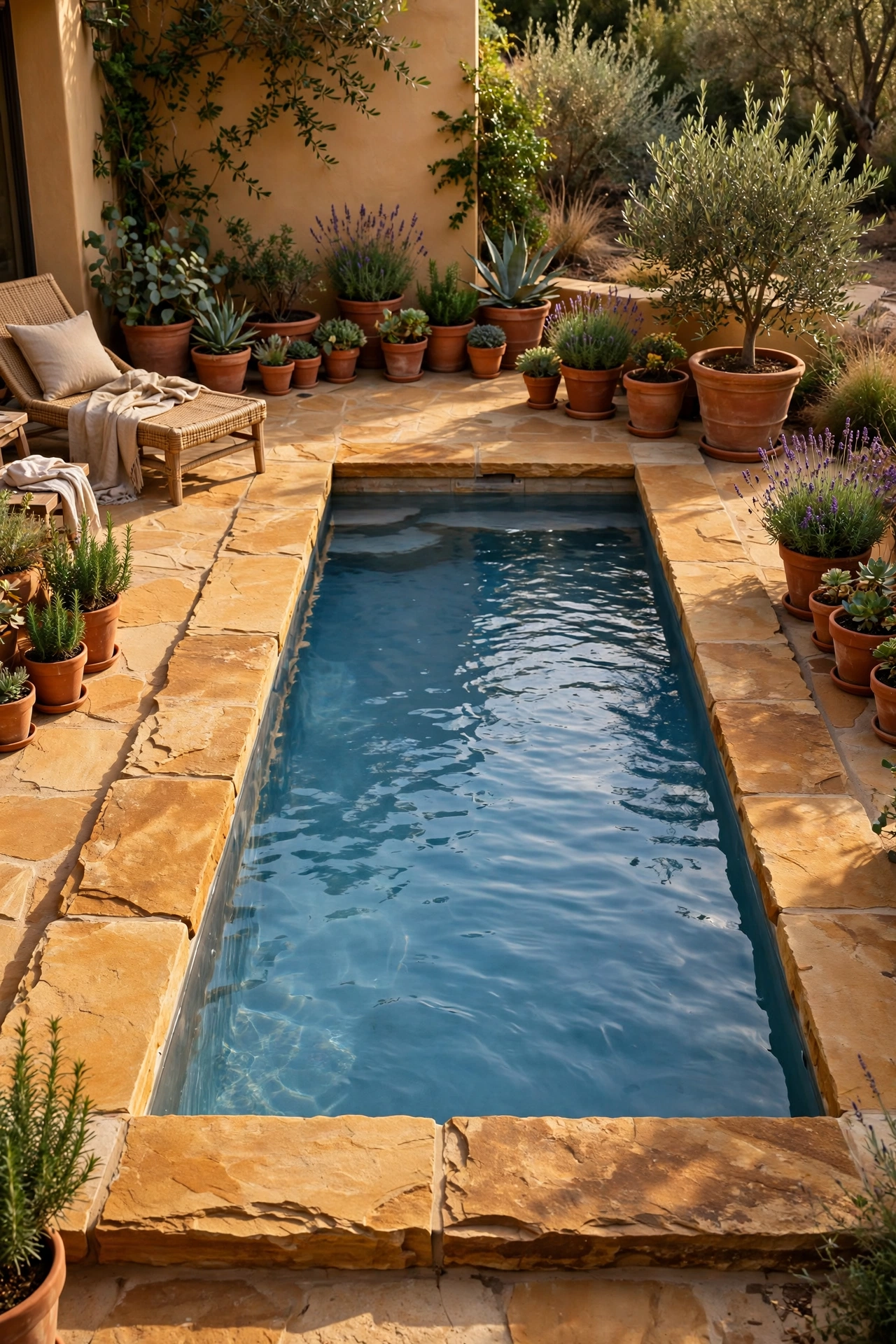
Sandstone brings honey, cream, and soft gold tones with a riven texture that reads relaxed and coastal. It pairs well with terracotta pots, olive trees, and pale rendered walls, and it costs less than granite or marble in most markets. Sandstone is softer than granite or bluestone, so check its freeze-thaw rating and salt tolerance before committing, and plan on sealing it every year. The stone varies a lot from piece to piece, which is part of the charm, but sort the pieces before laying so dark and light tones spread evenly around the rim.
Try this: Sort sandstone pieces into light and dark piles first, then mix them as you lay.
Cost: $$. Difficulty: Pro job.
9. Honed marble
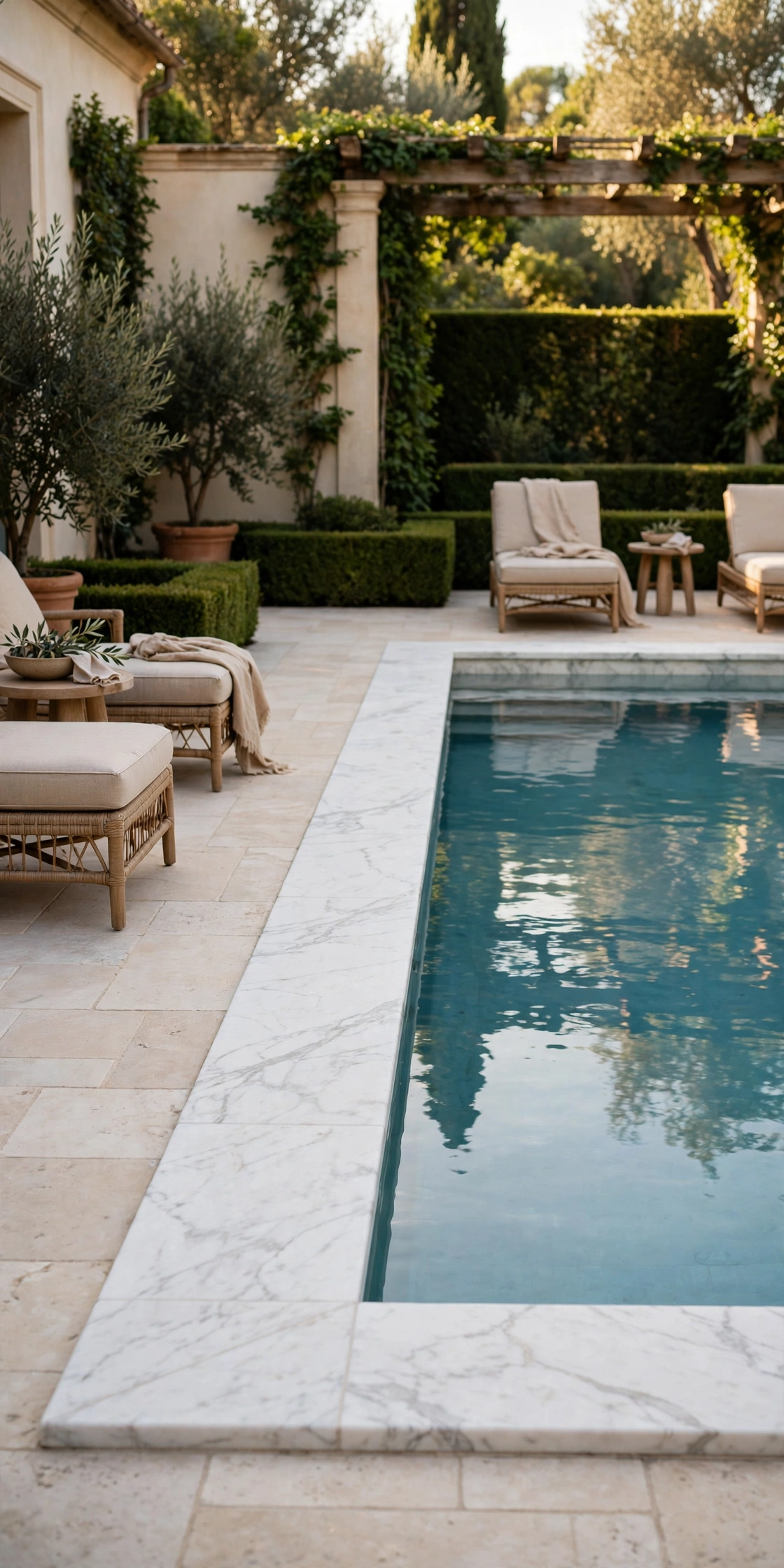
Honed marble is the showpiece option, with soft veining and a matte surface that reads calm and high-end. White and pale gray marble brightens a shaded yard and pairs with classic architecture, formal planting, and light waterline tile. Marble needs more care than other stone: seal it well, clean spills fast, and talk to your builder before using it with a salt system, since salt and soft stone do not always get along. Reserve it for lower-traffic pools where the look justifies the upkeep, and use a honed finish rather than polished for grip.
Try this: Keep a spare box of matching marble pieces for future repairs, since veining varies by lot.
Cost: $$$. Difficulty: Pro job.
10. Contrasting edge

A contrasting edge uses coping in a different color than the deck and the waterline tile, so the rim of the pool reads clearly from across the yard. The contrast is a design accent, and it also helps swimmers, kids, and guests see exactly where the water ends, which is a real safety plus at dusk. Dark charcoal coping on a light travertine deck is the classic pairing, but a pale edge on a dark deck works the same way. This idea works with any material on this list, so pick the stone first and then choose a deck color that sets it off.
Try this: Test the pairing at dusk, when edge visibility matters most.
Cost: Varies with material. Difficulty: Pro job.
How to choose the right pool coping
Start with the pool shape. Freeform and curved pools need custom-cut stone or poured concrete, since standard rectangular pieces leave awkward gaps on a curve. Next, weigh the climate: freeze-thaw regions favor low-absorption stone like granite or porcelain, while salt systems call for dense stone and a frank talk with your builder about softer options. Sun matters too, since light colors stay cooler underfoot and dark colors heat up fast. Then match or contrast the deck on purpose, not by accident. Finally, get the install details in writing: expansion joint placement, overhang depth, drainage slope away from the shell, and sealer type.
Pool coping comparison table
| Coping idea | Cost | Difficulty | Best for |
|---|---|---|---|
| Bullnose travertine | Medium to High | Pro job | Family pools, cool feet |
| Cantilever concrete | Low to Medium | Pro job | Modern pools, tight budgets |
| Drop-face limestone | Medium to High | Pro job | Contemporary pools, solid edges |
| Tumbled bluestone | Medium to High | Pro job | Cool tones, strong grip |
| Dark granite | High | Pro job | Heavy use, luxury builds |
| Porcelain paver coping | Medium to High | Pro job | Low upkeep, cold climates |
| Brick coping | Low to Medium | Moderate to Pro | Traditional homes, warm tones |
| Warm sandstone | Medium | Pro job | Coastal and country pools |
| Honed marble | High | Pro job | Low-traffic pools, classic style |
| Contrasting edge | Varies | Pro job | Edge visibility, design accent |
Common mistakes to avoid
Polished stone at the waterline is the most common regret, since a glossy edge turns slick the first time it gets splashed. Skipping expansion joints on poured concrete invites cracks, and using a soft, porous stone with a salt system can pit the surface within a couple of seasons. Coping that slopes toward the pool sends dirty deck water into the pool and can work its way behind the shell, so the finished edge should drain away from the water. Dark coping in a sun-blasted yard burns bare feet, and an edge with no overhang at all leaves the top of the shell exposed. Get the overhang, slope, and sealer spelled out before the crew starts.
More pool and patio ideas
Once the edge is settled, the area around the pool still needs a plan. For the patio itself, see these pool patio ideas for pavers, zones, and outdoor living layouts.
If the pool sits near the coast or you want a beachy surround, these coastal pool deck decorating ideas show how decks, planting, and color work together.
For a natural-looking pool to go with a stone edge, these freshwater DIY pool ideas cover pond-style builds and planting.
Working with a compact yard? These small pool ideas for small yards help you fit a pool, edge, and seating into tight space.
And to finish the whole backyard around the pool, these DIY backyard oasis ideas cover seating, shade, and lighting on a budget.
For safety basics around any pool, the U.S. Consumer Product Safety Commission runs Pool Safely, with guidance on barriers, supervision, and safer pool areas. For water care and swimmer health, the CDC publishes healthy swimming guidance covering chlorine, pH, and pool hygiene.
Frequently asked questions
What is pool coping?
Pool coping is the band of material that caps the top of the pool wall, covers the joint between the pool shell and the deck, and stops water from getting behind the shell. It also gives swimmers a place to grip when climbing out and a finished edge to sit on.
How much does pool coping cost?
Basic cantilever concrete often runs 6 to 15 dollars per linear foot installed, while installed natural stone like travertine commonly runs 40 to 60 dollars per linear foot. Final cost depends on the material, the edge profile, your region, and how much cutting a curved pool needs.
What is the best coping for a saltwater pool?
Dense stone like granite and porcelain coping hold up best with salt systems. Softer, porous stone can pit or wear faster in salt water, so check with your builder and pick a stone rated for salt use, then keep up with sealing.
Should pool coping match the deck?
No, it does not have to match. Matching coping and deck gives a calm, unified look, while a contrasting edge marks the pool rim clearly and adds a design accent. Both approaches work, so choose based on the look you want and how visible you want the edge to be.
How do you maintain pool coping?
Sweep and wash the edge regularly, reseal natural stone about once a year or as the sealer maker states, and check the joints each spring for cracks or gaps. Fix loose pieces and failed joints early, since water getting behind the coping causes bigger repairs later.
Final thoughts
Coping is a small strip of material that does a big job, so pick it for grip, heat, and climate first and for looks second. A light, textured edge that drains away from the water will serve a family pool far better than a glossy showpiece that slips and stains. Get samples wet, check the freeze and salt ratings, and get the joints and slope in writing before the crew starts.


