



Working from the kitchen table stopped being charming about a month in. The dishwasher runs during calls, the light is wrong, and every workday bleeds into home life because there is no door to close. A garden office fixes all of that, but only if the inside works as hard as the idea of it.
I spent a winter working out of an uninsulated shed before getting the setup right, so this list skips the pretty-but-useless ideas. Below are 12 garden office interior ideas that cover tiny sheds, shared couples’ offices, creative studios and dual-purpose guest rooms, each with a realistic budget and difficulty level. Pick the one that matches your space and workday, and start there.
Quick takeaways
- Put the desk where the light is: a glass-facing layout beats any decor upgrade.
- In rooms under 100 square feet, build the desk into the wall and make every piece do two jobs.
- Test glare, Wi-Fi and cold spots for one full week with a folding table before you buy furniture.
- Insulation beats heaters: seal and insulate first, then size the heater to the room.
- Anchor tall shelves, use GFCI-protected circuits, and call 811 before trenching any cable.
1. Face the glass: a desk under the biggest window
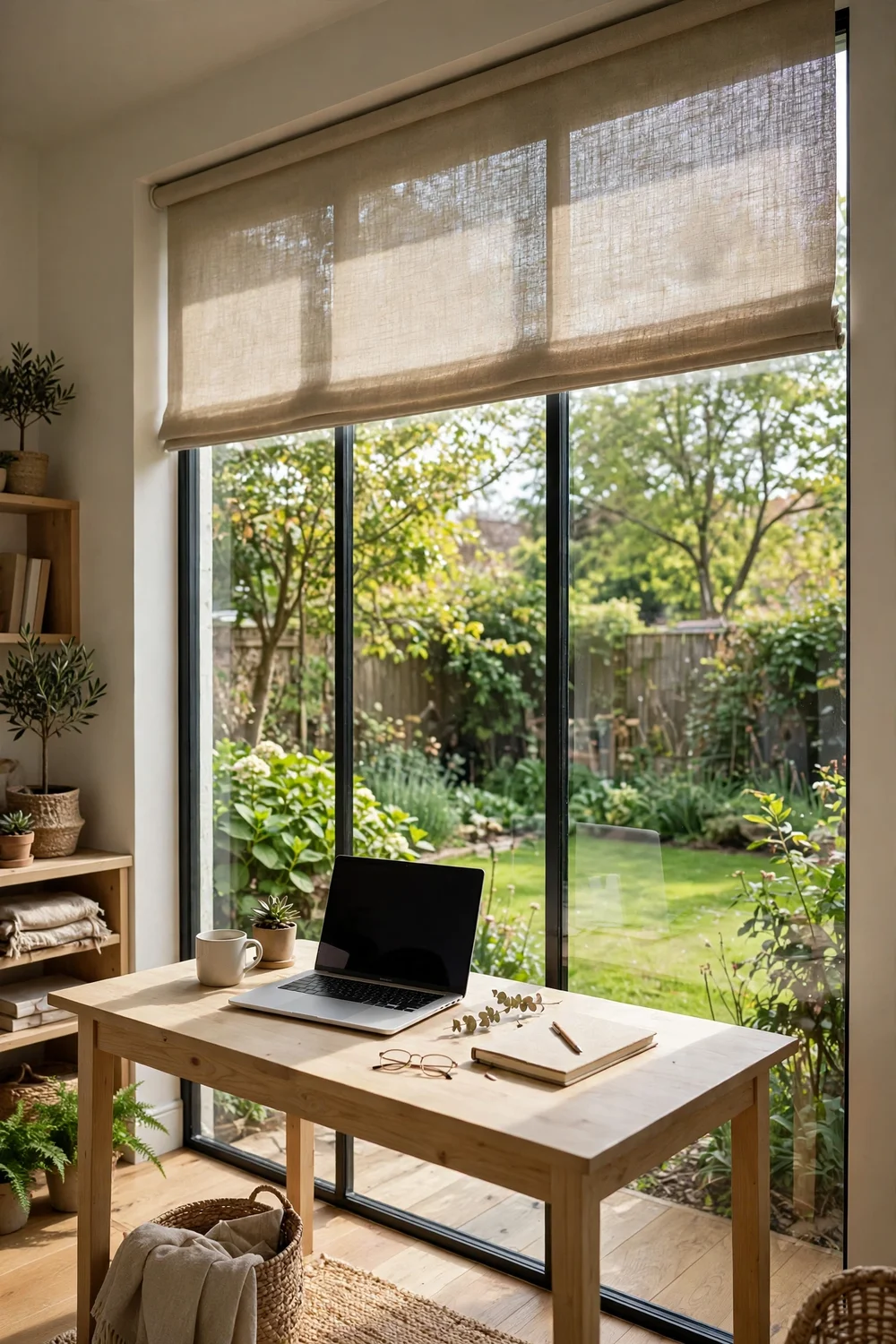
Park your desk right under the largest window or glass door so the garden becomes your backdrop. A 60-inch desk fits most 8×10-foot sheds with room to push the chair back. Choose a light-colored desktop so it bounces daylight around the room instead of soaking it up. Position the monitor at a right angle to the glass to cut glare, and add a simple linen roller blind for afternoons when the sun sits low. It works in sheds, summerhouses and full garden rooms alike.
Try this: Test glare at your worst hour (usually 2 to 4 PM) before you drill cable holes. Cost: $$$| Difficulty: Easy
2. Built-in desk wall for a tiny shed office
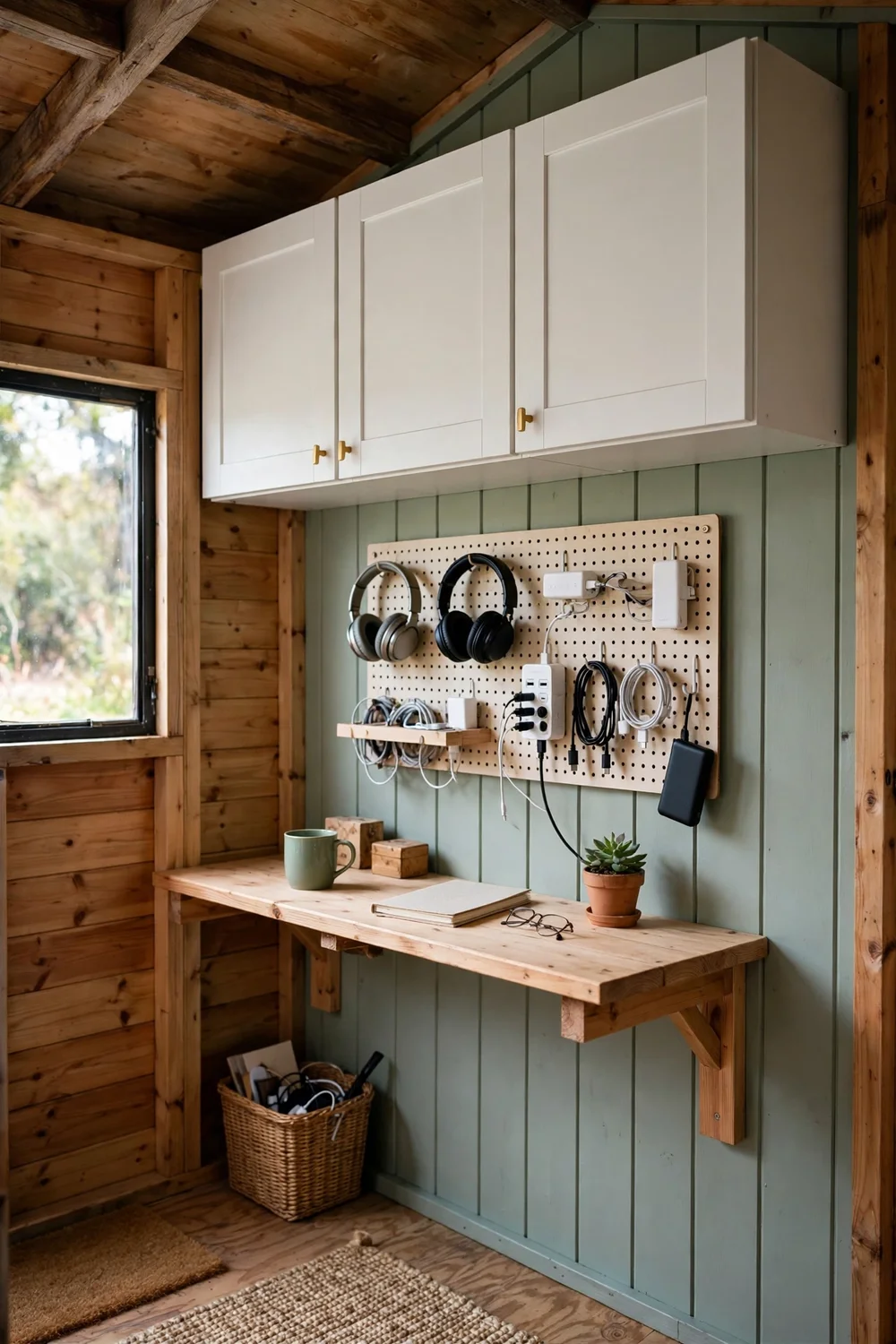
When floor space is tight, build the desk into the wall instead of standing furniture in the room. A 24-inch-deep bench desk screwed to wall cleats plus two upper cabinets gives you a full workstation in about 6 square feet. Paint the wall behind in one calm color so the storage reads as one piece. Add a pegboard or rail for headphones and chargers to keep the desktop clear. For sheds under 80 square feet this is often the only layout that leaves a clear walkway.
Try this: Mount the desk at 29 to 30 inches high, standard desk height, so any office chair works. Cost: $$$| Difficulty: Moderate
3. Biophilic corner with real plants and raw wood
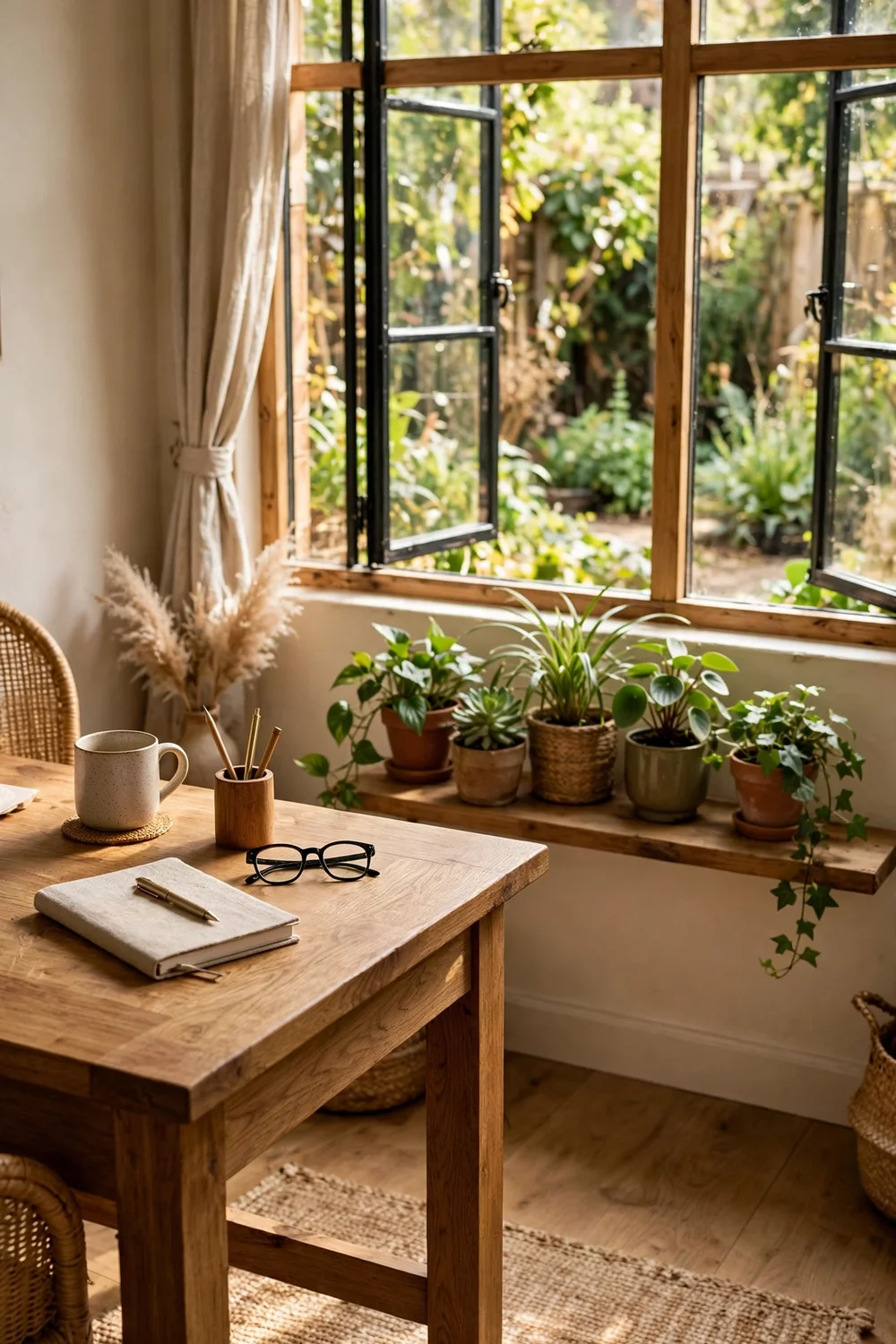
Bring the garden inside with a desk area built around natural materials. A solid wood desktop, a jute rug and 3 to 5 real plants on a low shelf create a workspace that feels alive. Pothos, spider plants and cast iron plants handle the temperature swings of a garden building well. A trailing pothos is the classic garden-office plant: these creative ways to grow pothos indoors and these easy DIY macrame plant hanger patterns show how to display it without drilling a dozen hooks.
Try this: Pick pet-safe plants if your dog or cat visits the office with you. Cost: $$$| Difficulty: Easy
4. The dual-purpose daybed office

If your garden room also hosts guests, make it pull double duty. Put a daybed along the back wall with a slim console desk opposite, and the room flips from office to guest space in minutes. A daybed with storage drawers holds spare bedding and office supplies. Keep the desk narrow (20 inches deep) so the walkway stays comfortable, and choose neutral bedding that matches your desk accessories. These garden nook seating ideas round up cozy setups that work inside the office and out in the garden.
Try this: Choose a daybed rated for daily sitting so it works as your reading seat too. Cost: $$$| Difficulty: Moderate
5. Moody dark-green office with warm wood

Dark paint can make a small garden office feel grounded instead of cramped, as long as the light is generous. A deep olive or forest green on two walls plus warm walnut or oak furniture creates a study-like feel that photographs beautifully. Keep the ceiling white so the room does not close in, and add one warm-white desk lamp for overcast days. Brass or black metal details (shelf brackets, lamp base) tie the look together without cluttering it.
Try this: Paint one wall first and live with it for three days before committing to the rest. Cost: $$$| Difficulty: Easy
6. Bright white Scandinavian-style office

White walls, pale wood and clean lines make the smallest shed office feel twice its size. Use a white or very light warm-grey wall paint with a satin finish that wipes clean. A birch desktop on white trestle legs, one open shelf and a single task lamp are enough furniture for a focused setup. Add texture instead of color: a sheepskin on the chair, a woven basket for cables, a linen curtain. The look stays calm, and every item earns its place.
Try this: Warm-white bulbs (2700 to 3000K) stop white walls from feeling cold in winter. Cost: $$$| Difficulty: Easy
7. Standing desk plus walking pad
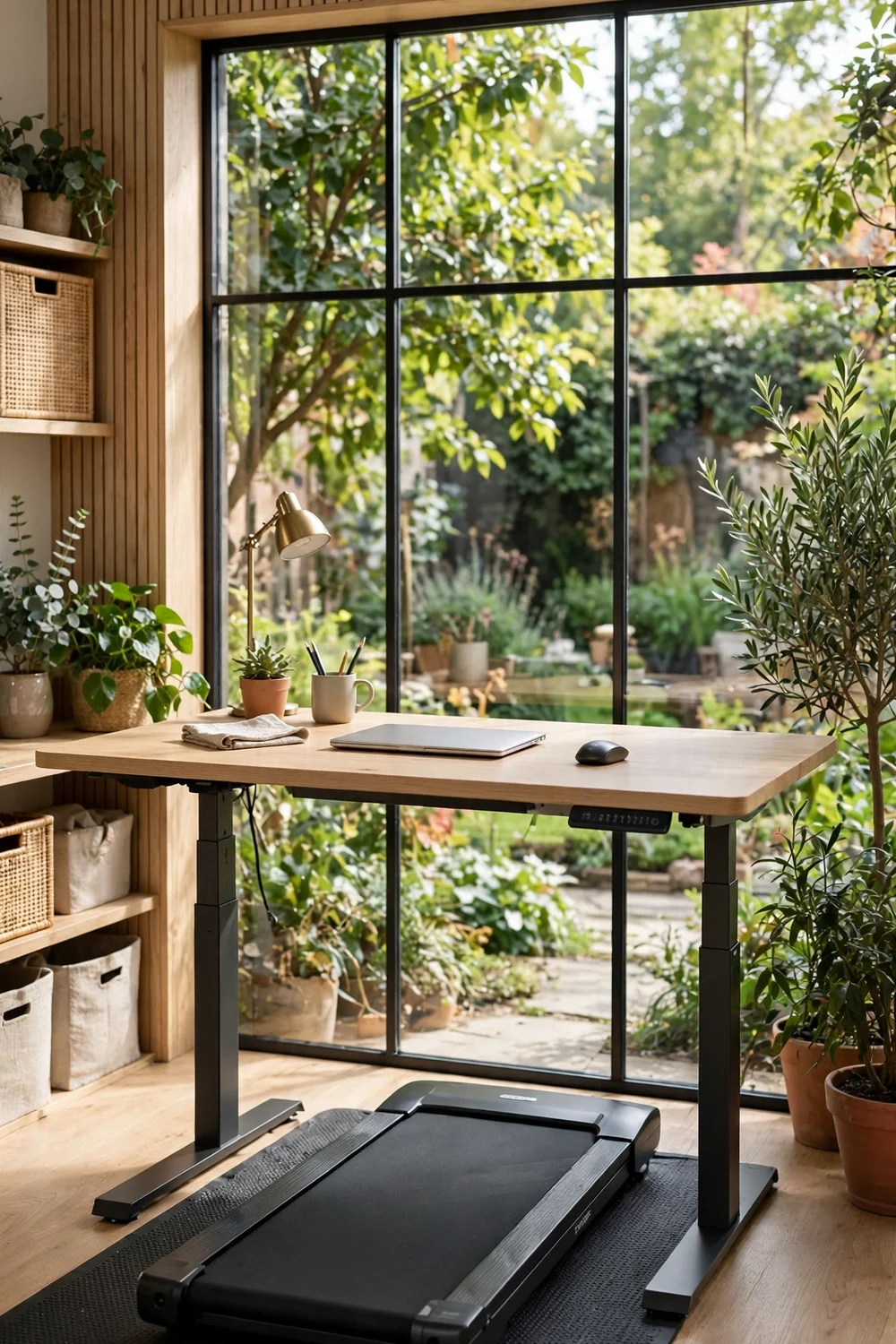
A height-adjustable desk and a slim walking pad turn a garden office into a place that keeps you moving. Walking pads need only about 4 feet of clearance behind the desk, so they fit most garden rooms. Set a rubber mat under the pad to protect the floor and dampen noise. Keep a regular chair for calls so you can sit when you need to concentrate on screen. Most people use the pad for email and reading, and sit for writing and meetings.
Try this: Start with 20-minute walking sessions and build up slowly. Cost: $$$| Difficulty: Easy
8. Artist studio office under a skylight

If you draw, paint, sew or craft, give your garden office a studio layout. Place a large table under the skylight or brightest window so your work surface gets true-color daylight. A flat file or shallow drawer unit under the table holds paper and supplies. Wall-mounted racks keep tools visible and off the table. Choose wipeable flooring (vinyl or sealed concrete) because creative work gets messy. A pegboard wall with labeled bins keeps the small stuff findable.
Try this: North-facing light is the most even for color work, so use the brightest window you have for the table. Cost: $$$| Difficulty: Moderate
9. Two-person layout that actually works
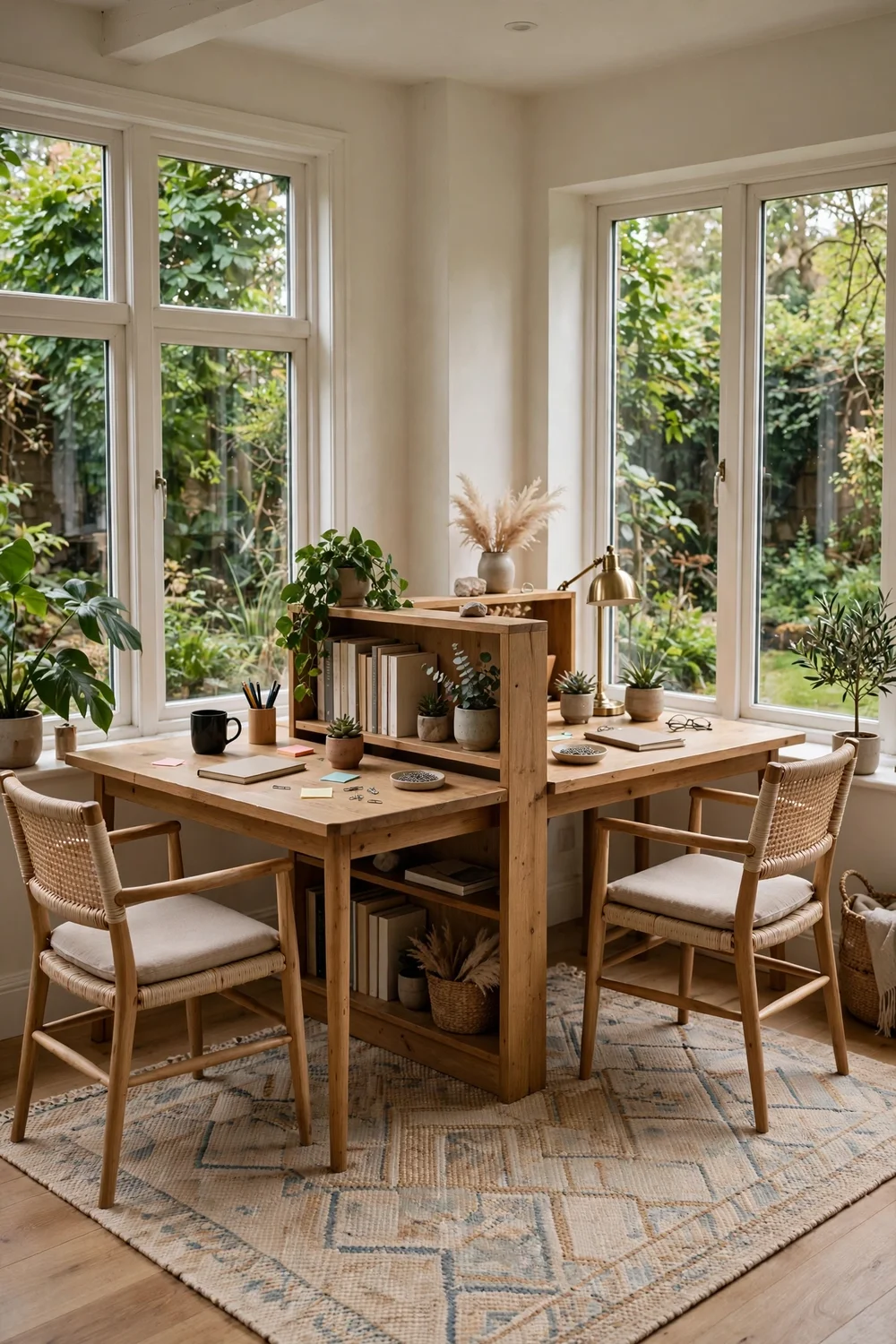
Couples sharing one garden office need zoning, not just two desks. Place desks back-to-back in the center of the room or in an L along two walls so each person faces a different direction. A low bookcase between desks works as a divider and extra storage. Matching chairs and one shared rug make it read as one room instead of two workstations pushed together. Plan at least 30 inches of clearance behind each chair so nobody blocks the other.
Try this: Agree on a shared headphone rule for calls before you move in. Cost: $$$| Difficulty: Moderate
10. Coffee corner and mini fridge station
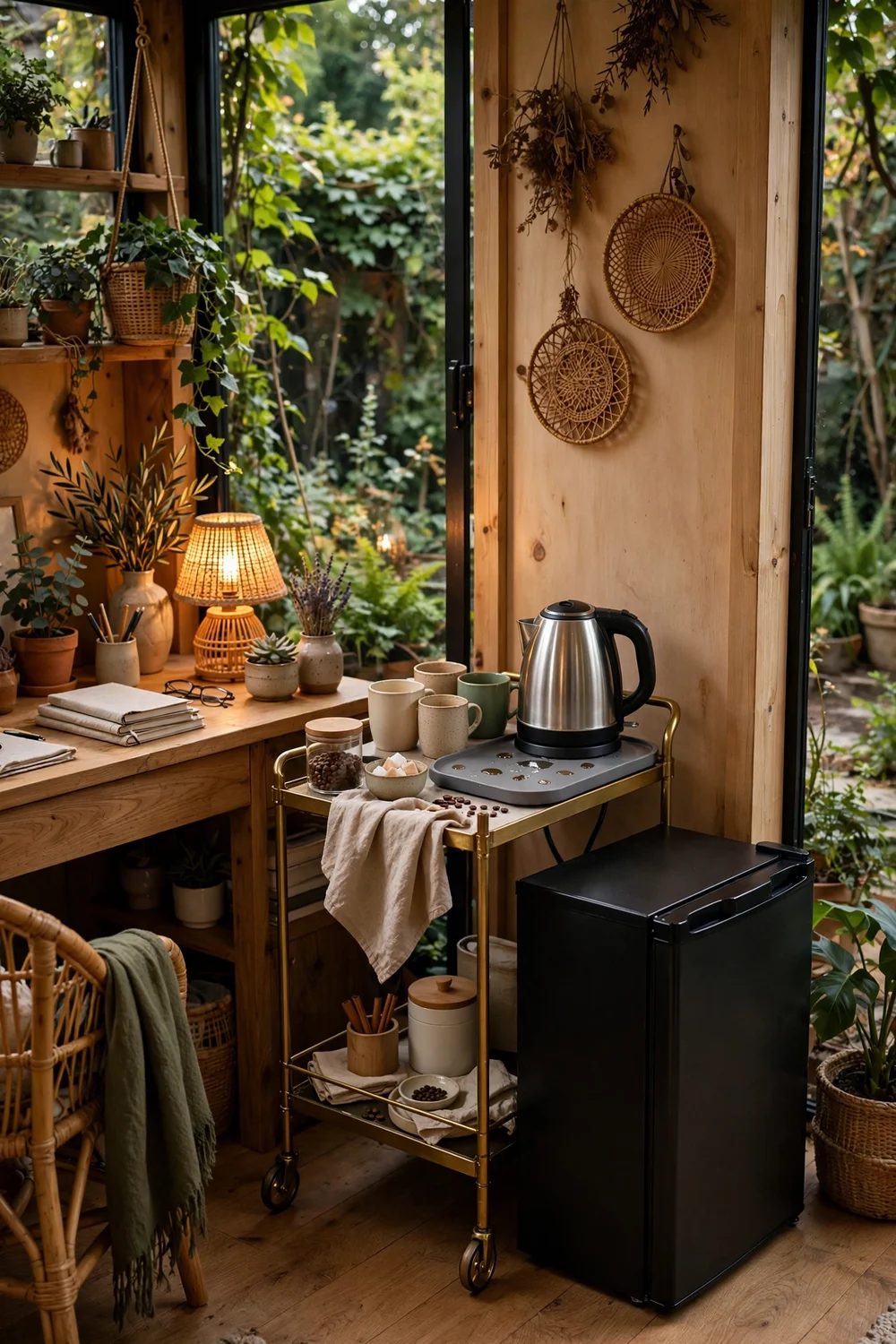
A small drinks station keeps you out of the main house during the workday. A narrow console or bar cart with a kettle, mugs and a mini fridge fits against any spare wall. Add a spill-proof tray under the kettle and a small bin for pods or filters. If you run a fridge, plug it into its own outlet so it never shares a circuit with a space heater. This corner also doubles as a break spot, which makes the office feel like a real workplace.
Try this: A 3.2-cubic-foot mini fridge is enough for drinks and lunch, and it sips power. Cost: $$$| Difficulty: Easy
11. Smart-home tech command desk
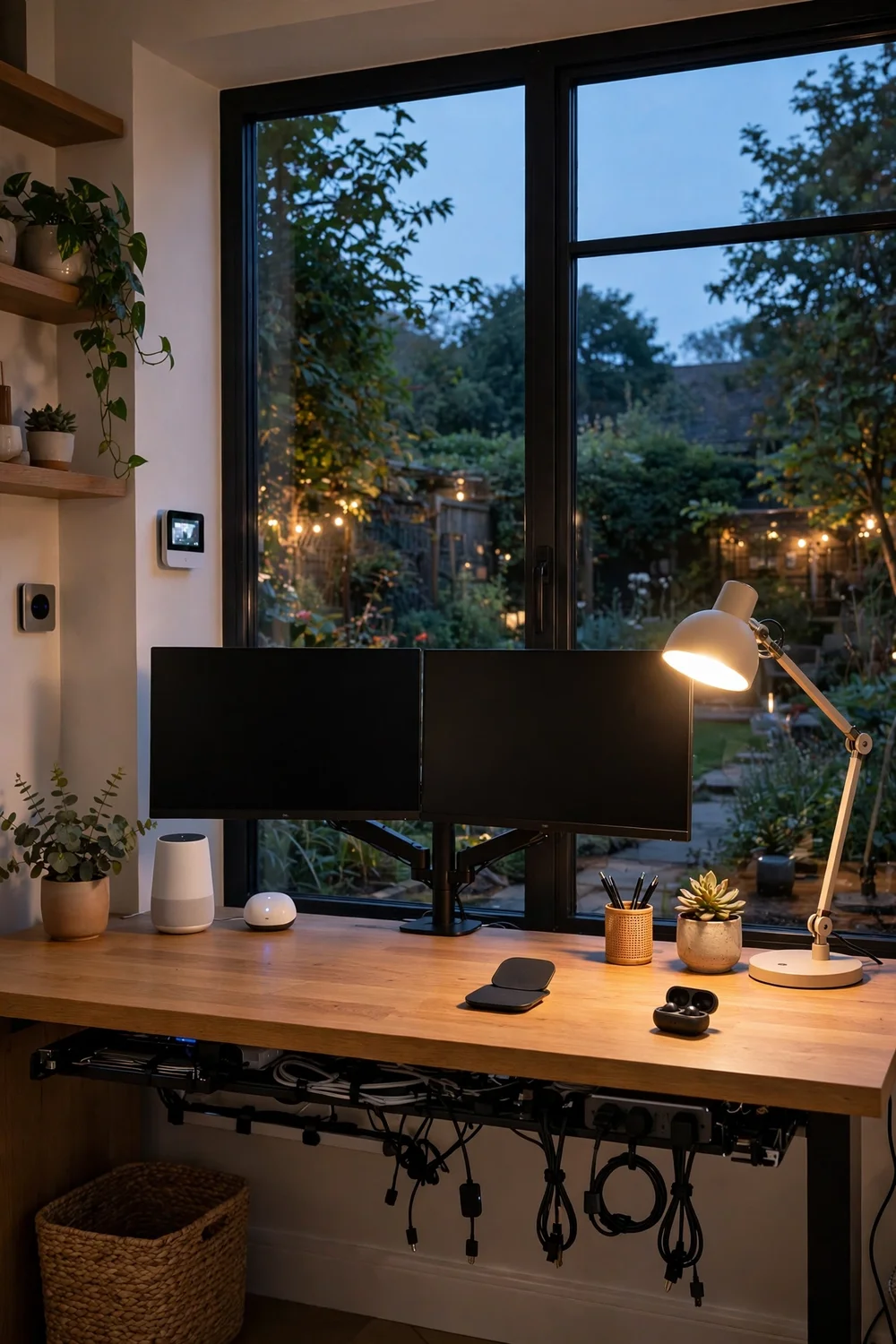
Load the desk with quiet tech that runs itself. A circadian desk lamp that shifts warmer in the evening, a smart plug on the heater, and a voice speaker for timers and calls cover 90 percent of what people actually use. Mount a power strip under the desk and label each plug so troubleshooting takes seconds. Run one cable spine from desk to wall with a cord cover. Keep the router or a mesh node in the office if the Wi-Fi signal from the house drops through the walls.
Try this: Test your video-call bandwidth in the garden room before you buy anything. Cost: $$$| Difficulty: Easy
12. Warm library office with bookshelves
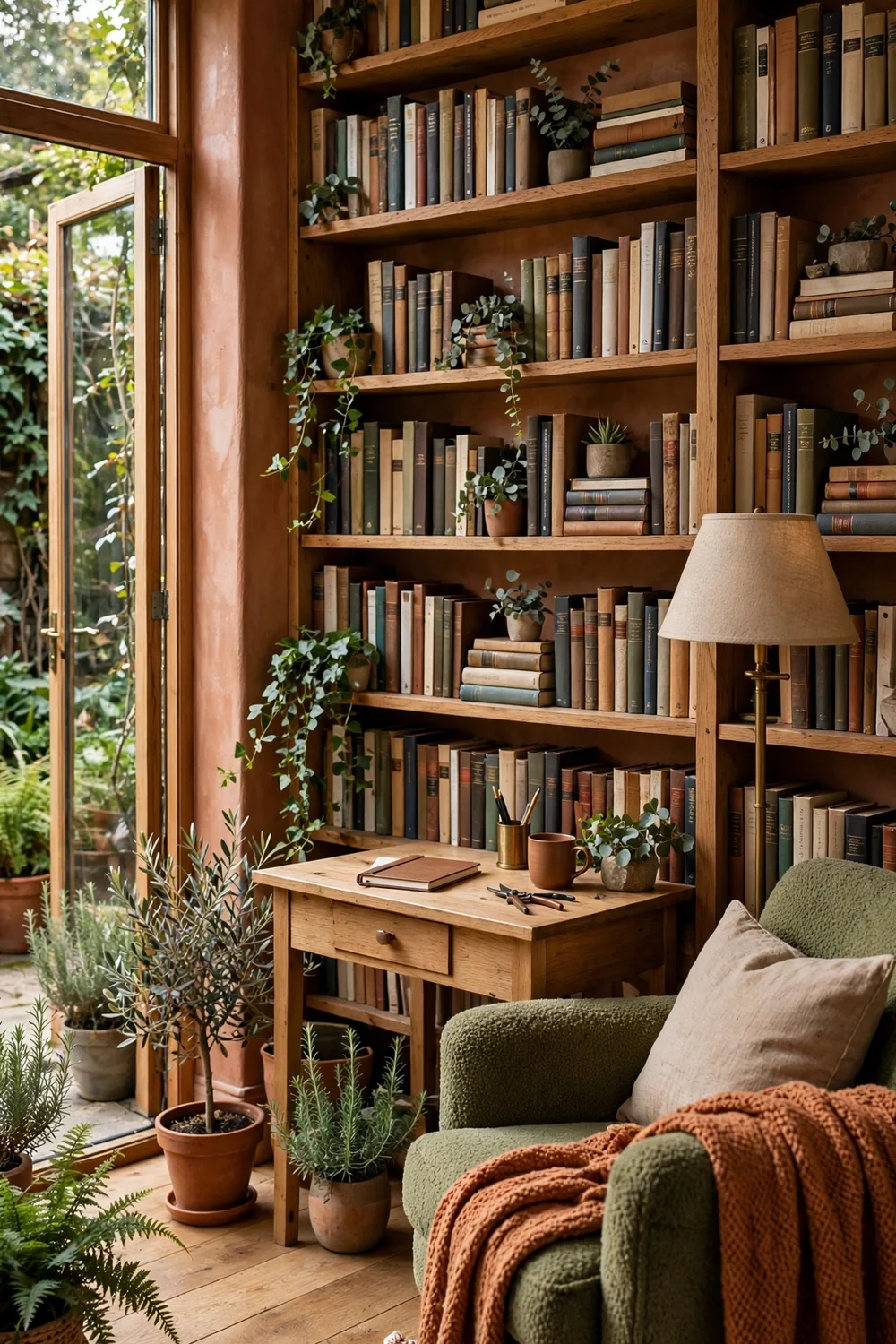
Line one wall with bookshelves and add a proper reading chair, and the garden office becomes the room everyone wants to borrow. Use freestanding shelves anchored to the wall so they cannot tip. A warm paint color (camel, terracotta or warm grey) plus a floor lamp with a fabric shade makes the corner glow in the evening. Keep the desk compact so the reading corner keeps its share of the floor. This style suits writers, researchers and anyone who reads for work.
Try this: Anchor every shelf over 3 feet tall to a stud, even if it feels stable. Cost: $$$| Difficulty: Moderate
Which garden office style fits you?
How to plan a garden office interior that fits your space
Measure twice. Note the door swing, window heights and where power enters the room, then sketch the layout on paper before buying anything. Give your desk the best light, storage the darkest corner, and keep a clear 30-inch path from door to chair. In rooms under 100 square feet, every piece should do two jobs: storage ottoman, fold-down desk, daybed. List what you actually do in a workday (calls, writing, reading) and give each activity a zone, even a small one. Buy the chair before the decor, because you will sit in it for hours and look at the decor for minutes.
Garden office interior mistakes to avoid
The most common mistake is filling the room before testing it. Set up a folding table and chair for one full workweek first, and you will learn where glare hits, where the Wi-Fi drops and which corner gets cold. Second, skip rugs with high pile in a garden building; muddy shoes and thick rugs are a bad pair, so choose flat-weave or washable. Third, do not block the heater or air vent with furniture, and leave access to the electrical panel clear. Fourth, match the interior to the building: a rustic shed fights a chrome-and-glass desk set, and the room looks cheaper for it.
Safety notes for garden offices
Electrical work in a garden building deserves a licensed electrician: outdoor-rated wiring, weatherproof outlets and GFCI protection on every circuit near water or soil contact. If you trench a power cable from the house, call 811 before you dig so marked utility lines are not hit. Keep portable heaters at least 3 feet from curtains, paper and furniture, and never leave one running overnight. Anchor tall shelves and bookcases to studs. If pets visit, skip toxic plants like pothos, snake plant, ZZ plant and peace lily, and check the ASPCA toxic and non-toxic plant list for anything new you bring in.
Frequently asked questions
How much does a garden office interior cost?
A basic setup with a desk, chair, lighting and paint runs $300 to $600 using ready-made furniture. Built-ins, a quality chair and tech push it to $800 to $1,500. The building shell itself is the big cost; the interior is usually the smaller half of the budget.
How do I keep a garden office warm in winter?
Insulation matters more than the heater: insulated walls, floor and roof plus double-glazed windows hold heat. A small oil-filled radiator on a thermostat is the safest steady option. Check the Energy Star insulation guide before you buy a heater, because heating an uninsulated shed wastes money.
Do I need planning permission for a garden office interior?
The interior fit-out itself rarely needs permission. The building may, depending on size, height and distance from boundaries, so check your local rules before the shell goes up. Rules vary by area, so confirm with your local planning office.
How do I get power and internet to a garden office?
An electrician should run an armored cable from the house on its own circuit, with GFCI protection. For internet, test the signal first: a mesh Wi-Fi node or a buried ethernet cable usually solves weak signal. Call 811 before digging any trench.
What plants are safe for a garden office with pets?
Spider plants, parlor palms and Boston ferns are safer choices. Skip pothos, snake plant, ZZ plant, philodendron and peace lily if pets visit, since all are toxic to cats and dogs. Check the ASPCA toxic plant list before buying anything new.
How do I stop glare on my screen in a glass garden office?
Place the monitor at a right angle to the largest window, add a linen roller blind for low afternoon sun, and use a monitor with a matte finish. Test at 2 to 4 PM, the worst glare hour, before fixing furniture in place.
A garden office works when the interior matches how you actually spend your day: light where you look, storage where you reach, and a chair you can sit in for hours. Pick one idea from this list, set it up, test it for a week, and adjust before you spend more. The best garden office interior is the one that gets you out of the house every morning and back to your desk without thinking twice.


