



The fastest way to get kids off screens is a yard with something to do. But most families own exactly one sad volleyball and a deflated soccer ball, so the yard sits empty while everyone stays inside. You do not need a big budget or a big lawn. You need the right games.
These 25 fun yard games cover every age and energy level: toss games for cookouts, active games for competitive kids, water games for hot days, and evening games that glow. Each one lists players, space needed, cost, and setup time, plus the safety rules that keep backyard play safe.
Quick takeaways
- Match the game to your space and ages first. Toss games fit small yards; running games need open lawn.
- Rotate games in short rounds (10 to 15 minutes) so nobody waits long and tired players can swap out.
- Never use pointed lawn darts (Jarts). The CPSC banned them in 1988 after serious injuries to children.
- Call 811 before staking anything into the ground, such as croquet wickets or badminton poles.
- Keep water games on grass, not concrete, and supervise kids around any water, even shallow.
1. Cornhole

Cornhole is the king of backyard games because anyone from age 6 to 86 can play within minutes. Two angled boards sit 27 feet apart (move them closer for kids), and players toss bean bags, scoring 3 points for a bag in the hole and 1 for a bag on the board. First to 21 wins. A decent set costs $60 to $120, or build boards from plywood for about $40. It needs a flat strip of lawn about 30 feet long.
For more party-ready entertainment ideas, our entertainment ideas collection has hosting tips that pair well with a game lineup.
Try this: play “cornhole golf” with kids: set up 9 throwing spots around the yard and count total throws like golf strokes. Cost: $$$. Difficulty: Easy. Players: 2 to 4.
2. Ladder toss

Ladder toss (ladder golf) is cornhole’s quirkier cousin. Players throw bolas, two balls joined by a rope, at a three-rung ladder, scoring 1, 2, or 3 points by rung. The bolas wrap around the rungs with a satisfying clack. Sets cost $25 to $50 and fold flat for storage. It plays well in smaller yards since the ladders sit about 15 feet apart. Kids love it because the wrapping action feels like a trick shot every time.
Try this: let kids stand halfway for their throws. The game stays fun when everyone can actually score. Cost: $$. Difficulty: Easy. Players: 2 to 4.
3. Bocce ball
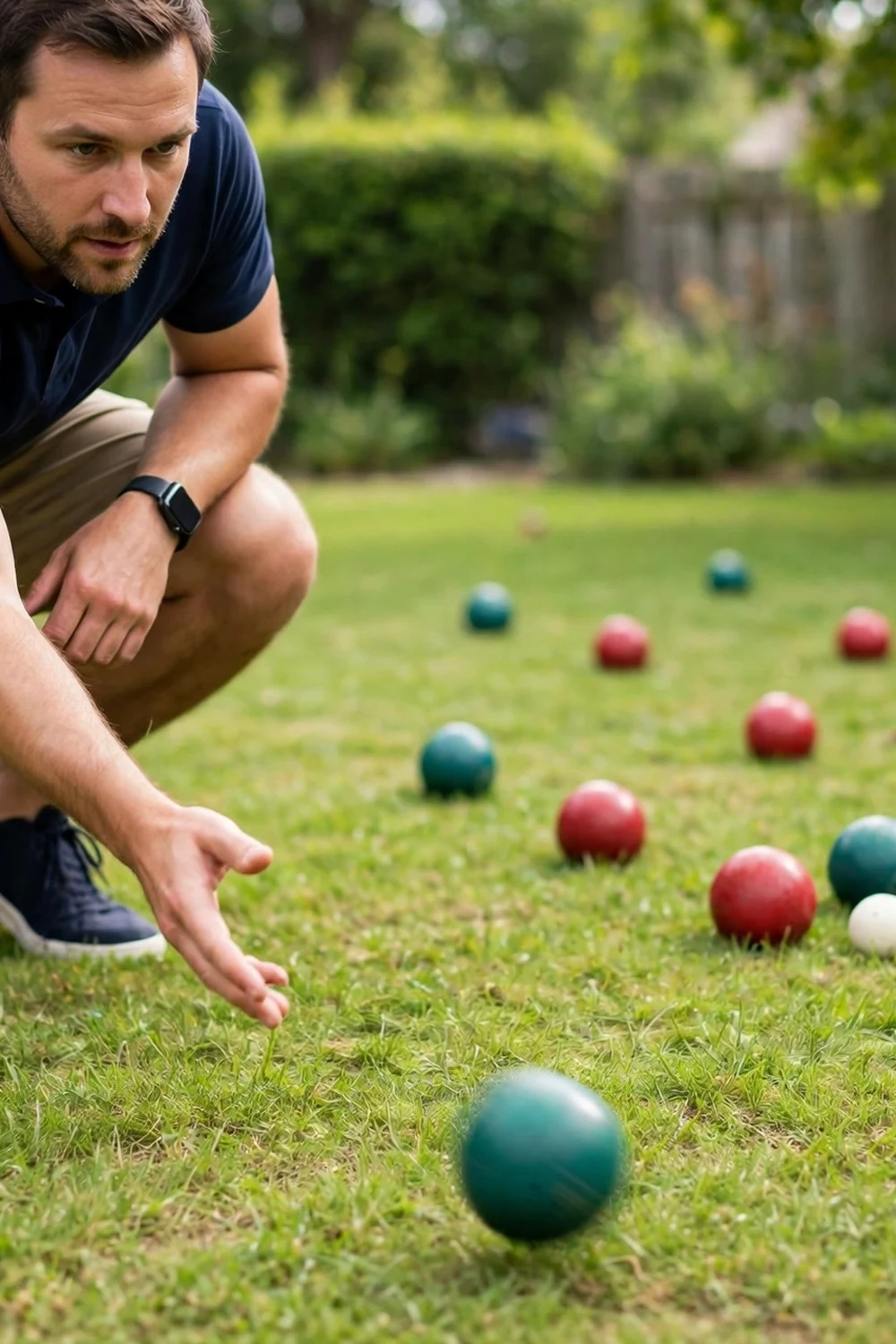
Bocce is the most relaxed competitive game you can own. One small target ball (the pallino) is tossed out, then teams roll their larger balls to land closest. It needs no setup beyond a reasonably flat lawn, and a set of 8 balls costs $25 to $40. Games take 20 to 30 minutes and work for mixed ages because rolling beats throwing for accuracy. Play on grass rather than a slope, since balls roll with the grade.
Try this: play at dusk with glow-in-the-dark tape on the pallino for an instant evening version. Cost: $$. Difficulty: Easy. Players: 2 to 8.
4. Ring toss

Ring toss is pure carnival nostalgia and dead simple to set up. A board with pegs (or bottles in a crate) and a set of rope or plastic rings is all you need. Players stand 6 to 10 feet back and toss rings onto pegs for points. A set costs $15 to $30, or make one from a wood board, dowels, and rope rings for under $10. It is ideal for young kids because the throwing motion is easy and every ringer feels like a big win.
Try this: assign different point values to each peg and let kids do the scorekeeping. They practice math without noticing. Cost: $$. Difficulty: Easy. Players: 1 to 6.
5. Giant Jenga

Giant Jenga takes the tabletop classic and supersizes it to a 4-foot tower of 2×4 blocks. Players pull blocks and stack them on top until the tower falls, which draws a crowd every time. Buy a set for $50 to $100 or cut 54 blocks from 2×4 lumber yourself for about $30 (have the hardware store cut them for even pieces). It needs only a flat patio or patch of lawn. Write dares or questions on the blocks for a party version.
Try this: play on grass rather than concrete. Falls are softer and the blocks survive longer. Cost: $$$. Difficulty: Easy. Players: 2 to 8. Safety note: keep toddlers clear of the fall zone when the tower gets tall.
6. Giant Connect Four

Giant Connect Four turns a 2-minute tabletop game into a lawn event. The oversized grid stands about 3 feet tall with chunky discs kids can actually grip. It teaches strategy without feeling like learning, and a round takes 5 minutes, perfect between more active games. Sets cost $40 to $80. It needs almost no space, so it works on patios and decks where ball games cannot go.
Try this: run a mini tournament bracket at parties. Short rounds keep everyone engaged. Cost: $$. Difficulty: Easy. Players: 2.
7. Kubb

Kubb (Viking chess) is a throwing game with real strategy: teams toss wooden batons to knock down the other team’s blocks, then the king. It sounds complex but kids grasp it in one round. A set costs $30 to $60 and the pieces are nearly indestructible. It needs a rectangle of lawn about 15 by 25 feet. Games run 20 to 40 minutes, making it a good main event for a cookout afternoon.
Try this: shorten the field for younger kids. A 10-foot field keeps throws hittable and frustration low. Cost: $$. Difficulty: Easy to moderate. Players: 2 to 12.
8. Croquet

Croquet is the gentlest competitive game on this list and a great one for grandparents playing with grandkids. Players hit balls through a series of wickets in order, and knocking an opponent’s ball away adds delicious strategy. A 6-player set costs $40 to $70. Set wickets in a simple course on flat lawn; keep the course short for kids. A full game takes 30 to 45 minutes.
Try this: play “poison” croquet with teens: the last wicket is poison, and hitting it eliminates you. It adds stakes to a calm game. Cost: $$. Difficulty: Easy. Players: 2 to 6. Safety note: call 811 before hammering wickets in, so you do not hit a buried utility line.
9. Backyard badminton
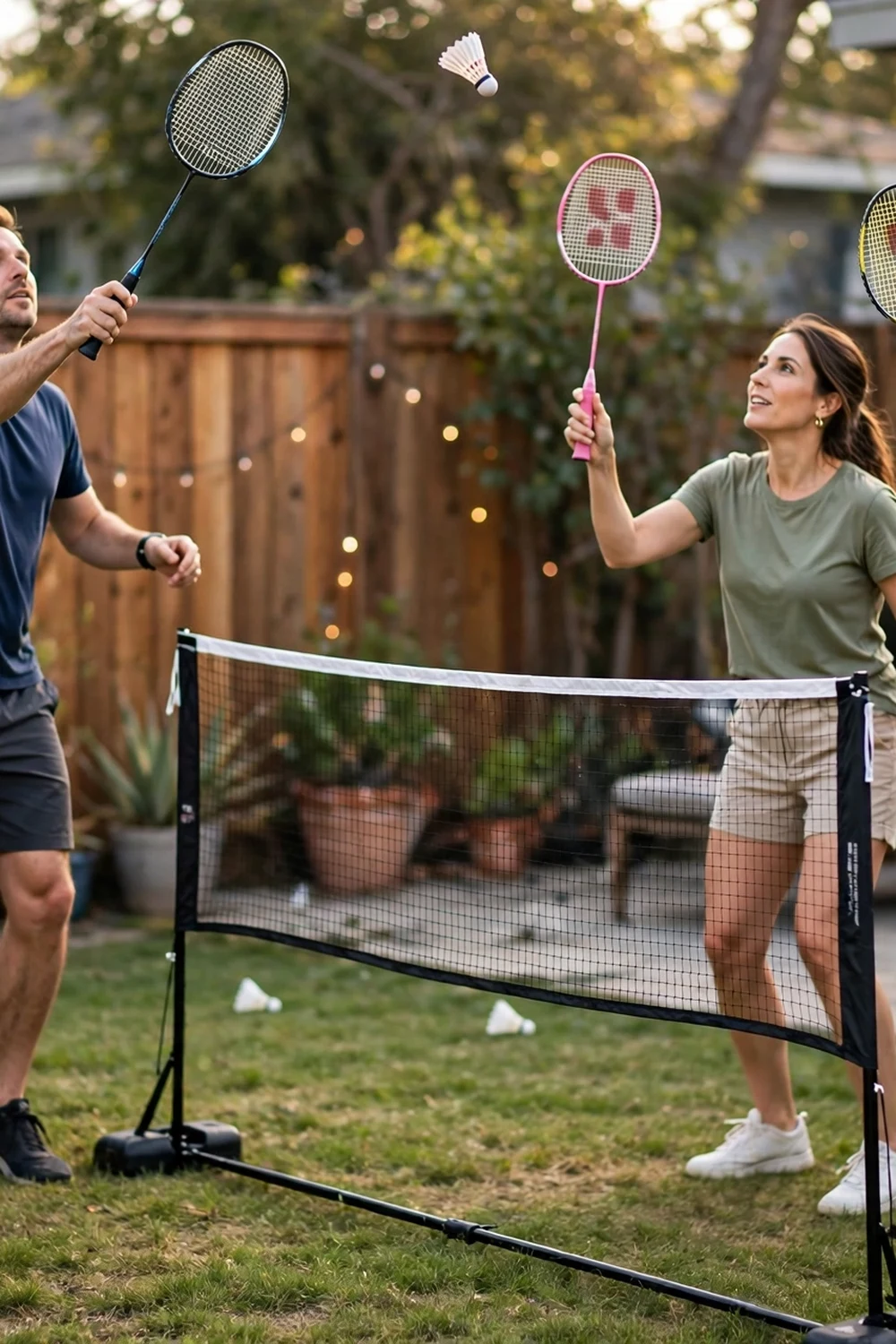
Badminton is the rare active game that works in a small yard, since the shuttlecock floats rather than flies. A portable net set costs $30 to $60 and sets up in 15 minutes. Kids as young as 5 can rally because the birdie moves slowly. Play to 11 for quick rounds. It is also a genuine workout; 30 minutes of backyard badminton burns real energy for restless kids.
Try this: use a balloon instead of a shuttlecock for very young kids. Rallies last longer and everyone laughs more. Cost: $$. Difficulty: Easy. Players: 2 to 4. Safety note: call 811 before driving net poles into the ground.
10. Spikeball

Spikeball (roundnet) is volleyball shrunk to a trampoline-like net at knee height. Teams of two get three hits to bounce the ball off the net, and rallies get intense fast. A set costs $60 to $100. It suits teens and athletic adults best; younger kids can play a simplified version with unlimited hits. It needs only a 15-foot circle of flat lawn, so it fits yards where full volleyball cannot.
Try this: teach the rules with a 5-minute practice rally before scoring. New players enjoy it far more once the rhythm clicks. Cost: $$$. Difficulty: Moderate. Players: 4.
11. Kan Jam

Kan Jam is frisbee meets teamwork: partners throw and deflect a disc toward a can, scoring for hits, near-misses, and the instant-win slot shot. It plays 2-on-2 and a game takes 15 to 20 minutes. A set costs $40 to $60. The cans sit 50 feet apart officially, but 30 feet works for casual family play. It is loud, fast, and tends to become the game everyone wants a rematch of.
Try this: move the cans closer for kids under 10. Hitting the can at all is the fun part at that age. Cost: $$. Difficulty: Easy to moderate. Players: 4.
12. Frisbee golf

Backyard frisbee golf needs no basket: pick targets like trees, buckets, or patio chairs and count throws like golf strokes. It works in any yard size because you design the course to fit. A set of discs costs $20 to $30, or use any frisbee you own. It is perfect for mixed ages since everyone throws from their own lie and plays at their own pace. Nine “holes” around a typical yard takes about 30 minutes.
Try this: let kids design the course. Ownership of the layout makes them want to play it. Cost: $$. Difficulty: Easy. Players: 1 to 8.
13. Kickball

Kickball is the easiest team sport to start: one rubber ball, four bases (use shoes or paper plates), and no special skills. It works for ages 5 and up because kicking is more natural than hitting with a bat. A playground ball costs $8 to $12. You need a reasonably open lawn, but bases can be 30 feet apart instead of the official 60. Play 3 innings for a 30-minute game that ends before attention fades.
Try this: let the youngest players use a tee or a rolled pitch. Easy contact keeps them in the game. Cost: $$. Difficulty: Easy. Players: 6 to 20.
14. Wiffle ball

Wiffle ball gives kids the joy of baseball without the fear of a hard ball. The perforated plastic ball curves, floats, and cannot hurt anyone, so even cautious kids swing freely. A bat-and-ball set costs $10 to $15. Use trash cans as bases and a strike zone drawn in chalk. It fits smaller yards than real baseball because the ball does not travel far. Pitch slow and underhand for young hitters.
Try this: play “pitcher’s hand” ghost runners when teams are uneven. It keeps the game moving with odd numbers. Cost: $$. Difficulty: Easy. Players: 4 to 12.
15. Backyard scavenger hunt

A scavenger hunt turns your ordinary yard into an adventure for about zero dollars. Write a list of 15 to 20 things to find: something red, a feather, a heart-shaped leaf, something that makes noise. Picture lists work for pre-readers. Set a 20-minute timer and a clear boundary. It works for ages 3 and up, needs no equipment beyond paper, and tired parents can supervise from a chair.
Try this: make it a photo hunt for teens: they photograph each item instead of collecting it, then vote on the funniest shots. Cost: $. Difficulty: Easy. Players: 1 to 20.
16. DIY obstacle course

An obstacle course burns energy fast and costs almost nothing: line up pool noodles to jump over, hula hoops to hop through, cones to weave around, and a blanket tunnel to crawl under. Time each run with a phone stopwatch and let kids try to beat their own record rather than each other. It suits ages 4 to 12 best. Rebuild the course in a new layout every few days and it stays fresh all summer.
Our chalk obstacle course for kids is a perfect add-on station for a DIY course day.
Try this: add one water station (sponge squeeze into a bucket) on hot days. It cools kids down mid-course. Cost: $$. Difficulty: Easy. Players: 1 to 10. Safety note: keep the course on grass, pad any hard landings, and walk it yourself first to catch trip hazards.
17. Water balloon toss

The water balloon toss is the simplest hot-day game ever invented: partners toss a balloon back and forth, stepping back after each catch, until it pops. A bag of 100 balloons costs $5 to $8; fill them with a $10 rapid-fill kit to save your sanity. Play on grass in bare feet. It works for ages 5 and up and takes zero setup beyond filling. Keep a towel station nearby.
Try this: use a bedsheet held by two kids as a launcher for a water balloon volleyball version. It is hilarious and soaks everyone. Cost: $$. Difficulty: Easy. Players: 2 to 20. Safety note: pick up balloon fragments afterward. Latex pieces are a choking hazard for toddlers and pets.
18. Sponge relay

Sponge relay is a water game with no balloons to clean up: teams race to soak a big sponge, run it to a bucket, squeeze it out, and repeat. The team with the most water after 5 minutes wins. You need two buckets and two big sponges per team, about $10 total. It works for ages 4 and up, and everyone gets wet without anyone getting pelted. Play on grass so the inevitable spills just water the lawn.
Try this: mark the fill line on each bucket with tape. Kids can see exactly how close the race is. Cost: $. Difficulty: Easy. Players: 4 to 20. Safety note: no running on wet concrete or decks; keep the relay on grass.
19. Capture the flag
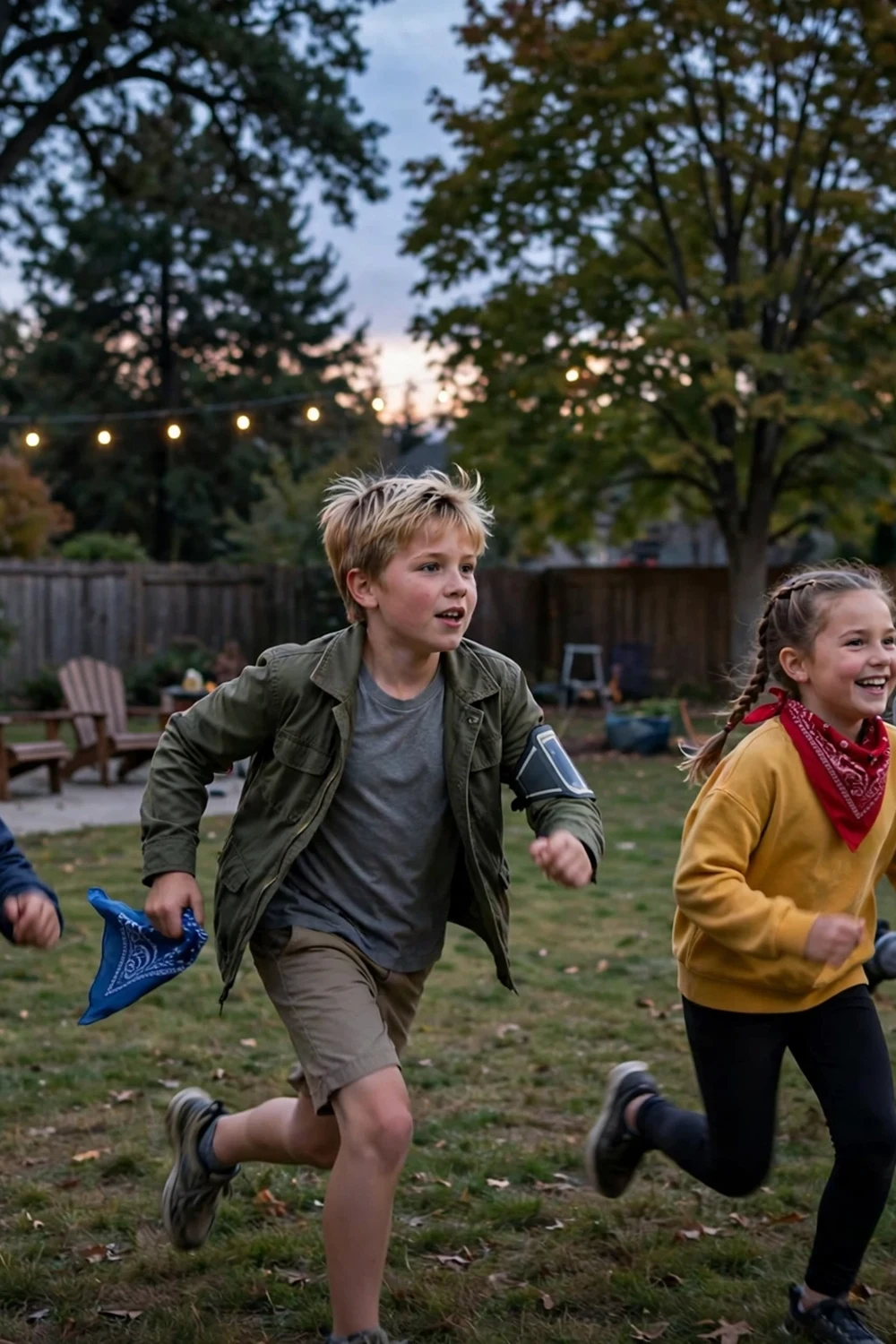
Capture the flag is the ultimate big-yard evening game: two teams, two flags (bandanas work), two territories, and one rule set everyone learns in minutes. Tag an opponent in your territory and they go to “jail” until freed by a teammate’s touch. It needs 8 or more players and a yard big enough to hide in, and it plays best at dusk when sneaking is half the fun. Free to play with rags or old t-shirts as flags.
Try this: set clear boundaries before starting and walk them with the kids. Most arguments come from unclear borders. Cost: $. Difficulty: Easy. Players: 8 to 30. Safety note: clear the field of holes, tools, and tripping hazards before dusk play, and keep it in your own yard.
20. Red light, green light
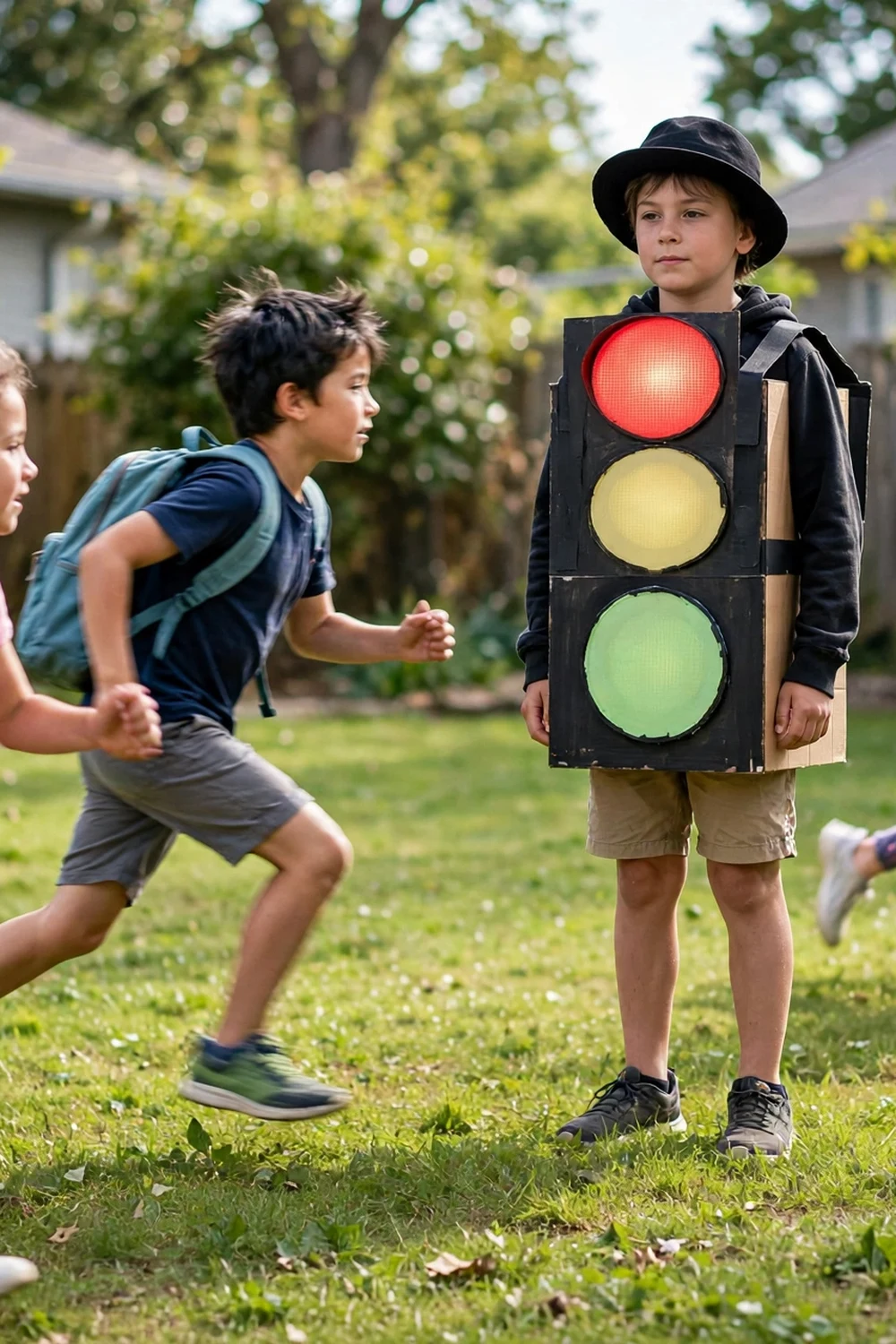
Red light, green light needs nothing but a yard and a voice, which is why it has survived generations. One player is the traffic light, turning away for “green light” while others advance, then spinning around for “red light” to catch movers. Anyone caught moving goes back to start. It works for ages 4 and up, plays in 10 minutes, and teaches self-control disguised as fun. Add silly freeze poses to keep it fresh.
Try this: let the winner be the next traffic light. Kids stay invested when the role rotates. Cost: $. Difficulty: Easy. Players: 3 to 20.
21. Sidewalk chalk hopscotch
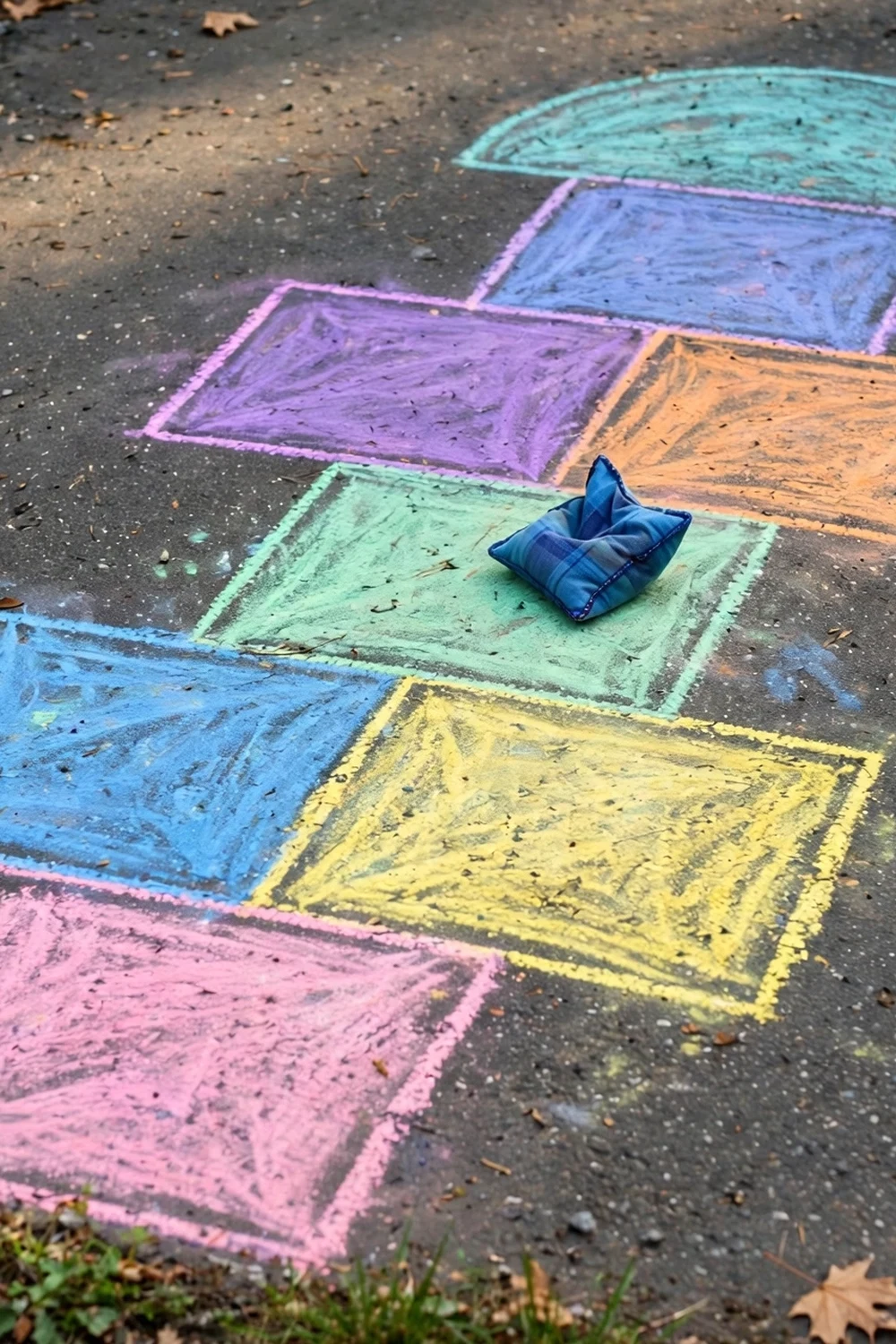
Hopscotch costs a $3 box of chalk and entertains kids for an hour. Draw the classic 10-square grid on a driveway or patio, toss a beanbag or stone onto square one, and hop through without touching lines. It builds balance and counting skills for ages 4 to 8. Rain washes it away, so the canvas renews itself. Draw a second grid for a sibling and race side by side.
Try this: draw a spiral hopscotch for older kids. The turning jumps are much harder and they love the challenge. Cost: $. Difficulty: Easy. Players: 1 to 6.
22. Lawn Twister
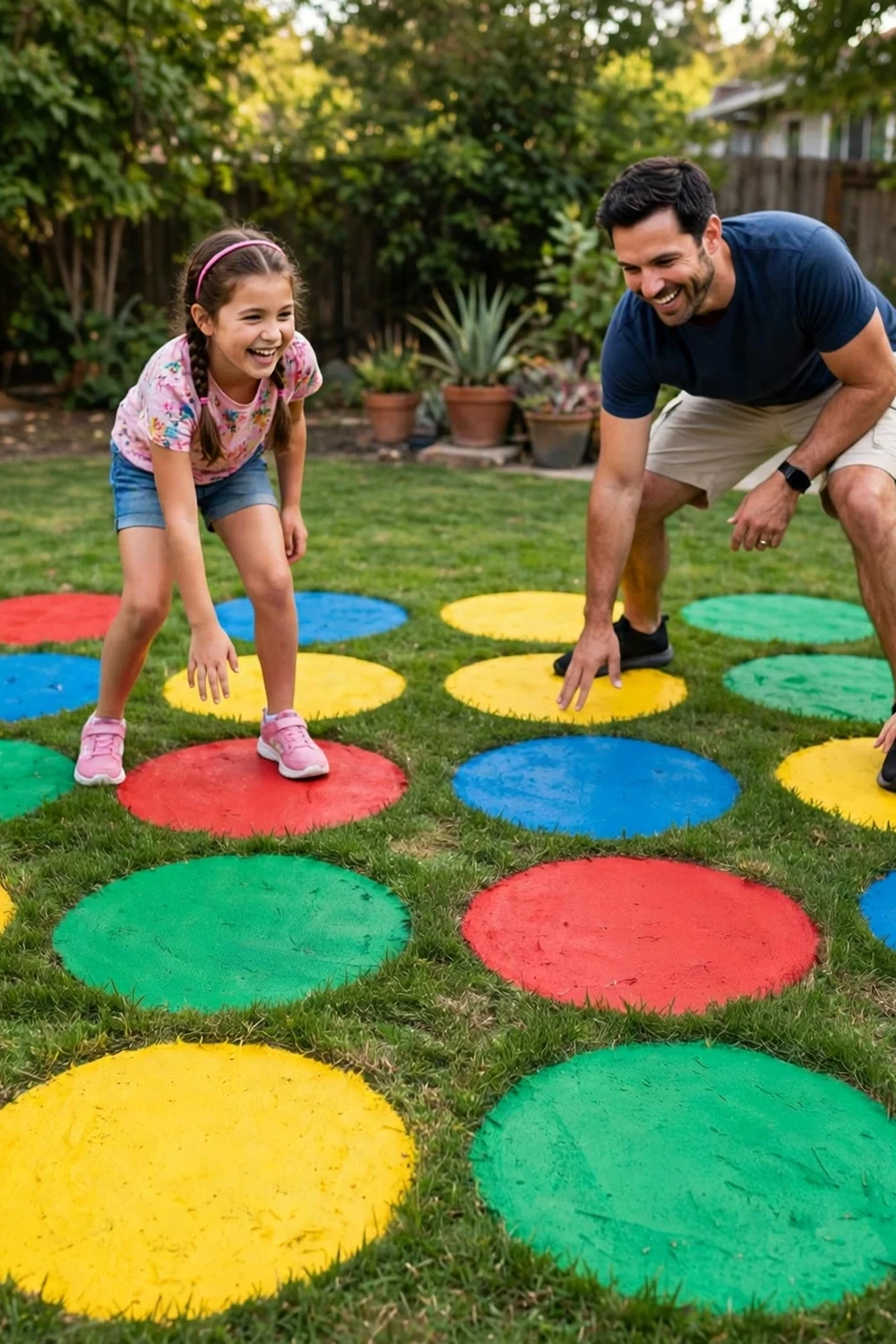
Lawn Twister scales the classic game to the grass: spray-paint four rows of big color circles on the lawn (use washable field paint) and play with the usual spinner. The bigger mat means bigger laughs and actual exercise. A can of field paint costs $6 to $8 and the circles fade in a few weeks of mowing. It works for ages 5 and up and takes 15 minutes to play. Keep the spinner dry; soggy cards tear.
Try this: play in teams with one caller per team. Doubles the chaos in the best way. Cost: $. Difficulty: Easy. Players: 2 to 6.
23. Yard dice (Yardzee)
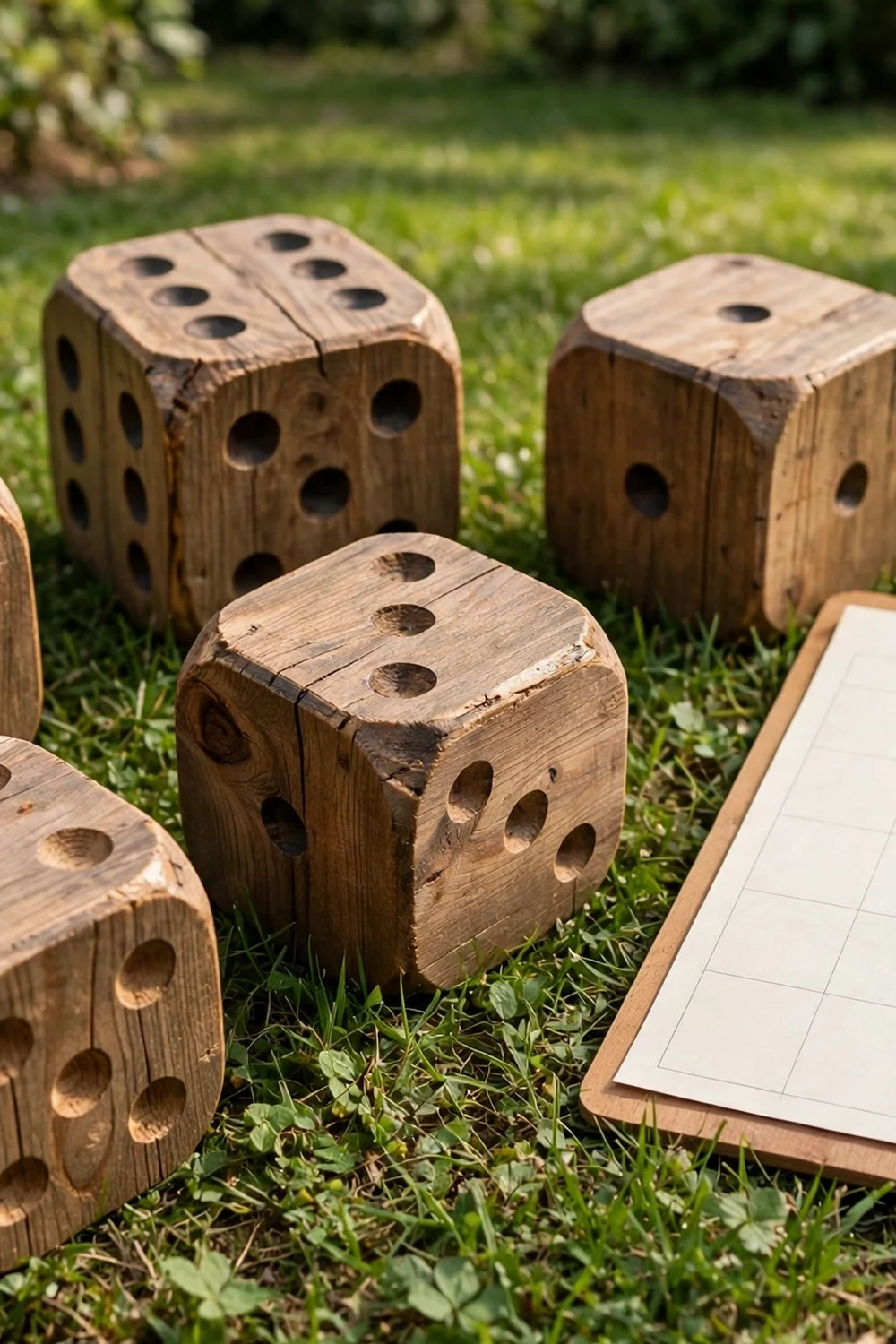
Yard dice take Yahtzee outside with 3.5-inch wooden cubes you roll in a bucket. Players score straights, full houses, and five-of-a-kind over 13 rounds, which sneaks arithmetic practice into game night. A set costs $25 to $40, or cut cubes from a 4×4 post for about $15. It needs no running and almost no space, so it is the perfect seated game for the grill master to join between flips. Print free scorecards online.
Try this: play “best of three rounds” so a bad first game does not decide the night. Cost: $$. Difficulty: Easy. Players: 2 to 8.
24. Tug of war
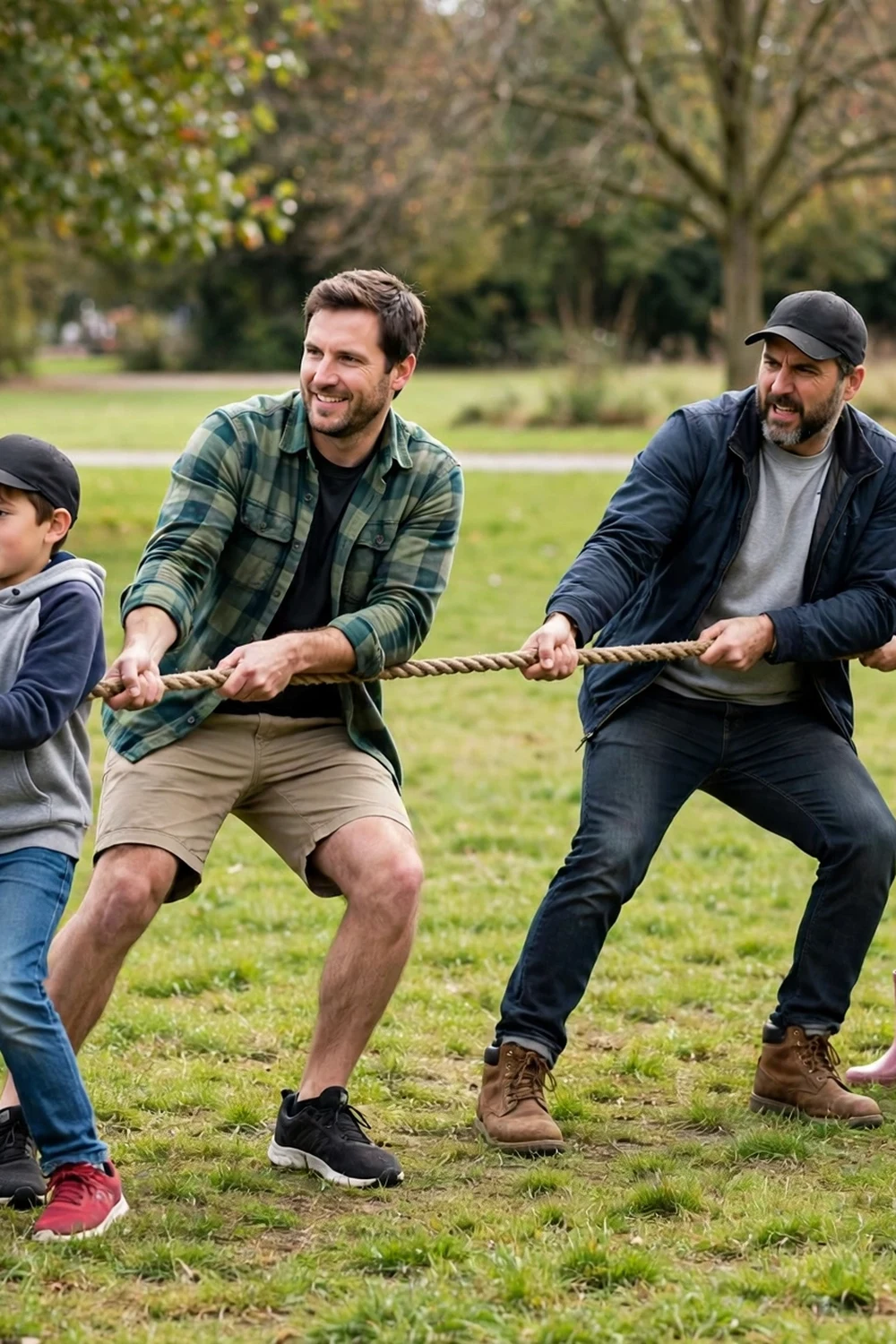
Tug of war is pure, primal fun: one long rope, a center mark, and two teams pulling. A 50-foot rope costs $15 to $25. Mark the center with tape and pull a flag or bandana across a line to win. It works for ages 6 and up and ends in 5 minutes, making it a great between-games event. Mix teams by size rather than age so it stays fair. Play on grass, never near a hard edge or drop.
Try this: put a kiddie pool of water on the center line. Losers get pulled in, which everyone secretly wants. Cost: $$. Difficulty: Easy. Players: 6 to 20. Safety note: use a proper rope (not bungee or thin cord), keep hands clear of the center mark, and stop if anyone falls awkwardly.
25. Glow ring toss after dark
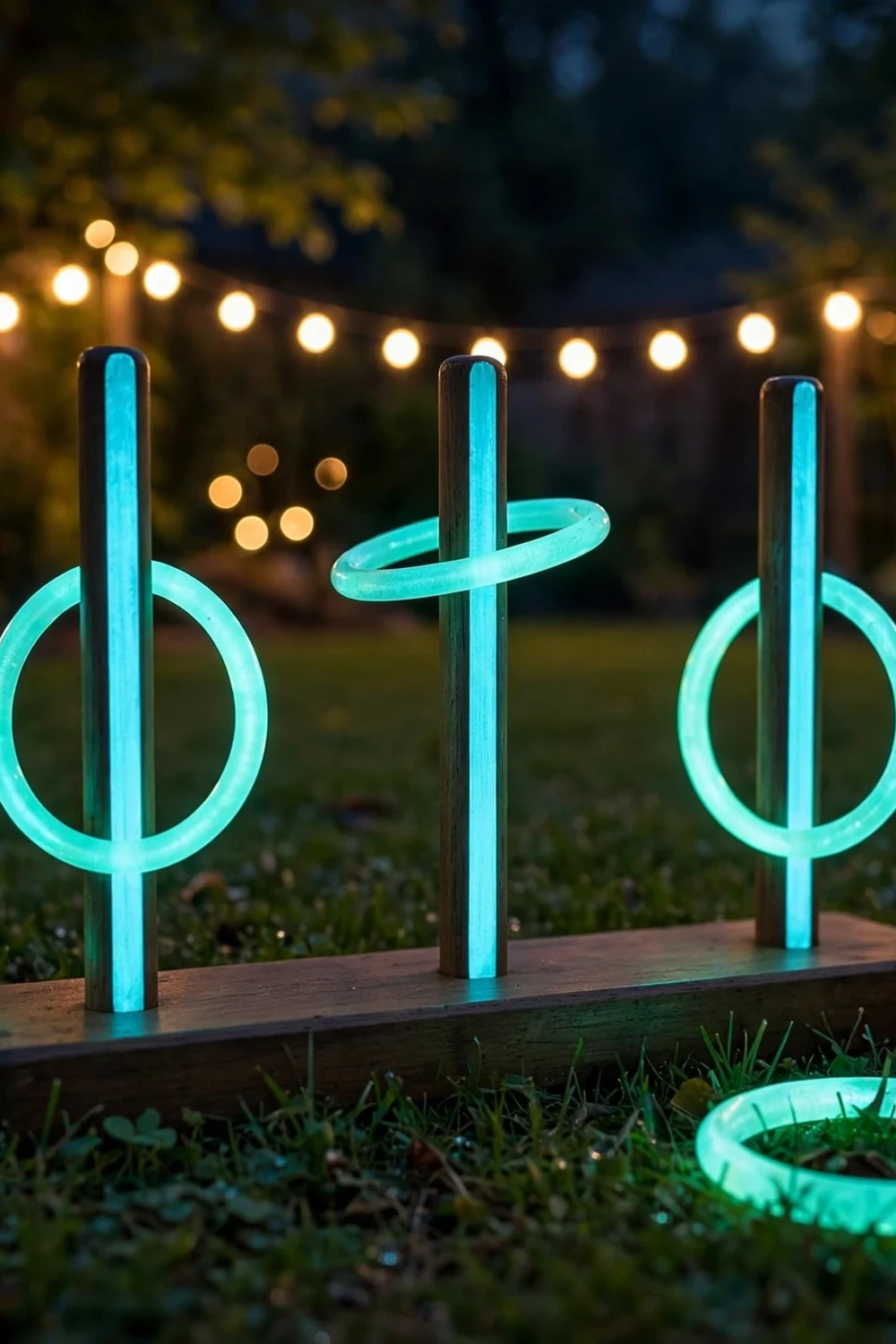
When the sun goes down, crack glow sticks onto your ring toss pegs and rings for an instant evening game. Glow necklaces ($8 for a pack of 50) turn ordinary rings into glowing ones, and the pegs become beacons in the dark. It extends game night by an hour with zero extra equipment to buy if you already own ring toss. Kids who were done playing at 7 p.m. suddenly want one more round. Add string lights around the play area so nobody trips.
Try this: make it a tournament finale: the day’s winners face off in one glow round for the championship. Cost: $$. Difficulty: Easy. Players: 1 to 6. Safety note: light the area well enough to see the ground. Glow games are fun; tripping in the dark is not.
Yard game picker: match the game to your crew
How to plan a backyard game day
If your game day runs into the evening, an outdoor pavilion with a fireplace makes a great gathering hub between games. A little structure turns random games into an event kids remember. Start with a low-energy warm-up like bocce or ring toss while everyone arrives and snacks. Move to the main event: one or two active games such as kickball, capture the flag, or a tournament bracket of cornhole. Cool down with water games or seated games like yard dice as energy fades. Keep rounds to 10 or 15 minutes and rotate, so nobody waits long and tired players can rest. Assign one adult as scorekeeper and timekeeper; it prevents 90 percent of arguments.
Yard game safety rules that matter
Most yard games are safe, but a few rules prevent the injuries that ruin a good day. Never buy or use pointed lawn darts (Jarts): the CPSC banned their sale in 1988 after children suffered skull punctures, and old sets still turn up at garage sales. Destroy any you find rather than playing with them. Before you stake anything into the ground (croquet wickets, badminton poles, tug-of-war anchors), call 811 a few days ahead so buried utility lines get marked; it is free. Keep water games on grass, never on slick concrete, and supervise children around any water play. Pick up small pieces like balloon fragments, which are choking hazards for toddlers and pets.
Games by age: what works when
Ages 3 to 5 do best with no-rules-needed play: scavenger hunts with picture lists, red light green light, sponge relay, and hopscotch. Ages 6 to 9 add aim and scoring: ring toss, cornhole at short distance, ladder toss, kickball, and wiffle ball. Ages 10 to 12 handle strategy and competition: kubb, capture the flag, Kan Jam, frisbee golf tournaments, and obstacle course time trials. Teens and adults gravitate to spikeball, bocce leagues, croquet rivalries, and glow games after dark. When ages mix, pick games with handicaps built in (shorter throwing lines for kids) so everyone competes instead of watching.
Frequently asked questions
What are the best yard games for small yards?
Cornhole, ladder toss, ring toss, giant Jenga, giant Connect Four, yard dice, and badminton all fit small yards or patios. They need 30 feet or less and no running room. Save kickball and capture the flag for bigger lawns or the park.
What yard games are best for toddlers?
Scavenger hunts with picture lists, red light green light, sponge relay, and chalk hopscotch suit ages 3 to 5. They need no equipment skills and no scoring. Always supervise toddlers around water games and pick up small pieces like balloon fragments.
Are lawn darts safe?
No. Pointed lawn darts (Jarts) were banned by the CPSC in 1988 after causing skull punctures and deaths in children. If you find an old set, destroy the darts so they cannot be used. Modern soft-tip alternatives exist, but the original pointed darts should never be played with.
How do I keep score at a backyard game day?
Keep it simple: one adult as scorekeeper, short rounds of 10 to 15 minutes, and a visible scoreboard (chalkboard or whiteboard). For tournaments, single elimination brackets work for 8 or fewer teams; round-robin fits bigger groups.
What should I do before staking games into the lawn?
Call 811 a few days before you drive stakes, wickets, or poles into the ground. The free service marks buried utility lines so you do not hit electric, gas, or cable lines. This applies to croquet wickets, badminton poles, and tug-of-war anchors.
How do I host yard games in the evening?
Add glow sticks to ring toss, bocce, or cornhole for instant night versions, and string lights around the play area so players can see the ground. Keep the games low-energy after dark (toss games, yard dice) since running games get riskier with limited visibility.
Conclusion
You do not need a resort backyard to have a game day kids talk about for weeks. Pick three games from this list that fit your space, keep the rounds short, and let the scoreboard do the entertaining. The yard is already there. Now it has a job.


