


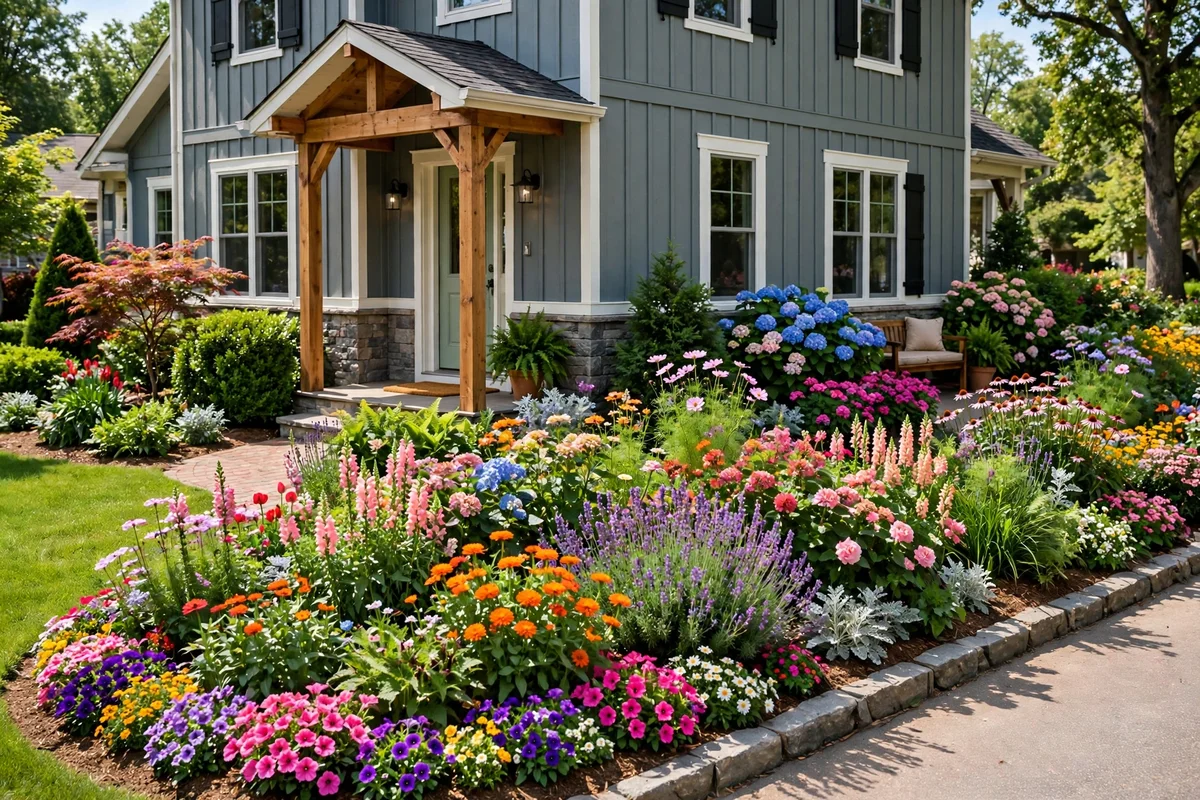
My front yard used to be a flat strip of grass with a lonely row of marigolds. It took one weekend of reshaping the bed edge into a curve before the whole house looked different.
These 15 flower bed ideas work in any climate and any season, because they are about bed shapes, layers, and plant combinations rather than one-season color. Pick the ones that fit your yard’s light and your appetite for upkeep.
Quick takeaways
- Shape the bed before you buy plants; a good edge line does half the design work.
- Layer by height: tall at the back, medium in the middle, low at the front.
- Repeat 3 to 5 plant types in groups instead of buying one of everything.
- Call 811 before digging any new bed edge or installing edging stakes.
1. The layered triangle bed
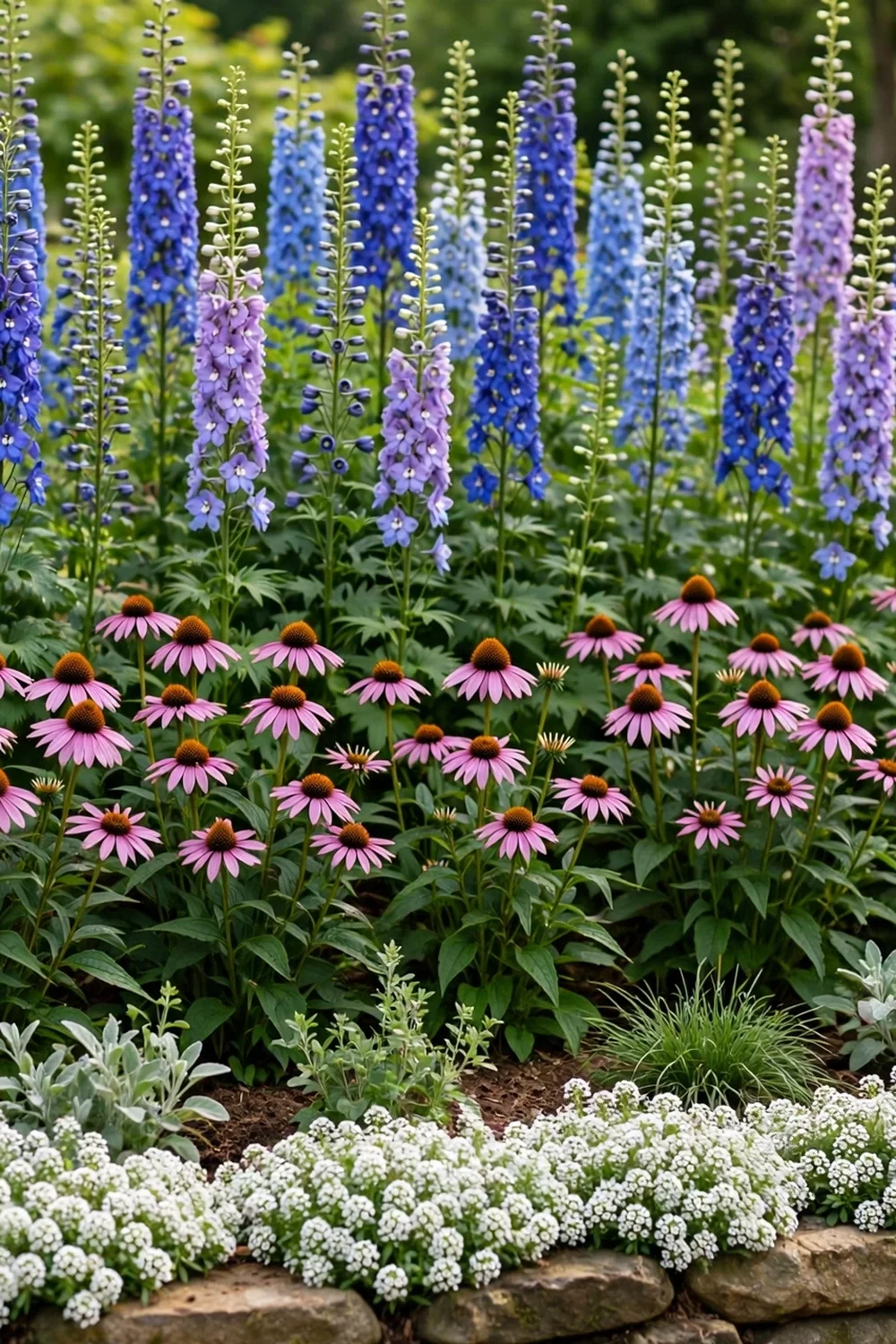
This is the formula professionals use for foolproof beds: tall vertical plants (delphinium, foxglove) at the back, mounding plants (hydrangea, Russian sage) in the middle, and spilling edgers (creeping phlox, alyssum) at the front. The triangle of heights reads as depth even in a bed only 4 feet deep. Plant in odd-numbered groups of 5 to 7 for a natural look, and you get continuous color with just three plant types.
Try this: stake the tallest back-row plants in spring before they flop in summer storms.
Cost: $$. Difficulty: easy.
2. The round island bed
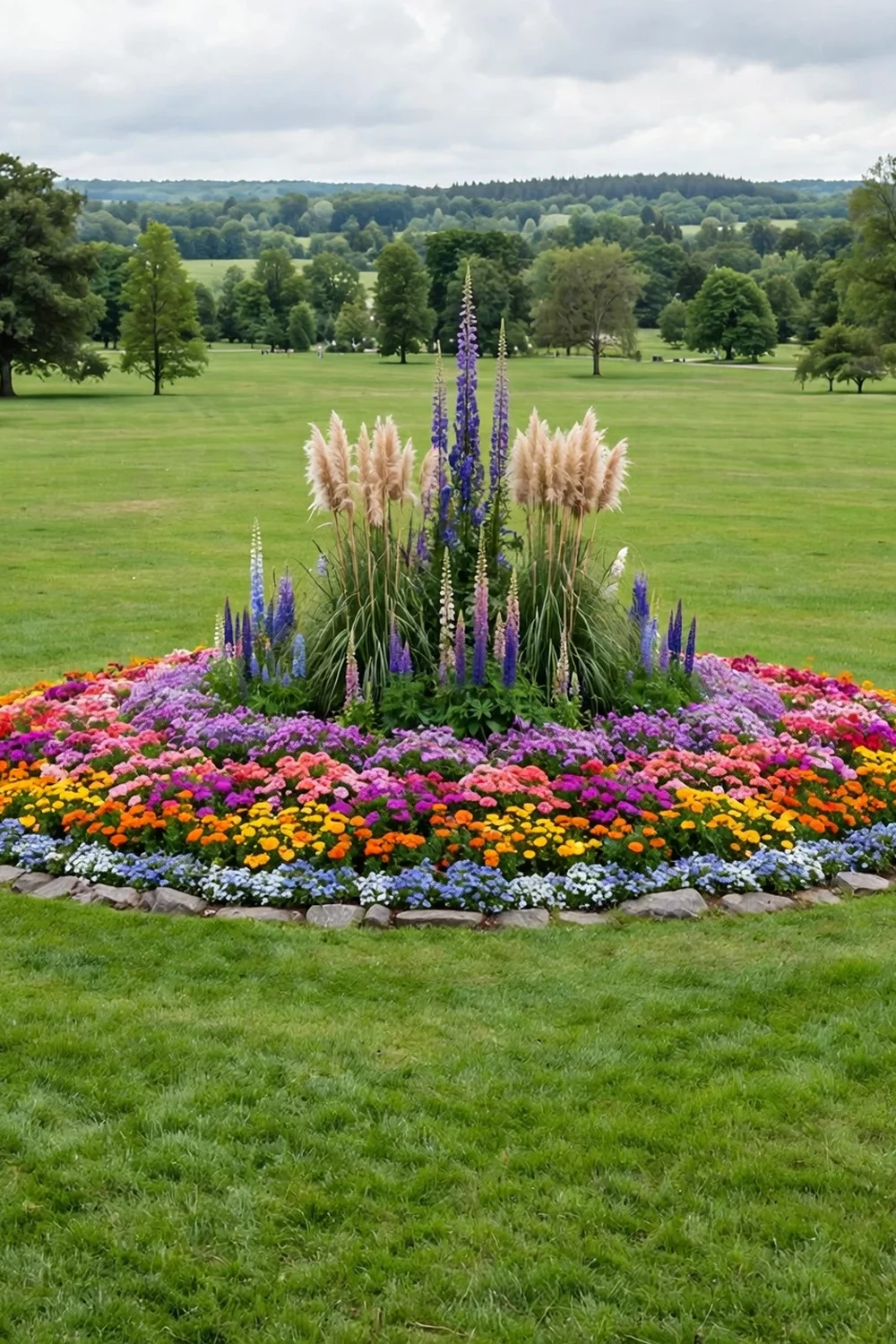
An island bed sits in the middle of the lawn instead of hugging the house, which makes it a focal point from every window. Plant the tallest flowers (canna, ornamental grass) in the center, then ring outward in descending heights. Round beds are forgiving because there is no “back” to get wrong. A 8 to 10 foot diameter island fills a boring lawn fast.
Try this: mow a crisp edge around the island weekly; the lawn-to-bed line is what makes it look intentional.
Cost: $$$. Difficulty: easy.
3. The curved walkway bed

Straight beds feel formal; a gentle curve along a walkway or driveway feels welcoming. Follow the path with a bed 3 to 4 feet deep, planting low spillers (sweet alyssum, creeping thyme) right at the edge where feet brush past. The curve slows the eye and makes a short path feel longer. This is the single cheapest curb-appeal upgrade I know.
Try this: lay a garden hose on the ground to sketch the curve before you cut the sod.
Cost: $$. Difficulty: easy.
4. The monochromatic bed
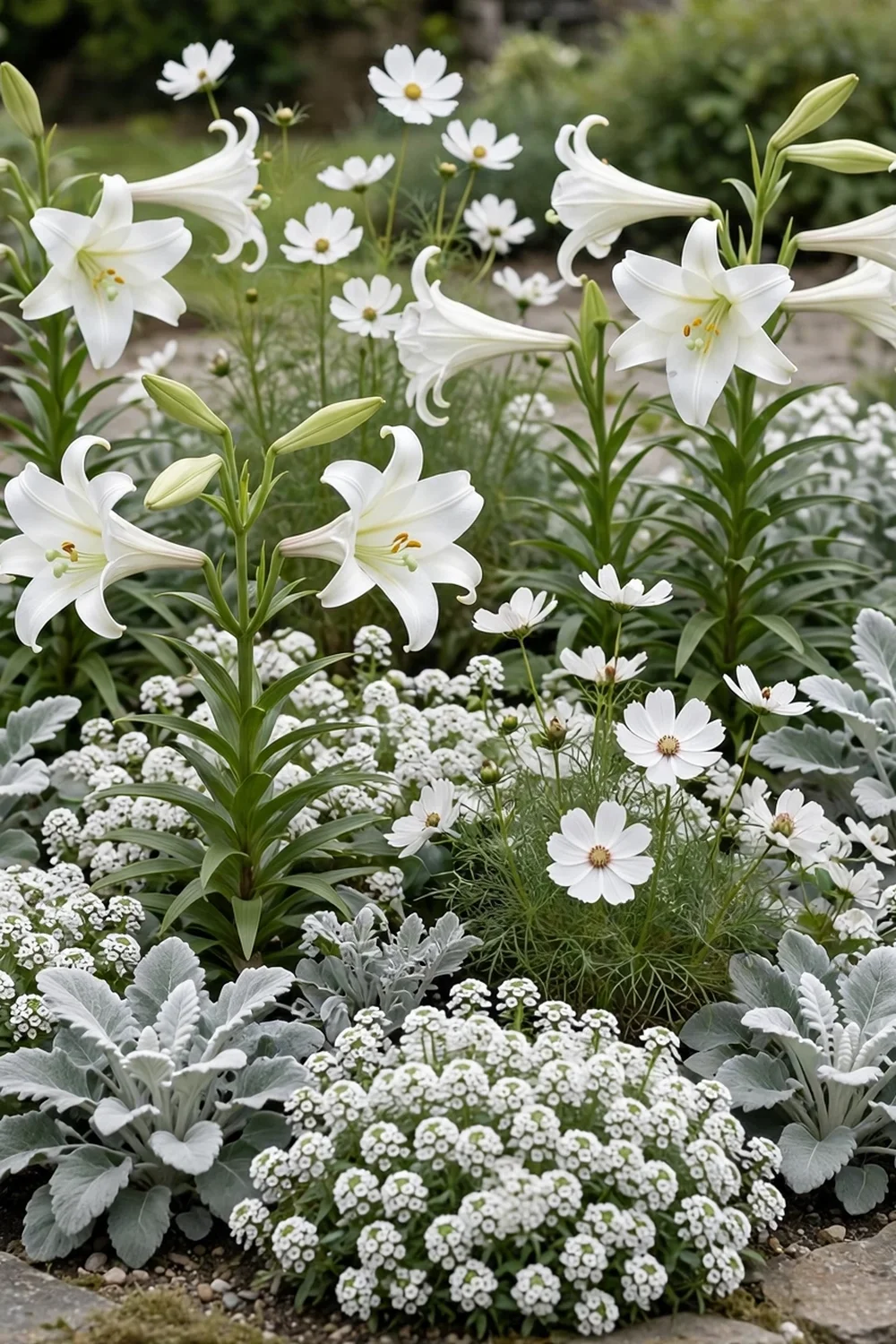
One color, many shades, zero clashing. A white bed (white lilies, sweet alyssum, white cosmos, dusty miller for silver contrast) glows at dusk and photographs beautifully. Or go all purple with salvia, lavender, and verbena. The secret is mixing flower shapes, spikes, daisies, and puffs, so the bed has texture even in a single hue. Minimalists and modern homes love this look.
Try this: add one silver-foliage plant (dusty miller or artemisia) to keep a monochrome bed from looking flat.
Cost: $$. Difficulty: easy.
5. The fragrant evening bed

Plant for your nose, not just your eyes. A bed near the porch or bedroom window with night-scented flowers (moonflower, night phlox, jasmine, fragrant roses) turns summer evenings into something you look forward to. White and pale blooms show best after dark. This bed earns its keep in July and August when daytime heat keeps you inside until sunset.
Try this: add a small bench beside the bed so you actually sit in the fragrance.
Cost: $$. Difficulty: easy.
6. The pollinator border
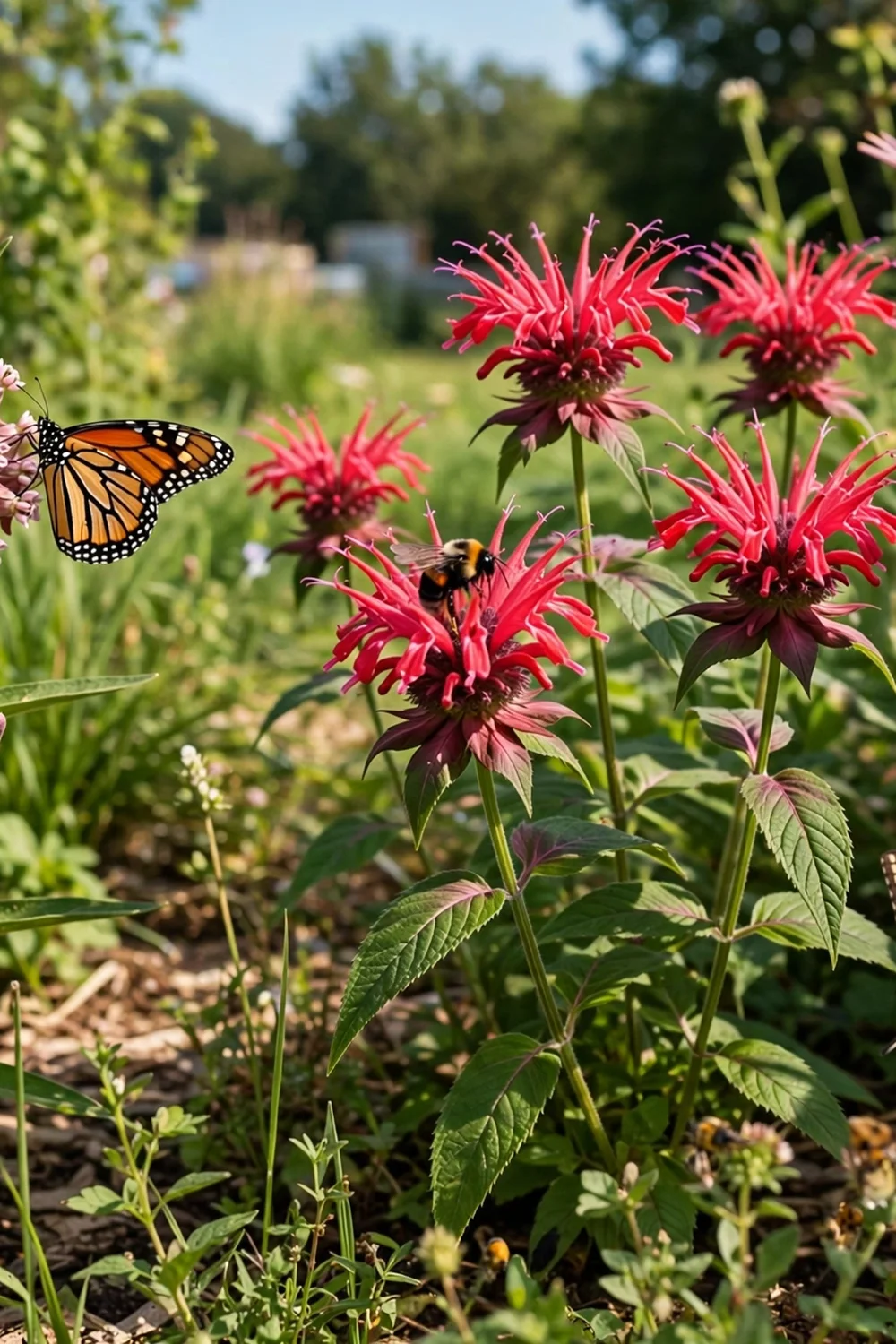
A pollinator bed is both a garden and a small act of ecology. Single or semi-double flowers (milkweed, bee balm, coneflower, salvia) give bees and butterflies real nectar, unlike pompom doubles bred for looks. Plant in sunny drifts, skip the pesticides entirely, and add a shallow dish of water with pebbles for landing spots. You will see more wildlife in one summer than the last five combined.
Try this: leave stems standing through winter; native bees overwinter in hollow stems.
Cost: $$. Difficulty: easy.
7. The evergreen framework bed
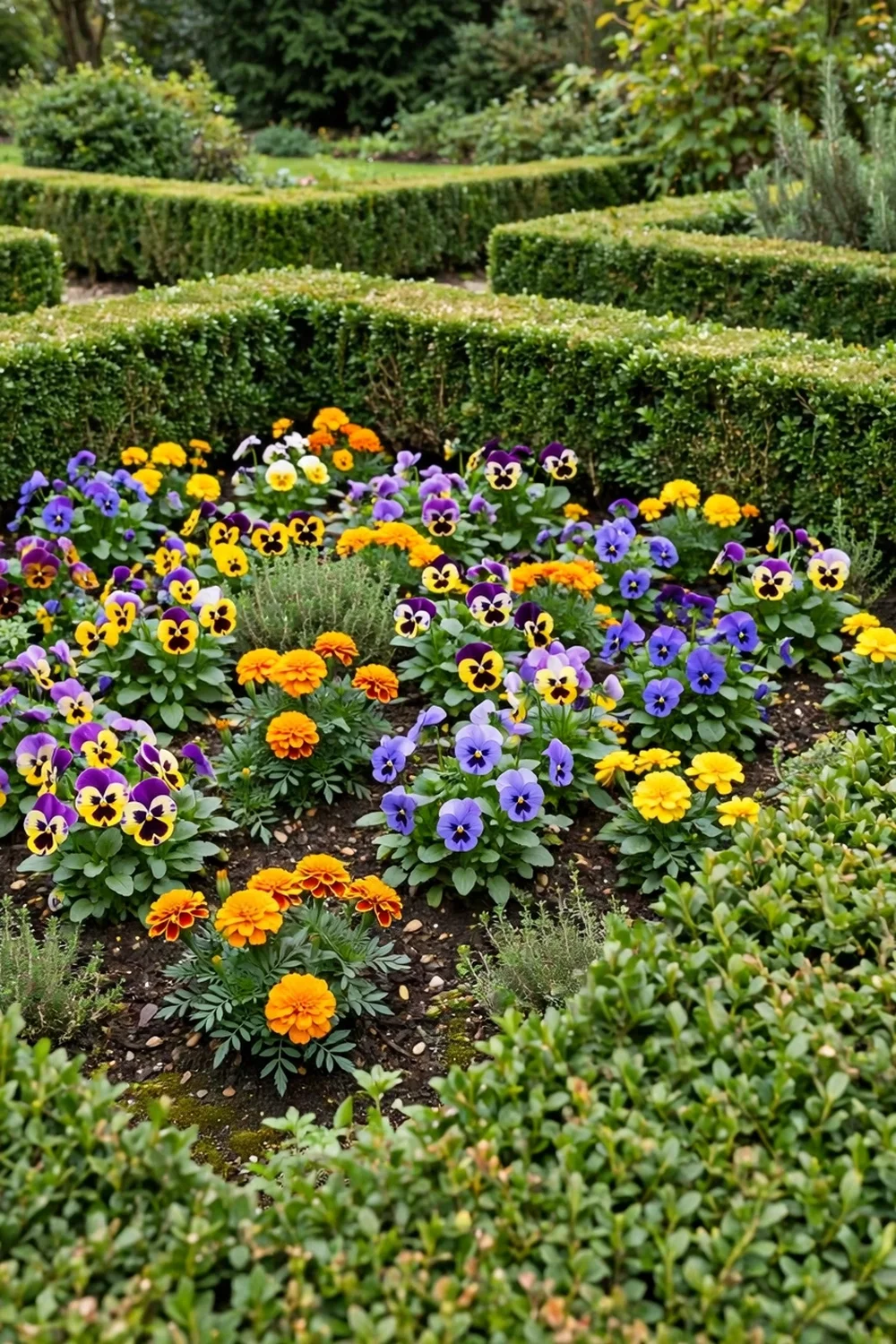
This bed never looks empty because evergreens (dwarf boxwood, juniper) form the permanent skeleton and seasonal flowers swap in and out. Plant the shrubs once, then refresh the gaps with pansies in cool months and marigolds or zinnias in heat. It is the lowest-regret design for beginners: even if the seasonal flowers flop, the structure holds. Works in cold climates where winter interest is usually ignored.
Try this: plant the evergreens 3 feet apart; they will fill in within two seasons.
Cost: $$$. Difficulty: easy.
8. The wildflower meadow strip

A wildflower strip is the lowest-maintenance bed there is: scatter a regional wildflower seed mix over prepared soil in fall or spring, water until established, then mostly leave it alone. Coneflowers, black-eyed Susans, cosmos, and yarrow weave into a naturalistic display that changes weekly. It suits back corners, slopes, and anywhere mowing is a chore. Mow once a year in late fall and it reseeds itself.
Try this: buy a seed mix formulated for your region, not a generic national bag.
Cost: $$. Difficulty: easy.
9. The tropical foliage bed
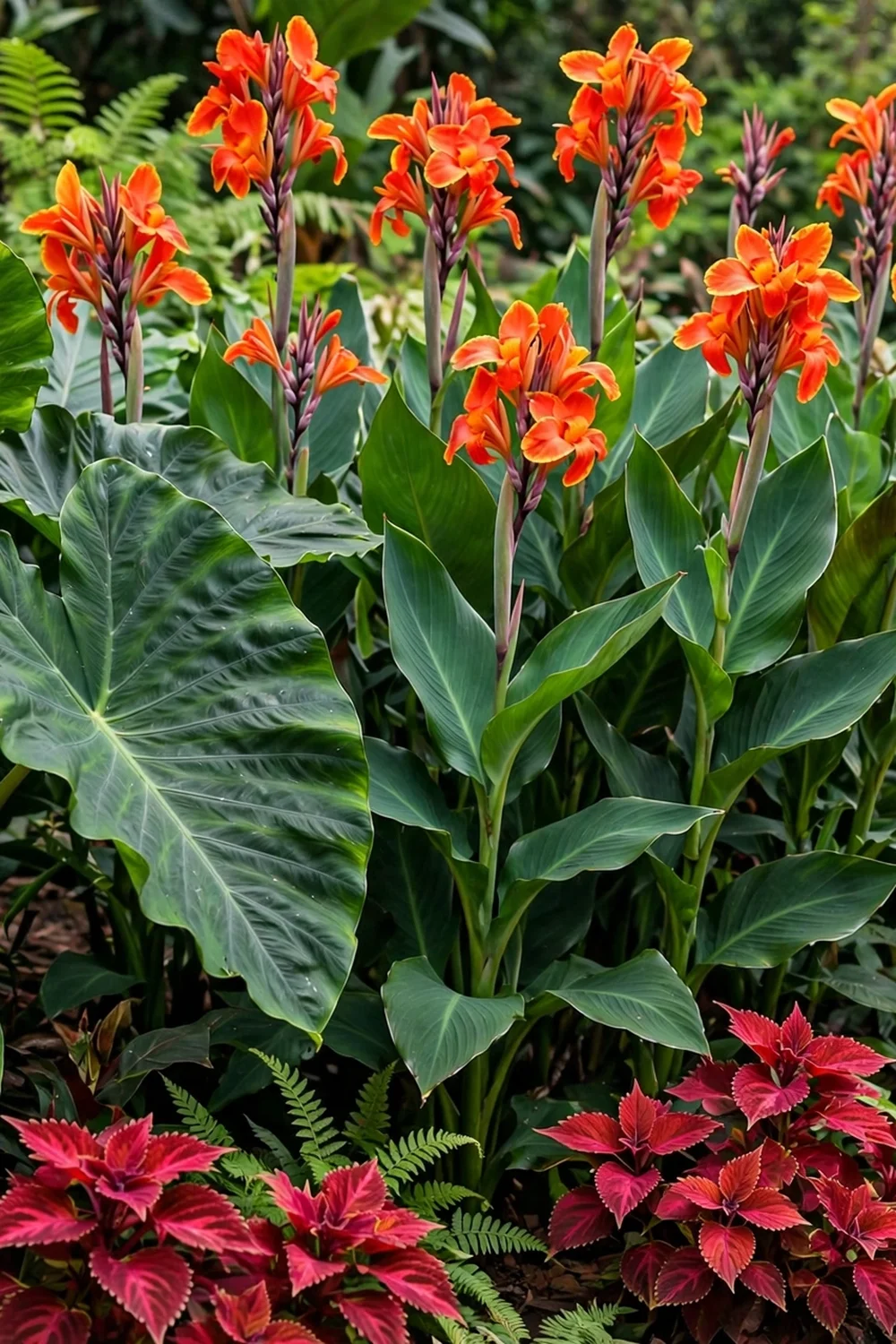
When you want drama, go big-leaf. Canna lilies, elephant ears, and coleus create a tropical bed that reads lush from the street, even in a small space. The trick is mixing one giant leaf with one hot flower color (canna blooms in red or orange do both jobs). In cold zones, lift canna and elephant ear bulbs before frost and store them dry for spring. One season of tropical makes neighbors stop walking.
Try this: feed cannas monthly in summer; they are hungry plants and bloom harder for it.
Cost: $$. Difficulty: moderate.
10. The formal clipped-hedge bed
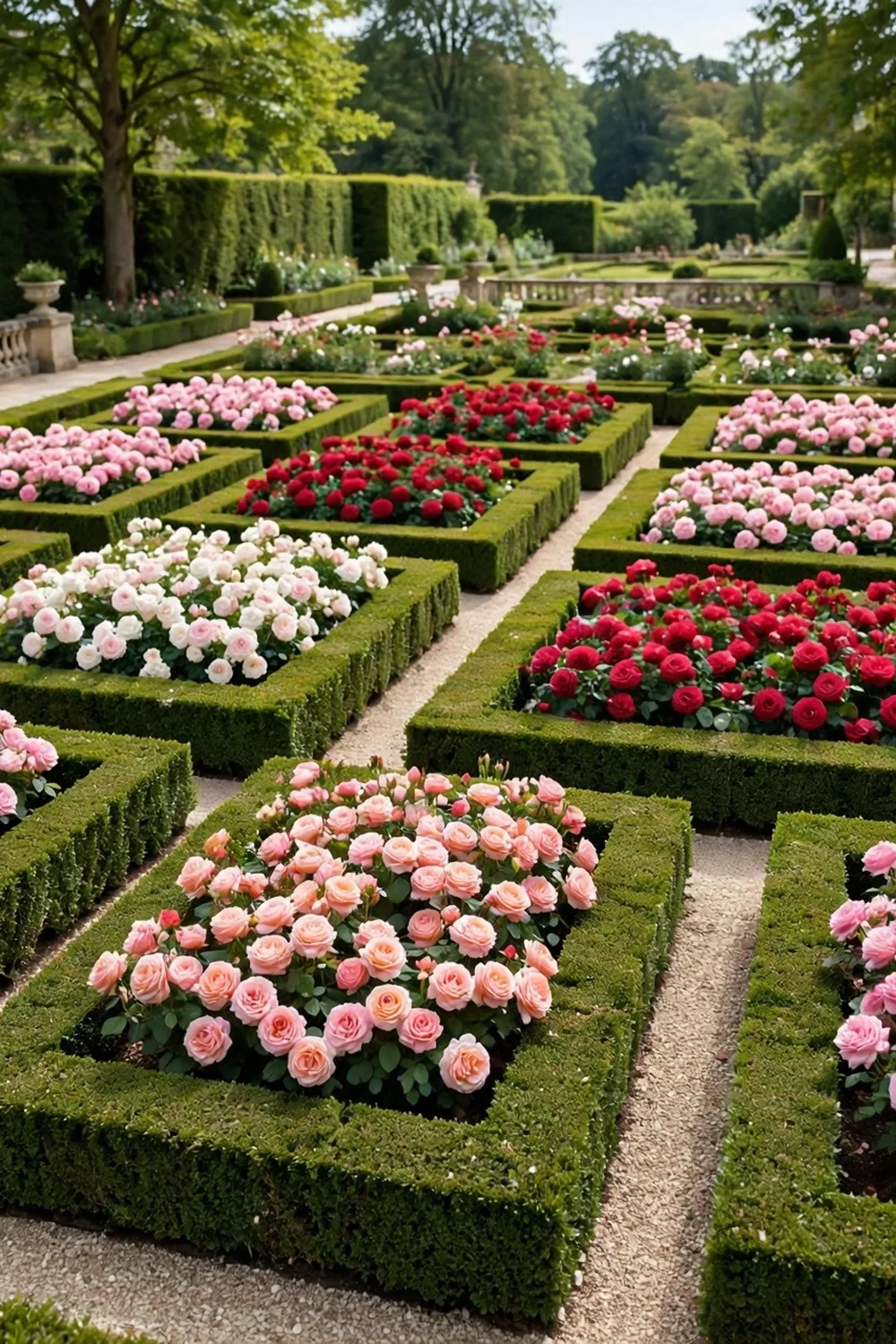
Clipped boxwood hedges in squares or rectangles, filled with roses or lavender, give a European garden feel that never goes out of style. The geometry does the design work, so the flower choices can be simple. This bed suits front yards of traditional homes and needs the most upkeep on this list: hedge trimming 2 to 3 times a season. The payoff is a bed that looks sharp in every season.
Try this: keep hedges at 18 inches or lower so flowers stay visible above them.
Cost: $$$. Difficulty: moderate.
11. The shade-loving flower bed
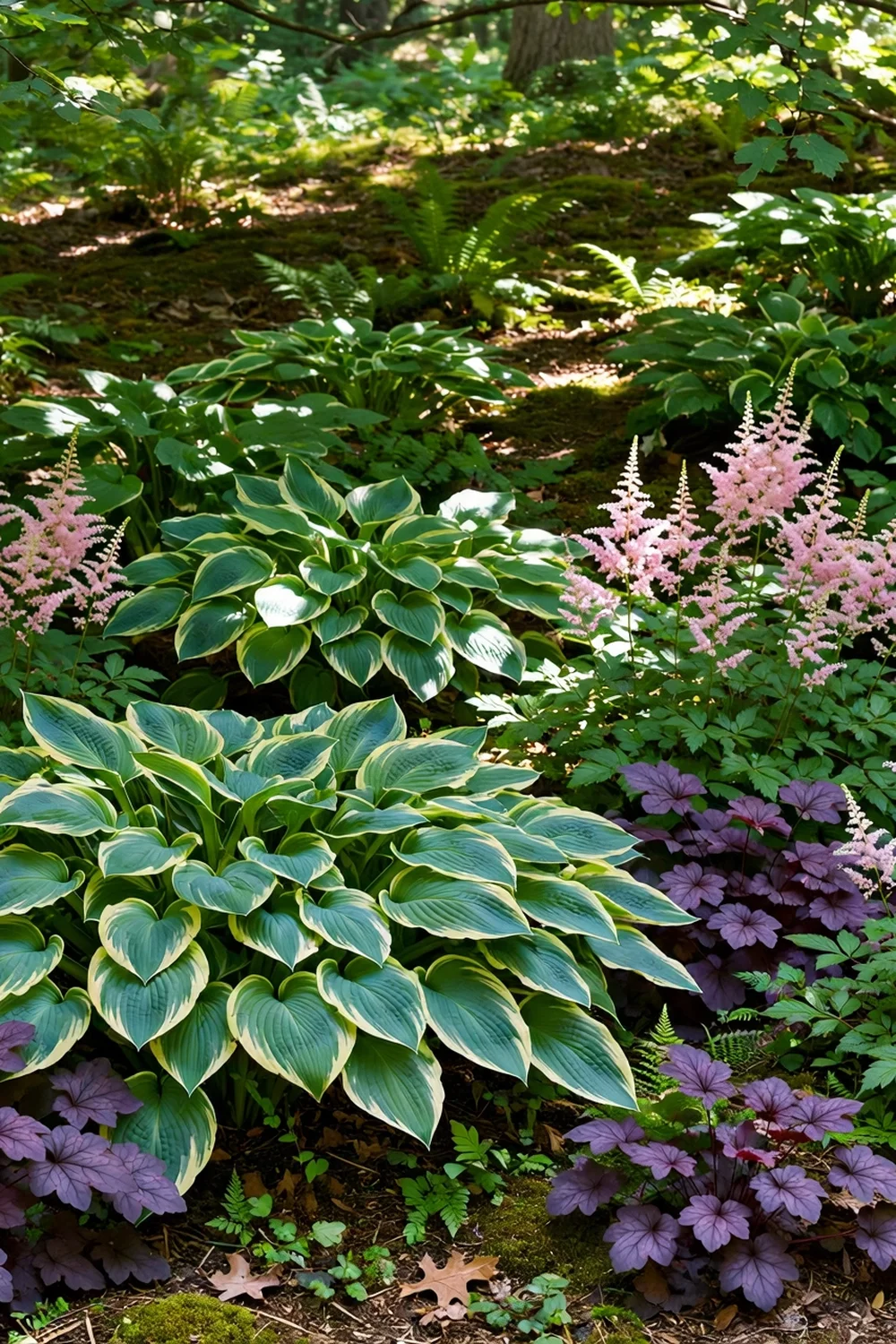
Shady beds are not a consolation prize; they are where foliage shines. Hostas, heuchera, astilbe, and ferns layer into a bed with more texture than most sunny borders, and impatiens or begonias add summer color. The key is amending the soil with compost, because tree roots steal both water and nutrients. Mulch 3 inches deep and water the first season until roots compete well.
Try this: choose heuchera varieties with purple or caramel leaves for color without flowers.
Cost: $$$. Difficulty: easy.
12. The rock and gravel bed

Stones plus drought-tough plants make a bed that needs almost no water and no mowing. Arrange a few large boulders first, then plant sedum, ornamental grasses, and agave in the pockets, finishing with gravel mulch. The rocks hold heat, which succulents love, and the clean lines suit modern homes. This is the right answer for dry climates and for gardeners who travel.
Try this: bury each boulder one-third deep so it looks settled, not perched.
Cost: $$$. Difficulty: easy.
13. The corner L-shaped bed
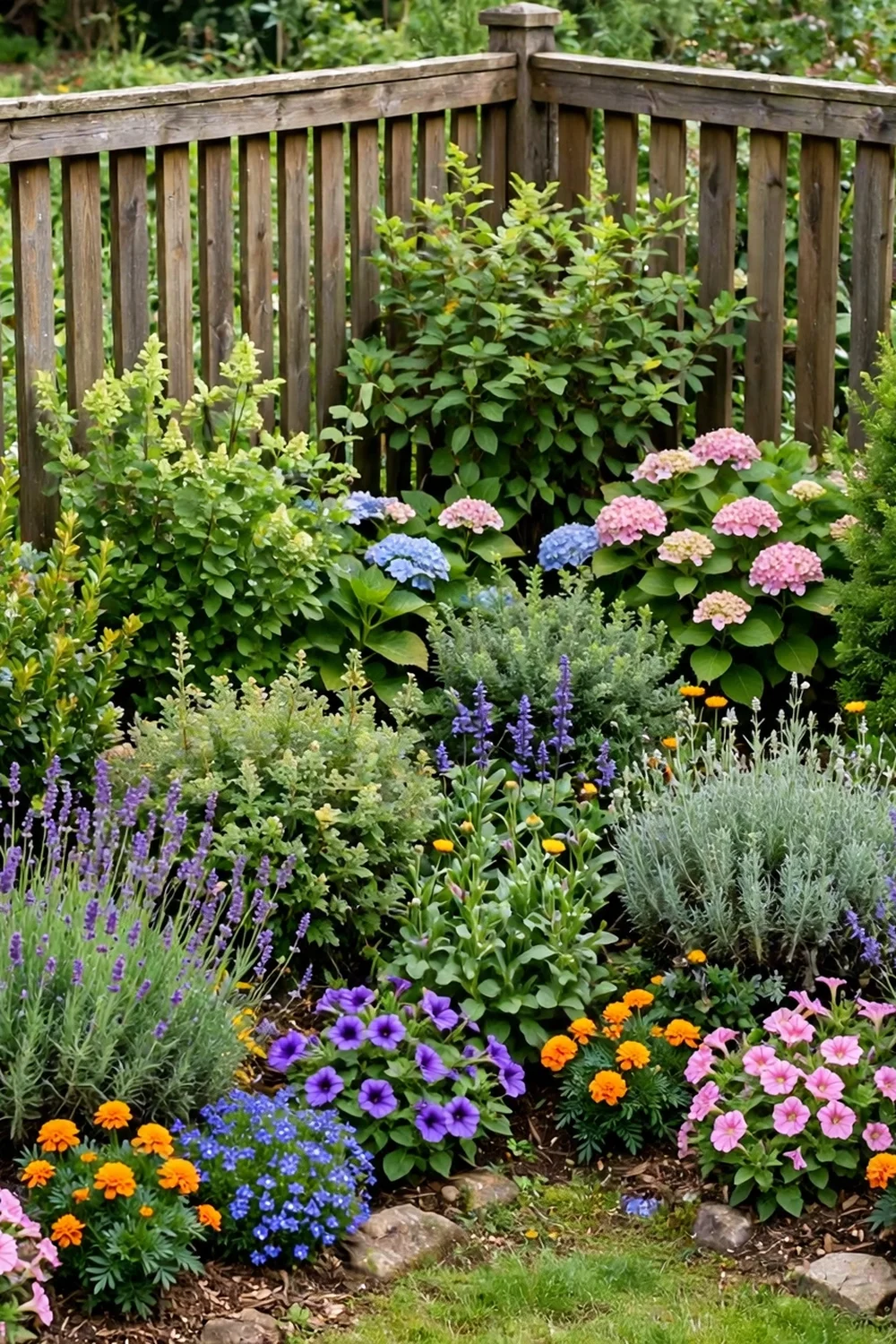
Corners are dead space until you claim them. An L-shaped bed wrapping a fence corner or house corner turns an awkward angle into the garden’s anchor. Put a small ornamental tree or large shrub at the very corner (a crape myrtle or hydrangea), then step heights down along both arms. Corners read bigger than they are, so one strong bed here upgrades the whole yard.
Try this: place the tallest plant exactly in the corner angle for a natural focal point.
Cost: $$$. Difficulty: easy.
14. The mailbox welcome bed
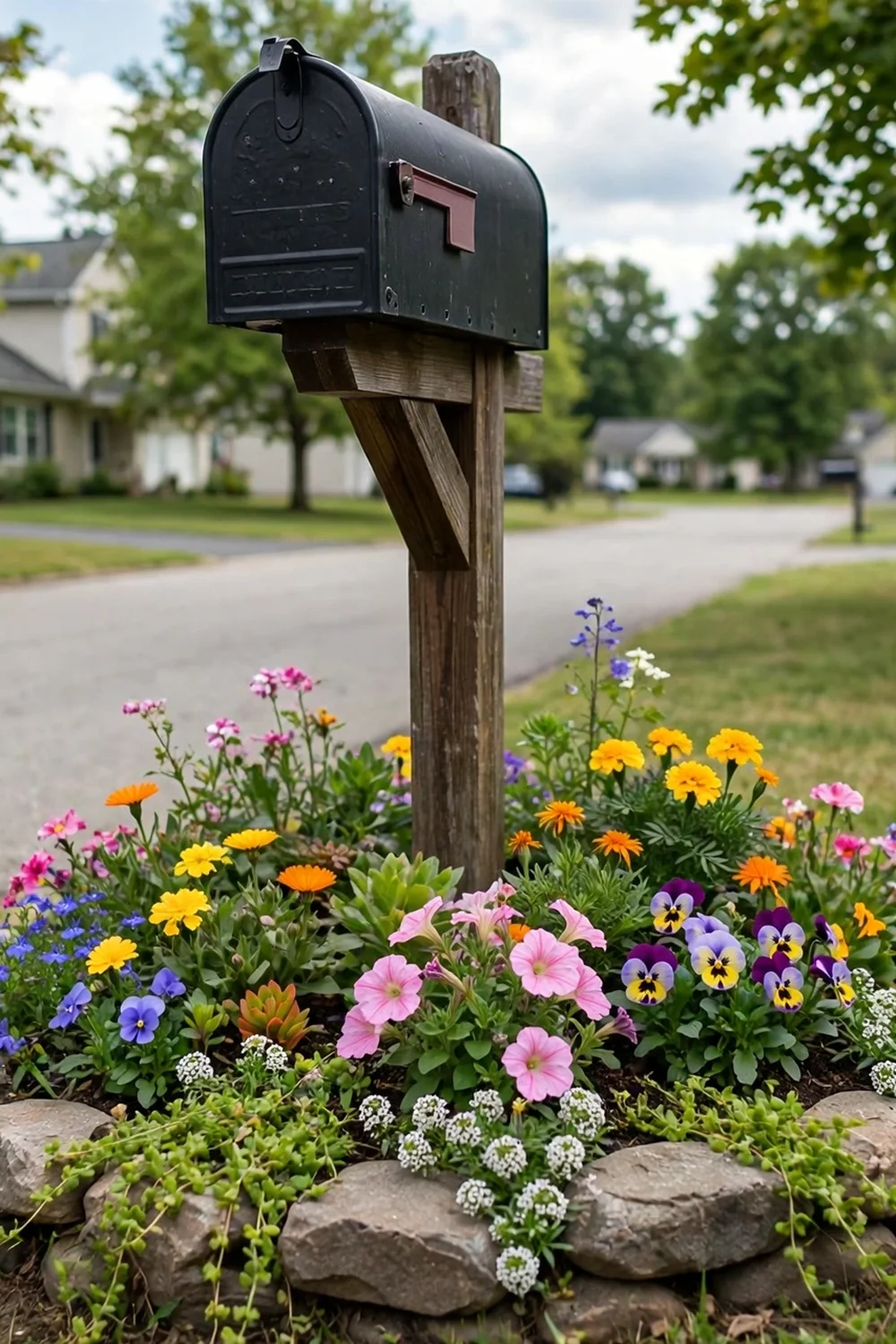
The mailbox bed is tiny but mighty: a 3-foot circle of flowers around the post greets everyone who passes. Use tough, low plants (dwarf zinnias, alyssum, portulaca) that handle heat, road dust, and the mail carrier’s reach. Keep it under 2 feet tall so the box stays visible and accessible. Refresh with seasonal annuals twice a year for a bed that always looks current.
Try this: edge it with a simple stone ring so the mower never scalps the flowers.
Cost: $$. Difficulty: easy.
15. The terraced slope bed

Slopes erode and frustrate mowing, but terraced into 2 or 3 level beds with stone or timber walls, they become the garden’s best feature. Each terrace gets its own planting theme: cascading flowers (trailing verbena, sweet potato vine) spilling over the front wall of each level. Build walls under 2 feet tall for DIY safety, and add drainage gravel behind each wall. The slope that fought you becomes the slope everyone photographs.
Try this: start at the bottom terrace and work up so falling soil lands on finished work.
Cost: $$$. Difficulty: moderate.
How to plan a flower bed that looks good from day one
Start with the edge, not the plants. A clean, smooth bed line, cut with a half-moon edger, is the difference between “landscaped” and “weedy patch.” Then improve the soil in the whole bed before planting a single thing: most flower beds fail from compacted, hungry soil, not from wrong plant choices. Two inches of compost worked into the top 8 inches fixes most problems.
Buy fewer varieties in bigger groups. Five delphiniums make a statement; one each of fifteen plants makes a jumble. Clemson Extension’s Home and Garden Information Center has free, research-based guides on bed preparation and plant selection if you want a second opinion before you shop.
If a trellis or arch would suit your bed design, 20 Climbing Rose Trellis Ideas for Every Garden Style shows vertical options that pair beautifully with flower beds.
Mistakes that ruin a new flower bed
Planting too close to the house is the classic one: mature plant width plus 18 inches of air space keeps siding dry and paint intact. The second is skipping mulch; 2 to 3 inches of bark or pine straw cuts weeding by more than half and keeps soil moisture even. The third is buying plants for the flowers you see in the nursery pot instead of the mature size on the tag, which is how beds end up overcrowded by August.
And when the cold months approach, your bed strategy changes completely; see 20 Plant and Flower Ideas for a Winter Flower Bed for the seasonal planting approach that keeps beds alive through winter.
Flower bed safety notes
- Call before you dig. Cutting a new bed edge or driving edging stakes can hit buried utilities. Contact your local 811 service at least 2 business days ahead; the Call 811 site explains how.
- Mind the house. Keep soil and mulch 6 inches below siding and away from foundation vents to prevent moisture and pest problems.
- Lift safely. Bags of mulch and stone weigh 40 to 60 pounds; bend at the knees and split loads rather than hauling a full wheelbarrow uphill.
- Watch for thorns and sap. Roses, bougainvillea, and euphorbia can scratch or irritate skin; wear gloves when planting and pruning them.
Frequently asked questions
How deep should a flower bed be?
Three to 4 feet deep is the sweet spot for beds against a house: deep enough for three layers of plants, shallow enough to reach the back. Island beds can be 6 to 10 feet across since you access them from all sides.
What is the easiest flower bed for beginners?
The evergreen framework bed: plant the shrubs once, then swap seasonal flowers in the gaps. Even if a round of annuals flops, the structure keeps the bed looking intentional while you learn.
How do I keep weeds out of a new flower bed?
Start with clean soil (remove existing weeds and roots), plant densely so leaves shade the soil, and mulch 2 to 3 inches deep. Most weed problems come from skipping one of those three steps.
Should flower beds be mulched every year?
Top up mulch once a year, usually in spring, to maintain 2 to 3 inches. Old mulch breaks down into the soil, so you are feeding the bed as you refresh it.
Can I make a flower bed over grass without digging?
Yes. Lay cardboard over the grass, wet it thoroughly, and cover with 4 to 6 inches of compost and mulch. Wait 6 to 8 weeks, then plant straight through. The grass underneath smothers and rots into the soil.
Final thoughts
Great flower beds are designed with a shovel and an edger before they are planted with flowers. Shape the bed, feed the soil, plant in groups, and the flowers almost take care of themselves.
If you enjoyed this, you’ll love our 15 Expert Raised Bed Cut Flower Garden Layout Ideas.


