

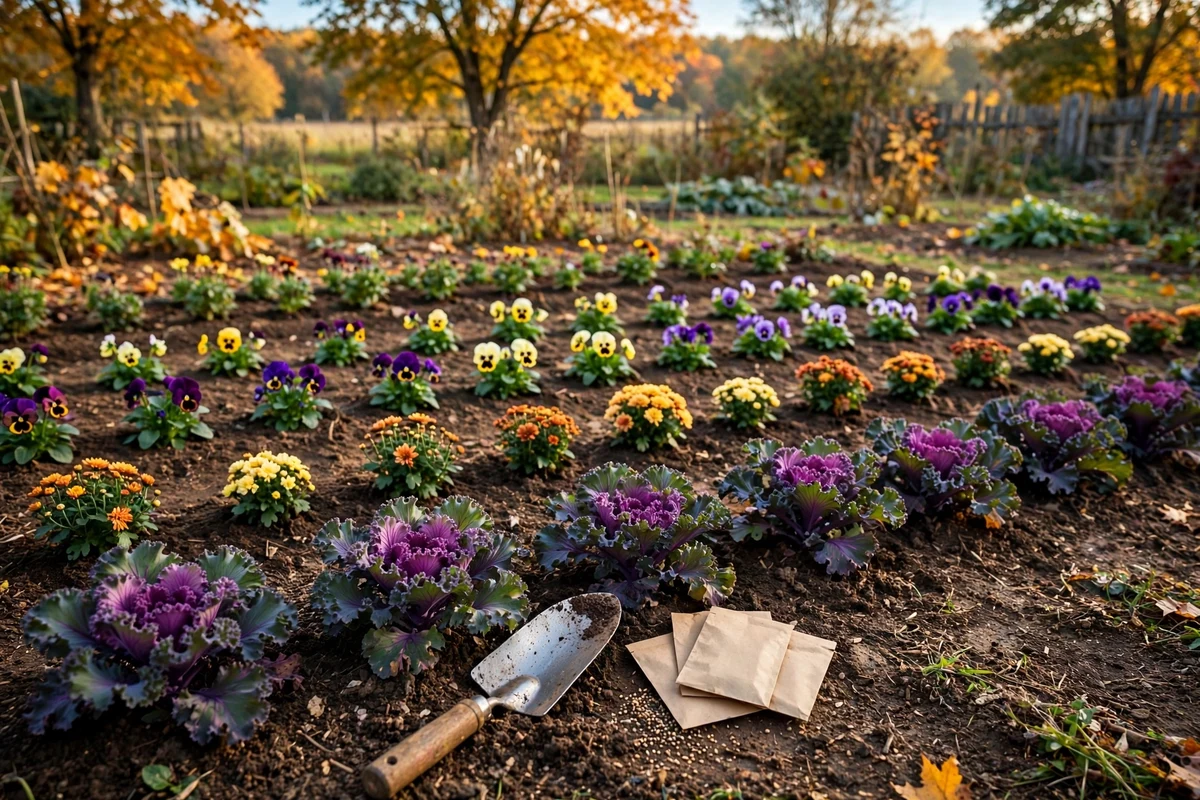
September is the garden’s second spring, and most people miss it. The soil is still warm, the rain returns, and nurseries discount everything that did not sell in May. I plant more in September than in April now, because fall-planted perennials and bulbs do the hard work while I am inside drinking tea.
These are 12 flowers, bulbs, and perennials to plant in September for color this fall and payoff next spring. Each one includes planting depth, spacing, zones, and timing so you get it right the first time. (Growing vegetables this month? See our companion list of veggies to plant in September; this guide covers the ornamental side.)
1. Pansies

Set out nursery-grown pansy transplants 6 to 8 inches apart in early September, planting at the same depth they grew in the pot. They bloom within 2 to 3 weeks and keep flowering through light frosts down to about 28°F. In zones 7 and warmer, fall-planted pansies often survive winter and rebloom in March. A six-pack costs $4 to $6. Full sun to part shade, and deadhead spent blooms to keep them coming.
Try this: plant pansies where spring bulbs will emerge; the bulbs push up right through them.
Cost: $· Difficulty: Easy · Time: 20 minutes
2. Hardy Garden Mums

Buy mums labeled hardy (Chrysanthemum morifolium), not florist mums, and get them in the ground by mid-September so roots establish before freeze. Space 18 inches apart in full sun, plant at nursery depth, and water deeply twice a week until frost. Hardy to zones 5 to 9. One-gallon pots run $8 to $12. Note: mums are toxic to dogs and cats if chewed, so site them away from pet paths; the ASPCA toxic plant list has the details.
Try this: mulch with 3 inches of shredded leaves after the ground freezes to help them overwinter.
Cost: $· Difficulty: Easy · Time: 15 minutes per plant
3. Asters

New England asters planted in September bloom almost immediately and return stronger each year. Space 18 to 24 inches apart in full sun; they reach 3 to 5 feet, so put them at the back of the border. Hardy in zones 4 to 8. One-gallon plants cost $9 to $13. Asters are among the best late-season nectar sources for bees and migrating monarchs, which is reason enough to give them a spot.
Try this: pinch stems back by a third in early July next year for bushier plants and more blooms.
Cost: $$· Difficulty: Easy · Time: 15 minutes per plant
4. Snapdragons

Snapdragons love cool weather and bloom harder in fall than they did in June. Set transplants 8 to 12 inches apart in early September in full sun. They handle light frost and bloom until a hard freeze in the 20s. In zones 7 to 10 they often overwinter and bloom again in spring. Six-packs cost $4 to $6. Taller varieties may need staking in windy spots.
Try this: cut the central spike when it fades; side shoots will branch and rebloom.
Cost: $· Difficulty: Easy · Time: 20 minutes
5. Calendula

Direct-sow calendula seeds 1/4 inch deep and 8 inches apart in early September; they germinate in under a week in warm soil and bloom in about 6 weeks. The orange and gold flowers handle frost and keep going until hard freeze. They self-sow freely, so expect volunteers next spring. A seed packet costs $3 to $4 and covers a 10 foot row. Full sun, average soil.
Try this: let the last flowers go to seed in November for free plants next year.
Cost: $· Difficulty: Easy · Time: 15 minutes
6. Sweet Alyssum

Sweet alyssum transplants set 6 inches apart in September form a fragrant white carpet along path edges within weeks. The tiny flowers bloom until hard frost and tolerate light freezes without complaint. Six-packs cost $4 to $5. Full sun to part shade. Shear the plants back by half if they get leggy; they rebound in about two weeks.
Try this: tuck alyssum between stepping stones where its scent hits you as you walk.
Cost: $· Difficulty: Easy · Time: 15 minutes
7. Ornamental Kale and Cabbage

Ornamental kale and cabbage go in as transplants in early September, 12 to 15 inches apart in full sun. Their colors intensify after the first frosts, and the rosettes hold through December in zones 6 and warmer, often surviving winter under snow. Six-packs cost $5 to $7. They are technically edible but bred for looks; the texture is too tough to enjoy.
Try this: plant them where summer annuals are fading; they fill the same footprint.
Cost: $· Difficulty: Easy · Time: 20 minutes
8. Spring-Flowering Bulbs

Tulips and daffodils go in the ground in September and October, pointed end up: tulips 6 inches deep and 4 inches apart, daffodils 6 inches deep and 6 inches apart. They need 12 to 14 weeks of soil below 50°F to bloom, which is why fall planting is non-negotiable. Hardy in zones 3 to 8. Bags of 25 bulbs cost $10 to $18. Daffodils naturalize and multiply; tulips are best treated as a 2 to 3 year show in most climates.
Try this: plant in drifts of 12 or more; single-file rows of bulbs always look sparse.
Cost: $$· Difficulty: Easy · Time: 30 minutes per bag
9. Garlic

In zones 2 to 5, plant garlic in mid to late September; warmer zones wait until October. Break bulbs into cloves and plant each 2 inches deep and 4 to 6 inches apart, pointed end up, in full sun. The cloves root in fall, go dormant, and size up for a July harvest. A half pound of seed garlic (about 4 bulbs) costs $8 to $12 and plants a 4 foot row. Mulch 4 inches deep after planting.
Try this: buy seed garlic from a garden supplier, not the grocery store; store bulbs may carry disease.
Cost: $· Difficulty: Easy · Time: 25 minutes
10. Sedum (Stonecrop)

Upright sedums like Autumn Joy planted in September establish roots all fall and bloom right on schedule the following year. Space 18 inches apart in full sun and poor-to-average soil; rich soil makes them flop. Hardy in zones 3 to 9 and extremely drought-tolerant once settled. One-gallon pots cost $10 to $14. Leave the dried flower heads standing through winter for structure and bird forage.
Try this: divide an existing clump instead of buying; fall division is sedum’s favorite propagation.
Cost: $$· Difficulty: Easy · Time: 15 minutes per plant
11. Daylilies (Fall Division)

September is the best month to divide overgrown daylily clumps: lift, split into fans of 3 to 5, and replant 18 to 24 inches apart at the same depth. The divisions root through fall and bloom the next summer. Hardy in zones 3 to 9. If you are buying new, one-gallon daylilies cost $10 to $15, but divisions from a neighbor are free and establish faster than store plants.
Try this: trim foliage to 6 inches at replanting to reduce water loss while roots settle.
Cost: $$· Difficulty: Easy · Time: 20 minutes per division
12. Cilantro

Cilantro bolts in summer heat but grows happily from a September sowing. Direct-sow seeds 1/4 inch deep and 6 inches apart; germination takes 7 to 10 days in cool soil. The leaves stay sweet for weeks longer than any spring planting. A seed packet costs $2 to $3. Part shade in warm zones, full sun where falls are cool. Sow a short row every two weeks for continuous harvest until hard freeze.
Try this: let one plant flower; the seeds are coriander, a free second harvest.
Cost: $· Difficulty: Easy · Time: 10 minutes
How to time September planting in your zone
September is not the same month everywhere, so let the weather guide you, not the calendar. In zones 3 to 5, plant in the first two weeks while soil is still warm; the first frost can arrive by late September. Zones 6 and 7 get the whole month. In zones 8 and warmer, September is the start of the prime planting season, and you can keep planting into October and November. A soil thermometer is worth the $10: most seeds germinate best when soil is 60 to 75°F.
Confirm your zone on the USDA Plant Hardiness Zone Map before buying perennials; a plant hardy to zone 5 will not survive a zone 4 winter no matter when you plant it. Water every new planting deeply at installation, then check soil moisture twice a week until the ground cools. Fall rain helps, but new roots still need steady moisture for their first month.
| Plant | Planting depth | Spacing | Zones |
|---|---|---|---|
| Pansies | Nursery depth | 6–8 in | 4–9 |
| Hardy mums | Nursery depth | 18 in | 5–9 |
| Asters | Nursery depth | 18–24 in | 4–8 |
| Snapdragons | Nursery depth | 8–12 in | 7–10 (annual elsewhere) |
| Calendula | 1/4 in | 8 in | All (annual) |
| Sweet alyssum | Nursery depth | 6 in | All (annual) |
| Ornamental kale | Nursery depth | 12–15 in | All (annual) |
| Tulips / daffodils | 6 in | 4–6 in | 3–8 |
| Garlic | 2 in | 4–6 in | 2–9 |
| Sedum | Nursery depth | 18 in | 3–9 |
| Daylilies | Crown at soil level | 18–24 in | 3–9 |
| Cilantro | 1/4 in | 6 in | All (annual) |
September planting mistakes to avoid
The biggest mistake is planting too late. A mum dropped in the ground on October 25 has no time to root before freeze and will not return in spring, while the same plant installed September 10 usually does. Buy transplants early in the month, not when the nursery is picked over. Second, do not fertilize heavily at planting; a light starter dose is enough, since soft late growth gets damaged by frost.
Third, call before you dig. Any new bed, border edge, or bulb trench deeper than a few inches can hit buried lines, so contact 811 a few days before digging; the locator service is free. And keep pets in mind when siting mums: they are toxic to dogs and cats if chewed, so check the ASPCA toxic plant list for anything going near a pet’s favorite corner.
Once the beds are planted, dress up the containers to match. These fall planter recipes use many of the same plants in thriller filler spiller combinations for porches and steps. For window boxes full of pansies and alyssum, see these fall window box ideas.
Frequently asked questions
Is it too late to plant flowers in September?
No. September is one of the best planting months: warm soil, cooler air, and steady rain help transplants establish fast. Pansies, snapdragons, calendula, and asters planted now bloom this fall, while perennials, bulbs, and garlic planted now pay off next spring and summer.
What flowers can I plant in September for fall color?
Pansies, violas, snapdragons, calendula, sweet alyssum, asters, hardy mums, and ornamental kale all deliver fall color when planted in September. Choose nursery transplants rather than seeds for everything except calendula, alyssum, and cilantro, which germinate fast enough from seed.
Should I plant spring bulbs in September or October?
Either works in most zones. September planting gives roots the longest establishment window, which matters in zones 3 to 5 with early freezes. In zones 7 and warmer, October is fine and sometimes better, since bulbs should go in after soil cools below 60°F.
Do I need to call 811 before planting a garden bed?
Yes, if you are digging more than a few inches deep for a new bed, border, or bulb trench. Call 811 or visit call811.com a few days ahead; utility locators mark buried lines for free. Shallow planting of transplants into existing beds does not require a call.
Will fall-planted perennials survive winter?
Yes, if they are hardy in your zone and planted early enough to root. September planting gives perennials like asters, sedum, and daylilies weeks of root growth before dormancy, which is why fall planting often outperforms spring planting. Mulch after the ground freezes to prevent frost heaving.
Are mums perennial or annual?
Hardy garden mums (Chrysanthemum morifolium) are perennial in zones 5 to 9 when planted by mid-September so roots establish. Florist mums sold in decorative pots are usually not hardy and will not return. Keep in mind that all mums are toxic to dogs and cats if eaten.
September planting is the closest thing gardening has to a cheat code: warm soil, cool air, sale prices, and months of payoff. Get the transplants in early in the month, the bulbs in before the soil cools, and the garlic in before first frost. Next spring, when the daffodils come up through the pansies, you will be glad you spent that Saturday outside.


