



An enclosed sun porch is the hardest-working room you are not using. Glass on three sides, fresh air on demand, and light all day, yet most of them end up as storage for broken chairs and forgotten boxes. It takes less than you think to turn one into the favorite room in the house.
These 20 enclosed sun porch ideas cover every style and budget, from a $50 refresh to a full four-season conversion. Each idea includes cost and difficulty guidance plus a practical tip. When I reclaimed my own glassed-in porch last fall, ideas 2 and 11 did 80 percent of the work in a single weekend.
Quick takeaways
- Start with light control: sheer curtains, shades, or UV film tame glare and heat.
- Choose furniture rated for sun and temperature swings: rattan, teak, aluminum, and outdoor fabrics.
- Ventilation matters as much as decor. Screens, ceiling fans, and operable windows keep it comfortable.
- Enclosed porches need moisture-proof flooring: tile, sealed concrete, or luxury vinyl.
- Check local permits before converting a porch to heated living space.
1. Sheer curtain walls
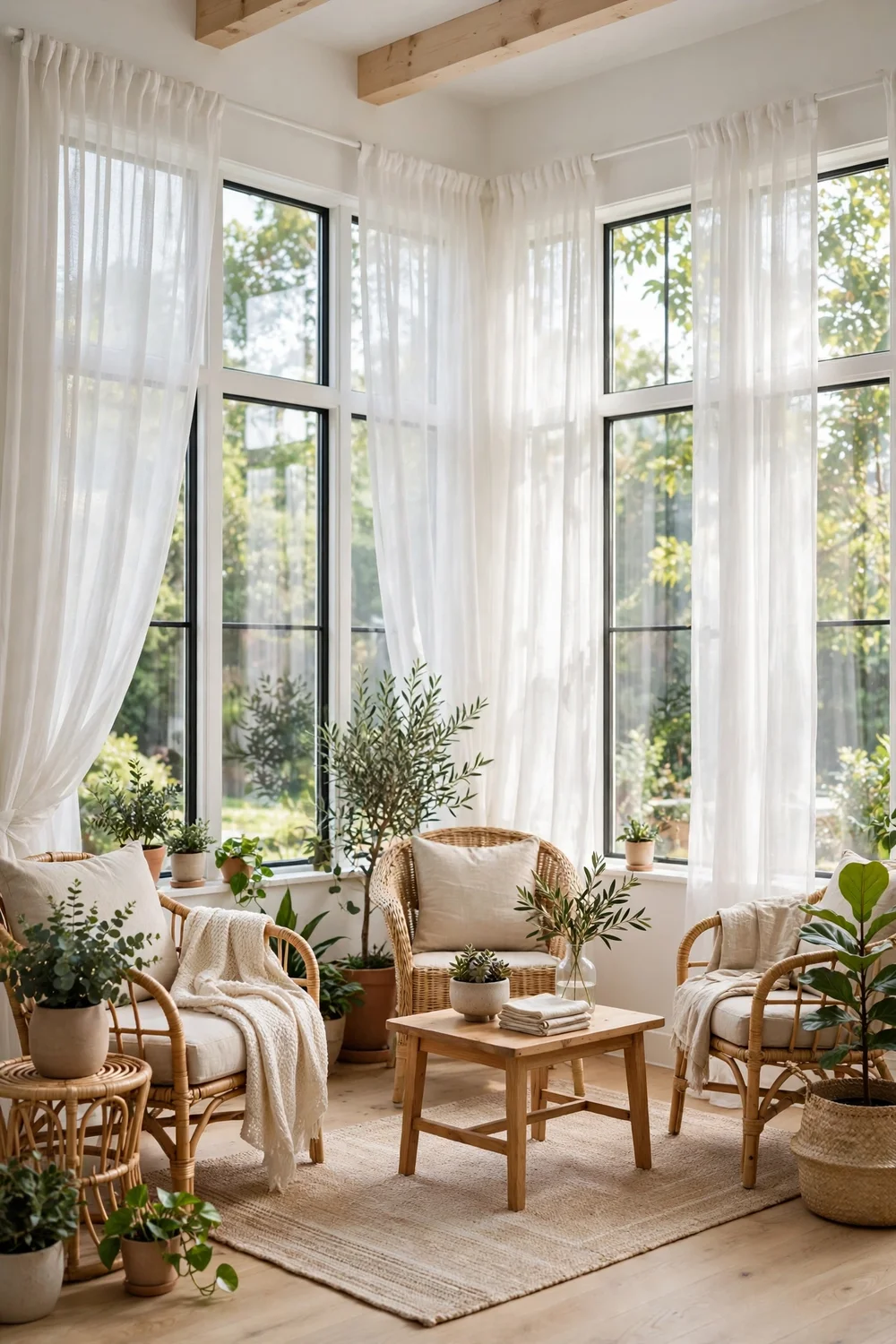
Floor-to-ceiling sheer curtains soften harsh sunlight while keeping the view. Mount ceiling tracks or tension rods inside each window bay and hang washable linen-look panels. Sheers cut glare without darkening the room, and they add privacy after dark when interior lights are on. Choose a light-filtering weave, not blackout, to preserve the bright feel that makes a sun porch special.
Try this: leave one panel per bay able to draw fully for maximum light on gray days.
Cost: $$· Difficulty: easy · Time: 3 hours
2. Rattan conversation set
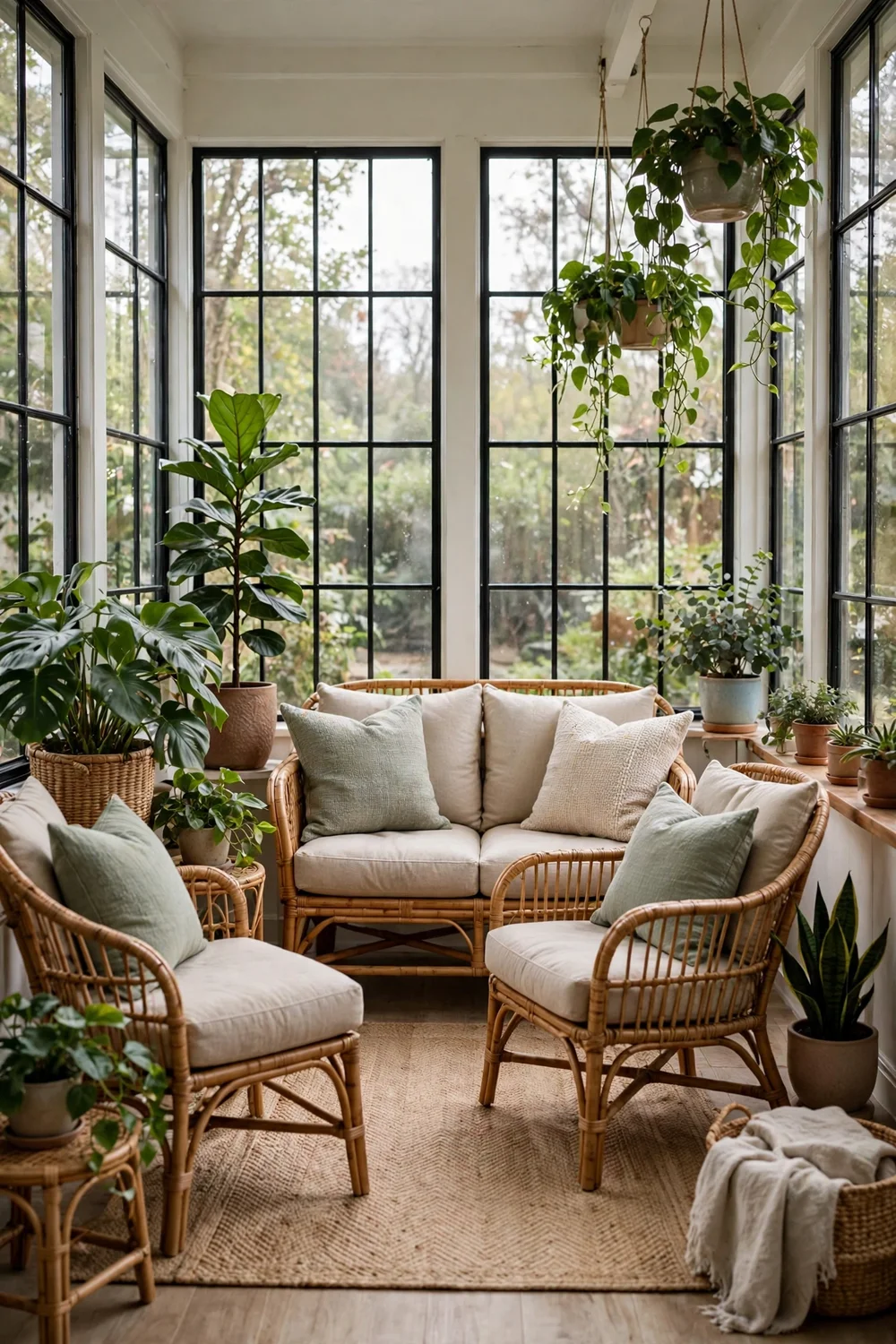
A rattan loveseat, two chairs, and a coffee table create an instant living room that handles sun and humidity. Look for aluminum-framed rattan with UV-resistant weave and solution-dyed cushions. Arrange seating to face the best view, not the house door. Add a washable outdoor rug underneath to anchor the arrangement and protect the floor.
Try this: buy cushion covers, not whole cushions, for cheap seasonal color swaps.
Cost: $$$· Difficulty: easy · Time: 2 hours
3. Indoor-outdoor rug layering

Layer a large flat-weave rug over sealed flooring to warm up the space and define zones. Outdoor rugs handle the temperature swings and occasional rain blown through screens. Layer a smaller patterned rug on top for a collected look. Keep rug edges 6 inches from walls so you can sweep underneath easily.
Try this: choose a rug pad rated for outdoor use to stop sliding on tile.
Cost: $$· Difficulty: easy · Time: 30 minutes
4. Ceiling fan for airflow
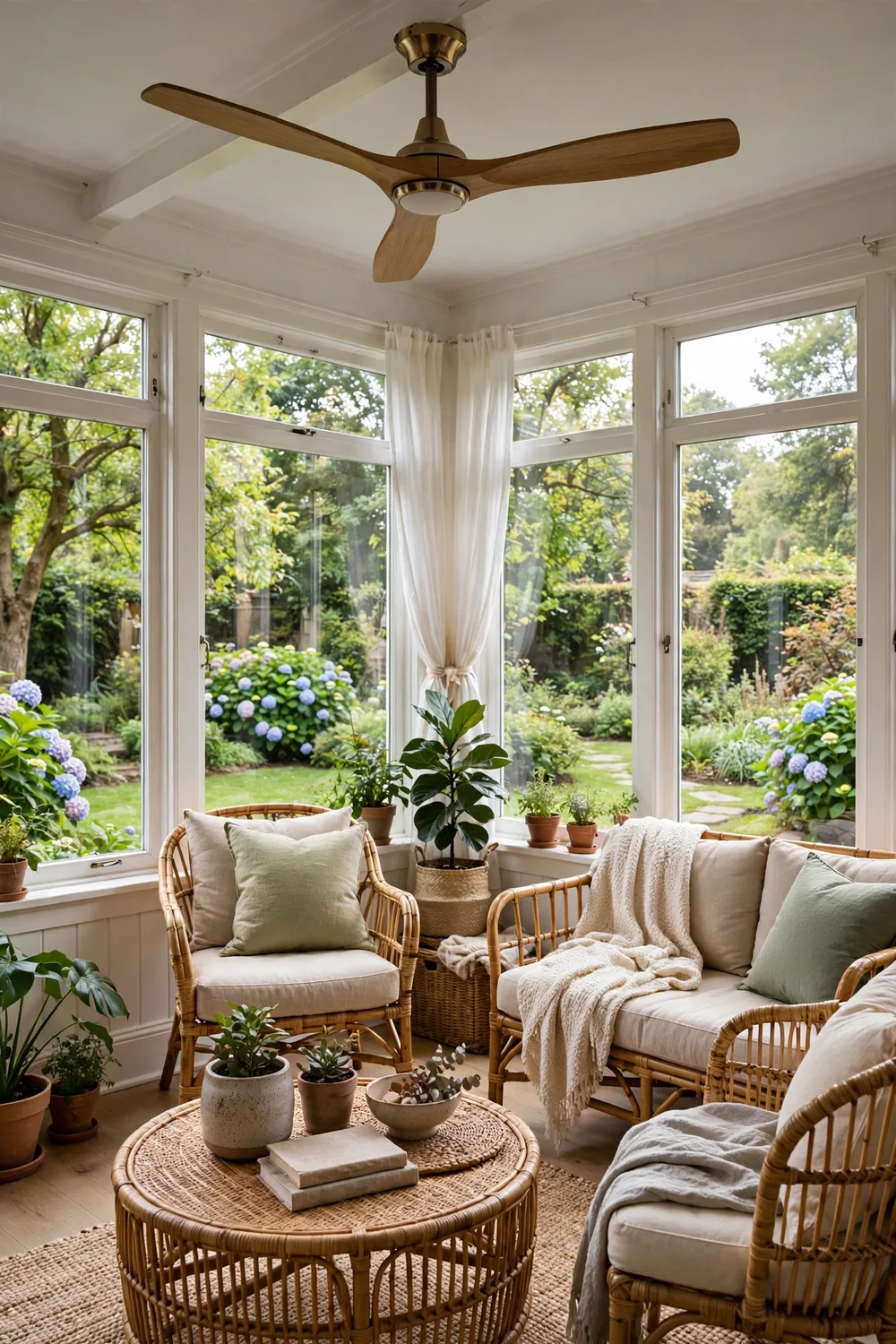
A ceiling fan makes a sun porch usable on hot afternoons by moving air across seating areas. Choose a damp-rated fan if screens stay open in rain. A 52-inch fan covers up to 400 square feet. If wiring is a hurdle, a portable tower fan or two delivers most of the comfort for a fraction of the cost and zero electrician visits.
Try this: run the fan counterclockwise in summer to push cool air down.
Cost: $$· Difficulty: easy to moderate · Time: 2 hours
5. Breakfast nook corner
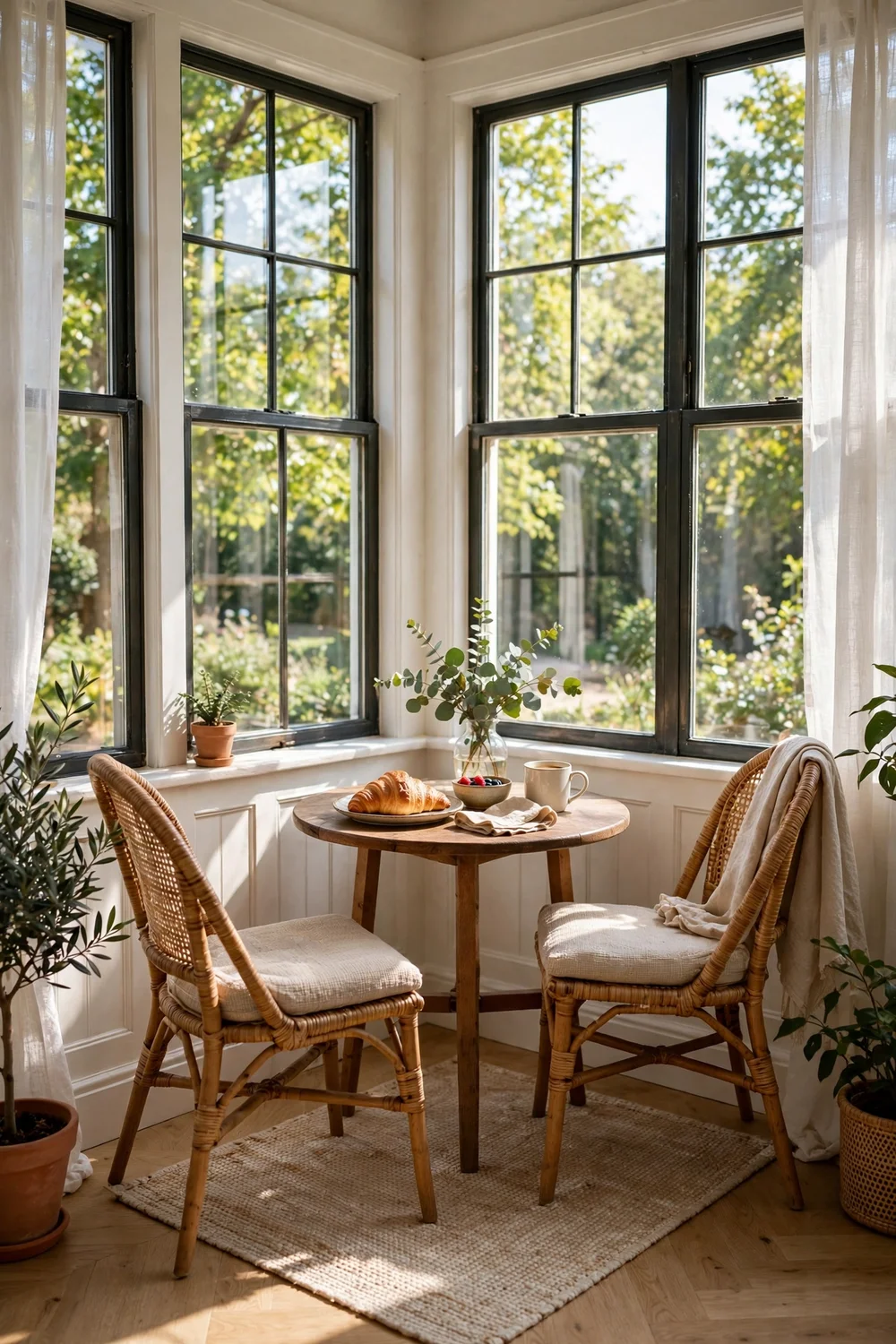
A small round table with two to four chairs turns the sunniest corner into a breakfast spot you will actually use. Round tables fit tight corners better than square ones and seat more people comfortably. Add a pendant light or lantern above for evening use. Keep the table 36 inches in diameter or less so chairs tuck in fully.
Try this: a pedestal base beats four legs in tight spaces: no leg to bump.
Cost: $$$· Difficulty: easy · Time: 1 hour
6. Tropical plant jungle
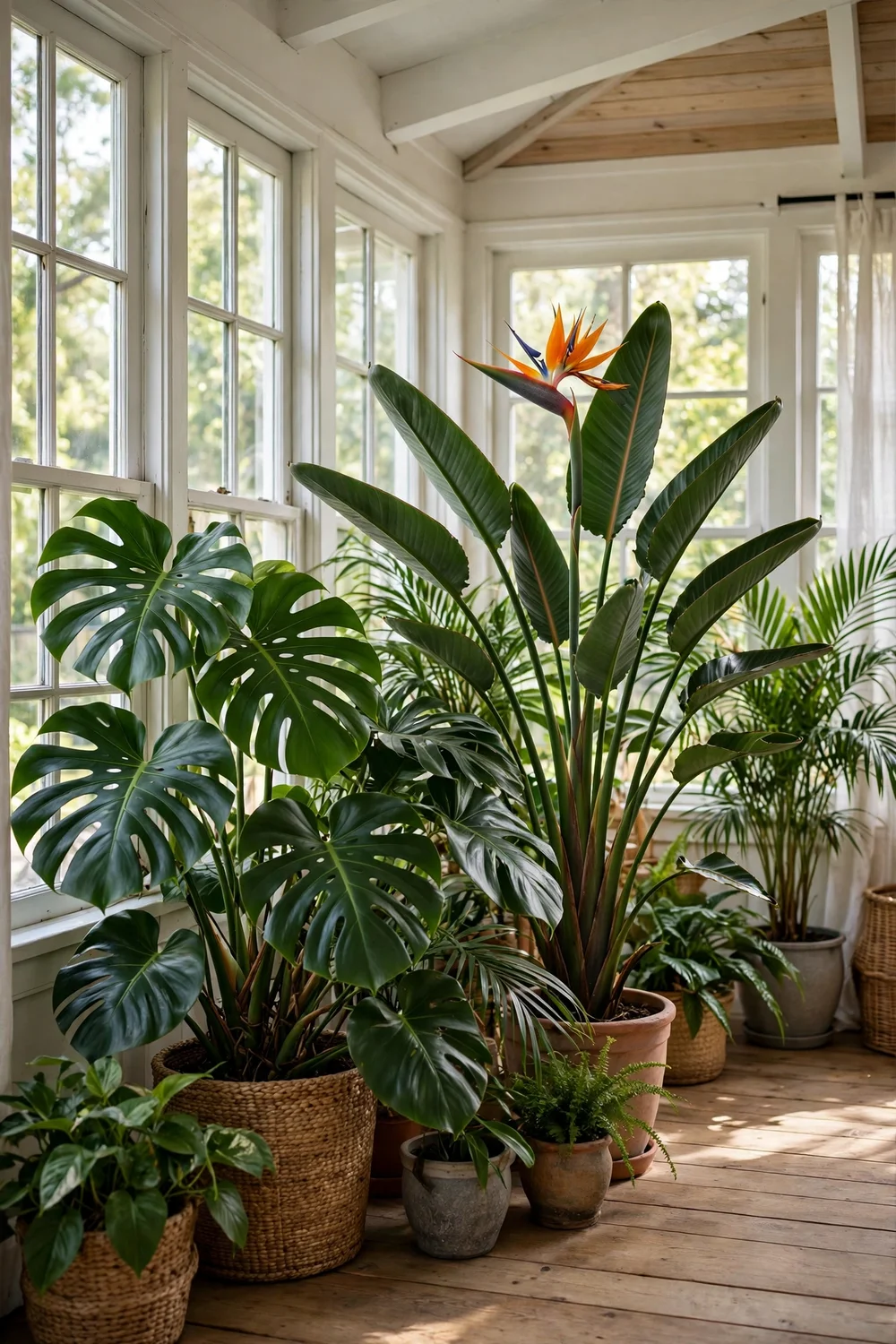
Group large tropicals like monstera, bird of paradise, and palms to blur the line between inside and out. Bright indirect light suits most tropicals; rotate pots monthly for even growth. Use cache pots with drainage trays to protect floors. A cluster of 5 to 7 plants of varying heights reads as intentional, while one lonely plant reads as an afterthought.
Try this: mist leaves weekly; dry porch air invites spider mites.
Cost: $$· Difficulty: easy · Time: 2 hours
7. Window seat with storage

A built-in or freestanding window seat under the sunniest windows adds seating and hides clutter. Top a low bookcase or storage bench with a 4-inch foam cushion in outdoor fabric. Store throws, games, and gardening supplies inside. Anchor freestanding units to the wall so they cannot tip when kids climb on them.
Try this: hinge the seat top for the easiest access to storage.
Cost: $$$· Difficulty: moderate · Time: 4 hours
8. Hanging chair or porch swing

A hanging egg chair or a classic porch swing gives the sun porch its signature seat. Hang from a ceiling joist, never just drywall, using a heavy-duty swing hook rated for 300-plus pounds. Position it to catch the view and a breeze. Add an outdoor cushion and a throw for shoulder seasons. One statement seat beats a room full of forgettable chairs.
Try this: test the joist with a stud finder and hang from the joist center, not the edge.
Cost: $$$· Difficulty: moderate · Time: 2 hours
9. Gallery wall of botanical prints

Framed botanical prints bring garden energy to solid wall sections between windows. Use UV-protective glass or acrylic so prints do not fade in the strong light. Mix frame sizes but keep one consistent frame color for cohesion. Hang the center of the arrangement at 57 inches, gallery standard, even if the ceilings are high.
Try this: lay the arrangement on the floor first and photograph it before hanging.
Cost: $$· Difficulty: easy · Time: 2 hours
10. Outdoor bar cart station

A weather-resistant bar cart stocked with a pitcher, glasses, and sparkling water turns the porch into happy-hour headquarters. Choose powder-coated metal or teak that handles humidity. Stock it seasonally: lemonade and iced tea in summer, cider and cocoa in fall. Lock the casters once it is positioned so it stays put.
Try this: add a small potted herb like mint for fresh garnishes.
Cost: $$· Difficulty: easy · Time: 1 hour
11. Layered lighting plan

Sun porches need light after dark too. Combine three layers: a dimmable overhead fixture, table or floor lamps for reading corners, and string lights or lanterns for atmosphere. Use warm 2700K bulbs throughout for a cohesive glow. Put the overhead on a dimmer so the room shifts from bright daytime to cozy evening with one slide.
Try this: battery lanterns work where outlets are scarce.
Cost: $$· Difficulty: easy · Time: 2 hours
12. Reading nook with floor lamp
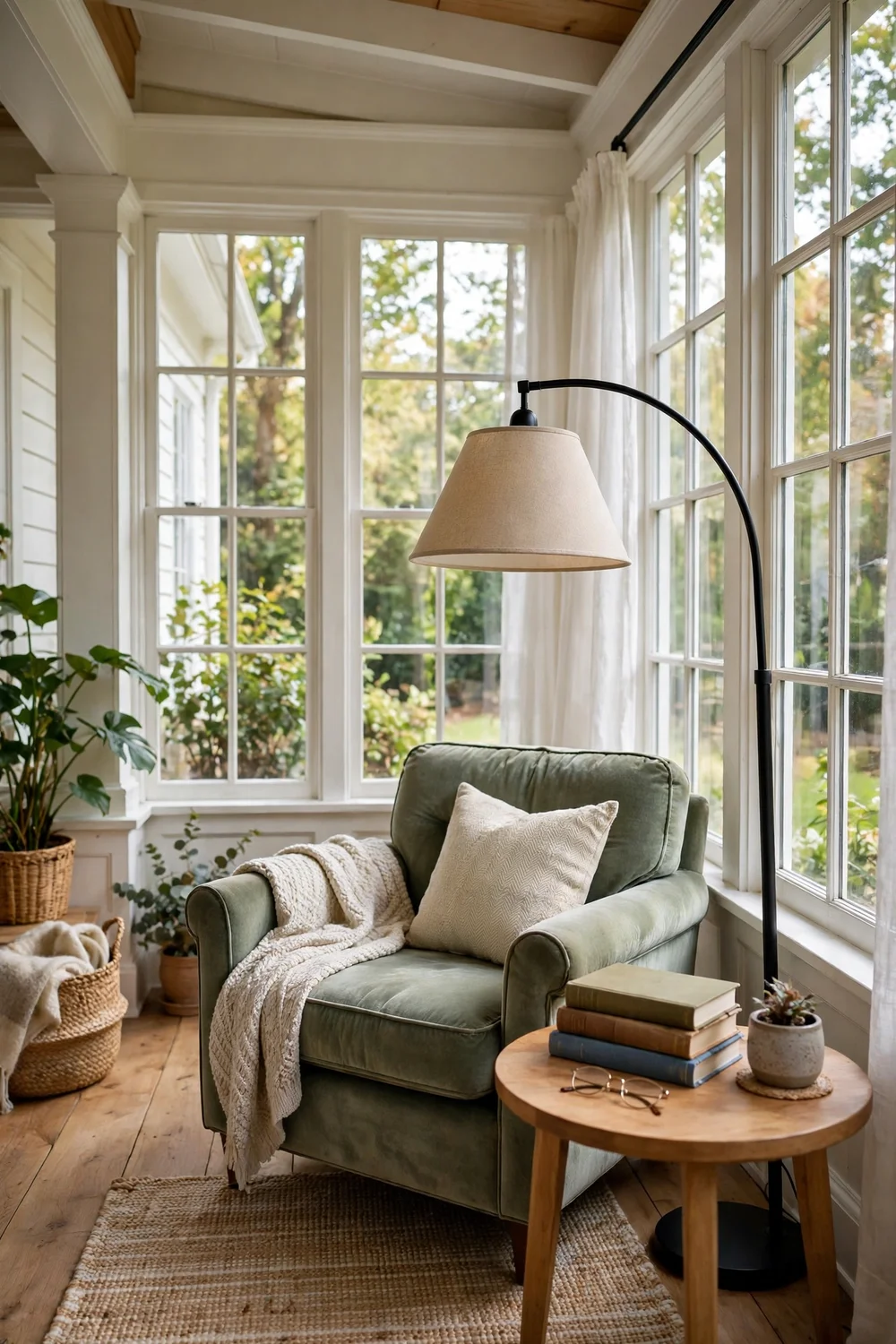
Claim the brightest corner with a comfortable armchair, a side table, and an arc or pharmacy floor lamp. Choose outdoor-rated upholstery so sun does not fade it in a season. Keep a basket for books and a throw within arm’s reach. Face the chair toward the windows so reading light comes over your shoulder during the day.
Try this: an arc lamp reaches over the chair without needing a side table.
Cost: $$$· Difficulty: easy · Time: 1 hour
13. Tile or sealed concrete floor
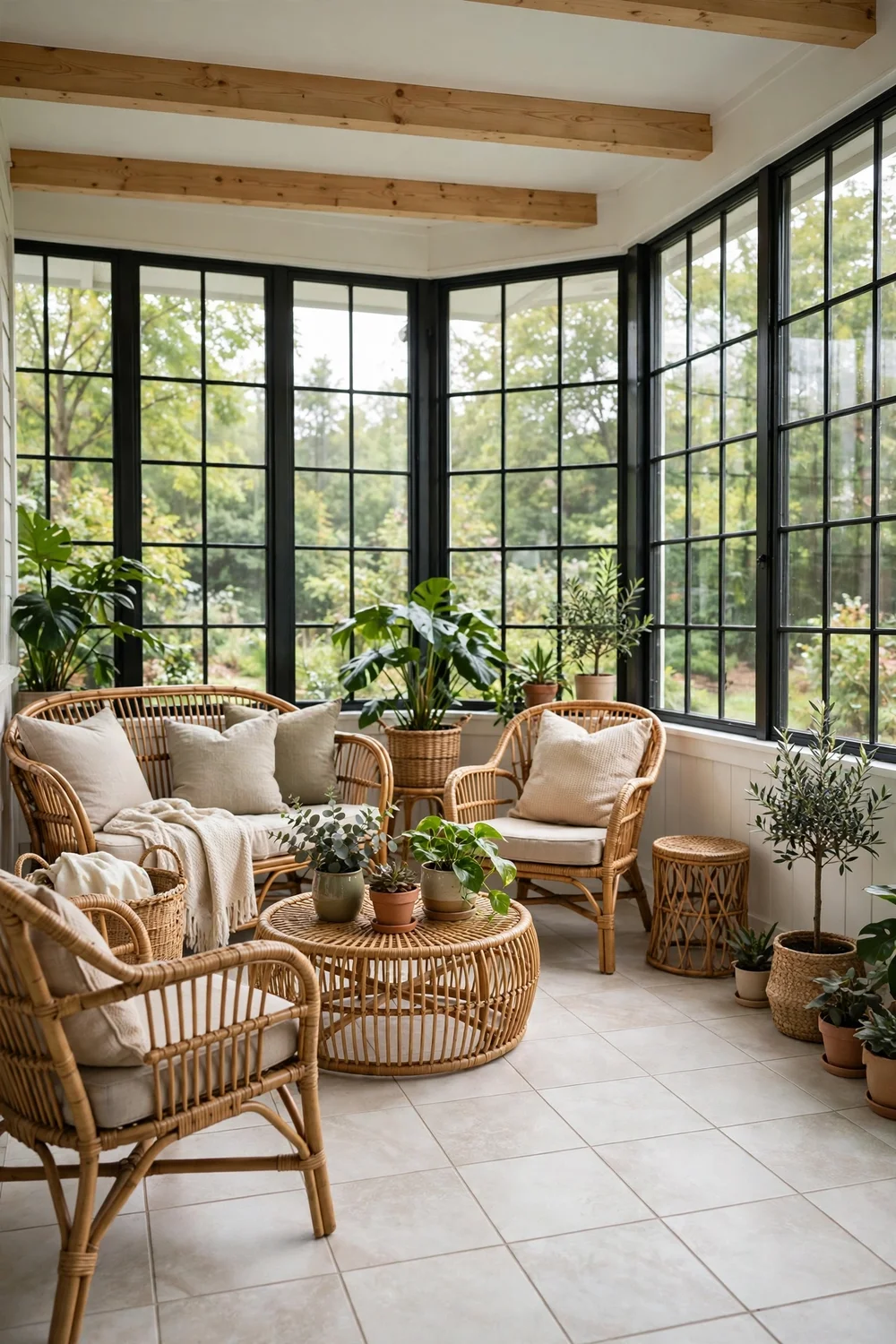
Enclosed porches need floors that handle moisture, temperature swings, and dirty shoes. Porcelain tile and sealed concrete both work; luxury vinyl plank rated for sunrooms is the easiest DIY option. Avoid solid hardwood and carpet, which warp and mildew. If budget is tight, paint existing concrete with porch and floor enamel as a stopgap.
Try this: choose grout one shade darker than the tile to hide dirt.
Cost: $$$· Difficulty: moderate · Time: 1-2 days
14. Potting station corner

Dedicate one corner to a potting bench with open shelving for soil, pots, and tools. A stainless or cedar bench wipes clean and handles water. Mount a small pegboard above for hand tools. The sun porch’s light makes it the ideal spot for starting seeds in late winter, weeks before the garden is ready.
Try this: add a clip-on grow light for seed starting in February and March.
Cost: $$· Difficulty: easy · Time: 3 hours
15. Dining setup for two seasons
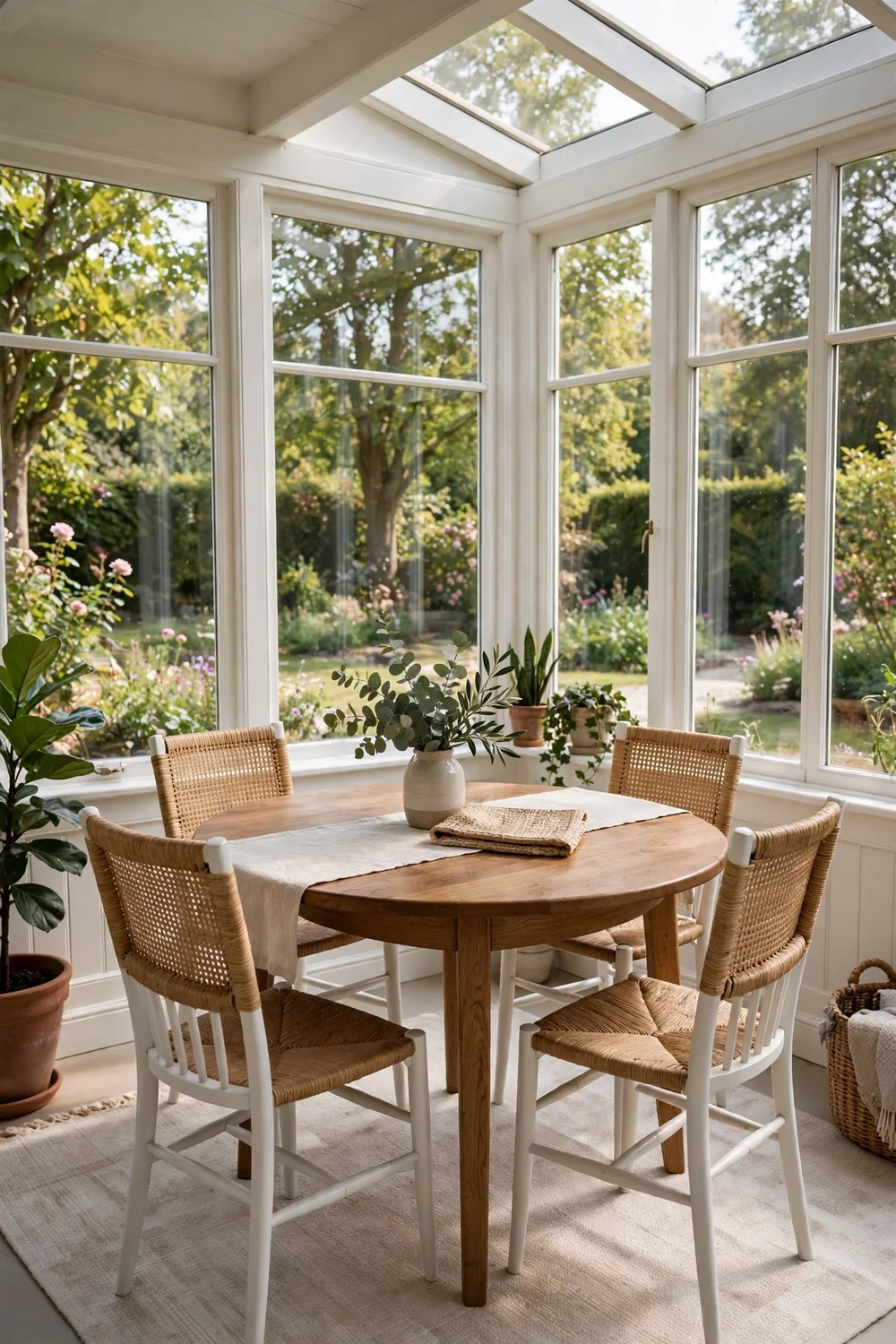
A 48-inch round dining table with four chairs makes the sun porch a three-season dining room. Choose a glass or light wood top to keep sight lines open. Add washable placemats and a low centerpiece that does not block views across the table. In winter, the same table becomes a puzzle or craft station.
Try this: felt pads under every chair leg protect tile and vinyl floors.
Cost: $$$· Difficulty: easy · Time: 1 hour
16. Fireplace or stove nook

An electric fireplace or a small pellet stove extends the porch season deep into fall. Electric units need only an outlet and give real warmth for a 200-square-foot space. Keep 3 feet of clearance from curtains and furniture, and never use unvented fuel-burning heaters indoors. The flicker alone makes the room feel cozy on gray days.
Try this: choose a unit with a thermostat so it cycles instead of running constantly.
Cost: $$$· Difficulty: easy · Time: 1 hour
17. Kids’ play corner

A low table, washable rug, and toy storage turn one end of the porch into a play zone with a view. Choose furniture with rounded edges and anchor bookcases to the wall. The natural light makes it a cheerful spot for art projects. Keep one cabinet with a childproof latch for paints and small supplies.
Try this: a small easel facing the windows invites nature drawing.
Cost: $$· Difficulty: easy · Time: 2 hours
18. Home office with a view

A slim desk facing the windows makes the sun porch the best home office in the house. Position the monitor perpendicular to the glass to cut glare, and add a sheer shade behind you for video calls. A laptop, a comfortable chair, and a small plant are all you need. The daylight beats any office lighting for afternoon energy.
Try this: run cables along the baseboard with adhesive clips for a clean look.
Cost: $$$· Difficulty: easy · Time: 2 hours
19. Four-season insulation upgrade
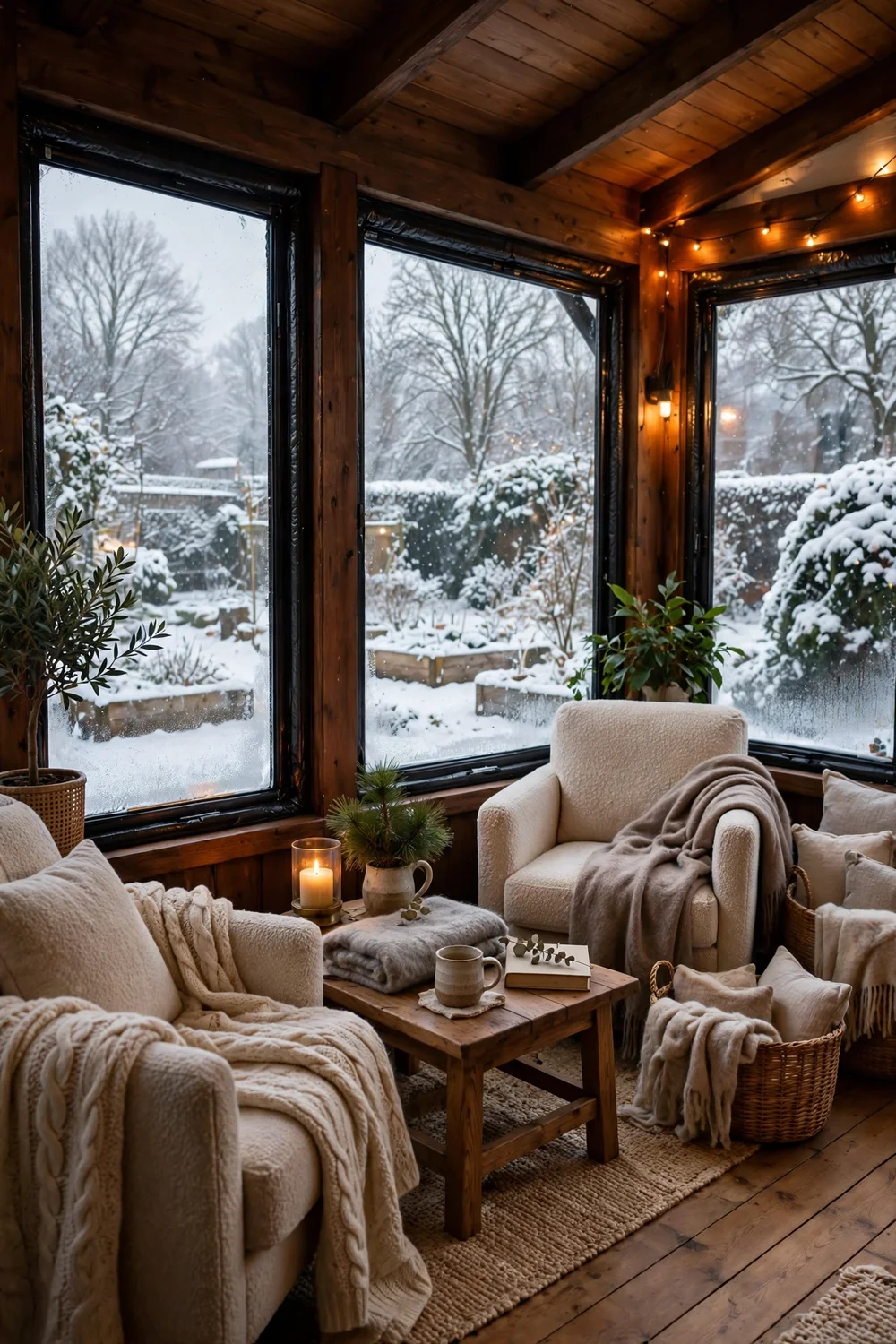
To use the porch year-round, upgrade in this order: seal air gaps with caulk and weatherstripping, add insulated window coverings, install a dedicated heat source, and insulate the floor from below if accessible. Each step extends the season further. Check local building codes before adding permanent heat; many areas classify heated porches as living space with permit requirements.
Try this: a thermal camera rental ($50) shows exactly where heat escapes.
Cost: $$$· Difficulty: moderate to pro · Time: 1-3 days
20. String lights and lanterns finale
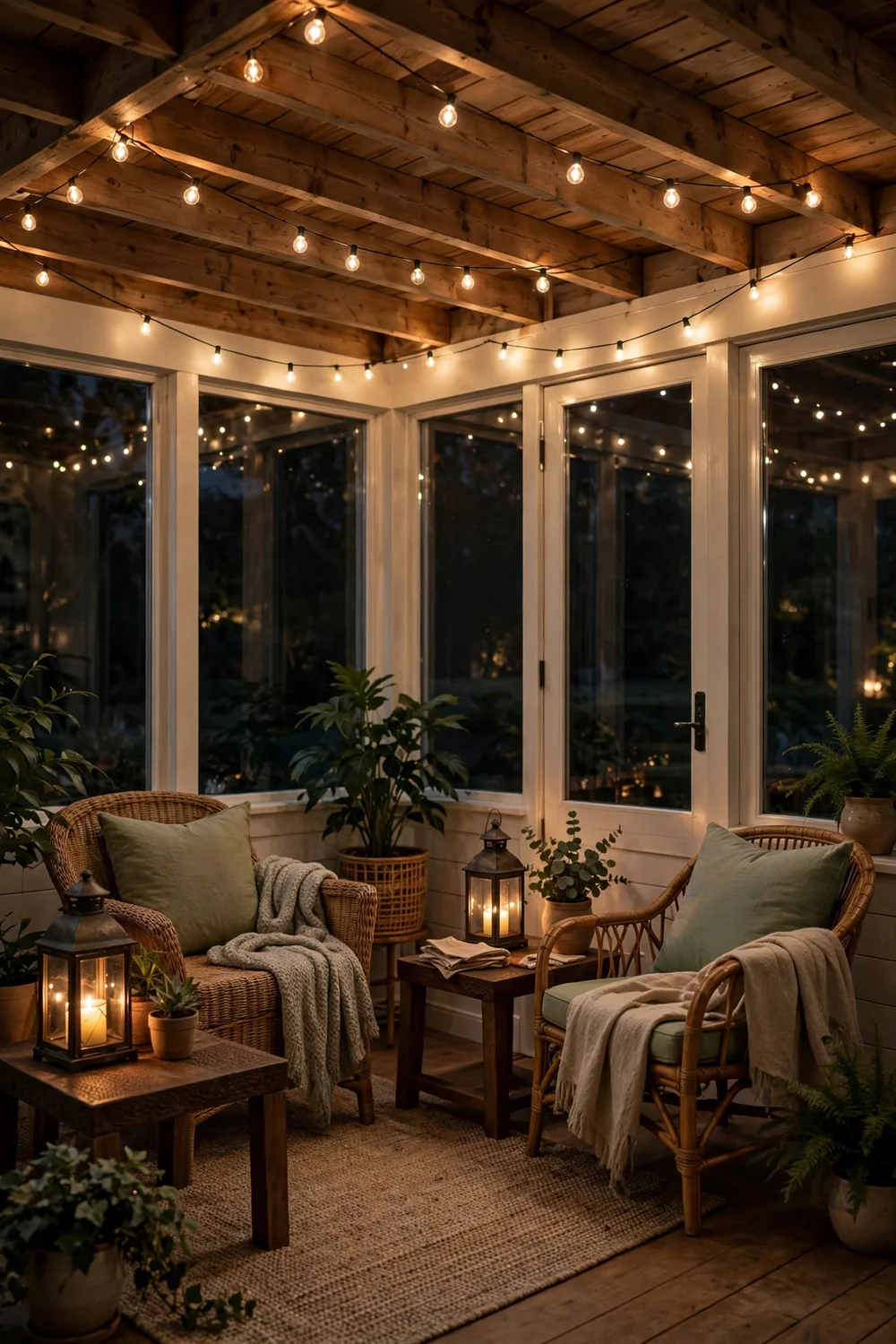
Finish with warm string lights draped along the ceiling beams and a few lanterns on side tables. The glow turns the glass walls into mirrors at night, doubling the light. Use outdoor-rated strands even indoors on a porch, since humidity is higher. Put them on a timer so the porch welcomes you every evening without a thought.
Try this: warm white (2700K) flatters skin tones and plants best.
Cost: $$· Difficulty: easy · Time: 1 hour
How to plan your sun porch layout
Divide the porch into zones before buying anything: a main seating zone facing the best view, plus one secondary use like dining, reading, or plants. Leave 30 inches of clear walkway from the house door to the yard door; everything else arranges around that path. Measure twice, then choose furniture scaled to the room. Oversized sectionals swallow small porches, while too-small pieces look lost. One rug per zone keeps each area feeling deliberate.
Mistakes to avoid in enclosed porches
The top mistake is using indoor-only furniture and fabrics. Sun bleaches standard upholstery in one season and humidity warps particle board. Buy outdoor-rated or sunroom-rated pieces from the start. Second, ignoring ventilation: a sealed glass box overheats fast, so make sure windows open or add a fan. Third, skipping window treatments; without sheers or shades, afternoon sun makes the room unusable. Finally, check permits before adding heat or electrical circuits. An unpermitted conversion can cause problems at resale or with insurance.
Sun porch safety notes
Glass safety comes first: if children play on the porch, confirm that low windows and glass doors use tempered or laminated safety glass, which crumbles instead of shattering into shards. Older porches may have plain annealed glass worth upgrading. Ventilation matters for health as well as comfort; never run fuel-burning heaters without proper venting, and keep a carbon monoxide detector on any porch with a stove or fireplace. Anchor tall bookcases and heavy planters to the wall for tip-over safety. Before any structural change or new electrical circuit, check local permit requirements with your city or county building department. For energy-efficient window guidance, the U.S. Department of Energy covers window attachments and efficiency at energy.gov/energysaver.
Sun porch upgrades compared
For seasonal porch styling, these front porch decorating ideas adapt well to enclosed spaces, and these screened-in porch ideas share the same light-filled DNA. If plants are your focus, pair the porch with these vertical garden ideas for the wall beside the door.
Frequently asked questions
How do you keep an enclosed sun porch cool in summer?
Combine shade, airflow, and ventilation: sheer curtains or shades on the sunniest glass, a ceiling fan moving air across seating, and operable windows or screens for cross-breeze. Light-colored flooring and rugs reflect heat instead of absorbing it. On the hottest days, close shades during peak sun hours and reopen in the evening.
What furniture is best for a sun porch?
Rattan or wicker with aluminum frames, teak, powder-coated aluminum, and outdoor-rated upholstery handle sun and humidity best. Avoid standard indoor furniture: UV fades fabrics in one season and moisture warps particle board. Solution-dyed acrylic cushions resist fading far longer than printed cotton.
Can you use an enclosed porch in winter?
A basic enclosed porch works on sunny winter days but gets cold after dark. For real winter use, seal air leaks, add insulated window coverings, and install a dedicated heat source like an electric fireplace or mini-split. Check local codes first; adding permanent heat can reclassify the space and trigger permit requirements.
Do I need a permit to enclose or convert a porch?
Often yes. Rules vary by city and county, but structural changes, new electrical circuits, and conversions to heated living space usually need permits and inspections. Call your local building department before starting work. Unpermitted conversions can cause insurance and resale problems later.
What flooring is best for an enclosed sun porch?
Porcelain tile, sealed concrete, and luxury vinyl plank rated for sunrooms all handle moisture and temperature swings. Avoid solid hardwood, laminate, and carpet, which warp, buckle, or mildew in porch conditions. If budget is tight, porch and floor enamel over existing concrete works as a stopgap.
How do I stop my sun porch furniture from fading?
Use UV-resistant fabrics like solution-dyed acrylic, add sheer curtains or UV window film to cut direct sun, and rotate cushions monthly for even exposure. Store throw pillows indoors during the harshest summer weeks if the porch gets all-day direct sun.
Start this weekend with the two cheapest wins: sheer curtains for light control and a layered lighting plan for evenings. Those two changes alone will pull you onto the porch daily. Then let the room earn its upgrades one season at a time.


