


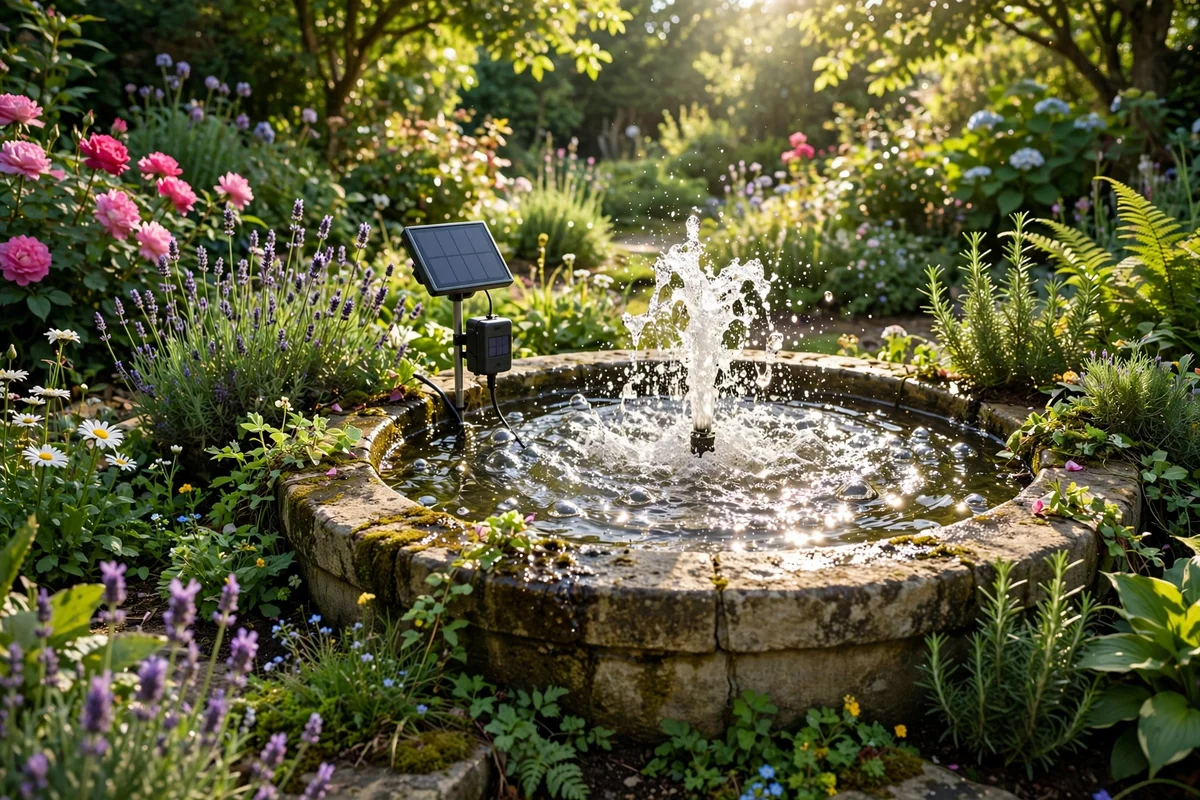
A water fountain changes a garden instantly: the sound covers traffic noise, birds show up within days, and the whole space feels calmer. The catch has always been the wiring. Running power to a fountain means trenching cable, hiring an electrician, and paying for the electricity forever.
Solar fixes the catch. A small solar pump drops into any watertight container, the panel drinks the sun, and water moves with no outlet and no power bill. These 9 DIY solar water fountain ideas work with pots, barrels, birdbaths, and ponds you may already own. Every build takes under two hours.
- Solar pumps only run in direct sun. Place the panel where it gets 6 or more hours of unfiltered sunlight.
- Match the spray nozzle to the basin size. A wide spray in a small bowl throws water out and empties the reservoir.
- Moving water resists mosquitoes, but still add Bti dunks and scrub the basin regularly.
- Top off the water every day or two in summer. Evaporation and splashing drain small fountains fast.
- Store the pump dry over winter. Freezing water cracks pump housings.
1. Painted planter-pot fountain
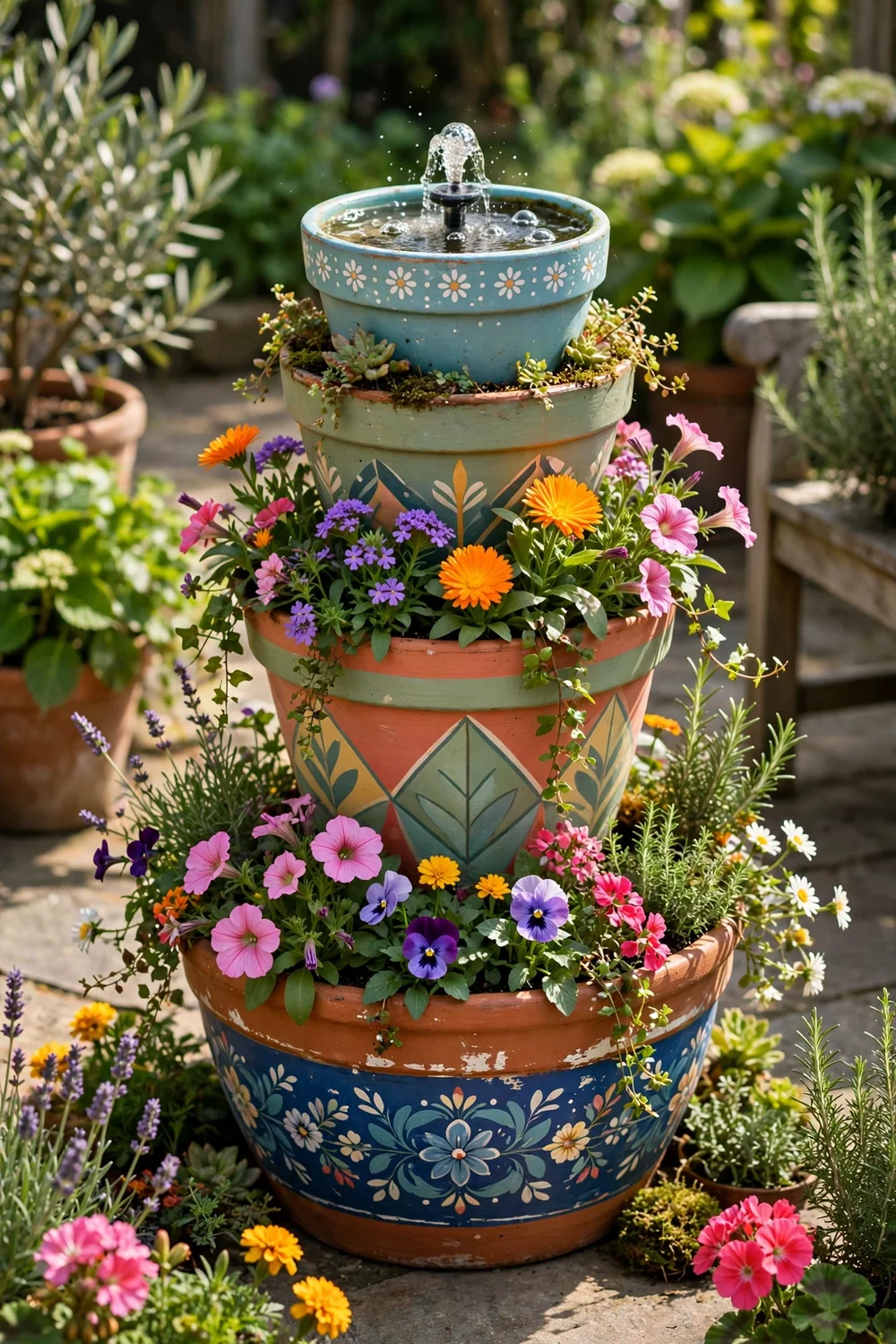
This build doubles as a flower planter. Seal the drainage hole of a small terracotta pot, nest it inside a larger pot ringed with potting soil and flowers, and drop a solar fountain insert into the top pot’s water. The flowers frame the bubbling water, and the whole piece sits anywhere the sun reaches. Paint the pots first with outdoor craft paint and seal them so the color survives the season. Trailing flowers like alyssum or lobelia soften the edges nicely.
Try this: set the small pot on an inverted nursery pot inside the big one to get the height right without wasting soil.
Cost: $$. Difficulty: Easy, one hour.
2. Solar birdbath bubbler
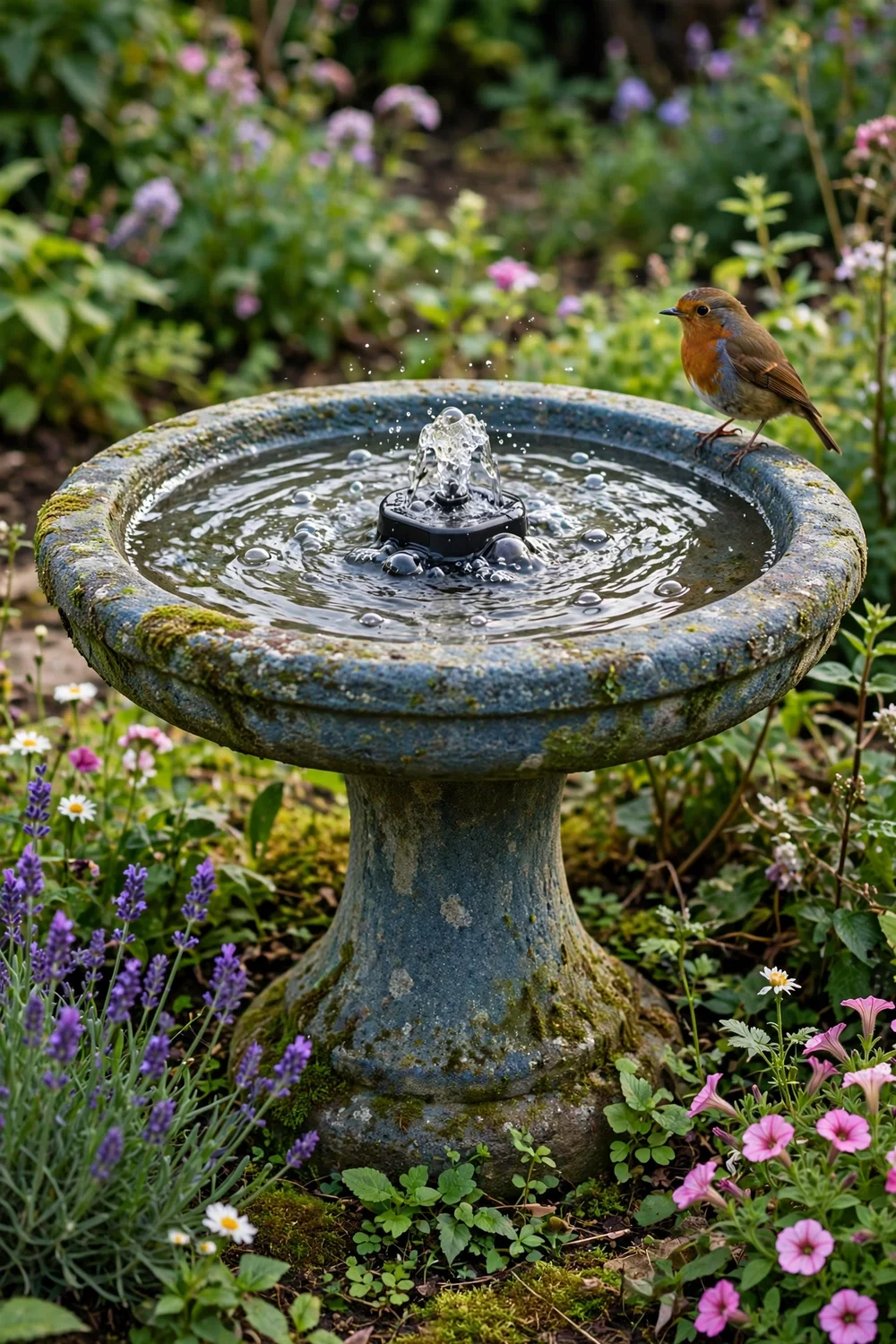
A birdbath becomes a fountain with one purchase: a floating solar pump. Set the pump in the center of the bowl, anchor it with a few pebbles so it does not drift, and sunlight does the rest. Birds prefer moving water and visit far more often, and the gentle bubbling keeps the water fresher than a still bath. Choose a birdbath at least 18 inches wide so the spray lands back in the bowl instead of soaking the ground.
Try this: use the smallest spray nozzle. Birdbaths are shallow, and a tall jet empties them in an afternoon.
Cost: $$. Difficulty: Easy, 10 minutes.
3. Galvanized planter fountain
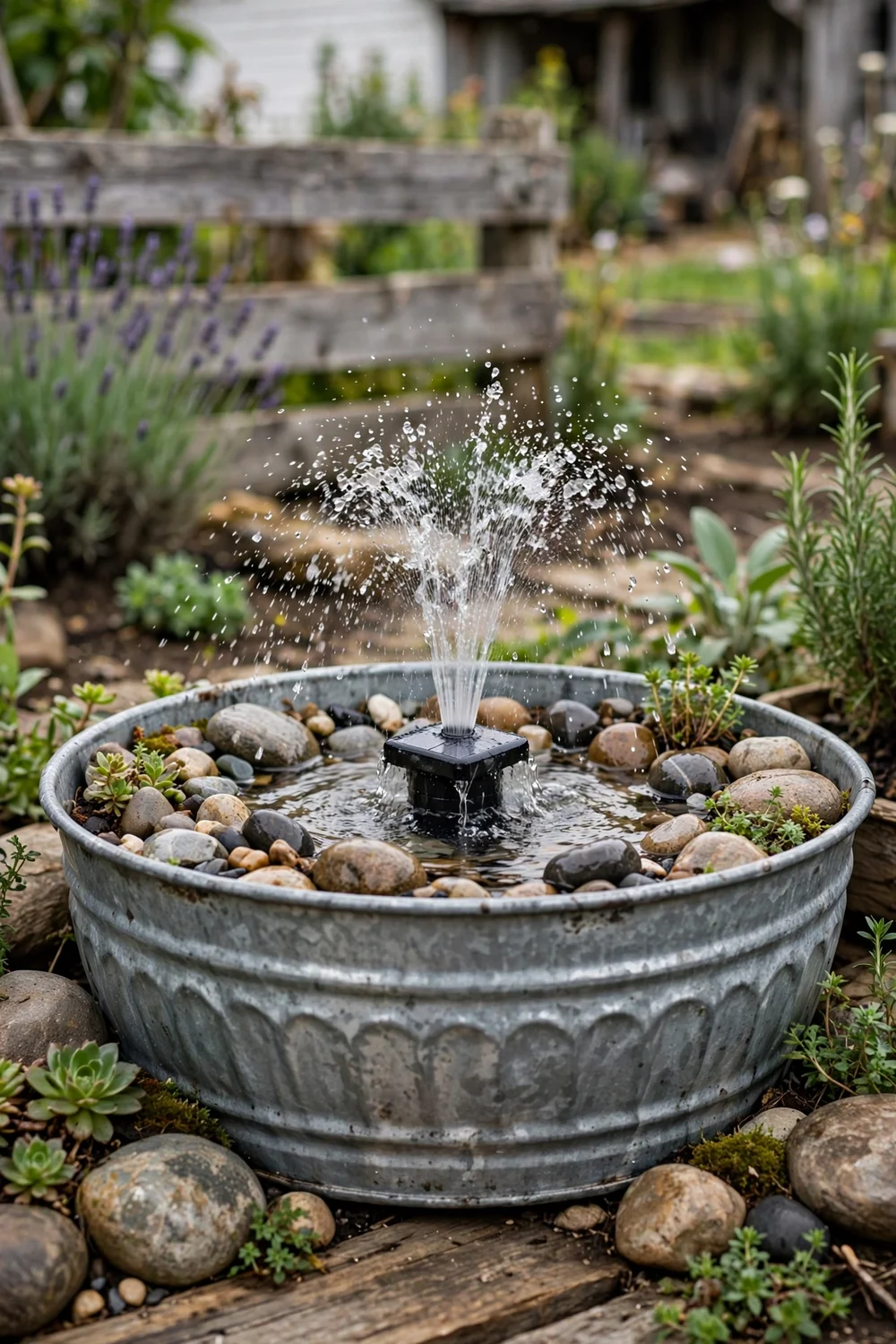
A watertight galvanized planter bowl, a solar pump, and a few decorative stones make a fountain in under 15 minutes. Fill the bowl, center the pump, arrange stones to hide the base, and set the whole thing where it gets full sun. The metal look suits modern and farmhouse gardens alike. Refill daily in hot weather, since wide shallow bowls evaporate fast, and bring the bowl in before freezing temperatures dent or split the metal.
Try this: tuck a few water-tolerant plants like dwarf papyrus around the pump to soften the metal edges.
Cost: $$. Difficulty: Easy, 15 minutes.
4. Tiered terracotta cascade
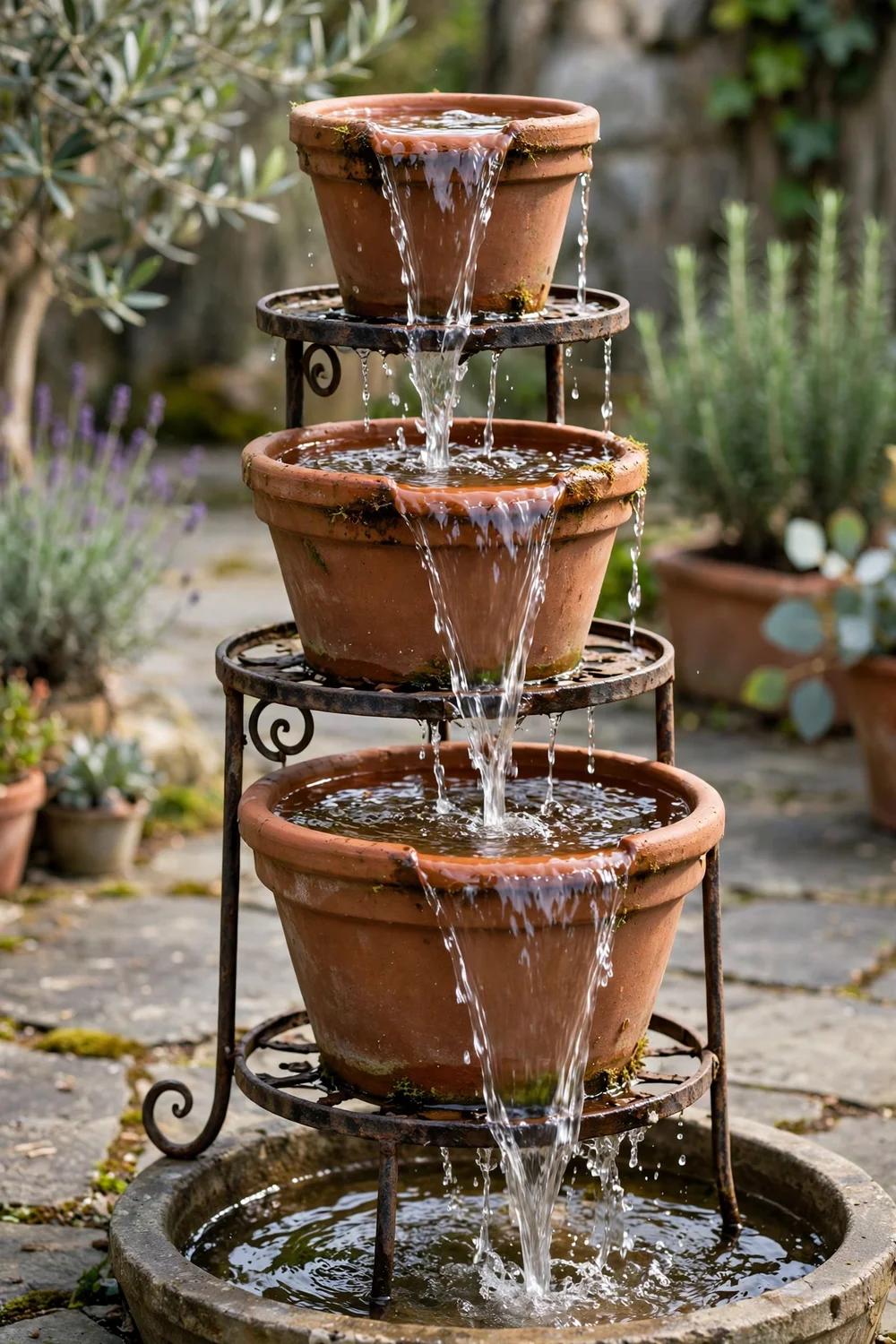
Stack three terracotta pots in decreasing sizes, thread the pump’s tube up through the drainage holes, and water cascades from the top pot down through each tier. The sound is richer than a single bubbler because water falls twice before it lands. Seal each pot’s drainage hole around the tube with silicone so water flows over the rims instead of leaking down the sides. This build looks best slightly raised on a patio table or plant stand.
Try this: offset each pot slightly to one side so the falling water is visible from the front.
Cost: $$. Difficulty: Moderate, two hours.
5. Watering can waterfall
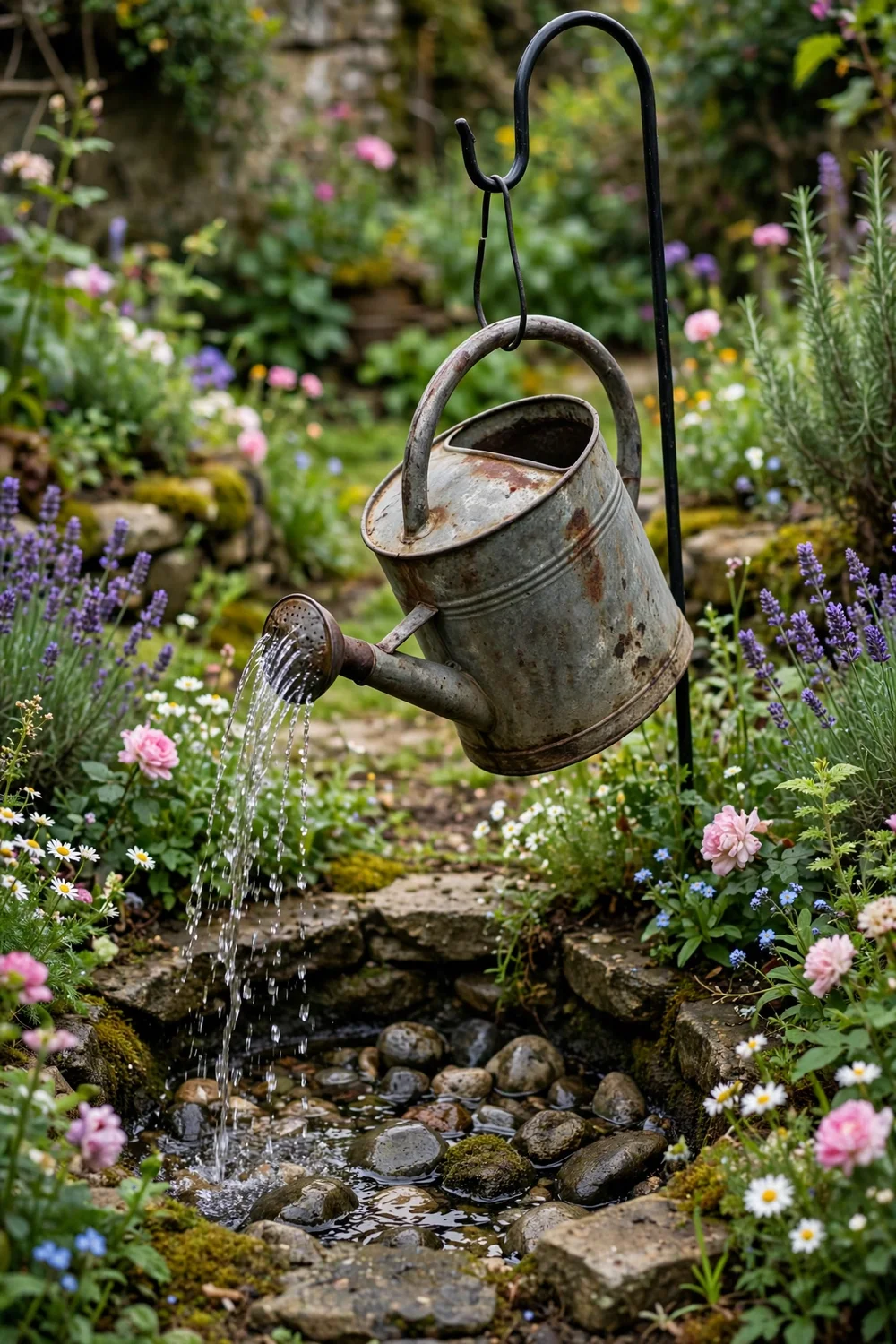
Hang an old metal watering can from a shepherd’s hook or tree branch over a stone-filled basin, run the solar pump’s tube up through the spout, and water appears to pour endlessly from the can. It is the most whimsical build on this list and a strong favorite for cottage gardens. Drill a small hole near the can’s base for the tube, seal it with silicone, and keep the basin wide enough to catch the full stream.
Try this: use a can with a rose head removed so the stream is one clean pour instead of a sprinkle.
Cost: $$. Difficulty: Easy to moderate, one hour.
6. Rock basin bubbler
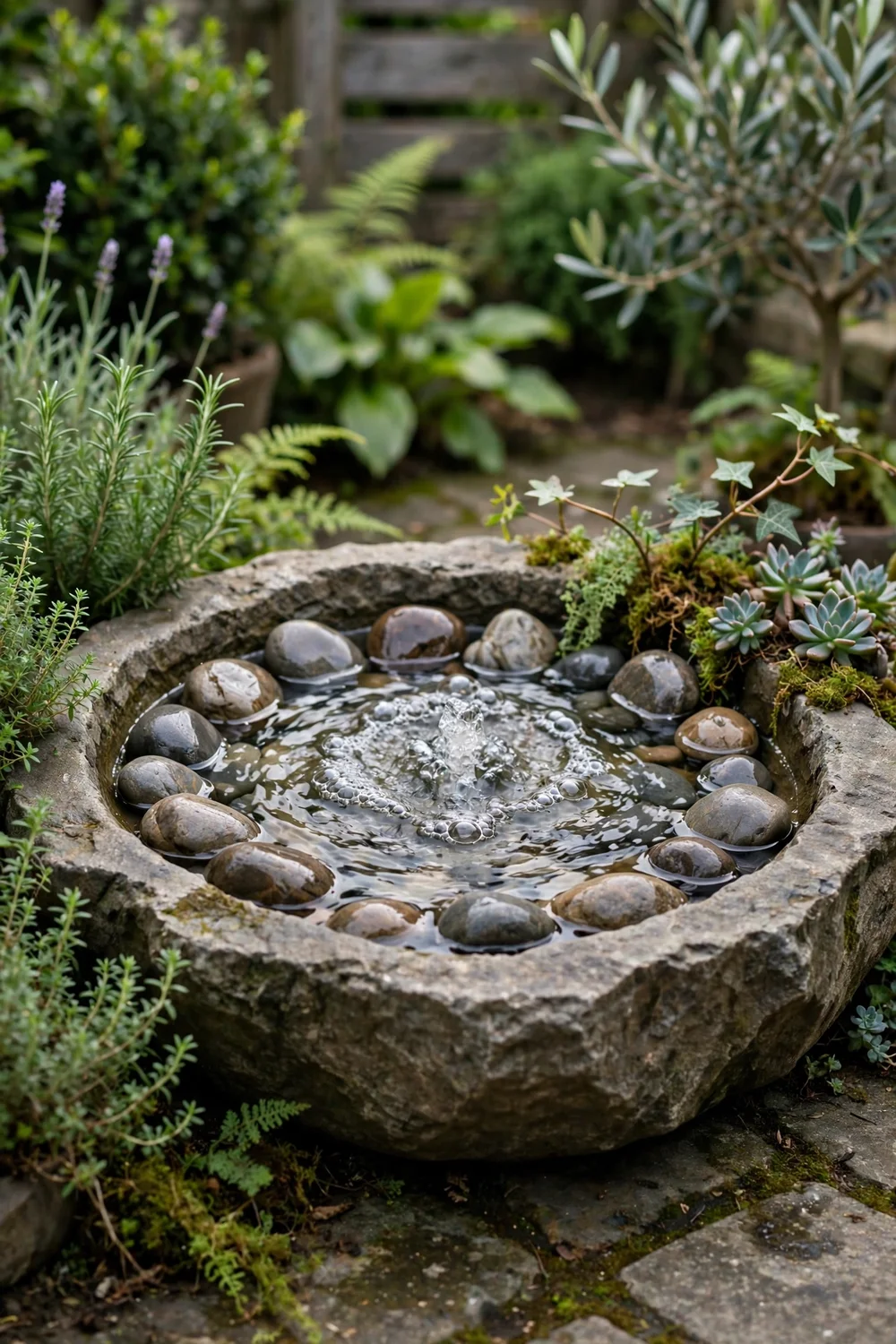
A hollowed stone bowl or a wide ceramic bowl filled with smooth river rocks makes the most natural-looking fountain here. Nestle the solar pump among the rocks so only the bubbling water shows, and the rocks hide the hardware completely. The low profile suits Japanese-inspired gardens and small patios. Keep the water level just above the rocks: too deep and the bubbling looks weak, too shallow and the pump sucks air.
Try this: add one upright stone behind the pump as a backdrop. The water reads better against a dark stone.
Cost: $$. Difficulty: Easy, 30 minutes.
7. Solar pond with floating fountain
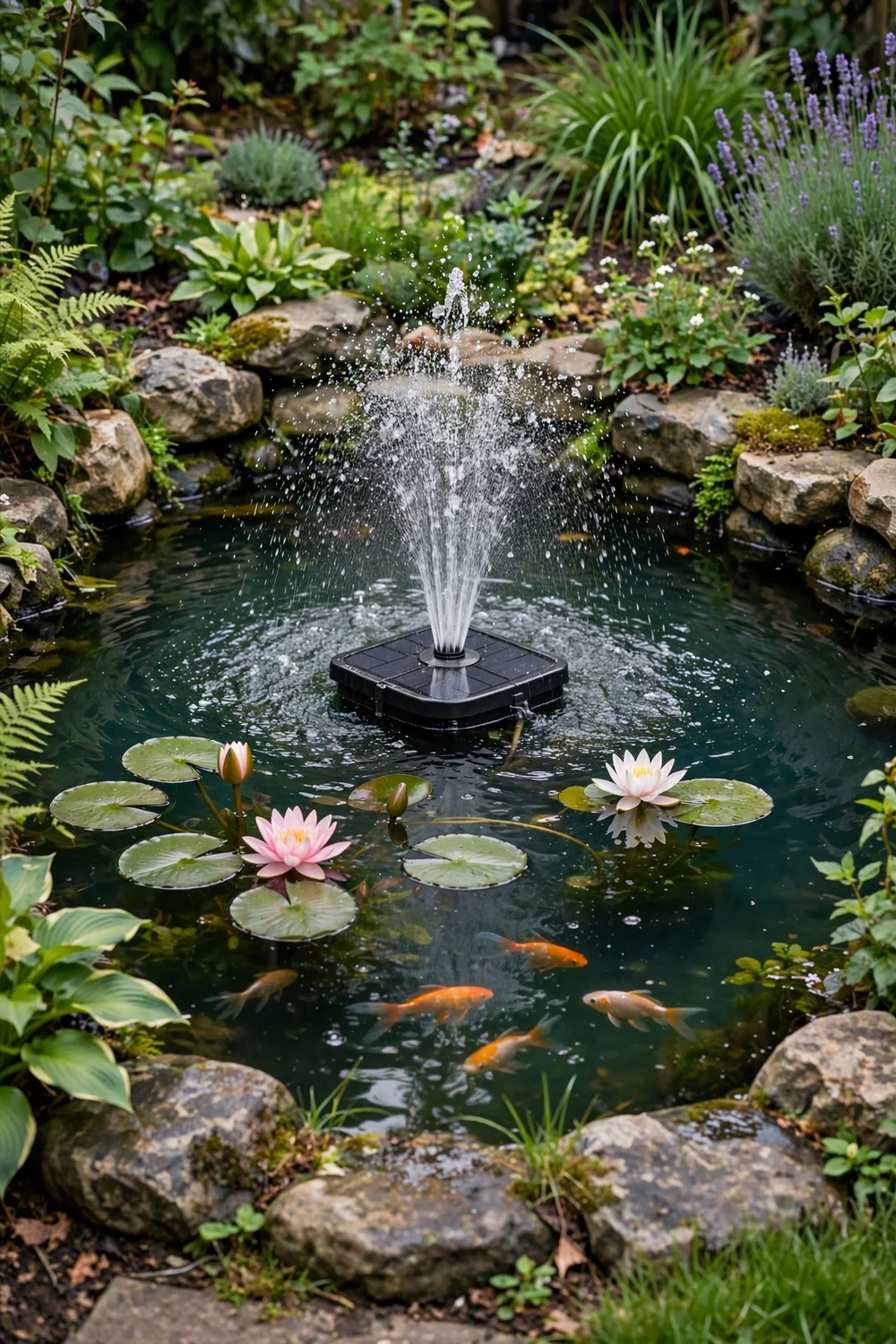
For bigger ambitions, dig a shallow pond, line it with flexible pond liner, and float a solar fountain on the surface. A 6-foot pond costs under $200 in liner and edging stone, and the floating fountain needs no installation at all. Add a few goldfish or mosquito fish and they eat larvae while the moving water discourages egg-laying. Drain it partially and remove the pump before winter in cold climates.
Try this: anchor the floating fountain with a fishing line tied to a submerged brick so wind does not push it into the shallows.
Cost: $$$. Difficulty: Moderate, one weekend.
8. Stacked barrel waterfall
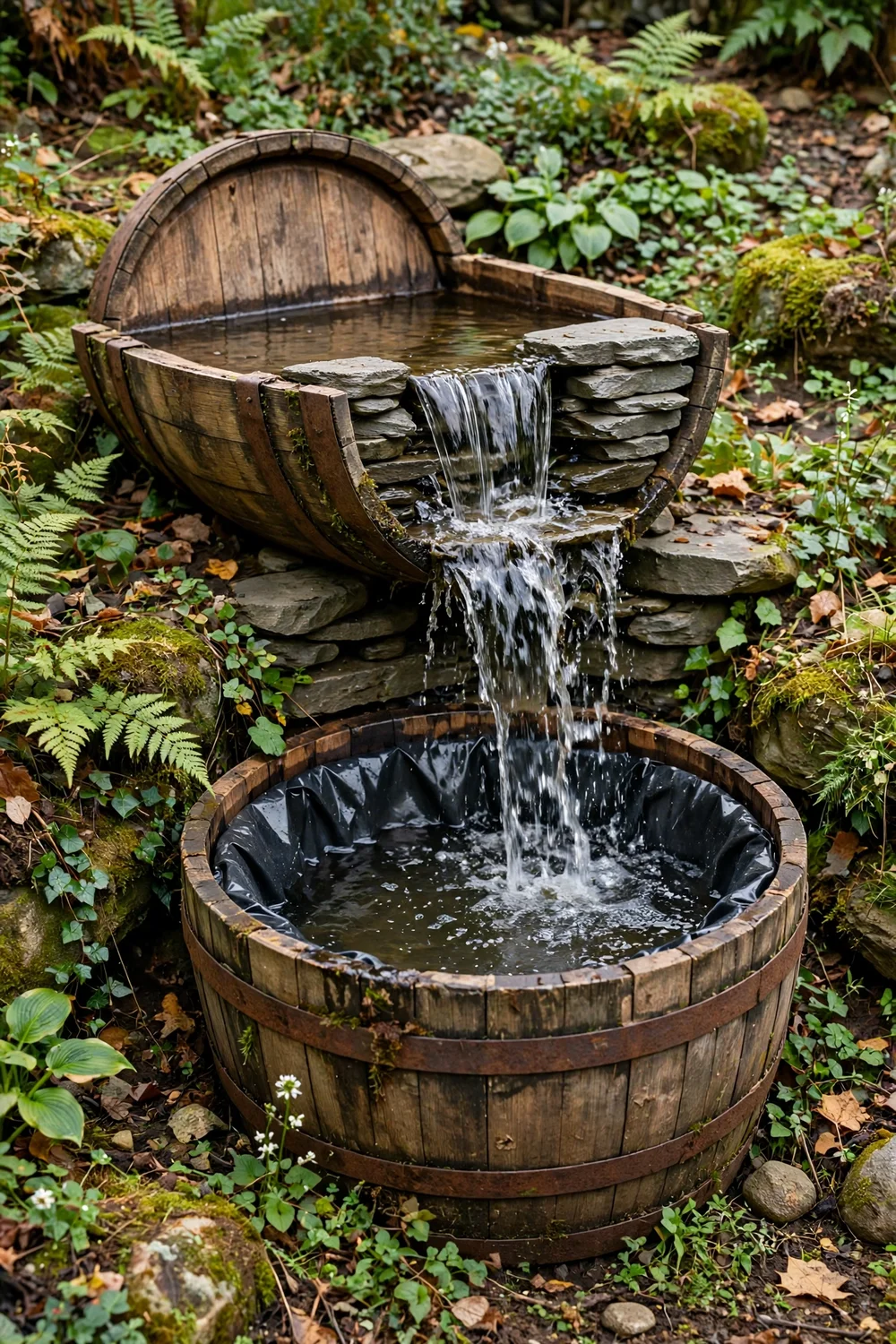
Two half-barrels or whiskey barrels stacked with a spillway between them make a rustic waterfall. The pump sits in the lower barrel and pushes water up to the top, where it sheets over a flat stone lip back down. Line both barrels with pond liner so the wood never stays soaked, and level the stack carefully: an uneven spillway pours to one side. This is the loudest, most dramatic fountain on the list.
Try this: chisel a shallow notch in the spillway stone so the water sheets evenly across the full width.
Cost: $$$. Difficulty: Moderate, half a day.
9. Mini bowl fountain
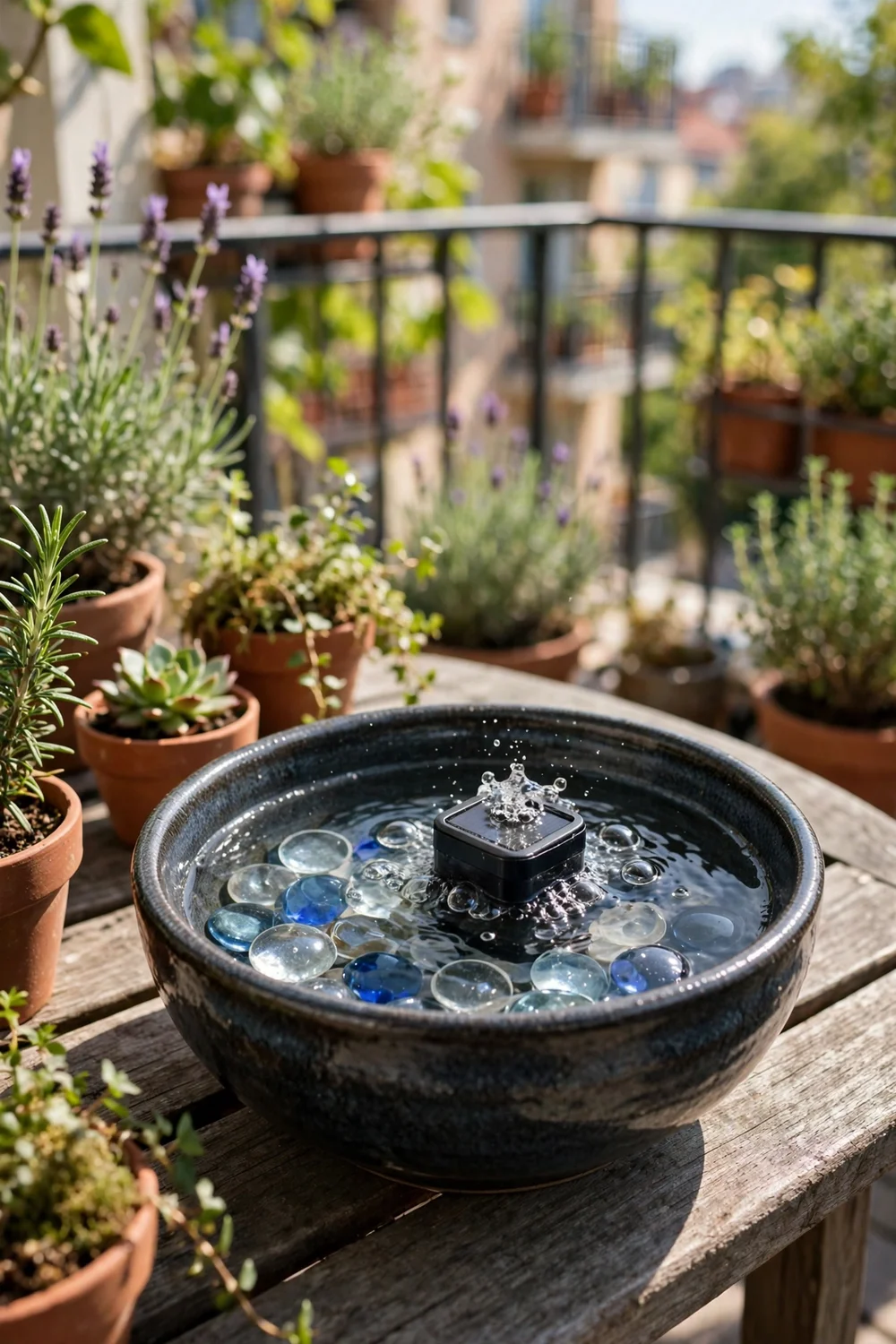
A 12-inch ceramic bowl on a patio table is the smallest viable solar fountain, and it still delivers the sound. Choose a glazed bowl that holds water without seeping, add a mini solar pump and a handful of glass pebbles, and set it where the table gets sun. It is ideal for balconies and renters because the whole thing moves in one trip. Refill it daily: a bowl this small can evaporate to pump-damaging levels in one hot afternoon.
Try this: pick a bowl in a dark glaze. Dark water shows the bubbling movement better than light colors.
Cost: $$. Difficulty: Easy, 15 minutes.
Solar water fountains compared
Choosing the right solar pump
Solar fountain kits range from tiny floating discs to panel-and-pump sets with battery backup. For a birdbath or bowl, a basic floating pump is enough. For cascades and waterfalls, buy a kit with a separate panel you can position for maximum sun while the fountain sits in partial shade. Battery backup matters if you want the fountain running when clouds pass: without it, the water stops the moment shade hits the panel. Check the pump’s lift height against your build, since a weak pump cannot push water to the top of a tiered cascade.
A fountain makes a seating area feel complete. These garden nook seating ideas pair a quiet corner with the sound of water.
Water safety: mosquitoes, pets, and kids
Any standing water can breed mosquitoes, so keep the pump running in daylight, scrub the basin every week or two, and add Bti mosquito dunks for backup. Penn State Extension recommends Bti dunks for small water features that cannot be drained, noting they target larvae without harming pollinators, fish, or birds; see their watershed-friendly mosquito control guide for details. Choose a basin wide and stable enough that pets cannot tip it, and supervise small children around any water feature, even a shallow bowl. The EPA’s WaterSense program also offers tips for using water wisely outdoors.
For the surrounding space, these backyard patio design layouts help you place the fountain where you will actually hear it.
Solar fountain FAQs
Do solar fountains work on cloudy days?
Weakly or not at all. Basic solar pumps run only in direct sun and stop when clouds cover the panel. Kits with battery backup store charge and keep running through cloudy spells and into the evening. If your garden gets less than 6 hours of direct sun, choose a kit with a separate panel you can mount in the sunniest spot.
How long do solar fountain pumps last?
Most last two to four seasons with basic care. The pump itself is simple, but mineral buildup and algae clog the intake. Rinse the filter and impeller monthly, keep the panel clean, and store the pump dry indoors over winter to get the longest life.
Will a solar fountain attract mosquitoes?
Moving water discourages egg-laying, but the pump stops at night, so mosquitoes can still use the basin. Scrub the container every week or two to remove the film larvae feed on, and drop in a Bti mosquito dunk for the weeks you cannot tend it. Both steps together keep fountains nearly mosquito-free.
Can I leave a solar fountain out in winter?
Remove the pump and store it dry indoors before the first freeze. Ice cracks pump housings and splits ceramic and terracotta containers. The basin itself can stay out if it drains fully, but glazed and clay pieces last longer stored under cover.
How much sun does a solar fountain need?
At least 6 hours of direct, unfiltered sunlight on the panel for reliable daytime operation. Dappled shade under trees starves the panel even when the garden looks bright. If the fountain must sit in shade, buy a kit with a separate panel on a long cord and mount the panel in the sun.
Are solar fountains safe for pets?
Generally yes, but choose a wide, heavy basin that a dog cannot knock over, and keep the water clean. Some dogs drink from fountains, so avoid algaecides and harsh cleaners in pet-accessible basins. Small birds and beneficial insects also use these fountains, which is part of their charm.
Start with a birdbath and a floating pump this weekend. Ten minutes of work buys you birdsong, moving water, and the calmest corner of the garden.
Compare solar fountains with 24 other options in this overview of water features for stunning garden design.


