


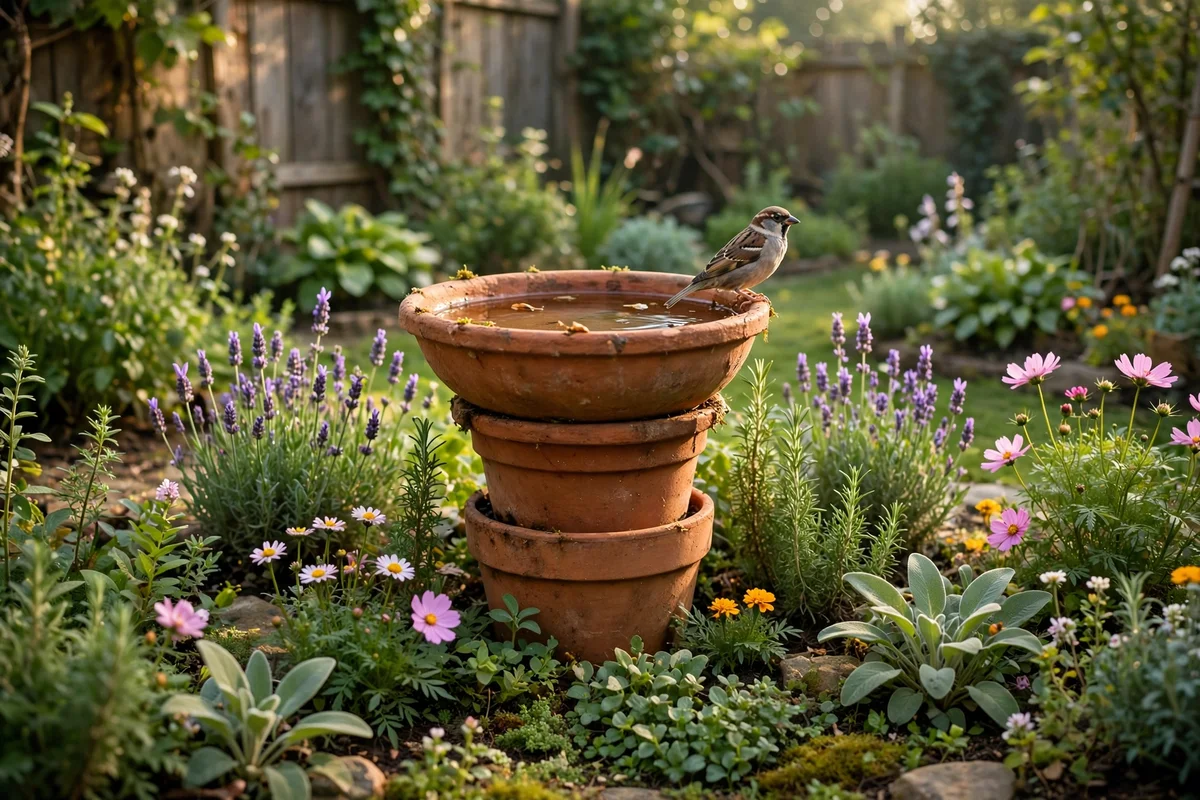
A bird bath changes a quiet yard into a busy little place. Birds need fresh water for drinking and for keeping their feathers clean, and once they find a safe spot they come back every day.
These 15 DIY bird bath ideas use things you may already own: terracotta pots, thrifted lamps, old chairs, and kitchen cast-offs. I built the terracotta tower in my own garden last spring and watched the first finch land on it within a week. Every idea below keeps the water shallow and safe, costs little, and can be finished in an afternoon.
• Keep bird bath water 1 to 2 inches deep, with a few stones for grip.
• Any shallow, easy-to-scrub container works: saucers, bowls, platters, lids.
• Rinse and scrub the bath every 2 to 3 days to keep water fresh.
• Place the bath where you can see it, with shrubs 10 to 15 feet away for cover.
• Never use containers that held chemicals, flaking paint, or sharp rusted metal.
1. Terracotta pot tower
Flip a large terracotta pot upside down and rest a wide plant saucer on top. The saucer becomes the basin, and the pot gives it sturdy height that cats cannot easily topple. Pick a saucer at least 14 inches wide so birds have room to splash.

Try this: Plug the saucer’s drainage hole with a dab of silicone sealant, then add two flat river stones so smaller birds can stand comfortably.
Cost: $$| Difficulty: Easy | Time: 30 minutes
2. Thrifted lamp base bath
Floor lamps with wide, stable bases make wonderful pedestals. Remove the shade and harp, then top the base with a shallow ceramic bowl or pie dish. A quick scrub and a coat of exterior sealant keeps an old brass base looking tidy through rain and sun.
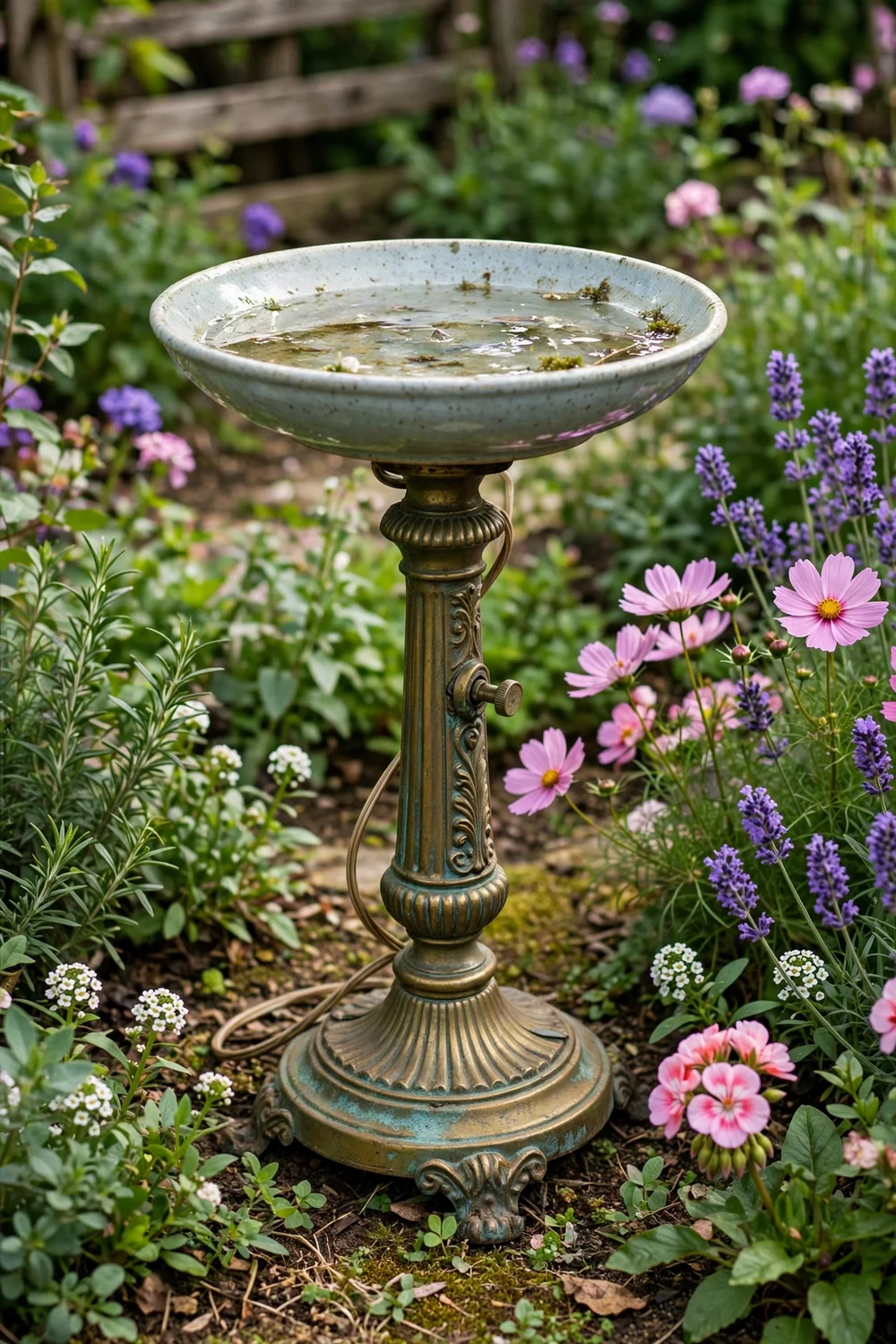
Try this: Fill the hollow lamp tube with dry sand before setting the bowl on top. The added weight keeps the whole thing steady in wind.
Cost: $| Difficulty: Easy | Time: 45 minutes
3. Mosaic bowl bath
A chipped mixing bowl or shallow serving dish gets a second life with a ring of broken tile or glass gems around the rim. Glue the pieces with waterproof construction adhesive and let it cure fully before filling. The texture doubles as a grippy edge for small feet.

Try this: Use pre-cut mosaic tiles instead of breaking your own. You get the same look with no sharp shards to sweep up.
Cost: $$| Difficulty: Easy | Time: 2 hours plus curing
4. Hanging teacup bath
Thread a sturdy cord through a thrifted teacup and saucer and hang it from a shepherd’s hook or tree branch. It holds only a sip of water, which means you will refresh it daily, but small birds like wrens and chickadees prefer these pocket-sized baths to big open basins.

Try this: Hang two or three teacups at different heights. The variety brings in birds that avoid ground-level water.
Cost: $| Difficulty: Easy | Time: 20 minutes
5. Tomato cage bath
A tomato cage flipped point-side down becomes an instant pedestal. Set a terra cotta saucer or shallow plastic dish in the wide end at the top. The open wire frame looks surprisingly neat once plants grow up around the legs.
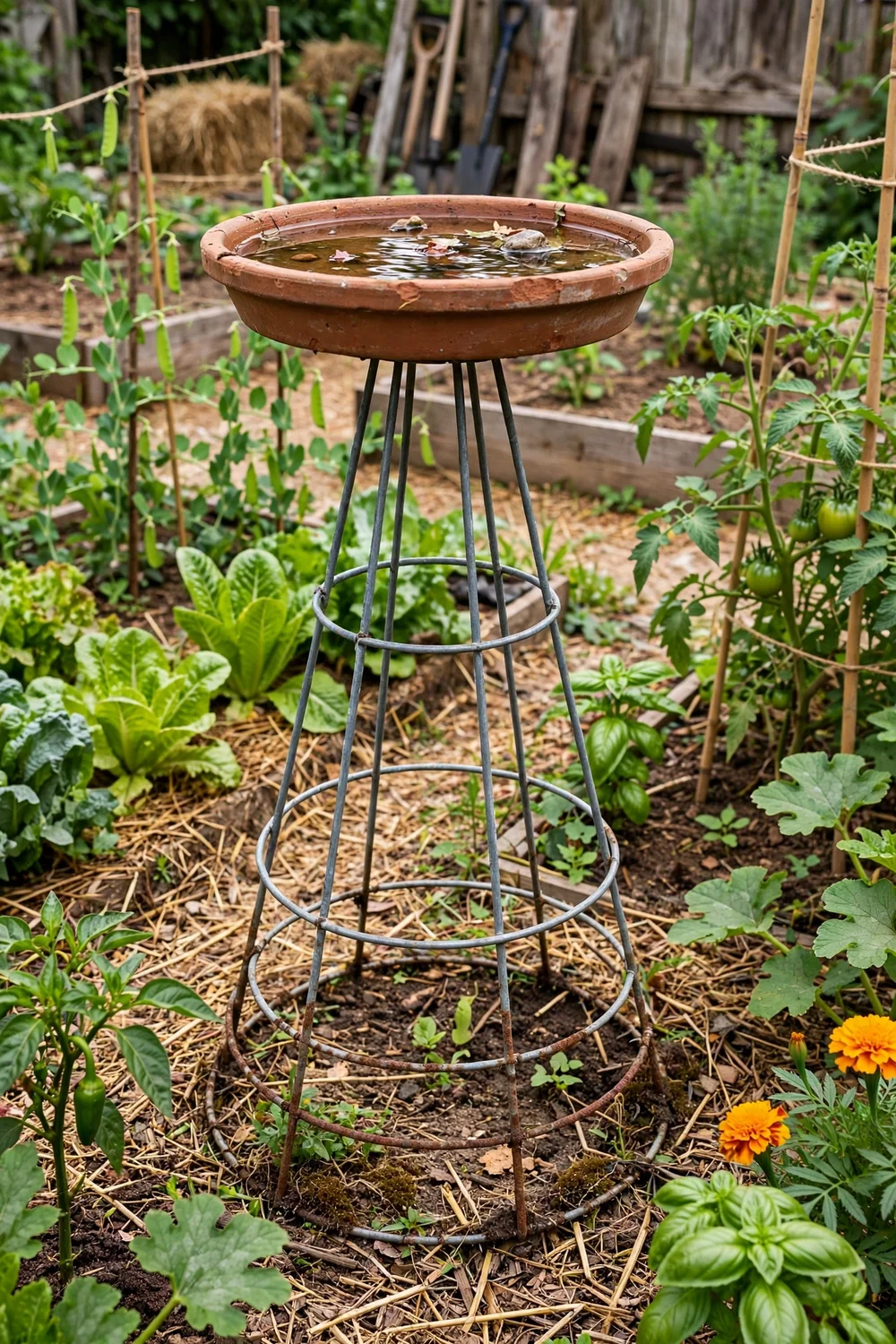
Try this: Zip-tie the saucer to the cage ring so a gusty afternoon cannot knock it sideways.
Cost: $| Difficulty: Easy | Time: 15 minutes
6. Stacked stone pedestal
Flat fieldstones or leftover pavers stacked into a short column make a pedestal that looks like it grew there. Mortar the joints or dry-stack them on a level base, then cap the column with a wide, shallow bowl. This is the most weatherproof option on the list.
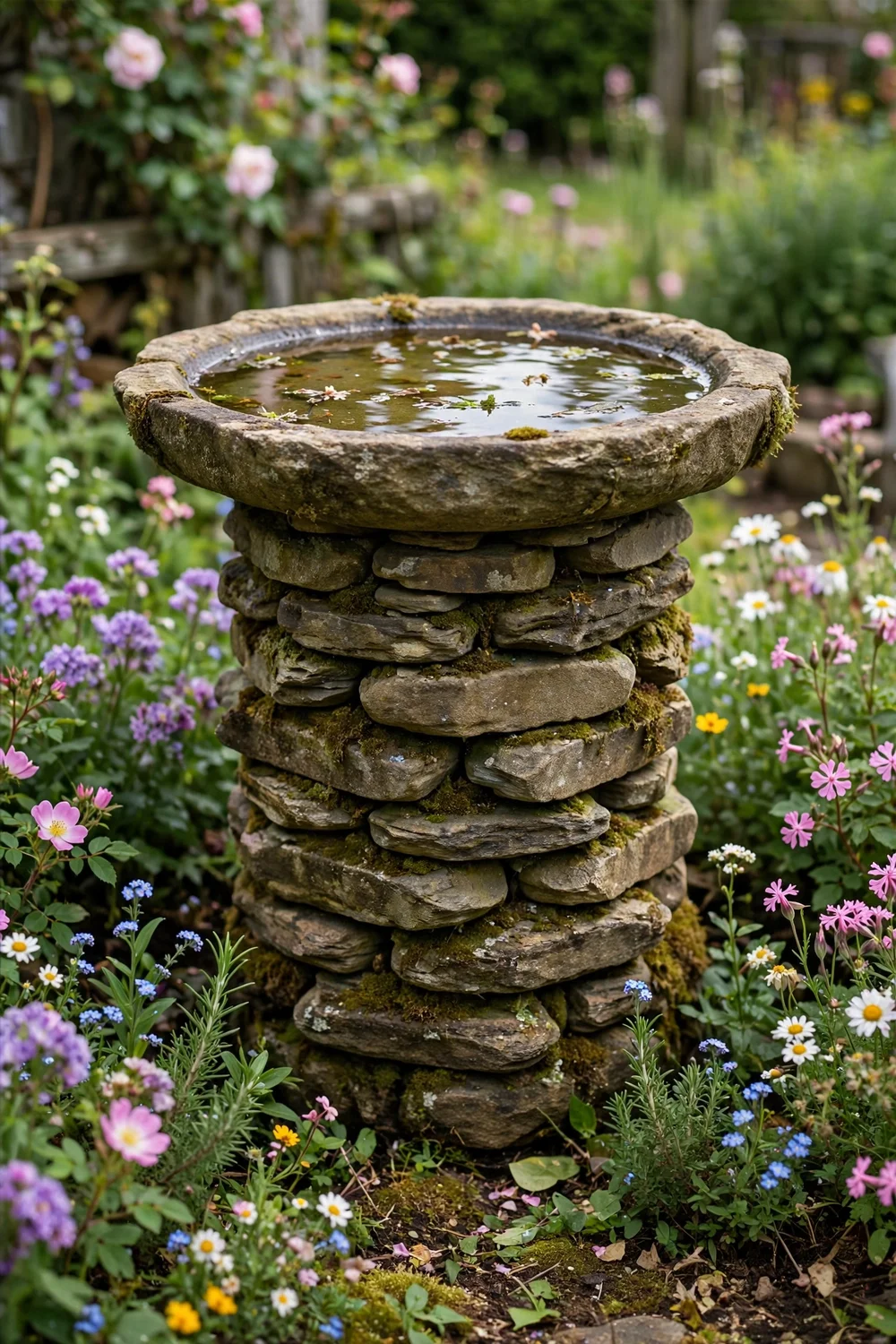
Try this: Sink the bottom stone a few inches into the soil. The bath will not wobble even in soft ground after heavy rain.
Cost: $$| Difficulty: Moderate | Time: 2 hours
7. Chip-and-dip platter bath
Those divided serving trays from the dollar store are shaped almost exactly like a bird bath: wide, shallow, and rimmed. Mount one on a PVC pipe or wooden dowel staked into the ground, and you have a cheerful bath for less than the price of lunch.

Try this: Choose a tray with a textured or matte finish. Glossy plastic gets slippery when algae starts to form.
Cost: $| Difficulty: Easy | Time: 20 minutes
8. Concrete leaf-cast basin
Press a large hosta or rhubarb leaf into a mound of damp sand, then spread quick-set concrete over it. Once cured, you have a basin shaped exactly like a giant leaf, veins and all. Rest it on a stump or short pedestal at a gentle tilt so rainwater drains off.

Try this: Seal the finished concrete with a non-toxic concrete sealer so it cleans easily and lasts for years.
Cost: $$| Difficulty: Moderate | Time: 3 hours plus curing
9. Tree stump bath
If you have a stump left from a removed tree, hollow out the top with a chisel to create a shallow dish, or simply set a wide bowl into a natural dip. Stumps are heavy, free, and give birds a landing spot that looks completely at home in a woodland corner.
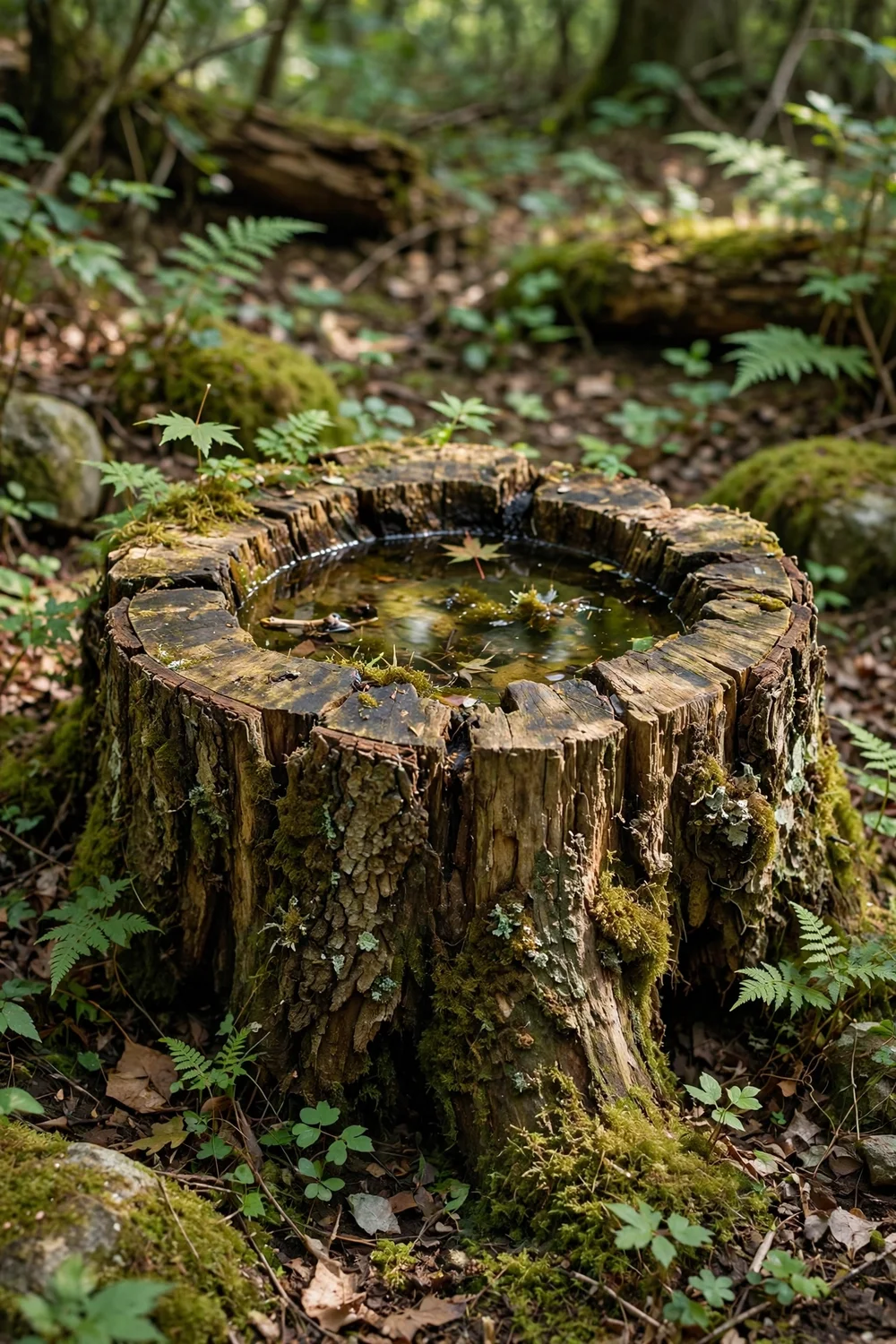
Try this: Line a rough hollow with a piece of pond liner before filling, so the wood stays drier and the water stays cleaner.
Cost: $| Difficulty: Moderate | Time: 1 to 2 hours
10. Old chair bath
Take the seat out of a broken wooden chair and drop a galvanized tub or large plastic basin into the frame. The chair back becomes a perch and a backdrop for climbing plants. Sand any splinters and check that the legs are solid before you add water weight.

Try this: Paint the chair with exterior paint in a color that matches your planters. The whole piece reads as garden art, not junk.
Cost: $$| Difficulty: Easy | Time: 1 hour
11. Trash can lid bath
A clean metal or heavy-duty plastic trash can lid has a gentle center dip that holds water nicely. Set it on level soil, a low platform, or a ring of bricks. This is the simplest bath on the list, and Cornell’s birding guides list lids and trays among the best quick options.

Try this: Check the lid edge for sharp spots and file them smooth. Ground-level baths should sit where cats cannot hide nearby.
Cost: $| Difficulty: Easy | Time: 10 minutes
12. Solar dripper bath
A small solar pump turns any bowl into a moving-water bath. Birds find dripping and bubbling water much faster than still water, and the movement slows mosquito breeding. Place the solar panel where it gets full sun and keep the pump’s intake clear of leaves.
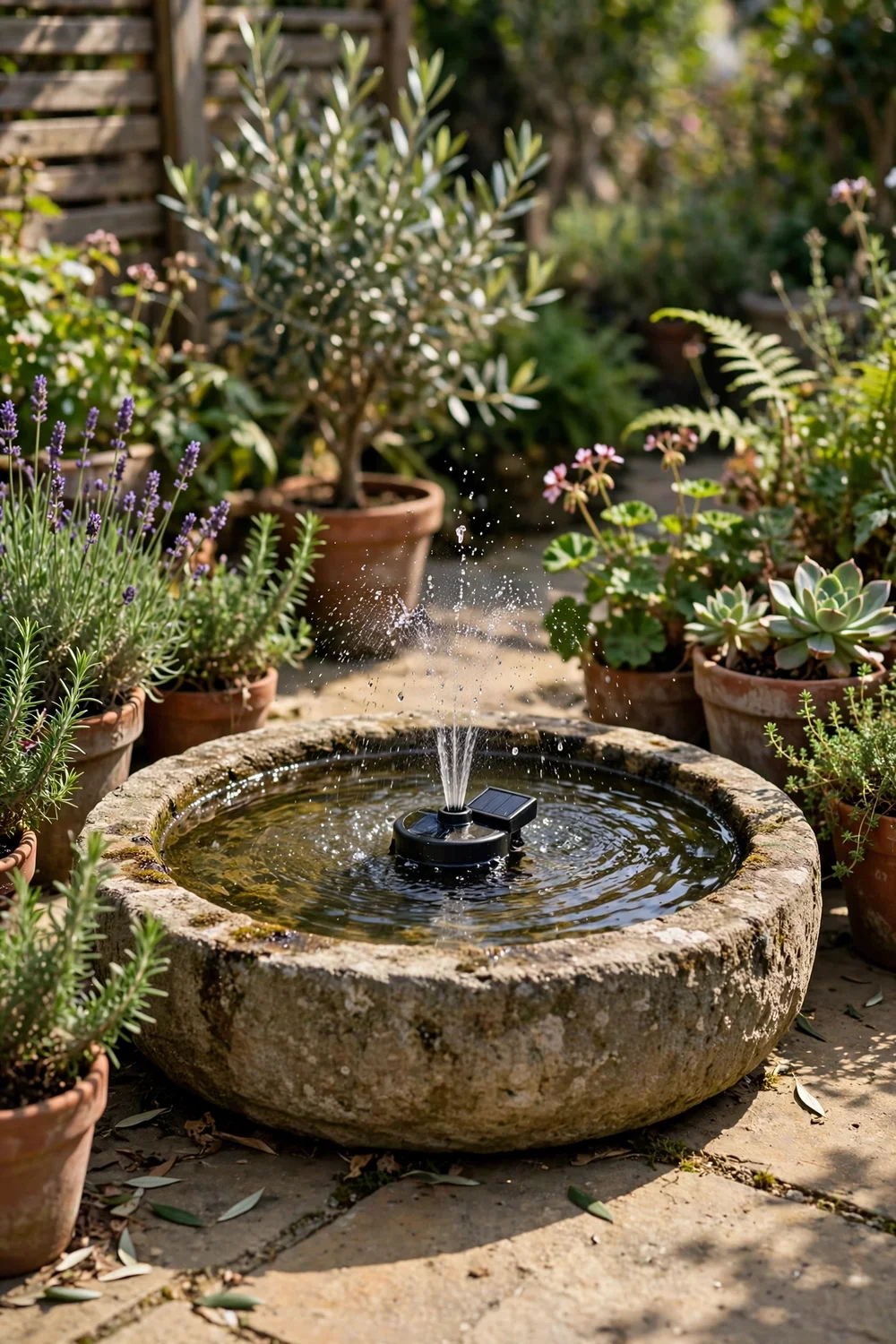
Try this: Start with the pump in an existing bowl you own. The solar kit is the only purchase, usually under $20.
Cost: $$| Difficulty: Easy | Time: 15 minutes
13. Bundt pan hanging bath
A bundt pan’s center hole is made for this project. Run a rope through the hole, knot it underneath, and hang the pan from a branch or pergola. The sloped sides make a naturally shallow basin, and the fluted edges give birds plenty of grip.
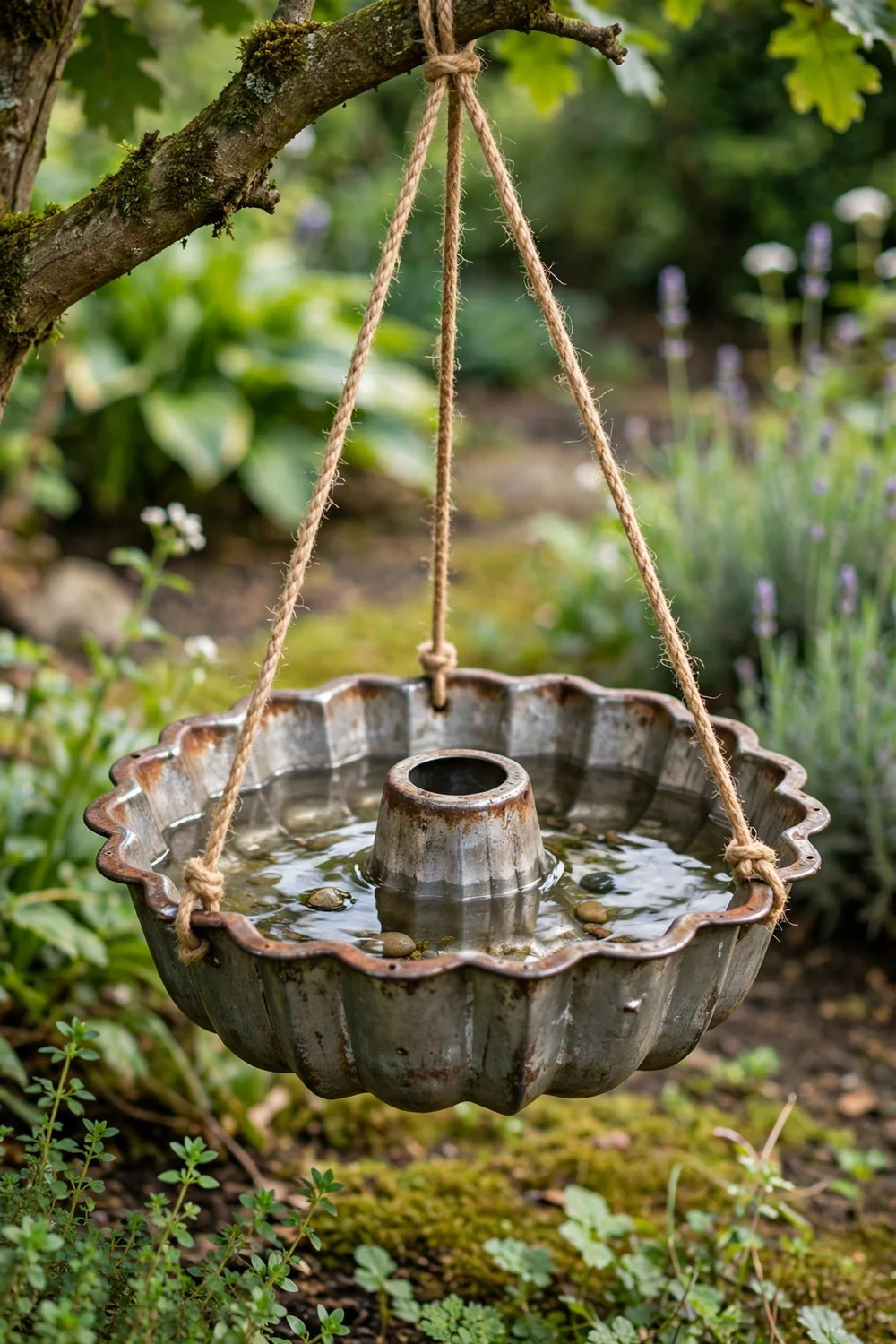
Try this: Use a nonstick-free steel pan, not one with a flaking nonstick coating. Old enamel pans work well too.
Cost: $| Difficulty: Easy | Time: 15 minutes
14. Upcycled sink bath
A reclaimed bathroom or utility sink set on a crate or low stand becomes a wide, deep-feeling bath. Add a layer of gravel and flat stones so the water stays under two inches deep anywhere a bird stands. Seal the drain with a rubber stopper or a patch of pond liner.
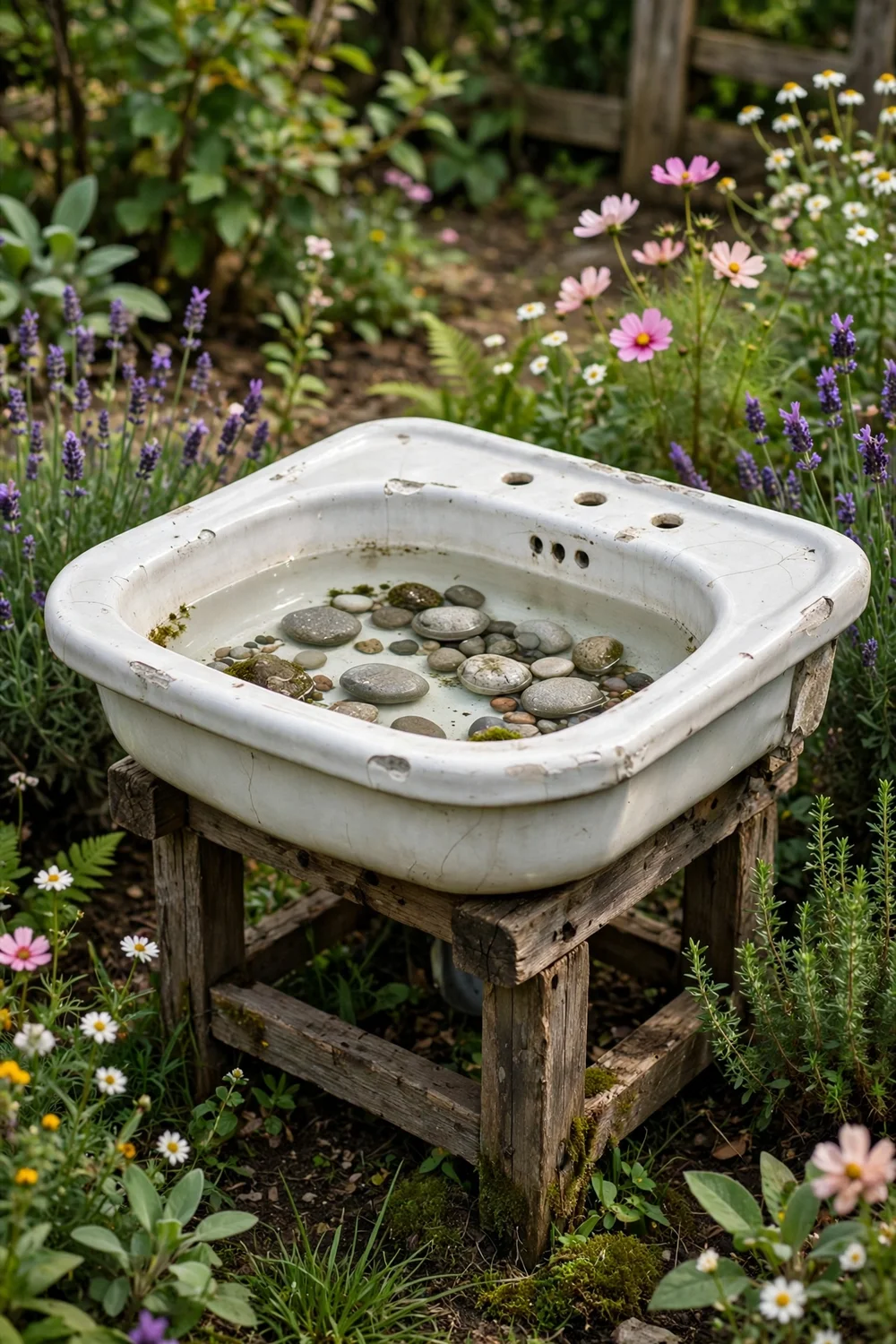
Try this: Tuck the sink into a flower bed so the rim sits near plant height. Birds hop from stems straight into the water.
Cost: $$| Difficulty: Easy | Time: 1 hour
15. Flat marble bowl bath
Press a ring of flat glass marbles into a bead of waterproof adhesive inside any shallow bowl, and you get a sparkling, textured surface that birds can grip. Kids love helping with this one, and the finished bowl catches sunlight beautifully even when it is empty.

Try this: Use an outdoor-rated adhesive and let it cure the full recommended time. Cheap craft glue will loosen after the first rain.
Cost: $$| Difficulty: Easy | Time: 1 hour plus curing
Bird bath ideas compared
Bird bath safety notes
Keep water between 1 and 2 inches deep. Deeper water puts small birds at risk, so fill deep bowls with clean gravel until the standing depth is right. Scrub the basin with a stiff brush every 2 to 3 days and rinse well. In hot weather, change the water daily so mosquitoes cannot breed. Skip any container that held paint, oil, or chemicals, and avoid old dishes with flaking glaze or peeling paint that birds could peck at. If your bath uses an electric pump, plug it into a GFCI-protected outdoor outlet and keep cords off walkways.
For more yard projects that reuse old finds, browse these rustic garden decor ideas and easy vintage garden projects for pieces that pair well with a new bird bath. If you like the relaxed look of these baths, you may also enjoy these bohemian garden ideas for the rest of your yard.
Frequently asked questions
How deep should a DIY bird bath be?
Keep the water 1 to 2 inches deep. If your bowl is deeper, add clean gravel or flat stones until the standing water is shallow. Small songbirds will not use water they cannot stand in safely.
How often should I clean a bird bath?
Scrub it every 2 to 3 days with a stiff brush and rinse thoroughly. In summer heat, dump and refill the water daily. Frequent cleaning prevents algae and stops mosquitoes from breeding.
Where is the best place to put a bird bath?
Choose an open spot you can see from a window, with shrubs or small trees 10 to 15 feet away. That distance gives birds an escape route without giving cats a hiding place. Partial shade keeps water cooler in summer.
What can I use for a bird bath basin?
Almost any shallow, easy-to-clean container works: plant saucers, pie dishes, serving platters, metal lids, or glass bowls. Avoid containers that held chemicals, and skip anything with sharp edges, cracked glass, or flaking paint.
Do bird baths attract mosquitoes?
Still water left for several days can. Change the water every 2 to 3 days, or add a small solar dripper to keep the surface moving. Moving water also attracts more birds.
Can I use a heated bird bath in winter?
Yes. A submersible de-icer made for bird baths keeps a small area ice-free without heating the whole basin. Never add antifreeze or salt to the water, and keep the bath away from perches where wet feathers could freeze.
A quick note on safety and sources
The depth and cleaning guidance above follows recommendations from the Cornell Lab of Ornithology and the National Audubon Society. For mosquito prevention around standing water, see the CDC’s mosquito prevention guidance.
Pick one idea that fits the materials you already have and build it this weekend. A simple saucer on a pot brings in just as many birds as a store-bought bath, and you will spend the summer watching them enjoy something you made.


