


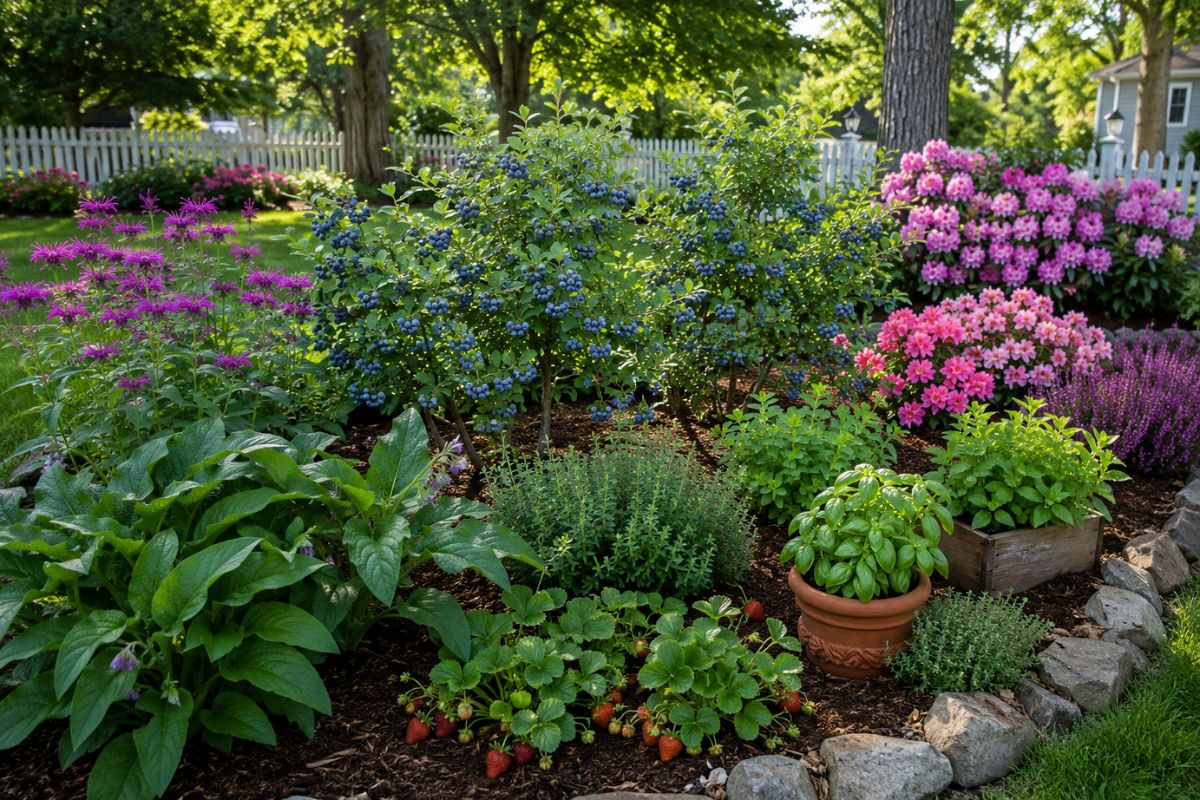
When I planted my first blueberry bushes, I expected baskets of fresh berries within a couple of seasons. Instead, the plants grew slowly, weeds kept taking over the bed, and there were fewer bees visiting the flowers than I had hoped. After learning more about companion planting and testing different plants around my blueberries, I saw healthier growth, better pollination, and a garden that was much easier to care for.
If you’re wondering what to plant with blueberries, you’re in the right place. The best blueberry companion plants enjoy the same acidic soil while helping attract pollinators, protect the soil, and support stronger bushes. In this guide, I’ll share the companion plants that have proven to work well together and simple tips to help you grow healthier blueberry bushes with bigger, sweeter harvests.
Why Companion Plants Help Blueberries
Blueberries have different needs than many other garden plants. They grow best in acidic soil with a pH between 4.5 and 5.5, need steady moisture, and depend on bees for good pollination. Planting the right companions nearby creates a healthier growing space that supports these needs.
Here are some of the biggest benefits of companion planting for blueberries:
- Attracts bees and butterflies for better pollination.
- Helps keep aphids and other pests away.
- Covers the soil to reduce weeds.
- Keeps the ground cool and moist.
- Adds natural nutrients to the soil.
- Creates a more beautiful and wildlife-friendly garden.
The best companion plants are those that enjoy similar growing conditions and work together without competing for space or nutrients.
What Makes a Good Blueberry Companion Plant?
Not every plant grows well with blueberries. The best companion plants share the same growing conditions and provide extra benefits without competing for space or nutrients.
Look for companion plants that:
- Thrive in acidic soil with a pH between 4.5 and 5.5.
- Attract bees, butterflies, and other pollinators.
- Help keep weeds under control.
- Retain soil moisture during warm weather.
- Support healthy soil and beneficial insects.
- Grow without crowding the shallow roots of blueberry bushes.
Choosing plants with these qualities creates a healthier garden and helps blueberry bushes produce better harvests year after year.
Quick Comparison of the Best Blueberry Companion Plants
| Companion Plant | Main Benefit | Best Use |
|---|---|---|
| Comfrey | Natural mulch and nutrient recycling | Improve soil health |
| Bee Balm | Attracts pollinators | Increase pollination |
| Thyme | Living ground cover | Weed control |
| Oregano | Attracts beneficial insects | Low-maintenance herb |
| Basil | Attracts bees | Container planting |
| Mint | Helps discourage pests | Grow in containers |
| Strawberries | Living mulch | Moisture retention |
| Cranberries | Acid-loving ground cover | Berry gardens |
| Azaleas | Beautiful blooms | Ornamental borders |
| Rhododendrons | Pollinator-friendly flowers | Woodland gardens |
| Heather | Long flowering season | Year-round interest |
| Clover | Ground cover and pollinator support | Garden edges |
Comfrey
Comfrey is one of the most useful companion plants for blueberries because its deep roots pull nutrients from deep in the soil. Those nutrients are stored in its large leaves. When the leaves are cut and spread around blueberry bushes as mulch, they slowly break down and return valuable nutrients to the soil.
Comfrey also helps improve soil structure and keeps the ground from drying out during warm weather. Its purple flowers attract bees and other pollinators, which can lead to better blueberry production during bloom season.

Why it grows well with blueberries
- Adds nutrients back to the soil through mulch.
- Makes excellent organic mulch.
- Attracts pollinators.
- Helps retain soil moisture.
Growing Tip: Plant comfrey a few feet away from blueberry bushes so its large leaves have room to grow without crowding the shrubs.
Bee Balm
If you want more bees visiting your blueberry flowers, bee balm is one of the best plants you can grow nearby. This colorful perennial attracts bees, butterflies, and hummingbirds, helping improve pollination and supporting a healthy garden.
Its bright flowers also add beautiful summer color around blueberry bushes. Bee balm enjoys moist, well-drained soil and grows well near blueberries when given enough space for good air circulation.

Why it grows well with blueberries
- Attracts bees for better pollination.
- Brings butterflies and hummingbirds to the garden.
- Adds long-lasting color.
- Supports a healthy garden ecosystem.
Growing Tip: Remove faded flowers during the season to encourage more blooms and keep the plants looking fresh.
Thyme
Thyme is a low-growing herb that works as a living ground cover around blueberry bushes. It helps reduce weeds while allowing air to move freely around the plants. Its tiny flowers attract bees and other beneficial insects throughout the growing season.
Because thyme stays compact, it does not compete heavily with blueberry roots. It also handles dry periods well once established, making it an easy herb to grow in many home gardens.

Why it grows well with blueberries
- Attracts pollinators.
- Helps suppress weeds.
- Forms a tidy ground cover.
- Adds a pleasant fragrance to the garden.
Growing Tip: Plant thyme around the outer edge of blueberry beds where it can spread naturally without covering the base of the bushes.
Oregano
If you’re looking for a low-maintenance herb that also helps your blueberry garden, oregano is an excellent choice. Its small flowers attract bees, hoverflies, and other beneficial insects that naturally help keep some common garden pests under control.
Oregano spreads gently to cover bare soil, helping reduce weeds and keep moisture in the ground. It also gives you fresh herbs to harvest throughout the growing season.

Why it grows well with blueberries
- Attracts bees and beneficial insects.
- Helps suppress weeds.
- Works as a living ground cover.
- Easy to grow and maintain.
Growing Tip: Plant oregano around the outer edge of your blueberry bed so it has space to spread without crowding the bushes.
Basil
Basil is a great companion plant if you want to attract more pollinators to your blueberry patch. When basil flowers, it draws bees and other helpful insects that can improve blueberry pollination.
Although basil enjoys slightly richer soil than blueberries, it grows well in containers placed close to the bushes. This allows each plant to thrive in its preferred growing conditions.

Why it grows well with blueberries
- Attracts bees and beneficial insects.
- Adds diversity to the garden.
- Easy to grow in containers.
- Provides fresh herbs for cooking.
Growing Tip: Place basil in pots beside your blueberry bushes instead of planting it directly in the blueberry bed.
Mint
Mint is well known for its refreshing scent and its ability to help discourage pests like ants and aphids. Its flowers also attract bees and butterflies, making it a helpful companion during blueberry flowering season.
Mint grows very quickly and can spread throughout a garden if left unchecked. Growing it in a container lets you enjoy its benefits without letting it take over your blueberry bed.

Why it grows well with blueberries
- Helps discourage common garden pests.
- Attracts bees and butterflies.
- Easy to grow.
- Adds a fresh fragrance to the garden.
Growing Tip: Always grow mint in a container and place it near your blueberry bushes instead of planting it directly in the ground.
Strawberries
Strawberries are one of the best ground covers for blueberry gardens. Their spreading leaves help shade the soil, reduce weed growth, and hold moisture during hot weather.
Since strawberries and blueberries both enjoy acidic soil, they grow well together. Planting them in the same garden also gives you two delicious berry harvests from one space.

Why it grows well with blueberries
- Acts as a living mulch.
- Helps retain soil moisture.
- Suppresses weeds.
- Attracts pollinators.
Growing Tip: Leave a little space around the base of each blueberry bush to maintain good airflow.
Cranberries
Cranberries naturally thrive in acidic soil, making them an excellent companion for blueberries. Their low-growing vines spread across the soil, helping reduce weeds and protect the ground from drying out.
Growing blueberries and cranberries together creates a beautiful berry garden that is both productive and easy to maintain.

Why it grows well with blueberries
- Prefers acidic soil.
- Forms a natural ground cover.
- Helps conserve soil moisture.
- Adds another edible crop.
Growing Tip: Keep the soil evenly moist, especially during dry periods, to support healthy growth.
Azaleas
Azaleas are beautiful flowering shrubs that share the same love for acidic soil as blueberries. Their colorful spring blooms attract bees and add bright seasonal color to the garden.
These shrubs also blend well into woodland-style landscapes, creating an attractive planting area around blueberry bushes.

Why it grows well with blueberries
- Thrives in acidic soil.
- Attracts pollinators.
- Adds colorful spring flowers.
- Enhances the garden’s appearance.
Growing Tip: Plant azaleas several feet away from blueberry bushes so both plants have enough room to grow.
Rhododendrons
Rhododendrons are another acid-loving shrub that pairs well with blueberries. Their large flower clusters attract pollinators during spring, helping support better blueberry pollination.
In warmer climates, their larger size can also provide light afternoon shade that helps protect blueberry roots from excessive heat.

Why it grows well with blueberries
- Enjoys the same acidic soil.
- Attracts bees and other pollinators.
- Adds structure to the landscape.
- Fits beautifully in woodland gardens.
Growing Tip: Give rhododendrons enough space so they do not block sunlight or airflow around blueberry bushes.
Heather
Heather is a compact evergreen plant that produces colorful flowers over a long blooming season. These flowers provide a steady source of nectar for bees and other pollinators while adding year-round beauty to your blueberry garden.
Because heather also prefers acidic soil, it grows comfortably alongside blueberry bushes without needing different care.

Why it grows well with blueberries
- Loves acidic soil.
- Attracts pollinators for an extended period.
- Provides year-round garden interest.
- Low maintenance after establishment.
Growing Tip: Plant heather in full sun or light shade with well-drained soil for the best flowering results.
Clover
Clover is a useful ground cover that attracts bees and helps protect bare soil from erosion. It works best when planted around the edges of a blueberry bed, where it supports pollinators without competing closely with blueberry bushes.
Its dense growth also helps reduce weed pressure and creates a healthier environment for beneficial insects.

Why it grows well with blueberries
- Attracts bees and other pollinators.
- Covers bare soil.
- Helps reduce weeds.
- Supports beneficial insects.
Growing Tip: Trim clover regularly and keep it around the edges of the planting area rather than directly at the base of blueberry bushes.
Plants to Avoid Near Blueberries
Some plants do not make good neighbors for blueberries because they prefer different growing conditions or compete too strongly for water and nutrients.
Avoid planting these near your blueberry bushes:
- Tomatoes
- Peppers
- Eggplants
- Potatoes
- Black walnut trees
- Large trees with aggressive root systems
Tomatoes, peppers, potatoes, and eggplants usually grow best in less acidic soil than blueberries. Black walnut trees produce a natural chemical called juglone that can affect many nearby plants. Large trees may also compete for sunlight, water, and nutrients, making it harder for blueberry bushes to grow well.
Frequently Asked Questions
What grows best with blueberries?
The best companion plants for blueberries include comfrey, bee balm, thyme, oregano, basil, mint, strawberries, cranberries, azaleas, rhododendrons, heather, and clover. These plants enjoy similar growing conditions while helping attract pollinators, reduce weeds, and support healthier soil.
Can blueberries and strawberries grow together?
Yes. Blueberries and strawberries grow well together because they both prefer acidic soil. Strawberries also act as a living mulch, helping keep the soil cool, reduce weeds, and hold moisture during warm weather.
Is mint a good companion for blueberries?
Yes. Mint can help discourage some common garden pests while attracting bees and butterflies. Since mint spreads aggressively, it should always be grown in a container placed near blueberry bushes instead of directly in the garden bed.
What flowers grow well with blueberries?
Bee balm, azaleas, rhododendrons, and heather are excellent flowering companions for blueberries. They attract bees and other pollinators while adding beautiful color to the garden throughout the growing season.
Can I plant herbs around blueberry bushes?
Yes. Herbs such as thyme, oregano, basil, and mint make excellent companion plants. They attract beneficial insects, provide fresh herbs for your kitchen, and help create a healthier garden environment. Basil and mint are easiest to manage when grown in containers.
Do blueberries need another blueberry plant?
Many blueberry varieties produce larger harvests when another compatible blueberry variety is planted nearby. Cross-pollination often results in bigger berries and increased fruit production, although some varieties can produce fruit on their own.
Can lavender grow with blueberries?
Lavender can grow near blueberries because it attracts bees and other pollinators. However, lavender prefers slightly less acidic soil than blueberries, so it usually performs best when planted nearby rather than directly in the same planting bed.
Conclusion
Choosing the right companion plants can make a real difference in the health and productivity of your blueberry bushes. From my experience, adding plants that attract pollinators, protect the soil, and thrive in the same growing conditions creates a healthier and easier-to-manage garden over time. Start with a few companions that fit your space, observe how your blueberry bushes respond, and continue building your garden as you gain confidence. Small changes today can lead to stronger plants and more delicious blueberries for many growing seasons.


