


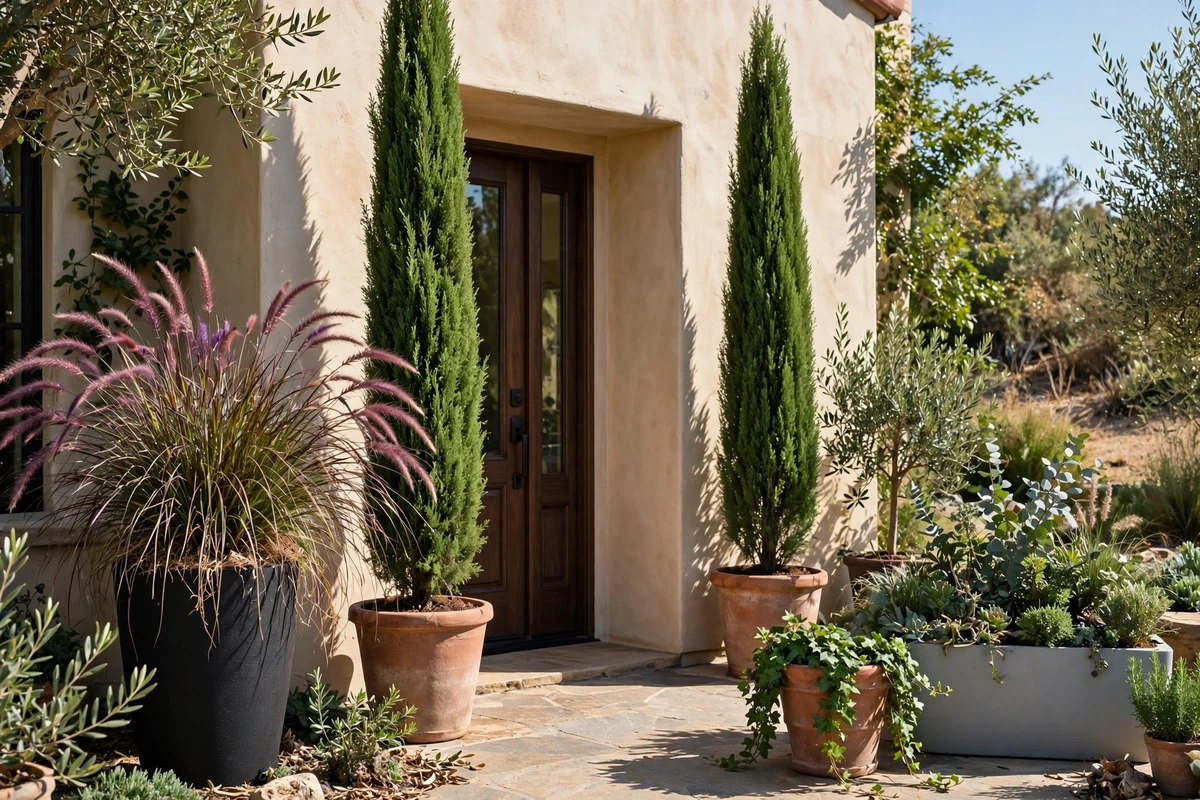
Tall planters solve a problem short pots cannot. They lift plants to eye level, fill empty corners, and add structure to patios and porches without any construction. I bought my first tall planter for a bare spot beside the garage, and it looked like we had landscaped the whole side of the house.
This guide covers 18 tall planter ideas for indoors and out: statement plants, DIY builds, and styling tricks that make one planter look like a designer did it. Each idea includes a cost and difficulty label, plus a “Try this” tip so you can get it right the first time.
Quick takeaways
- Use the thriller filler spiller formula. One tall focal plant, mounding fillers around it, and trailers over the edge.
- Fill the bottom third with filler. Upside-down nursery pots or packing peanuts cut soil weight and cost.
- Match the planter to the spot. Fiberglass for modern patios, terracotta for cottage gardens, ceramic for indoors.
- Drainage is non-negotiable. Drill holes if the pot lacks them, and raise pots on feet so water escapes.
- One big planter beats three small ones. Scale the pot to the space so it reads as intentional, not cluttered.
1. Purple fountain grass as the thriller
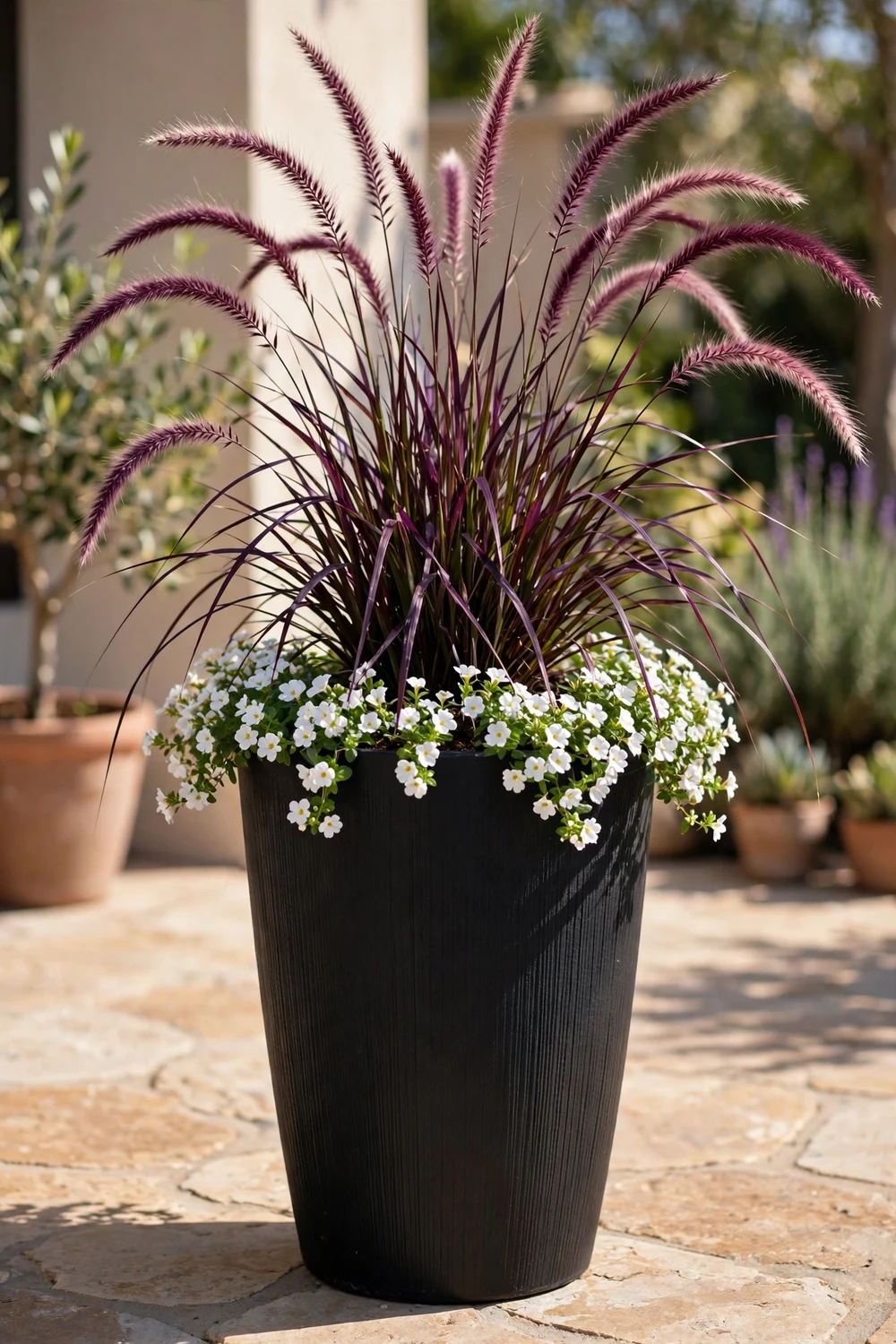
Purple fountain grass gives a tall planter instant drama with almost no effort. Its burgundy plumes arch 3 to 4 feet above the rim, moving in the breeze all summer. Plant one grass in the center of a 16 to 20 inch pot, then ring it with white bacopa or blue lobelia as fillers. It grows fast in full sun and needs only regular water. In zones colder than 8, treat it as an annual and compost it after frost.
Try this: leave the dried plumes standing through winter for off-season texture. Difficulty: easy | Cost: $$
2. Italian cypress pair at the front door
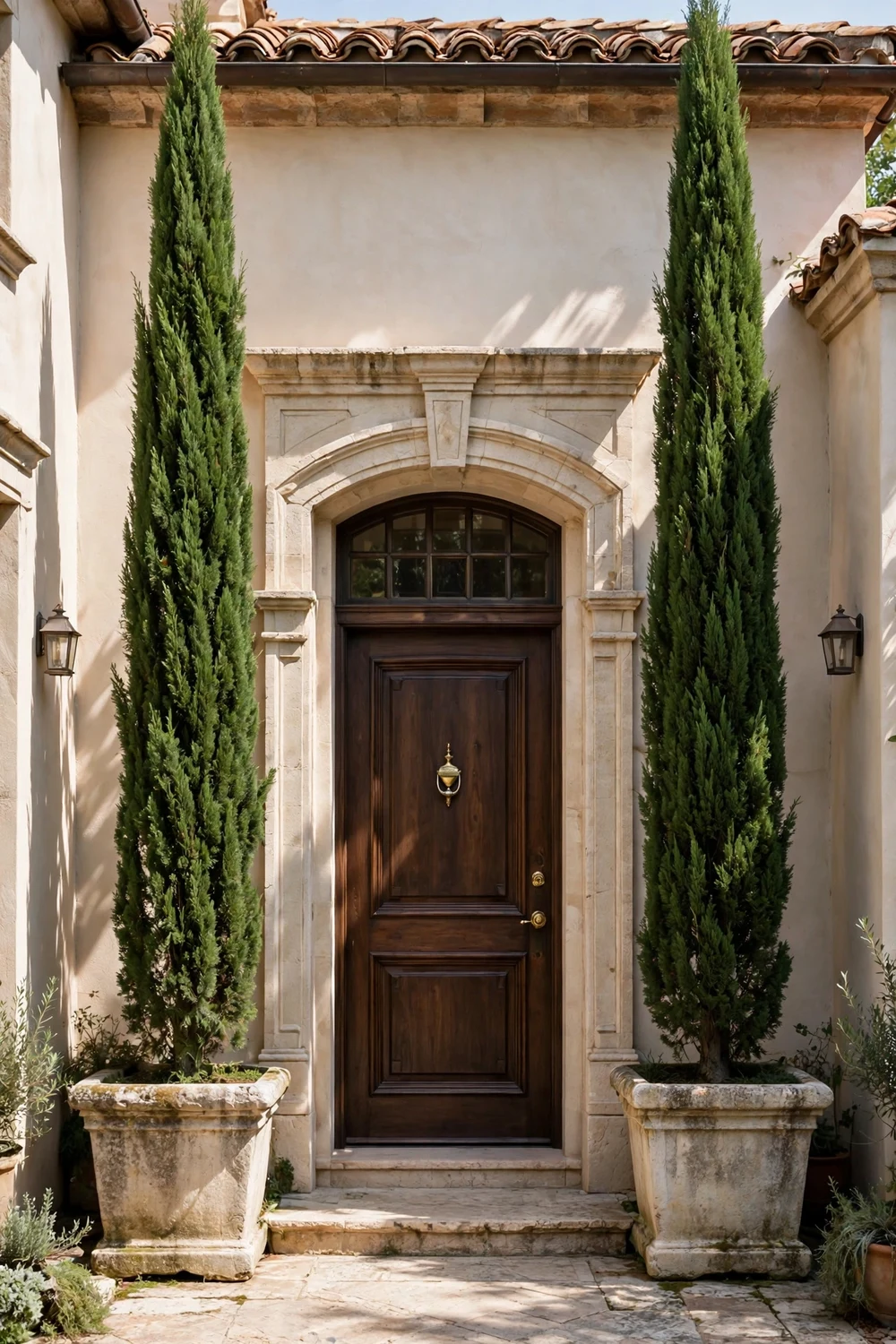
A pair of Italian cypress trees in tall planters frames a front door with Mediterranean formality. Their slim, upright shape fits narrow spaces where a wide shrub would crowd the walkway. Choose pots at least 18 inches wide for stability, since the trees catch wind. They grow slowly and keep their shape with one shearing per year. In cold climates, wheel them into an unheated garage for winter.
Try this: underplant with trailing ivy to soften the base of each tree. Difficulty: easy | Cost: $$$
For more inspiration on styling the space around your door, see these beautiful plants to decorate your home entrance.
3. Snake plant in a tall indoor planter
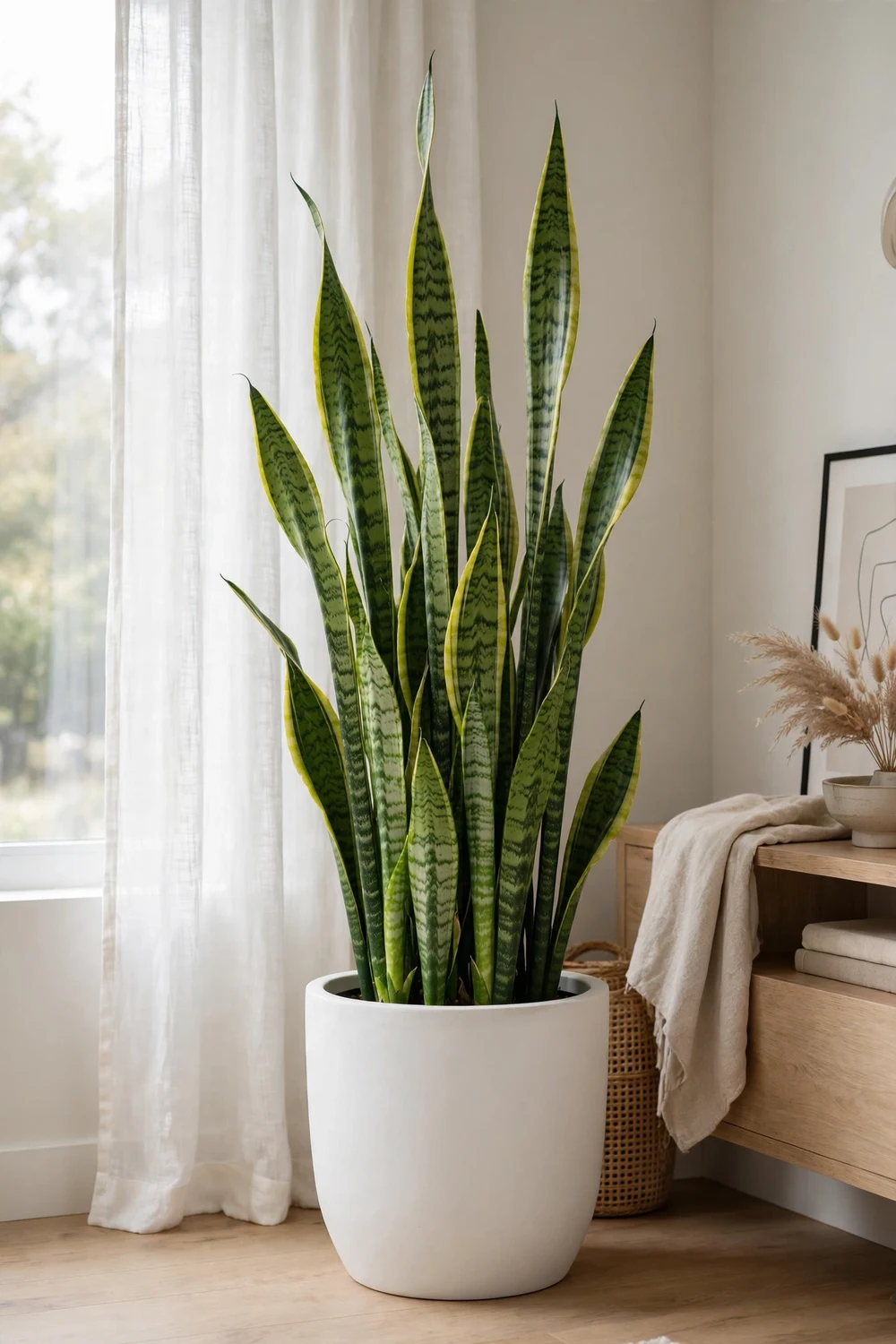
A snake plant in a tall floor planter is the lowest-maintenance indoor statement you can make. The stiff, upright leaves reach 2 to 4 feet and tolerate low light, missed waterings, and dry indoor air. Use a well-draining cactus mix and a pot with a drainage hole, since soggy roots are the one thing that kills them. One warning for pet owners: snake plants are toxic to cats and dogs if chewed, so keep this one out of reach.
Try this: choose a matte ceramic planter in white or charcoal for a modern look. Difficulty: easy | Cost: $$
If your indoor spots get very little sun, these indoor plants for low light thrive almost anywhere in the house.
4. Bird of paradise in a bright corner
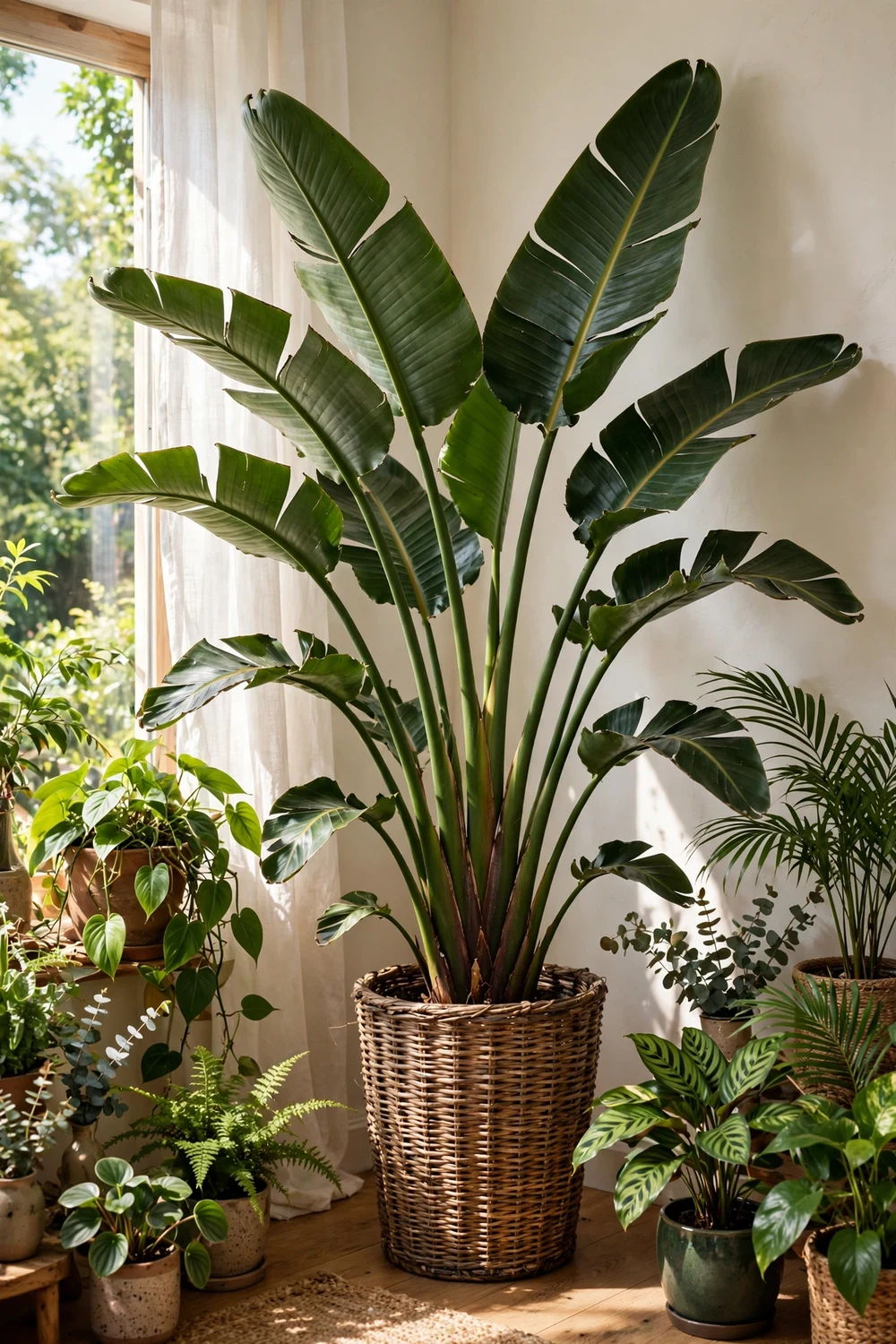
Bird of paradise brings bold tropical leaves to a sunny indoor corner or a sheltered patio. Its huge split leaves reach 5 to 6 feet indoors and make the planter look twice as expensive. Give it the brightest spot you have and water when the top 2 inches of soil dry out. It will not flower indoors, but the foliage alone carries the look. Rotate the pot monthly so it grows evenly instead of leaning toward the window.
Try this: wipe the leaves monthly with a damp cloth to keep them glossy. Difficulty: moderate | Cost: $$$
5. Clumping bamboo privacy screen
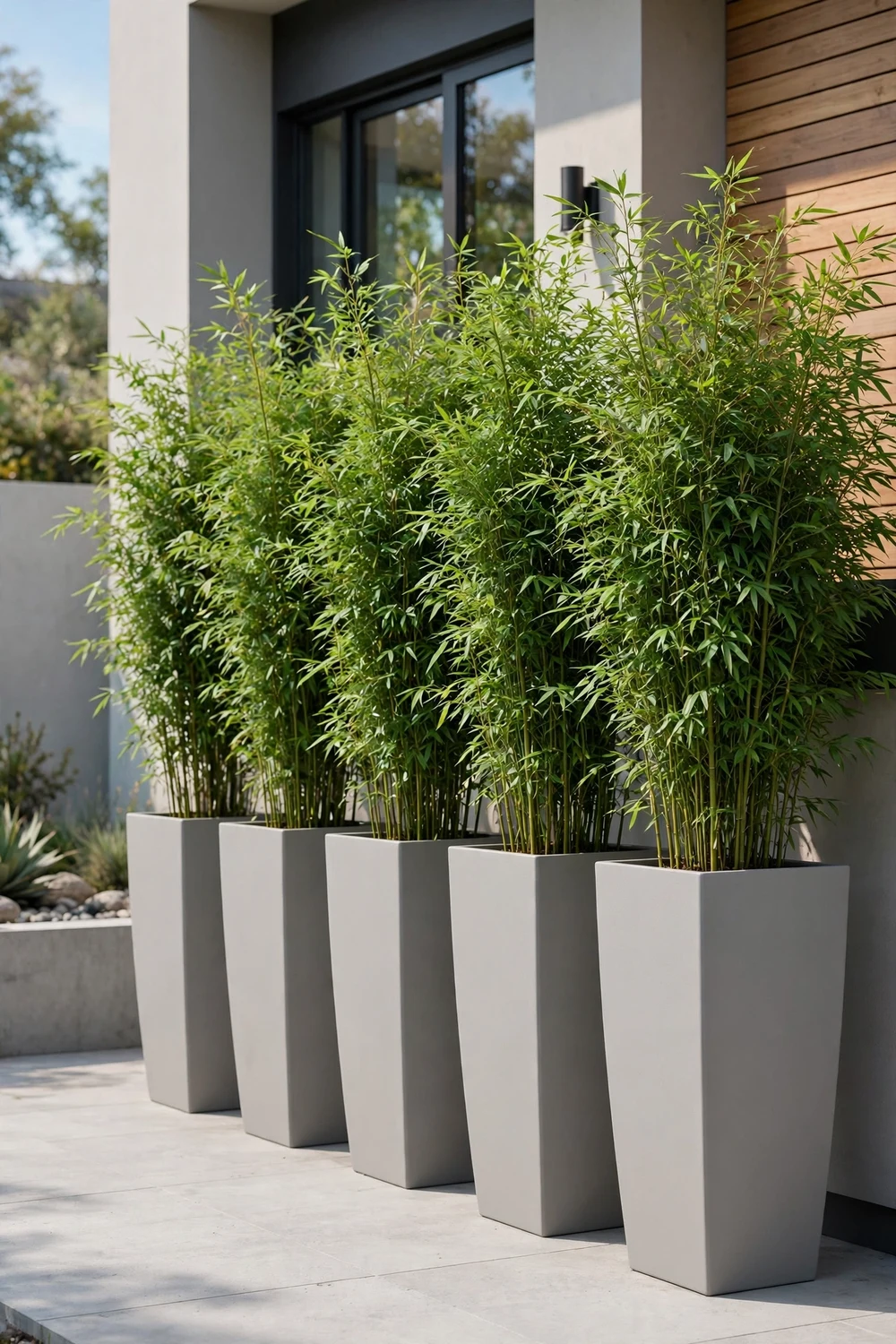
Clumping bamboo in a row of tall planters builds a living privacy screen in one afternoon. Unlike running bamboo, clumping types stay contained and behave in pots. Varieties like Bambusa multiplex reach 8 to 10 feet in large containers. Space the planters 3 feet apart and let the canes fill the gaps. Water deeply in summer, since bamboo drinks heavily. Choose frost-hardy Fargesia if your winters drop below 10 degrees.
Try this: use matching fiberglass planters so the row reads as one designed screen. Difficulty: moderate | Cost: $$$
6. Alberta spruce for year-round structure
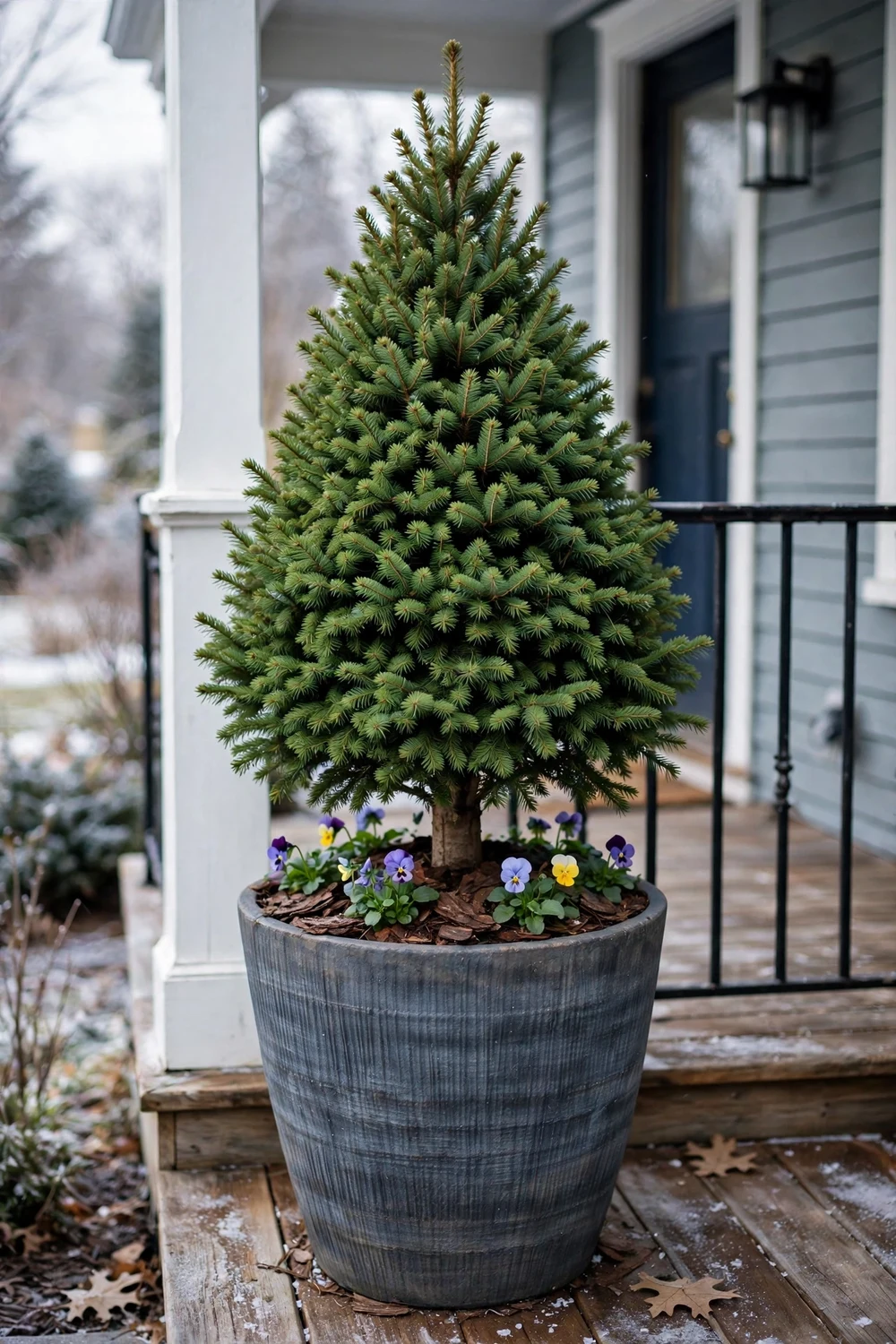
An Alberta spruce gives a tall planter four-season structure with zero replanting. Its dense, conical shape looks good in January and July, and you can wrap it with lights in December. Plant it in a frost-proof pot at least 18 inches wide, since the root ball is heavy. Water through fall until the ground freezes so it enters winter hydrated. Add a ring of pansies around the base each spring for seasonal color.
Try this: top the soil with pine bark mulch to keep roots cool in summer. Difficulty: easy | Cost: $$$
7. DIY cedar tall planter build
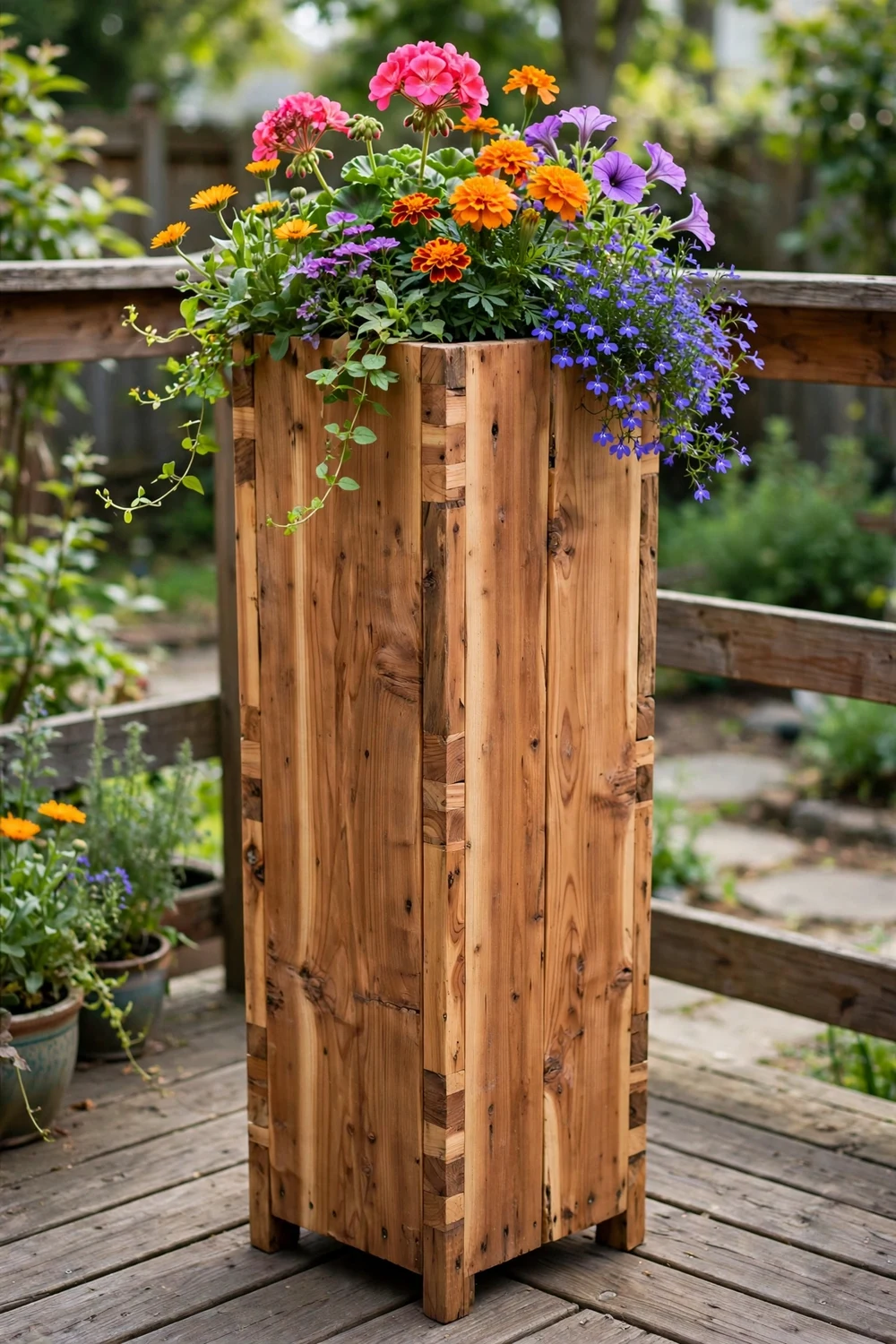
Building a cedar tall planter costs a fraction of store prices and takes one weekend. Cedar resists rot naturally, so the box lasts years without treatment. A simple design uses 1 by 6 boards screwed to a 2 by 4 frame, about 30 inches tall. Line the inside with landscape fabric so soil does not escape through the gaps. Staple the fabric, add a plastic liner with drainage holes, and fill. Sand the edges smooth before planting.
Try this: stain the cedar in a weathered gray for a high-end look. Difficulty: moderate | Cost: $$
8. Pot-in-pot tall shell trick
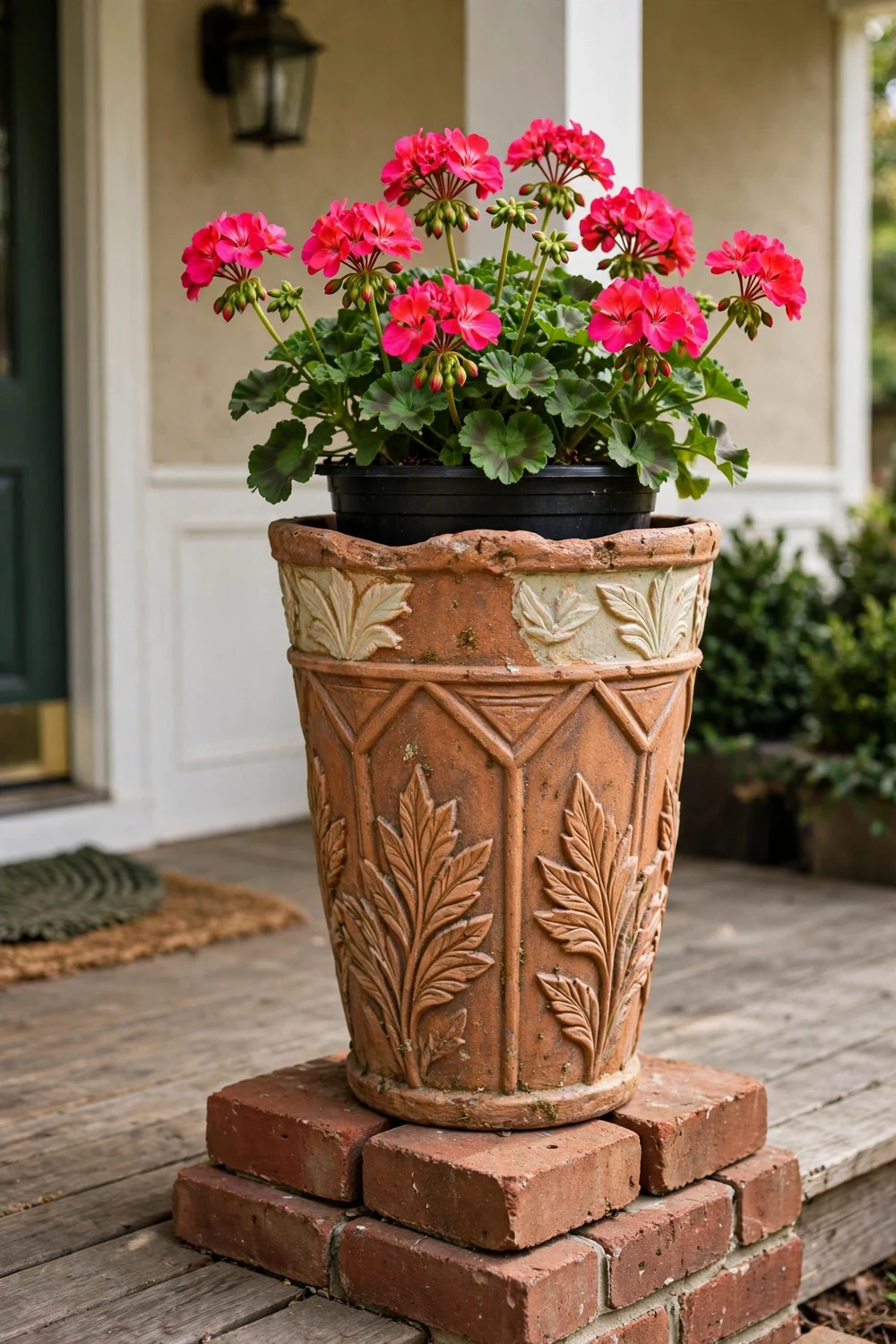
The pot-in-pot trick gives you a tall planter look with easy seasonal swaps. Set a standard nursery pot inside a tall decorative shell, raised on bricks so water drains below. When the season changes, lift out the inner pot and drop in a fresh arrangement. No repotting, no heavy lifting of soil. The shell never holds wet soil directly, so even wood or metal shells last longer. This is the best method for renters who move often.
Try this: keep two inner pots planted and rotate them between display and recovery. Difficulty: easy | Cost: $$
9. Galvanized tall tub planter
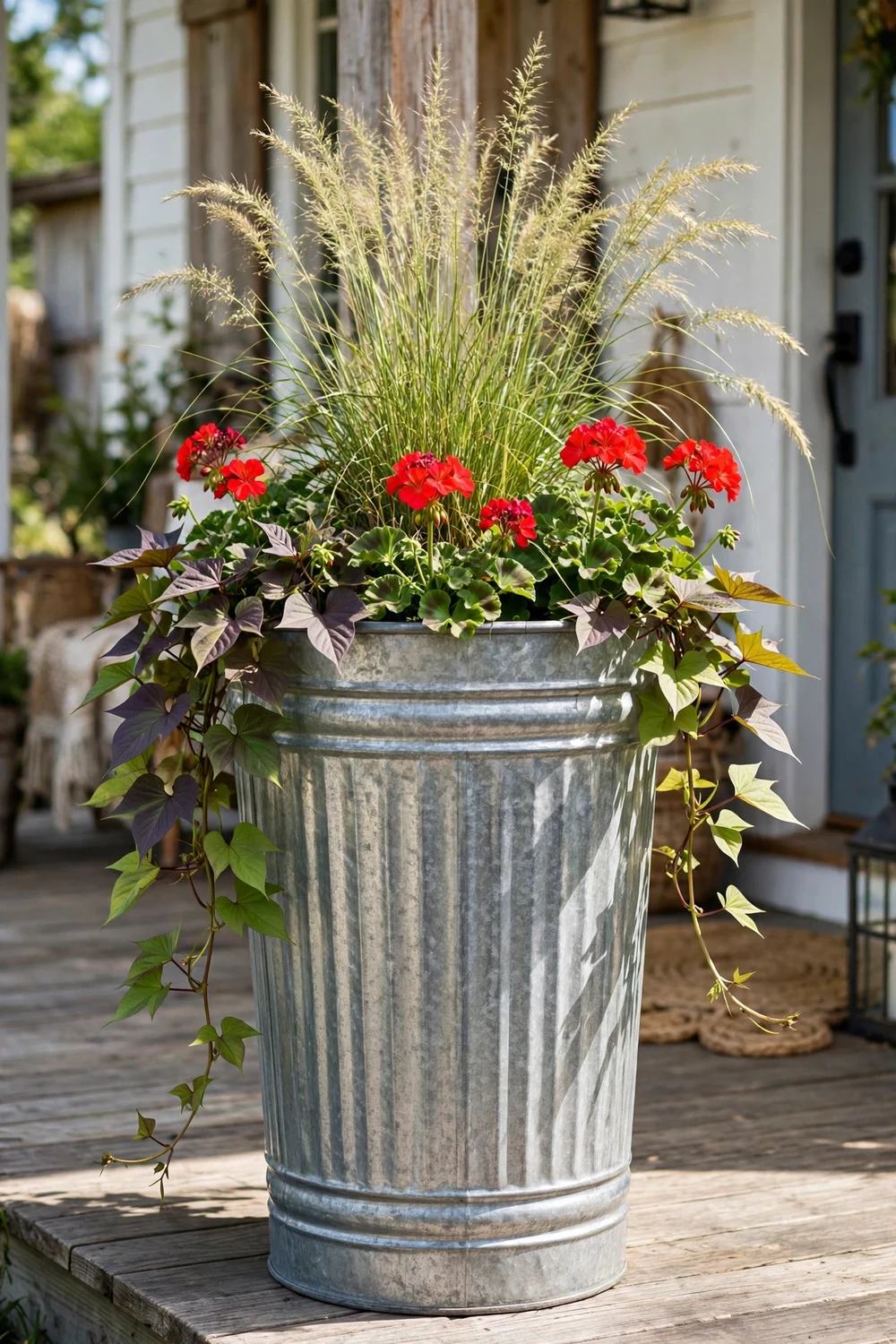
A tall galvanized metal tub brings farmhouse texture to a porch or patio. Metal tubs are cheap, light, and handle weather without complaint. Drill six to eight half-inch drainage holes in the bottom and set the tub on bricks so air circulates underneath. Fill with a thriller filler spiller arrangement of ornamental grass, geraniums, and sweet potato vine. The silver finish pairs well with both bright flowers and silvery foliage.
Try this: paint the outside a light color in hot climates to keep roots cool. Difficulty: easy | Cost: $$
10. Tall terracotta with trailing ivy
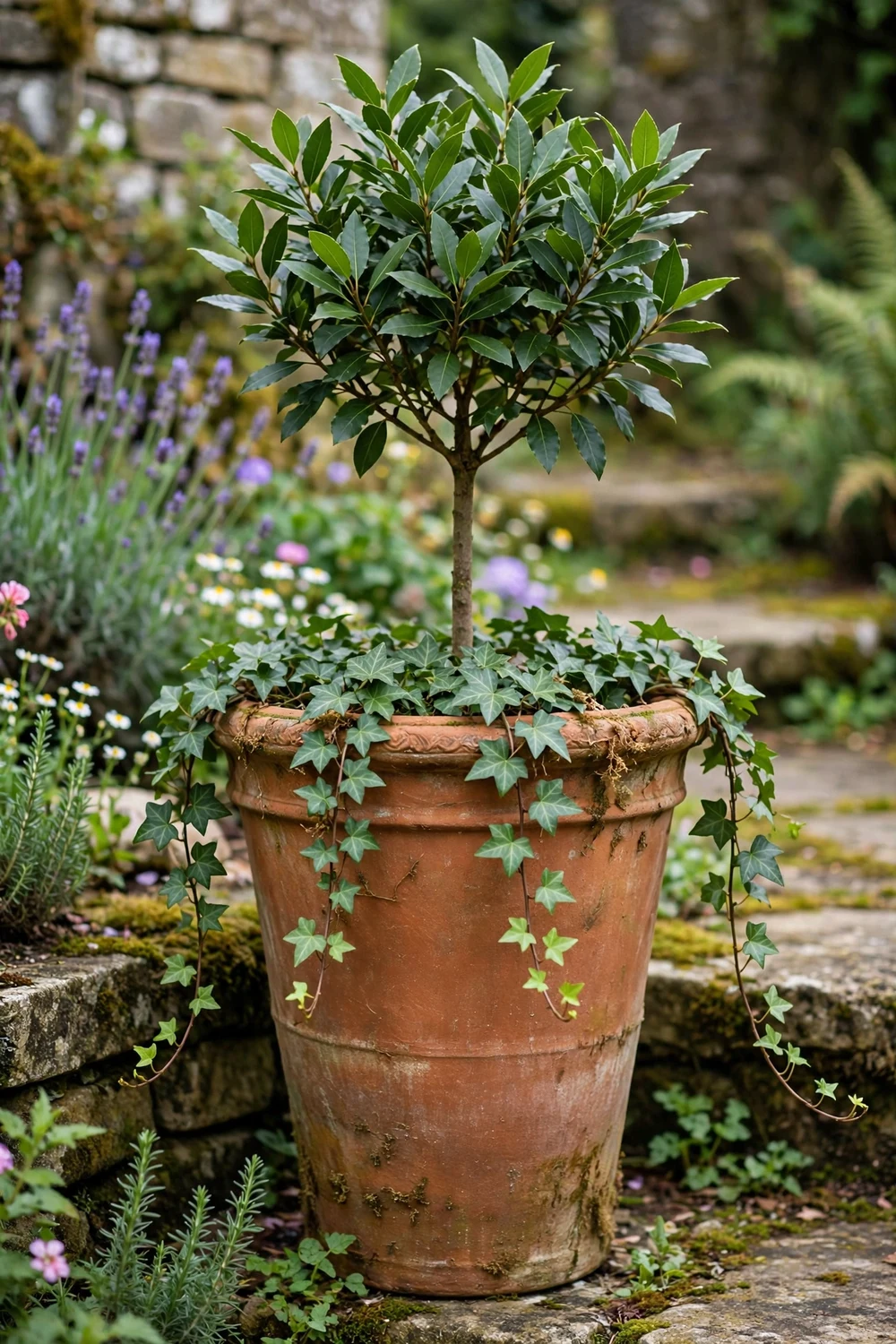
Classic terracotta never goes out of style, and a tall terracotta pot with trailing ivy suits cottage and Mediterranean gardens alike. The porous clay breathes, which keeps roots healthy but means daily watering in summer heat. Plant a dwarf Alberta spruce or bay laurel as the thriller and let English ivy spill over the rim. Ivy is toxic to pets if eaten, so keep this arrangement away from curious dogs. Seal the inside with a liner to slow moisture loss.
Try this: group three terracotta pots in descending heights for a collected look. Difficulty: easy | Cost: $$
11. Olive tree in a modern fiberglass planter
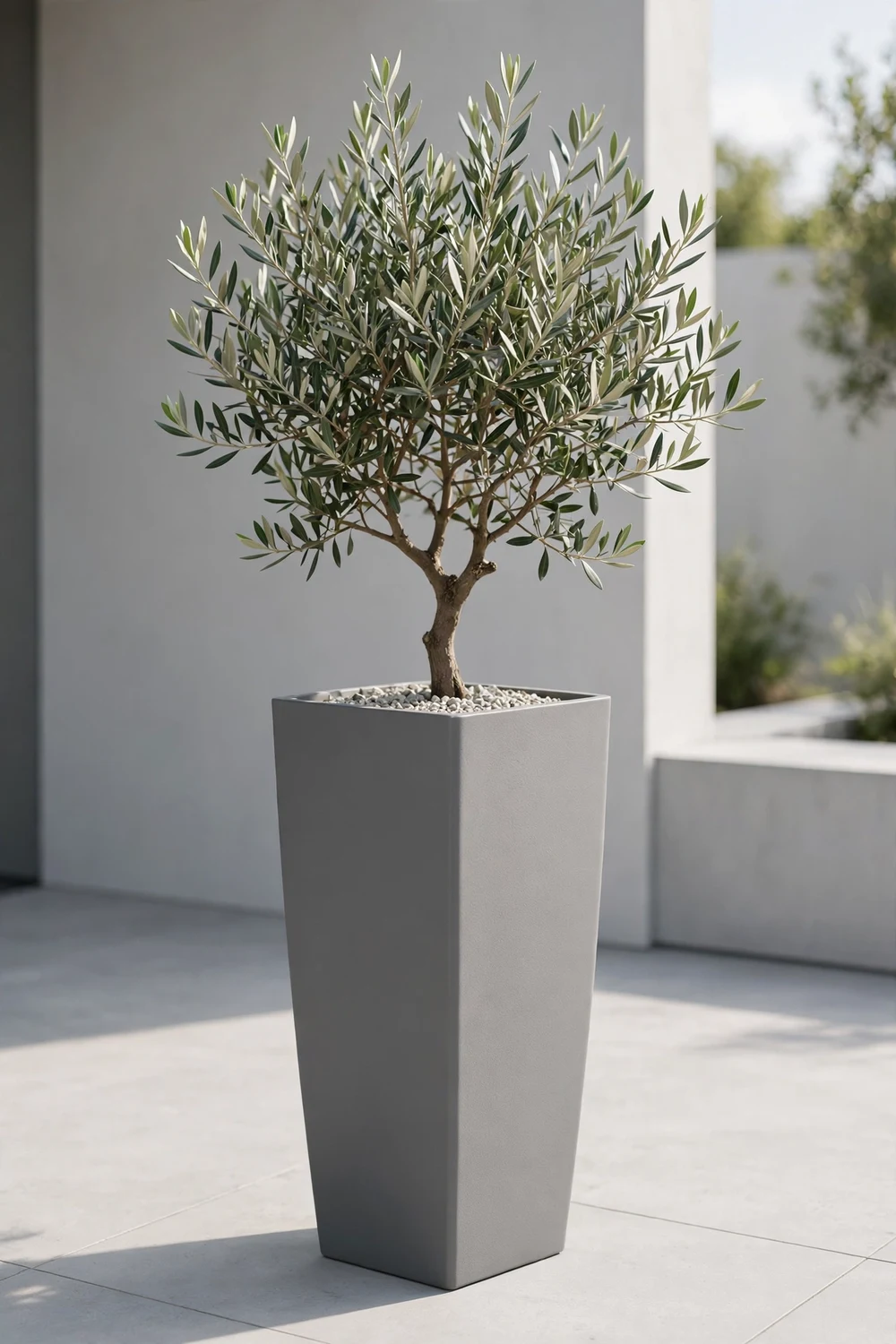
A small olive tree in a sleek fiberglass planter is pure modern Mediterranean style. The silvery leaves and gnarled trunk look sculptural with no flowers needed. Fiberglass is light for its size, frost-resistant, and comes in finishes that mimic stone or concrete. Give the tree full sun and sharp drainage, and bring it inside before hard frost in cold zones. Prune lightly each spring to keep the canopy open.
Try this: top-dress with light gravel to echo a Mediterranean courtyard. Difficulty: moderate | Cost: $$$
12. Topiary ball in a tall urn
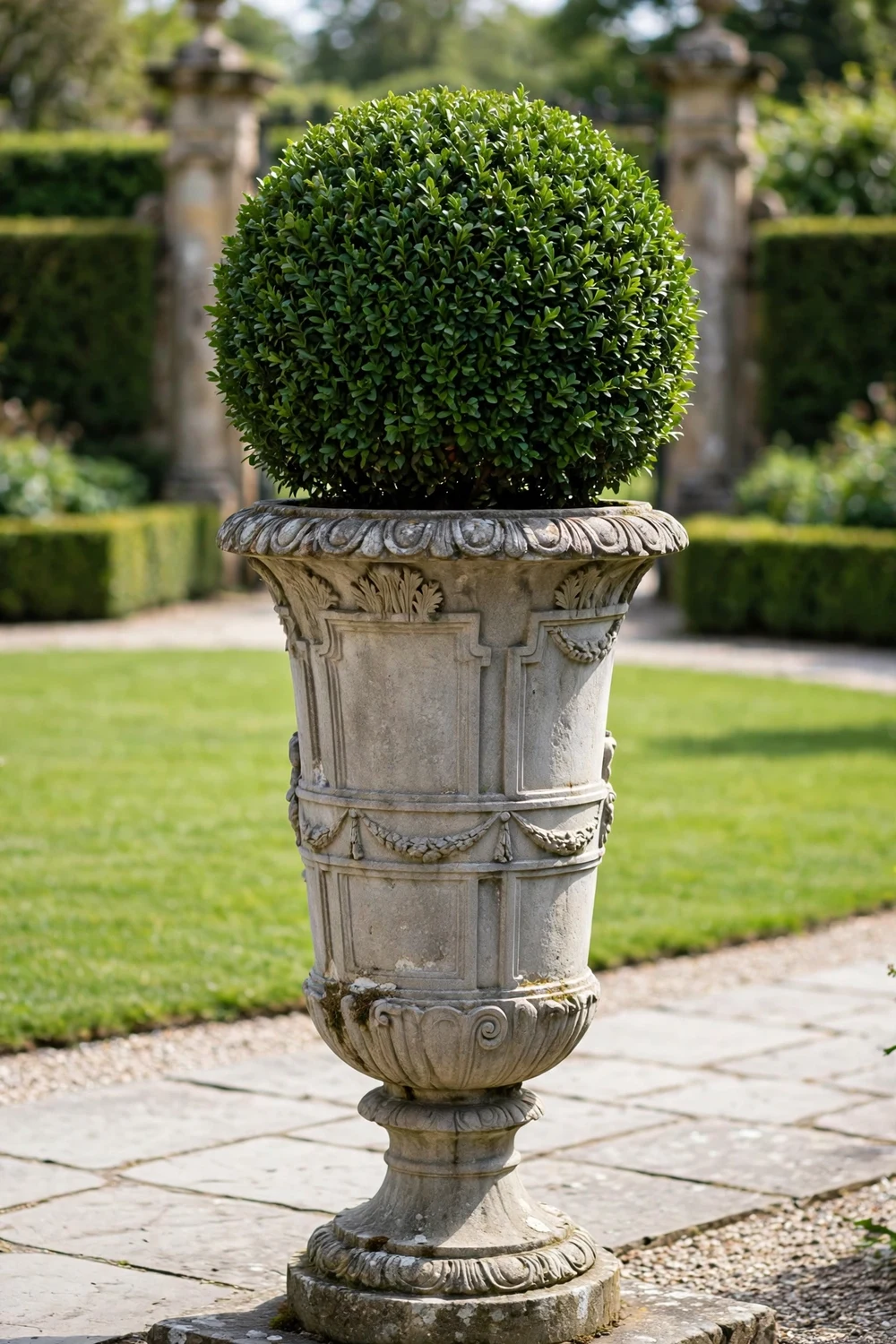
A clipped boxwood or privet ball in a tall urn is the most formal tall planter look, and it works in every season. Buy a pre-shaped topiary to skip years of training, then maintain the sphere with shears twice a year. Boxwood needs consistent water in pots and afternoon shade in hot climates. Flank a doorway or gate with a matching pair for symmetry. Fertilize in spring with a slow-release granular feed.
Try this: use a faux boxwood ball in deep shade where real boxwood struggles. Difficulty: moderate | Cost: $$$
13. Ornamental kale seasonal swap
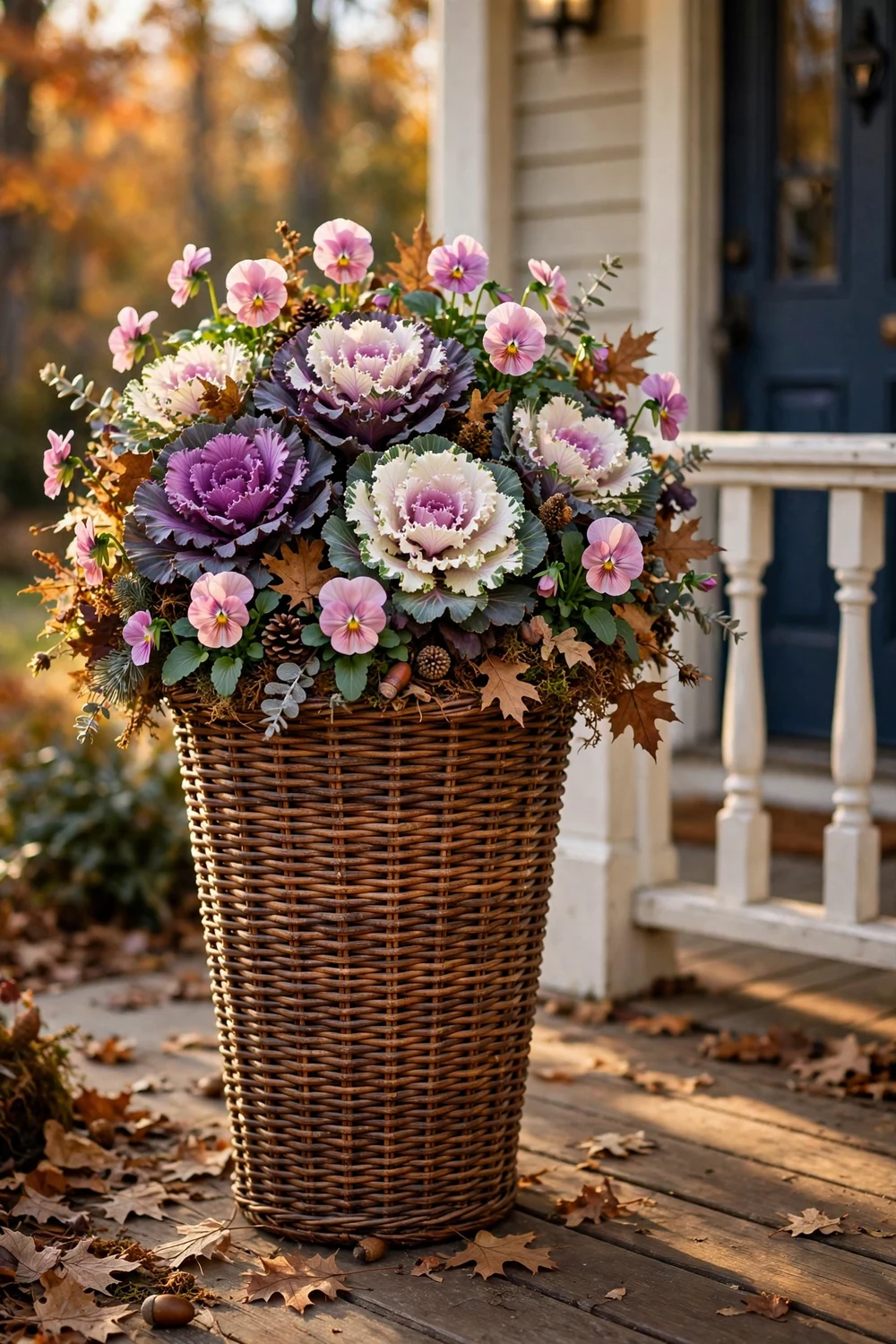
Ornamental kale turns a tired summer planter into a fall showpiece in minutes. Its ruffled purple and white leaves thrive in cool weather and survive light frosts that kill summer annuals. Pull out the spent summer plants, refresh the top 4 inches of soil, and drop in kale plus pansies as fillers. One watering settles everything in. The colors deepen after the first cold snap, so plant in September for peak October color.
Try this: add trailing dusty miller as a spiller for a frost-proof trio. Difficulty: easy | Cost: $$
For a full autumn refresh beyond one pot, these fall porch planter ideas use the same thriller filler spiller formula.
14. Tall planter herb tower
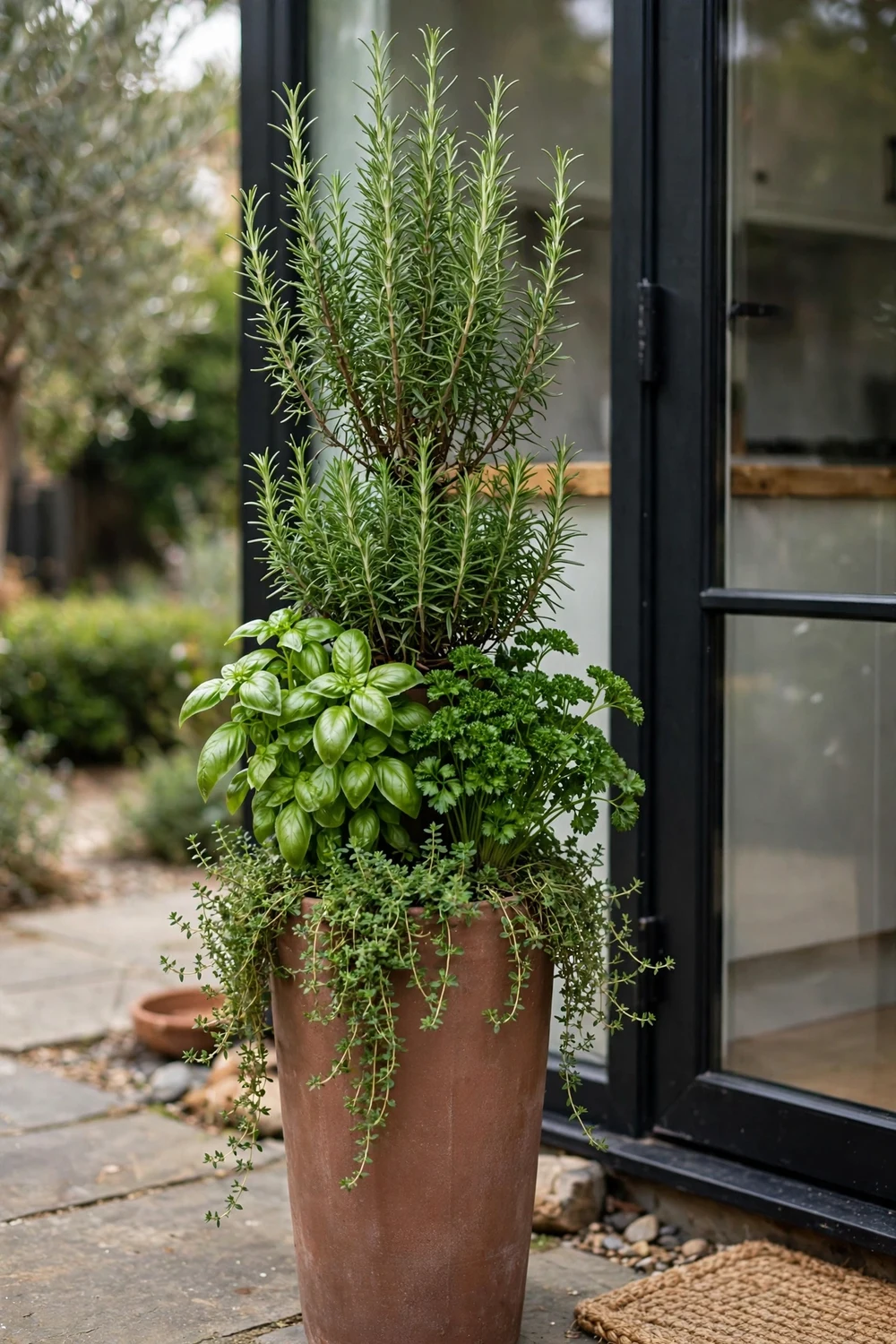
A tall planter stacked with herbs puts a kitchen garden on a 2-foot square of patio. Use a tall narrow pot and plant upright rosemary as the thriller, basil and parsley as fillers, and trailing thyme as the spiller. Keep mint in its own small pot sunk into the arrangement so it does not take over. Place the tower by the kitchen door for easy snipping. Harvest in the morning when the oils are strongest.
Try this: add a small obelisk for climbing nasturtiums as a bonus thriller. Difficulty: easy | Cost: $$
15. Succulent tower in a tall pot
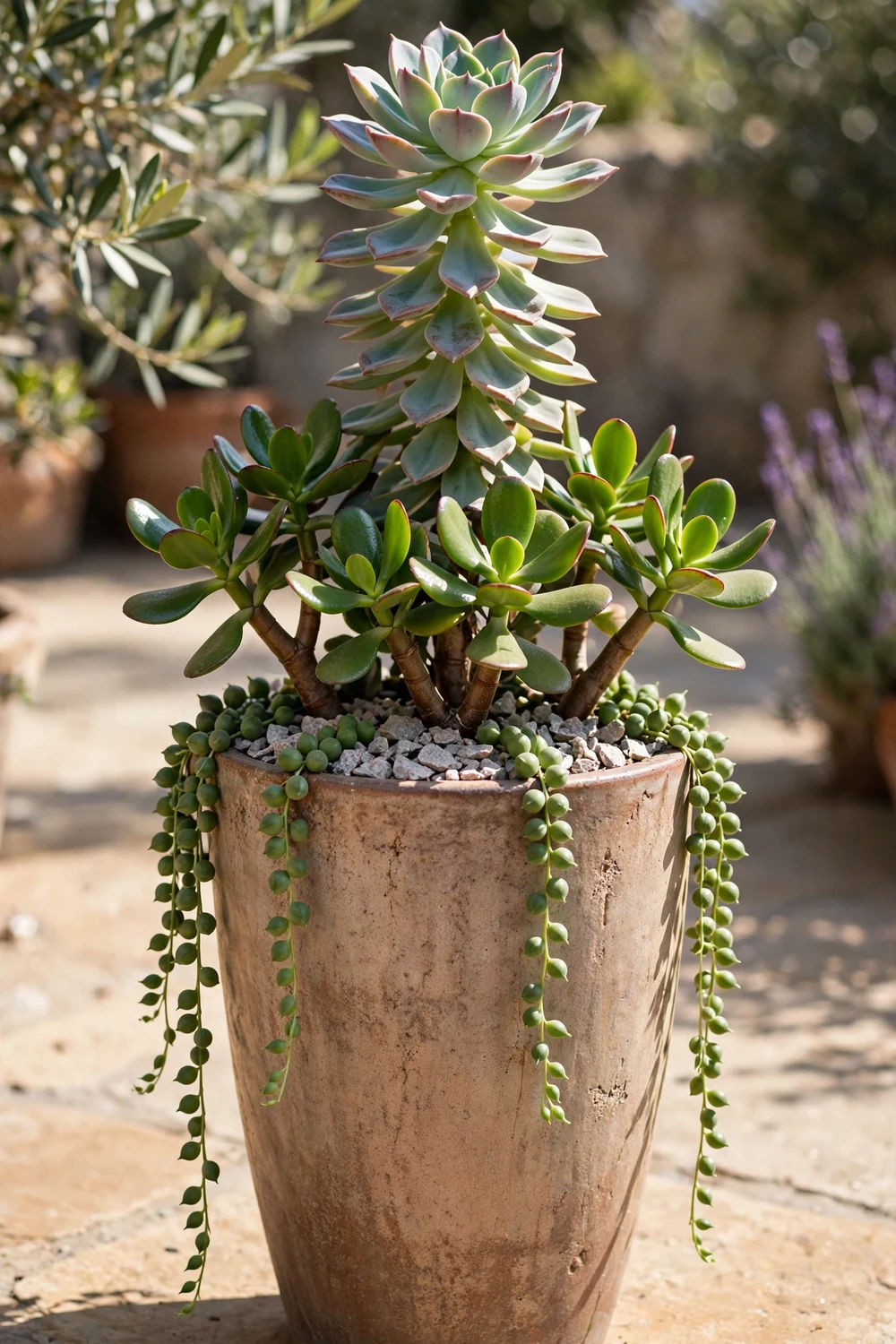
Succulents in a tall planter create a sculptural tower that needs water only every week or two. Use a gritty cactus mix and a pot with excellent drainage, since wet feet rot succulents fast. Stack varieties by height: a tall echeveria or aeonium on top, jade and sedum in the middle, and string of pearls spilling over the edge. Full sun keeps the colors vivid. Bring the pot under cover before the first freeze.
Try this: top the soil with crushed granite for a finished desert look. Difficulty: easy | Cost: $$
16. Tall planter as an indoor room divider
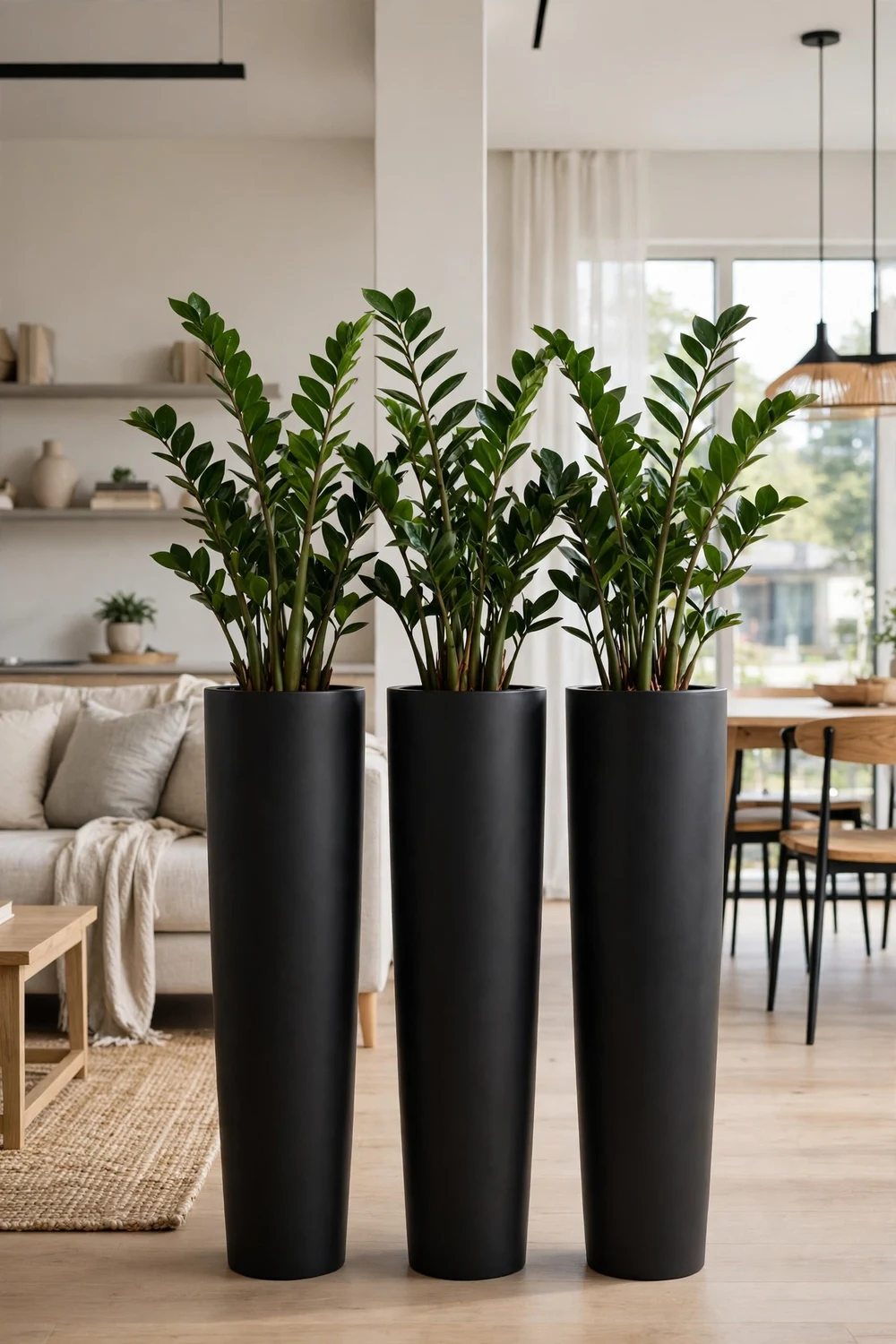
A row of tall planters divides an open room without blocking light. Use three matching floor planters, each 24 to 30 inches tall, filled with upright plants like snake plants or ZZ plants. ZZ plants tolerate very low light, which suits interior walls. Keep the row 6 inches from foot traffic so leaves do not get brushed. This trick works in rentals too, since nothing attaches to walls or floors. Note that ZZ plants are toxic to pets, so place accordingly.
Try this: vary the plant heights slightly so the row feels organic, not rigid. Difficulty: easy | Cost: $$$
17. Tall planter with a trellis for climbers
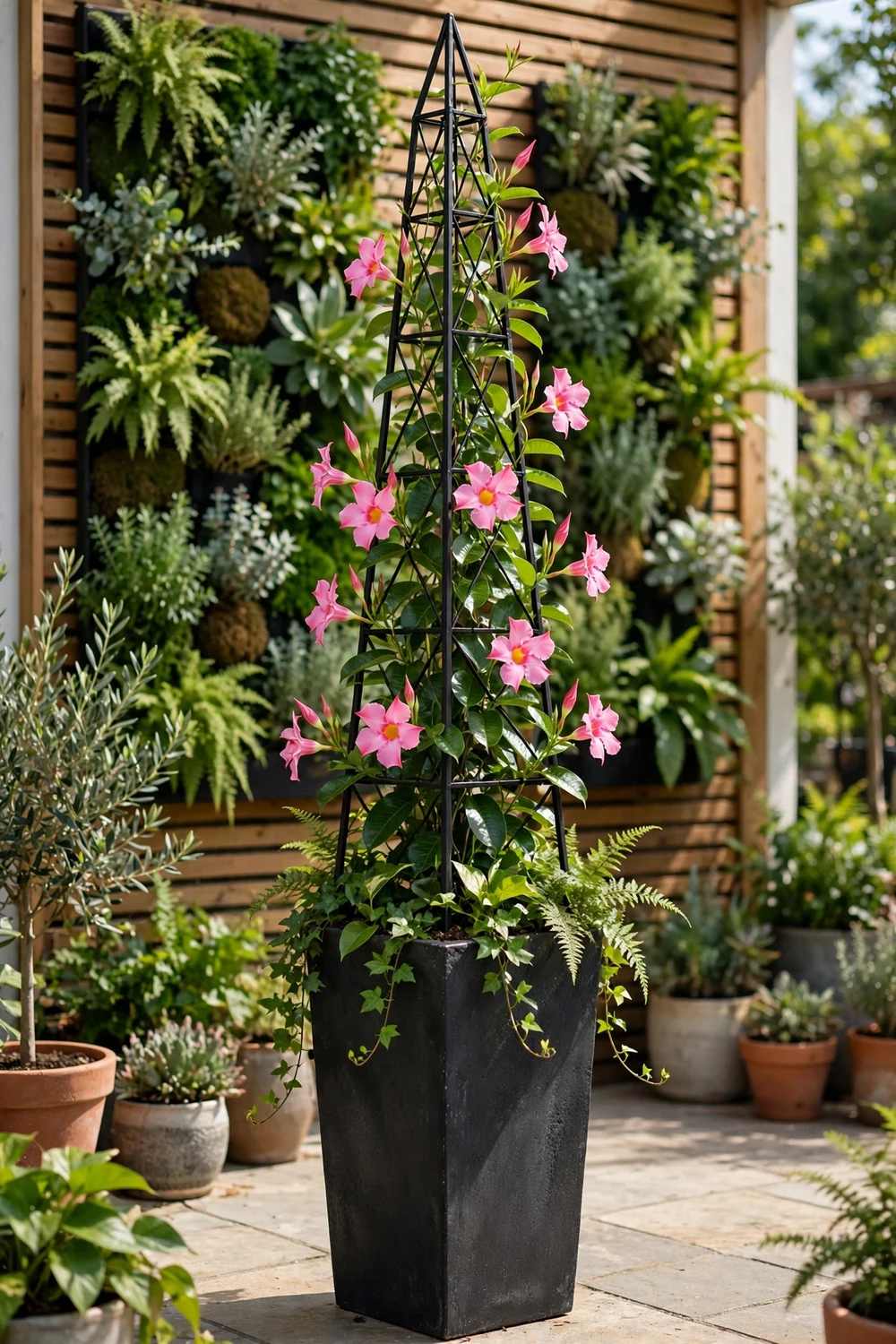
Adding a trellis to a tall planter turns it into a vertical garden for climbers. Push a fan or obelisk trellis into the soil and plant mandevilla, jasmine, or clematis at its base. The vine covers the trellis by midsummer, giving you 6 feet of green from one pot. Anchor the pot well, since a leafy trellis catches wind. Water daily in heat, because climbers in pots dry out fast. Bring tender vines indoors before frost.
Try this: train two different vines up opposite sides for a mixed display. Difficulty: moderate | Cost: $$$
18. Lemon tree in a tall patio planter
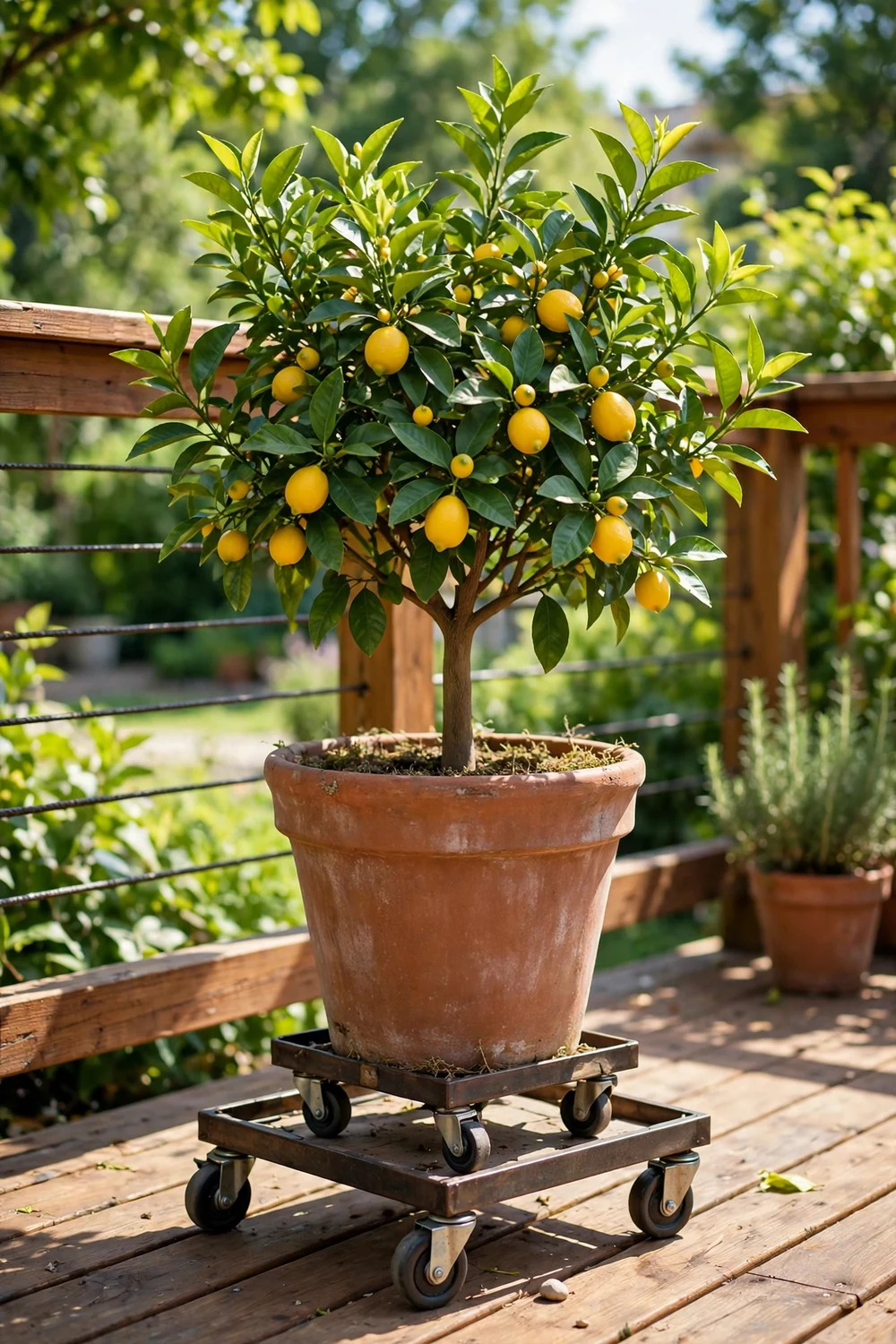
A dwarf Meyer lemon tree in a tall planter gives you fragrant blooms, glossy leaves, and real fruit on a patio. Citrus needs full sun and well-draining soil, and it hates sitting wet. Use a pot at least 18 inches wide with a raised base for airflow. Fertilize monthly through the growing season with a citrus feed. In zones below 9, move the tree indoors to a bright window for winter and cut water back by half.
Try this: roll the pot on a plant caddy to make the winter move easy. Difficulty: moderate | Cost: $$$
How to choose the right tall planter
Match the material to the location first. Fiberglass and resin handle freeze-thaw cycles and stay light enough to move. Terracotta and ceramic look best but crack in hard freezes and weigh a lot when filled. Wood suits rustic styles but needs a liner. Size the pot to the plant: the planter should be about one-third the total height of the finished arrangement. Always confirm drainage holes before you buy, since many decorative pots ship without them.
Tall planter mistakes to avoid
The biggest mistake is filling the whole pot with soil. It wastes money and makes the planter too heavy to move. Fill the bottom third with upside-down nursery pots, then add landscape fabric before the soil. Second, skipping drainage. Drill holes and raise the pot on feet. Third, planting sun-lovers in a shady corner because the pot looked good there. Check the light the spot actually gets through the day, not what you wish it got. Oregon State Extension’s container gardening basics covers soil, drainage, and fertilizer in more detail.
Frequently asked questions
What do you put in the bottom of a tall planter?
Fill the bottom third with lightweight filler like upside-down nursery pots or packing peanuts, then lay landscape fabric over it before adding soil. This cuts the weight, saves on potting mix, and keeps soil from washing into the filler. Never use gravel for drainage, since it actually slows water movement through the soil.
What plants grow best in tall planters?
Tall planters suit upright plants with room for roots: ornamental grasses, dwarf conifers, bamboo, snake plants, bird of paradise, and small trees like olives or citrus. For mixed arrangements, use the thriller filler spiller formula with one tall focal plant, mounding fillers, and trailing spillers.
Do tall planters need drainage holes?
Yes, always. Without drainage, water pools at the bottom and rots the roots. If your decorative pot has no holes, drill them with a masonry bit for ceramic or a standard bit for wood and plastic. Set the pot on feet or bricks so water can actually escape.
How do I keep a tall planter from tipping over?
Use a wide, heavy pot rather than a narrow one, and place a few inches of gravel or sand at the very bottom for ballast. For top-heavy trees, choose a planter whose base is at least half the height of the plant. In windy spots, cluster planters together or anchor trellised pots to a wall.
Can tall planters stay outside in winter?
It depends on the pot and the plant. Frost-proof fiberglass, resin, and wood planters survive freezing, but terracotta and thin ceramic can crack. Hardy plants like spruce and boxwood stay out with mulch protection, while tropicals like bird of paradise and citrus must come inside before frost.
A tall planter is one of the fastest ways to add structure to a porch, patio, or empty corner. Start with one statement plant or a simple thriller filler spiller mix, get the drainage right, and the planter will look good for years. Pick the idea that fits your light and your budget, and plant it this weekend.
Want more ideas like these? Explore 15 Tall Planters With Artificial Plants Ideas.


