



A pergola gives a patio bones, and a trellis gives it skin. Together they turn an open slab into a room with walls of green, filtered shade, and a reason to linger.
These 25 trellis pergola patio ideas range from a $40 fan trellis to a full cedar pergola build. Each one names the structure, the plants that suit it, and what it really costs, so you can pick the project that fits your patio and your weekend.
Quick takeaways
- Size the pergola to the furniture, not the patio: it should cover the seating zone with about 2 feet of margin.
- Set posts in concrete piers below the frost line; a pergola that leans is almost always a footing problem.
- Match the vine to the structure’s strength: wisteria needs timber framing, clematis climbs light trellis fine.
- Budget $40 to $300 for trellis projects; $1,000 to $4,000 for pergola builds.
- Prune climbing plants yearly or they will swallow the structure and block the light you wanted.
1. Classic Cedar Pergola Dining Room

Four cedar posts, crossbeams, and rafters over the dining set make an outdoor room in a weekend. Cedar resists rot without chemical treatment, which matters when vines and food share the space. A 10 by 12 foot footprint fits a six-person table with walking room. Set the posts 8 feet high so tall guests clear the beams and hanging lights fit underneath.
Try this: notch the beams into the posts instead of just bolting; the joint carries the load for decades.
Cost: $$$$· Difficulty: Moderate
2. Jasmine Trellis Privacy Wall

A freestanding trellis panel planted with star jasmine blocks the neighbor’s view and perfumes the patio in spring. Star jasmine is evergreen in warm zones and covers a 6 by 8 foot panel in two seasons. Build the panel from cedar lattice on 4×4 posts set in concrete so it stands up to wind once the vine fills in. One panel screens a seating nook; three enclose a patio.
Try this: plant jasmine on both sides of the panel for faster, fuller coverage.
Cost: $$$· Difficulty: Easy
3. Arched Trellis Entryway

An arched trellis over the patio entrance makes arrival feel like an event. A 4-foot-wide arch fits the path; 7 feet of clearance keeps it walkable. Climbing roses or clematis soften the wood within a season or two. Anchor the legs in concrete footings, since an arch catches wind from both sides. This is a one-day build with a big visual payoff.
Try this: plant a different climber on each leg for a two-tone arch by midsummer.
Cost: $$$· Difficulty: Easy
4. Wisteria Canopy Pergola

Wisteria on a pergola is the showstopper: hanging purple blooms, deep summer shade, and a structure that looks better every year. It demands a heavy timber pergola, 6×6 posts and doubled beams, because mature wisteria weighs hundreds of pounds. Prune twice a year, summer and winter, or it eats the gutters. American wisteria is less aggressive than the Asian species and suits smaller yards.
Try this: train two main trunks up opposite posts and let them meet across the top for even coverage.
Cost: $$$$· Difficulty: Advanced
5. Corner Trellis for Small Patios

A triangular corner trellis turns dead patio corners into the prettiest spot out there. Two 4-foot lattice panels joined at the corner, planted with clematis, give height without eating floor space. Clematis likes its roots cool and its head in the sun, so mulch the base well. A small bistro set tucked in front completes a morning coffee corner.
Try this: choose a repeat-blooming clematis so the corner flowers from spring to fall.
Cost: $$$· Difficulty: Easy
6. Freestanding Trellis Screen

A movable trellis screen divides a big patio into zones: dining here, lounging there. Build it like a large picture frame on feet, 6 feet tall and 4 feet wide, so one person can shift it. Morning glory or black-eyed Susan vine covers it in a single summer from seed. Two screens angled together make a windbreak that still lets breeze through.
Try this: put the screen on locking casters if you rearrange the patio often.
Cost: $$$· Difficulty: Easy
7. Pergola Over Outdoor Kitchen

A pergola over the grill zone keeps the cook out of the worst sun and gives the kitchen a defined footprint. Keep the roof open-slatted, never solid, above any grill; smoke and heat need to escape. Mount a task light under a beam and add a small shelf on one post for tools. A 8 by 10 foot pergola covers most grill-plus-prep setups.
Try this: hang utensils from S-hooks on the crossbeam to free up the prep counter.
Cost: $$$$· Difficulty: Moderate
8. Fan Trellis With Climbing Roses

A fan trellis against the house wall trains climbing roses into a perfect spread. The fan shape suits roses because it holds canes apart, which improves airflow and cuts disease. Mount it 4 inches off the wall so air circulates behind the plant. Tie new canes horizontally; horizontal canes bloom far more than vertical ones.
Try this: pick a disease-resistant climber like New Dawn to cut spraying to nearly zero.
Cost: $$$· Difficulty: Easy
9. Modern Metal Pergola

A powder-coated steel or aluminum pergola suits modern patios where cedar would look rustic. Metal frames come as kits with pre-drilled parts and go up in a day with two people. They never rot, never need staining, and handle climbing plants fine with a trellis panel added. Black frames recede visually; white frames pop against greenery.
Try this: add wood-look composite trellis panels to a metal frame for warmth without maintenance.
Cost: $$$$· Difficulty: Moderate
10. Trellis With String Lights
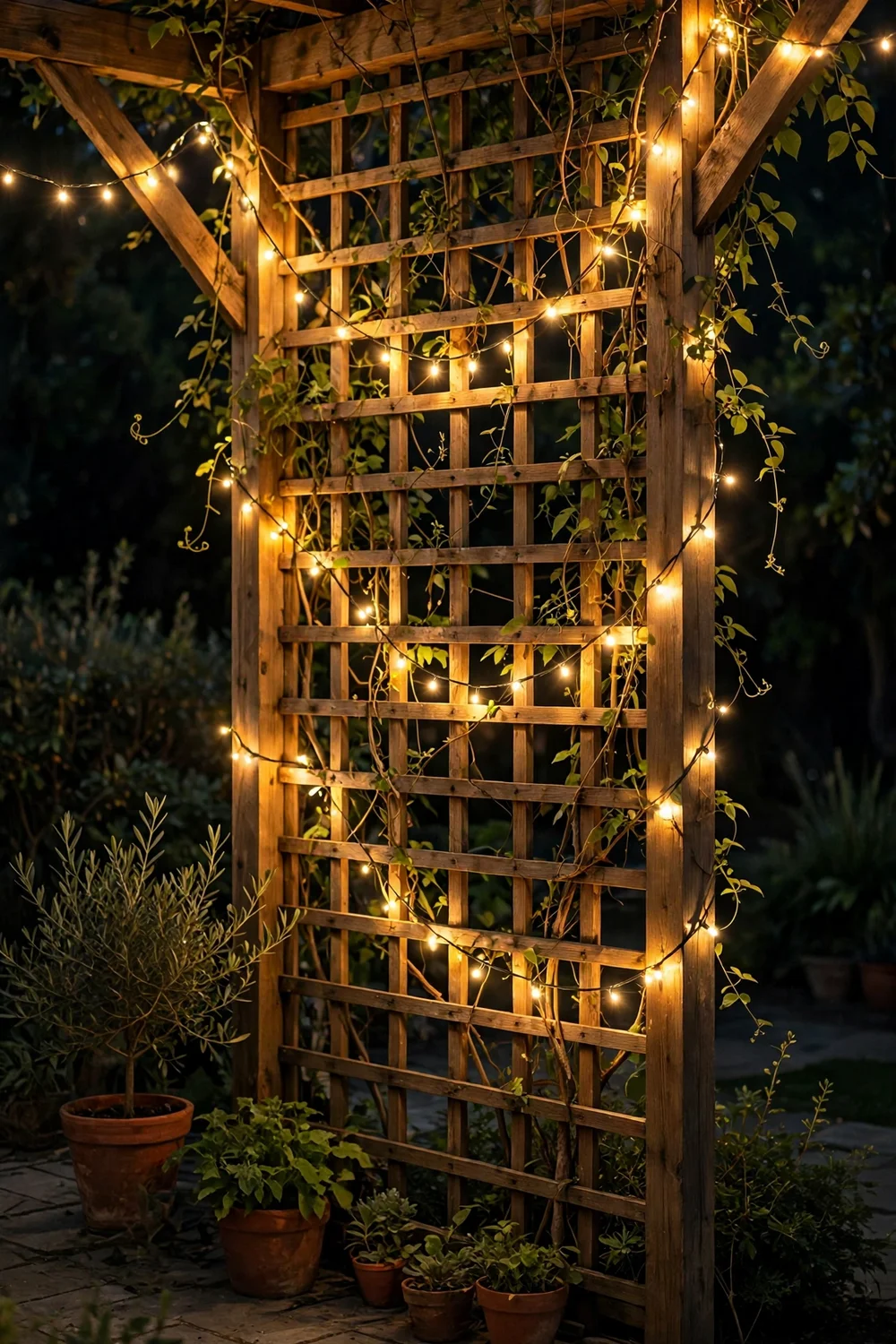
String lights woven through a trellis turn the structure into evening decor. Wrap commercial-grade LED strands loosely so vines can still grow through, and use warm 2700K bulbs. Solar strands work where no outlet reaches, but plug-in strands stay brighter longer. This trick works on any trellis you already own, which makes it nearly free.
Try this: run the lights on a dusk-to-dawn timer so the patio lights itself every night.
Cost: $$· Difficulty: Easy
11. Pergola Swing Bed

A daybed hung from the pergola beams by ropes or chains is the seat everyone fights over. Hang it from the beams, never the rafters, and through-bolt the hangers; a loaded swing bed can top 400 pounds. Twin-size outdoor mattress with a washable cover fits most pergola bays. Gentle motion plus shade makes it the nap spot of the yard.
Try this: use marine-grade rope and check the knots each spring before swing season.
Cost: $$$· Difficulty: Moderate
12. Espalier Fruit Trellis Wall

An espaliered fruit tree trained flat on wires is a living wall that also makes dessert. Apples and pears take to espalier best; figs work in warm zones. Set horizontal wires 18 inches apart on the wall or a freestanding frame, and tie young branches flat each winter. It takes 3 years to fill in, but the result is pure garden theater plus real fruit.
Try this: start with a pre-trained 2-year tree from a nursery to skip the hardest first seasons.
Cost: $$$· Difficulty: Moderate
13. Pergola With Retractable Shade

Slide-on-wire fabric panels give a pergola adjustable shade without the cost of a louvered roof. Stainless cables run between the beams, and outdoor fabric panels glide on hooks. Open them for full sun, close them for shade, remove them for winter. The whole add-on costs $150 to $400 on a pergola you already own.
Try this: slope the cables an inch or two so rain runs off instead of pooling in the fabric.
Cost: $$$· Difficulty: Easy
14. Obelisk Trellis Planters

Obelisk trellises in big planters add height anywhere on the patio with zero digging. A 5-foot cedar obelisk in a 20-inch planter holds clematis, mandevilla, or annual vines all summer. The planters need to be heavy or the whole thing tips in wind; fill the bottom third with gravel. Group three at different heights for a designed look.
Try this: plant mandevilla in warm zones for glossy leaves and flowers till frost.
Cost: $$· Difficulty: Easy
15. House-Attached Pergola

Bolting one side of the pergola to the house cuts the post count in half and ties the structure to the architecture. Use a proper ledger board lagged into the house framing, with flashing above it so water never gets behind. This is the most stable pergola you can build, and it shades the patio doors too, which cools the house. Check that the attachment point hits framing, not just siding.
Try this: slope the rafters slightly away from the house so rain drips off the outer edge.
Cost: $$$$· Difficulty: Moderate
16. Trellis Fence Topper

A 2-foot lattice topper on an existing fence adds privacy and a planting surface without replacing the fence. Check local height limits first; many cities cap fences at 6 feet total. Lightweight cedar lattice screwed to the fence posts handles vines like clematis or annual morning glory. It reads as a design choice, not a workaround.
Try this: stain the topper to match the fence so it looks original, not added on.
Cost: $$$· Difficulty: Easy
17. Pergola Over Hot Tub

A pergola over the hot tub adds privacy, a place for lights and curtains, and shelter from light rain. Keep all wood and fabric clear of the tub’s steam path, and use outdoor-rated electrical for any lights or speakers. Privacy curtains on three sides make it feel like a spa; leave the fourth open for the view. Size it 2 feet wider than the tub on each side.
Try this: mount a small waterproof speaker under a beam for music without cluttering the tub edge.
Cost: $$$$· Difficulty: Moderate
18. Rustic Branch Trellis

A trellis lashed together from pruned branches costs nothing and suits cottage patios perfectly. Use straight hardwood prunings, lash the joints with garden twine, and sink the legs 12 inches into soil or a planter. Sweet peas, nasturtiums, or pole beans cover it in one season. It lasts 2 to 3 years, which is fine for something free.
Try this: build it in early spring and plant sweet peas at the base the same day.
Cost: $$· Difficulty: Easy
19. Pergola With Outdoor Curtains

Curtains on a pergola add privacy, block low sun, and move beautifully in breeze. Hang outdoor-rated panels on stainless cable between the posts, and tie them back when you want the view. White or natural linen-look fabric keeps the space bright. This is the fastest way to make a plain pergola feel finished.
Try this: weight the hems so the curtains hang straight instead of billowing into the seating.
Cost: $$$· Difficulty: Easy
20. Trellis Herb Wall

A trellis panel on a sunny patio wall becomes a vertical herb garden with S-hooks and small pots. Thyme, oregano, mint, and basil all grow in 6-inch pots hung at chest height, right where the grill cook can reach them. Keep mint in its own pot; it bullies everything else. Water wall pots daily in summer; they dry out fast.
Try this: hang the pots slightly tilted forward so rain and watering reach the roots, not the wall.
Cost: $$$· Difficulty: Easy
21. Double Pergola Walkway

Two pergolas in a row create a shaded walkway from the house to the patio, which makes the whole yard feel designed. Keep both the same height and spacing so they read as one feature. Climbing roses on the posts and low plantings along the path finish it. This suits long narrow yards where the patio sits far from the door.
Try this: run low-voltage path lights along the walkway so it works after dark too.
Cost: $$$$· Difficulty: Advanced
22. Pergola Fire Pit Zone

A pergola framing the fire pit zone defines the evening gathering spot. Keep the pergola footprint generous, at least 4 feet clear between the fire and any post, and never hang fabric or lights low over the flames. Use only fire pits rated for use under structures, and follow the manufacturer’s clearance specs exactly. A propane fire table is the safest choice here.
Try this: point the open side of the pergola toward the best view so seats face outward.
Cost: $$$$· Difficulty: Moderate
23. Lattice Trellis With Clematis
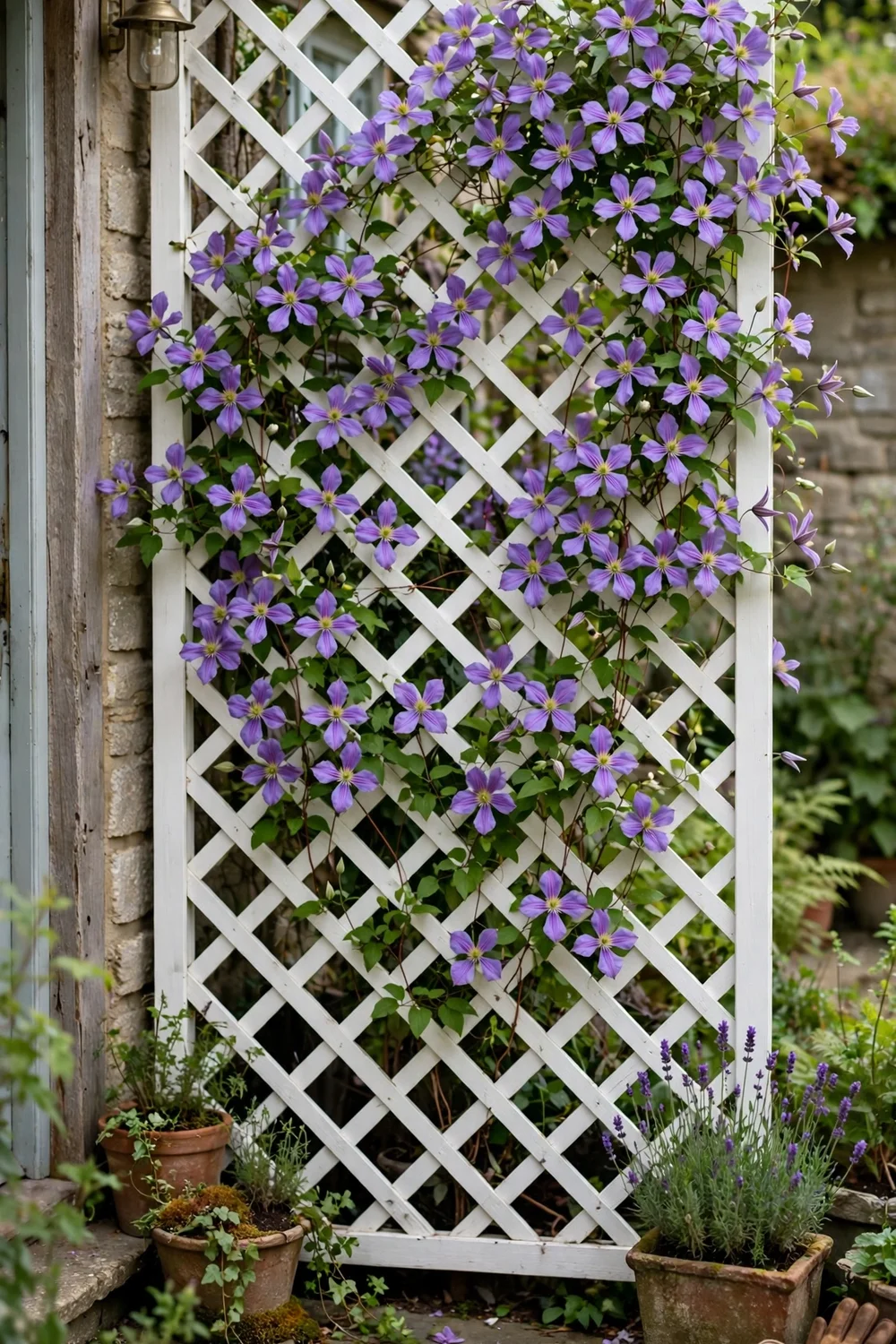
A classic white lattice panel smothered in clematis is the cottage patio look in one project. Clematis climbs by twining leaf stems, so it needs thin supports; lattice slats are ideal. Plant the clematis 6 inches deeper than nursery level and mulch heavily to keep roots cool. One vigorous plant covers a 4 by 6 foot panel in two seasons.
Try this: pair an early and a late clematis on the same panel for flowers from May to September.
Cost: $$$· Difficulty: Easy
24. Pergola Daybed Lounge

A daybed under the pergola with sheer curtains makes a nap-worthy lounge that still feels open. Use a powder-coated frame with quick-dry cushions, and sheer outdoor curtains for daytime privacy that never blocks the breeze. This setup shines on deep patios where a dining set would feel lost. Add a small side table for books and drinks.
Try this: choose curtains you can machine wash; outdoor sheers collect pollen fast.
Cost: $$$$· Difficulty: Easy
25. Climbing Hydrangea Pergola

Climbing hydrangea on pergola posts gives white summer blooms and bark that looks good in winter too. It climbs by aerial rootlets, so it grips posts and beams on its own, but it is slow: expect 3 to 5 years for real coverage. Plant it on the north or east posts where it gets some shade; it dislikes hot afternoon sun on its roots.
Try this: be patient and do not fertilize heavily; fast soft growth is weaker on this vine.
Cost: $$$· Difficulty: Easy
How to choose between a trellis and a pergola
Pick a trellis when you need height, screening, or a plant support on a wall, fence, or small patio. Pick a pergola when you need overhead structure: shade, lights, a swing, or a defined outdoor room. Most patios end up with both, and that is fine; the trellis handles the vertical layer while the pergola handles the roof. Start with whichever solves your biggest problem, sun or privacy, and add the other later.
Mistakes to avoid with trellis and pergola projects
The top mistake is weak footings: posts set shallow or in soil alone lean within a couple of seasons, especially once vines add weight and wind load. Second is planting an aggressive vine on a light structure; wisteria will crush a flimsy kit pergola. Third is forgetting mature size: that cute clematis wants a 6-foot panel, and the trumpet vine wants the whole fence. Match the plant to the structure’s strength and your willingness to prune.
Trellis and pergola safety essentials
Anchor every freestanding structure for your wind zone, and keep grills and fire pits clear of wood posts, fabric, and dry vines. Use pressure-treated lumber rated for ground contact on any post that meets soil, and hire a licensed pro for house-attached ledgers and any electrical work. Clemson Extension’s guide to vine selections for landscaping helps match the plant to the support.
Frequently asked questions
How much does a pergola cost?
A DIY cedar pergola over a dining area typically runs $1,000 to $2,500 in materials. Kits in metal or wood run $1,200 to $3,000, and professionally built custom pergolas run $4,000 to $10,000 or more depending on size and features.
What is the best vine for a pergola?
For fast coverage, wisteria, trumpet vine, or hardy kiwi on a heavy timber frame. For lighter structures, clematis, star jasmine, or climbing roses. For one-season coverage from seed, morning glory or black-eyed Susan vine.
Do I need a permit for a pergola?
Often yes, especially for attached or large freestanding pergolas. Small freestanding trellises almost never need permits. Check with your city or county, and check HOA rules, before building.
How do I keep a trellis from falling over?
Set posts in concrete footings at least 2 feet deep (below frost line in cold climates), use ground-contact-rated lumber, and brace the structure until the concrete cures. Top-heavy vine growth adds serious wind load, so build stronger than the empty trellis seems to need.
What is the difference between a trellis and a pergola?
A trellis is a vertical lattice panel that supports climbing plants and screens views. A pergola is an overhead open-roof structure on posts that defines a space and gives partial shade. They are often combined: trellis panels on pergola posts with vines overhead.
Conclusion
A trellis gives your patio green walls and a pergola gives it a ceiling; together they make an outdoor room worth using every day. Start with the structure that solves your biggest need, plant for it, and prune like you mean it.
For climbing roses to cover your new trellis, these climbing rose trellis ideas cover varieties and training. And to arrange furniture under the finished pergola, these backyard patio design layouts show simple arrangements that work.
For trellises used as privacy screens, see these trellis ideas for privacy.


