



Red oak cabinets show their grain in a way smoother woods never do, and that grain decides how the whole kitchen reads. Pick the wrong stain or the wrong hardware and the room can turn orange or heavy fast. Pick the right pairing and the same cabinets give you warmth, depth, and a kitchen that still looks right in twenty years.
This guide covers 26 red oak kitchen cabinet ideas, from natural shaker doors to espresso stains, glass fronts, and budget refinish projects. I swapped one builder-grade upper cabinet for a glass-front red oak door last spring and watched the whole wall stop looking flat, so I know how much one cabinet choice can change a room. Every idea below names a stain, a finish, a countertop, or a hardware pairing, plus a cost and difficulty label, so you can tell at a glance what fits your budget and your skill level.
Quick takeaways
- Red oak takes stain well, so test any stain on a scrap door in your own kitchen light before you commit to a full set.
- Warm metals (brass, bronze, copper) suit red oak best, while cool chrome can fight the wood’s amber tones.
- Light stains keep small kitchens bright, and dark stains need light counters or walls to stay balanced.
- Glass fronts and open shelving break up long runs of wood without replacing a single cabinet box.
- Refinishing existing red oak cabinets costs far less than new ones and works well when the boxes are still solid.
1. Natural clear-finish shaker cabinets

A clear coat with no stain lets red oak’s pink-brown tones and open grain do the talking. Shaker doors keep the look clean, and the flat center panel shows off the grain pattern without extra carving. Pair these cabinets with a light quartz counter and warm white walls so the wood stays the warmest thing in the room. A clear satin finish also makes daily wipe-downs simple, since grease sits on the finish instead of soaking into raw wood.
Try this: Order one sample door in clear satin and check it at breakfast light and at night under your own bulbs before you sign off.
Cost: $$ · Difficulty: Moderate
2. Honey-stained raised panel cabinets

Honey stain warms red oak without pushing it toward orange, and raised panels add the classic shape that suits older homes. The stain settles into the open grain and gives each door a slightly varied tone, which reads as real wood rather than a printed finish. Crown molding on top and a granite counter in earthy browns complete the traditional look. Keep wall paint in the cream family so the honey tones stay soft instead of loud.
Try this: Pair honey cabinets with oil-rubbed bronze pulls to pull out the stain’s deeper notes.
Cost: $$ · Difficulty: Moderate
3. Golden oak with cream walls

Golden oak stain sits a step lighter than honey, which helps in kitchens with one small window or north-facing light. Cream walls bounce light back into the room, and a white subway tile backsplash gives the eye a quiet place to rest between wood surfaces. This pairing works well in 1990s kitchens where the cabinets are solid but the room feels dated. A fresh stain and cream paint can update the space for far less than a full remodel.
Try this: Paint the walls first, then hold stain samples against the dry paint in daylight.
Cost: $ · Difficulty: Easy
4. Espresso-stained red oak for contrast

Espresso stain goes dark enough to read almost black-brown, but the red oak grain still shows through as fine lines. That grain keeps dark cabinets from looking flat or painted. White quartz counters and a pale backsplash give the contrast dark cabinets need, and brass knobs add small warm points across the fronts. Use this stain on lower cabinets first if a full dark kitchen feels risky, then decide whether the uppers should follow.
Try this: Test espresso stain on a lower door only and live with it for a week before staining the uppers.
Cost: $$ · Difficulty: Moderate
5. Walnut-stained island with natural perimeter cabinets

A walnut-stained island next to natural red oak perimeter cabinets gives you two wood tones that still belong together, since both share the same grain. The darker island reads as furniture, which suits open kitchens where the island faces the living room. Keep the countertop the same on both so the two tones look planned rather than accidental. Bar stools in leather or wood tie the island back to the rest of the room.
Try this: Match the island stain to your dining table wood for a link across the open space.
Cost: $$$ · Difficulty: Hard
6. Chestnut stain with brass hardware

Chestnut stain lands between honey and espresso, with a reddish-brown depth that suits both traditional and transitional kitchens. Brushed brass hardware picks up the warm undertones without the shine of polished gold, and it ages with a soft patina that deepens over time. Use cup pulls on drawers and knobs on doors for a settled, unfussy look. A butcher block or warm granite counter keeps the palette in the same warm family.
Try this: Swap one knob style at a time, starting with the most-used drawers, to check the brass tone in your light.
Cost: $$ · Difficulty: Easy
7. Red oak with butcher block counters

Butcher block counters and red oak cabinets share a wood-first character, and together they make a kitchen feel hand-built. Choose a butcher block a shade lighter or darker than the cabinets so the two woods read as separate layers instead of one block of brown. Oil the block every few months and wipe spills fast near the sink, since wood counters need more care than stone. The payoff is a warm, forgiving surface that suits daily cooking.
Try this: Use butcher block on the island only if full wood counters feel like too much upkeep.
Cost: $$ · Difficulty: Moderate
8. Red oak with white quartz counters

White quartz counters give red oak cabinets a clean frame and keep the room bright even with a medium stain. Quartz resists stains from coffee, tomato sauce, and wine better than marble, which matters in a hardworking kitchen. A simple white backsplash in subway or large-format tile keeps the focus on the wood grain. This pairing suits buyers who like wood warmth but want the counters to stay low-maintenance for years.
Try this: Pick a quartz with faint warm veining rather than bold grey veins, which can clash with red oak tones.
Cost: $$$ · Difficulty: Hard
9. Red oak with earthy granite counters

Earthy granite in browns, tans, and creams echoes red oak’s own palette, so the counters and cabinets read as one warm composition. Granite’s natural veining adds a second texture next to the wood grain, which keeps large kitchens from looking flat. Seal granite once a year and wipe acidic spills promptly to protect the seal. A beige or cream backsplash in stone or tile ties the two surfaces together without adding a third strong pattern.
Try this: Bring a cabinet door sample to the stone yard and view slabs in natural light, not just showroom spots.
Cost: $$$ · Difficulty: Hard
10. Red oak with subway tile backsplash

A white subway tile backsplash breaks up the wood between counter and upper cabinets and adds a crisp line that suits almost any red oak stain. Run the tile to the underside of the uppers for a finished look, and use a warm white grout instead of bright white to avoid a cold edge against the wood. Subway tile costs less than most stone backsplashes and cleans with a damp cloth. It works in small kitchens because the simple grid does not add visual noise.
Try this: Lay tile in a running bond pattern for a classic look, or stack it vertically for a quiet modern twist.
Cost: $ · Difficulty: Moderate
11. Glass-front upper cabinets in red oak

Glass-front uppers lighten a wall of red oak by showing dishes, glassware, and a bit of wall color behind them. Keep the contents simple, with matching white dishes or a small set of colored bowls, so the open view stays calm. Interior cabinet lights make glass fronts glow at night and turn storage into a feature. Swap only two or three doors to glass if a full run feels too exposed for everyday dishes.
Try this: Start with the doors flanking the range or sink, where glass reads as a deliberate accent.
Cost: $$ · Difficulty: Moderate
12. Red oak open shelving beside cabinets

Open red oak shelves next to closed cabinets give you display space and easy reach for daily dishes, while the closed cabinets hide the rest. Match the shelf wood and stain to the cabinets so the two read as one built-in unit. Limit each shelf to one row of items with breathing room, since crowded shelves undo the calm look. Open shelves suit renters too, since a pair of brackets and boards can come down without touching the cabinet boxes.
Try this: Anchor shelf brackets into wall studs, not drywall alone, since dishes add real weight fast.
Cost: $ · Difficulty: Easy
13. Red oak pantry tower cabinets

Full-height red oak pantry towers use the vertical space beside the fridge or range that often goes to waste. Pull-out shelves inside turn deep towers into usable storage, so cans and small appliances stop getting lost at the back. Match the tower doors to the rest of the cabinets for a built-in wall look. A tower on each side of the fridge can frame the appliance and make the whole wall feel planned.
Try this: Add pull-outs to the lowest two shelves first, where heavy items are hardest to reach.
Cost: $$ · Difficulty: Moderate
14. Red oak appliance garage

An appliance garage is a red oak cabinet with a lift-up or tambour door that hides the toaster, coffee maker, and blender behind matching wood. The counter stays clear, and the kitchen reads calmer even when small appliances stay plugged in. Size the garage for your tallest appliance plus a few inches of cord room, and add an outlet inside so nothing needs to move for use. This small cabinet solves one of the most common open-kitchen complaints: cluttered counters in full view.
Try this: Measure your coffee maker with the lid open before ordering the garage height.
Cost: $$ · Difficulty: Moderate
15. Red oak island with seating

A red oak island with a seating overhang turns the work zone into the room’s gathering spot. A 12-inch overhang fits most counter stools, and a stone or butcher block top gives a durable surface for homework, coffee, and prep. Match the island stain to the perimeter cabinets for a unified kitchen, or stain it darker for a furniture look. Add pendant lights above the seating side so the island works after dark too.
Try this: Leave 42 to 48 inches of walkway around the island so two people can pass without squeezing.
Cost: $$$ · Difficulty: Hard
16. Red oak farmhouse sink base cabinet

A farmhouse sink needs a base cabinet built for its apron front, and red oak suits the job because the wood’s warmth matches the sink’s country character. The cabinet front gets cut to fit the sink apron, so order the sink first and build or adapt the cabinet around its exact width. A bridge faucet in brass or bronze completes the look. Keep a towel bar or open shelf below the sink for dish towels within reach.
Try this: Check the sink maker’s cabinet size chart before ordering, since apron sinks vary by brand.
Cost: $$ · Difficulty: Hard
17. Red oak with matte black hardware

Matte black bar pulls give red oak cabinets a firm modern edge without cooling the room the way chrome can. Black hardware reads as a quiet outline on each door, which suits flat-panel and shaker doors alike. Use longer pulls on drawers and shorter knobs on doors for a balanced scale. Pair black hardware with a black faucet or black-framed glass doors to repeat the accent in two or three places, not just one.
Try this: Buy one pull first and hold it against a door in daylight, since black finishes vary from soft to harsh.
Cost: $ · Difficulty: Easy
18. Red oak with oil-rubbed bronze hardware

Oil-rubbed bronze hardware has a dark, warm finish that sits naturally against red oak’s amber tones. Cup pulls on drawers and knobs on doors give a traditional feel that suits raised panel cabinets and farmhouse kitchens. The finish varies slightly from piece to piece, which reads as hand-finished rather than factory-perfect. Bronze also hides fingerprints better than polished metals, a real plus on doors that get opened all day long.
Try this: Mix cup pulls on wide drawers with knobs on doors for a look that feels collected over time.
Cost: $ · Difficulty: Easy
19. Red oak with brushed brass hardware
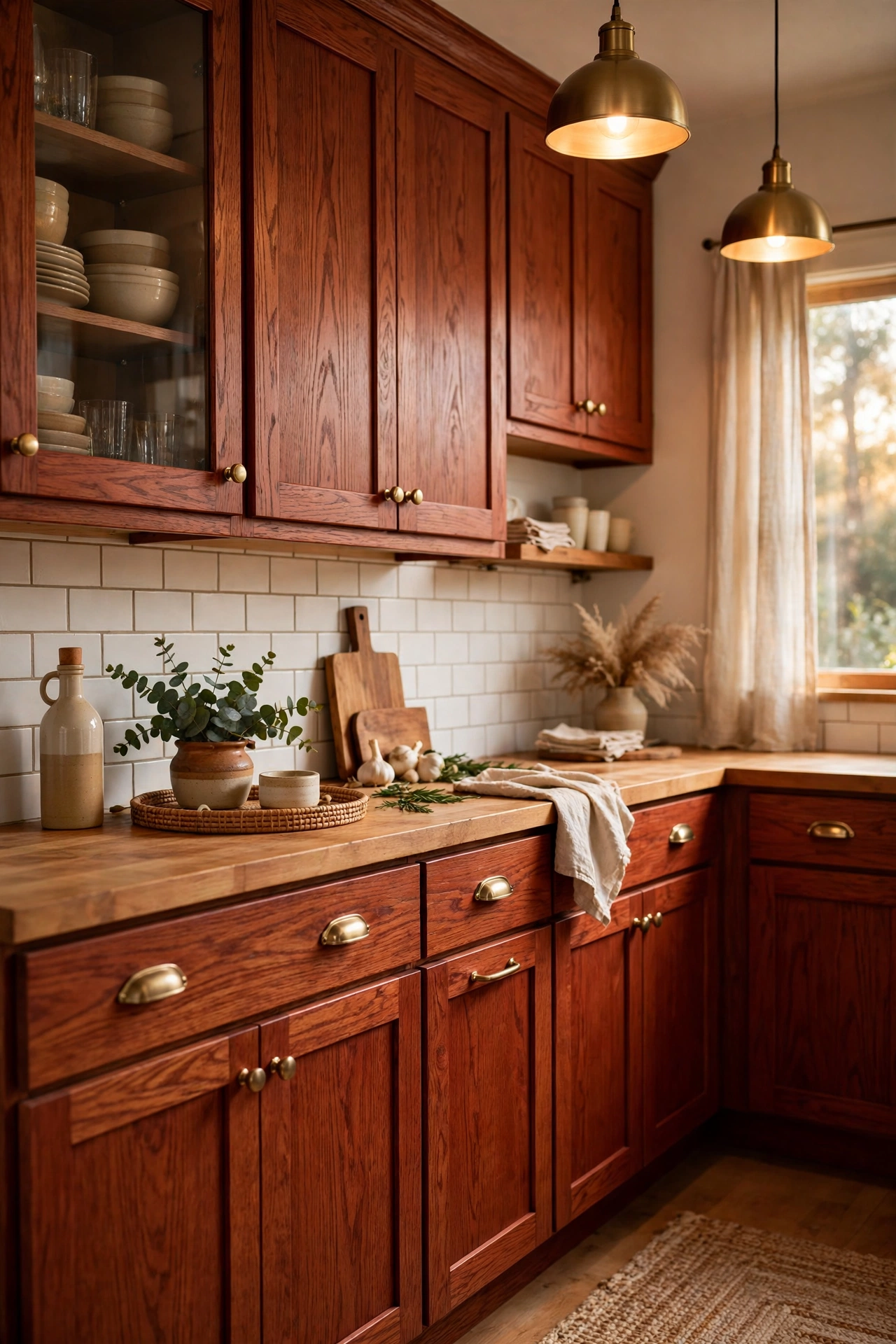
Brushed brass knobs and pulls warm red oak cabinets further and catch light without glare. The brushed finish shows fewer smudges than polished brass, which helps on high-touch doors near the sink and range. Brass suits honey, chestnut, and natural stains best, and it pairs well with brass faucets and pendant lights for a matched metal story. If brass feels too gold in your light, try unlacquered brass, which darkens gently with age.
Try this: Keep all metals in the room to one warm family so brass, bronze, and copper do not compete.
Cost: $$ · Difficulty: Easy
20. Slab-front modern red oak cabinets
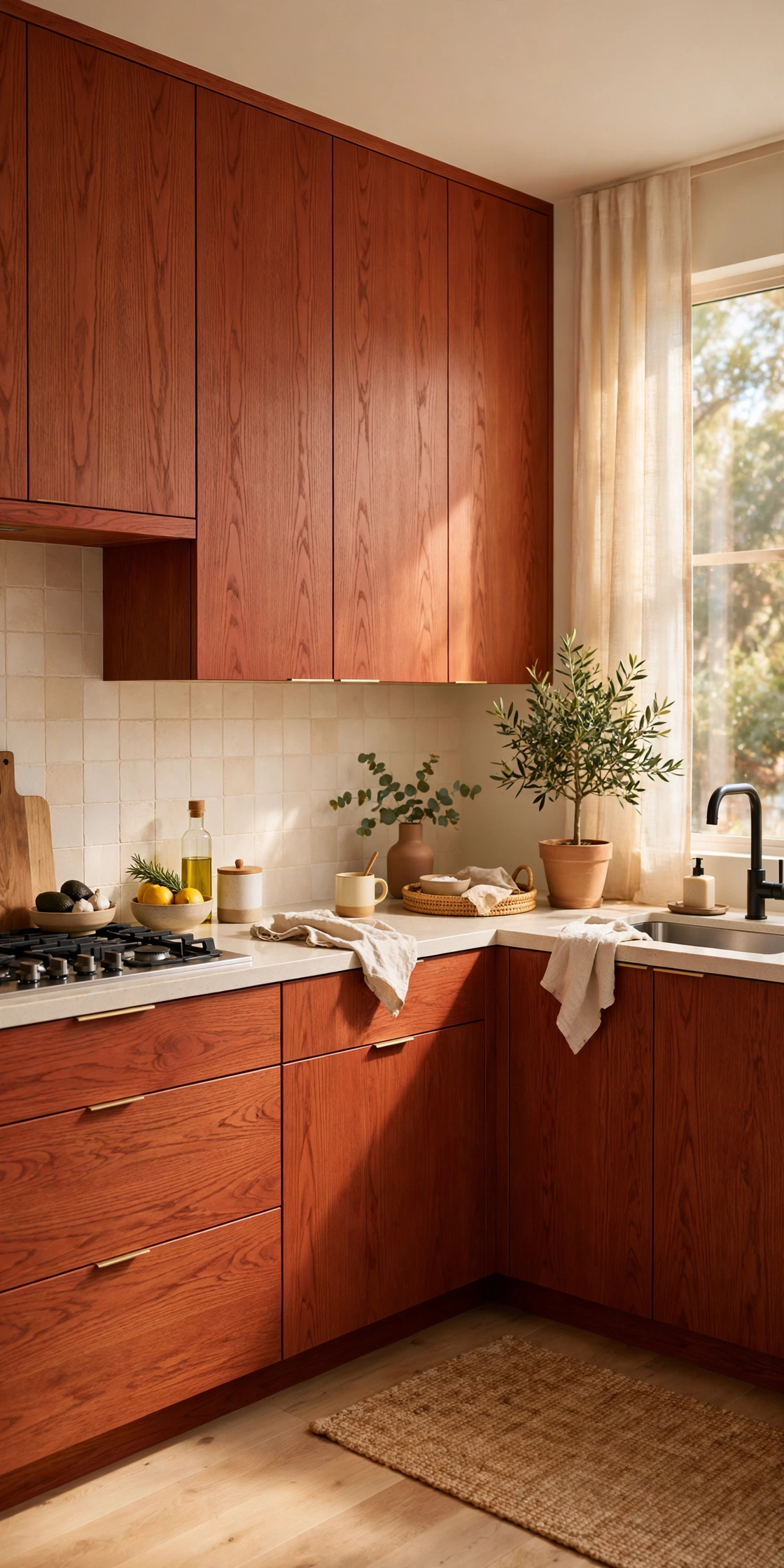
Slab-front doors strip red oak cabinets down to flat panels, and the wood grain becomes the only decoration. A light or natural stain keeps the modern look from feeling heavy, and slim edge pulls or push-to-open hardware keep the fronts clean. Pair slab doors with a plain backsplash and handleless drawers for a calm, architectural kitchen. The grain still shows, so the room keeps warmth that painted flat doors often lose.
Try this: Choose grain-matched veneer or book-matched doors on wide drawer fronts for a furniture-grade look.
Cost: $$$ · Difficulty: Hard
21. Distressed hand-scraped red oak finish

A distressed or hand-scraped finish adds dents, worn edges, and a matte topcoat that make new red oak cabinets read as old and lived-in. This finish suits farmhouse and rustic kitchens, where a perfect surface would look out of place. The texture also hides small nicks from daily use better than a smooth gloss finish. Pair distressed cabinets with matte black hardware and a butcher block counter for a cohesive rustic room.
Try this: Ask the finisher for a sample board with the exact distressing level, since light and heavy distressing look very different.
Cost: $$ · Difficulty: Moderate
22. Red oak with beadboard cabinet panels
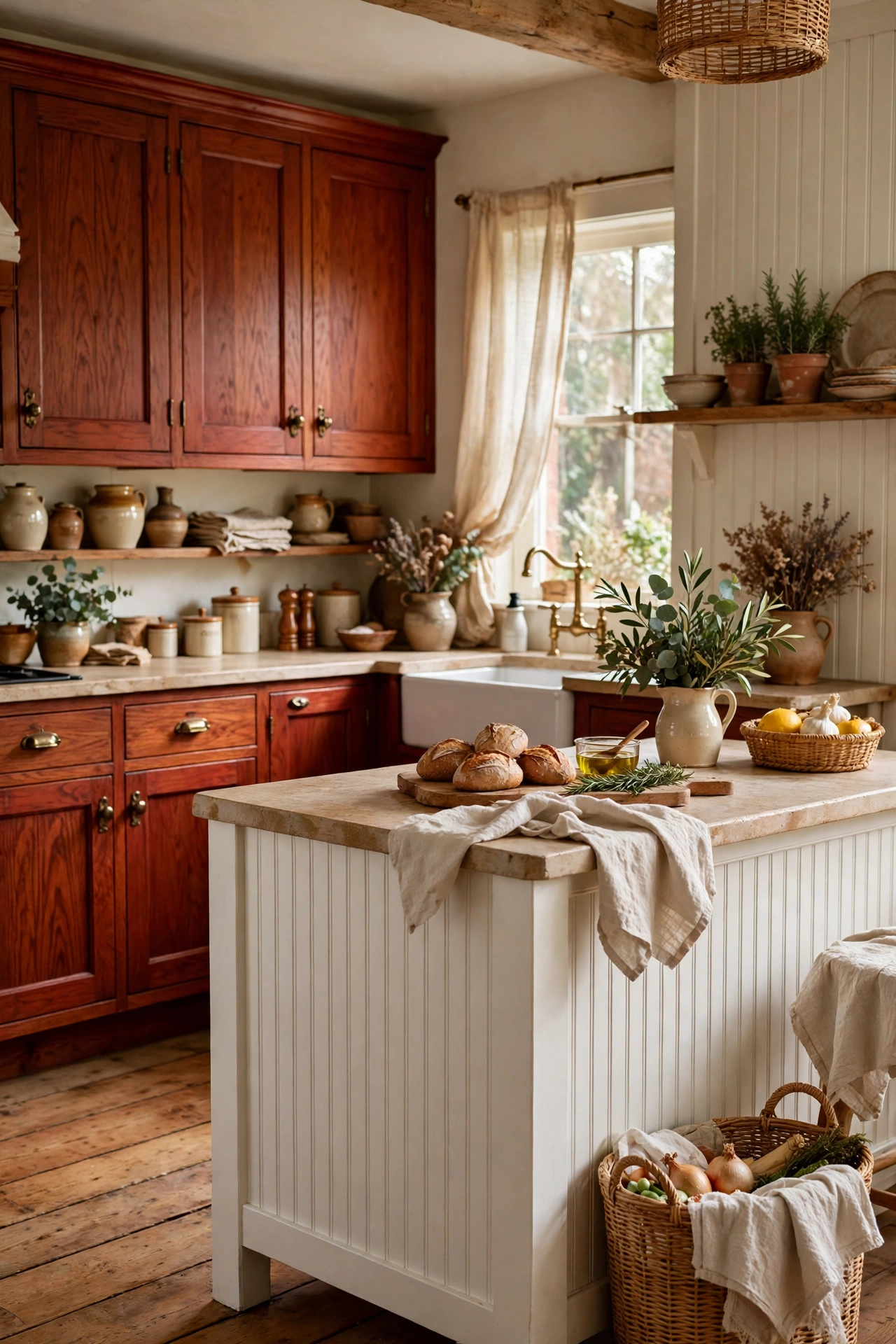
Beadboard panels on cabinet ends or an island back add cottage texture to red oak kitchens without changing the door style. Paint the beadboard cream or leave it in matching red oak stain, depending on whether you want contrast or a unified wood look. Beadboard suits cottage and coastal kitchens and pairs well with a farmhouse sink and open shelving. Keep the beadboard to one or two surfaces so the texture stays an accent instead of taking over.
Try this: Use beadboard on the island back only, where guests see it most, and keep perimeter cabinets plain.
Cost: $ · Difficulty: Moderate
23. Two-tone red oak lowers with painted uppers

Painted uppers in soft white or cream above red oak lowers lighten the room while keeping wood warmth at counter level, where hands and eyes spend the most time. This two-tone split works well in kitchens with low ceilings, since light uppers make the wall feel taller. Keep the countertop neutral so the two cabinet colors stay the stars. Match the hardware finish on both colors for a unified look.
Try this: Paint uppers the same warm white as your trim so the two whites do not fight each other.
Cost: $$ · Difficulty: Moderate
24. Red oak with crown molding and furniture details

Crown molding across the top of red oak cabinets closes the gap to the ceiling and gives the kitchen a built-in, furniture-grade finish. Add furniture feet or a recessed toe-kick on the island and a valance above the sink for the same tailored feel. These details cost less than new cabinets but change how custom the room reads. Match the molding stain to the cabinets exactly, since a mismatch at eye level shows fast.
Try this: Run molding to the ceiling only if the ceiling is level, or add a small filler strip to hide uneven gaps.
Cost: $$ · Difficulty: Moderate
25. Light-stained red oak for small kitchens

Small kitchens benefit from a light red oak stain, glass-front uppers, and white counters, since each choice bounces light instead of absorbing it. Keep upper cabinets to one wall or use open shelves on the second wall so the room does not close in. A single warm wood tone throughout, from cabinets to a small wood shelf, keeps the small space calm. Avoid dark stains and busy backsplashes here, since both shrink the room visually.
Try this: Remove one upper cabinet door and leave it open for a week to test whether open storage suits your habits.
Cost: $$ · Difficulty: Moderate
26. Refinish your existing red oak cabinets

Refinishing keeps solid red oak boxes and doors and changes only the stain or topcoat, which costs a fraction of new cabinets. Clean and degrease first, sand lightly to open the grain, then apply the new stain and a durable clear coat. This project suits weekend work if you tackle doors in batches and label every hinge position as you go. Homes built before 1978 need a lead paint check before any sanding, since old paint layers can hide lead. If the boxes are damaged or the layout fails, new cabinets make more sense than a refinish.
Try this: Refinish one door fully, including topcoat, before committing to the whole kitchen.
Cost: $ · Difficulty: Moderate
How to choose the right red oak look for your kitchen
Start with light. A dark stain needs a bright room or light counters to stay balanced, while a light stain works in almost any kitchen. Next, pick one anchor: a stain, a countertop, or a hardware finish that you love, then let the other choices support it instead of competing. Measure the three biggest pieces before ordering: the range wall, the island, and the pantry wall. If you rent, lean on hardware swaps, open shelves, and peel-and-stick backsplash tiles, which change the look without touching the cabinet boxes.
Red oak cabinet ideas at a glance
| Idea | Cost | Difficulty | Best for |
|---|---|---|---|
| Natural clear-finish shaker | $$ | Moderate | Showing off grain |
| Honey-stained raised panel | $$ | Moderate | Traditional homes |
| Golden oak with cream walls | $ | Easy | Low-light kitchens |
| Espresso stain for contrast | $$ | Moderate | Bold contrast |
| Walnut island, natural perimeter | $$$ | Hard | Open kitchens |
| Chestnut stain, brass hardware | $$ | Easy | Transitional style |
| Butcher block counters | $$ | Moderate | Farmhouse warmth |
| White quartz counters | $$$ | Hard | Low-maintenance counters |
| Earthy granite counters | $$$ | Hard | Traditional rooms |
| Subway tile backsplash | $ | Moderate | Budget refresh |
| Glass-front uppers | $$ | Moderate | Lightening wood walls |
| Open shelving beside cabinets | $ | Easy | Display and reach |
| Pantry tower cabinets | $$ | Moderate | Deep storage |
| Appliance garage | $$ | Moderate | Clear counters |
| Island with seating | $$$ | Hard | Gathering spot |
| Farmhouse sink base | $$ | Hard | Country kitchens |
| Matte black hardware | $ | Easy | Modern edge |
| Oil-rubbed bronze hardware | $ | Easy | Traditional feel |
| Brushed brass hardware | $$ | Easy | Warm metal story |
| Slab-front modern doors | $$$ | Hard | Minimal rooms |
| Distressed hand-scraped finish | $$ | Moderate | Rustic rooms |
| Beadboard cabinet panels | $ | Moderate | Cottage texture |
| Two-tone lowers, painted uppers | $$ | Moderate | Low ceilings |
| Crown molding, furniture details | $$ | Moderate | Custom finish |
| Light stain for small kitchens | $$ | Moderate | Small spaces |
| Refinish existing cabinets | $ | Moderate | Budget update |
Common mistakes to avoid
- Skipping the stain test. Red oak shifts with light, so a stain that looks right in the store can turn orange at home. Test on a real door in your kitchen before ordering.
- Mixing four metal finishes. Brass knobs, chrome faucets, black pulls, and nickel hinges in one kitchen read as accidental. Pick one warm metal family and repeat it.
- Putting dark stain in a dark room. Espresso cabinets need light counters, pale walls, or strong lighting, or the kitchen feels smaller and gloomier.
- Sanding old paint without a lead check. Homes built before 1978 can hide lead paint under newer coats. The U.S. Environmental Protection Agency lead paint guidance explains testing and safe handling before you sand.
- Skipping studs for heavy wall cabinets. Loaded uppers and open shelves pull hard on walls. The U.S. Consumer Product Safety Commission Anchor It guidance covers anchoring heavy items so they stay put.
- Forgetting outlets and clearances. Appliance garages need an inside outlet, islands need walkway room, and farmhouse sinks need exact cabinet sizing. Measure twice before ordering.
More kitchen and cabinet ideas
If you want more cabinet storage ideas, these small farmhouse kitchen cabinets pair well with red oak tones.
Small farmhouse kitchen cabinets ideas
For a wider look at kitchen styles before you pick a stain, these inspiring kitchen designs show how wood, paint, and stone work together.
Inspiring kitchen design ideas
Beige counters are a safe partner for red oak, and these beige countertop kitchens show the pairing in real rooms.
Kitchen with beige countertops ideas
If your kitchen flows into the living room, these open concept kitchen ideas help the cabinets sit well in the larger space.
Perfect open concept kitchen ideas
For pantry storage that matches new cabinets, these pull-out shelf pantry cabinets keep deep storage easy to reach.
Pantry cabinet with pull out shelves ideas
Frequently asked questions
Does red oak look orange in a kitchen?
Red oak can read orange when paired with a warm stain plus cool white walls and chrome hardware, since the contrast pushes the eye toward the wood’s pink tones. Warm cream walls, brass or bronze hardware, and a stain tested in your own light keep the tone honey or chestnut instead. If your cabinets already look orange, a cooler stain like chestnut or a light whitewash glaze can calm the tone without replacing the doors.
What countertop goes best with red oak cabinets?
White quartz suits red oak when you want a bright, low-maintenance kitchen, while earthy granite and butcher block suit traditional and farmhouse rooms. The safest rule is to match undertones: warm counters with warm wood, and avoid bold grey veining that fights the wood’s amber tones. Bring a door sample to the stone yard and view slabs in natural light before you decide.
Can you paint red oak cabinets?
Yes, but the open grain will show through most paints unless you fill it first with grain filler and sand between coats. Many homeowners keep the grain visible on purpose for a textured painted look in cream or soft grey. If you want a smooth painted finish, budget extra time for filling and sanding, or hire a finisher who has done grain filling before.
Is red oak durable enough for kitchen cabinets?
Red oak ranks 1290 on the Janka hardness scale, which puts it above pine and cherry and makes it well suited to daily kitchen use. It resists dents from normal cooking traffic, though sharp impacts can still mark it. A durable clear topcoat and prompt wipe-ups near the sink protect the finish, and worn areas can be sanded and recoated without replacing the doors.
Should I refinish or replace red oak cabinets?
Refinish when the boxes are solid, the layout works, and you like the door style, since refinishing costs far less than new cabinets. Replace when boxes are water-damaged, the layout wastes space, or you need a different door style that refinishing cannot give. A full refinish of a mid-size kitchen usually takes a few weekends of door-by-door work, while replacement takes longer and costs several times more.
Final thoughts
Red oak cabinets reward one careful choice above the rest: test the stain in your own kitchen light, then build the counters, hardware, and walls around it. Get that pairing right and the grain that makes red oak hard to ignore becomes the reason the kitchen feels warm for years.
For the warm golden oak tone specifically, see our guide to 6 Honey Oak Kitchen Cabinets Ideas for a Kitchen That Finally Feels Current for a matte black hardware swap, a painted island, light quartz counters, warm wall paint, and glass-front uppers.


