



Cottagecore decor looks easy until you stand in a room full of florals, baskets, and thrifted finds that somehow add up to clutter instead of charm. The style works when each piece feels collected over time, in soft colors, natural materials, and layers you can actually live with. That is the difference between a room that feels like a country cottage and a room that feels like a yard sale.
These 25 perfect cottagecore decor tips cover the whole home, from the palette you pick first to the small swaps that keep rooms feeling fresh through the seasons. Last spring I swapped a plain store bought throw for a crocheted one I found at a flea market for twelve dollars, and that one change made my living room feel warmer than a full redecorating weekend ever had. Most tips here cost under 75 dollars, need no drilling, and work in rentals as well as owned homes.
Quick takeaways
- Pick a small palette first: cream, sage, dusty rose, and one warm wood tone, then buy only what fits it.
- Thrift the big pieces and buy new only for bedding and curtains, where wear shows fastest.
- Layer textures (linen, wool, crochet, lace) instead of piling on more patterns.
- Keep one surface clear in every room so collected pieces read as charming, not crowded.
- Most cottagecore changes are renter friendly: textiles, baskets, jars, and removable hooks do the heavy work.
1. Start with a soft, nature based palette

Every cottagecore room starts with color, not shopping. Cream walls, sage green accents, dusty rose textiles, and butter yellow touches give you a palette pulled straight from a garden, and it stops impulse buys from clashing. Paint one wall or a small piece of furniture if a full repaint is out of reach, then match new pillows, throws, and curtains to those four shades. When a thrifted piece falls outside the palette, a coat of chalk paint in sage or cream usually brings it back in line for under 20 dollars.
Try this: carry a small fabric swatch in your phone photos when thrifting, and skip anything that fights your four colors.
Cost: $$| Difficulty: Easy
2. Thrift one anchor piece before anything else

A single old piece with visible patina gives a room instant history: a pine dresser, a farmhouse table, a bentwood chair, or a weathered armoire. Shop estate sales, flea markets, and secondhand shops first, and check joints, drawers, and legs before you fall for a pretty finish. One anchor piece per room is enough. It grounds the softer layers that come later, and it costs a fraction of a new piece built to look old. Sand rough edges, tighten screws, and leave small dents alone, since they are part of the charm.
Try this: measure your space and doorways before you shop, and pass on any piece that needs structural repair.
Cost: $$$| Difficulty: Medium
3. Mix floral patterns at different scales

Cottagecore loves florals, but one scale repeated everywhere turns a room flat. Pair a large cabbage rose print on curtains or a quilt with a small sprig print on pillows, then calm both with a solid linen in cream or sage. Keep all three inside your palette so the mix reads as collected. This trick works on beds, sofas, and dining chairs, and it lets you use thrifted prints that would clash on their own. If two patterns fight, remove one and add a solid instead.
Try this: lay all three fabrics together in daylight before you commit, since store lighting hides clashes.
Cost: $$| Difficulty: Easy
4. Layer textures instead of adding more stuff
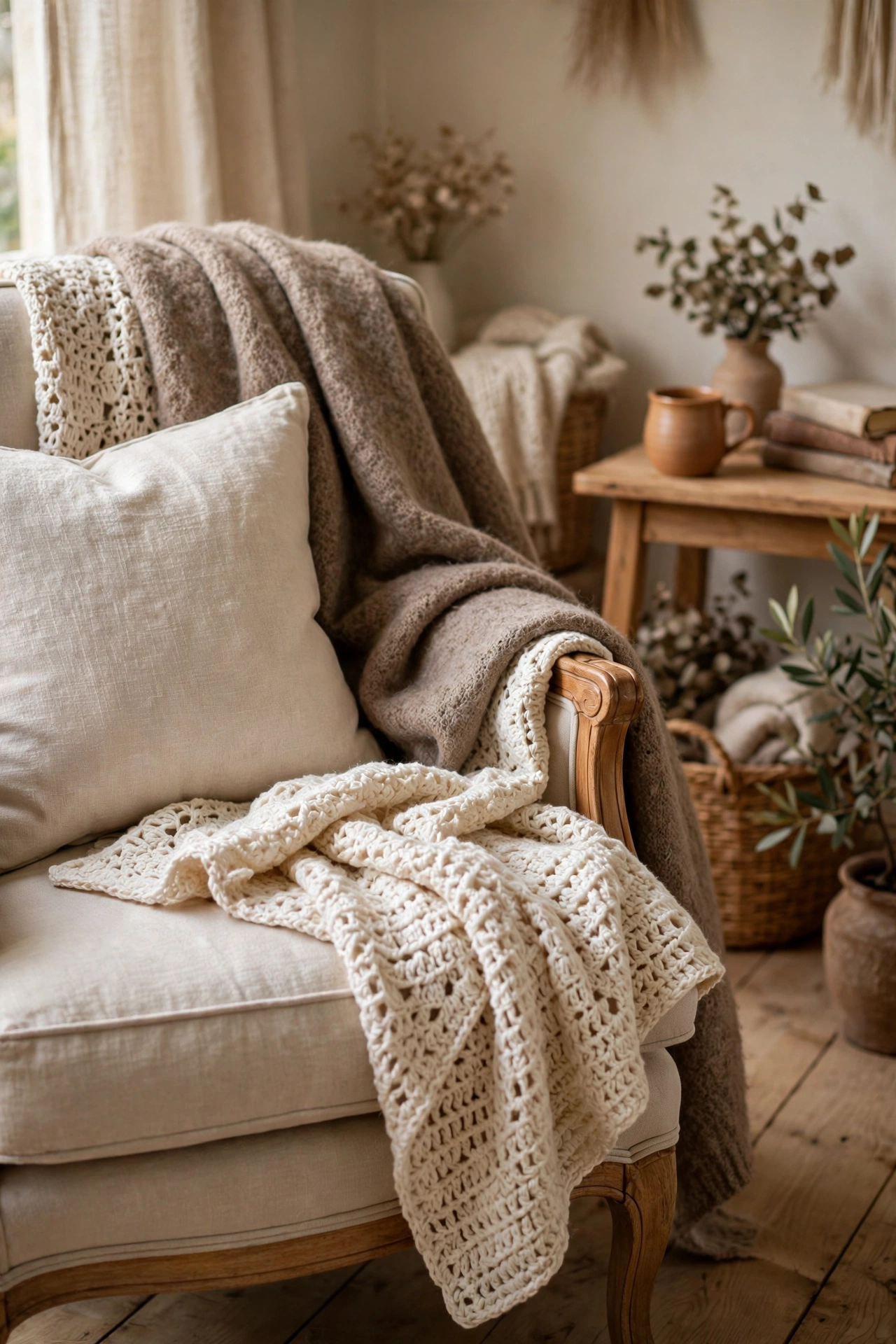
When a room feels thin, the fix is usually texture, not another object. Combine smooth linen curtains, a nubby wool throw, a crocheted blanket, and a lace edged pillow on one chair or sofa, and the seat suddenly looks finished. Texture catches light and shadow, which is what makes cottage rooms feel warm in photos and in person. Stick to two or three textures per seat so the layers stay readable. Washable cotton and wool blends hold up best in homes with kids or pets.
Try this: fold a throw over one arm and drape a second over the seat back, then stop and live with it for a day.
Cost: $$| Difficulty: Easy
5. Build a botanical gallery wall with mismatched frames
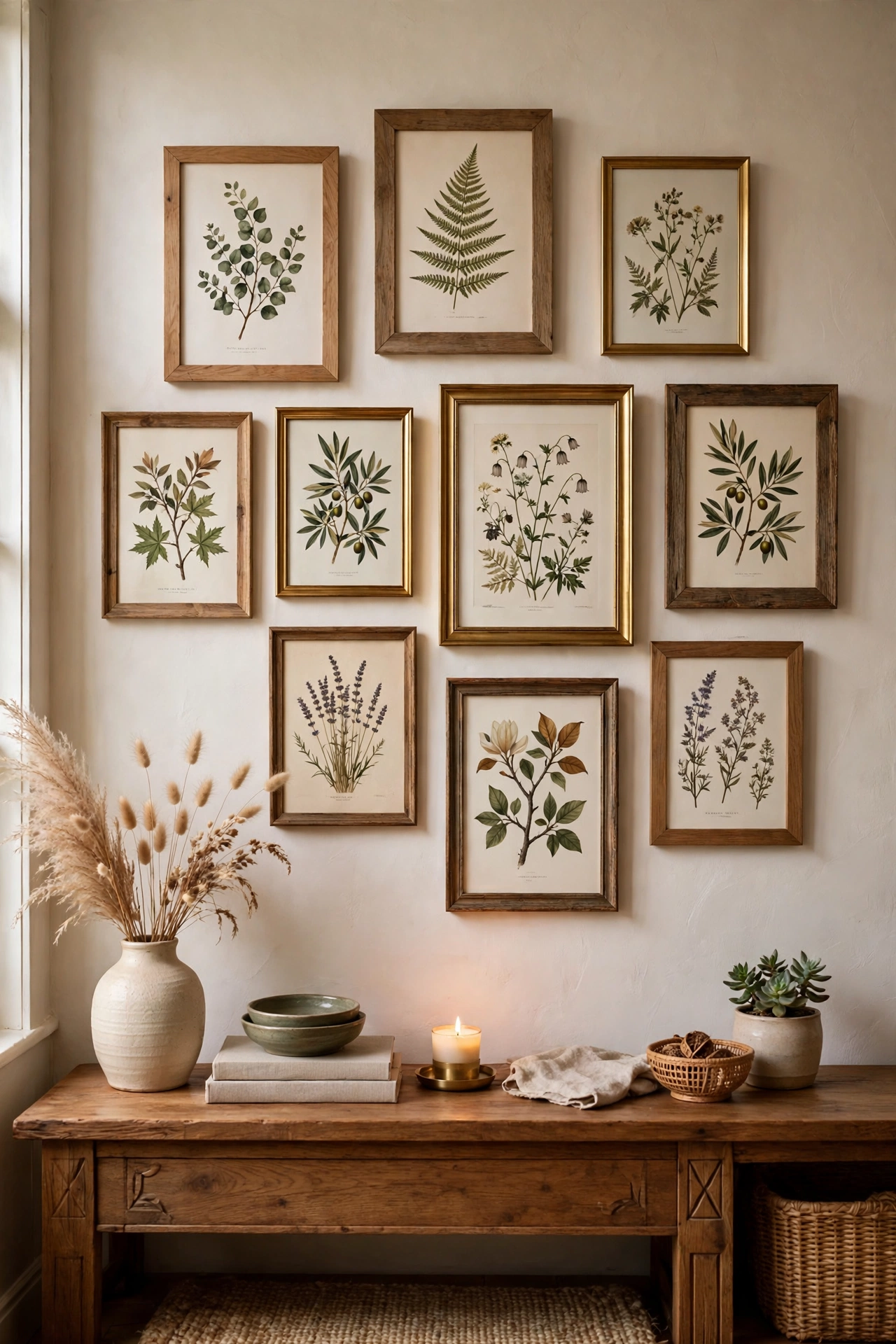
Botanical prints, pressed leaves, and small landscape sketches give cottagecore walls their storybook feel. Collect wood, brass, and painted frames in different sizes from thrift shops, and hang them in a loose grid with two inches between frames. Mix real pressed flowers under glass with printed botanicals so the wall looks gathered over years. Hang heavy frames on wall studs or with anchors rated for the frame weight, since a falling frame can injure someone and damage floors.
Try this: lay the arrangement on the floor first and photograph it, then hang from the center outward.
Cost: $$| Difficulty: Easy
6. Put everyday crockery on open shelves
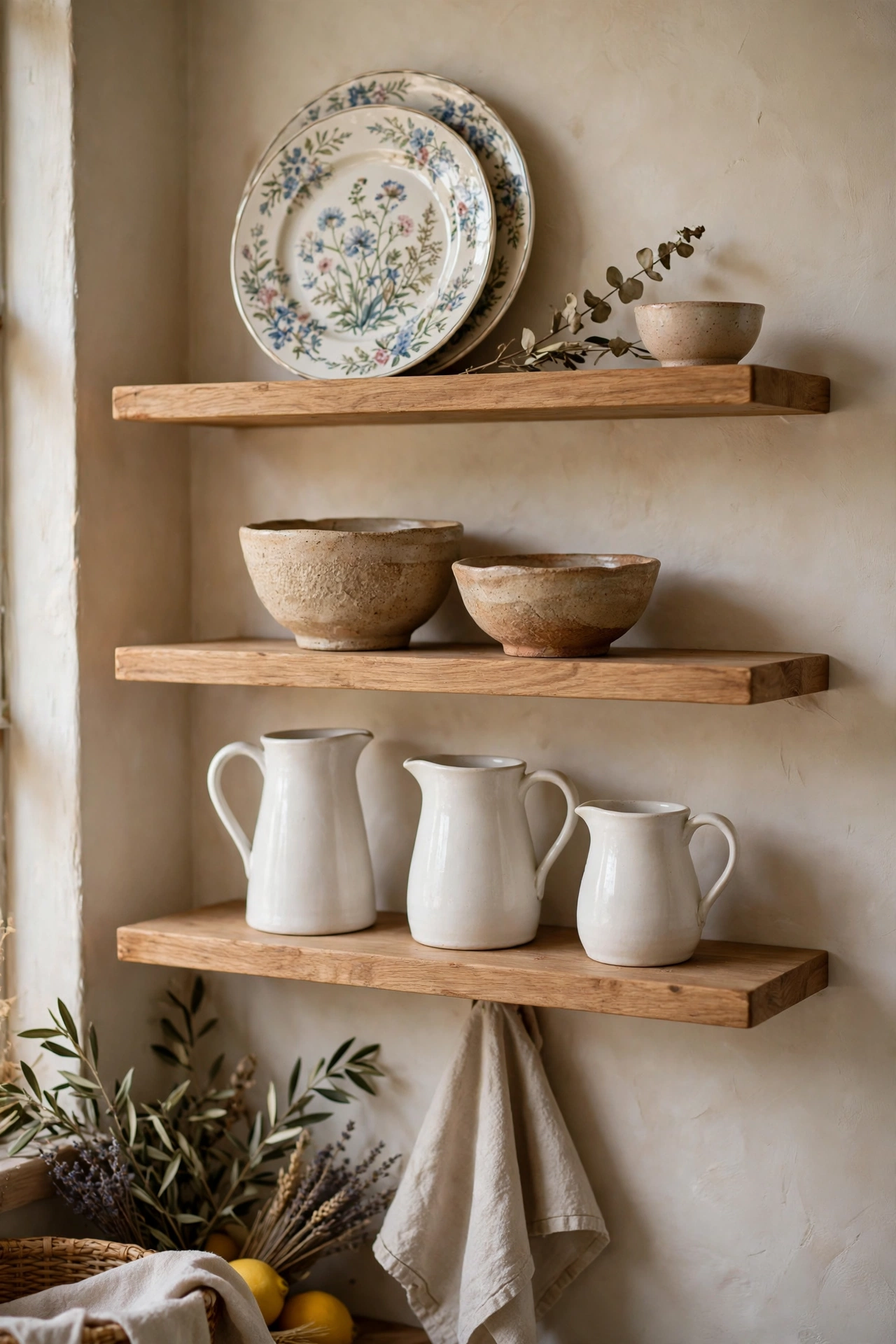
Open shelves turn daily dishes into decor, which is the heart of cottagecore kitchens. Mount one or two wood shelves and arrange floral plates, handmade bowls, white pitchers, and a few cookbooks with breathing room between groups. Keep the pieces you actually use at arm height and the display only pieces up high. If shelves feel dusty fast, limit open shelving to one wall and keep the rest of your storage behind doors. Anchor shelves into studs, since a shelf of stoneware is heavy.
Try this: group dishes by color, not by set, so mismatched pieces look intentional.
Cost: $$$| Difficulty: Medium
7. Store pantry staples in glass jars

Flour, oats, rice, pasta, and dried beans look neat and old fashioned once they move from boxes into glass jars. Use airtight jars with simple paper labels, and line them on an open shelf or a countertop tray where you cook. The jars make it easy to see what is running low, and they keep pantry moths out better than cardboard. Keep jars away from direct sun, since light dulls flour and spices faster. One shelf of jars is enough; a whole wall of them turns a kitchen into a shop.
Try this: start with the five staples you use weekly, then add more jars only as empties appear.
Cost: $$| Difficulty: Easy
8. Dry herbs on a small wall rack
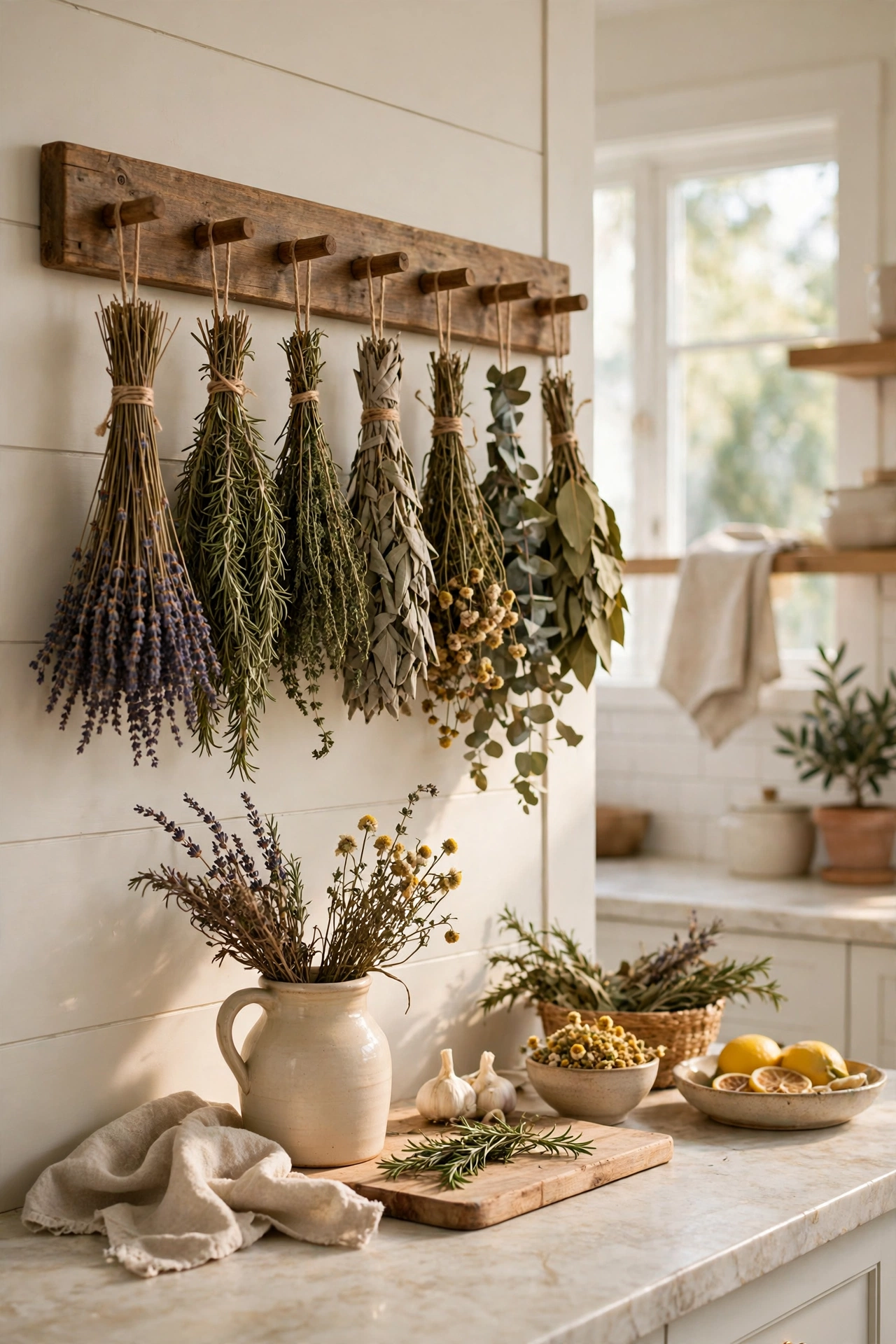
A wall rack of drying herbs adds scent, color, and a working kitchen feel for almost no money. Bundle rosemary, thyme, oregano, and mint with twine, hang them upside down in a dry spot away from the stove, and use them within a few months while the flavor is strong. Dried bundles also work as a gift tied with ribbon. Keep the rack away from open flames and heat, since dried herbs catch fire easily, and use battery candles anywhere near dried material.
Try this: dry one bundle at a time so the rack stays neat and the herbs stay fresh.
Cost: $$| Difficulty: Easy
9. Hang a dried flower wreath on the front door

A wreath is the fastest way to set a cottage tone before anyone steps inside. Dried lavender, strawflowers, and grasses hold their shape for months, cost less than fresh arrangements, and survive a covered porch well. Hang it with a removable hook so the door finish stays intact, and bring it indoors during heavy rain if the porch is exposed. Swap the wreath with the seasons: fresh blossoms in spring, dried grasses in autumn, evergreen in winter.
Try this: tie a short length of ribbon at the top so the wreath hangs at eye level, not above the door frame.
Cost: $$| Difficulty: Easy
10. Lay a braided rag rug where feet land
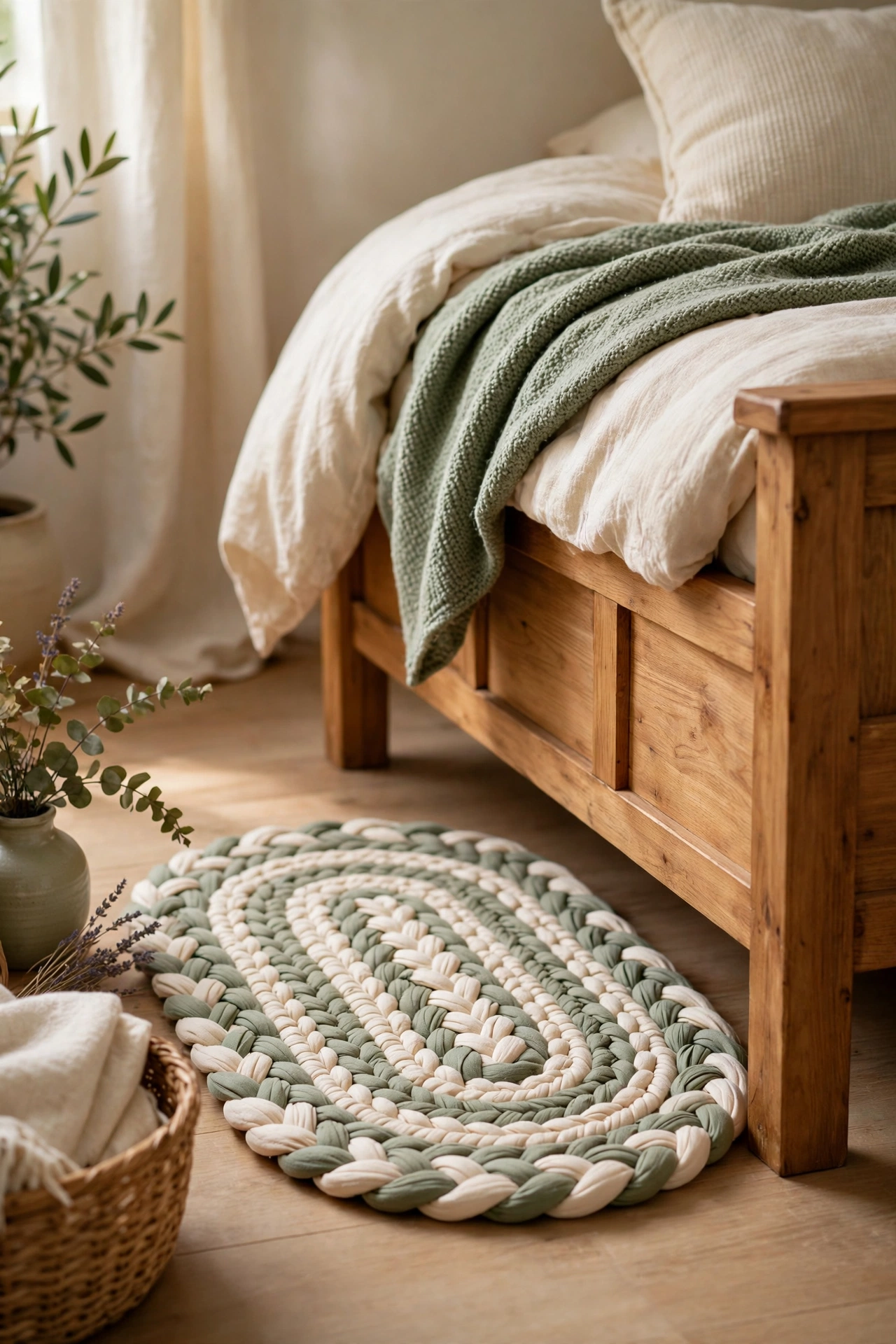
Braided rag rugs soften hard floors and add the handmade layer cottagecore rooms need. Place one beside the bed, in front of the kitchen sink, or under a reading chair, where bare feet actually land. Cotton rag rugs wash well and cost far less than wool antiques, and their muted stripes fit a cottage palette without a loud print. Layer a small rag rug over a larger plain rug if the floor still feels cold, but keep edges flat so nobody trips.
Try this: add a thin rug pad underneath so the rug stays put on smooth floors.
Cost: $$| Difficulty: Easy
11. Set up a vintage coffee nook on a tray
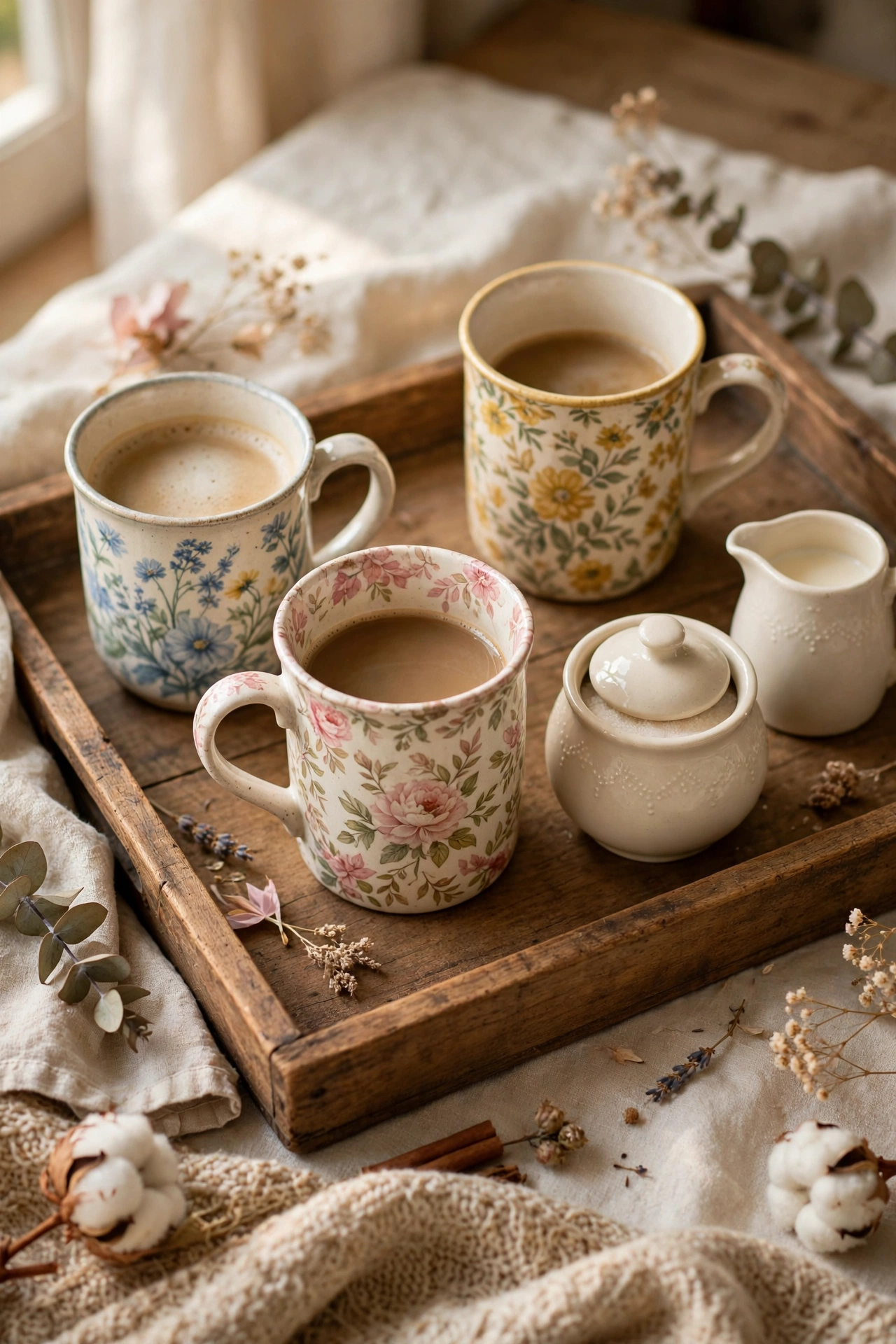
A coffee nook turns a slow morning into a small ritual. Group mismatched floral mugs, a ceramic sugar bowl, and a small cream pitcher on a wood tray near the kettle or coffee maker, and add a folded linen napkin under the mugs. The tray keeps the corner contained and tidy. Use pieces you like enough to drink from daily, since cottagecore works best when pretty things also get used. Wash the tray weekly so coffee rings never build up.
Try this: limit the nook to one tray and five pieces, then rotate mugs instead of adding more.
Cost: $$| Difficulty: Easy
12. Keep a seasonal fruit bowl on the table

A bowl of fruit is free decor that changes itself with the seasons. Peaches and plums in summer, apples and pears in autumn, and citrus in winter each bring their own colors to the table, and the bowl earns its place by holding food you will eat. Pick a chipped enamel bowl or a glazed ceramic piece in cream or sage, and keep it to one bowl per table so the surface stays usable. Wash fruit before eating, and compost any piece that softens.
Try this: shop the fruit bowl first at the market, and let its colors guide that week’s table linen.
Cost: $$| Difficulty: Easy
13. Display one collection, not five
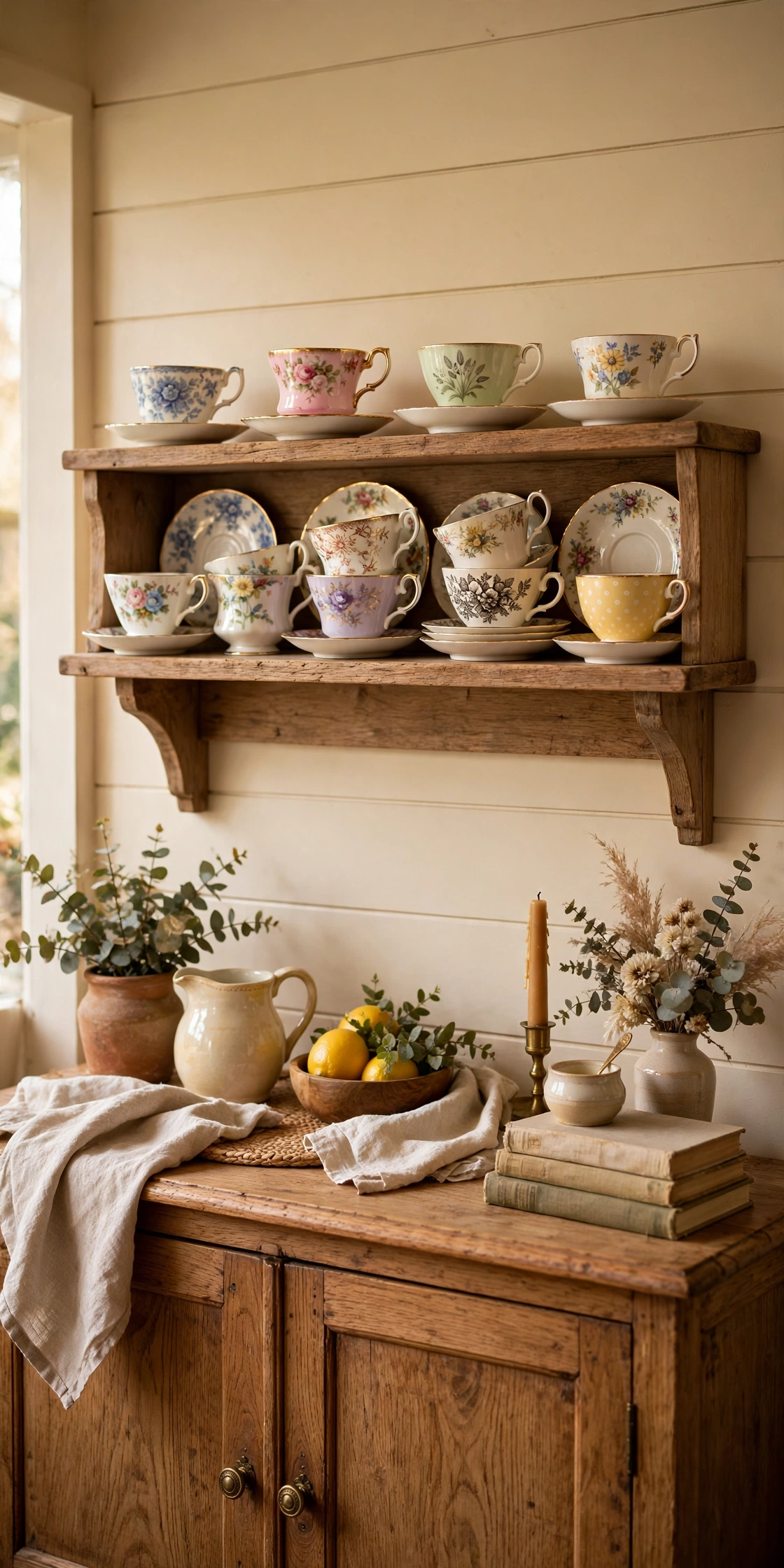
Collections give cottagecore its collected feel, but five collections in one room read as a shop. Pick one to display: teacups, small pitchers, baskets, brass candlesticks, or vintage books, and store the rest. Group the chosen pieces on one shelf or inside a glass front cabinet with space between them, so each piece gets a little air. A single strong collection tells a clearer story than a shelf crowded with everything you own, and it leaves room for the collection to grow slowly.
Try this: box up the collections you are not displaying, and rotate one in each season if you miss it.
Cost: $$| Difficulty: Easy
14. Use wicker baskets for everyday clutter
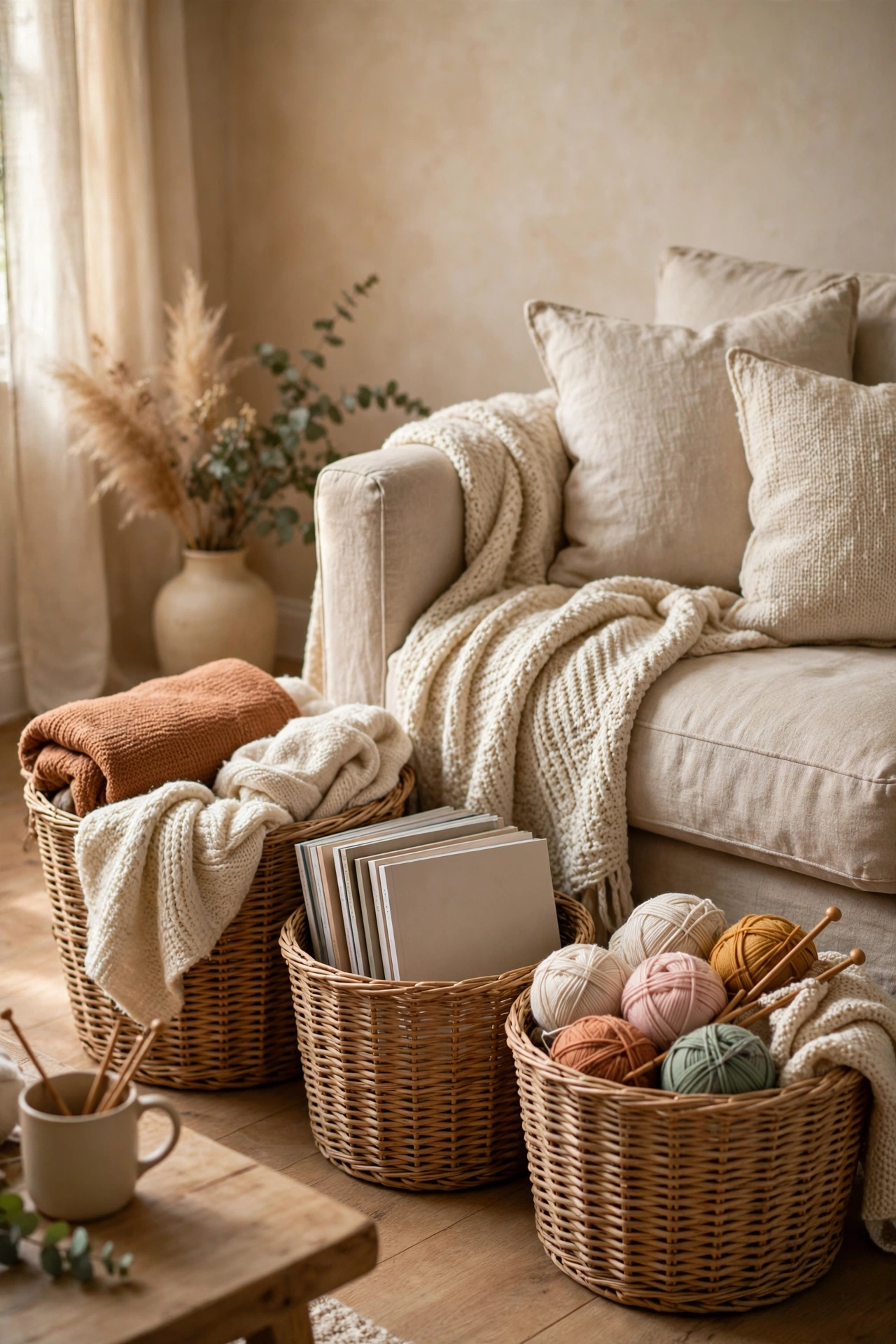
Baskets are the quiet workhorse of cottagecore homes. A lidded basket by the sofa hides throws and remote controls, a tall basket by the door catches scarves and dog leashes, and small baskets on shelves corral chargers and keys. Natural wicker, seagrass, and rattan all fit the palette, and they cost less than matching storage boxes. Line baskets that hold yarn or linens with a cotton cloth so fibers never snag. When a basket starts overflowing, it is a sign to edit, not to buy a bigger one.
Try this: give every basket one job and label the inside rim if the household keeps mixing them up.
Cost: $$| Difficulty: Easy
15. Add a ruffled valance to the kitchen window
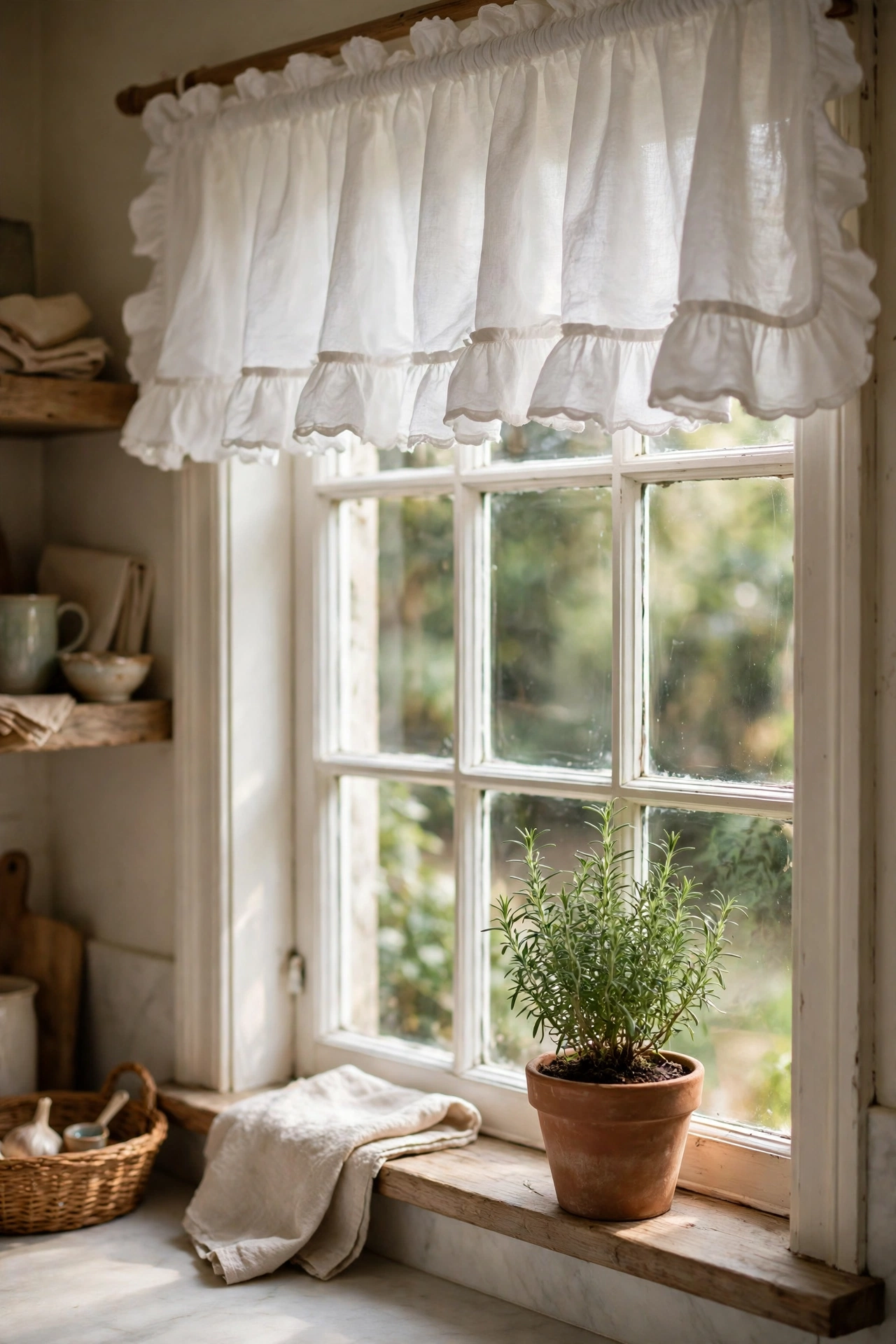
A short ruffled valance softens a kitchen window without blocking light the way a full curtain does. White or cream cotton with a simple ruffle reads cottage instantly, and a tension rod makes it renter friendly with no holes in the wall. Keep the valance above the sill so it never touches the faucet or stove, and wash it monthly since kitchen fabric collects cooking grease. One valance per window is plenty; pairing it with a full curtain on the same window usually looks fussy.
Try this: measure the window width and buy a valance one and a half times wider so the ruffles gather softly.
Cost: $$| Difficulty: Easy
16. Use ruffle and scallop trims on linens

Small trims carry a lot of cottage character. A scallop edged tablecloth, ruffle trimmed pillowcases, or a lace edged guest towel each add a handmade note for a few dollars, and they work even in rooms that are otherwise plain. Sew trims onto existing linens if you sew, or buy vintage linens at thrift shops and check the edges for stains before you pay. Keep trims to two places per room so they stay subtle. White and cream trims fit any palette.
Try this: start with pillowcases, since they show the trim every night and cost the least to replace.
Cost: $$| Difficulty: Easy
17. Warm a room with brass candlesticks
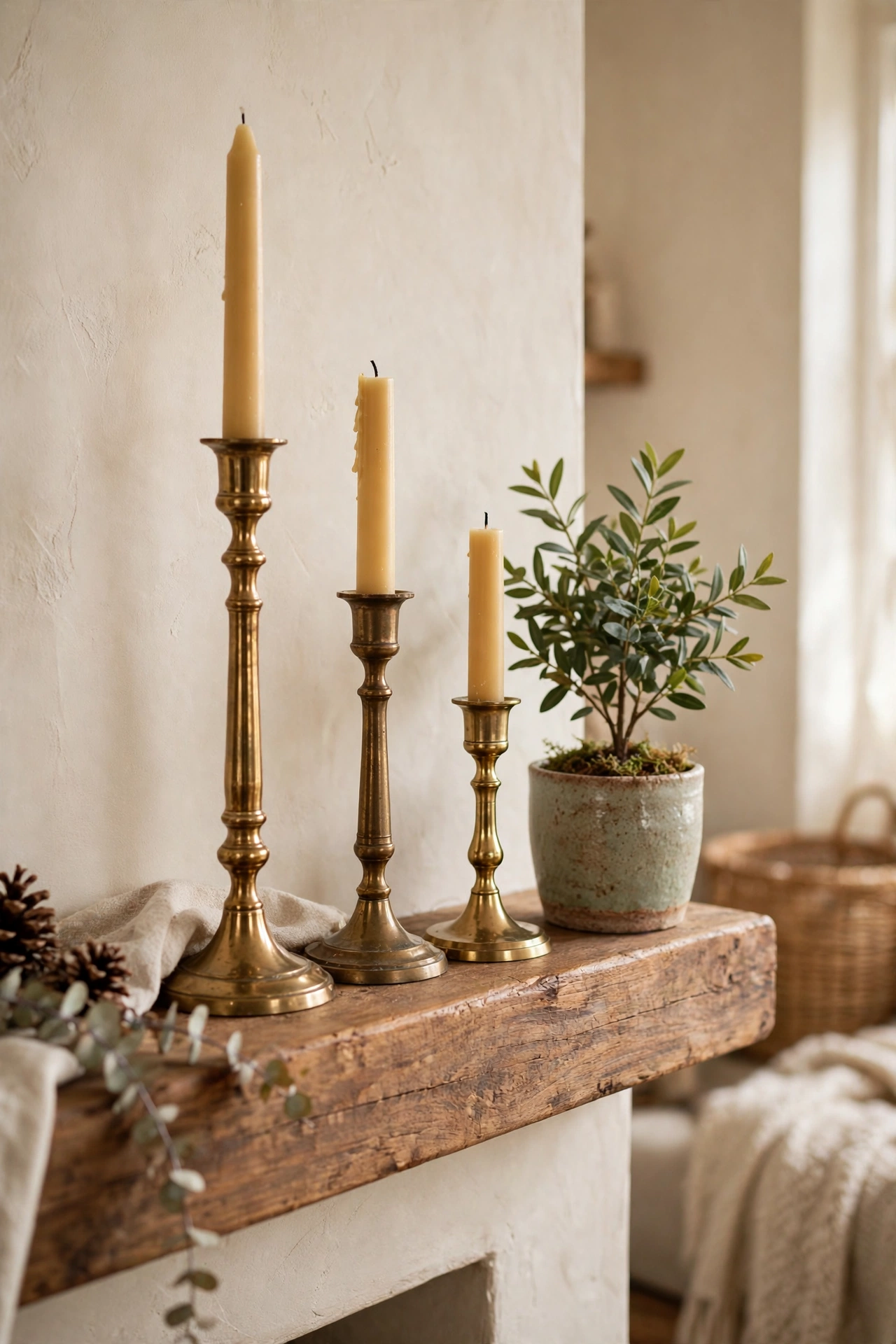
Brass candlesticks in mixed heights add warmth and a little gleam to mantels, dining tables, and shelves. Thrift shops sell them for a few dollars each, and a quick polish with lemon and salt brings dull brass back to life. Group three candlesticks of different heights at one end of a mantel instead of lining them up in a row, and keep them away from curtains and dried flowers. Use battery taper candles if children or pets share the room, since real flames near fabric and dried material are a fire risk.
Try this: polish only the fronts that face the room and leave the backs aged, so the set looks old rather than new.
Cost: $$| Difficulty: Easy
18. Build a window seat with storage underneath

A window seat turns an unused stretch of wall into the coziest spot in the house. A low bench with a thick cushion, two floral pillows, and a folded throw invites reading and morning coffee, while baskets or drawers underneath hold books, blankets, and board games. If building is out of reach, a sturdy low bookcase laid on its side with a cushion on top gives the same effect for under 100 dollars. Anchor any tall bookcase to the wall so it cannot tip, and keep the seat cushion washable.
Try this: place the seat where morning light lands, and add a small wall lamp for evening reading.
Cost: $$$| Difficulty: Weekend project
19. Style the mantel for the season

A mantel is a natural stage for cottagecore, and restyling it four times a year keeps the whole room feeling fresh. Spring gets wildflowers in a ceramic vase, summer gets a small mirror and shells, autumn gets dried grasses and a brass candlestick, and winter gets evergreen and battery candles. Keep the arrangement to five pieces or fewer, with one tall piece at one end to anchor the eye. Never hang dried flowers or fabric above a working fireplace, since heat and sparks can ignite them.
Try this: photograph each seasonal arrangement so next year you can recreate the ones you loved.
Cost: $$| Difficulty: Easy
20. Lay a crocheted tablecloth for Sunday table
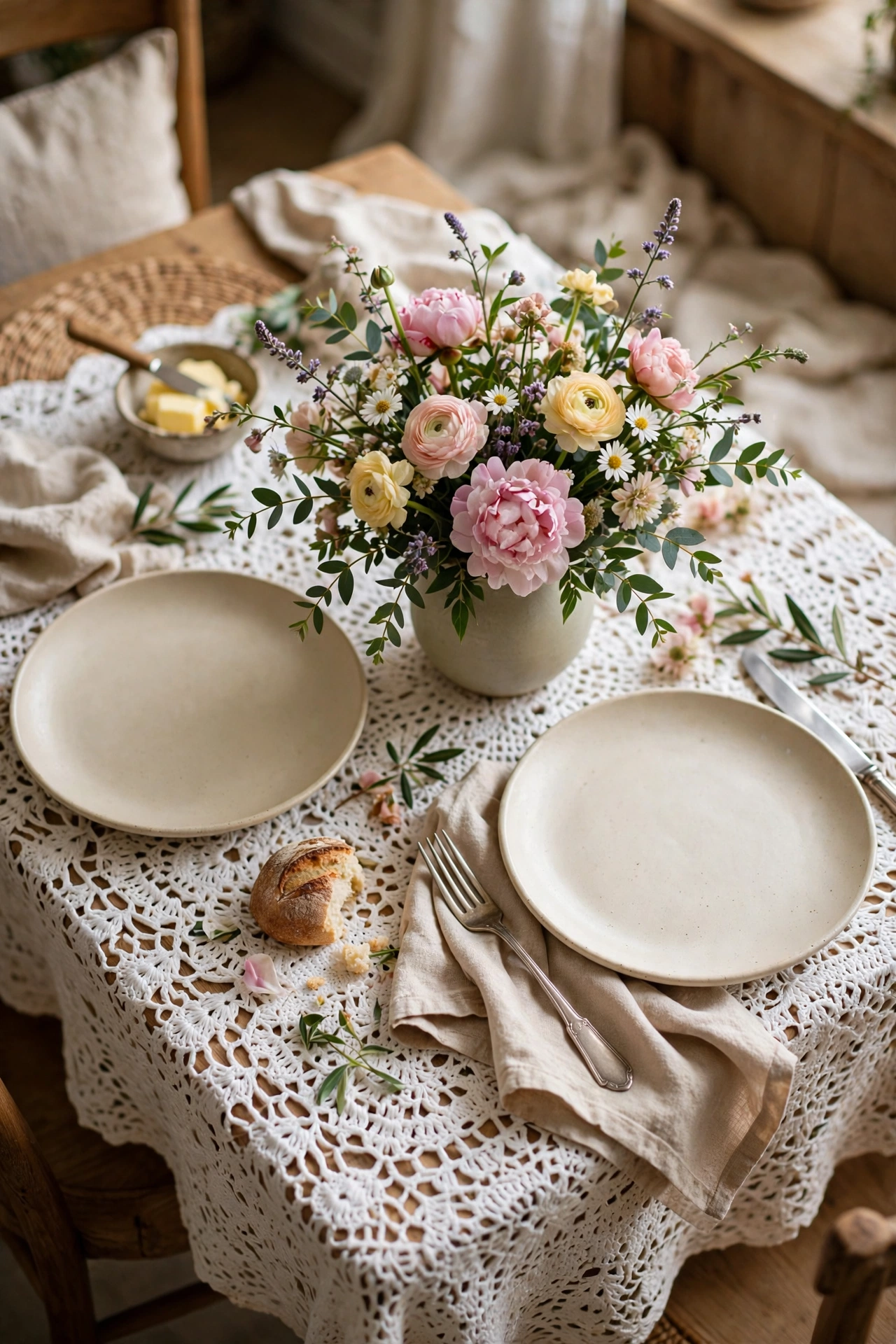
A crocheted or lace tablecloth turns an ordinary Sunday lunch into an occasion. White or cream crochet reads cottage in any dining room, and it layers well over a plain wood table or a solid cloth in sage. Protect the table underneath with a felt pad if hot dishes go straight down, and wash the cloth on gentle so the openwork never snags. Save the crocheted cloth for meals and use a wipeable runner on busy weekdays, so the good piece stays good.
Try this: pair the cloth with plain stoneware so the pattern stays the star of the table.
Cost: $$| Difficulty: Easy
21. Bring out embroidered linens for guests
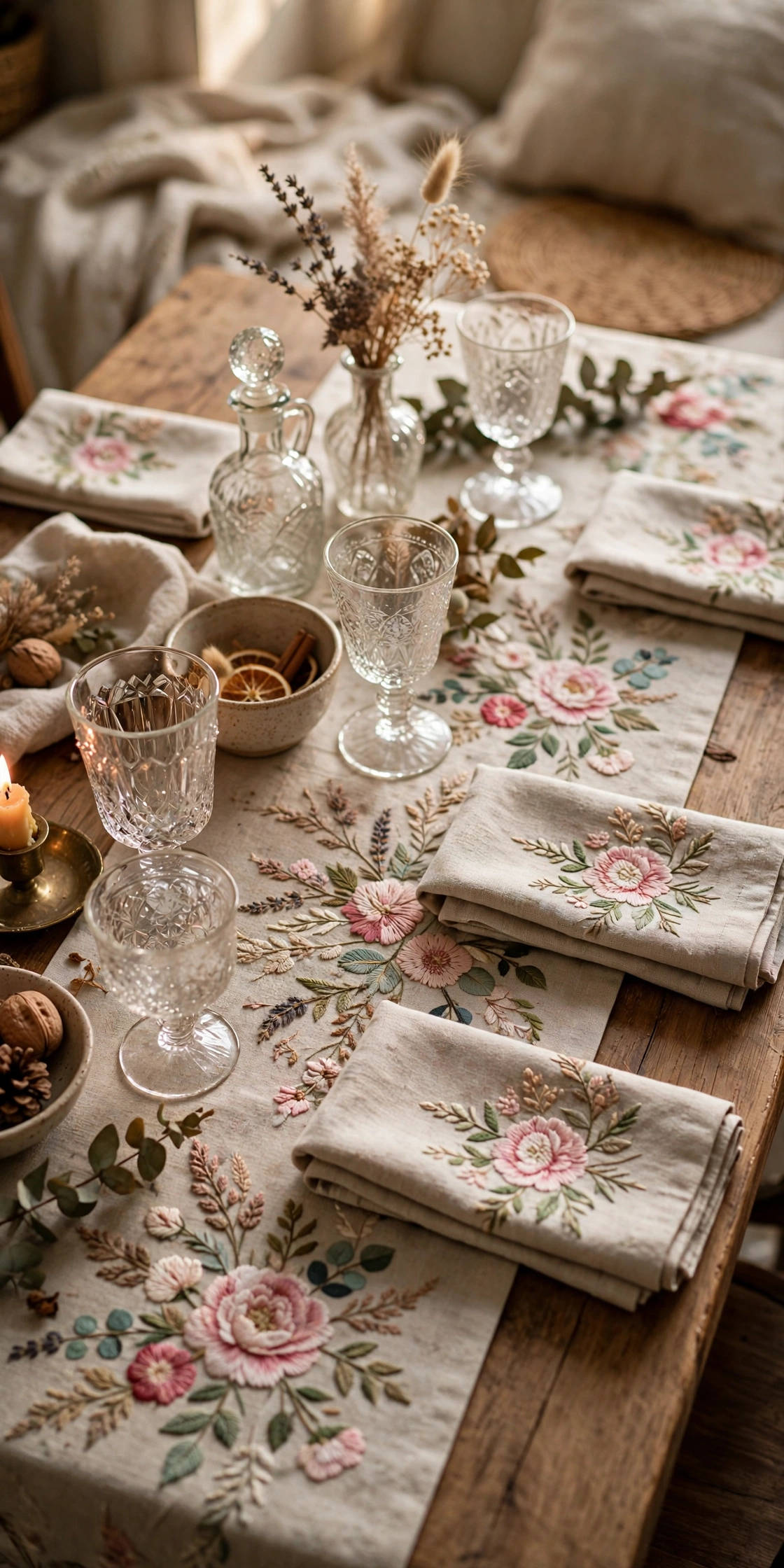
Embroidered table napkins, a floral runner, and a stitched guest towel carry cottagecore charm without changing any furniture. Vintage shops sell embroidered linens for a few dollars, and small stains often wash out with a soak in oxygen bleach. Use them for guests and weekend meals, and keep everyday meals on plain cotton so the good pieces last. Check old linens for thin spots before you buy, since worn centers tear in the wash. Fold napkins simply so the embroidery shows at each place.
Try this: mix one embroidered runner with plain napkins if a full embroidered set feels too busy.
Cost: $$| Difficulty: Easy
22. Scent the house the cottage way
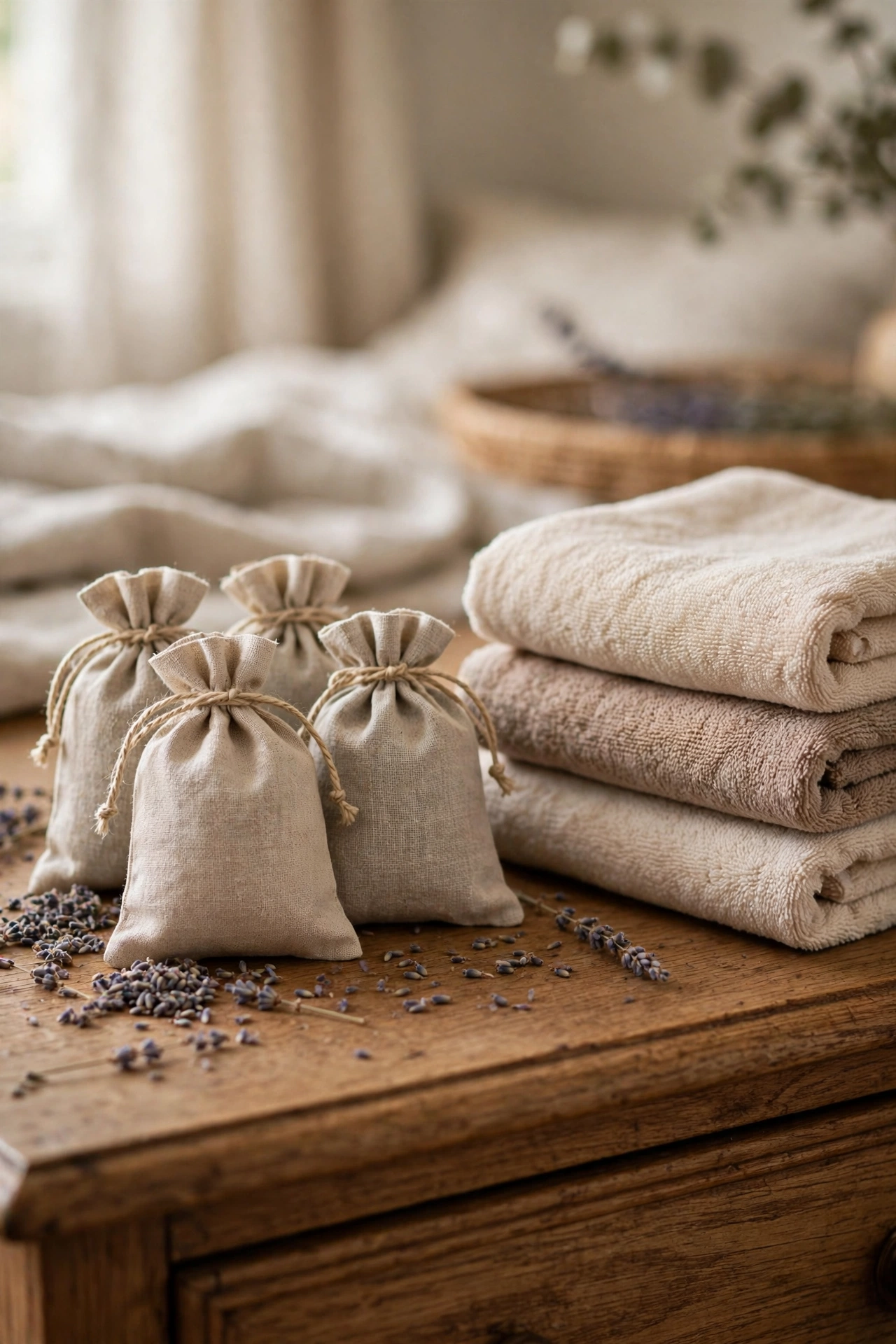
Cottagecore is as much about scent as sight. Dried lavender sachets in drawers, a simmer pot of citrus peels and cloves on the stove, and fresh herbs on the sill each give a home a gentle smell that no plug in air freshener matches. Make sachets from scrap linen and dried lavender, and refresh them every few months by squeezing the pouch. Keep sachets and potpourri out of reach of pets and small children, since dried lavender and some essential oils can upset pets if chewed or eaten.
Try this: simmer a pot for one hour before guests arrive, then turn the heat off and let the scent linger.
Cost: $$| Difficulty: Easy
23. Swap small decor with the seasons

Seasonal swaps keep cottagecore feeling alive without redecorating. Change pillow covers, table runners, wreaths, and mantel pieces four times a year, and store the off season set in one labeled basket so swaps take twenty minutes. Spring brings fresh blossoms and pastel linens, summer brings airy curtains and fruit bowls, autumn brings dried grasses and amber glass, and winter brings evergreen, candles, and deep velvet. Keep furniture and wall colors constant so swaps stay simple and affordable.
Try this: buy pillow covers, not new pillows, since covers store flat and cost a third as much.
Cost: $$| Difficulty: Easy
24. Use renter friendly swaps for the whole look
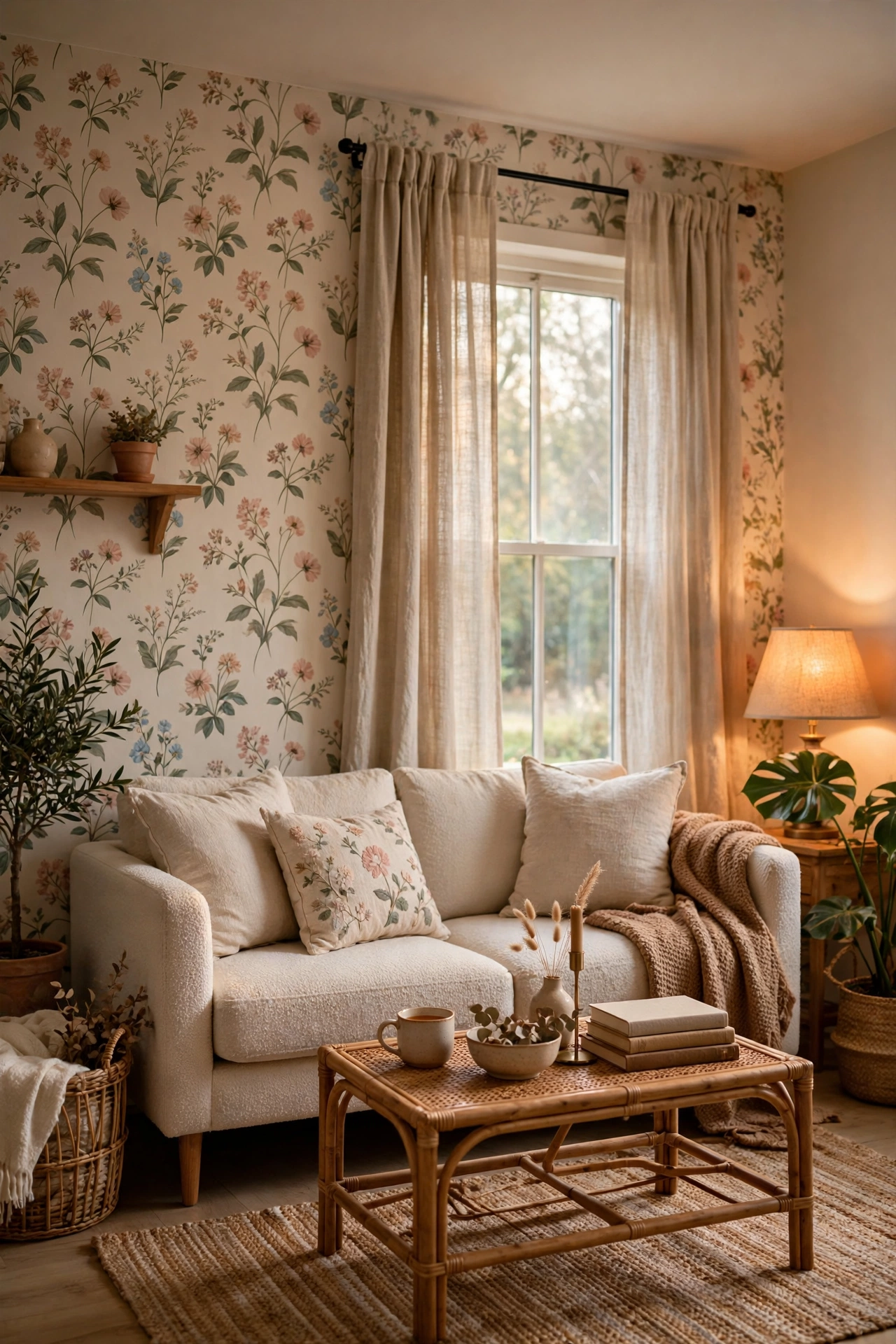
Renters can get the full cottagecore look without losing a deposit. Peel and stick floral wallpaper on one accent wall, tension rod linen curtains, removable hooks for art and dried flowers, and warm bulbs in every lamp together change a generic rental into a cottage. Swap builder grade cabinet knobs for brass ones and save the originals in a labeled bag to refit before moving out. If paint is allowed, one sage accent wall costs under 40 dollars and transforms a white box room.
Try this: photograph every original fixture before you swap it, so move out day takes an hour, not a weekend.
Cost: $$$| Difficulty: Easy
25. Keep one surface clear in every room
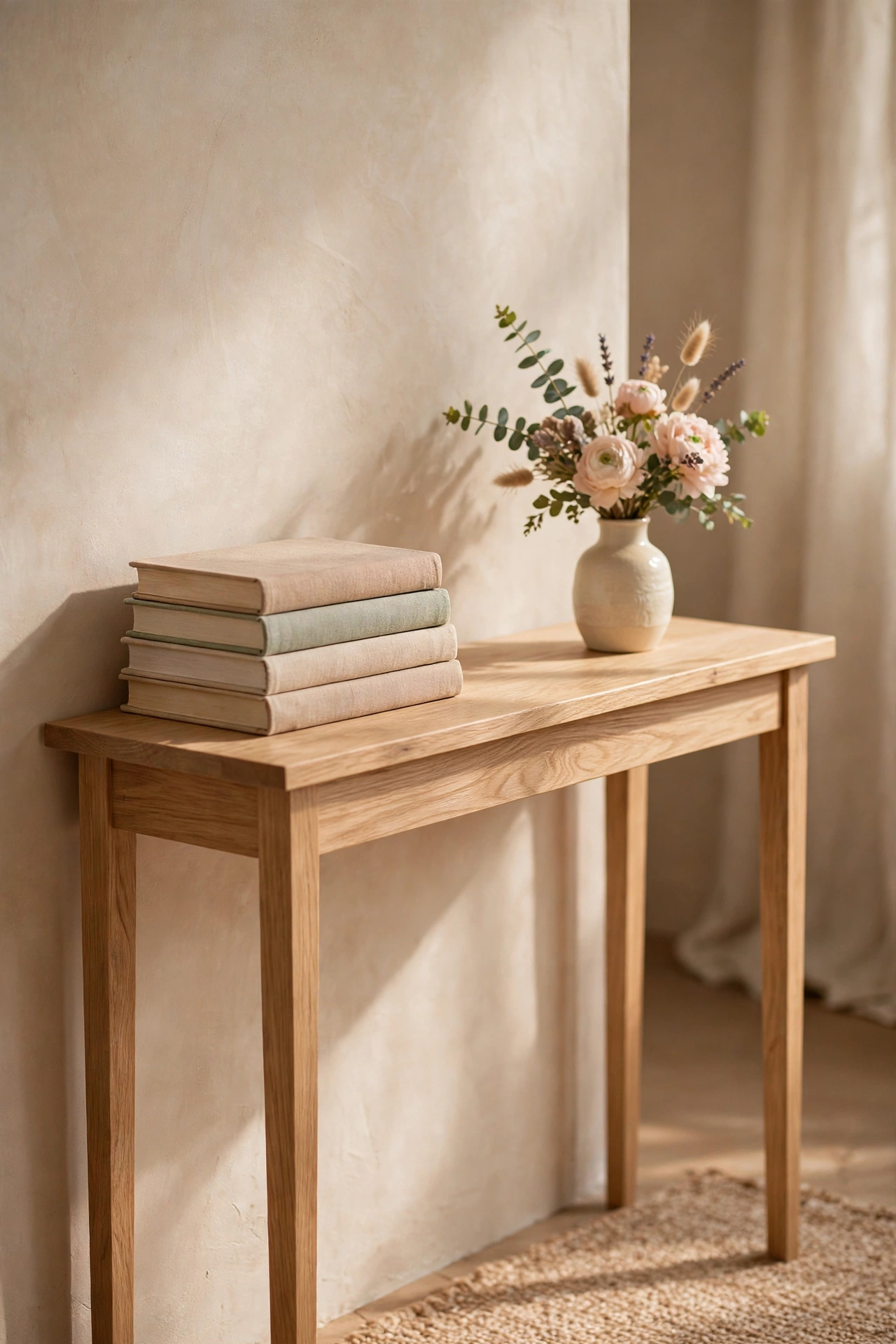
The rule that saves cottagecore from clutter is simple: one surface in every room stays nearly clear. A console with only a vase and a book stack, a kitchen counter with only the fruit bowl, or a nightstand with only a lamp and a book each give the eye a resting place. Collected pieces around a clear surface look curated, while the same pieces around a crowded surface look messy. Clear the surface first, then add pieces back one at a time until the room feels full but calm.
Try this: pick the surface you see first when you enter the room, and clear it tonight before buying anything new.
Cost: $| Difficulty: Easy
How to choose the right cottagecore look for your home
Start with light, since cottagecore lives or dies by it. A north facing room needs cream walls and sheer curtains, while a sunny room can carry sage walls and deeper florals. Pick one anchor piece, one wood tone, and one metal finish, then let everything else follow those three choices. Renters should start with textiles and removable pieces, while owners can add paint and shelves. If a room already feels busy, remove three things before adding one, and give the room a week before judging it.
Cottagecore decor tips at a glance
| Tip | Cost | Difficulty | Best for |
|---|---|---|---|
| Soft, nature based palette | Under $50 | Easy | Whole home refresh |
| Thrifted anchor piece | $50 to $200 | Medium | Living room, dining room |
| Mixed floral scales | Under $50 | Easy | Sofas, beds |
| Layered textures | $25 to $75 | Easy | Living room, bedroom |
| Botanical gallery wall | $25 to $75 | Easy | Hallway, living room |
| Open shelf crockery | $50 to $150 | Medium | Kitchen, dining room |
| Glass jar pantry | Under $25 | Easy | Kitchen |
| Dried herb wall rack | Under $25 | Easy | Kitchen |
| Dried flower wreath | $15 to $40 | Easy | Front door, entryway |
| Braided rag rug | $30 to $80 | Easy | Bedroom, bathroom |
| Vintage coffee nook | $25 to $60 | Easy | Kitchen corner |
| Seasonal fruit bowl | Under $15 | Easy | Kitchen, dining table |
| One displayed collection | Under $50 | Easy | Shelves, hutch |
| Wicker basket storage | $20 to $60 | Easy | Every room |
| Ruffled valance | $20 to $50 | Easy | Kitchen window |
| Ruffle and scallop trims | Under $30 | Easy | Bedding, table linens |
| Brass candlesticks | $15 to $50 | Easy | Mantel, dining table |
| Window seat with storage | $75 to $250 | Weekend project | Bedroom, living room |
| Seasonal mantel styling | Under $40 | Easy | Living room |
| Crocheted tablecloth | $25 to $70 | Easy | Dining table |
| Embroidered linens | $15 to $50 | Easy | Table, bed |
| Cottage scent (sachets, simmer pot) | Under $20 | Easy | Drawers, closets, bedroom |
| Seasonal decor swaps | Under $30 per season | Easy | Whole home |
| Renter friendly swaps | $25 to $100 | Easy | Rentals, apartments |
| One clear surface rule | Free | Easy | Every room |
Common mistakes to avoid
- Using florals on every surface. One large floral plus one small print plus a solid keeps the room calm. Five competing florals turn it loud.
- Buying matching sets. Cottagecore thrives on mismatched, collected pieces. A perfect set of anything kills the feeling instantly.
- Keeping harsh overhead lighting. Warm lamps, battery candles, and fairy lights do more for a cottage room than any new furniture.
- Filling every shelf and surface. If every inch is covered, remove one thing from each shelf and leave breathing room around what stays.
- Putting real candles near dried flowers, herbs, or curtains. Dried material catches fire fast, so use battery candles anywhere near it.
- Skipping safety checks on old homes and heavy items. Homes built before 1978 may have lead paint, so check the U.S. Environmental Protection Agency lead paint guidance before sanding or repainting. Hang heavy mirrors, shelves, and bookcases on studs, and follow the U.S. Consumer Product Safety Commission Anchor It guidance to keep tall furniture from tipping.
More cottage and home ideas
For cottagecore in a small apartment with a luxury layer of velvet, brass, and linen, see these luxurious small apartments cottagecore decor ideas.
For cottage style focused on the living room, see these cozy cottage living room decor ideas.
For cottage charm in the bedroom, see these amazing cottage aesthetic bedroom inspirations.
For cottagecore outside the house, see these easy cottagecore backyard ideas.
For rental friendly changes that work with any style, see these creative renter friendly upgrades.
Frequently asked questions
What is cottagecore decor?
Cottagecore decor is a home style inspired by English country cottages, built on natural materials, vintage finds, floral prints, layered textiles, and plants. It favors soft colors like cream, sage, and dusty rose, collected pieces over matching sets, and rooms that feel lived in rather than staged.
How do I start cottagecore decor on a small budget?
Start with your palette, then thrift one anchor piece and add low cost textiles like pillow covers, a throw, and a tablecloth. Baskets, glass jars, and a fruit bowl cost little and change a room fast. Buy new only for bedding and curtains, where wear shows fastest.
Can renters do cottagecore decor without damage?
Yes. Peel and stick floral wallpaper on one accent wall, tension rod curtains, removable hooks for art and dried flowers, and swapped cabinet knobs with the originals saved in a labeled bag all come out cleanly. Photograph every original fixture before you swap it so move out day stays simple.
How do I keep cottagecore from looking cluttered?
Keep one surface clear in every room, display one collection instead of five, and leave breathing room on shelves. If a room feels crowded, remove three things before adding one, and give the room a week before judging it.
Which plants work best for cottagecore indoors?
Ferns, trailing pothos, spider plants, and kitchen herbs like basil, rosemary, and mint all fit the look. Pothos is toxic to pets if chewed, so hang it high or choose a Boston fern or spider plant instead in homes with cats or dogs.
Final thoughts
Cottagecore rewards patience more than spending, so start with your palette, add one thrifted anchor, and let the layers build slowly until your home feels warm, personal, and easy to live in.
For stunning boho sunshine nursery ideas for a warm, happy room, see these stunning boho sunshine nursery ideas.
For best Winnie the Pooh nursery ideas for a sweet Hundred Acre Wood room, see these best Winnie the Pooh nursery ideas.
For creative DIY home decor ideas for 2026 for a home that feels like you, see these creative DIY home decor ideas.
For dreamy dark cottagecore paradise ideas for a cozy, enchanted home, see these dreamy dark cottagecore paradise ideas.
For inspiring French cottage living room ideas for a warm, refined home, see these inspiring French cottage living rooms.
Want more ideas like these? Explore 15 Stunning Boho Shelf Decor Ideas to Create a Cozy and Stylish Home.


