


Your summer pots look tired. The petunias went leggy weeks ago, the basil bolted, and the porch that looked so good in July now looks abandoned. October does that to containers, and every year I tell myself I will replant before the front steps start looking sad.
Fall container planters are the fix, and they are simpler than they look. Every recipe below follows the thriller-filler-spiller formula: one tall plant for height, medium plants for fullness, and one trailer to soften the rim. Pick one pot, copy one recipe, and you can replant a tired container in about twenty minutes. Pot sizes, plant counts, and costs are included with each one, so there is no guessing at the garden center.
1. Golden mum trio

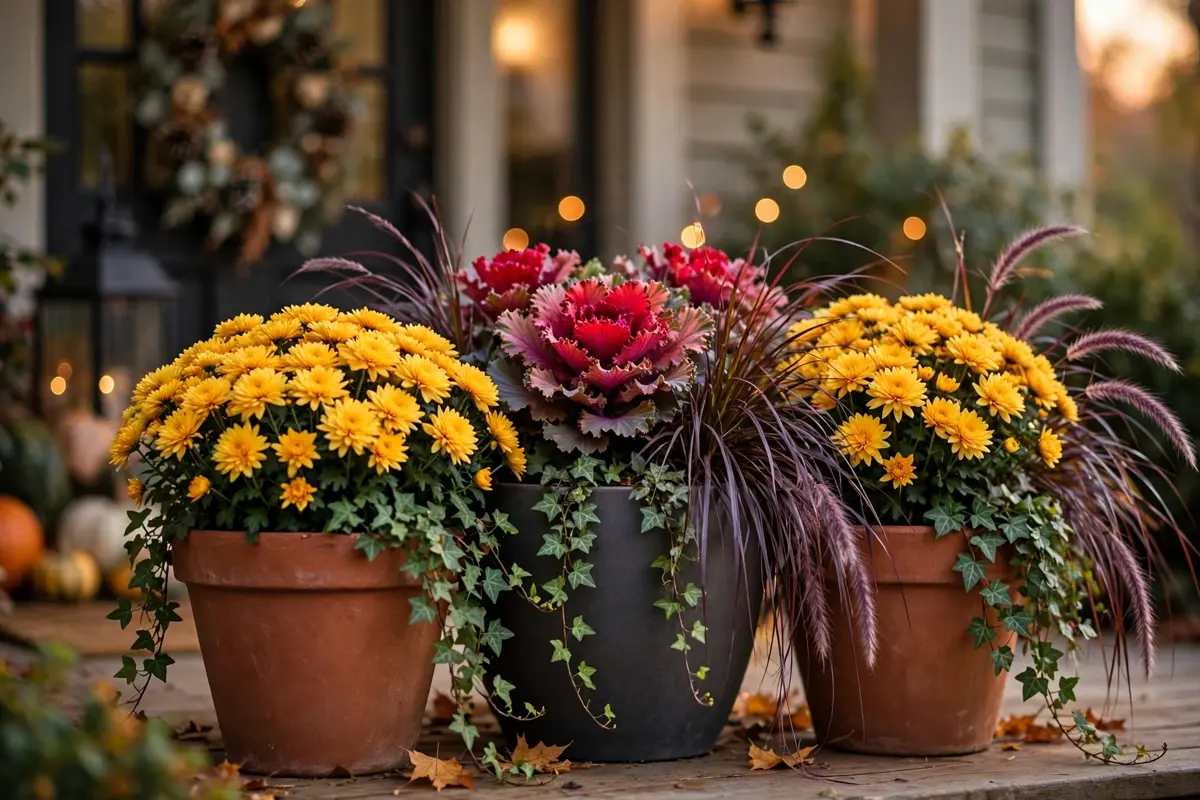
Golden-yellow garden mums are the classic fall thriller because one plant fills a 14-inch pot with color fast. Buy a variety sold in tight bud, such as ‘Hankie’, so the blooms open at home and last longer. Set it in the center of a terracotta pot filled with bagged container mix, then ring it with three red ornamental kale plants (‘Nagoya Rose’). Tuck two creeping Jenny plugs at the rim so the chartreuse leaves spill over the edge. Give it full sun and water when the top inch of soil feels dry. This combination holds color until a hard frost shuts it down.
Try this: pinch off spent mum blooms each week to stretch the show into November.
Cost: $$· Difficulty: easy
2. Purple fountain grass and copper kale
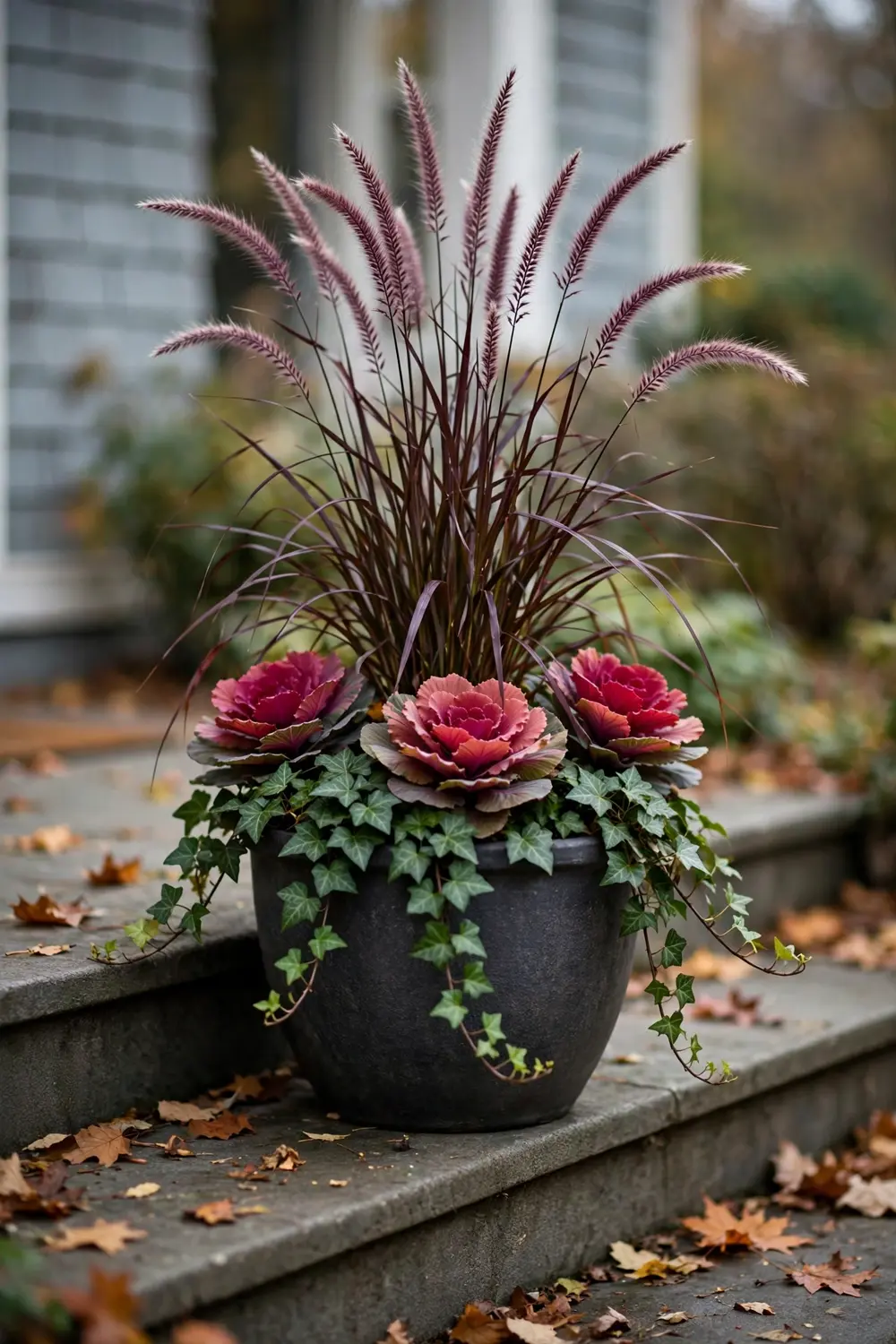
This recipe leans on foliage when flowers are fading elsewhere. Plant one purple fountain grass (‘Rubrum’) in the center of a 16-inch dark ceramic pot for height and movement. Around it, set three ornamental cabbage plants (‘Osaka Red’) whose rose centers deepen as nights cool. Finish with two English ivy plants at the edge for a green cascade. Use fresh container mix and leave an inch of space below the rim so water soaks in instead of running off. Full sun keeps the grass plumes burgundy. In zones colder than 8, treat the grass as an annual and compost it after frost.
Try this: run your fingers through the grass plumes once a week to shake out spent seed heads.
Cost: $$· Difficulty: easy
3. Black pearl pepper pot

Ornamental peppers bring a harvest feel without a single flower. Center one ‘Black Pearl’ pepper plant, with its near-black leaves and glossy red fruits, in a 14-inch clay pot. Surround it with three dusty miller plants (‘Silver Dust’) for a frosted contrast, then add two lime-green sweet potato vine plants to trail over the front rim. Keep the soil evenly moist and set the pot in full sun so the fruits color up. The peppers are grown for looks, and they can irritate mouths, so keep this pot where curious pets and toddlers will not chew on it.
Try this: water at the base of the plants to keep the pepper fruits clean and shiny.
Cost: $$· Difficulty: easy
4. Purple majesty millet tower
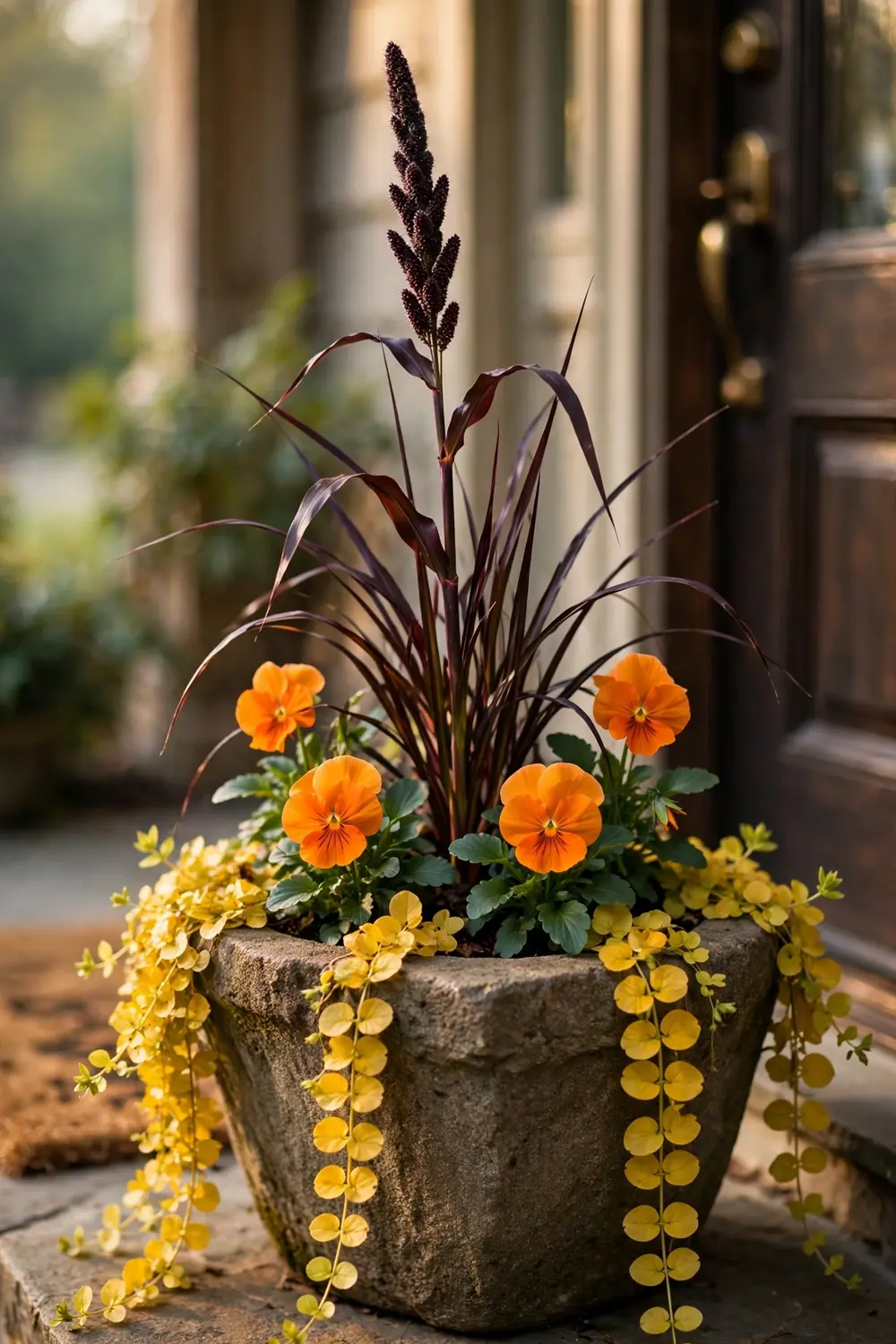
One ornamental millet turns an ordinary pot into a tower. Plant ‘Purple Majesty’ in the middle of a 16-inch stone pot; its burgundy leaves and tall seed spike give you instant height. Ring it with four bright orange pansies (‘Matrix’) for a color punch at the base, and tuck two creeping Jenny plants at the edge for trailing gold. Fresh container mix and full sun are all it needs. The millet seed heads attract birds late in the season, so leave them standing as long as the pot looks good. Replace tired pansies individually instead of redoing the whole pot.
Try this: stake the millet loosely if your porch gets strong wind.
Cost: $$· Difficulty: easy
5. All-foliage kale and carex

No flowers needed here. A single red ornamental kale (‘Peacock Red’) anchors the center of a 14-inch pot with ruffled, cold-loving leaves. Around it, plant three caramel-colored sedge grasses (‘Toffee Twist’) that sway and catch the light. Two variegated vinca vine plants at the rim spill over softly. This mix takes sun to part shade and actually looks better after a few chilly nights, when the kale color intensifies. Water deeply but less often than in summer, since cool air slows evaporation. It is one of the cheapest recipes on this list for the impact it gives.
Try this: pull off any yellowing outer kale leaves to keep the rosette tidy.
Cost: $$· Difficulty: easy
6. Rusty mums and autumn sedum
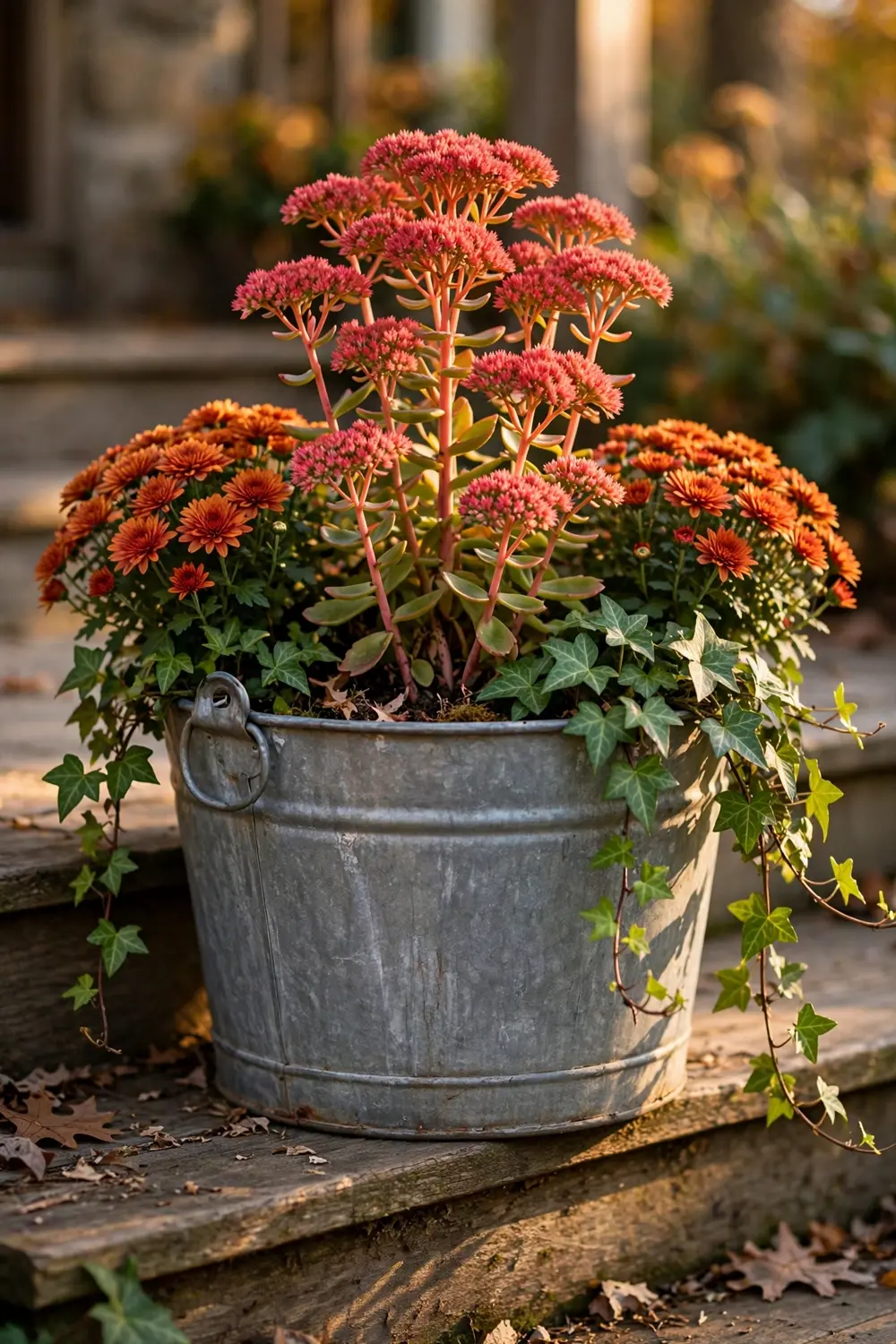
A galvanized bucket gives this recipe its farmhouse feel. Drill drainage holes first if the bucket has none. Plant one ‘Autumn Fire’ sedum in the center for height and late-season pink flower clusters. Flank it with two rust-orange garden mums bought in bud, and finish with two English ivy plants trailing over the front. Fresh container mix, full sun, and consistent watering carry it through fall. The sedum is a perennial, so after frost you can move it into a garden bed and reuse the bucket next year with a new mum.
Try this: slip a plastic nursery pot inside the bucket as a liner to make fall cleanup faster.
Cost: $$· Difficulty: easy
7. Aster bloom bowl

Asters bloom when almost everything else is done, which makes this bowl a late-season star. Set one New England aster (‘Purple Dome’) in the center of a wide, shallow 16-inch bowl. Ring it with four deep violet pansies, and tuck two creeping Jenny plants at the edge to soften the rim. The bowl shape suits plants with a mounding habit, and fresh container mix keeps the shallow soil from drying out. Full sun gives the most flowers. Deadhead the aster lightly and the pansies will keep blooming in the gaps well past the first light frost.
Try this: rotate the bowl a quarter turn each week so all sides get even light.
Cost: $$· Difficulty: easy
8. Shade-corner heuchera pot

Shady porches get fall color too. One coral bells plant (‘Palace Purple’) with deep plum leaves anchors a 14-inch stone-gray pot in part shade. Around it, plant four pale pink pansies that bloom reliably with less sun. Two English ivy plants at the rim add trailing green that looks good even after the pansies fade. Use fresh container mix and water a bit less than sun pots, since shade soil stays damp longer. After frost, the heuchera can go straight into a shady garden bed, where it returns as a perennial.
Try this: choose pansy colors that echo the heuchera leaves, like pink or plum, for a pulled-together look.
Cost: $$· Difficulty: easy
9. White and silver evening pot
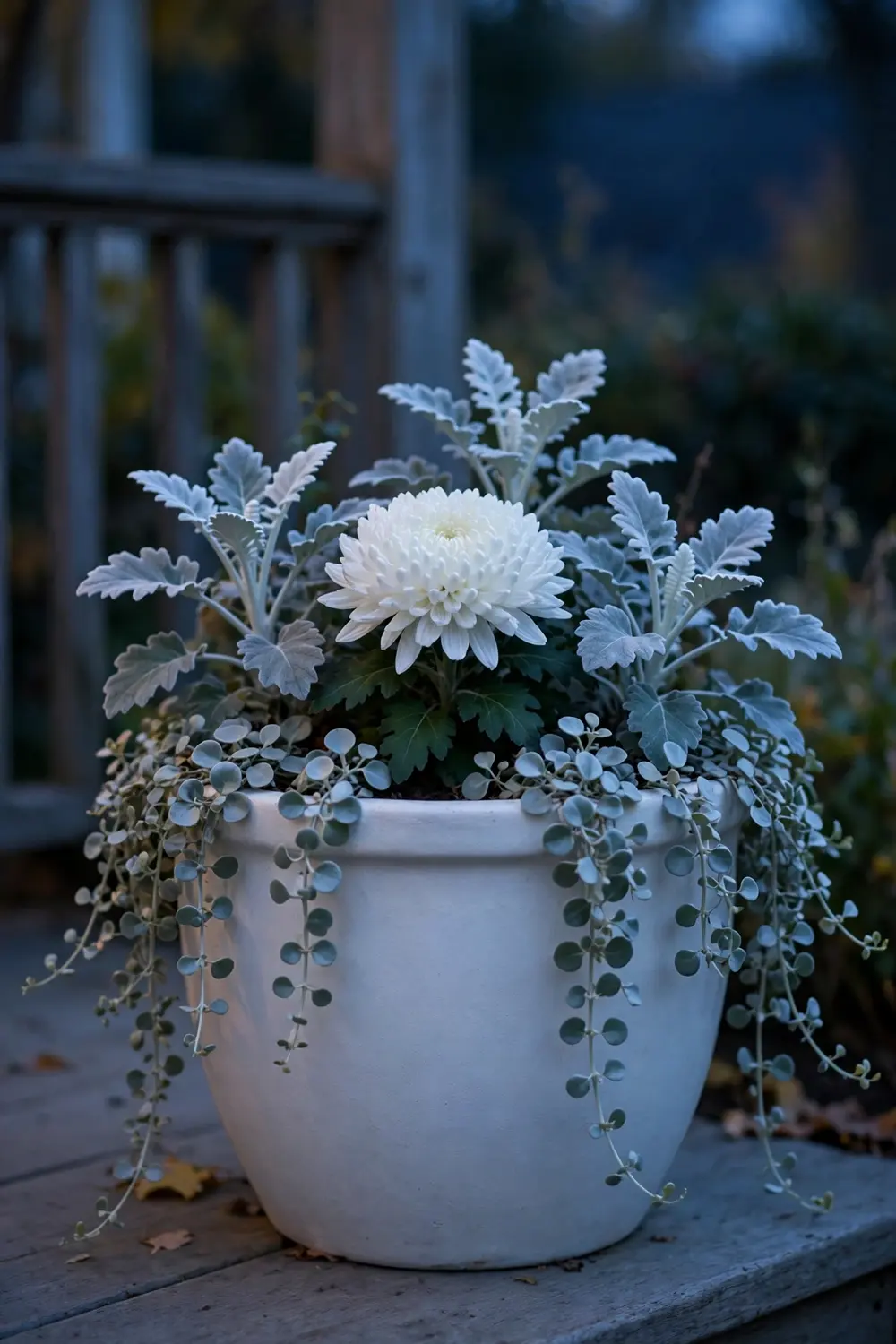
This is the pot that glows after sunset. Center one white garden mum in a 14-inch white ceramic pot, still in tight bud so it opens at home. Surround it with three dusty miller plants (‘Silver Dust’) whose silver leaves catch porch light. Add two ‘Silver Falls’ dichondra plants to trail over the rim in long silvery strands. Fresh container mix and full sun keep it crisp. Place this one near the front door or under a porch light, where the pale tones stand out after dark. It pairs well with a simple wreath and needs nothing else to look finished.
Try this: trim the dichondra back by a few inches if it starts looking stringy.
Cost: $$· Difficulty: easy
10. Burgundy cordyline statement

When you want one pot with real drama, this is it. Plant one cordyline (‘Red Star’) in the center of a 16-inch black pot; its sword-like burgundy leaves give instant height. Around the base, set two deep red garden mums for a band of color. Finish with two dark purple sweet potato vine plants (‘Blackie’) spilling over the edge. Fresh container mix, full sun, and regular watering keep it lush. In cold climates the cordyline and sweet potato vine are annuals, so enjoy them until frost and compost the tender plants afterward.
Try this: group this pot with a plain green shrub pot nearby so the burgundy really pops.
Cost: $$· Difficulty: easy
11. Harvest herb pot
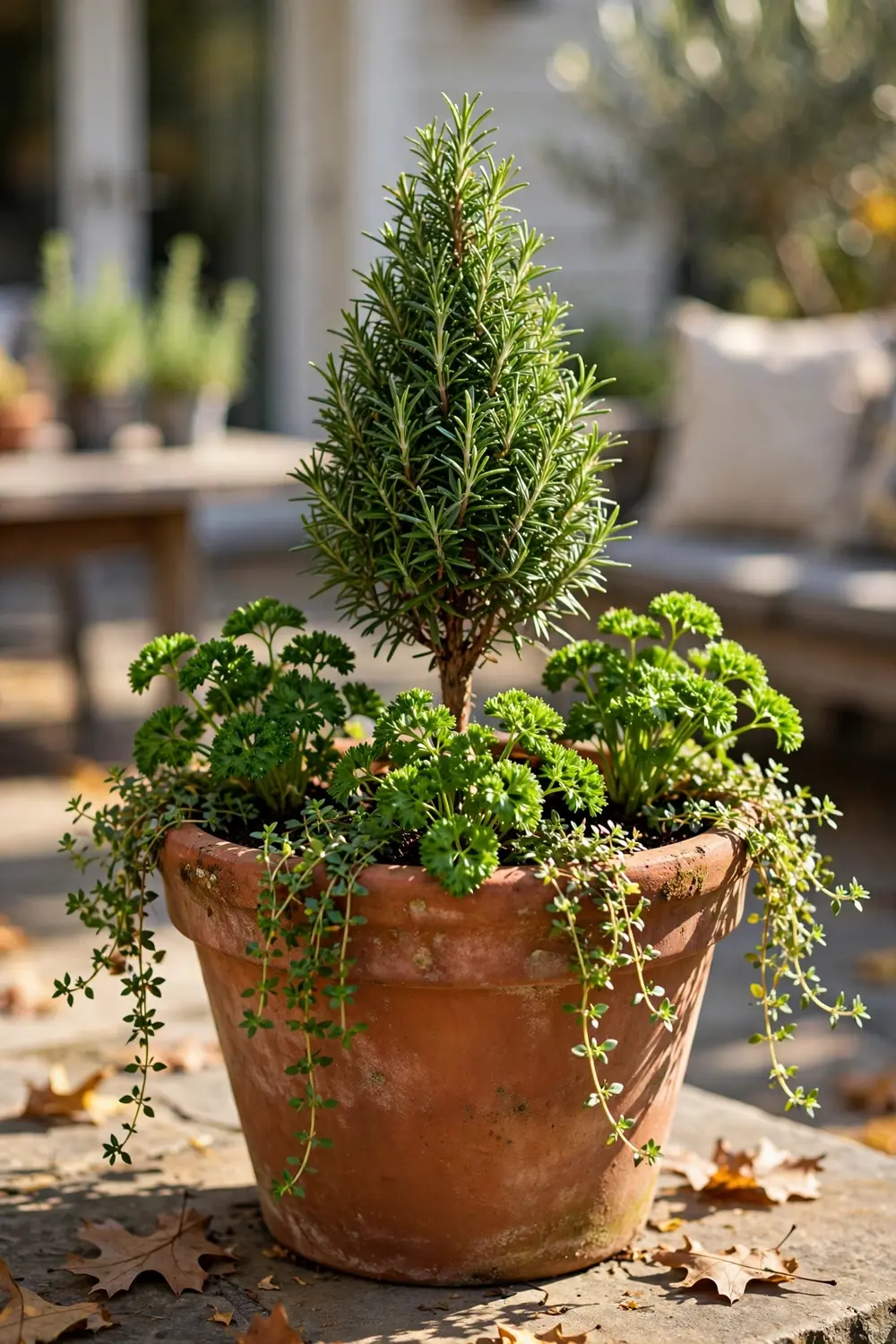
Fall containers can feed you too. Train one rosemary plant into a small cone (or buy one pre-shaped) and center it in a 14-inch terracotta pot. Around it, plant three curly parsley plants for a full green middle layer. Tuck two trailing lemon thyme plants at the rim to spill over. Use fresh container mix and set the pot in full sun near the kitchen door, where you will actually snip from it. Water when the top inch dries out. Harvest the parsley and thyme regularly; cutting keeps them producing until hard frost. Bring the rosemary indoors before freezing nights if you want to keep it.
Try this: snip herbs in the morning, when their flavor is strongest.
Cost: $$· Difficulty: easy
12. Coral and cream cabbage combo

This soft palette suits porches that lean cottage style. One large cream-and-rose ornamental cabbage (‘Osaka White’) sits in the center of a 14-inch blush ceramic pot. Flank it with two coral-pink garden mums for warm color, and let two lime-green sweet potato vine plants (‘Marguerite’) trail over the front rim. Fresh container mix and full sun are the only requirements. The cabbage rosette keeps looking good after the mums fade, which extends the life of the whole pot. In mild climates this combination can carry you into early winter.
Try this: pick a pot color that echoes the cabbage center for a coordinated look.
Cost: $$· Difficulty: easy
13. Mini spruce front-door pot

This is the recipe that outlasts fall entirely. Plant one dwarf Alberta spruce in the center of a large 16-inch barrel or urn; it gives you a perfect cone of green through winter. Ring it with three white pansies for fall flowers, and tuck two English ivy plants at the edge for trailing green. Fresh container mix, sun to part shade, and steady watering until the ground freezes. After the holidays, you can decorate the spruce with lights, then plant it in the yard in spring. It costs more up front but works for three seasons.
Try this: mulch the soil surface with bark to insulate the spruce roots.
Cost: $$· Difficulty: moderate
14. Pink pepper sunset
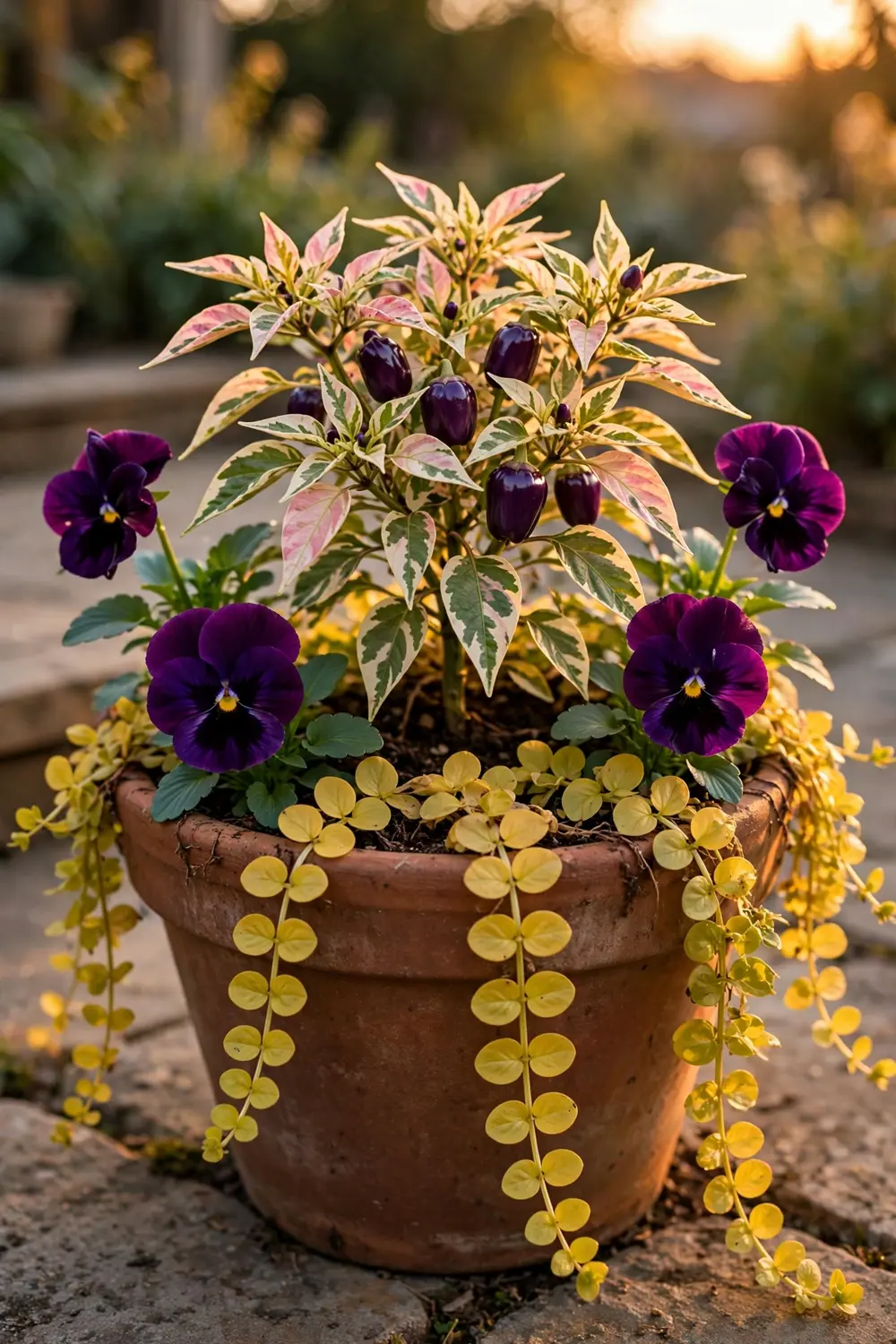
Ornamental peppers come in more than red. One ‘Sangria’ pepper plant, with cream-and-pink variegated leaves and purple fruits, centers a 14-inch terracotta pot. Around it, plant four deep purple pansies that echo the fruit color. Two creeping Jenny plants at the rim add trailing gold that lights up in low sun. Fresh container mix and full sun keep the colors strong. Like all ornamental peppers, the fruits are for looks, so keep the pot out of reach of pets and small children who might taste them.
Try this: place this pot where it catches late afternoon sun to make the variegation glow.
Cost: $$· Difficulty: easy
15. Kale and cabbage family pot

This is the toughest pot on the list. One frilly red ornamental kale (‘Nagoya Red’) anchors the center of a 14-inch stone-gray pot. Around it, plant three blue-green ornamental cabbages (‘Osaka Blue’) with pink centers. Two creeping Jenny plants at the rim spill over in gold. Fresh container mix and full sun are all it asks. Ornamental kale and cabbage shrug off light frosts and their colors deepen as temperatures drop, so this pot often looks its best in November. Water less as the weather cools; soggy soil is the only real threat.
Try this: plant this one last, after your first light frost, when the colors are at their peak in the nursery.
Cost: $$· Difficulty: easy
16. Snapdragon column
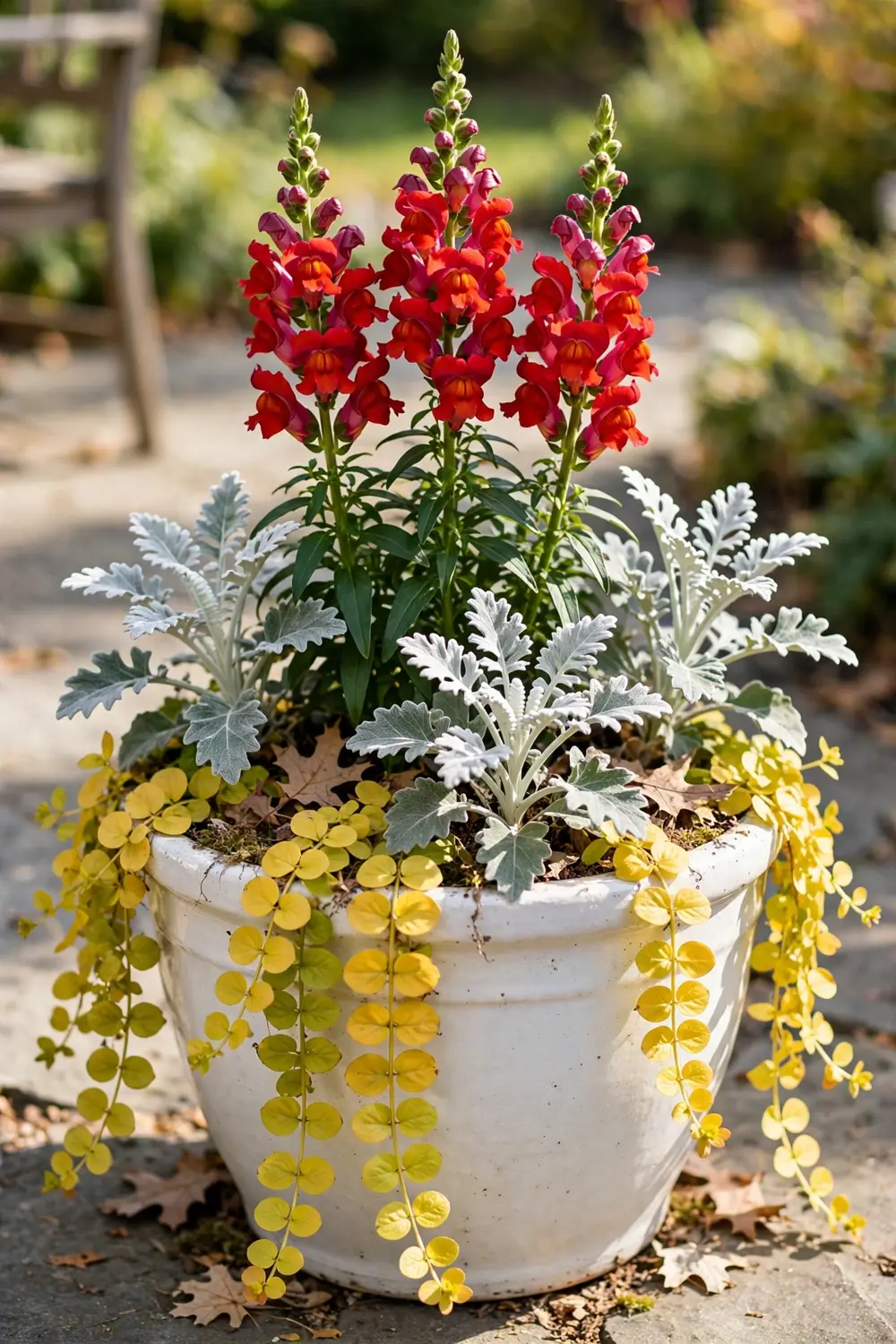
Snapdragons are cool-weather flowers that bloom until hard frost. Group three tall red snapdragons (‘Rocket Red’) in the center of a 14-inch white pot for a column of color. Around them, plant three dusty miller plants (‘Silver Dust’) for a silver collar. Finish with two creeping Jenny plants trailing over the rim. Fresh container mix, full sun, and deadheading keep the spikes coming. If a hard freeze is forecast, toss a frost cloth over the pot overnight and it will often bounce back the next day.
Try this: cut a few snapdragon stems for indoor vases; cutting encourages more blooms.
Cost: $$· Difficulty: easy
17. Orange celosia flame
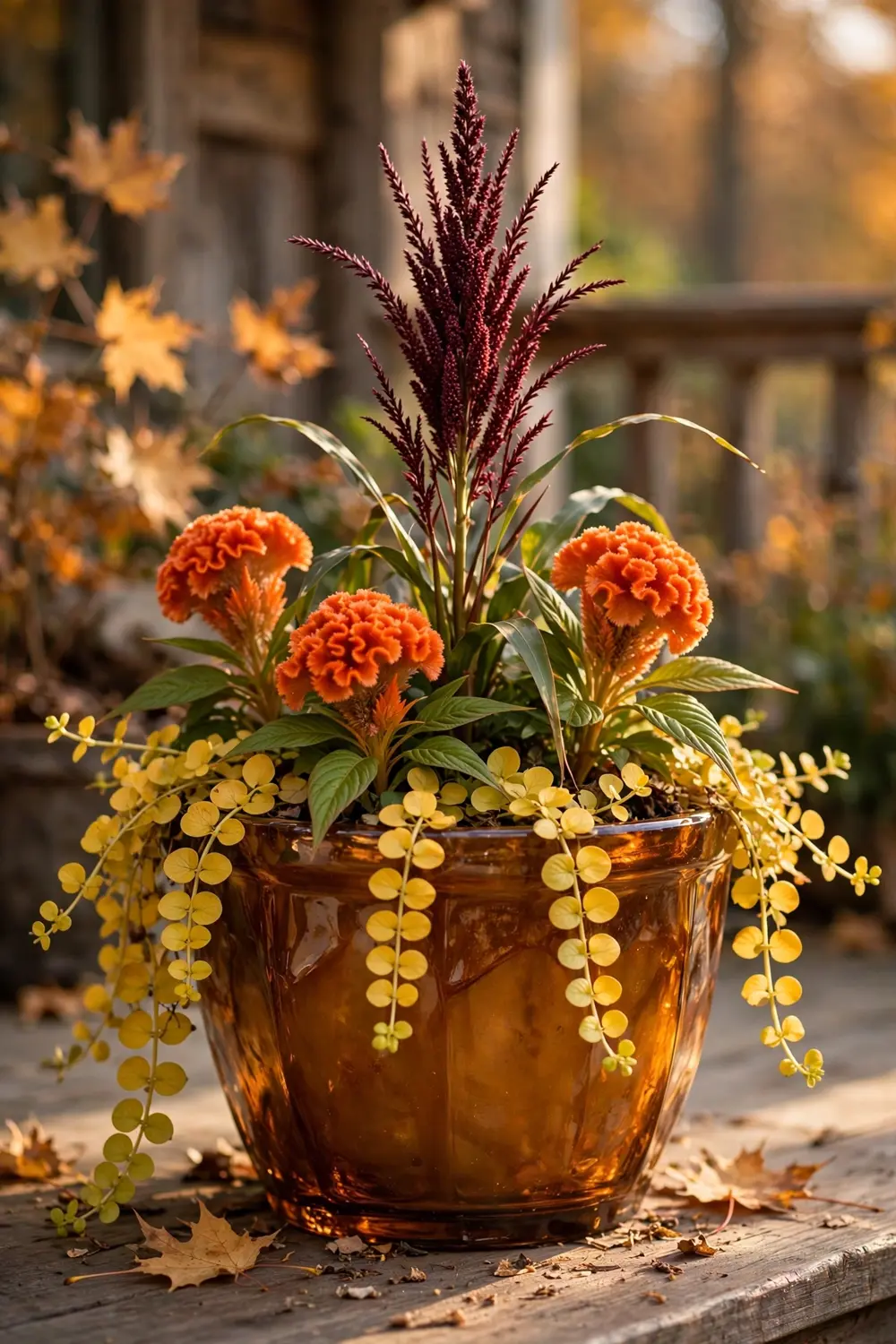
Celosia plumes look like little flames, which fits fall perfectly. Plant one burgundy ornamental millet (‘Jester’) in the center of a 14-inch amber resin pot for height. Around it, set three orange celosia plants (‘First Flame’) for feathery texture. Two creeping Jenny plants at the edge trail over in gold. Fresh container mix and full sun keep it bold. Celosia is tender, so this recipe suits regions where hard frost arrives late, or porches where you can cover the pot on cold nights. It is a short-season showstopper.
Try this: cut celosia plumes before frost and dry them upside down for indoor arrangements.
Cost: $$· Difficulty: easy
18. Pink mum dome
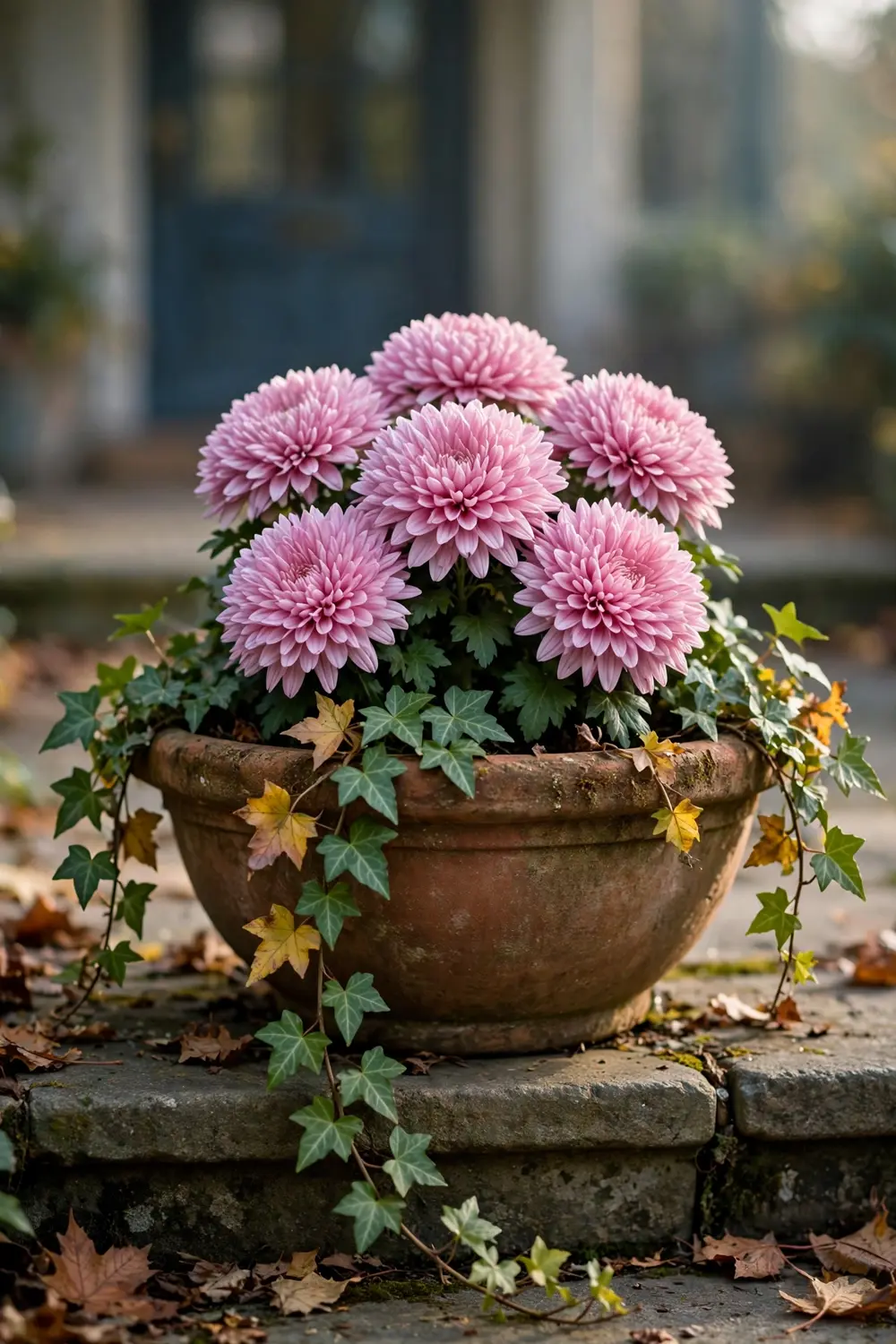
Sometimes the simplest recipe wins. Pack five pink garden mums (‘Jessica’) tightly into a wide 16-inch terracotta bowl so they form one big dome of color. Buy them in bud for the longest show. Tuck three English ivy plants around the rim to trail over the edge and soften the shape. Fresh container mix and full sun are all it takes. Mums are thirsty, so check the soil daily during warm spells; a light pot means water now. This is the fastest recipe here: one plant type, one pot, done in ten minutes.
Try this: mix two pink shades, like light and deep rose, for a dome with more depth.
Cost: $$· Difficulty: easy
How to choose plants for a fall container
Match the plants to your porch first. Note how many hours of direct sun your spot gets, then pick a recipe from the list that suits it; most fall plants want full sun, but heuchera and pansies handle part shade. Check your average first frost date and plant 4 to 6 weeks before it, so roots settle in while the soil is still warm. Choose pots 14 to 16 inches wide with drainage holes, and always use bagged container mix rather than garden soil, which compacts in pots. A quick lift test tells you when to water: if the pot feels light, give it a long drink.
The table below groups the recipes above so you can pick fast.
| Group | Recipes | Best for |
|---|---|---|
| Full sun classics | 1, 2, 3, 4, 6, 9, 10, 12, 14, 16, 17, 18 | Bright porches and entries |
| Part shade friendly | 5, 8, 11, 13 | Covered porches, north-facing spots |
| Toughest in frost | 5, 8, 13, 15 | Regions with early freezes |
| Edible bonus | 11 | Kitchen-door pots |
For container soil and drainage basics, Clemson University’s extension guide to container gardening is a solid reference: Clemson HGIC container gardening factsheet.
Fall planter mistakes to avoid
Most fall pots fail for the same few reasons. Buying mums in full bloom is the biggest one; open flowers fade in a week or two, while tight buds open at home and last far longer. Planting in garden soil is another; it compacts in containers and drowns roots, so use bagged container mix. Skipping drainage holes is just as bad, especially with wet autumn rain. People also forget to water in fall. Cool air feels damp, but wind dries pots fast, so keep checking with the lift test. Finally, do not toss the whole pot at the first frost. Kale, cabbage, pansies, and heuchera all handle light frosts, and a frost cloth buys tender plants several more weeks.
A quick pet-safety note
Garden mums (chrysanthemums) are listed as toxic to dogs and cats by the ASPCA, so keep mum-heavy pots where pets cannot chew the leaves or flowers: ASPCA chrysanthemum plant page. Ornamental peppers can irritate mouths and stomachs if eaten, so the pepper recipes above belong out of reach too. English ivy is also toxic to pets if ingested in quantity. If your dog treats every pot as a snack bar, stick with the herb pot, the kale and cabbage recipes, or pansy-based combinations, and place all planters where curious noses cannot reach them.
Fall container planter FAQs
When should I plant fall containers?
Plant 4 to 6 weeks before your area’s average first hard frost so roots establish while the soil is still warm. In mild climates you can plant well into October. Nurseries stock fall plants like mums, kale, and pansies in waves, so shop early for the best selection and again after the first cool snap, when ornamental kale shows its best color.
How many plants go in one container?
For a 14-inch pot, plan on 6 to 8 plants: one thriller, three or four fillers, and two spillers. A 16-inch pot takes 8 to 10. Fall containers can be planted a little tighter than spring ones because cool weather slows growth, but leave enough room that you can still get a watering can spout between the plants.
Do fall containers need fertilizer?
A slow-release granular fertilizer mixed into the container mix at planting time is usually enough for the whole season. Fall is short, and cool soil slows nutrient uptake, so heavy feeding does not help. If you reuse the same potting mix from summer, refresh the top few inches with new mix and add the slow-release feed.
Can mums survive a light frost in a pot?
Yes. Garden mums handle light frosts without damage, and cool nights can deepen their color. When a hard freeze below about 28°F is forecast, move pots against the house wall, cover them with frost cloth overnight, or bring smaller pots into a garage. Remove the cover in the morning so the plants get light.
Are mums toxic to dogs and cats?
Yes. Chrysanthemums are listed as toxic to dogs and cats by the ASPCA, and chewing the leaves or flowers can cause drooling, vomiting, and diarrhea. Keep mum planters where pets cannot reach them, and choose the kale, herb, or pansy recipes if your pets chew on plants.
Can I move fall container plants into the garden afterward?
Some of them, yes. Heuchera, sedum, asters, and dwarf spruce are perennials that transplant into garden beds easily. Ornamental kale, cabbage, peppers, and millet finish with the frost and go to the compost. Mums planted early in the season sometimes return the next year in zones 5 through 9, but fall-planted mums often do not establish in time, so treat them as seasonal color.
If your porch needs more than planters, these small front porch decor ideas help the whole entry look pulled together. Once the pots are planted, rustic garden decor ideas give the rest of the yard the same autumn feel. And when warm weather returns, these summer front porch flower pot ideas keep the same pots working through the next season.
Pick one pot this weekend and give it a fall recipe. Twenty minutes of planting turns the saddest corner of the porch into the part guests notice first, and the mums will still be going strong when the holiday decorations come out.


