


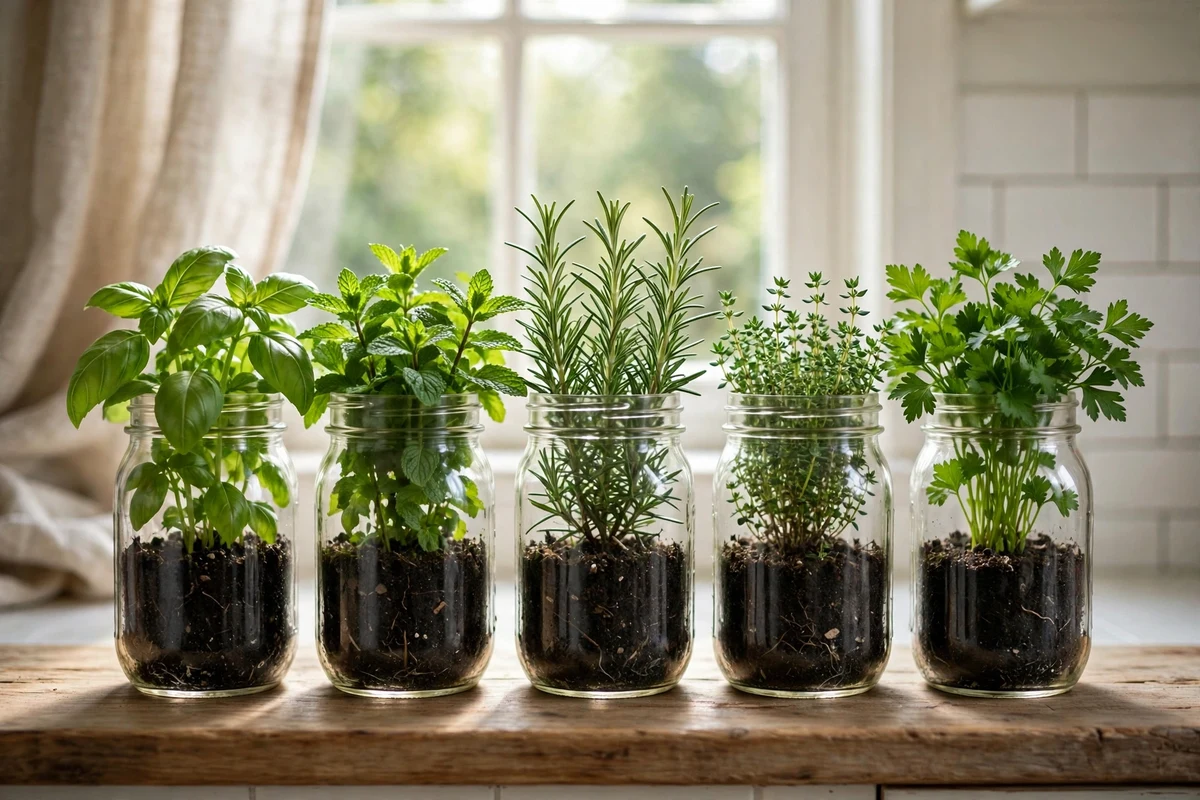
Your grocery store herbs wilt before the week ends. You pay $4 for a plastic clamshell of basil that turns brown on day two, and every recipe calls for fresh sprigs you do not have. A windowsill jar garden fixes this on a tiny budget, and you can start it in one afternoon.
This guide covers the 10 herbs that genuinely thrive in a mason jar indoors. You get soil layering that prevents root rot, light and water needs for each herb, and which popular herbs to skip because their roots outgrow jars. Perfect for apartment kitchens, rental windowsills, and anyone who wants fresh herbs within arm’s reach.
Quick takeaways
- Use quart-size jars and add 1 to 2 inches of pebbles under the soil since jars have no drainage holes.
- Basil, mint, and chives are the easiest wins for beginners; give every jar at least 6 hours of bright light.
- Keep mint in its own jar because it spreads aggressively and crowds out neighbors.
- Skip woody Mediterranean herbs like rosemary and lavender unless you move them to bigger pots within months.
- Check the pet safety list before you plant: some kitchen herbs are toxic to cats and dogs.
1. Basil

Basil is the mason jar champion. It grows fast, tolerates frequent harvesting, and rewards you with armloads of leaves from a single sunny jar. Genovese basil gives you the classic pesto flavor, while Thai basil adds a sweet anise edge for stir-fries. One quart jar holds one basil plant comfortably, and pinching the top set of leaves every week keeps it bushy instead of leggy.
Try this: set the jar on a south-facing windowsill and rotate it a quarter turn every few days so the plant grows straight. Cost: $· Difficulty: easy
2. Mint

Mint is nearly indestructible in a mason jar, which is exactly why it deserves its own jar. Peppermint and spearmint roots spread sideways with surprising speed, and a shared jar ends with mint everywhere and everything else gone. The payoff is huge: fresh leaves for tea, lemonade, and desserts all summer long. Keep the soil evenly moist and harvest from the top to keep new growth coming.
Try this: cut stems down to the third set of leaves when the plant hits 6 inches; it will double back bushier. Cost: $· Difficulty: easy
3. Chives

Chives are the set-and-forget herb of the mason jar world. A single clump keeps producing snippable green spears for months, and the mild onion flavor upgrades eggs, baked potatoes, and dips instantly. They tolerate slightly less light than basil, so a bright east window works fine. Let a few stems flower once and you get pretty purple puffs, though deadheading keeps leaf production higher.
Try this: harvest with clean scissors from the outer stems first, leaving the center to keep pushing new growth. Cost: $· Difficulty: easy
4. Parsley

Parsley is slow to germinate but generous once it gets going, and one jar produces more than most families use. Flat-leaf parsley carries stronger flavor for cooking, while curly parsley doubles as an edible garnish. Soak seeds overnight before sowing to speed up the sluggish germination, and expect sprouts in 2 to 3 weeks. Keep the soil consistently damp but never soggy, since seedlings rot in standing water.
Try this: sow a fresh pinch of seeds every month in a second jar so you always have young plants coming on. Cost: $· Difficulty: easy to moderate
5. Cilantro

Cilantro earns its jar with pure speed: you can harvest leaves within 3 to 4 weeks of sowing. It loves cool kitchen air and bolts to seed when rooms get too warm, so keep it away from the oven and direct afternoon heat. Sow seeds thickly every few weeks for a steady supply, because each plant has a short prime. When it finally bolts, let it flower and collect the coriander seeds for cooking.
Try this: harvest outer leaves first and never take more than a third of the plant at once, or it sulks. Cost: $· Difficulty: easy
6. Thyme

Thyme is the patient, long-lived jar herb. English thyme forms a tidy low mound that fits a pint jar for years, and the tiny leaves pack enormous flavor for roasts and soups. It wants the brightest spot you have and soil that dries between waterings, because soggy roots kill it faster than neglect. Buy a small seedling rather than starting from seed; thyme seed is notoriously slow and fussy.
Try this: trim flower buds off to keep leaf flavor strong, and give the jar a full sunny window all winter. Cost: $· Difficulty: easy
7. Oregano

Oregano thrives on the same bright, lean conditions as thyme, which makes the pair natural jar-mates. Greek oregano has the boldest flavor for pizza and pasta sauces, far stronger than the decorative varieties sold in gift pots. Water deeply but infrequently, letting the top inch of soil dry out first. Pinch the growing tips regularly and the plant stays compact instead of sprawling over the jar rim.
Try this: dry a handful of harvested sprigs by hanging them upside down in a paper bag for a week. Cost: $· Difficulty: easy
8. Dill

Dill brings feathery texture and unmistakable flavor for pickles, salmon, and dips. It grows tall fast, so use a quart jar and start seeds directly in it, since dill resents transplanting. Full sun and consistent moisture keep the fronds lush; a crowded jar tips over easily, so keep it to 3 or 4 plants. Harvest the ferny leaves any time, and let one plant flower for dill seed heads.
Try this: sow new seeds every 3 weeks in a second jar because dill has a short productive life. Cost: $· Difficulty: easy
9. Rosemary

Rosemary is the ambitious jar herb: it looks fantastic and smells incredible, but treat the mason jar as a temporary home. The woody roots quickly fill a quart jar, so plan to move it to a 6-inch pot within 4 to 6 months. Until then, give it your sunniest window, very light watering, and excellent air flow. Prune snips straight into roasted potatoes and chicken all winter long.
Try this: water only when the top 2 inches are dry; rosemary dies from kindness faster than thirst. Cost: $· Difficulty: moderate
10. Sage

Sage rewards patience with years of harvests from one jar. The soft gray-green leaves flavor poultry, stuffing, and brown-butter sauces, and the plant tolerates the dry indoor air of winter better than most herbs. Start with a seedling in a quart jar, keep it in full sun, and let the soil dry between waterings. Replace the plant every couple of years when the center gets woody and leaf production slows.
Try this: fry whole sage leaves in butter for 30 seconds for an instant garnish that impresses guests. Cost: $· Difficulty: easy
Mason jar herbs compared: light, water, and harvest speed
How to layer a mason jar so herbs survive without drainage holes
Mason jars have no drainage holes, so the soil layering does all the work. Start with 1 to 2 inches of clean pebbles or small stones at the bottom. Add a thin layer of activated charcoal if you have it; it keeps the jar smelling fresh. Then fill with a light indoor potting mix, leaving 1 inch of headspace. Water slowly until the pebble layer catches the excess, then wait until the top inch of soil dries before watering again. This routine prevents the root rot that kills most jar herbs.
Pet safety: which mason jar herbs are toxic to cats and dogs
Most herbs on this list are safe, but a few need caution around curious pets. Chives are the big one to watch: all alliums (chives, onions, garlic) are toxic to cats and dogs and can damage red blood cells if eaten in quantity. Mint and sage are generally safe in small nibbles, while parsley in large amounts can cause stomach upset in dogs. Keep jars on a high windowsill out of paw reach, and check the ASPCA toxic plant database before introducing any new herb around pets. If your cat chews plants obsessively, skip chives entirely.
Mistakes that kill mason jar herbs fast
The most common killer is overwatering without drainage. If water pools above the pebble layer, tip the jar gently to pour it off and let the soil dry out. The second killer is weak light: a dark kitchen corner starves basil and dill even in perfect soil, so add an inexpensive LED grow light if your windows are small. The third mistake is planting mint with anything else; give it a solo jar from day one. Finally, replace potting mix every year, since depleted soil turns compacted and waterlogged.
Looking for more ways to grow food in small spaces? Read these 15 beginner friendly raised vegetable garden ideas to plan your next step outdoors. If you are planting several herbs together, these companion planting charts for raised beds show which plants help each other thrive.
For science-backed growing guidance, the University of Minnesota Extension covers indoor herb care at extension.umn.edu, and the ASPCA maintains a searchable toxic and non-toxic plant database to check every herb before planting around pets.
Frequently asked questions
Do herbs actually grow well in mason jars?
Yes, compact herbs grow well in mason jars as long as you add a pebble layer for drainage, use light potting mix, and give them at least 6 hours of bright light. Herbs with small root systems (basil, mint, chives, thyme) do best. Large woody herbs like rosemary outgrow jars within months and need transplanting.
Which jar size is best for herb growing?
Quart-size (32 oz) jars work best for most herbs because they hold enough soil for healthy roots while still fitting a windowsill. Pint jars suit thyme and small seedlings. Wide-mouth jars are easier to fill with soil and lift plants out of later.
How often should I water mason jar herbs?
Water when the top inch of soil feels dry, usually every 3 to 5 days indoors. Pour slowly and stop when water reaches the pebble layer at the bottom. In winter, when growth slows, stretch watering to once a week to avoid root rot.
Can I grow herbs in mason jars without soil?
Yes, basil, mint, and chives grow in jars of plain water (hydroponic style) for several weeks. Change the water every 3 to 4 days to keep it fresh, and wrap the jar in paper if algae forms. Soil-grown herbs last far longer, though.
Which herbs should I not grow in mason jars?
Avoid large or aggressive plants: full-size rosemary and lavender outgrow jars fast, and mint crowds out anything planted with it. Bay laurel and lemongrass need deep pots. Stick to the 10 compact herbs in this guide for jar success.
A mason jar herb garden is the cheapest kitchen upgrade you will ever make. I started with three jars on my own windowsill last spring, and now I cannot imagine cooking without snipping fresh basil on demand. Pick two or three herbs from this list, layer your jars right, and you will have fresh flavor all year.
Once your herbs are harvested, see our guide to 7 Herb Drying in Kitchen Ideas for Herbs That Stay Fragrant for a wall peg rail with S-hooks, a hanging hoop rack, stacked screen trays, a countertop dehydrator, and a low oven batch.


