
Shopping for a baby boy can feel like walking the same aisle twice. The registry is picked over, the cute outfits are already bought in three sizes, and you want to give something that looks like you actually thought about it. Making the gift at home solves that problem in the best way: it costs less than most store gifts, it carries your time in it, and parents tend to keep handmade pieces long after the clothes are outgrown.
This list covers 20 creative baby boy gifts to make at home, from quick sewing projects you can finish in an evening to keepsakes that take a weekend. Every idea names its materials, its rough cost, and its difficulty, so you can pick one that fits your skills and your deadline. Most use basic supplies: cotton fabric, felt, yarn, wood, paint, and a sewing machine or a needle and thread.
- Start with the parents’ style: match the nursery colors or the family’s hobbies before you pick a project.
- Sewn gifts (bibs, burp cloths, booties) are the fastest wins, usually under $15 in materials.
- Keepsakes (name sign, memory book, growth chart) take longer but get displayed for years.
- Skip loose buttons, long cords, and small parts on anything a baby will mouth or grab.
- Wash every fabric gift before wrapping so it arrives soft, clean, and ready to use.
How to pick a gift to make
Match the project to two things: your skill level and how the gift will be used. A new sewer should start with straight seams (bibs, burp cloths, bunting) and leave fitted hats and softies for later. A knitter with a free weekend can tackle booties or a hat set. If the baby is already here, lean practical: bibs, burp cloths, and towels get used daily. If the gift is for a shower months before the due date, a keepsake lands better because the parents have time to hang it and enjoy it.
Check the nursery palette before you buy fabric or paint. Navy, sage, grey, and wood tones fit most boy nurseries without clashing. Ask one question before you start: does the family already have this? A second mobile or a third blanket helps no one, but a memory book or a growth chart is rarely duplicated.
1. Applique onesie set
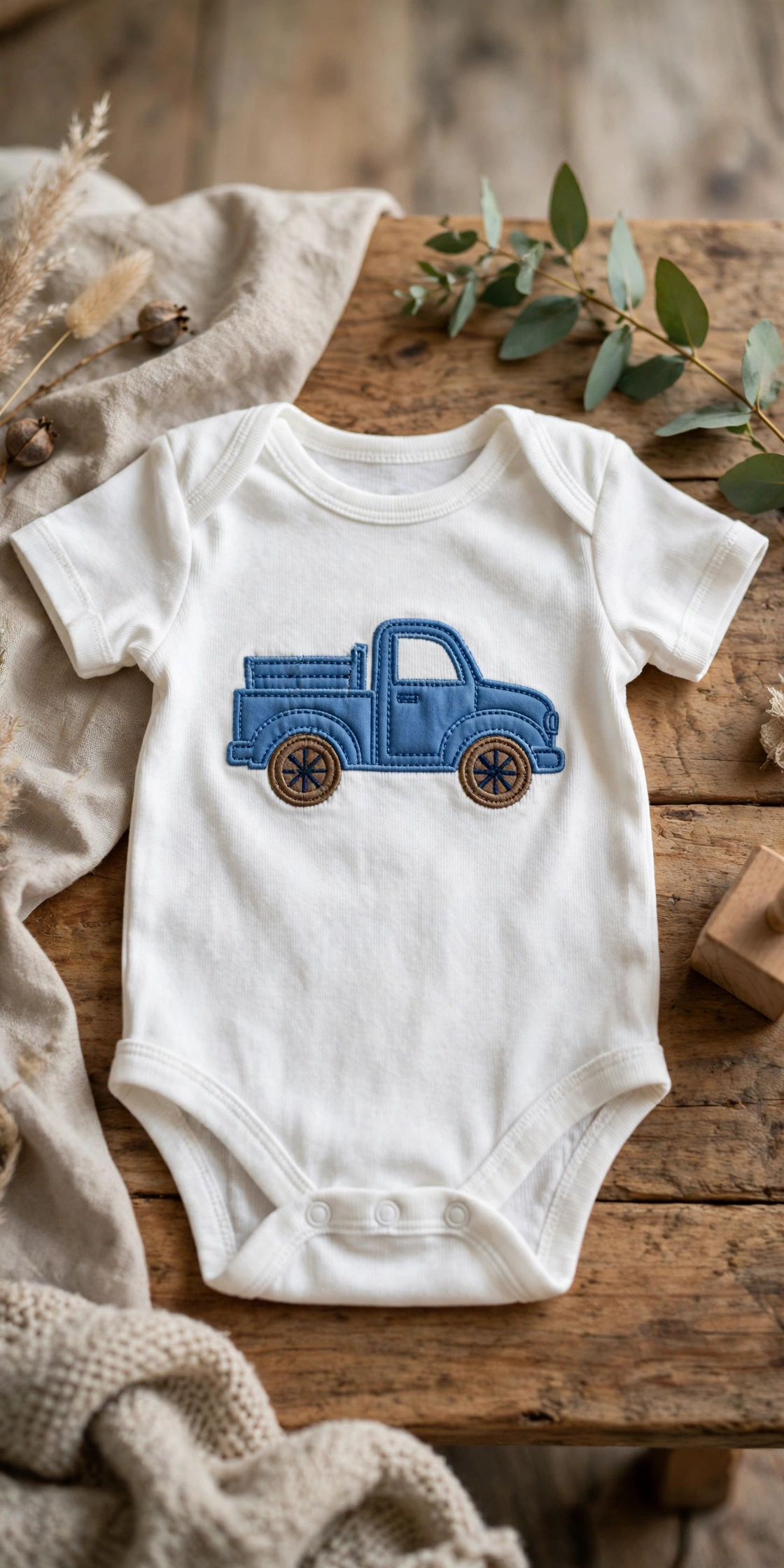
Cut a small truck, dinosaur, or rocket from cotton print and stitch it onto three plain white onesies in sizes 3 to 6 months. Use iron-on adhesive to hold each shape in place, then finish the edges with a tight zigzag stitch so nothing frays in the wash. A quarter yard of print fabric covers all three appliques, and the set looks store-bought once the seams are pressed.
Cost: $ | Difficulty: Easy.
Try this: cut the same shape in a second fabric for a matching burp cloth.
2. Bandana bibs

Sew four triangle bandana bibs from soft cotton prints and back them with absorbent flannel. Each bib takes one fat quarter of print and one of flannel, plus two snaps or a strip of hook-and-loop tape at the neck. The triangle shape catches dribble better than a round bib and stays put during tummy time. Finish with a topstitch around the edge for a clean look.
Cost: $ | Difficulty: Easy.
Try this: use one woodland print and one solid so the set mixes with any outfit.
3. Knitted booties

Knit a pair of booties in soft, washable yarn with a simple garter stitch pattern and a tie or button-free cuff. Newborn size takes under 50 grams of yarn and one evening of knitting, and the stretchy cuff keeps them on wiggling feet better than rigid shoes. Choose a yarn labeled machine washable so the parents can actually use them.
Cost: $ | Difficulty: Easy.
Try this: knit a second pair in the next size up so the gift lasts past month three.
4. Felt dinosaur softie

Cut a simple dinosaur shape from two layers of wool-blend felt, stitch the edges closed with a blanket stitch, and stuff it lightly with polyester fiberfill. Embroider the eyes and spots instead of gluing on buttons or beads, which keeps the toy safe for mouthing. The whole softie fits in one hand, which makes it a good first toy for small grips.
Cost: $ | Difficulty: Easy.
Try this: add a sewn loop on top so it can hang from a stroller or car seat handle.
5. Paper plane mobile

Fold a fleet of small planes from stiff felt or cardstock in navy, white, and mustard, then hang them at different lengths from a wooden embroidery hoop with clear thread. The planes turn slowly in room air and give the nursery a playful focal point without any electronics. Hang the hoop from the ceiling over a dresser or chair, never directly over the crib, and take it down once the baby can push up on hands and knees.
Cost: $ | Difficulty: Easy.
Try this: use one patterned plane among solids for a surprise detail.
6. Taggie blanket
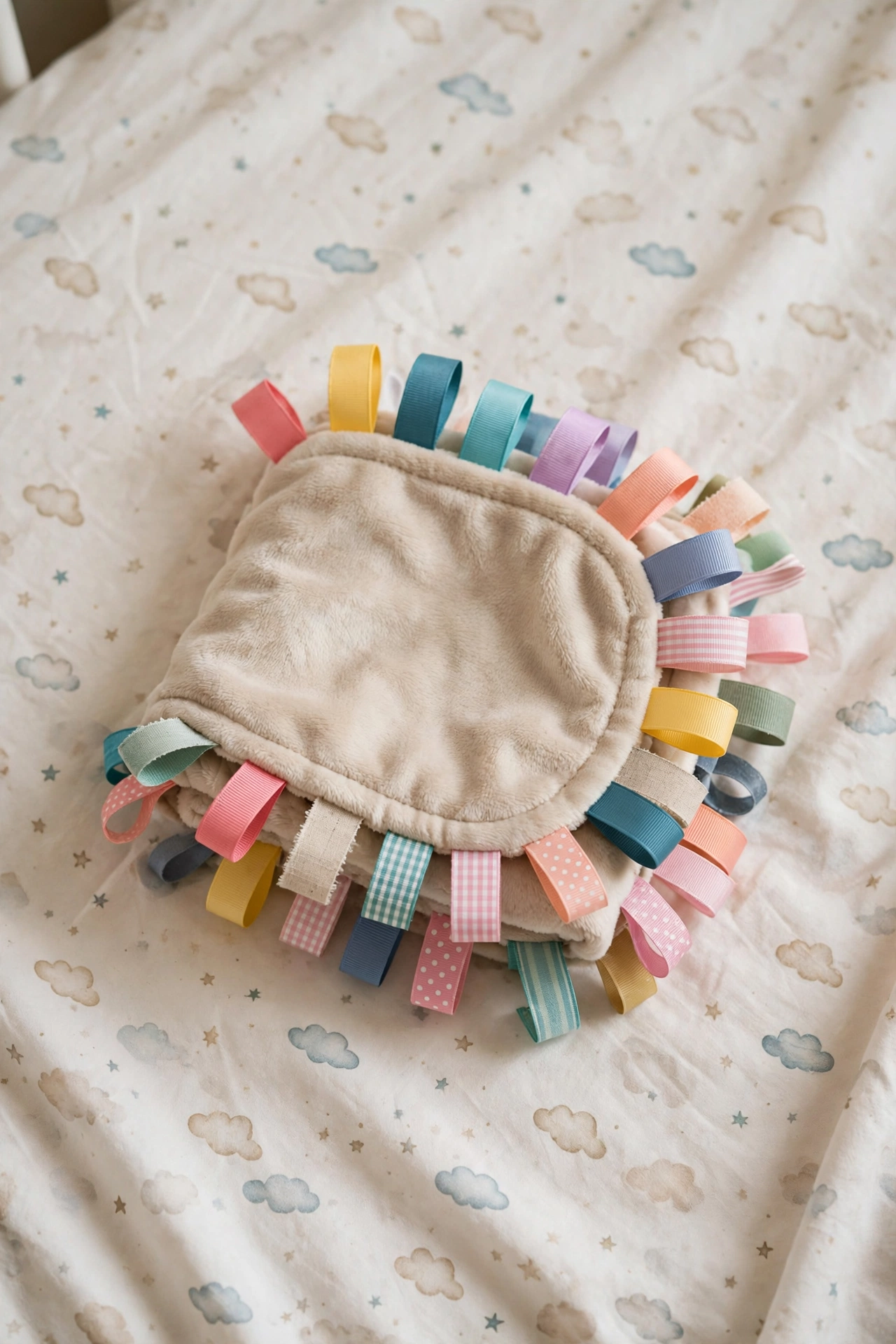
Sew a 12 inch square blanket with a soft minky front, a cotton back, and a dozen ribbon loops caught in the seams around the edges. Babies love to rub and tug the ribbons, which makes this tiny blanket a favorite comfort object despite its size. Keep each loop short, under 3 inches, and stitch every ribbon twice so none can pull free. Wash it before wrapping.
Cost: $ | Difficulty: Easy.
Try this: mix grosgrain, satin, and cotton ribbons for different textures to explore.
7. Handprint and footprint canvas

Press the baby’s hand and foot into washable, non-toxic paint and stamp them onto a stretched canvas, then add the name and birth date in a simple painted font once the prints dry. If the baby has not arrived yet, leave the canvas painted with a border and a blank center, and include the paint and a note so the parents can add the prints at home. Seal the finished piece with a clear matte spray.
Cost: $ | Difficulty: Easy.
Try this: stamp one extra practice print on paper first to get the pressure right.
8. Wooden name sign

Cut or buy a plain pine board, sand the edges smooth, and paint the baby’s name in a bold block font with a small painted star or truck beside it. Two coats of acrylic paint plus a clear sealant give a finish that survives nursery humidity and dusting. Drill two small holes at the top and hang it with cotton cord, or add a sawtooth hanger on the back.
Cost: $$ | Difficulty: Moderate.
Try this: paint the board in the exact nursery wall color family so it reads as part of the room.
9. Milestone cards

Paint or print a set of 12 monthly milestone cards on thick cardstock, one for each month from 1 to 12, plus cards for first smile, first tooth, and first steps. Round the corners so the cards are safe near small hands, and keep the designs simple: a number, a small animal or vehicle, and plenty of white space for photos. Parents use these cards in monthly photos, so the set gets seen far beyond the nursery.
Cost: $ | Difficulty: Easy.
Try this: add a “one year old” card so the set covers the full first year.
10. First-year memory book

Build a scrapbook with 20 blank pages, labeled sections for firsts (first bath, first outing, first haircut), and pockets for the hospital bracelet and first photos. Use acid-free paper and a glue stick rather than tape, which yellows and peels within a year. Leave half the pages empty on purpose: a memory book works best when parents fill it, not when it arrives already finished.
Cost: $$ | Difficulty: Moderate.
Try this: write a short letter to the baby on the first page to make the book personal from day one.
11. Wooden growth chart

Mark inches and feet on a 6 foot pine board with a ruler and a dark stain pen, then add the baby’s name near the top and seal the whole board. Lean it against the wall or hang it with two screws into studs so it stays put as kids lean on it. Unlike a wall-painted chart, a board chart moves with the family, which makes it a gift that survives a house move.
Cost: $$ | Difficulty: Moderate.
Try this: leave the bottom 12 inches unmarked so the chart starts at a sensible measuring height.
12. Hooded bath towel

Sew a hood onto a full-size bath towel using a matching hand towel folded in half, then add two small rounded ears for a bear or bunny look. The towel wraps a wet baby fully, and the hood keeps little heads warm after bath time. Use 100 percent cotton towels and pre-wash them so the finished towel is soft on first use.
Cost: $ | Difficulty: Easy.
Try this: stitch a small applique star on the hood for a detail parents notice.
13. Fabric-trimmed burp cloths

Topstitch a strip of cotton print down the center of six plain cloth diapers or burp cloths, folding the strip edges under for a finished look. The trim turns a plain utility item into something that looks intentional on a shoulder, and six cloths cover a full day of spit-up. Use prints that match the bibs or the nursery for a coordinated set.
Cost: $ | Difficulty: Easy.
Try this: use flannel-backed cloths for extra absorbency during heavy spit-up weeks.
14. Ribbon pacifier clip

Thread a 7 inch length of grosgrain ribbon through a suspender clip on one end and a pacifier ring on the other, stitching both ends twice for strength. The clip keeps the pacifier from hitting the floor, which parents appreciate on every outing. Keep the total length under 7 inches and never add beads or buttons that could come loose.
Cost: $ | Difficulty: Easy.
Try this: make three clips in different prints so one is always clean.
15. Crinkle sensory toy

Sew a small square or animal shape from two cotton prints with a layer of crinkle material inside and a few short ribbon tabs in the seams. The crinkle sound rewards grabbing and shaking, which helps babies practice cause and effect in the first months. Use food-safe crinkle material sold for pet toys, stitch every seam twice, and test the toy by pulling hard on every tab before wrapping.
Cost: $ | Difficulty: Easy.
Try this: add a teething ring to one corner with a fabric loop for a second texture.
16. Quiet fabric book

Sew six soft pages from felt and cotton, each with one simple activity: a flap to lift, a button to fasten, a shape to match, a zipper to pull, a star to count, and a pocket to peek into. Bind the pages with a blanket stitch along the spine and keep every attached piece large and stitched down, never glued. The book travels well in a diaper bag and gives toddlers something quiet to do in waiting rooms.
Cost: $$ | Difficulty: Moderate.
Try this: use the baby’s name on the cover page in felt letters.
17. Denim baby shoes
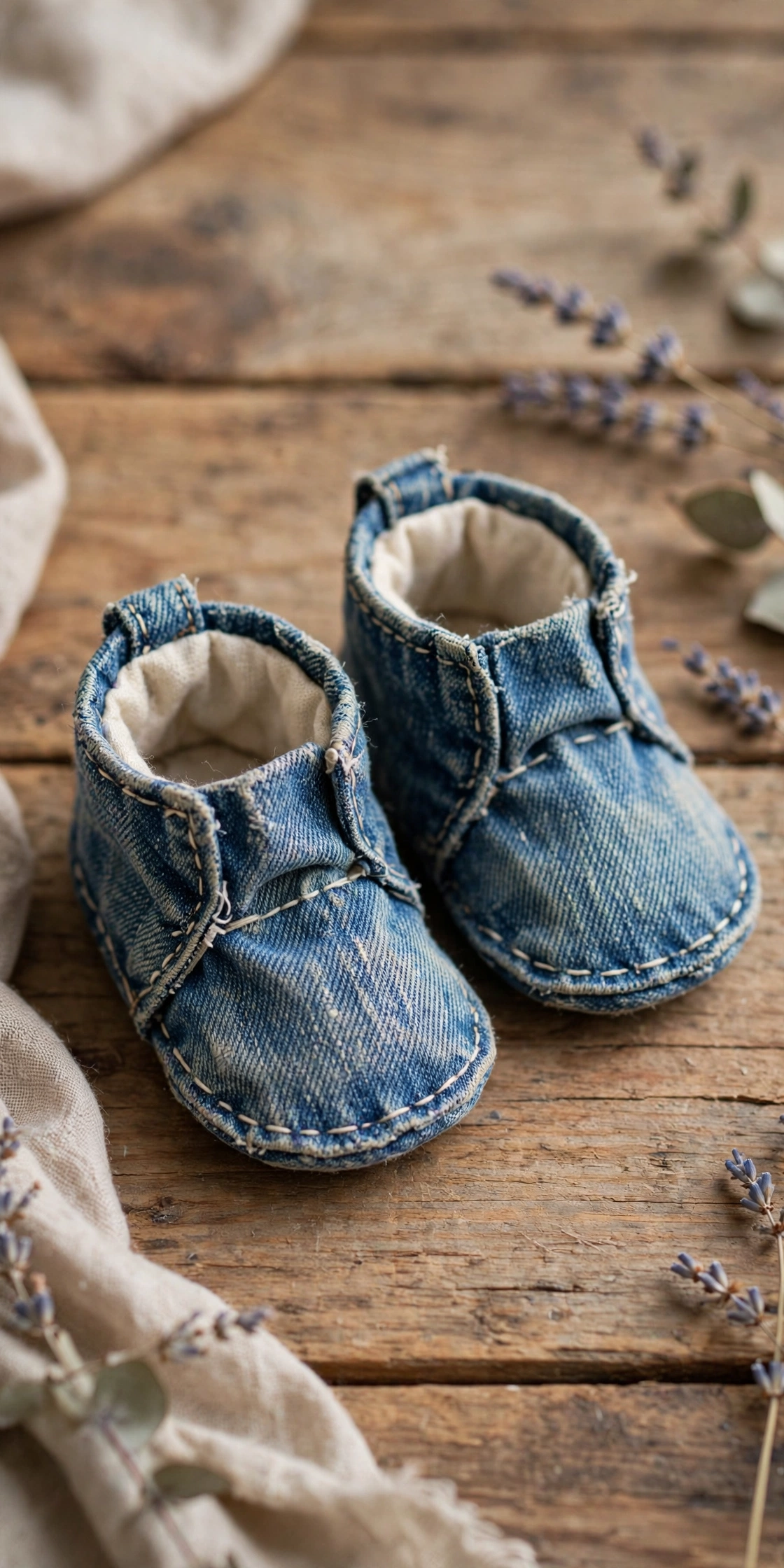
Cut a simple soft-shoe pattern from an old pair of jeans, sew the uppers to soft leather or suede soles, and add elastic at the ankle so the shoes stay on. Denim is sturdy enough to survive crawling, and the recycled fabric gives the shoes a story parents love to tell. Wash the jeans first and use a denim needle so the seams hold.
Cost: $ | Difficulty: Moderate.
Try this: use the jeans pocket as a decorative patch on one shoe.
18. Knit top-knot hat
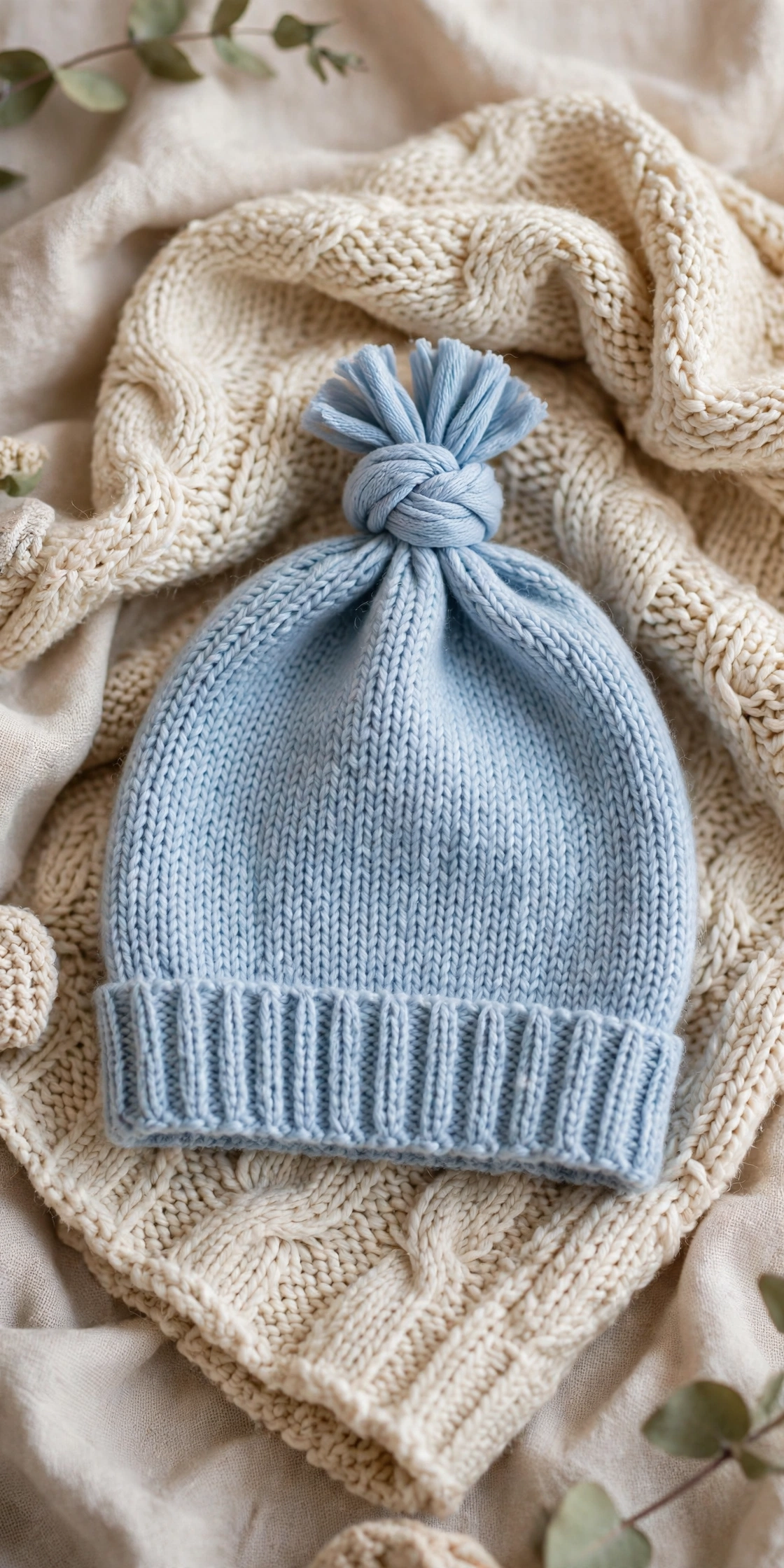
Knit a simple beanie in soft yarn, gather the top into a knot, and leave the knot loose enough to adjust as the baby grows. The knot style fits newborns through 6 months because it stretches, and the hat takes under two hours for a confident knitter. Use a yarn labeled soft and machine washable, and skip any pom-pom that could detach.
Cost: $ | Difficulty: Easy.
Try this: knit a matching pair of booties from the same yarn for a gift set.
19. Felt ball bunting

String 20 wool felt balls in navy, grey, and white onto cotton cord with a large needle, spacing them evenly and knotting the cord after each ball. The garland dresses a nursery shelf, a party table, or a photo backdrop, and it packs flat for storage between uses. Hang it high on a wall or shelf, out of crib reach, and keep the cord short enough that it cannot loop around anything.
Cost: $ | Difficulty: Easy.
Try this: add one mustard ball every fifth ball for a gentle pop of color.
20. Decorated keepsake box

Paint a plain wooden box in a nursery color, add the baby’s name with a stencil or a small engraved plate, and line the inside with felt. The box holds the hospital bracelet, first lock of hair, first shoes, and the cards from the shower, which otherwise end up scattered in drawers. Seal the paint so the box survives handling, and include a handwritten note about what the box is for.
Cost: $$ | Difficulty: Easy.
Try this: paint the inside lid with the birth date so it shows every time the box opens.
Gift comparison table
| Gift | Cost | Difficulty | Best for |
|---|---|---|---|
| Applique onesie set | $ | Easy | A shower gift with a personal touch |
| Bandana bibs | $ | Easy | Daily use from month one |
| Knitted booties | $ | Easy | A knitter’s quick evening project |
| Felt dinosaur softie | $ | Easy | A first toy for small hands |
| Paper plane mobile | $ | Easy | Nursery decor over a dresser |
| Taggie blanket | $ | Easy | A comfort object for car rides |
| Handprint and footprint canvas | $ | Easy | A keepsake for the nursery wall |
| Wooden name sign | $$ | Moderate | A shower gift that gets displayed |
| Milestone cards | $ | Easy | Monthly photos in year one |
| First-year memory book | $$ | Moderate | A sentimental gift for new parents |
| Wooden growth chart | $$ | Moderate | A gift that moves with the family |
| Hooded bath towel | $ | Easy | Bath time from week one |
| Fabric-trimmed burp cloths | $ | Easy | A practical set for daily use |
| Ribbon pacifier clip | $ | Easy | Outings and daycare bags |
| Crinkle sensory toy | $ | Easy | Play in months one to six |
| Quiet fabric book | $$ | Moderate | Travel and waiting rooms |
| Denim baby shoes | $ | Moderate | Crawling babies with style |
| Knit top-knot hat | $ | Easy | A quick gift set with booties |
| Felt ball bunting | $ | Easy | Nursery shelves and party tables |
| Decorated keepsake box | $$ | Easy | Storing first-year mementos |
Cost key: $ means $1 to $10, $$ means $11 to $99, $$$ means $100 to $999, $$$$ means $1,000 and up.
Mistakes to avoid
Do not use buttons, beads, or glued-on eyes on anything a baby will hold: embroider details instead. Do not hang mobiles, bunting, or garlands over the crib or within reach of a standing baby. Do not give a weighted blanket, weighted sleep sack, or any weighted sleep product for a baby. Do not use paint or finishes that are not labeled non-toxic and child-safe on items a baby will mouth. Do not make cords, ribbons, or strings longer than 7 inches on baby items, and never leave loose threads that can wrap around tiny fingers.
Safety notes for handmade baby gifts
Keep the crib bare: no loose blankets, pillows, bumpers, or toys in the crib, and use a fitted sheet only. The U.S. Consumer Product Safety Commission’s safe sleep guidance covers this in detail, and it is worth reading before making any sleep-related gift: CPSC Safe Sleep. Skip weighted sleep products entirely for babies. Check every material and tool against the CPSC recalls database before you buy, especially for secondhand fabric, vintage buttons, and old wooden items: CPSC Recalls. Wash all fabric gifts before wrapping, keep small parts off baby items, and anchor wall-hung pieces like name signs and growth charts into studs with hardware rated above the load.
Related reading
If you are shopping for a shower, our buy-focused list pairs well with this make-at-home guide: 15 Best Baby Gift Ideas for Showers That Parents Will Actually Use.
For nursery colors and themes to match your fabric and paint choices, see: 26 Stunning Boho Sunshine Nursery Ideas for a Warm, Happy Room.
For a coastal nursery palette that suits navy and grey handmade pieces, see: 27 Nautical Nursery Ideas for a Calm, Coastal Baby Room.
For a boy’s room wall idea to pair with a wooden name sign, see: 22 Trendy Accent Wall Baby Boy Nursery Ideas for a Room He Grows Into.
For shower theme ideas if the gift is for a winter shower, see: Charming Winter Baby Shower Themes.
Frequently asked questions
What is the easiest baby boy gift to make at home?
Bandana bibs and fabric-trimmed burp cloths are the easiest starting points. Both use straight seams, one fat quarter of fabric each, and under an hour of sewing. Ribbon pacifier clips are even faster if you can sew a straight line twice.
How much should a handmade baby gift cost in materials?
Most gifts on this list cost under $15 in materials. Sewn items like bibs, burp cloths, and booties sit in the $ range, while keepsakes like a name sign, memory book, or growth chart land in the $$ range of $15 to $40.
Are handmade baby gifts safe for newborns?
Yes, when you skip small parts, keep cords under 7 inches, embroider details instead of gluing buttons, and wash fabrics before wrapping. Never put loose blankets, pillows, or toys in the crib, and skip weighted sleep products entirely.
Can I make a baby boy gift without a sewing machine?
Yes. Handprint canvas art, milestone cards, a wooden name sign, a growth chart, a keepsake box, and felt ball bunting need no sewing at all. Felt softies and taggie blankets can also be hand-stitched with a blanket stitch.
How far ahead of a shower should I start a handmade gift?
Start sewn gifts one week ahead and keepsakes two to three weeks ahead. Paint and sealant need drying time, and a quiet fabric book or memory book takes several evenings. A buffer week also covers a redo if a seam or paint coat goes wrong.
Final thoughts
A handmade gift says something a registry item cannot: someone sat down and made this for your boy. Pick one project that fits your skills, start a week early, and wash it before you wrap it. The parents will notice the effort, and the keepsakes on this list tend to stay on shelves long after the baby clothes are passed on.

For sewing gifts for friends, see our guide to 15 Thoughtful DIY Sewing Gifts for Friends That Feel Personal, Not Store-Bought for a monogrammed zipper pouch, a key fob wristlet, lavender drawer sachets, a padded eyeglass case, and a market tote with a pocket.