


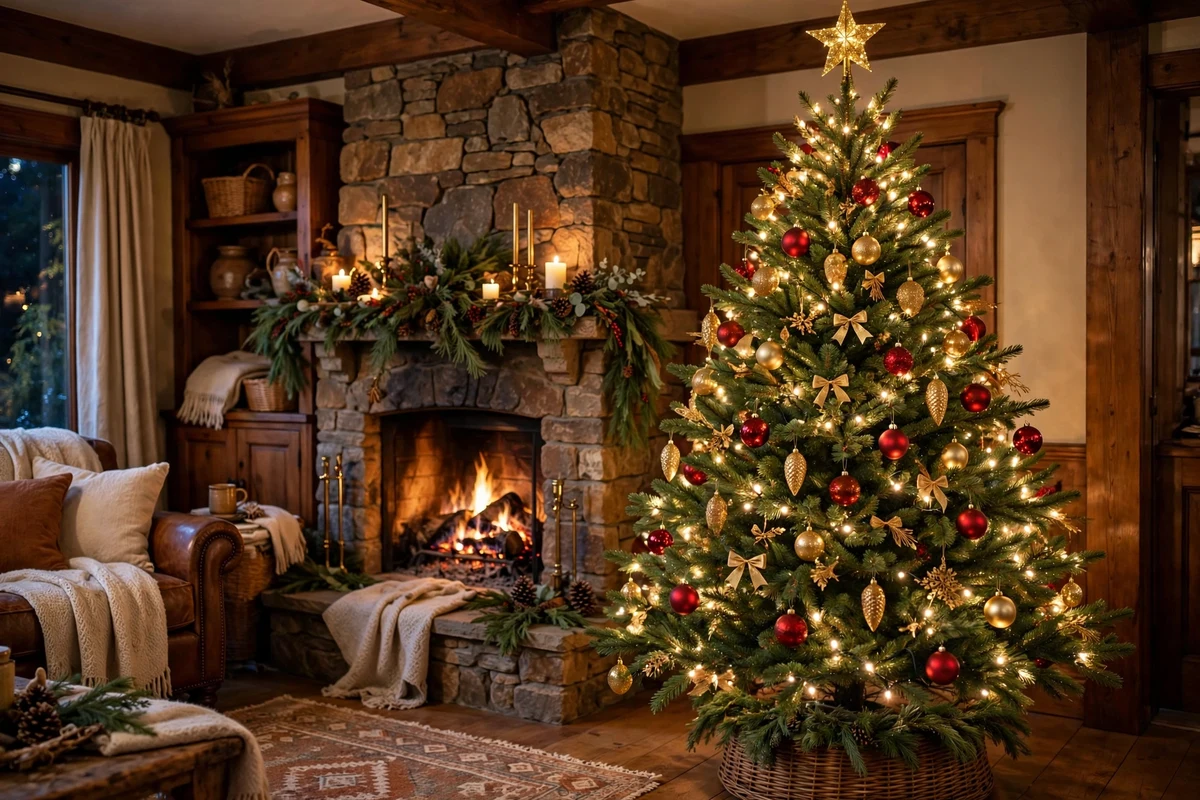
Trends come and go, but a classic Christmas tree never looks dated in family photos. The formula has stayed the same for generations: rich color, warm light, and ornaments that mean something. If your tree felt a little random last year, this is the reset.
These 25 classic Christmas tree ideas stick to traditional looks, red and gold, white flocked branches, vintage glass, plaid ribbon, and the toppers your grandparents used. Every idea includes a cost and difficulty label, plus the little placement tricks that make a tree look professionally done.
Quick takeaways
- Lights go on first, woven inside the branches, before a single ornament.
- Two to three colors maximum keeps a classic tree looking collected instead of chaotic.
- Large ornaments sit deep near the trunk, special ones hang at eye level.
- A real tree needs water daily; a dry tree is a fire risk.
- Group ornaments in odd numbers and step back often to spot gaps.
1. The classic red and gold tree
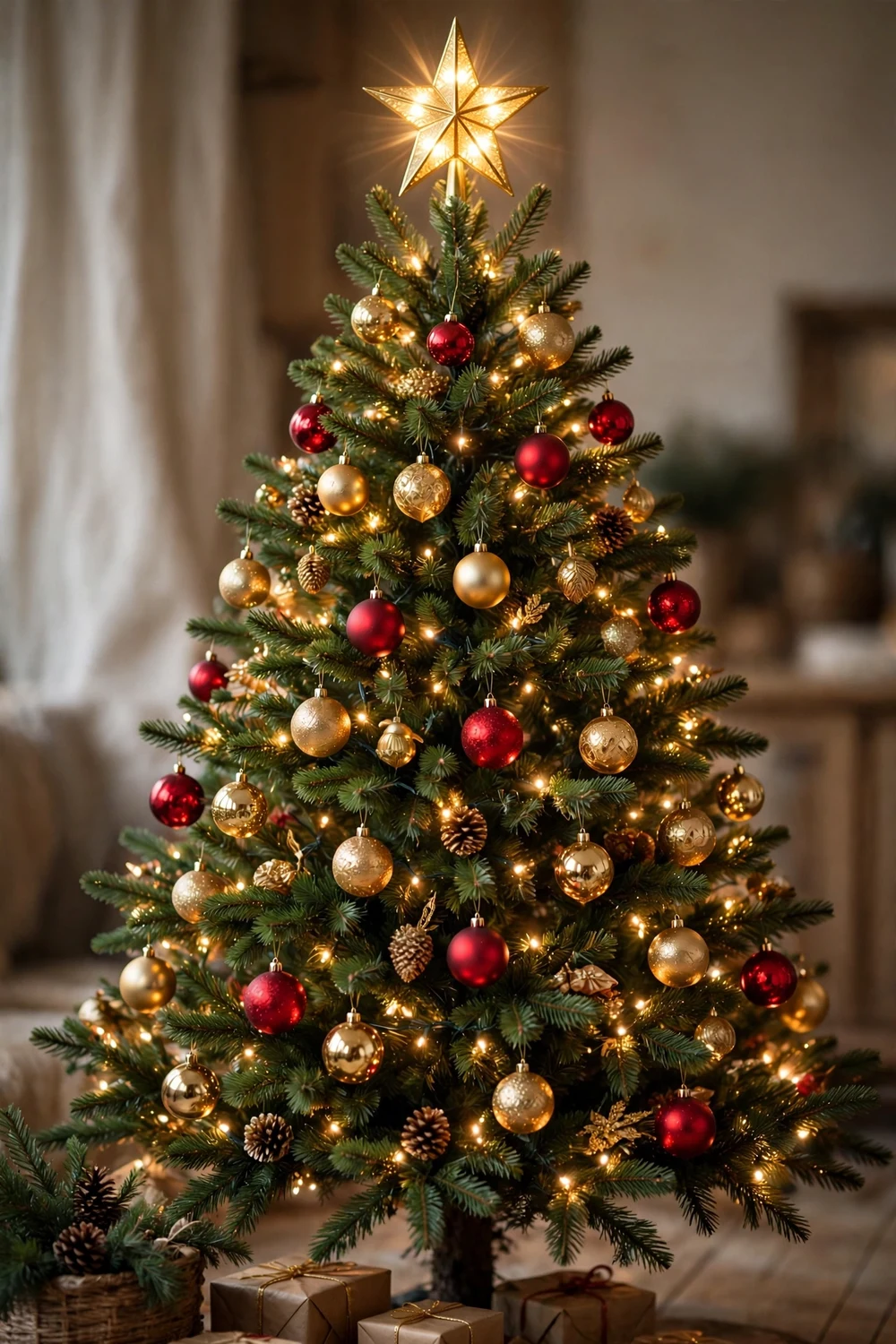
Red and gold on green branches is the most reliable traditional scheme ever invented, and it suits almost any living room. Aim for roughly 60 percent red and 40 percent gold, mixing matte and glossy finishes within each color so the tree has depth. Tuck red berry picks between the baubles to fill gaps cheaply. Warm white lights underneath make the gold reflect and the red glow, which is the whole magic of this combination.
Try this: Buy one extra-large gold bow for the top instead of a star if your ceilings are low.
Cost: $$$· Difficulty: Easy

2. White flocked tree with silver ornaments
A flocked tree dusted white looks snow-covered straight out of the box, and silver ornaments keep the palette cool and formal. Because the flocking already gives you texture, you need fewer ornaments than on a green tree, which saves money. Clear crystal drops catch the lights and throw tiny rainbows across the room. This look fits modern apartments and formal living rooms where traditional red would feel too loud.
Try this: Flock sheds, so lay a sheet under the tree while decorating and shake it out afterward.
Cost: $$$· Difficulty: Easy

3. Vintage glass bauble tree
Old glass ornaments with their soft, slightly faded shine give a tree a collected-over-decades feel that new baubles cannot fake. Hunt them at estate sales and flea markets, where a box of twelve often costs less than a new set. Mix the vintage pieces with plain new balls in matching colors to stretch the collection. Hang the oldest, most fragile ones higher up, away from wagging tails and small hands.
Try this: Tie replacement caps with green florist wire, since vintage caps crumble.
Cost: $$· Difficulty: Easy

4. Tartan plaid ribbon tree
Wide tartan ribbon woven through the branches in loose waves gives you pattern, color, and texture in one move. Cut the ribbon into three-foot lengths and tuck each piece deep into the branches rather than spiraling one endless strand, since short pieces look fuller and waste less. Red and green tartan is the classic pick, but navy tartan reads elegant in a modern home. Finish with plain red and gold balls so the ribbon stays the star.
Try this: Wire-edged ribbon holds its shape; non-wired ribbon collapses by New Year.
Cost: $$· Difficulty: Moderate

5. Warm white lights, simply done
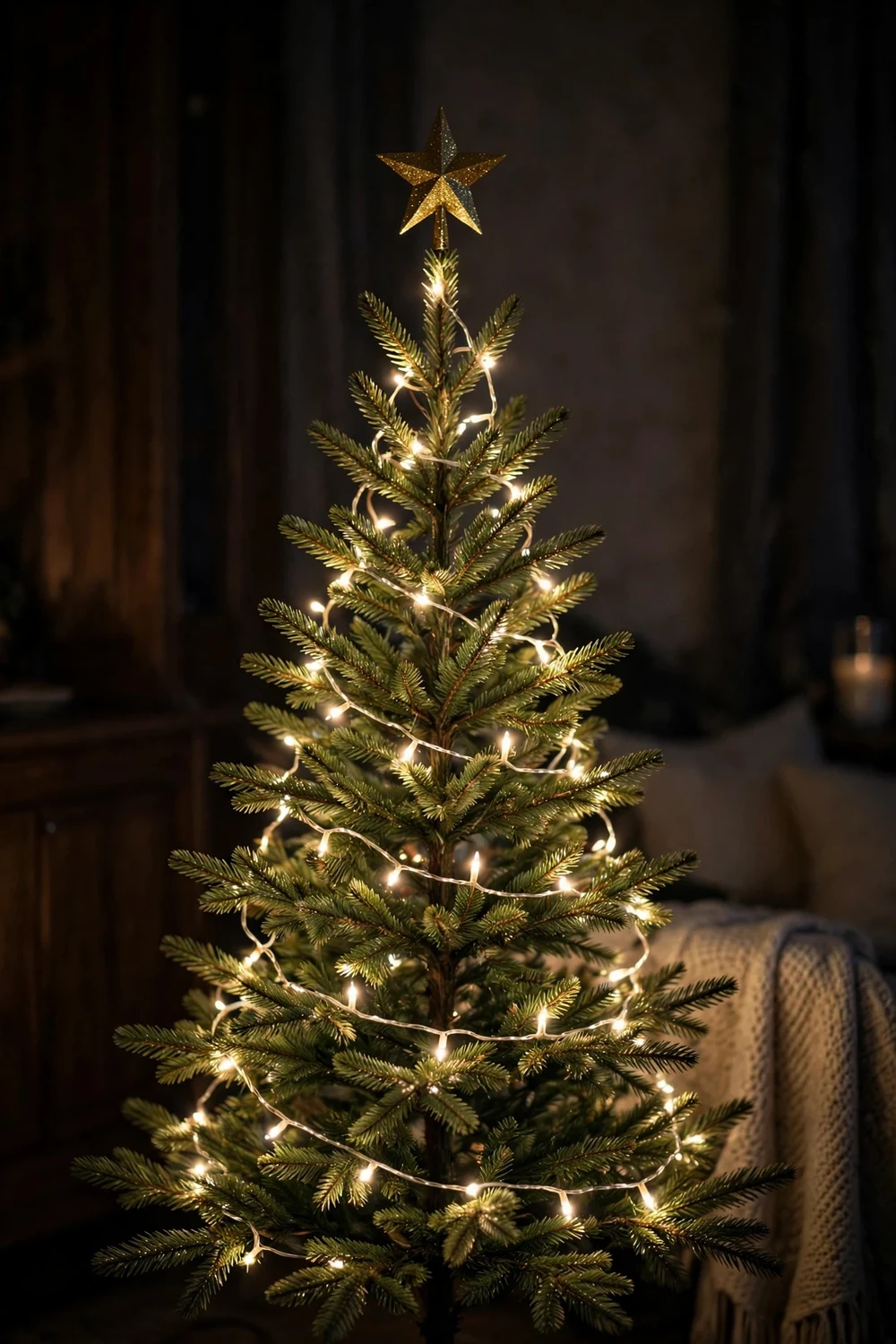
Sometimes the most classic tree is the simplest: a green tree with nothing but warm white lights, done generously. Use about 100 lights per foot of tree height, weaving them along each branch toward the trunk and back out instead of wrapping the outside. The inside-out method makes the tree glow from within. Add a simple star and stop there. This restraint reads as confident, and it photographs beautifully.
Try this: Plug lights in as you go so you can see thin spots before moving on.
Cost: $$· Difficulty: Easy
6. Candy cane striped tree
Red and white candy cane ornaments, striped ribbon, and peppermint-striped balls turn a tree into pure nostalgia. Hang real candy canes on the lower branches where kids can reach them, and use shatterproof striped ornaments up high. The red-and-white palette pops against green branches with zero effort. This is a great theme for a kids’ tree or a family room, since every element is cheerful and inexpensive.
Try this: Hang candy canes the week of Christmas, not earlier, so they stay fresh for little hands.
Cost: $$· Difficulty: Easy

7. Nutcracker collection tree
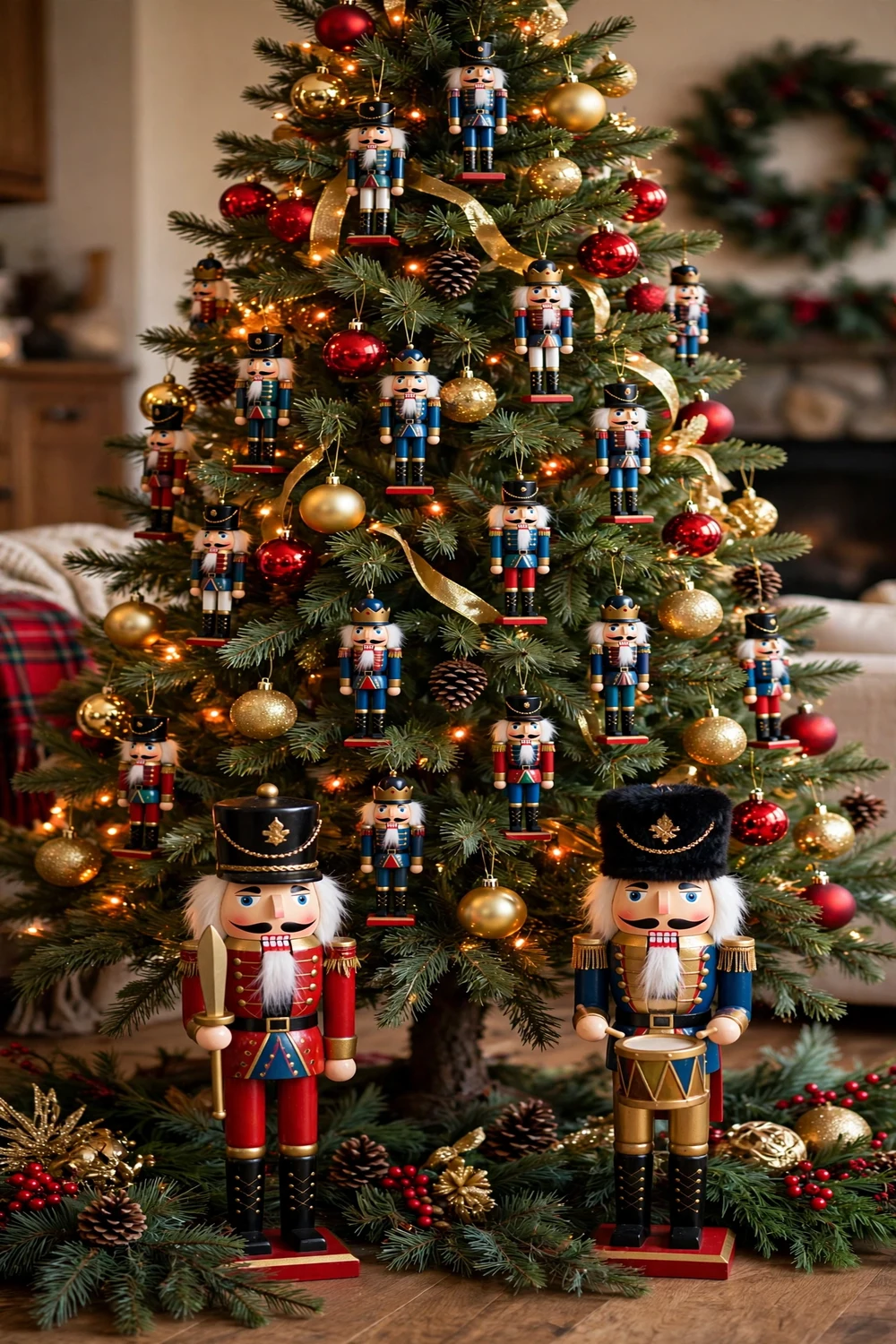
A tree decorated around nutcracker figurines feels like a storybook, especially with a few large nutcrackers standing guard at the base. Tuck small nutcracker ornaments among classic red and gold balls, and add a toy soldier or two for good measure. Keep the palette tight, red, gold, and green, so the figurines read as a collection instead of clutter. Kids remember this tree for years.
Try this: Place the biggest nutcrackers on the floor flanking the tree rather than hanging them.
Cost: $$$· Difficulty: Easy
8. Red velvet ribbon cascade
Wide red velvet ribbon cascading from the top in vertical falls gives a tree a formal, almost regal look. Start each ribbon at the topper and let it fall straight down, tucking it into the branches every eighteen inches so it ripples instead of hanging flat. Velvet absorbs light, which makes the surrounding ornaments look brighter by contrast. Pair with gold balls and warm lights for the full classic effect.
Try this: Cut ribbon ends in a dovetail notch for a tailored finish.
Cost: $$· Difficulty: Moderate

9. Old-fashioned tinsel tree
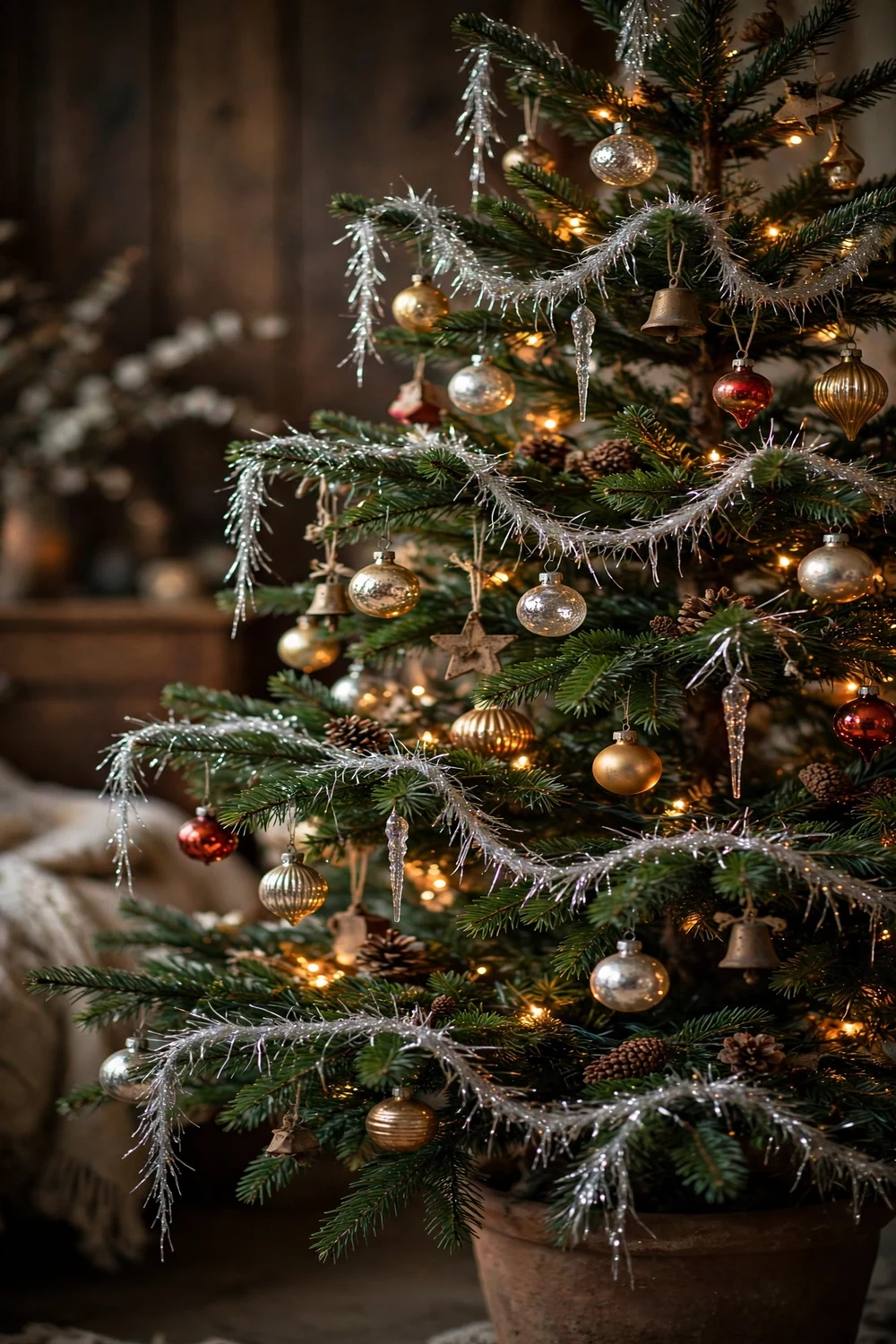
Old-fashioned strand tinsel, draped sparingly over the branch tips, catches light like nothing else and costs almost nothing. The trick is restraint: a little tinsel shimmering at the ends reads vintage, while handfuls thrown at the tree read messy. Silver tinsel suits a white or flocked tree, while gold tinsel warms up a green one. If you have cats, skip loose tinsel entirely, since swallowed strands mean a vet visit.
Try this: Drape tinsel only on the outer third of branches for an even, icy sparkle.
Cost: $$· Difficulty: Very easy
10. Pearl and champagne gold tree
Champagne gold baubles with faux pearl garlands give you a jewelry-box tree that suits formal dining rooms and neutral interiors. Drape the pearl strands in shallow swags between branch tips, letting each dip about six inches. Mix champagne, ivory, and soft gold baubles in two or three sizes. A cream satin ribbon woven through finishes the soft, glowing look. This palette never photographs badly.
Try this: Keep pearl garlands away from the very top so they do not compete with the topper.
Cost: $$$· Difficulty: Moderate

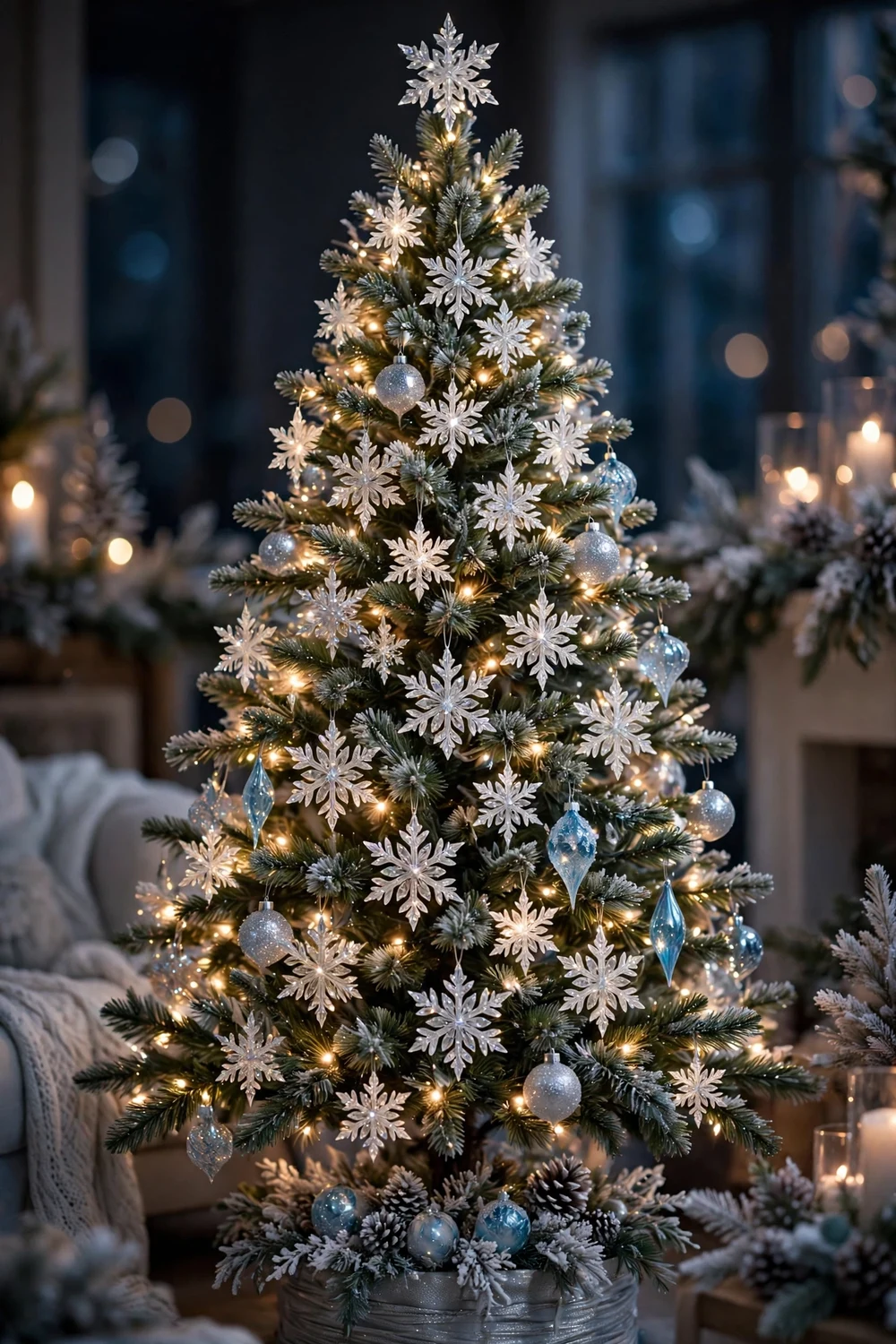
11. Crystal snowflake sparkle tree
Crystal and white glitter snowflakes hung near the lights turn a tree into a winter night. The facets catch every bulb and throw sparkle across the room, so you need fewer ornaments overall. Hang the snowflakes at the branch tips where they move slightly and catch light from all angles. This works on green, white, or flocked trees, and it pairs beautifully with silver and ice-blue accents for a frosty classic look.
Try this: Hang snowflakes with clear fishing line instead of hooks for a floating effect.
Cost: $$· Difficulty: Easy
12. Heirloom photo ornament tree
Ornaments holding family photos through the years make the tree a walk down memory lane. Order a few new photo ornaments each year, or make your own with clear glass balls and printed photos curled inside. Mix them with plain red and gold balls so the tree still looks decorated rather than like a bulletin board. Guests will stand at this tree longer than any other in the house.
Try this: Hang photo ornaments at eye level where they get noticed, not buried inside.
Cost: $$· Difficulty: Easy

13. Angel topper tradition
A classic angel tree topper, especially a vintage-style one with a porcelain face, finishes a traditional tree the way nothing else can. Choose a topper sized to your tree: about one-tenth of the tree height looks right. Secure it to the top branch with florist wire so it survives curious cats and wobbly floors. An angel topper pairs naturally with red, gold, and white palettes and signals tradition instantly.
Try this: Fluff the top branches around the topper base so no bare pole shows.
Cost: $$· Difficulty: Very easy

14. Red berries and pinecone accents
Red berry picks and natural pinecones tucked among classic ornaments add texture that glass balls alone cannot give. Push berry sprays deep into the branches so the red dots appear throughout the tree, not just on the surface. Pinecones fill the awkward gaps near the trunk where ornaments look lost. This natural layer makes even a basic ornament set look styled and intentional.
Try this: Wire pinecones to branches with brown florist wire for a secure, invisible hold.
Cost: $$· Difficulty: Easy

15. Gold mesh garland tree
Gilded mesh garland spiraled loosely around the tree adds a formal shimmer that ribbon cannot quite match. Let the mesh drape with gravity in wide swags rather than pulling it tight, since tension flattens the texture. Gold mesh over red ornaments is the classic pairing, and it hides thin spots on artificial trees beautifully. One or two rolls usually cover a seven-foot tree.
Try this: Tuck the mesh ends deep into the branches instead of cutting them short at the bottom.
Cost: $$· Difficulty: Easy

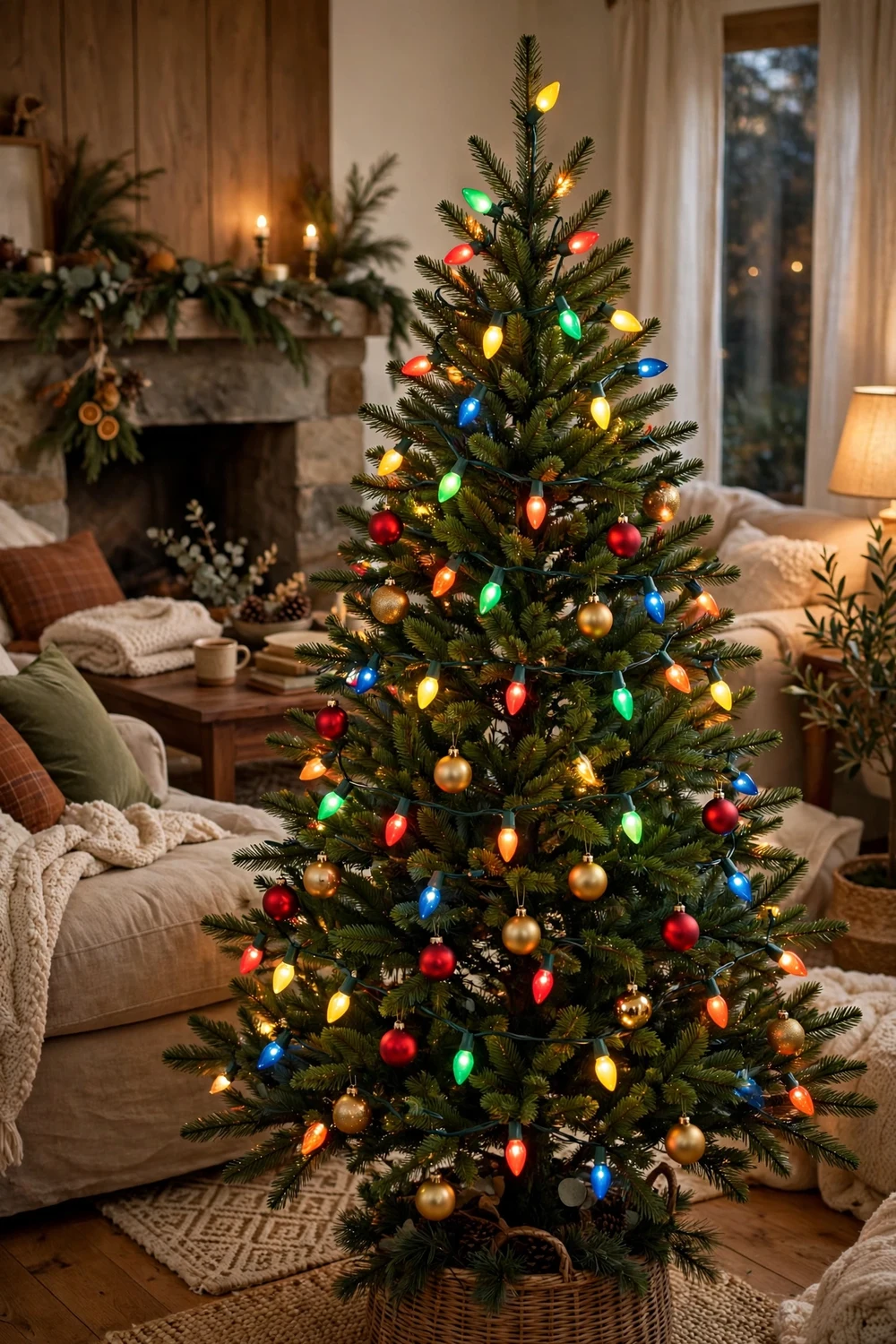
16. Multicolor lights nostalgia tree
Multicolor lights are the tree of many childhoods, and they still look joyful on a classic green tree. Pair them with simple red and gold ornaments and resist the urge to add more colors, since the lights already supply the rainbow. The retro glow suits family rooms and kids’ spaces perfectly. Modern LED multicolor sets run cool and use little power, so the nostalgia comes without the old heat worries.
Try this: One color scheme for ornaments plus multicolor lights is the formula; more colors fight the lights.
Cost: $$· Difficulty: Easy
17. Classic star topper tree
A radiant gold or brass star crowning the tree is the single most traditional topper there is. Pick a star with some dimension, faceted or layered, rather than a flat cutout, since dimension catches light from every side. Wire it firmly to the top spike and angle it slightly toward the room’s main viewpoint. A star topper works with every classic palette, which is why it has never gone out of style.
Try this: Lighted star toppers add a focal glow but need an outlet plan before decorating day.
Cost: $$· Difficulty: Very easy
18. Satin red monochrome tree
An all-red tree in mixed finishes, satin, gloss, matte, and glitter, looks rich and deliberate rather than one-note. The secret is finish variety: identical shiny balls look flat, while mixed textures create depth. Add warm white lights and a red velvet tree skirt to complete the monochrome story. This bold choice suits entryways and living rooms where you want one dramatic holiday statement.
Try this: Include a few oversized red balls deep inside for depth the small ones cannot give.
Cost: $$$· Difficulty: Easy

19. Glass icicle elegance
Glass icicle ornaments dripping from branch tips give a tree a delicate, frosty finish that reads pure classic. Hang them on the outer branches where they catch the light and sway gently. Mix clear and silver icicles with white lights for a winter-ice effect, or pair with red and gold for traditional warmth. They are fragile, so this idea suits adult spaces better than playrooms.
Try this: Store icicles in their original box with tissue between layers to prevent chipping.
Cost: $$· Difficulty: Easy

20. Poinsettia bloom tree
Clip-on poinsettia blooms in deep red push a tree into lush, floral territory without a single fresh flower. Cluster three blooms together at intervals around the tree, mixing them with gold balls and green branches. The large blooms cover bare patches on artificial trees better than any ornament. Faux poinsettia clips cost little, store flat, and come back out every year looking the same.
Try this: Angle the blooms outward and slightly down, the way real flowers face.
Cost: $$· Difficulty: Easy

21. Classic red skirt and coordinated gifts
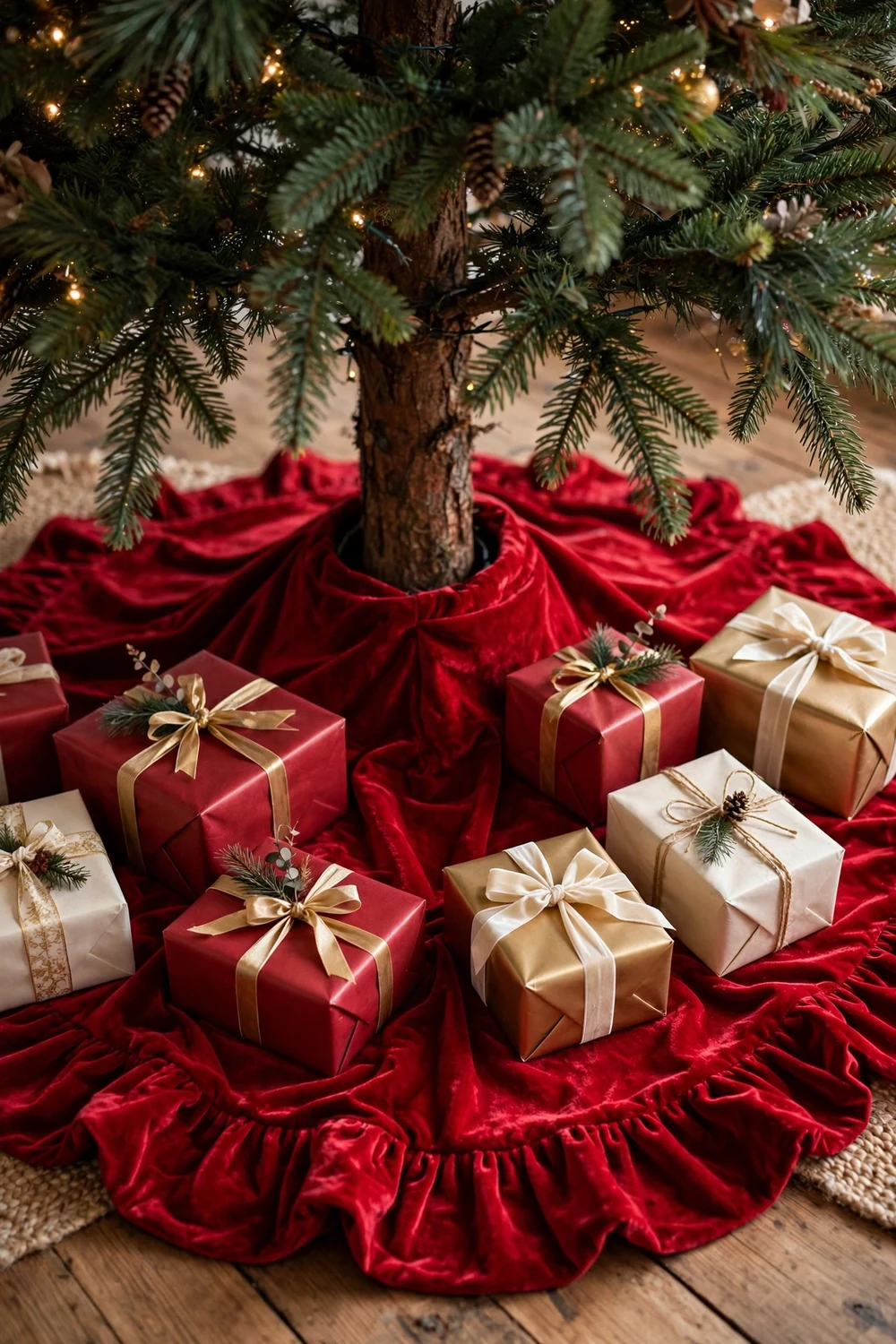
The base of the tree matters as much as the branches. A classic red velvet or quilted tree skirt hides the stand, and gifts wrapped in coordinating red, gold, and cream paper turn the whole corner into one composition. Wrap early and place a few empty decoy boxes if the real gifts arrive late. This finishing step takes an hour and makes the tree look twice as expensive in photos.
Try this: A tree collar in brushed gold works if you prefer a tailored look over fabric.
Cost: $$· Difficulty: Very easy
22. Vintage bead garland tree
Long strands of glass or wooden beads in gold, silver, or cranberry red drape like jewelry around a classic tree. Loop them in gentle swags from branch to branch rather than spiraling tightly, since loose drapes catch more light. Bead garlands are a vintage staple that thrift stores practically give away. They add old-world luxury for the price of a coffee.
Try this: Two strands in different finishes, say gold and cranberry, look richer than one.
Cost: $$· Difficulty: Easy
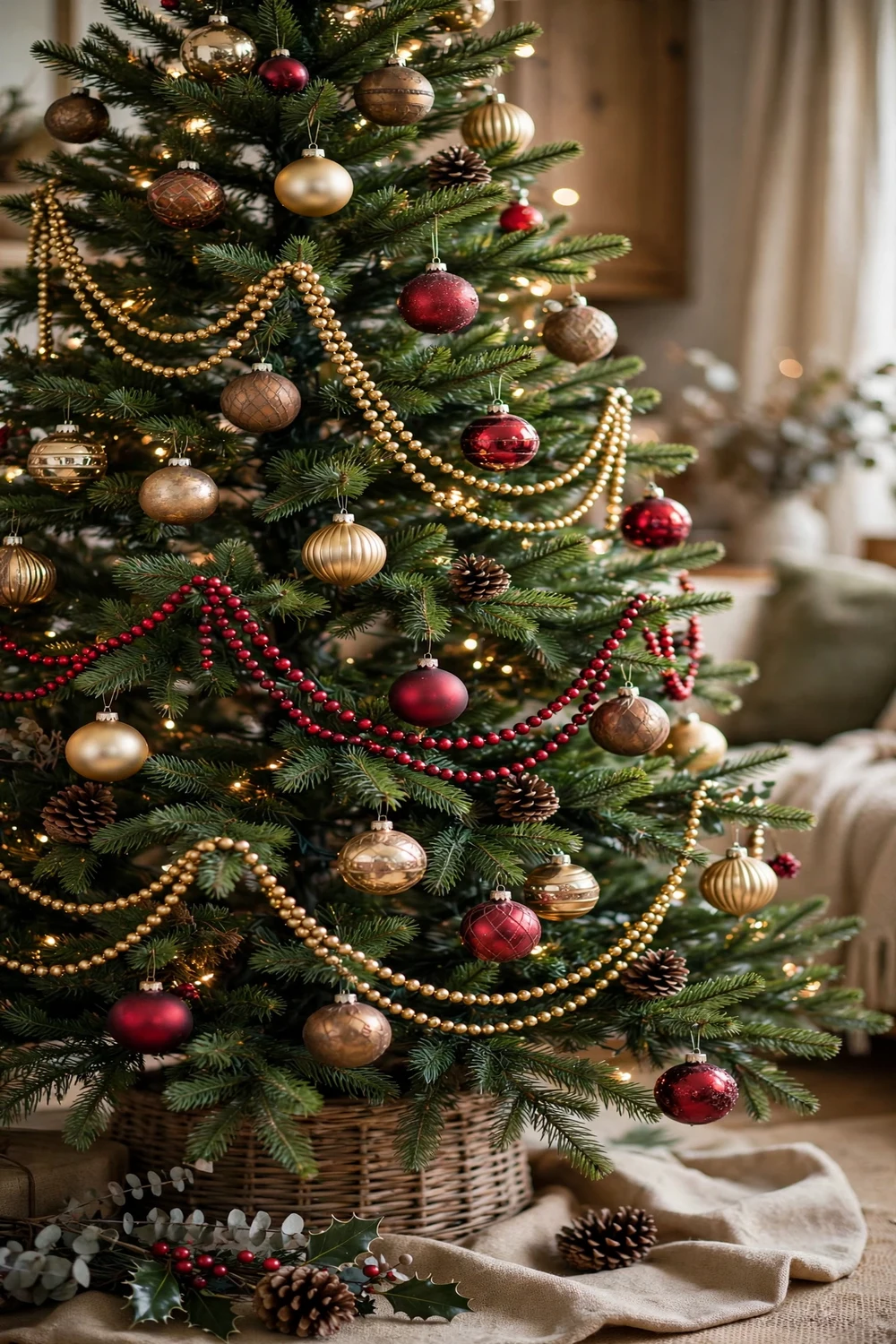
23. White and gold formal tree
White and gold is the tuxedo of Christmas trees: formal, glowing, and impossible to get wrong. Use white lights, gold balls in mixed finishes, and ivory ribbon, keeping every element in the warm white-to-gold family. A gold star topper completes it. This palette suits homes with neutral decor, since it adds holiday warmth without introducing new colors that fight the room.
Try this: Add a few clear glass ornaments to bounce light around the white palette.
Cost: $$$· Difficulty: Easy

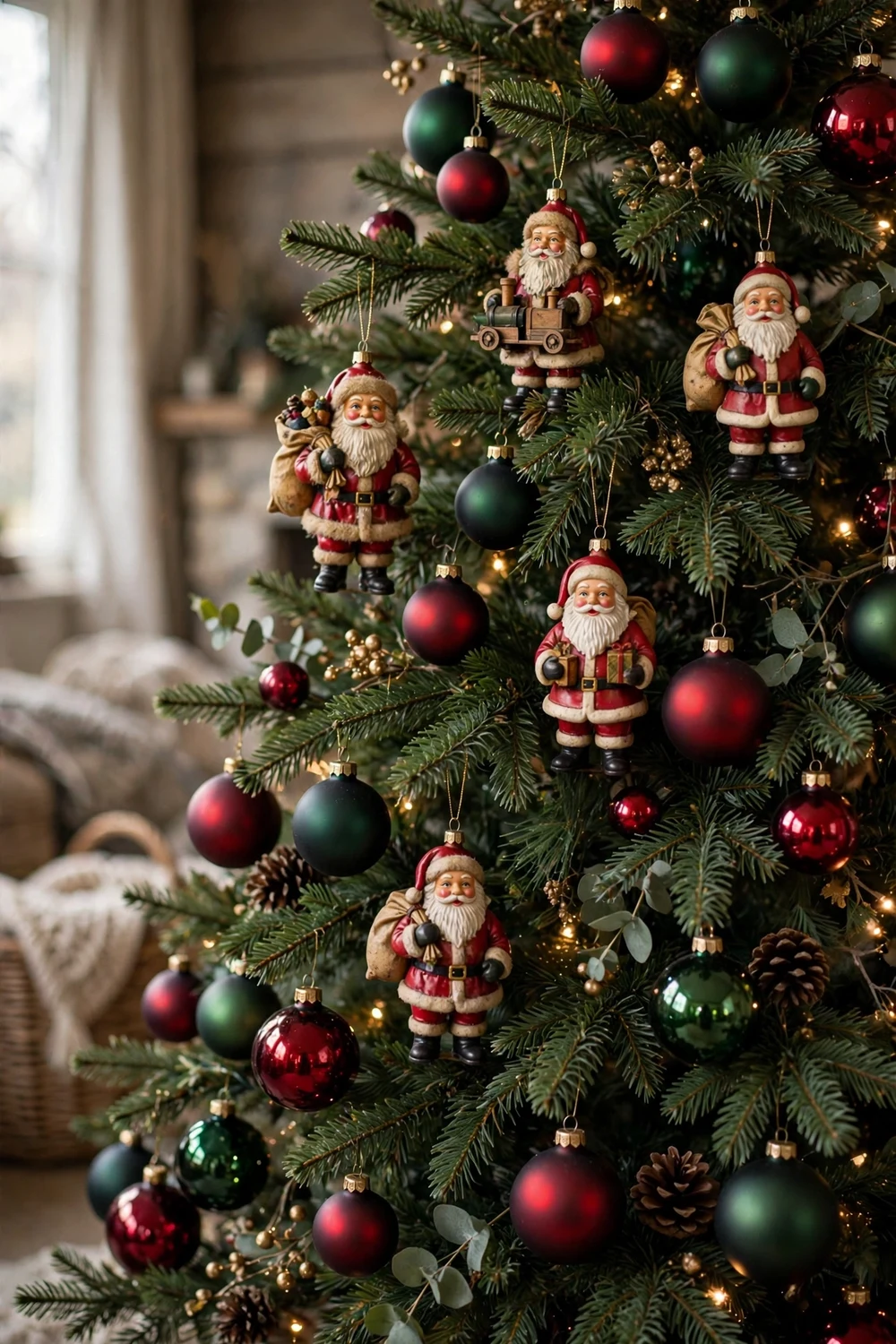
24. Storybook Santa ornament tree
Vintage-style Santa ornaments, from jolly figurines to old-world glass Santas, give a tree instant character and nostalgia. Cluster them at eye level where their faces show, and fill around them with deep red and forest green balls. A Santa collection tree feels personal in a way that matched ornament sets never do. Add one new Santa each year and the tree becomes a family tradition.
Try this: Keep Santa ornaments facing outward and slightly varied in height for a natural look.
Cost: $$· Difficulty: Easy
25. The traditional green tree, nothing trendy
The ultimate classic is a full green tree with red balls, gold accents, warm lights, a simple garland, and a star on top, done with care and nothing else. No theme, no novelty, just the tree from every beloved Christmas movie. Fluff every branch, light generously, hang thoughtfully, and step back often. Done well, this tree needs no explanation and never looks dated, which is exactly the point.
Try this: Decorate the back of the tree too if it floats in a room instead of sitting in a corner.
Cost: $$$· Difficulty: Easy

How to decorate a classic tree in the right order
Professionals work from the inside out and top down, and the order matters more than the ornaments. First, fluff every branch on an artificial tree, separating each tip, since this single step makes the biggest visual difference. Next, add lights, weaving them along each branch toward the trunk and back out rather than wrapping the outside. More lights than you think gives a fuller glow. Then comes ribbon or garland, draped loosely in swags. Hang large, plainer baubles deep near the trunk to add depth and hide the pole, then place feature ornaments at eye level where they get seen. Fill gaps with picks, berries, or pinecones, add the topper last, and finish the base with a skirt or collar so the stand never shows.
Quick comparison: classic tree palettes
Mistakes that make a classic tree look off
The most common mistake is too few lights, which leaves the tree flat no matter how nice the ornaments are. The second is hanging every ornament on the outer branches, leaving a visible dark hole in the middle; push the larger, plainer baubles deep inside for depth. Third, mixing too many colors breaks the classic spell, so commit to two or three and repeat them everywhere. Fourth, a topper that is too small for the tree looks like an afterthought, so size it to about one-tenth of the tree height. Finally, skipping the base finish leaves the stand visible in every photo, so add a skirt, collar, or wrapped gifts.
Christmas tree safety notes
A real tree needs water every single day, since a dry tree can catch fire fast. Keep any tree, real or artificial, at least three feet from fireplaces, radiators, and heating vents. Use only lights rated by a recognized testing lab, check old strands for cracked sockets and frayed wires, and turn the tree lights off before bed and when you leave the house. The National Christmas Tree Association has detailed guidance on choosing and caring for a real tree so it stays fresh all season. For artificial trees, the American Christmas Tree Association covers fire-resistant standards and safe setup.
For a bolder take on tree color, these black and pink Christmas tree ideas show how far from classic you can go. And if you love handmade holiday details, these DIY gingerbread house decorations pair beautifully with a traditional tree nearby.
Frequently asked questions
What colors are classic for a Christmas tree?
The most classic Christmas tree colors are red, green, gold, and silver, often with white as a supporting tone. Red and gold is the warmest traditional pairing, white and silver reads cool and formal, and champagne gold with pearl suits elegant neutral interiors. Sticking to two or three of these keeps the tree looking classic for years.
How many ornaments do I need for a 7-foot tree?
A 7-foot tree typically needs 70 to 100 ornaments for a full classic look, depending on ornament size. Larger ornaments cover more visual space, so a tree with 4-inch balls needs fewer pieces than one with small vintage glass. Start with fewer than you think, step back, and add more only where you see gaps.
Should lights go on the tree before ornaments?
Lights always go on first, before any ornament or garland. Weave them along each branch toward the trunk and back out, starting at the bottom and working up. This inside-out method creates depth and glow that surface-wrapped lights cannot match, and it keeps cords hidden behind the ornaments.
How do I make a real Christmas tree last longer?
Cut an inch off the trunk before placing it in the stand, then keep the water reservoir filled every day, since a fresh tree can drink a gallon daily at first. Keep the tree away from heat vents and fireplaces, and use LED lights, which run cooler than old incandescent strands. A well-watered tree stays fresh for four to five weeks.
What is the most traditional Christmas tree topper?
The star and the angel are the two most traditional toppers, both with centuries of history. A star suits red-and-gold and formal trees, while an angel pairs beautifully with vintage and family-memory themes. Size the topper to about one-tenth of the tree height so it looks proportional, not lost or overwhelming.
Can I mix vintage and new ornaments?
Yes, mixing vintage and new ornaments is the easiest way to get a collected classic look. Use new plain balls in matching colors as the filler base, then feature the vintage pieces at eye level where their character shows. Keep the overall palette tight so old and new read as one intentional design.
A classic tree is really a promise: the same warm glow, the same beloved ornaments, year after year. Pick the palette that feels like your family’s Christmas, hang the pieces that matter, and let the lights do the rest.


