


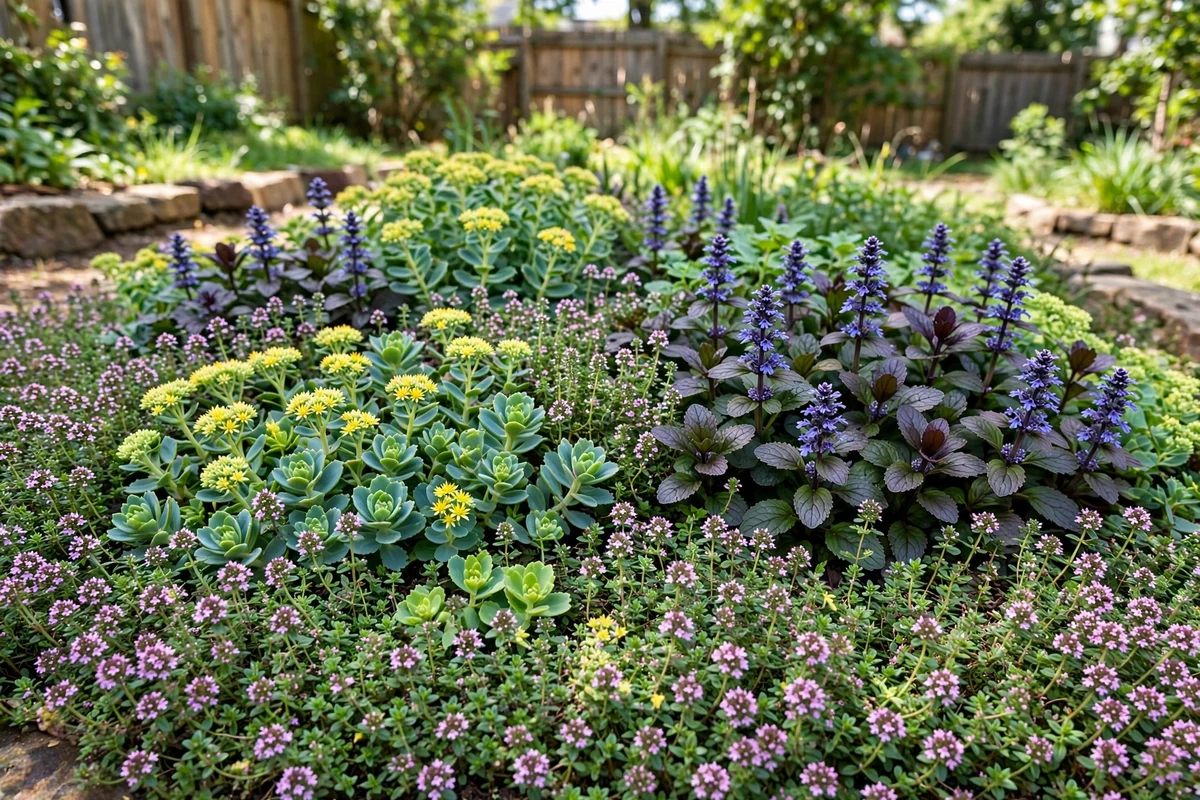
Bare soil is a standing invitation for weeds. Every open patch between your shrubs turns into a weekend chore, and pulling the same crabgrass twice a month gets old fast.
These 12 ground cover plants solve that by covering the ground themselves. Each one forms a dense mat or colony that blocks light at the soil surface, which is exactly what weed seeds need to sprout. I have grouped them by where they grow best, so you can match the plant to your sun, shade, or slope and stop weeding the same bed twice.
Quick takeaways
- Dense, mat-forming plants beat weeds by blocking light at the soil surface.
- Match the plant to the site: sun lovers for hot strips, shade lovers under trees.
- Clear perennial weeds first; no ground cover outcompetes established roots on day one.
- Space plants by their mature spread and mulch between them for the first season.
- Fast spreaders like ajuga and vinca need edging so they stay where you planted them.
1. Creeping thyme

For sunny, dry ground where grass refuses to grow, creeping thyme spreads into a tight, fragrant mat only 2 to 3 inches tall. Its tiny leaves knit together so closely that weed seeds struggle to find light, and pink or purple flowers cover it in early summer.
It handles light foot traffic, so tuck it between stepping stones or along path edges. Give it full sun and lean, well-drained soil; it sulks in rich, soggy beds. Zones 4 to 9.
Try this: plant plugs 6 to 8 inches apart in spring and skip the fertilizer; lean soil keeps the mat tight.
Cost: $. Difficulty: easy.
2. Dragon’s Blood sedum
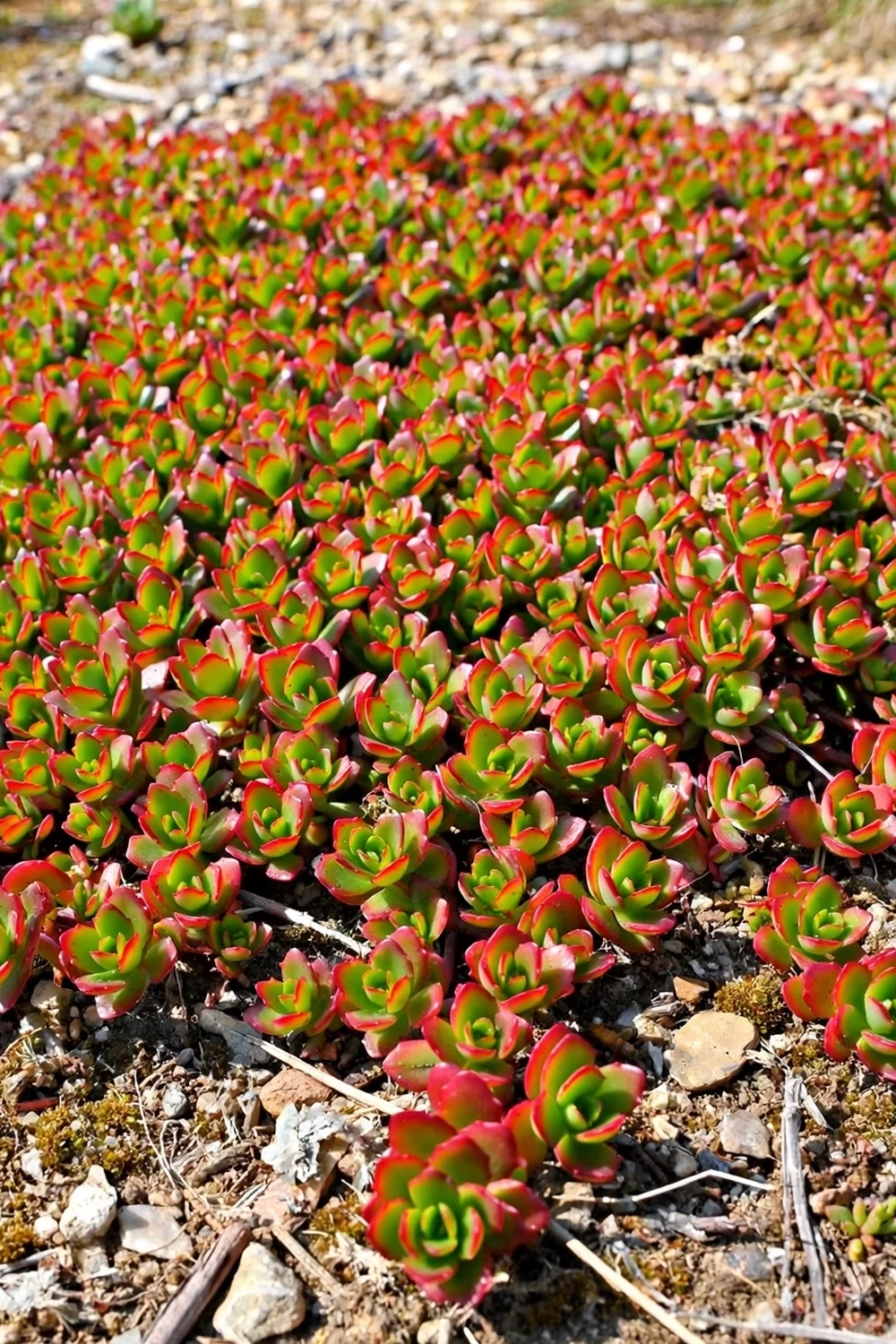
For a hot strip along the driveway that turns into a weed nursery every July, Dragon’s Blood sedum spreads into a succulent carpet about 4 to 6 inches tall. Its red-edged leaves root along the stems as they creep, locking down bare ground fast.
It thrives in poor, gravelly soil where most weeds bake out by midsummer, and it needs almost no water once established. Red summer flowers pull in pollinators. It rots in winter-wet clay, so it wants sharp drainage. Zones 3 to 8.
Try this: tuck small divisions 8 to 10 inches apart into gravel; each piece roots on its own.
Cost: $. Difficulty: easy.
3. Creeping phlox

Creeping phlox earns its keep on sunny slopes where mowing is miserable and weeds take over. In spring it erupts in pink, purple, white, or blue flowers, and afterward the needle-like evergreen foliage keeps spreading into a dense weed-blocking mat.
Its roots grip shallow soil and slow erosion while the foliage shades out germinating weeds. Shear it back lightly after flowering to keep the center from thinning. Full sun and decent drainage. Zones 3 to 9.
Try this: plant it at the top of a slope so stems cascade down and root as they go.
Cost: $. Difficulty: easy.
4. Ajuga (bugleweed)

Ajuga is the fastest weed smotherer on this list for part-shade beds. Its rosettes overlap like shingles and send out runners that root wherever they touch soil, closing a bed in a single season. Spring brings short spikes of blue or purple flowers.
That speed is also the warning: ajuga does not respect bed edges, so give it metal edging or a mowing strip. It prefers even moisture and falters in hot, dry sun. Zones 3 to 10.
Try this: use it under shrubs where lawn grass creeps in; the dense rosettes stop grass runners cold.
Cost: $. Difficulty: easy, but contain it.
5. Sweet woodruff

For dry shade under trees where almost nothing grows, sweet woodruff is a quiet hero. Its whorled light-green leaves spread by underground runners into a soft 6 to 12 inch carpet, and starry white flowers perfume the air in spring.
It tolerates root competition and leaf litter, two things that defeat fussier ground covers. It goes dormant in hot, dry spells, so pair it with evergreen epimedium or wild ginger if you want year-round cover. Zones 4 to 8.
Try this: plant it where downspouts splash; it loves the extra moisture and fills fast there.
Cost: $. Difficulty: easy.
6. Pachysandra

Pachysandra is the workhorse for deep shade, the kind of spot under evergreens where even grass gives up. Its glossy evergreen leaves fan out in overlapping tiers about 8 to 10 inches tall, forming a weed-proof colony that looks tidy in every season.
White spring flowers are a small bonus; the real value is winter coverage when deciduous covers vanish. Plant 6 to 8 inches apart for faster fill; it spreads slowly at first. It prefers acidic, humus-rich soil. Zones 4 to 8.
Try this: shred fallen leaves over it in autumn; the slow compost feeds it while the mulch blocks weeds.
Cost: $$. Difficulty: easy.
7. Vinca minor (periwinkle)

Vinca minor suits steep banks and the strip between sidewalk and street. Its glossy evergreen leaves root along trailing stems, and blue flowers dot the mat in spring. Once established it holds soil and starves weeds through density.
It tolerates sun or shade and poor soil. Like ajuga, it wanders, so edge it where beds meet lawn. Note: the ASPCA lists periwinkle as toxic to dogs and cats, so skip it where pets chew plants. Zones 4 to 9.
Try this: lay stems on bare soil and pin them down; each node roots into a new plant.
Cost: $. Difficulty: easy, but edge it.
8. Barren strawberry
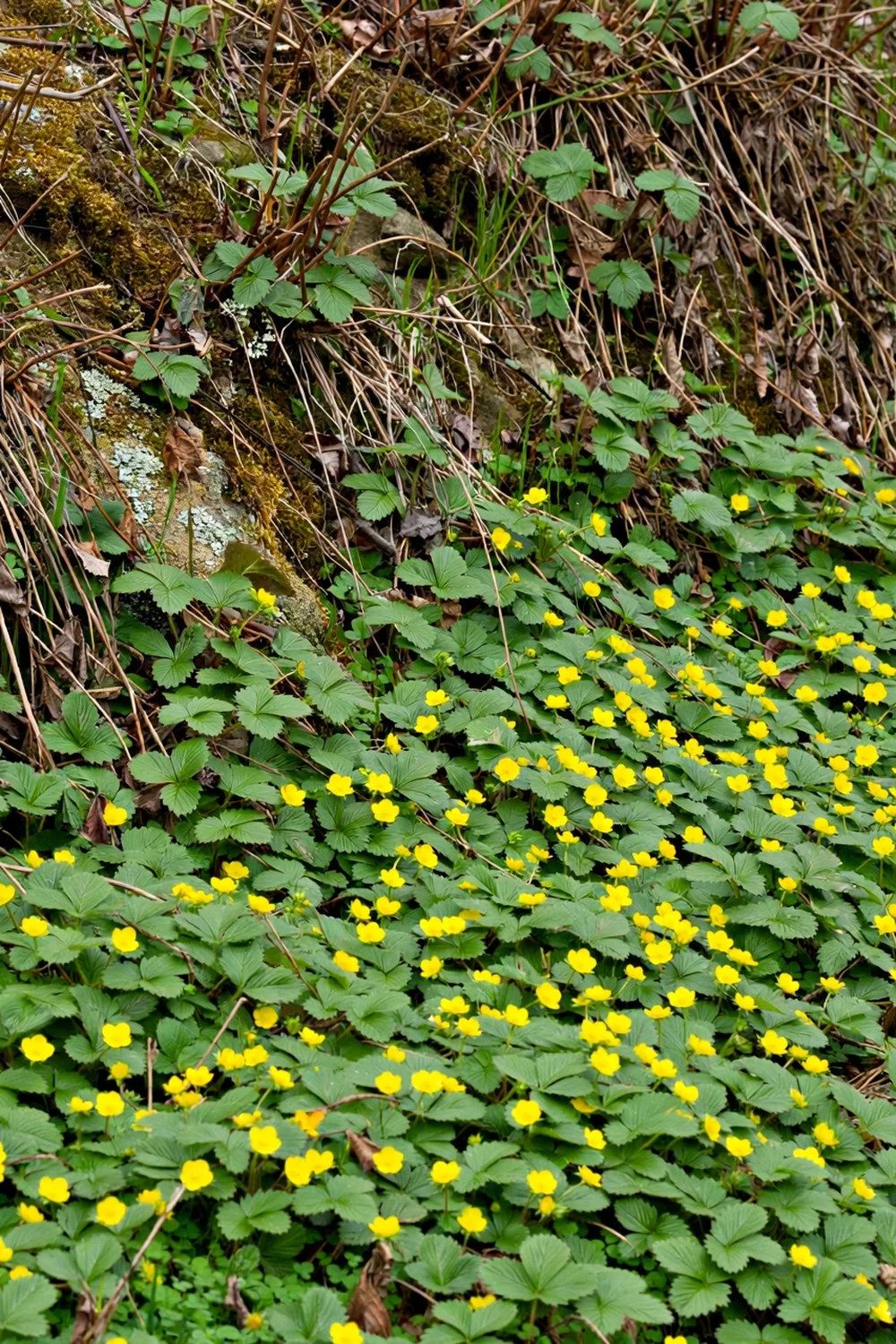
Barren strawberry looks like a wild strawberry plant but skips the fruit and doubles down on coverage. Its low, leafy runners knit into a natural-looking carpet about 4 to 6 inches tall that suppresses germinating weeds across banks and naturalized beds.
Yellow spring flowers brighten it for a few weeks. It is slower to close than ajuga, so plant it 8 to 10 inches apart and mulch the first year. Sun to part shade. Zones 4 to 8.
Try this: use it to knit together the base of a shrub border so mulch stays put and weeds stay out.
Cost: $. Difficulty: easy.
9. Wild ginger
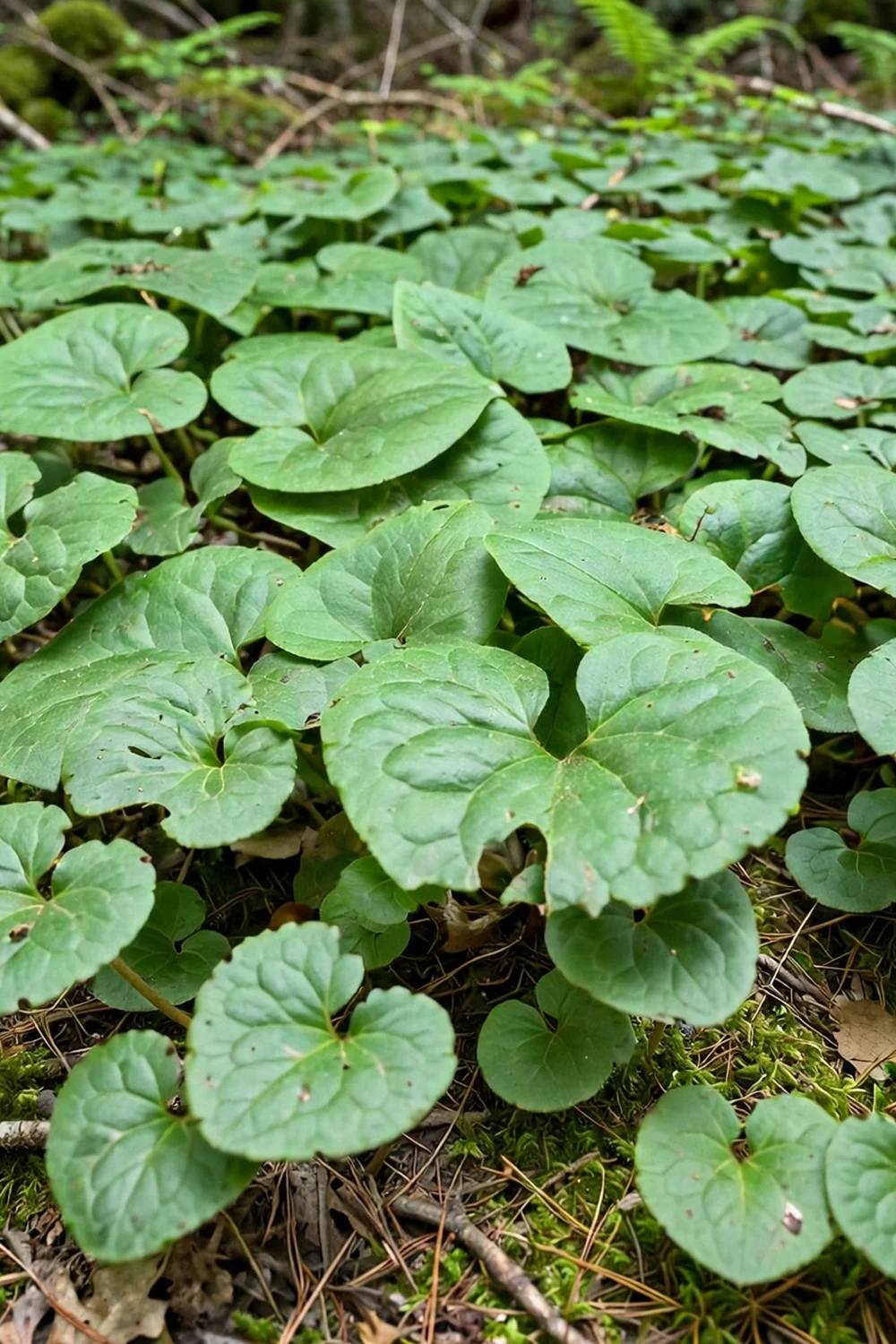
Wild ginger is built for the woodland floor: rich shade, cool roots, and leaf litter. Its broad heart-shaped leaves overlap tightly at about 6 inches tall, holding a calm, weed-resistant surface where shallow-rooted covers fail.
It is slow the first year, then steadily builds a durable colony that needs almost no care. Hidden maroon flowers bloom at ground level in spring, a fun detail for kids to hunt. It dislikes hot, reflected sun and soggy crowns. Zones 4 to 8.
Try this: plant it in drifts of seven or more; single plants look lost, but drifts close into a real carpet.
Cost: $$. Difficulty: easy once established.
10. Epimedium (barrenwort)

Epimedium handles the hardest shade of all: dry shade under mature trees, where roots drink every drop. Its wiry stems carry delicate spring flowers in pink, white, or yellow, then settle into a tough, deer-resistant leaf colony about 12 inches tall.
The leathery leaves overlap and shade the soil through summer when weeds would surge. First-year fill is slow and nursery pots cost more, but a planted patch lasts decades. Cut old foliage back in late winter. Zones 5 to 9.
Try this: water deeply the first summer only; after that it competes with tree roots on its own.
Cost: $$. Difficulty: easy.
11. Creeping juniper

For big sunny banks that need a permanent fix, creeping juniper is the woody answer. Cultivars like Blue Rug spread 6 to 8 feet wide but stay under a foot tall, forming an evergreen mat so dense that weeds cannot get light.
It is drought-tolerant, deer-resistant, and holds slopes against erosion year-round. The trade-off is patience: it takes two to three seasons to close, so mulch heavily between plants at the start. Full sun. Zones 3 to 9.
Try this: space plants 4 to 5 feet apart on slopes; they will meet in the middle and lock the hill down.
Cost: $$. Difficulty: easy.
12. Blue star creeper

Blue star creeper is the steppable pick for path edges and the gaps between pavers. Its tiny leaves form a soft green mat barely 2 inches tall, sprinkled with starry pale-blue flowers from spring to fall.
It tolerates light foot traffic and part shade, filling the cracks where weeds usually colonize. Keep it evenly moist the first season; once rooted it handles normal rainfall. A simple spade edge once a year keeps it tidy. Zones 5 to 9.
Try this: plant it in paver joints instead of sand; it locks the joints and outcompetes the weeds that love them.
Cost: $. Difficulty: easy.
At a glance
Clear the weeds first, or the weeds win
No ground cover, however aggressive, beats established perennial weeds on planting day. Bindweed, quackgrass, and Bermuda grass will punch straight through a new planting and make you regret skipping prep.
Strip the bed first: smother it with cardboard and 3 inches of mulch for 6 to 8 weeks, or dig out the roots by hand. Then plant into clean soil. This one step decides whether your ground cover closes in one season or fights weeds for three.
Space for closure, then mulch the gaps
Weed control comes from coverage, and coverage comes from spacing. Use each plant’s mature spread as your guide, then plant a little tighter if you want the bed closed within two seasons. Wide spacing just buys you more hand-weeding during establishment.
Mulch between new plants with 2 to 3 inches of shredded bark. The mulch blocks weeds while the ground cover fills in, then fades into the background as the leaves meet. Pull any weed that appears while the mat is closing; five minutes a week now saves hours later.
Give the fast spreaders a boundary
Ajuga, vinca, and sweet woodruff earn their weed-smothering reputation by spreading hard, and they will not stop at your bed edge. Before planting, install metal or plastic edging 4 to 6 inches deep, or plan a mowing strip between the bed and the lawn.
Check local guidance too: ajuga is listed as invasive in some regions, and vinca escapes into natural areas in mild climates. The best ground cover is the one that fills its space without becoming your next weed problem. If you garden near woods or wetlands, favor well-behaved clumpers like epimedium and wild ginger.
Keep reading
If you are filling beds around vegetables too, these companion planting charts show which plants help each other thrive. Companion planting charts for raised beds.
For more shade-bed ideas to pair with these ground covers, see these hosta gardening tricks for lush shade beds. Hosta gardening tricks for lush shade beds.
Sedum lovers can find more ways to use succulents in these rock succulent landscape design ideas. Rock succulent landscape design ideas.
Trusted sources
The NC State Extension groundcover plant database lets you filter by light, soil, and zone before you buy. NC State Extension groundcover database.
Check the ASPCA toxic and non-toxic plant list if pets or kids share the garden. ASPCA toxic and non-toxic plant list.
If you garden in an older neighborhood, the EPA lead guidance explains how to test soil before planting edibles nearby. EPA guidance on lead and soil testing.
Frequently asked questions
How long does it take ground cover to choke out weeds?
Most ground covers start suppressing weeds in their first season and close fully by the second. Fast spreaders like ajuga and vinca can cover a bed in one growing season when planted 8 to 10 inches apart. Slower woodland plants like epimedium and wild ginger may need two to three years, so mulch the gaps meanwhile.
Can I plant ground cover over existing weeds?
It rarely works. Weeds with established roots, like bindweed or quackgrass, grow right through new plantings. Clear the bed first by smothering it with cardboard and mulch for 6 to 8 weeks or digging out the roots, then plant into clean soil for the fastest weed-free result.
What is the fastest ground cover for weed control?
Ajuga and vinca minor are among the fastest, often closing a bed in a single season. Creeping thyme and creeping phlox fill at a medium pace, while epimedium and wild ginger are slow starters that reward patience with decades of low care.
Which ground covers can I walk on?
Creeping thyme and blue star creeper handle light foot traffic and work well between stepping stones. Sedum tolerates occasional stepping. Most shade covers like pachysandra and vinca do not recover well from regular walking, so keep paths on hardscape.
Are these ground covers safe around pets?
Many are, but not all. The ASPCA lists periwinkle (vinca) and pachysandra as toxic to dogs and cats, so plant those where pets do not chew. Creeping thyme and sedum are generally considered pet-friendly. When in doubt, check the ASPCA toxic and non-toxic plant list before planting.
Do I still need mulch with ground cover?
Yes, for the first season. A 2 to 3 inch layer of shredded bark blocks weeds while the plants spread and close the gaps. Once the foliage meets and shades the soil, the living mat takes over and you can stop mulching that bed.
Pick the plant that matches your light and soil, clear the bed first, and give it one season of mulch and patience. After that the ground covers itself, and your weeding weekends get a lot shorter.


