


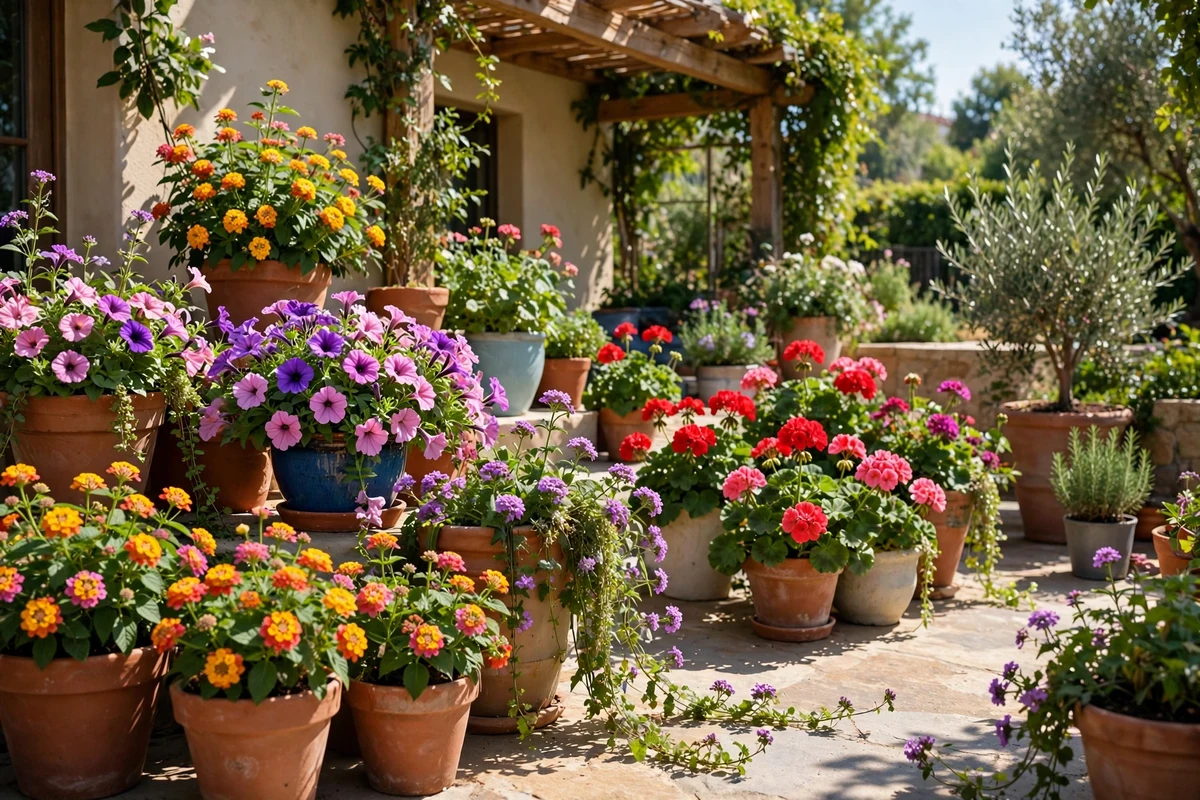
A sunny patio should be the easiest place to garden, but containers in full sun are secretly one of the hardest spots. Small pots bake dry by noon, flowers stall in the heat, and that pretty planter you bought in May looks tired by July. The problem is rarely your effort. It is the plant and pot combination.
These 12 full sun container plants are chosen for life in pots, not in the ground. Every pick handles 6+ hours of direct sun, survives the heat that builds up inside a container, and keeps blooming with basic care. You will also get the pot-size rules and watering routine that make the difference between thriving and crispy.
Quick takeaways
- Full sun containers need plants bred for heat, not just plants labeled “full sun” for garden beds.
- Use pots at least 12 inches wide. Bigger pots hold moisture longer and keep roots cooler.
- In peak summer, most flowering containers need water daily. Check soil 2 inches down before watering.
- The thriller-filler-spiller formula (one tall, several mounding, one trailing) makes any pot look designed.
- Light-colored pots stay cooler than black ones. Double-potting insulates roots in extreme heat.
1. Lantana: the heat champion

Lantana does not just survive heat, it blooms harder because of it. Clusters of tiny flowers in yellow, orange, and pink open nonstop from June until frost, and butterflies visit daily. Compact varieties like ‘Lucky’ or ‘Bandana’ stay 12 to 18 inches tall, perfect for a 14-inch pot. It wants the sunniest spot you have and well-drained soil. Let the top inch dry between waterings; soggy soil is the one thing it dislikes. In zones 9 to 11 it returns yearly, elsewhere it grows as an annual.
Try this: pair lantana with purple fountain grass in the same pot. The grass adds height and movement while the lantana covers the base in color. Cost: $. Difficulty: Easy. Safety note: lantana berries and leaves are toxic to dogs, cats, and children, so keep pots out of reach of curious mouths. The ASPCA toxic plant database lists lantana and other risky container plants.
2. Wave petunias that spill over

Wave petunias were bred for exactly this job: spreading 3 to 4 feet from a single plant and covering themselves in flowers all summer. They need no deadheading, which is rare for a heavy bloomer. One plant fills a 12-inch hanging basket; three fill a 20-inch planter. They drink a lot in full sun, so water daily in July and feed every two weeks with a balanced liquid fertilizer. If they get leggy in August, cut them back by a third and they flush again.
Try this: buy the “Wave” series specifically, not generic petunias. The spreading habit is what gives you the waterfall effect. Cost: $. Difficulty: Easy.
3. Calibrachoa (million bells) baskets
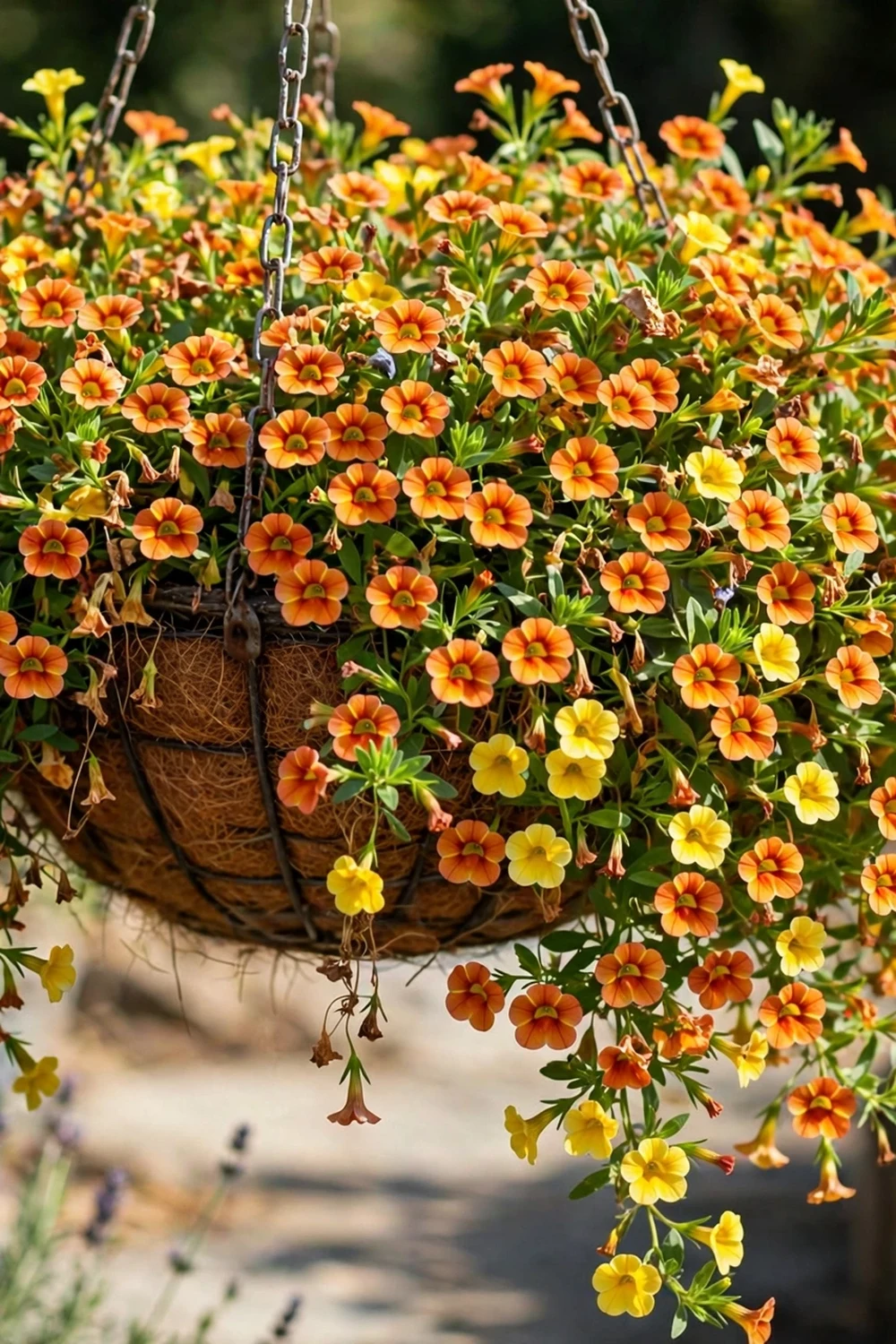
Calibrachoa looks like tiny petunias but handles heat and humidity better, making it a top pick for southern patios. Each plant produces hundreds of small trumpet flowers in orange, yellow, pink, or purple from spring to frost. It trails 12 to 18 inches, ideal for hanging baskets and tall planters. It hates wet feet, so use a fast-draining mix and a pot with big drainage holes. Feed weekly at half strength for the heaviest bloom.
Try this: plant three different colors in one basket for a ready-made mixed display that needs zero design skill. Cost: $. Difficulty: Easy.
4. Geraniums for classic porch pots

Zonal geraniums are the classic porch plant because they tolerate heat, missed waterings, and beginner mistakes. Flower heads in red, pink, salmon, and white sit above rounded leaves from May to frost. They prefer their soil to dry slightly between waterings, which suits busy gardeners. Snap off spent flower heads to keep new buds coming. Bring pots indoors before the first frost and they can overwinter on a sunny windowsill.
For styling ideas beyond the patio, our home entrance plant ideas show how to carry the container look to the front door.
Try this: choose one bold color per pot rather than mixing. A pot of solid red geraniums reads classic and intentional. Cost: $. Difficulty: Easy.
5. Marigolds that guard your pots
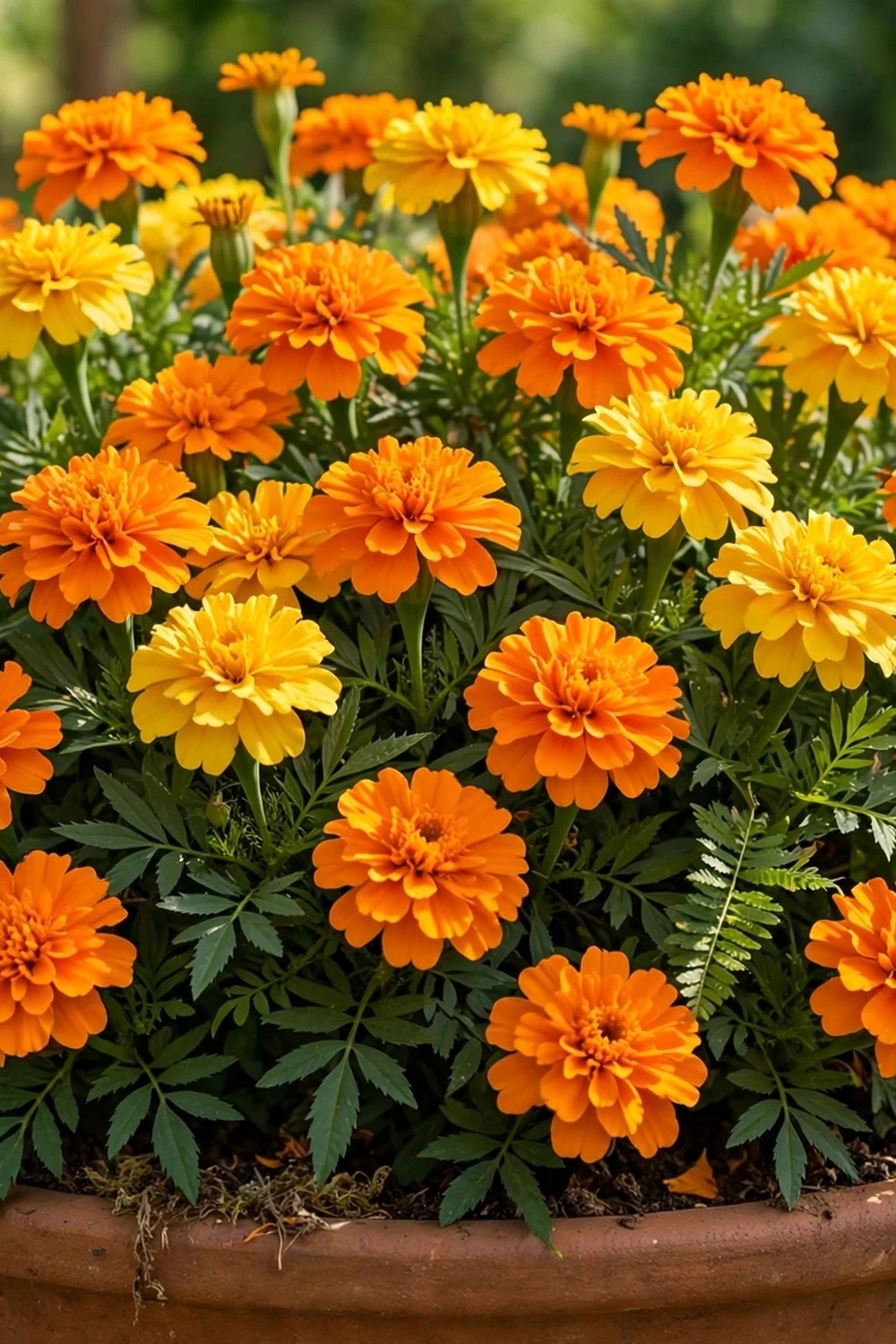
Marigolds earn their place twice: they bloom nonstop in heat that stops other flowers, and their scent confuses pests like aphids and whiteflies. French marigolds stay compact at 8 to 12 inches for pot edges; African types reach 2 feet for the center. Deadhead regularly and they never quit. They germinate fast from seed, so a 50-cent packet fills a whole patio with plants by midsummer.
If you are growing food in pots too, our beginner vegetable garden guide covers which crops share containers well.
Try this: tuck marigolds around the edges of vegetable containers. They protect tomatoes and peppers while adding color. Cost: $. Difficulty: Easy.
6. Portulaca for the hottest corner
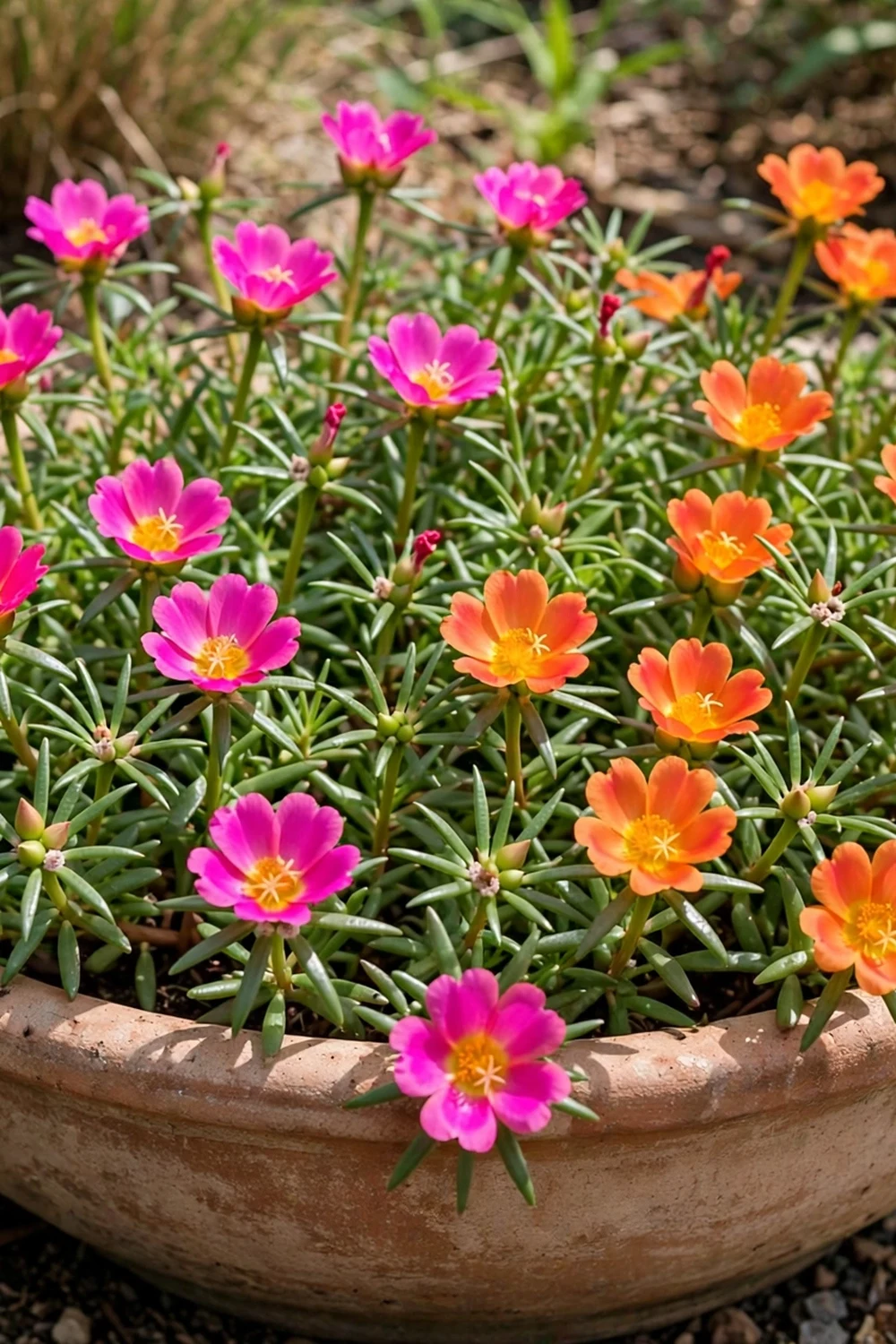
Portulaca (moss rose) is a succulent that treats 100-degree patios like a vacation. Its rose-like flowers in neon pink, orange, yellow, and white open in sun and close at night. It needs almost no water once established; in fact, overwatering kills it faster than drought. Plant in shallow, wide pots with cactus mix. It self-sows, so you may get free plants next year in the same pot.
Try this: use portulaca in the shallow top of a stacked planter where deeper-rooted plants would dry out. Cost: $. Difficulty: Easy.
7. Vinca for low-water color
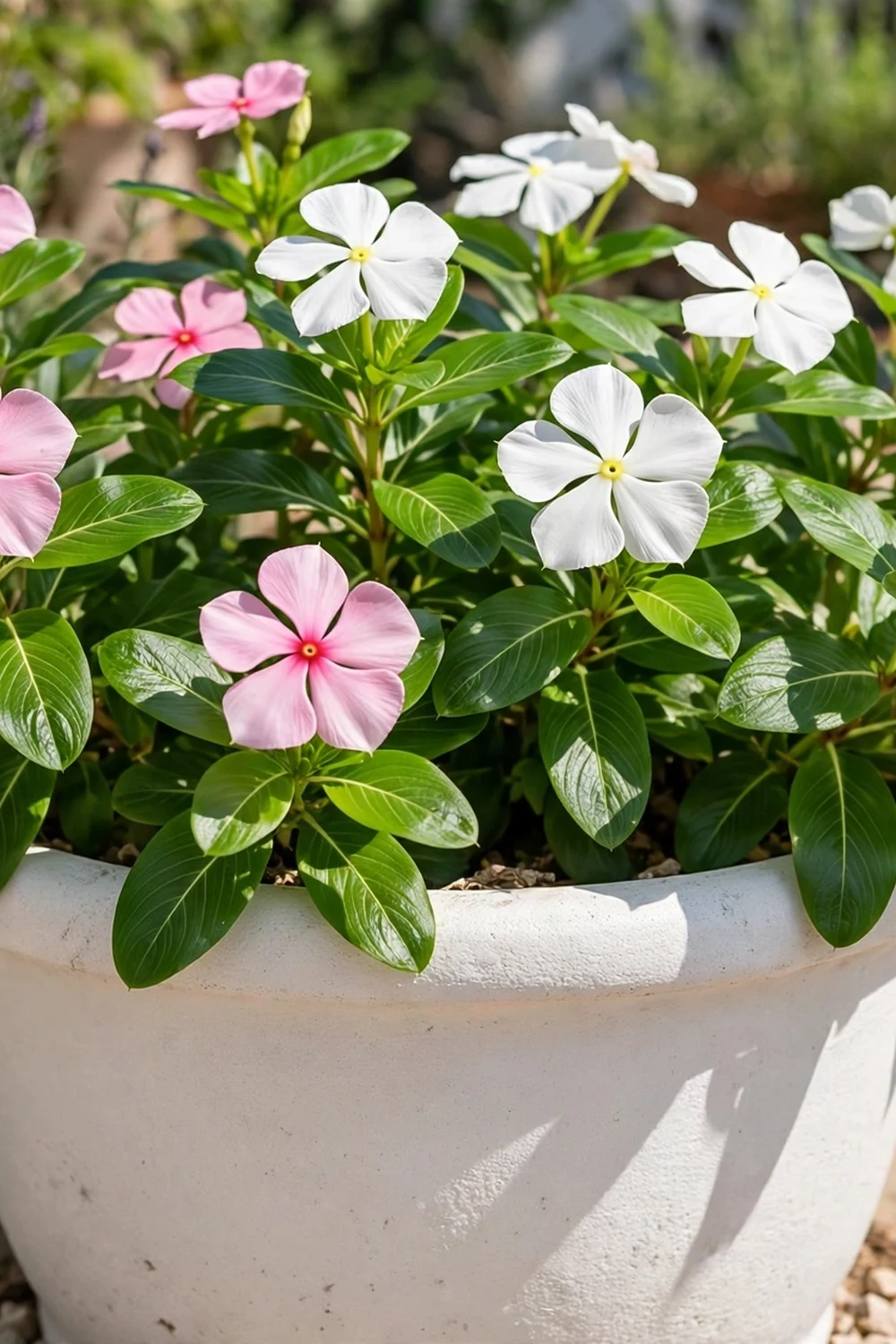
Annual vinca (Madagascar periwinkle) is the plant for gardeners who forget to water. Once established, it handles drought, humidity, and blazing sun while producing pink, white, or red flowers with glossy leaves. It blooms best in real heat, so it peaks exactly when spring flowers fade. Give it excellent drainage and do not overwater; it sulks in soggy soil. Space plants 8 inches apart for a full look.
Try this: plant vinca in light-colored pots on the sunniest, hottest part of your patio, the spot where everything else fries. Cost: $. Difficulty: Easy. Safety note: vinca is toxic if eaten, so keep it away from pets and small children.
8. Sweet potato vine as the spiller
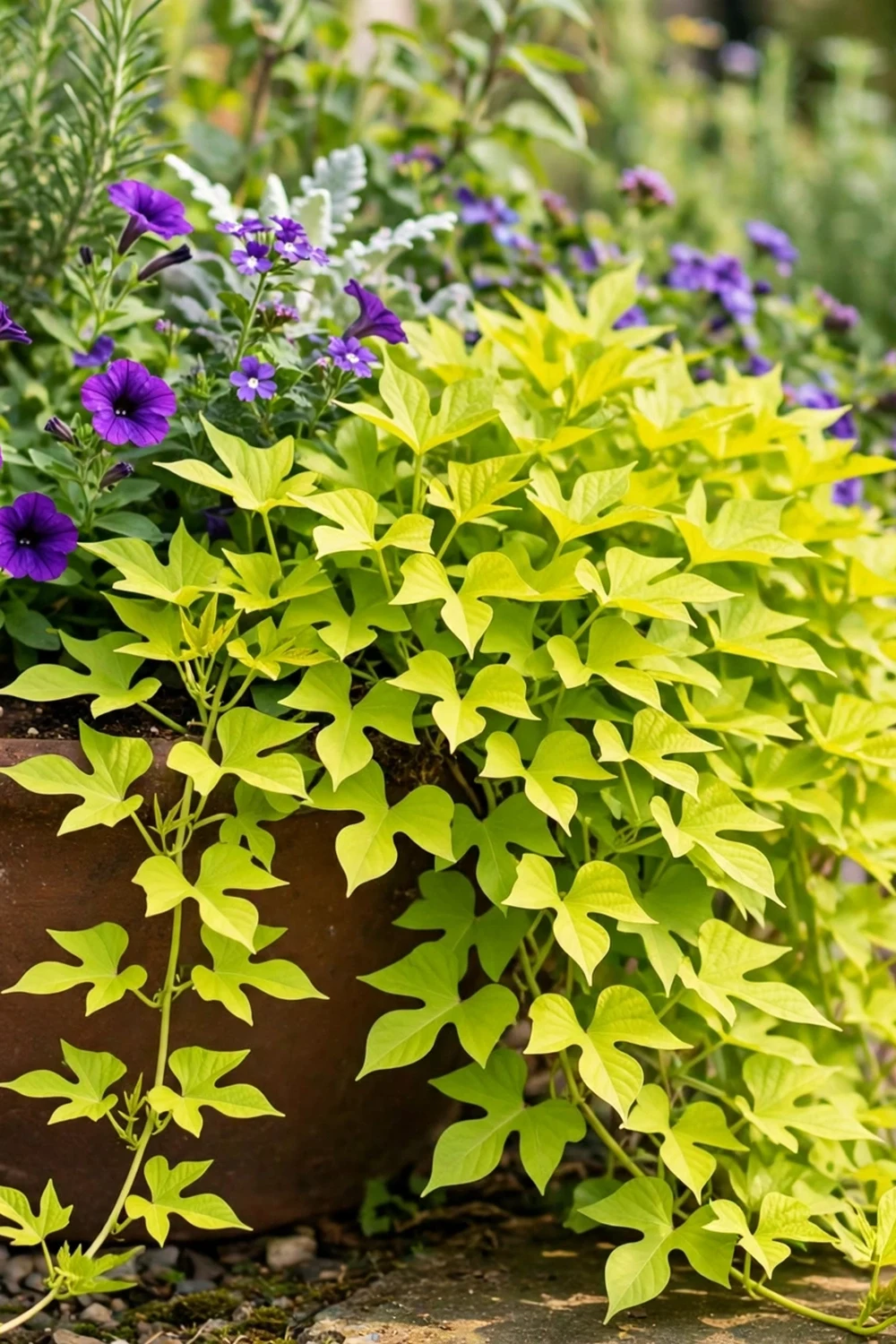
Every mixed container needs a spiller, and sweet potato vine is the fastest one for sun. Its heart-shaped leaves come in chartreuse (‘Margarita’), deep purple (‘Blackie’), or tricolor, and a single plant trails 3 feet by midsummer. It grows from heat, so it looks better in August than in May. Pinch the tips to branch it out. It rarely flowers, but the foliage is the show.
Try this: pair chartreuse ‘Margarita’ with purple angelonia. The lime-and-purple contrast is a classic designer combination. Cost: $. Difficulty: Easy.
9. Zinnias for cut-and-come-again blooms
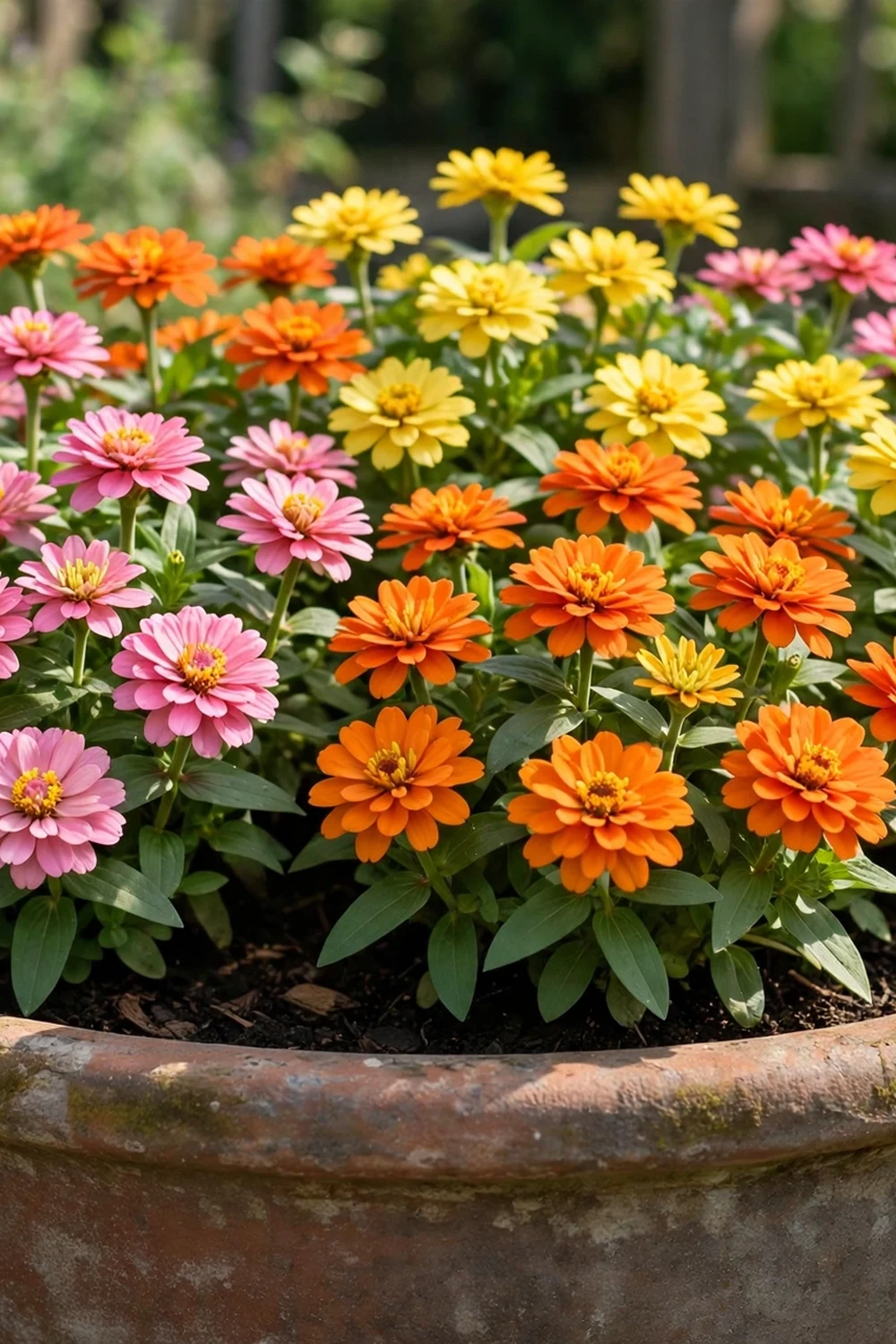
Zinnias are the easiest flowers to grow from seed directly in a pot, and they bloom about 60 days after sowing. Dwarf series like ‘Profusion’ or ‘Zahara’ stay 12 to 18 inches and need no staking, unlike tall garden zinnias. The more you cut flowers for vases, the more they produce. They love heat and full sun and tolerate dry spells. Sow seeds after the last frost in a 14-inch or larger pot.
Try this: cut stems in the morning and put them straight in water. Zinnias last a week in a vase, so the pot doubles as a cutting garden. Cost: $. Difficulty: Easy.
10. Dwarf hibiscus as a tropical focal point
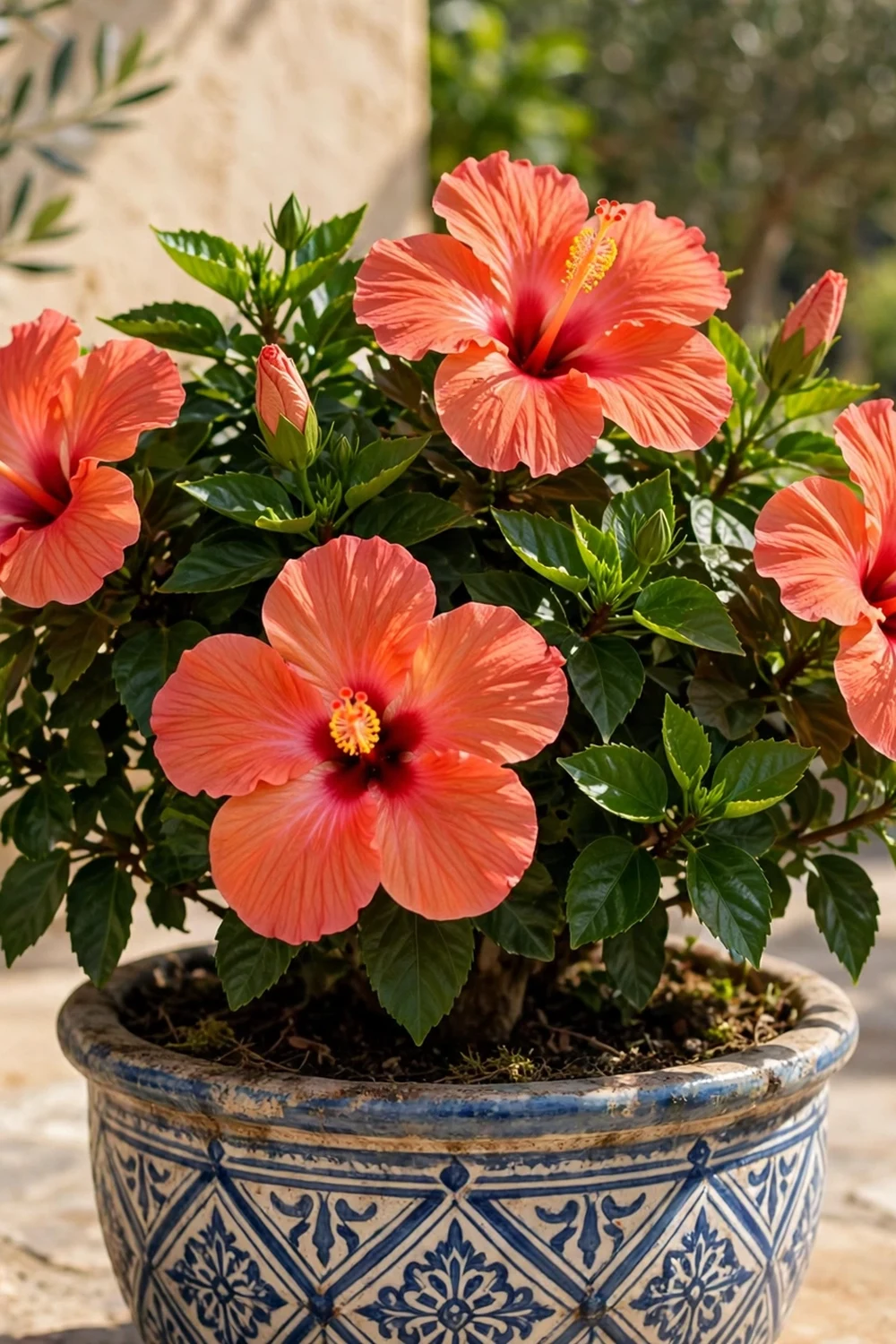
One dwarf hibiscus turns an ordinary patio into a resort. Dinner-plate flowers in red, coral, pink, or yellow open daily through summer on a compact 2 to 3 foot shrub. It needs a 16 to 20 inch pot, daily water in heat, and a sunny corner out of strong wind. Feed every two weeks for the biggest blooms. In zones 9 to 11 it lives for years; elsewhere bring it indoors before frost.
Try this: place the pot where you see it from your most-used window. Tropical flowers deliver the most joy when they are in your daily sightline. Cost: $$. Difficulty: Moderate.
11. Lavender and rosemary herb pot
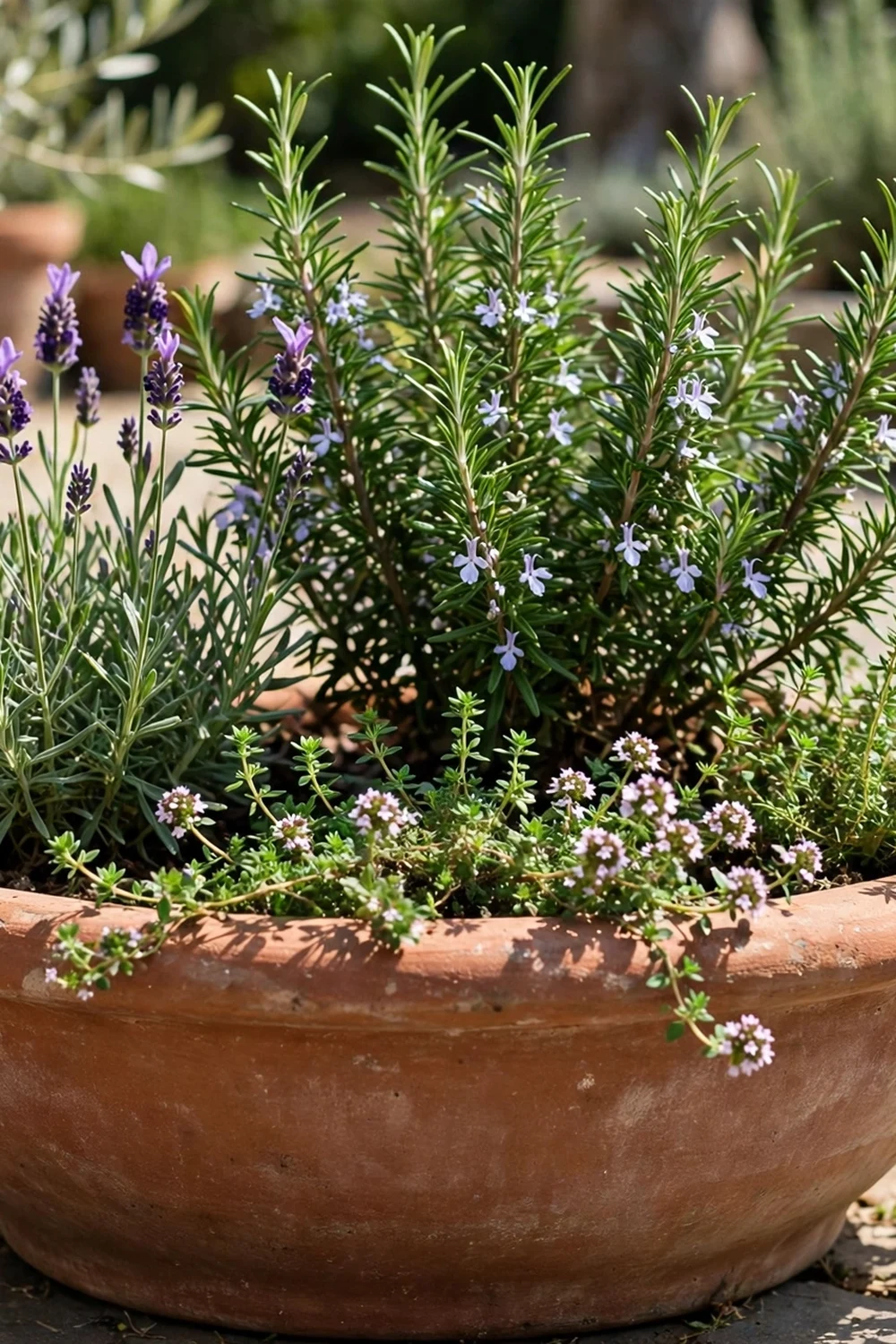
Mediterranean herbs are built for hot, sunny, dry conditions, which makes them perfect container mates. Lavender, rosemary, and thyme share the same needs: full sun, sharp drainage, and soil that dries between waterings. Plant them together in a wide terracotta pot with cactus or herb mix. Harvest sprigs for cooking all summer; the more you snip, the bushier they grow. In zones 7 and warmer, rosemary and lavender can overwinter in the pot with protection.
Try this: set the herb pot by the grill or kitchen door. You will actually use the herbs when they are within arm’s reach of cooking. Cost: $. Difficulty: Easy.
12. Angelonia for upright summer color

Angelonia looks like a summer snapdragon and performs like one, sending up spikes of purple, pink, or white flowers from June to frost. It is the thriller of the thriller-filler-spiller formula, giving a pot its vertical line. Unlike real snapdragons, it loves heat and never needs deadheading. It tolerates short dry spells once established. Plant it in the center of a 14-inch pot with lower flowers around it.
Try this: use angelonia as the center spike, calibrachoa around the middle, and sweet potato vine at the edge for a complete designer pot in one planting. Cost: $. Difficulty: Easy.
Container picker: sun plants at a glance
The pot, soil, and water rules for full sun
Plant choice is half the battle; the container setup is the other half. Use pots at least 12 inches wide and deep, because small pots heat up and dry out by midday in full sun. Light-colored or glazed pots stay cooler than black plastic. Always use bagged potting mix, never garden soil, which compacts in pots and suffocates roots. Mix in a slow-release fertilizer at planting time so feeding is handled for the season. Water early in the morning so leaves dry before night, and water until it runs from the drainage holes. In a heat wave, move the thirstiest pots into afternoon shade for a few days; no rule says they must suffer.
The thriller-filler-spiller formula
Oregon State University Extension has a container gardening basics guide that backs up this formula with plant lists for thrillers, fillers, and spillers. Professional-looking containers follow a simple recipe. The thriller is one tall, upright plant in the center (angelonia, dwarf hibiscus, or fountain grass). Fillers are mounding plants around it (lantana, geraniums, marigolds, calibrachoa). The spiller trails over the edge (sweet potato vine, wave petunias). Use odd numbers of fillers, usually 3 or 5, and one spiller per side of the pot. Keep to two or three colors plus one foliage accent; restraint looks expensive. Plant tightly, because containers should look full on day one, not “in a month.”
Mistakes that fry container plants
The top killer is a pot with no drainage holes. Roots sitting in water rot in days during summer heat, so drill holes in any decorative pot that lacks them. Second is the tiny pot: a 6-inch pot in full sun needs watering twice a day and still stresses the plant. Third is dark pots on hot concrete, which can cook roots; set pots on pot feet or a plant stand for airflow underneath. Fourth is forgetting fertilizer. Potting mix nutrients wash out with daily watering, so slow-release granules or biweekly liquid feed are not optional for heavy bloomers.
Frequently asked questions
What are the best plants for full sun containers?
Lantana, wave petunias, calibrachoa, geraniums, marigolds, portulaca, and vinca are the most reliable full-sun container plants. They handle the extra heat that builds up inside pots and keep blooming through summer with basic watering and feeding.
How often should I water full sun containers in summer?
Most flowering containers in full sun need water once a day in normal summer weather and sometimes twice during heat waves. Drought-tolerant plants like portulaca, lantana, and vinca can go 2 to 3 days. Always check the soil 2 inches down first and water until it drains from the bottom.
What size pot is best for full sun plants?
Use at least a 12-inch pot for most flowering plants and 16 to 20 inches for large specimens like dwarf hibiscus. Larger pots hold moisture longer, keep roots cooler, and need less frequent watering, which matters most in full sun.
Can I use garden soil in containers?
No. Garden soil compacts in pots, drains poorly, and can carry weed seeds and disease. Use bagged potting mix, which is blended for container drainage and airflow. For succulents and Mediterranean herbs, choose a cactus or herb mix for even sharper drainage.
Why are my container plants wilting even though I water them?
Wilting with wet soil usually means root rot from poor drainage or a pot with no holes. Wilting that recovers after watering means the pot is simply too small for the plant’s roots. Move up a pot size, check drainage, and make sure water is not pooling in the saucer.
Do full sun containers need fertilizer?
Yes. Daily watering washes nutrients out of potting mix fast. Mix slow-release fertilizer into the soil at planting, then feed heavy bloomers like petunias and calibrachoa with liquid fertilizer every one to two weeks through summer.
Conclusion
Full sun containers fail when the plant, pot, and watering routine do not match the heat. Pick heat-proven plants from this list, give them roomy pots with drainage and good mix, and water on a real schedule. Do that, and your sunny patio stays colorful from June to frost.


