



The mantel shelf is the smallest stage in the house and somehow the hardest to get right. Too little and it looks bare. Too much and it looks like a yard sale. I have spent more October afternoons rearranging the same six objects on my mantel than I care to admit, and the breakthrough was embarrassingly simple: the shelf needs a back row, a middle row, and a front row, and almost every good fall mantel follows that pattern.
This guide is all about the shelf itself, not the hearth or the firebox. You will get 20 concrete mantel styling ideas, from symmetrical candlestick pairs to layered art to garlands that actually stay put. Each one tells you what goes where on the shelf and why it works, so you can copy a look in an afternoon or mix pieces you already own.
1. Symmetrical Candlesticks Flanking a Wreath

Symmetry is the fastest route to a mantel that looks intentional. Hang a grapevine wreath with mini pumpkins tucked into it directly above the shelf, then set matching candlesticks on both ends, tall ones if your ceiling allows. Fill the middle ground with small orange pumpkins and pinecones in a loose row. The mirror-image layout reads as calm and finished, which is exactly what a busy fall living room needs.
Try this: use an odd number of pumpkins between the candlesticks, three or five, so the center stays soft instead of split.
Difficulty: Easy | Cost: $$
2. Layered Art Behind the Decor

Art does the heavy lifting on this mantel. Lean a large framed autumn print against the wall as the back row, then layer two smaller botanical prints in front of it, offset to one side. The overlap creates depth without a single nail. In front, keep it simple: small white pumpkins, one brass candlestick, and a bud vase of dried wheat. The prints carry the fall color so the objects can stay neutral.
Try this: thrift stores are full of frames. Print autumn art at a copy shop for a few dollars and you have custom pieces for under $20.
Difficulty: Easy | Cost: $$
3. One Long Garland, Edge to Edge
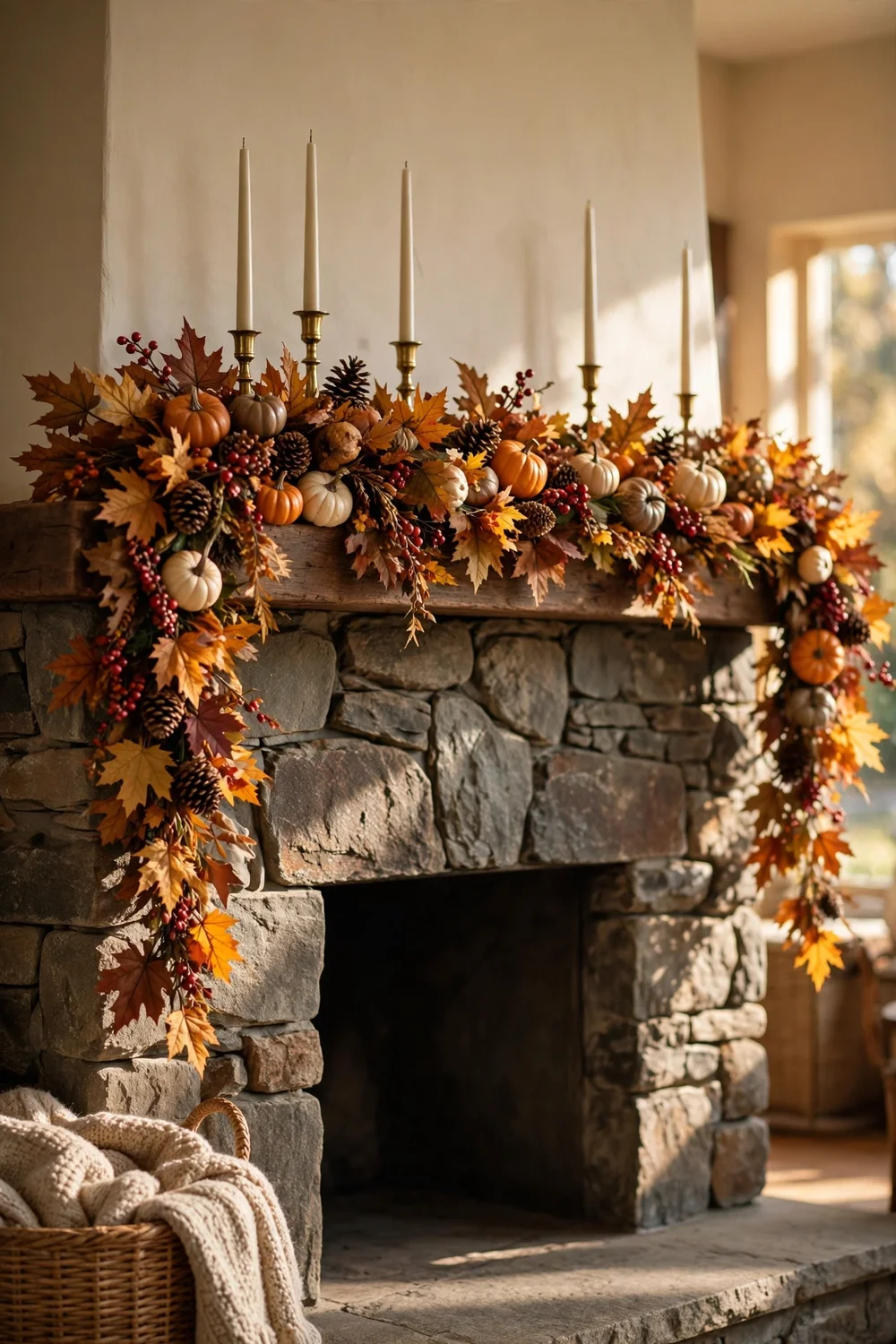
Sometimes the mantel only needs one thing done well. Run a single lush garland, maple leaves, berries, pinecones, and mini pumpkins woven through, across the full width of the shelf and let both ends drape over the edges. Tuck three brass taper candles behind it so the flames peek through the leaves. The garland is the back, middle, and front row all at once, which is why this looks full with so few pieces.
Try this: buy two 6-foot garlands instead of one long one and overlap them in the middle. The join disappears and the fullness doubles.
Difficulty: Easy | Cost: $$
4. A Wooden Gather Sign as Centerpiece
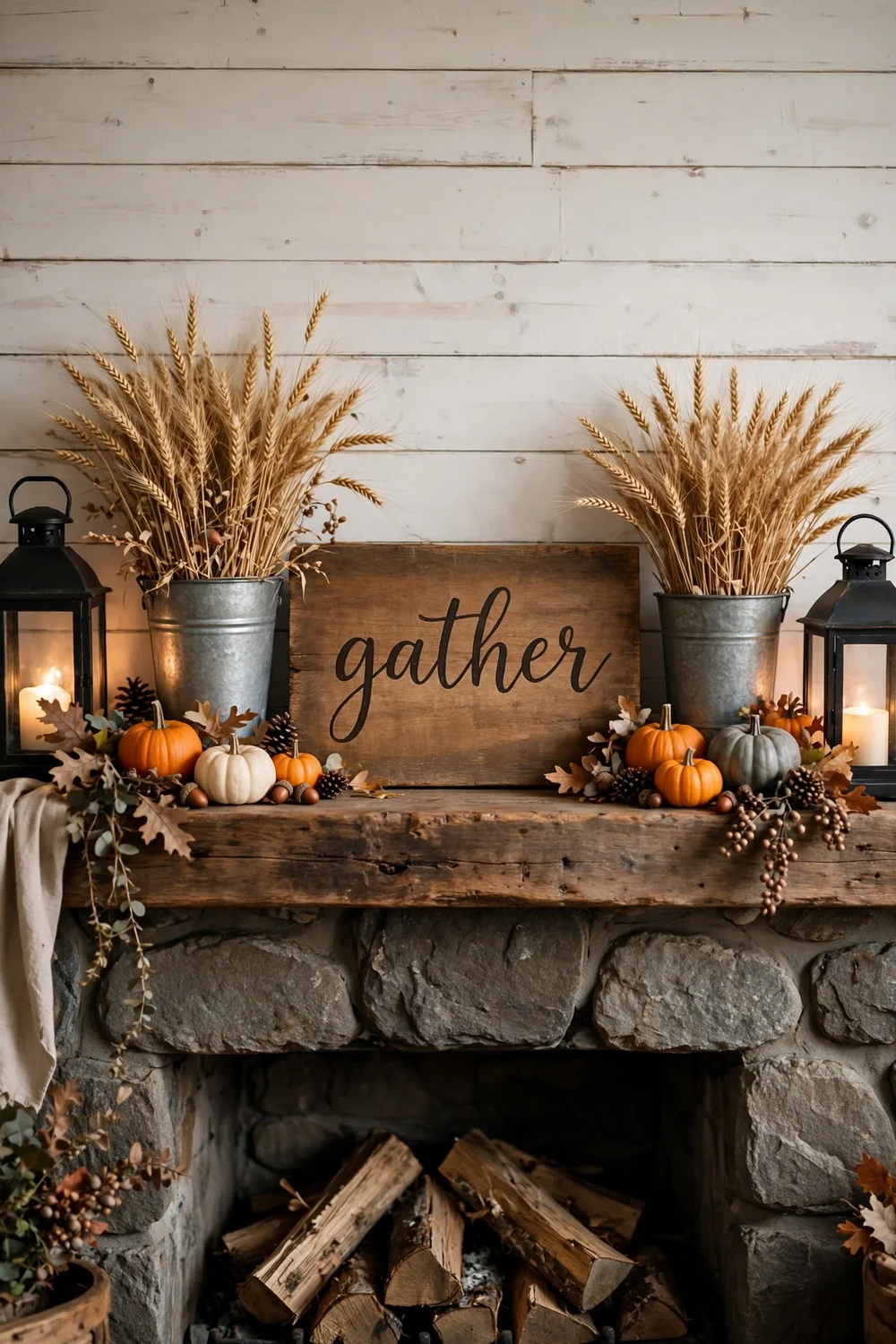
A word sign gives the mantel a clear focal point, which makes everything around it easier to place. Set a rustic wooden “gather” sign dead center, then build outward: galvanized buckets of wheat stalks on both sides, small pumpkins filling the gaps, and black metal lanterns at the far ends. The sign’s horizontal shape balances the vertical wheat, and the whole thing reads farmhouse without trying too hard.
Try this: lean the sign instead of hanging it. A slight lean looks relaxed, and you can swap the sign for Christmas without patching holes.
Difficulty: Easy | Cost: $$
5. Stacked Vintage Books Topped With Pumpkins

Books are the cheapest risers you own. Stack three or four vintage hardcovers on one side of the mantel and top the pile with a small pumpkin or a candle. Make a second, shorter stack on the other side. The different heights break up the shelf’s flat line, and the worn covers add texture that new decor cannot fake. Pull books with warm-toned spines, rust, mustard, deep green, and the fall palette builds itself.
Try this: check the 50-cent cart at library sales. You want sturdy hardcovers with pretty spines, not reading copies.
Difficulty: Easy | Cost: $$
6. Lantern Pair Anchoring Both Ends
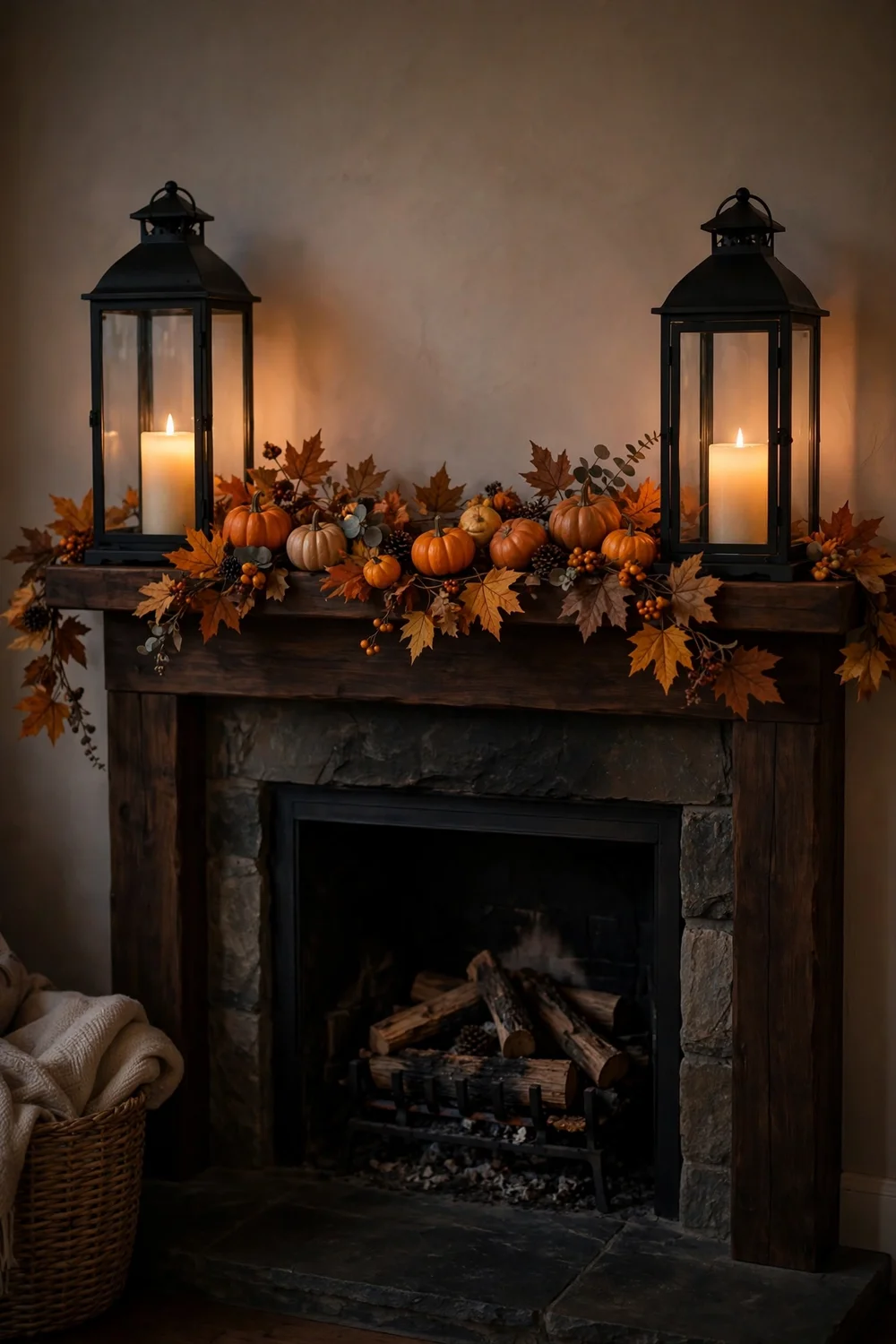
Two matching lanterns at the ends of the mantel act like bookends for the whole display. Choose lanterns at least 12 inches tall so they hold their own against the fireplace’s scale. Run a simple leaf garland between them and drop flameless pillar candles inside the lanterns. At dusk the lanterns glow and the mantel looks lit from within. Everything between the lanterns can be minimal because the ends carry the weight.
Try this: put the lanterns on timers. Six hours on, eighteen off, and you never touch them again all season.
Difficulty: Easy | Cost: $$
7. Garland With Warm Fairy Lights Woven In
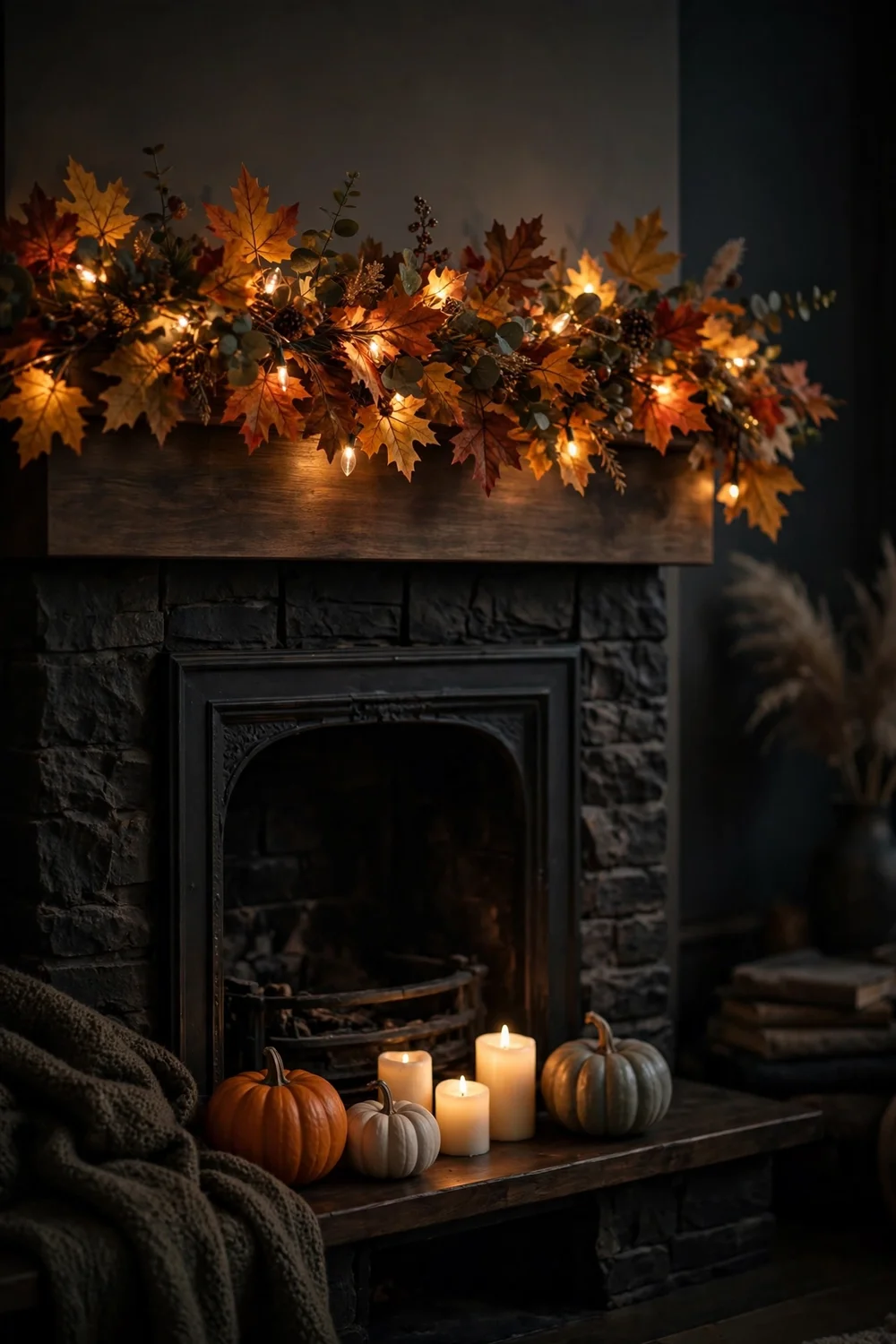
Fairy lights turn an ordinary garland into the thing everyone comments on. Weave one 20-foot strand of warm white micro lights through a faux leaf garland before you drape it, hiding the battery pack behind a pumpkin at one end. The tiny bulbs catch on the leaves and berries and make the whole mantel shimmer after dark. Keep the shelf decor low, pumpkins and short candles, so the lit garland stays the star.
Try this: warm white only. Cool white lights make fall colors look flat and a little sad.
Difficulty: Easy | Cost: $$
8. One Statement Vase, Placed Off Center
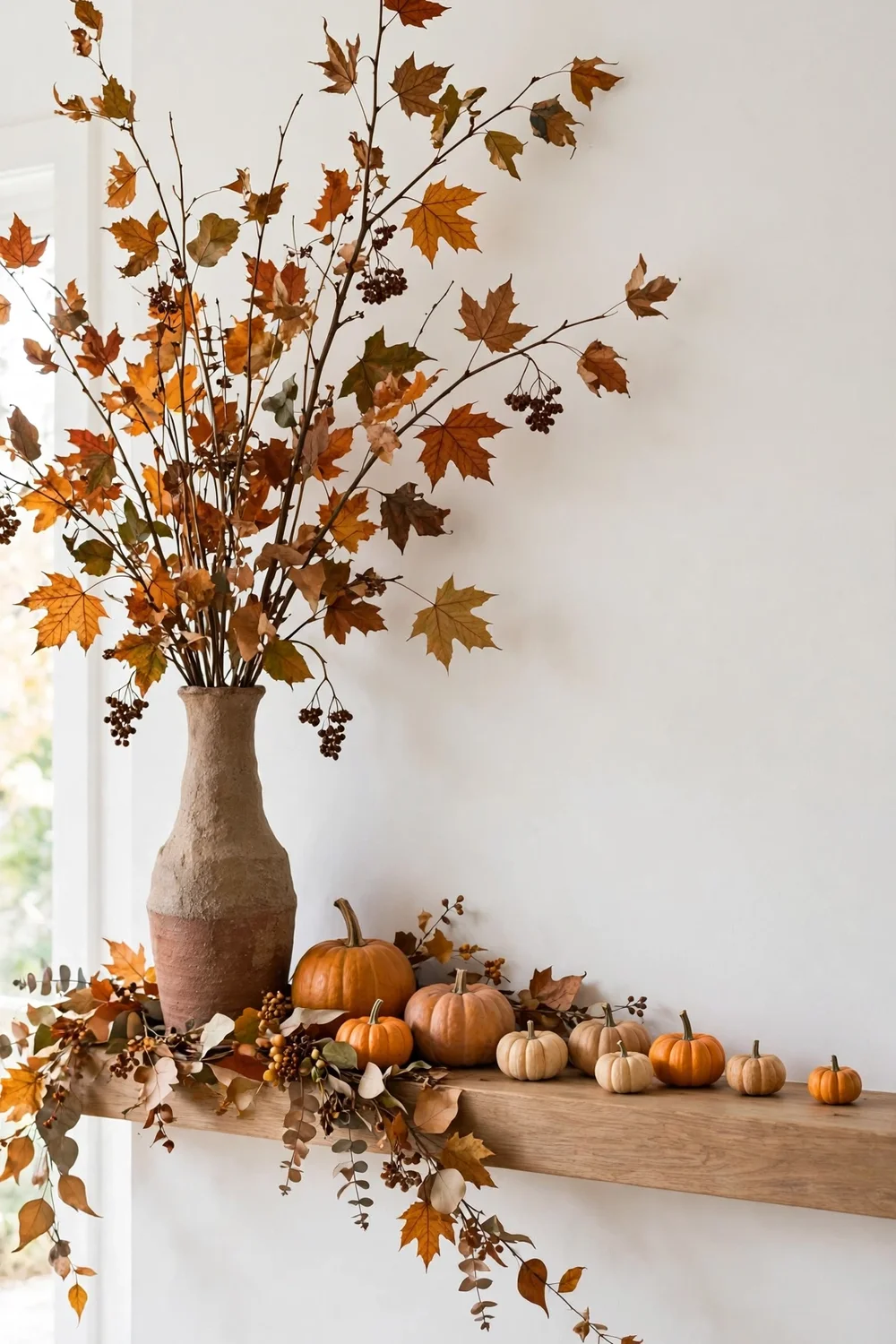
Asymmetry looks modern and a little daring, and it starts with one bold piece. Set a tall ceramic vase, 18 inches or more, filled with autumn branches on the left third of the mantel. Trail small pumpkins and a low garland from the vase toward the right, getting smaller as they go. The eye travels the line and the mantel feels full of movement instead of static. This works best on wide mantels with room for the composition to breathe.
Try this: the vase must be heavy or weighted. Tall branches are top-heavy, and a bumped mantel is a matter of time.
Difficulty: Moderate | Cost: $$
9. Mini Pumpkin Row in Graduated Sizes
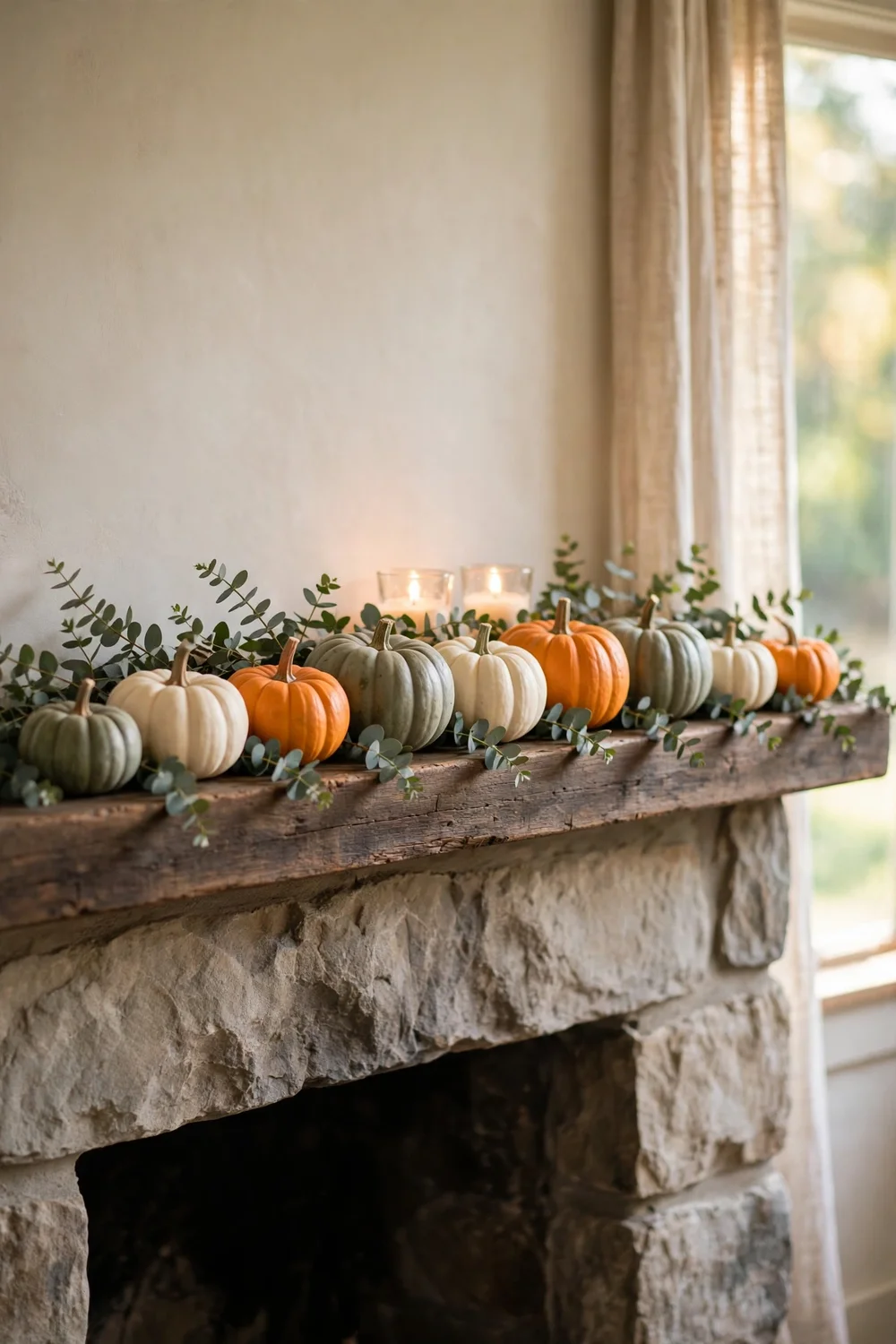
Seventeen mini pumpkins in a row sounds like a lot until you see it. Line them along the front edge of the mantel in graduated sizes, biggest in the middle tapering to the ends, mixing orange, white, and green-gray. Tuck eucalyptus sprigs between them and set two small candles behind the row. The repetition is soothing, the color mix keeps it interesting, and the whole thing costs less than one big statement piece.
Try this: real mini pumpkins last 4 to 6 weeks indoors. Faux ones last forever. Mix both and nobody can tell.
Difficulty: Easy | Cost: $$
10. Chalkboard Sign With a Fall Quote

A chalkboard sign is the mantel’s message board. Write a short fall quote in chalk, prop the board center-back, and flank it with wheat bundles and amber candles. The dark board makes the warm tones around it pop. When Thanksgiving arrives, wipe it and write something new. It is the only mantel piece that reinvents itself for free, which earns it a permanent spot on my shelf.
Try this: use a chalk marker, not real chalk. It writes cleaner and will not smudge when the furnace kicks on.
Difficulty: Easy | Cost: $$
11. Mixed-Metal Candlesticks With Eucalyptus
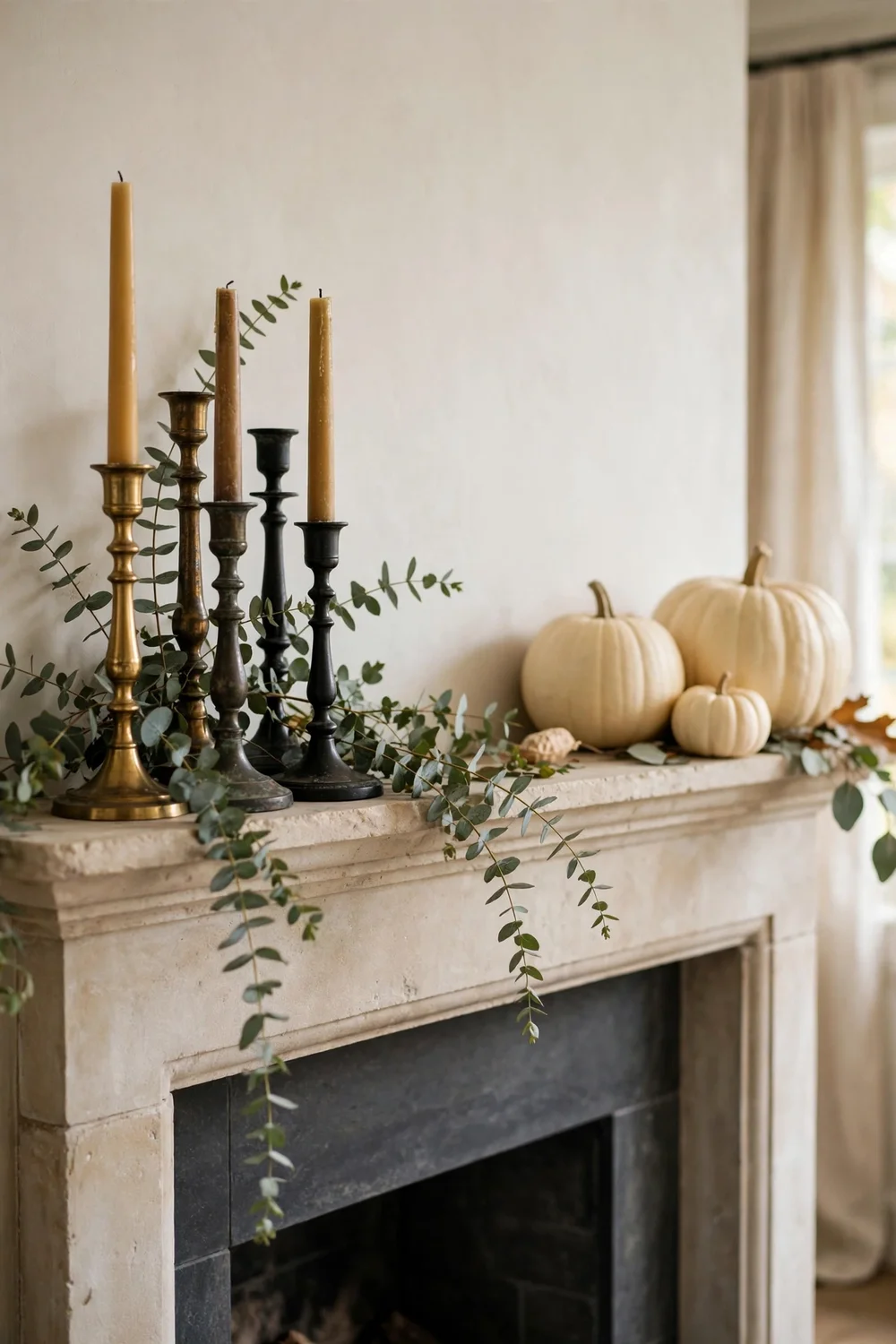
Matching candlestick sets are safe. Mixed metals are better. Gather brass, black, and aged bronze candlesticks in different heights and cluster them on one half of the mantel, then trail eucalyptus stems through and around them. The metals catch light differently, which gives the cluster life. Cream pumpkins on the other half keep the palette calm. The rule: stick to warm metals only, no chrome, and the mix always works.
Try this: group in odd numbers and vary the heights by at least 3 inches between neighbors.
Difficulty: Easy | Cost: $$
12. Dough Bowl Filled With Pinecones and Pumpkins

A dough bowl is a whole vignette in one piece. Fill a 2-foot wooden dough bowl with pinecones, then nestle mini pumpkins and a few dried orange slices among them. Set the bowl center-front on the mantel with a candle on each side. The low, wide shape suits mantels with something tall above them, like a mirror or art, because it fills the shelf without competing. One bowl, two candles, done.
Try this: line the bowl with a linen napkin first. It keeps pinecone sap off the wood and adds a soft layer.
Difficulty: Easy | Cost: $$
13. Cake Stands and Risers for Height

Flat mantels need height tricks, and risers are the trick. Put a marble cake stand on one end with a pumpkin and a candle on it, a low wooden riser on the other end with a small stack of gourds, and keep the middle low with a trailing garland. The varying levels make the eye move up and down instead of skating across. Raid your kitchen before you buy anything; cake stands and cutting boards work perfectly.
Try this: three levels max. More than that and the mantel starts looking like a store display.
Difficulty: Easy | Cost: $$
14. Dried Hydrangea Bundles in Small Crocks

Dried hydrangeas in dusty rose and sage are fall’s quiet luxury. Stand a bundle in each of three small stoneware crocks and space them across the mantel. Their papery texture contrasts beautifully with smooth pumpkins, so set beige pumpkins between the crocks and add two taper candles for height. The whole look is soft and a little romantic, and it carries straight through Thanksgiving without a single change.
Try this: cut hydrangea stems at an angle and stand them in the crock with no water. They hold their shape for months.
Difficulty: Easy | Cost: $$
15. A Plaid Runner as the Base Layer

Stylists start with a base layer, and on a mantel that means fabric. Lay a plaid or buffalo-check runner along the shelf, letting the ends hang an inch or two over the front edge. Then arrange your pumpkins, pinecones, and candles on top of it. The fabric unifies everything sitting on it and adds a textile softness that hard mantels need. When the season changes, swap the runner and the whole mantel feels new.
Try this: a 6-foot table runner fits most mantels. Fold a longer one under rather than letting it puddle.
Difficulty: Easy | Cost: $$
16. An Amber Glass Collection, Grouped Tight

Collections look best grouped tight, and amber glass was made for fall light. Cluster seven to nine amber bottles, vases, and jars in the center third of the mantel, varying the heights. When daylight hits them they glow like honey. Flank the cluster with small gourds and keep the ends of the mantel nearly bare. The tight grouping reads as one intentional object instead of nine random ones.
Try this: backlight is everything. If your mantel gets afternoon sun, this idea will stop people mid-step.
Difficulty: Easy | Cost: $$
17. Corn Husk Bundle Tied With Twine
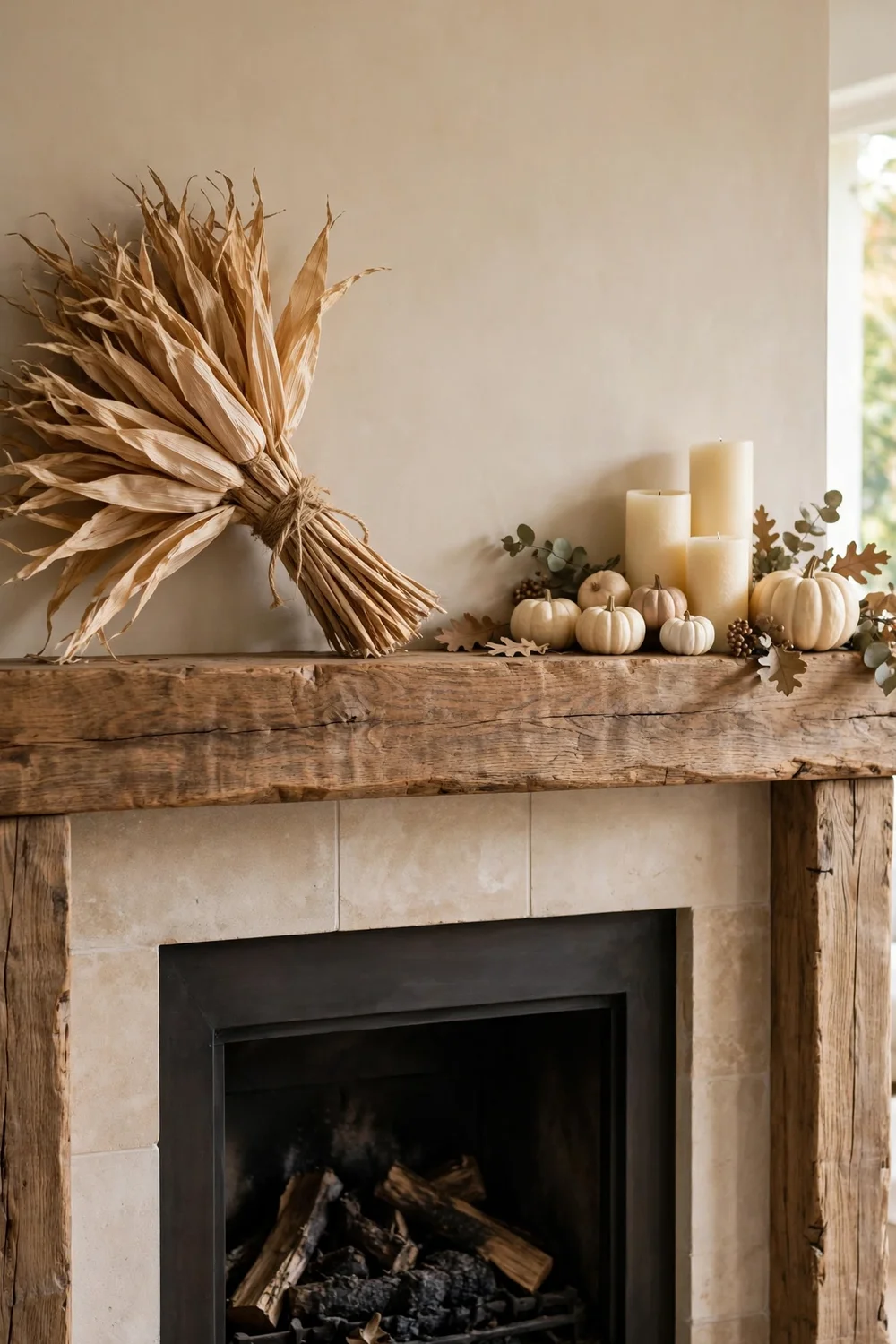
Dried corn husks bring harvest texture for almost no money. Gather a dozen husks, tie them in the middle with twine, and fan both ends so the bundle stands in a loose sheaf. Lean it against the wall at one end of the mantel, then balance the other end with a cluster of candles and small pumpkins. The husks’ papery gold is the exact color of October fields, and the whole arrangement takes ten minutes.
Try this: mist the husks lightly with water before arranging. They go from brittle to workable in about five minutes.
Difficulty: Easy | Cost: $$
18. Framed Fall Landscape as the Centerpiece
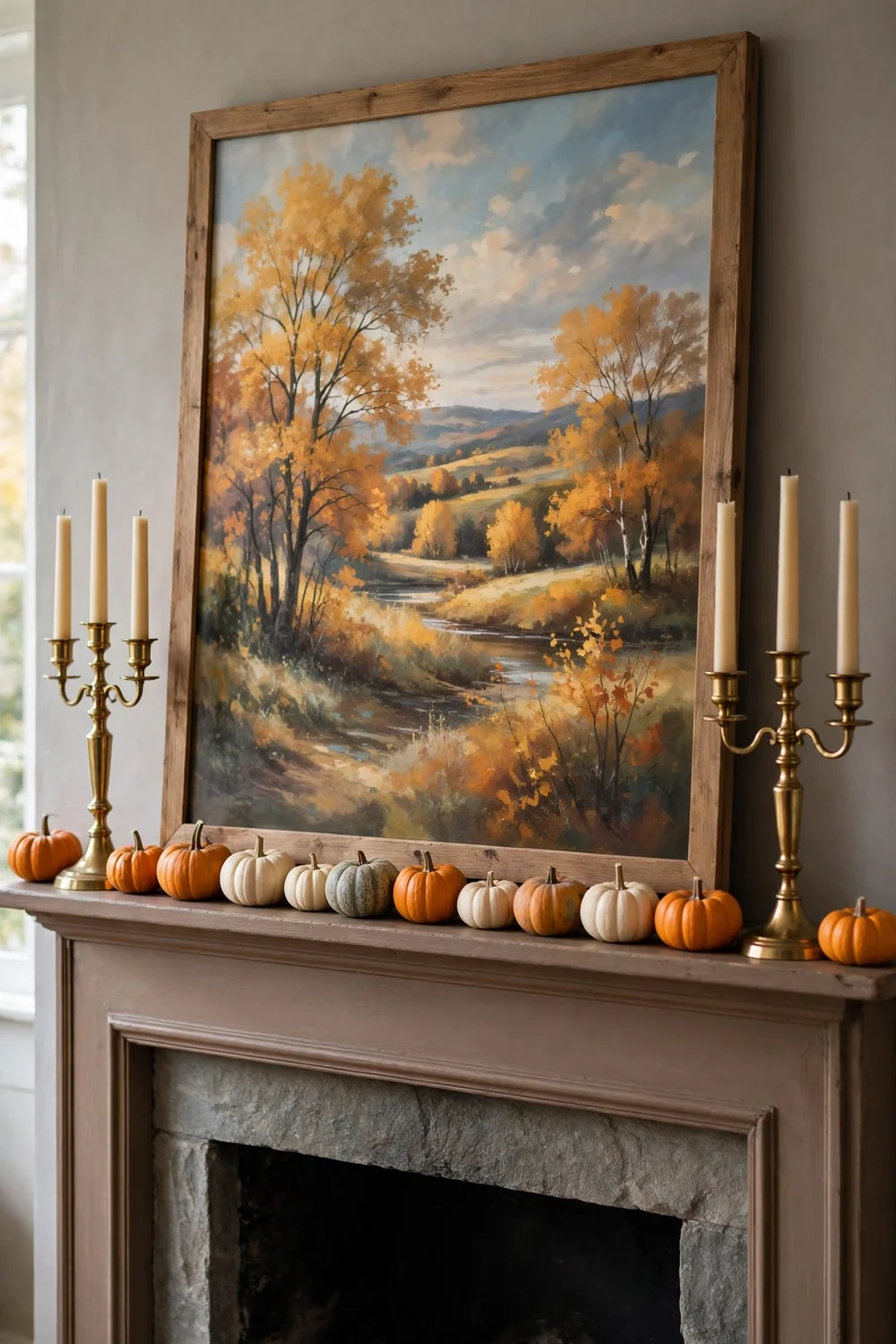
One strong piece of art can anchor the entire shelf. Center a large framed fall landscape, leaning, not hung, so you can swap it seasonally. Flank it with candlesticks that pick up a color from the print, and run a low row of small pumpkins along the front edge. The art sets the palette, which removes all the guesswork from choosing the smaller pieces. This is the lowest-decision mantel on the list.
Try this: the frame should be at least half the mantel’s width. Smaller than that and the art looks like an afterthought.
Difficulty: Easy | Cost: $$
19. Wood Bead Garland With Tassels

Wood bead garlands are the quiet workhorse of mantel styling. Swag one across the front edge of the shelf in two or three dips, letting the tassels hang. The natural wood tone goes with every fall palette, and the swag line adds a curve that softens the mantel’s straight edge. Layer mini pumpkins and white candles behind it. Two garlands overlapped read even better than one.
Try this: drape, step back, adjust, repeat. Bead garlands look best a little imperfect, so stop fussing after the third tweak.
Difficulty: Easy | Cost: $$
20. Cream-on-Cream Monochrome Mantel
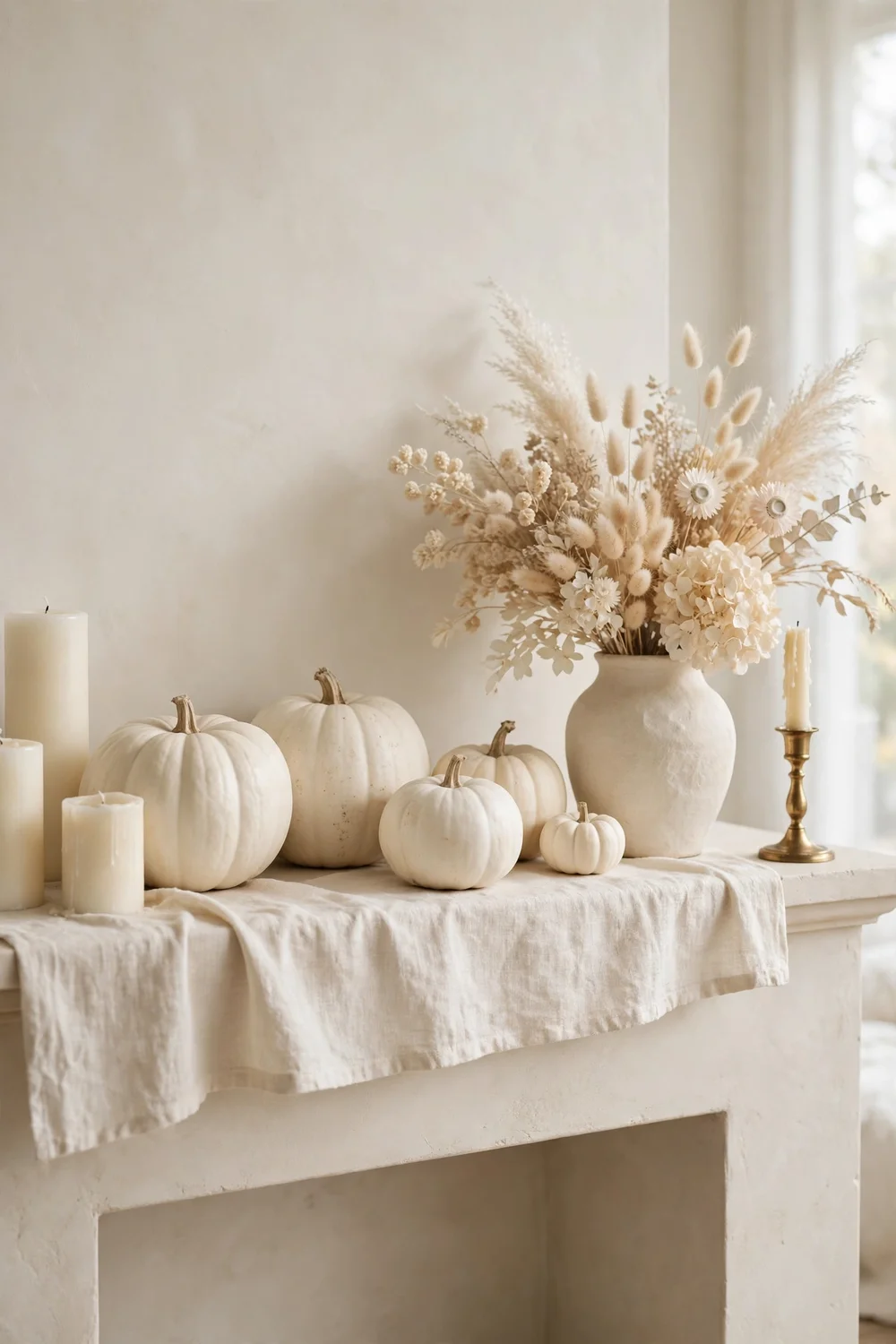
Fall does not have to be orange. Build the whole mantel in creams and ivories: white pumpkins, ivory candles, a linen runner, dried cream florals in a stoneware vase. The interest comes from texture, smooth pumpkin skin against nubby linen against papery dried blooms, not from color. It looks calm, a little elegant, and it photographs beautifully. If your living room is already colorful, this mantel gives the eye a place to rest.
Try this: add one warm metallic, a brass candlestick or a copper bowl, so the monochrome does not go flat.
Difficulty: Easy | Cost: $$
How to Layer a Fall Mantel in Three Depths
Almost every mantel on this list follows the same skeleton. The back row holds the tallest pieces: art, mirrors, tall vases, or a leaning sign. These sit against the wall and set the height of the whole display. Nothing in front should be taller than the back row’s midpoint, or the layers collapse into a jumble.
The middle row carries the medium pieces: candlesticks, medium pumpkins, crocks of dried flowers, lanterns. This row does most of the visual work, so vary the heights here by at least a few inches between neighbors. The front row is the low finish: mini pumpkins, pinecones, a swagged bead garland, the front edge of a runner. Keep it under 6 inches tall so it frames rather than hides.
Step back after every few pieces. The mantel should read as one composition from the doorway, not a row of separate objects. If one side feels heavy, move one medium piece to the light side and check again. For a full walkthrough of a finished mantel, these fall mantel decorating ideas show the same layering on real shelves.
Mantel Styling Mistakes to Avoid
The biggest mistake is lining everything up like soldiers. A mantel is not a store shelf. Cluster pieces in groups of three or five, vary the heights, and leave some breathing room between groups. If every object is the same height and evenly spaced, the eye slides right off.
Second, do not block what is above the mantel. If you have art, a mirror, or a TV up there, keep the back row low enough that the two layers work together. Tall branches in front of a beautiful mirror waste both. If your mirror is the star, these mirror-above-the-mantel ideas keep the glass visible while the shelf shines.
Third, mind the scale. Tiny objects scattered across a wide mantel look lost; one or two substantial pieces anchor better than ten small ones. And keep the palette tight. Three colors plus neutrals is plenty. Every extra color makes the mantel look busier without making it look better.
Fireplace and Candle Safety Tips for Fall Decorating
Mantels sit directly above heat, so safety comes first. A few rules keep the pretty parts from becoming hazards:
- Respect the 3-foot rule. The NFPA’s home heating safety guidance advises keeping combustibles at least 3 feet from heating equipment. Dried wheat, corn husks, and faux garlands count as combustibles.
- Choose flameless candles near dried material. LED tapers and pillars give the same glow with no open flame, which matters when wheat bundles and dried leaves share the shelf. Save real candles for stone or metal surfaces away from anything flammable.
- Secure tall and leaning pieces. Museum putty under vases, frames, and leaning art keeps a bumped mantel from sending things onto the hearth. Anchor anything heavy enough to hurt if it fell.
- Never leave flames unattended. Ready.gov is clear: blow out candles and let fires die down before leaving the room or going to sleep.
- Burn smart if the fireplace is working. The EPA’s Burn Wise program recommends dry, seasoned wood for cleaner burns and less creosote buildup in the chimney.
Small-scale pieces layer beautifully on a mantel. These fall tiered tray decor ideas are full of mini pumpkins, beads, and little signs sized perfectly for shelf styling.
Frequently Asked Questions
How do you decorate a mantel for fall without it looking cluttered?
Work in three depths, back, middle, and front, and leave breathing room between groups. Cluster pieces in odd numbers, vary heights by a few inches, and stick to three colors plus neutrals. If the mantel still feels busy, remove one item at a time until it reads as one composition from the doorway.
What is the rule for grouping items on a mantel?
Odd numbers, varied heights, and breathing room. Groups of three or five look more natural than pairs or even rows. Keep at least a few inches of height difference between neighbors in a group, and leave empty shelf space between groups so each cluster reads on its own.
How do you hang a garland on a mantel without nails?
Use removable adhesive hooks on the mantel’s front edge or top, or drape the garland and let gravity plus a few pieces of museum putty hold it. Mantel clips that grip the shelf without hardware also work. Test the hold before you walk away; garlands slide in the first hour as they settle.
Can I decorate a mantel with a TV above the fireplace?
Yes, but keep everything low and horizontal. Run a garland along the mantel edge, cluster short pumpkins and candles at the ends, and skip tall centerpieces that block the screen. Lean into wide, low arrangements and let the hearth hold anything tall, like floor vases or lanterns.
What colors work for a fall mantel besides orange?
Burgundy, deep plum, mustard, cream, sage, dusty blue, and warm browns all read as fall. Cream-on-cream with texture looks elegant, burgundy and gold looks rich, and sage with cream suits farmhouse styles. Pick two or three and repeat them across the shelf for a pulled-together look.
When should I put up fall mantel decor?
Most people decorate in mid to late September, once the evenings turn cool. A neutral fall base, greenery, candles, warm metals, works from September through November. Swap a few accents at Thanksgiving, deeper tones and harvest pieces, and the mantel carries you to December without a full redo.
The mantel rewards a simple system more than a big budget. Back row tall, middle row varied, front row low, three colors, odd numbers, breathing room. I still move things around every October, but now it takes twenty minutes instead of an afternoon, because the framework does the deciding. Start with one idea from this list, step back to the doorway, and trust what you see.


