



A bare front door in October looks unfinished, even when the porch has pumpkins and a new doormat. The door is the first thing guests see up close, and without a wreath it reads as a space you forgot to finish. Last October I hung a plain grapevine wreath on our door and watched the whole entry pull together in about two minutes.
This list gives you 21 fall wreath ideas for front doors, mantels, and covered porches, from classic grapevine and dried wheat to modern neutral and farmhouse styles. Every idea lists a cost range and a difficulty level, and each one works with a standard 36-inch door unless noted. Whether you buy ready-made or build your own, there is a wreath here that fits your door color, your budget, and your time.
Quick takeaways
- Size first: a 24 to 26-inch wreath suits a standard 36-inch door, and an oversized wreath needs a wide or double door.
- Grapevine bases hold up best outdoors and accept new stems year after year, so they are the easiest base to reuse.
- Faux wreaths last several seasons, while dried wreaths last one season if kept dry and out of direct rain.
- Hang dried wreaths away from open flames and porch lights that run hot, and keep eucalyptus, hydrangea, and bittersweet out of reach of pets and small kids.
- Match the wreath to the door color: warm rust and gold on dark doors, soft sage and cream on white doors.
1. Classic grapevine and maple leaf wreath
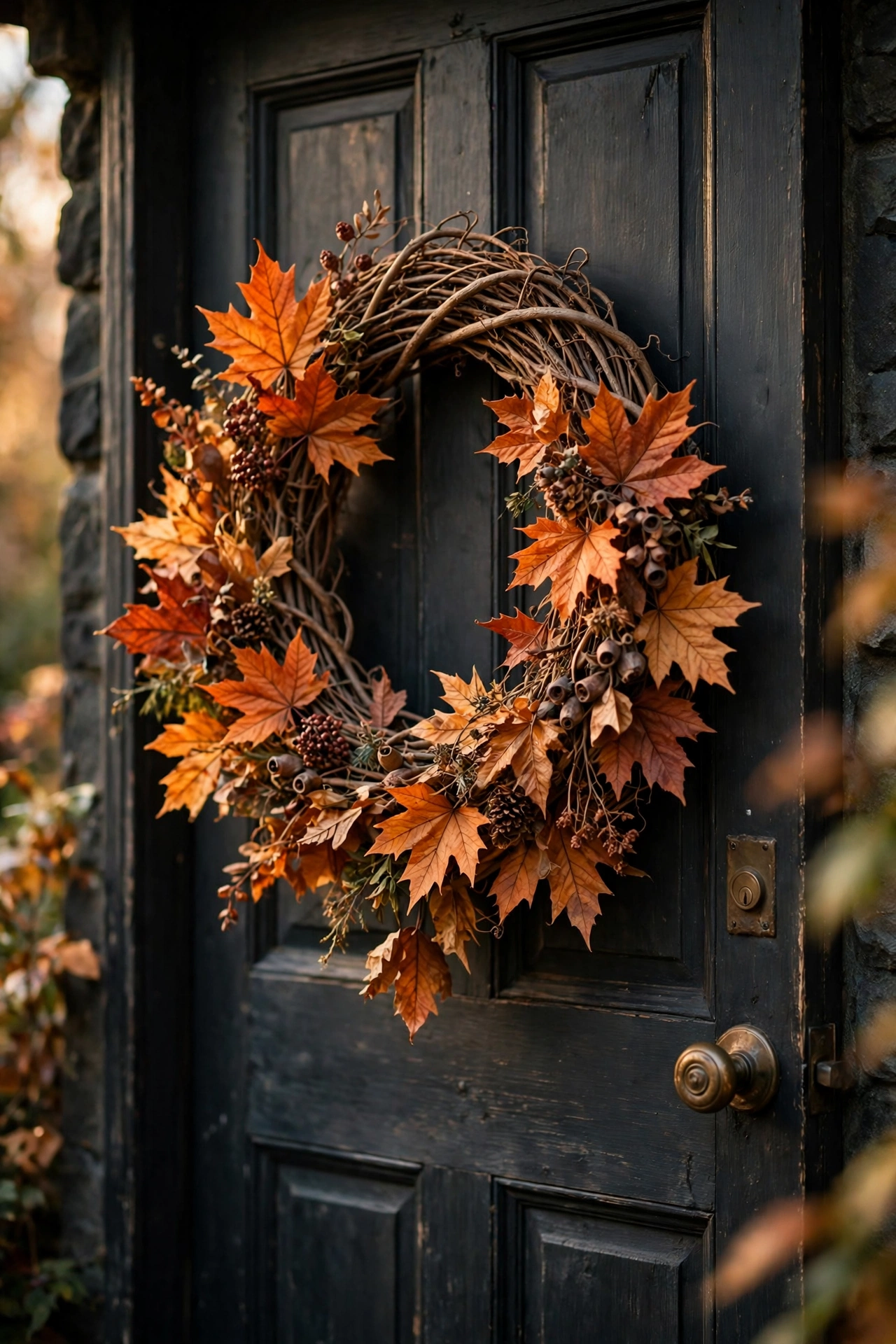
Start with an 18 or 24-inch grapevine base and layer faux maple leaves in orange, rust, and gold around it, all pointing the same direction. Tuck a few small pinecones into the gaps so the vine still shows through in places. The visible vine keeps the wreath from looking like a flat circle of plastic leaves, and the warm leaf colors read clearly from the street. Hang it centered at eye level for the best view from the street.
Try this: Leave one section of vine bare at the top. The gap gives the eye a resting spot and makes the wreath look gathered rather than glued solid.
Difficulty: Easy | Cost: $$
2. Seeded eucalyptus and berry wreath
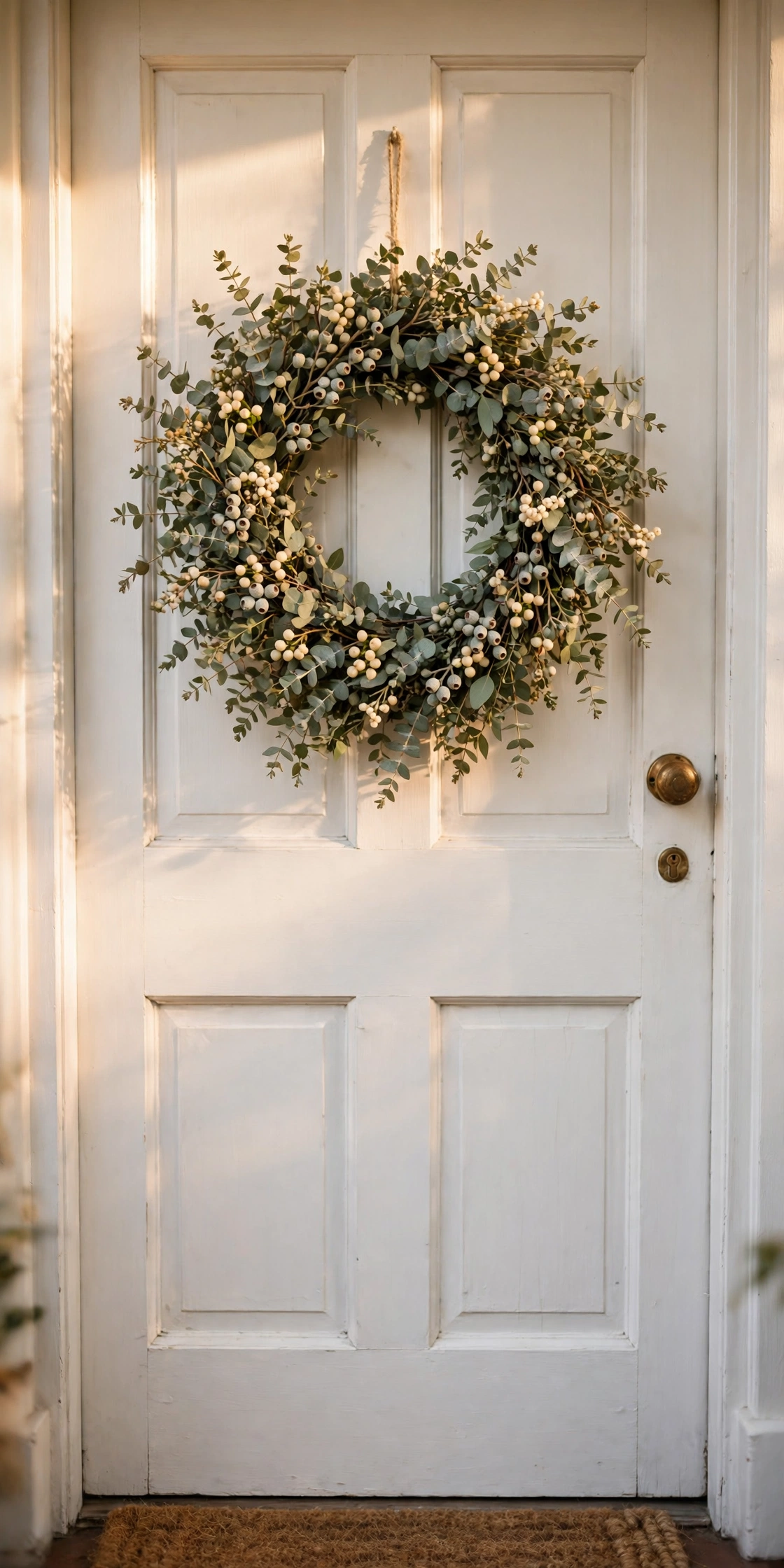
Seeded eucalyptus gives a soft, gray-green base that suits white, gray, and wood doors without shouting fall colors. Weave 6 to 8-inch eucalyptus cuttings into a grapevine base, then add small cream or rust berry picks in clusters of three. The berries add just enough color to mark the season while the wreath stays calm enough for a modern entry. The gray-green tone hides dust well and suits most porch paint colors.
Try this: Angle every stem the same way around the ring. Stems that point in mixed directions make the wreath look spiky instead of full.
Difficulty: Easy | Cost: $$
One note for pet owners: eucalyptus is toxic to dogs and cats if eaten, so hang this wreath on an outer door rather than at pet nose height indoors.
3. Golden sunflower harvest wreath
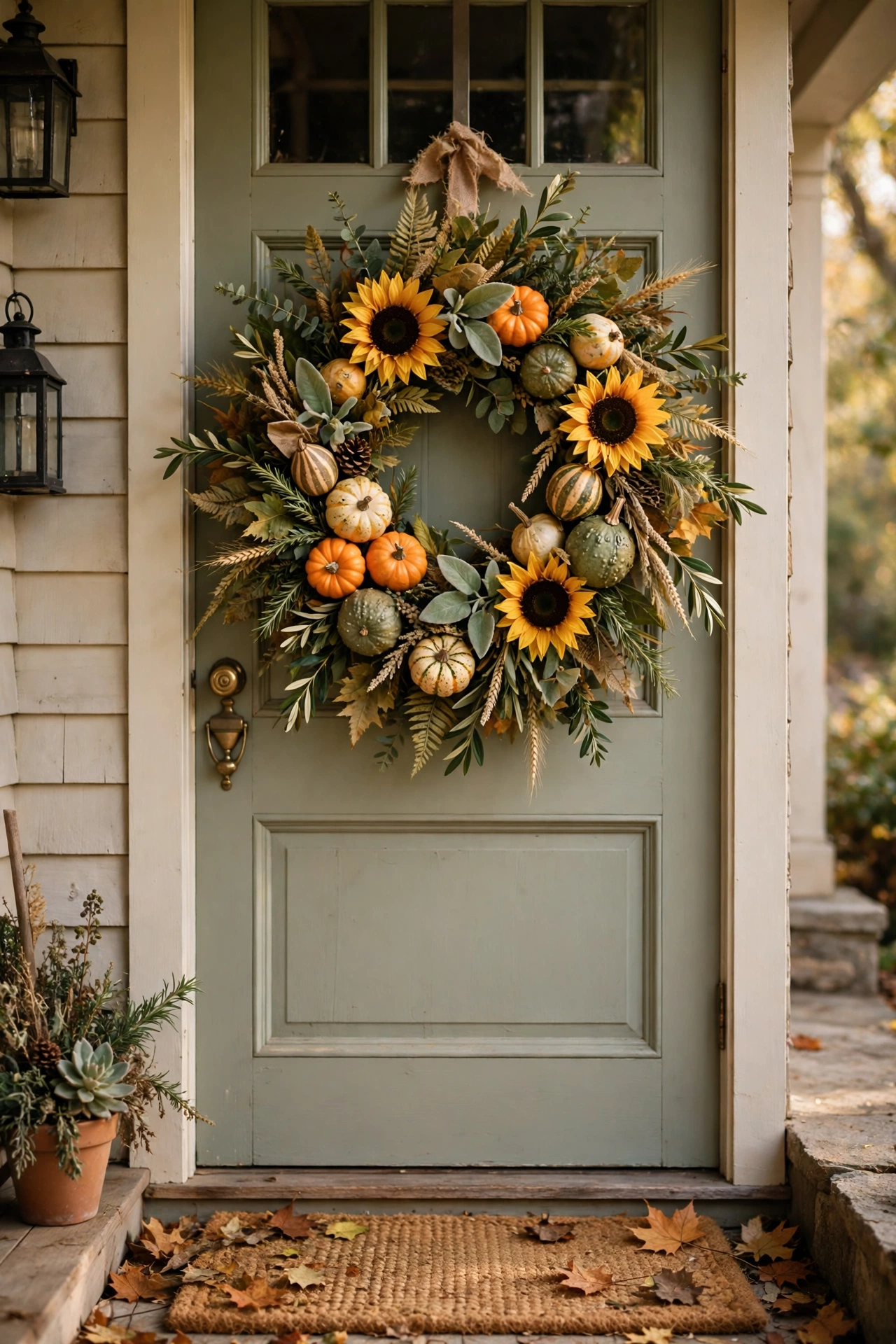
Sunflowers carry a harvest wreath on their own, so you need fewer fillers. Place five or six large faux sunflowers around a grapevine base, spaced evenly, then fill between them with green foliage and two or three mini gourds. The gold blooms stand out on dark green, black, and navy doors, and the wreath still reads as fall rather than summer because of the gourds and warm foliage. A grapevine base holds the heavy blooms without sagging over the season.
Try this: Use sunflowers in two sizes. One large bloom at the bottom and smaller ones around the ring keep the wreath from looking like a uniform ring of flowers.
Difficulty: Easy | Cost: $$
4. Dried wheat and grass bundle wreath
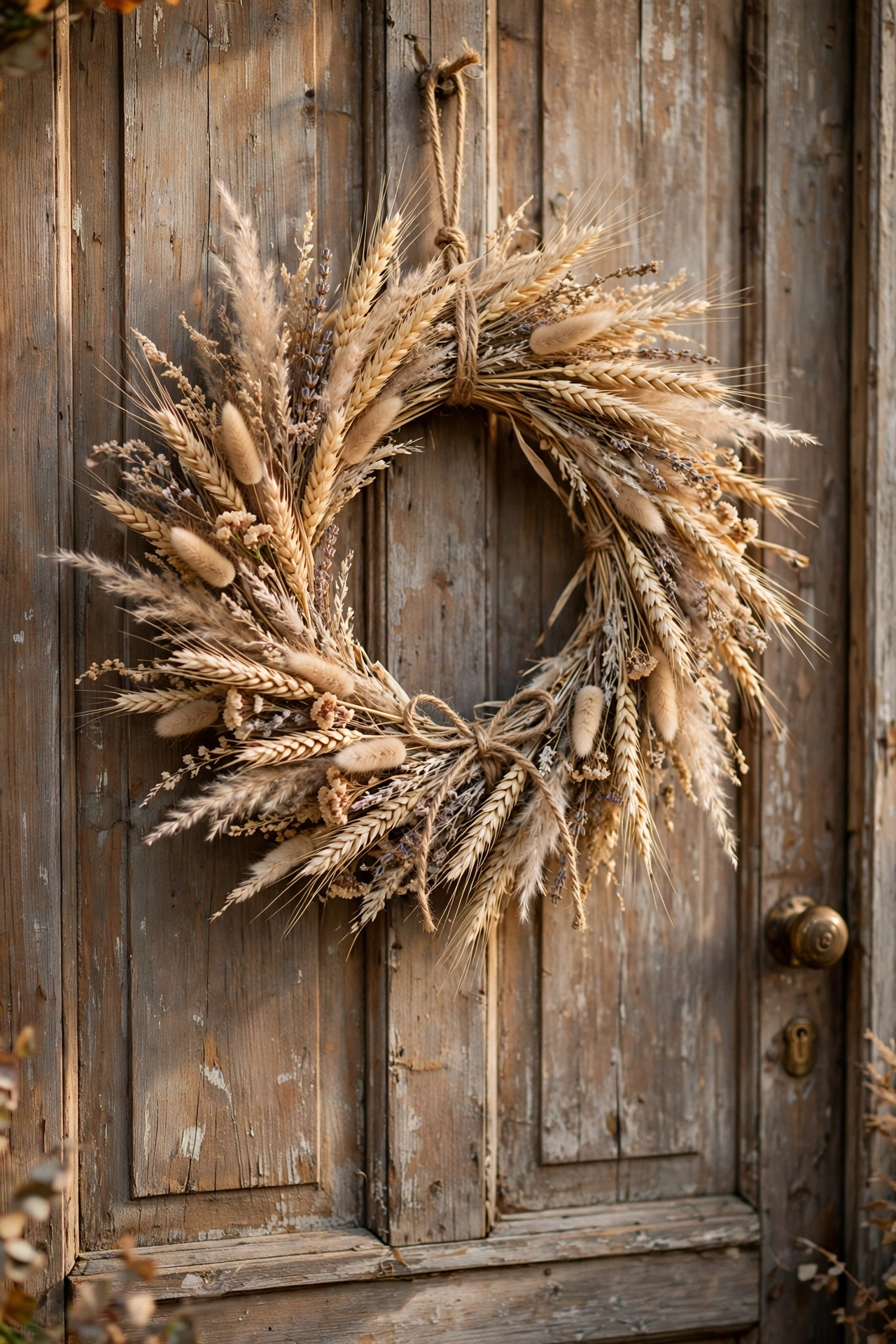
Bundle dried wheat stalks and beige grasses into small bunches, tie each bunch with twine, and wire the bunches around a straw or foam base so they all lean the same way. The result is tall, airy, and quiet, with no bright color at all. It suits farmhouse and neutral entries, and it costs little because wheat bundles are cheap and one bag covers a full wreath. Tie each bunch tight, since loose wheat sheds on the porch floor.
Try this: Add three dried seed heads that are taller than the rest at the bottom. The height change stops the wreath from reading as a flat halo.
Difficulty: Easy | Cost: $$
5. Pinecone woodland wreath

Cover a foam or grapevine base with pinecones in mixed sizes, glued close together with the largest cones at the bottom and smaller ones filling the gaps. A small burlap bow at the top finishes it without adding color. The wreath is heavy, so use a sturdy over-door hook rated for at least 5 pounds and check that the door still closes without the wreath catching the frame. Weigh the finished wreath before choosing a hook for the door.
Try this: Bake gathered pinecones at 200 degrees for 30 minutes first. The heat opens closed cones and drives out sap and insects before you glue them down.
Difficulty: Moderate | Cost: $$
6. Mini pumpkin and gourd wreath
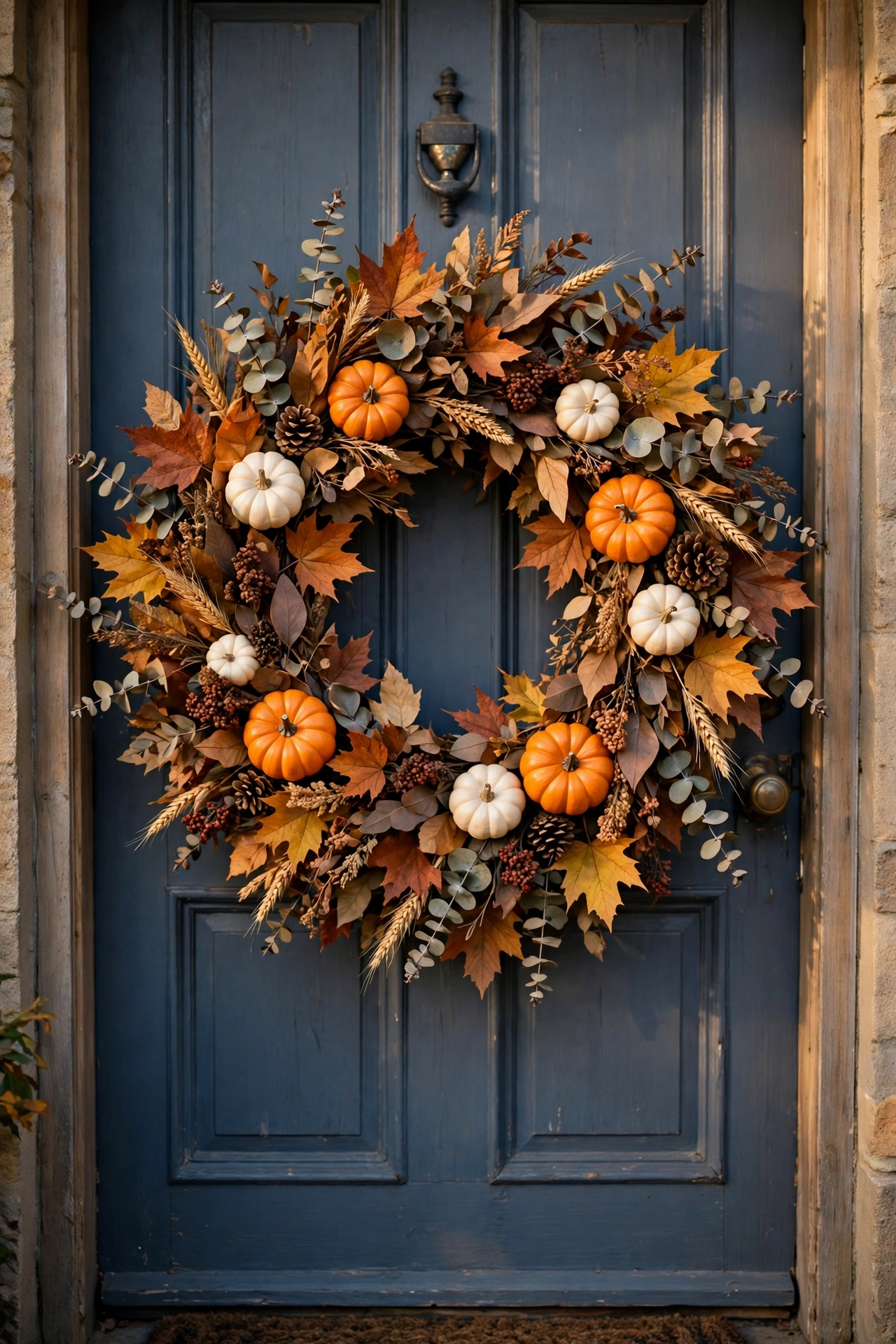
Mini pumpkins and gourds give instant fall recognition, so this wreath needs little else. Wire six to eight small faux pumpkins in orange, white, and sage onto a grapevine base, then tuck autumn leaves behind them to hide the wire. Keep the pumpkins to one side and the bottom so the wreath has a clear focal cluster instead of pumpkins dotted all around like spots. Faux pumpkins last for years, so store them flat after the season.
Try this: Mix one striped gourd in with solid pumpkins. The stripe breaks up the color blocks and keeps the cluster from looking like a bag of identical ornaments.
Difficulty: Easy | Cost: $$
7. Cream pumpkin farmhouse wreath with cotton stems

Cream pumpkins, cotton stems, and a little eucalyptus make a farmhouse wreath that works on white and light gray doors where orange would clash. Place three cream pumpkins along the bottom third, add cotton stems above them, and finish with a thin burlap bow. The palette stays soft, so the wreath pairs with neutral porch furniture and a plain coir doormat without competing. The soft palette also works beside a plain black lantern.
Try this: Use pumpkins with matte finishes only. Glossy cream pumpkins catch light unevenly and look like plastic from the sidewalk.
Difficulty: Easy | Cost: $$
8. Modern neutral ivory and beige grass wreath

Ivory pumpkins, beige grasses, and bare twigs make a wreath that reads as fall through texture rather than color. Keep the palette to three neutrals at most, and leave parts of the base visible so the wreath looks airy instead of stuffed. This style suits gray, beige, and modern black doors, and it carries into November without clashing with early winter decor. A darker door makes the ivory tones stand out even more.
Try this: Add one dark twig bundle for contrast. Without a dark element, all-neutral wreaths can wash out against a light door.
Difficulty: Easy | Cost: $$
9. Dried hydrangea basket wreath
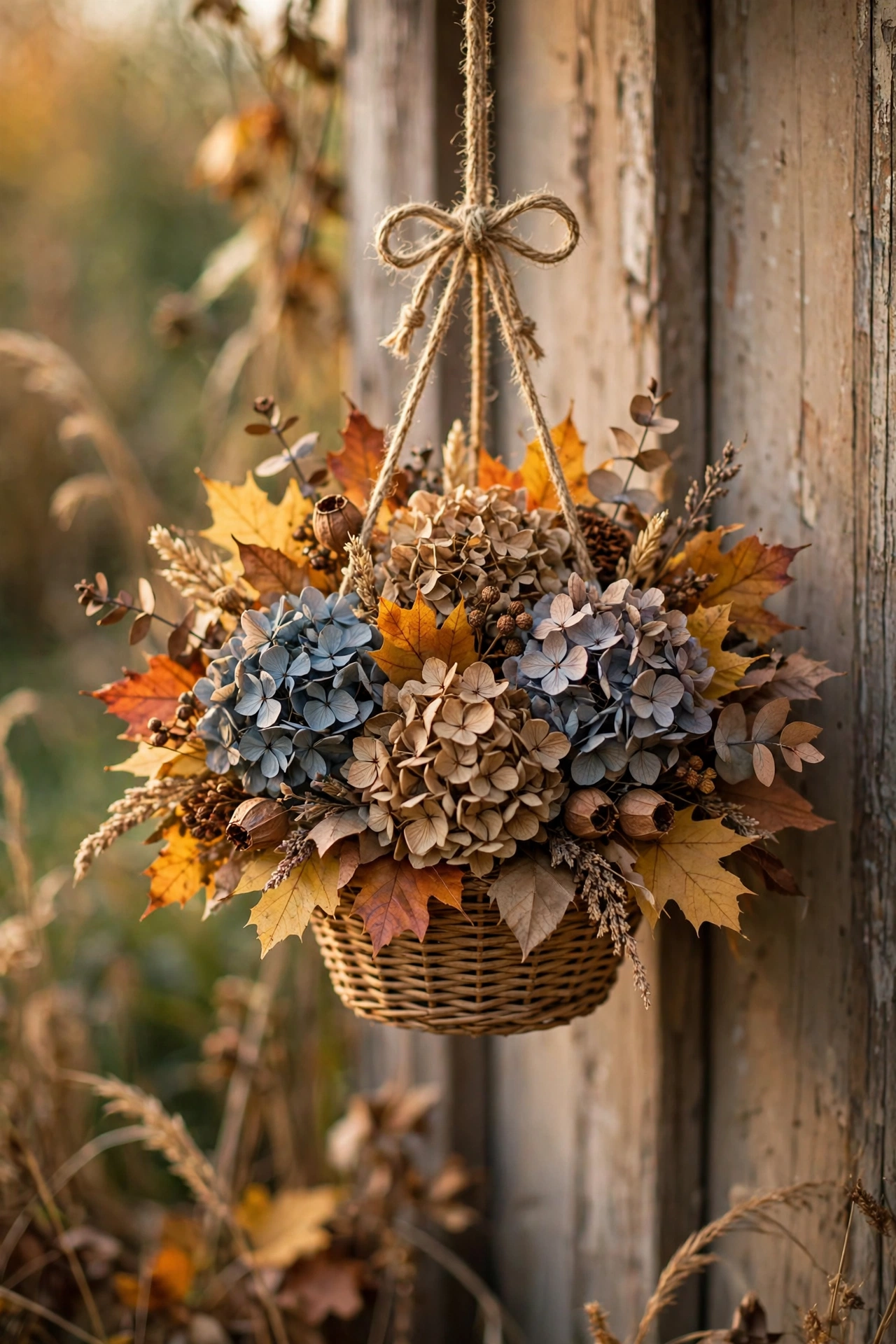
A small hanging basket changes the wreath shape from a circle to a soft pocket of flowers. Fill the basket with dry floral foam, then arrange dried hydrangea heads in dusty blue, cream, or faded rose with autumn leaves tucked around the edges. Hang it by a sturdy loop from a door hook, and keep it on a covered porch so rain does not soak the foam and leaves. The basket shape also hangs well on a narrow side door.
Try this: Let two or three stems trail below the basket rim. The trailing stems soften the basket edge and make the arrangement look less like a wall pocket.
Difficulty: Moderate | Cost: $$
One note for pet owners: hydrangea is toxic to dogs and cats if eaten, so keep this wreath on an outer door and out of reach indoors.
10. Bittersweet vine wreath
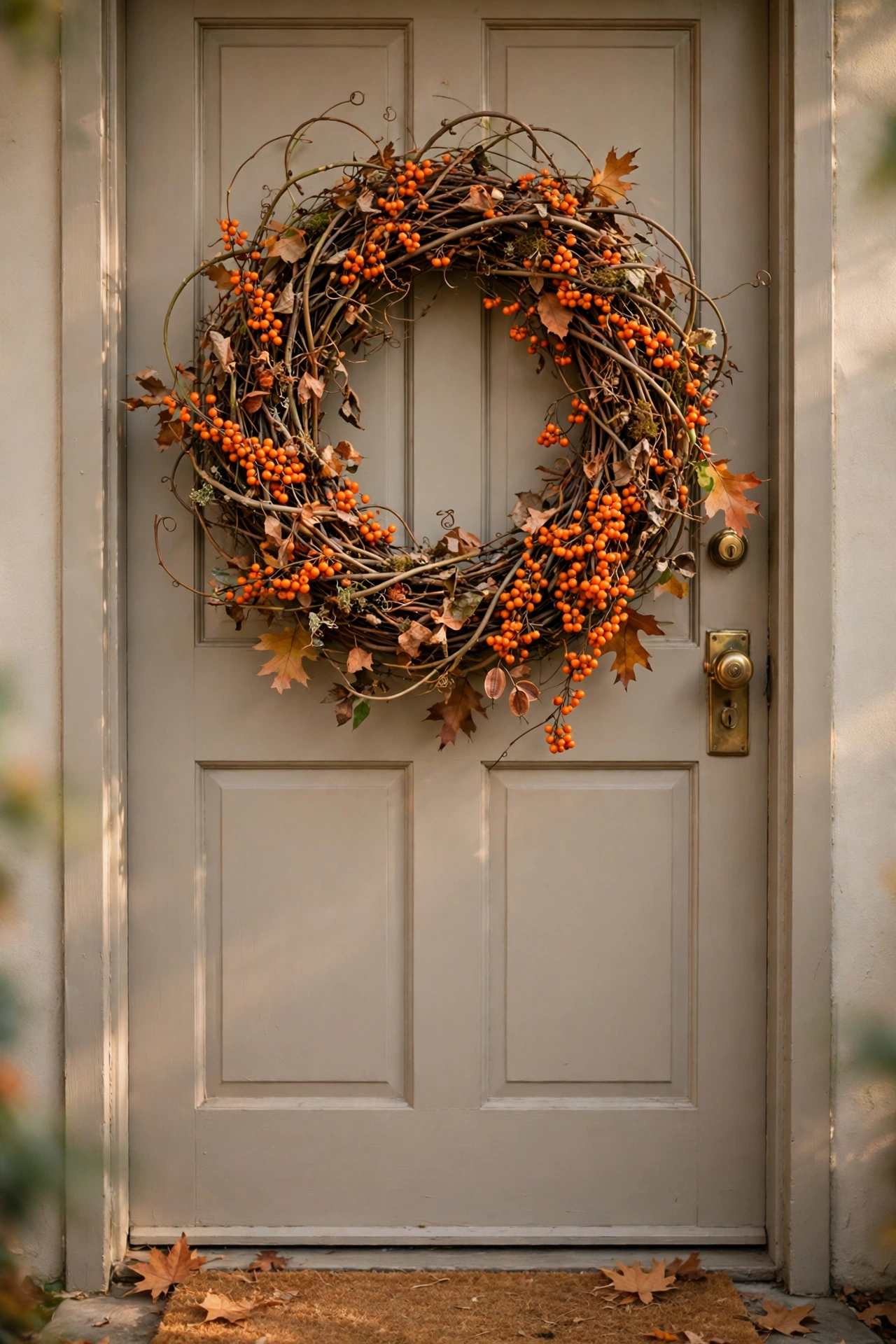
Bittersweet vine wraps into a wreath with almost no extra work: the winding stems and orange berries already give color and movement. Wind fresh-cut vine around a grapevine base, or buy a ready-made bittersweet wreath and add nothing at all. The berries hold their color through the season, and the vine shape looks good on neutral doors where a leafy wreath would blend in. The vine shape holds up well in wind on an open porch.
Try this: Check whether bittersweet is invasive in your area before planting or foraging it, and buy cultivated stems from a florist if you are unsure.
Difficulty: Easy | Cost: $$
Handle bittersweet with gloves and keep the berries away from kids and pets. The berries are toxic if eaten, so hang this wreath high and out of reach.
11. Dried orange and cinnamon spice wreath

Dried orange slices and cinnamon bundles add scent as well as color, which makes this wreath work well on a covered porch where guests pause at the door. Glue orange slices in clusters of two or three against eucalyptus or fir, then tie cinnamon sticks in small bundles with twine and tuck them between the clusters. The scent lasts about three to four weeks outdoors before it fades. The scent is strongest in the first two weeks after hanging.
Try this: Cluster the oranges instead of spacing them evenly. Even spacing turns the wreath into a pattern, while clusters look like a real arrangement.
Difficulty: Easy | Cost: $$
12. Magnolia leaf wreath

Magnolia leaves have a green top and a warm brown underside, so a wreath of them alone already has two tones. Layer fresh or faux magnolia branches around a wire base, all in one direction, and let the brown undersides show in places. The result is rich and simple, with no pumpkins or berries needed, and it suits brick homes and white doors equally well. Fresh magnolia lasts about three weeks before the edges brown.
Try this: Add a single cream ribbon at the bottom. A bow at the top competes with the leaf layers, while a bottom ribbon anchors the wreath.
Difficulty: Easy | Cost: $$
13. Cotton stem and burlap ribbon wreath
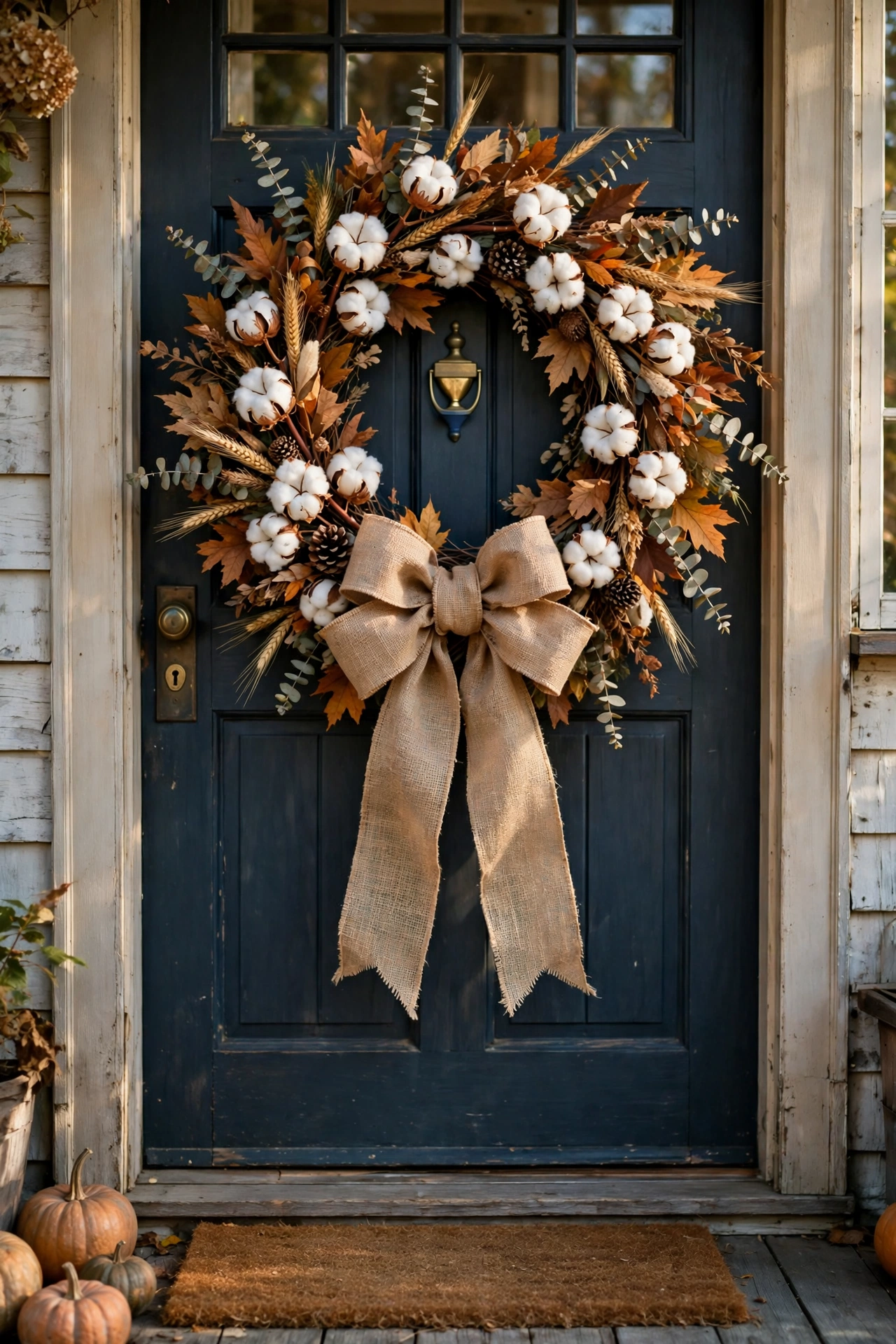
Cotton stems and a wide burlap bow are the two pieces this wreath needs. Arrange cotton stems around a grapevine base, leaving gaps so the vine shows, then tie a burlap bow with long tails at the bottom. The white cotton pops against dark doors, and the burlap keeps the look farmhouse rather than formal. It is one of the fastest wreaths to build, at about 20 minutes. The cotton stays bright if the wreath hangs under cover.
Try this: Cut the bow tails at an angle and fray the burlap edges slightly. Clean-cut burlap looks stiff, while frayed edges look like fabric that has been handled.
Difficulty: Easy | Cost: $$
14. Plaid ribbon and berry wreath

A plaid ribbon does most of the work here, so the foliage can stay simple. Wrap a grapevine base with autumn leaves and red berry picks, then add a large plaid bow in red, cream, and brown at the bottom with tails that hang 8 to 10 inches. The plaid pattern reads as fall from the street even before guests notice the leaves, and it pairs with plaid porch pillows and throws.
Try this: Use wired ribbon for the bow. Unwired ribbon flops after a week outdoors, while wired ribbon holds its loops through wind and rain.
Difficulty: Easy | Cost: $$
15. Asymmetrical crescent wreath

An asymmetrical wreath concentrates foliage on one side of the ring and leaves the rest of the grapevine bare. Build a crescent of eucalyptus, wheat, and berries along the bottom third and up one side, letting a few stems trail past the edge. The bare vine gives the wreath a modern, airy feel, and the style works on doors where a full round wreath would look heavy. The bare vine side also makes the wreath look lighter on a small door.
Try this: Mark the crescent start point with a small wire tie before you begin. Without a marker, the foliage tends to creep around the whole ring and the asymmetry disappears.
Difficulty: Moderate | Cost: $$
16. Corn husk harvest wreath
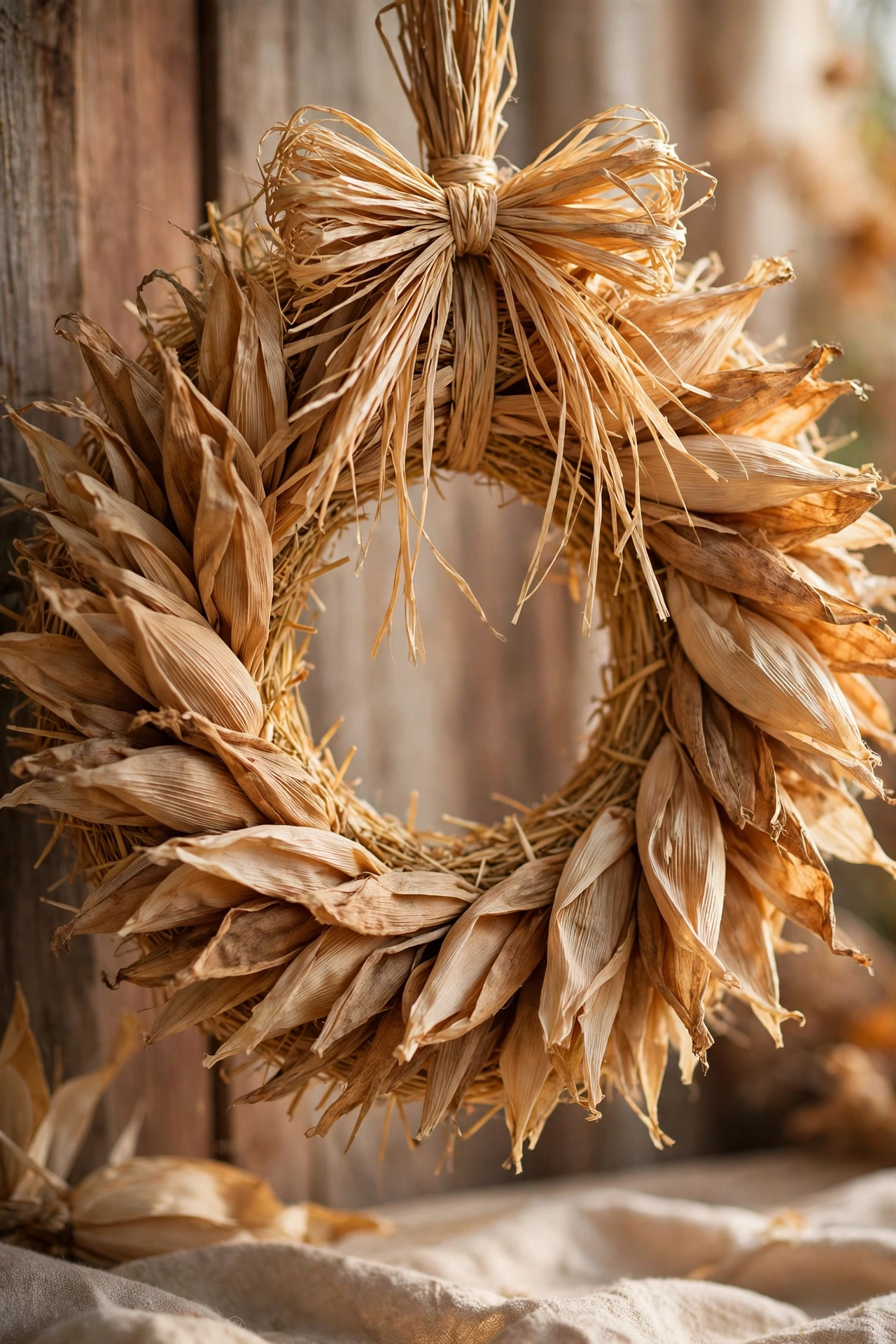
Dried corn husks layer into a full, textured wreath for very little money. Soak the husks briefly so they bend without cracking, then layer them around a straw base in overlapping rows, all pointing outward. A raffia bow at the top finishes it, and a few dried corn kernels glued into the gaps add a harvest detail. Keep this wreath under cover, since soaked husks that get rained on stay damp and mildew.
Try this: Alternate husk shades from pale cream to deeper gold. Single-shade husks look flat, while mixed shades give the wreath depth.
Difficulty: Moderate | Cost: $$
17. Acorn and oak leaf wreath
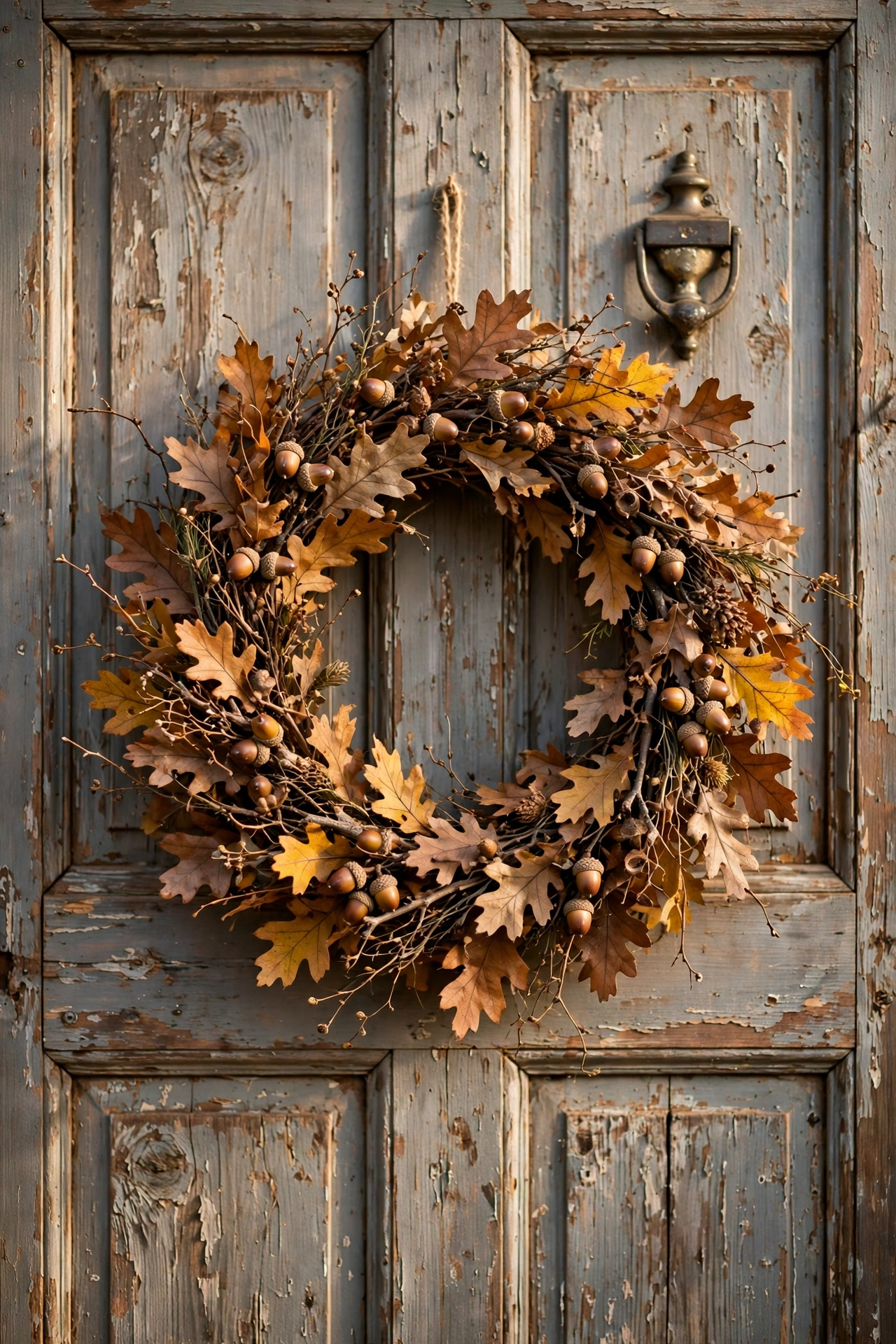
Acorns and oak leaves make a woodland wreath that costs almost nothing if you gather the materials. Glue acorns in clusters onto a grapevine base, then tuck oak leaves in russet and brown behind them to hide the glue points. The acorns give the wreath weight and texture up close, while the leaves give it color from the street. Seal gathered acorns with a clear matte spray so they do not crack or shed caps.
Try this: Use acorns in two sizes. One size alone looks like a craft supply, while mixed sizes look like a real forest floor.
Difficulty: Moderate | Cost: $$
18. Velvet pumpkin elegant wreath

Velvet pumpkins in navy, burgundy, and cream turn a fall wreath into something closer to a formal entry piece. Place three velvet pumpkins along the bottom of a grapevine base, add cream blooms and eucalyptus around them, and finish with a navy ribbon. The deep colors suit brick and dark-painted doors, and the velvet texture catches light in a way that flat faux pumpkins do not. The deep colors also pair well with brass door hardware.
Try this: Keep the pumpkin count odd and low. Three pumpkins look arranged, while five or more start to look like a pumpkin pile glued to a ring.
Difficulty: Easy | Cost: $$
19. Faux apple orchard wreath

Faux apples in red and green give a harvest wreath a different fruit than pumpkins, so it stands apart from most fall doors. Wire six to eight small faux apples onto a grapevine base with green leaves and a few berry picks, keeping the apples clustered at the bottom and one side. The red reads well on white and wood doors, and the wreath works from early September through Thanksgiving without looking tied to one holiday.
Try this: Pick apples with matte skins. Shiny faux apples reflect porch light and look like ornaments instead of fruit.
Difficulty: Easy | Cost: $$
20. Pampas grass boho wreath

Pampas plumes and dried flowers make a soft, tall wreath that suits boho and modern entries. Tie pampas stems into small bundles and wire them around a thin gold or natural hoop, leaving the plumes to fan upward and outward. Add two or three dried flowers in muted pink or cream for color. The wreath is light, so a simple adhesive hook holds it indoors, but outdoors it needs a covered spot or wind will shred the plumes.
Try this: Spray the plumes lightly with hairspray before hanging. The spray cuts shedding and helps the plumes hold their shape for the season.
Difficulty: Easy | Cost: $$
21. Repurposed tray wreath
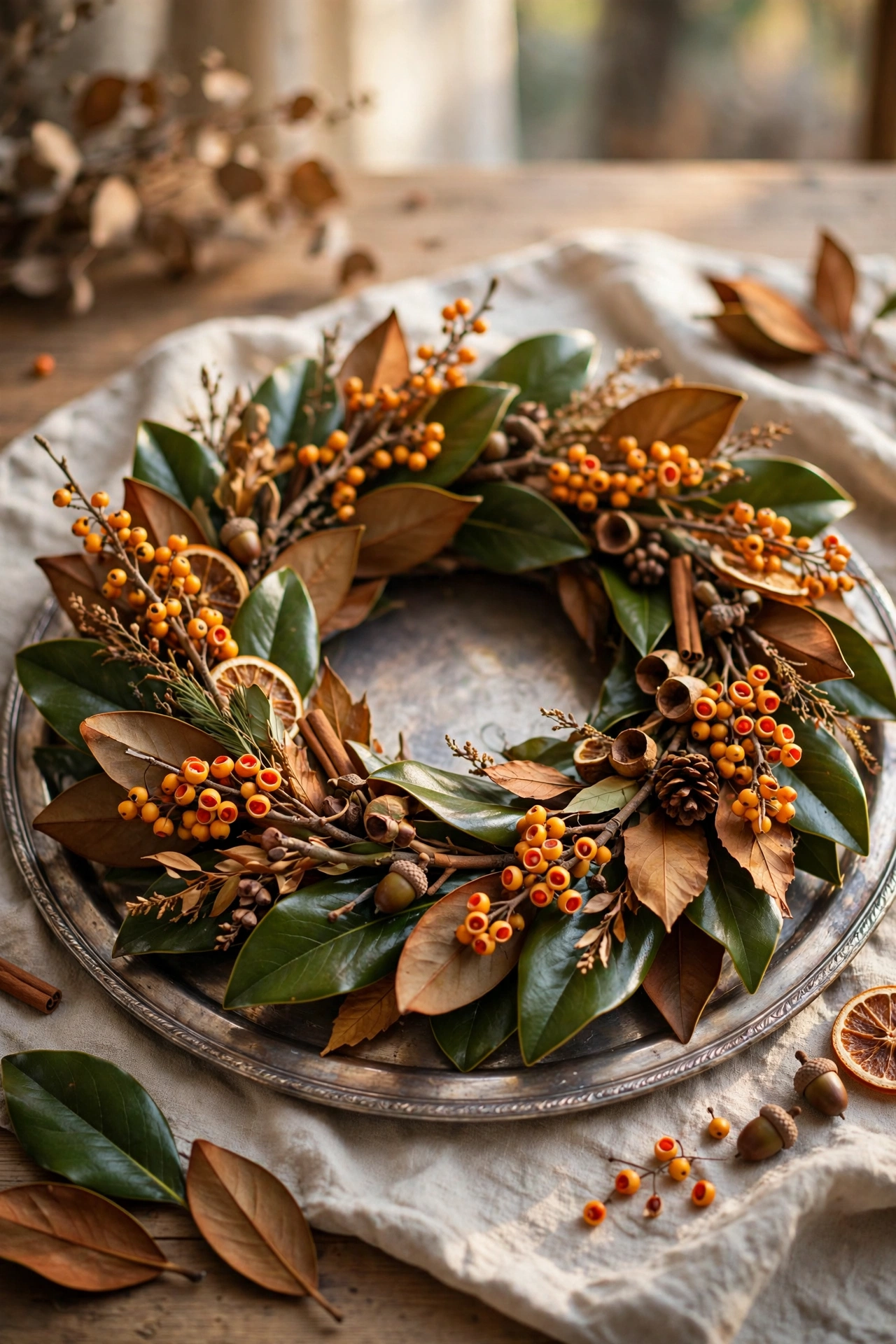
A round tray gives a wreath a firm backing and a finished edge, which helps when the door gets bumped. Lay magnolia leaves and bittersweet branches across a silver or wooden tray, glue them at the back, and add a plaid ribbon at the bottom. The tray also means you need less greenery than a full ring wreath, so the project takes about 30 minutes and uses one bag of stems instead of two.
Try this: Drill or glue a small hanging loop on the back of the tray before arranging anything. A loop added afterward sits crooked and the tray hangs tilted.
Difficulty: Moderate | Cost: $$
How to choose the right fall wreath
Start with the door. Measure the door width first: a 36-inch door takes a 24 to 26-inch wreath, a 30-inch door takes a 20 to 22-inch wreath, and double doors take either one large wreath or a matching pair. A wreath wider than two-thirds of the door crowds the frame and catches when the door opens.
Next, match the palette to the door color. Dark doors take warm rust, gold, and burgundy. White doors take sage, olive, cream, and wheat. Wood doors take cream berries, white pumpkins, and bronze accents. If you are unsure, a grapevine base with mixed leaves in rust and gold works on nearly every door color.
Then decide where it hangs. Outdoor wreaths need weather-resistant materials: faux foliage, grapevine, and sealed pinecones. Fresh and dried wreaths last longer on a covered porch or indoors, on a mantel or entry wall. If the door faces south or west with no cover, choose faux, since sun fades dried leaves within weeks.
Finally, decide whether to buy or build. Buy when you want a full look in one trip or need a wreath that lasts several seasons. Build when you want a specific palette, already own a grapevine base, or enjoy an hour-long craft project. A simple grapevine wreath takes 30 to 60 minutes to build, while a pinecone or corn husk wreath takes closer to two hours.
If budget is the main limit, there is a dedicated roundup for that. For readers who want the cheapest route to a fall door, these Dollar Tree DIY fall wreaths for the front door keep every wreath low cost with store supplies.
Fall wreath comparison table
| Wreath | Cost | Time to make | Best for |
|---|---|---|---|
| Classic grapevine and maple leaf | $15 to $45 | 30 min | Any door color |
| Seeded eucalyptus and berry | $20 to $55 | 30 min | Modern and white doors |
| Golden sunflower harvest | $20 to $60 | 40 min | Dark doors |
| Dried wheat and grass bundle | $10 to $40 | 30 min | Farmhouse and neutral entries |
| Pinecone woodland | $10 to $55 | 2 hours | Rustic and wooded homes |
| Mini pumpkin and gourd | $15 to $50 | 40 min | Classic fall doors |
| Cream pumpkin farmhouse | $20 to $60 | 40 min | White and light gray doors |
| Modern neutral ivory and grass | $20 to $65 | 40 min | Modern and gray doors |
| Dried hydrangea basket | $25 to $70 | 1 hour | Covered porches |
| Bittersweet vine | $15 to $55 | 20 min | Neutral doors, hung high |
| Dried orange and cinnamon | $15 to $45 | 45 min | Covered entries with scent |
| Magnolia leaf | $20 to $65 | 40 min | Brick homes and white doors |
| Cotton stem and burlap | $15 to $45 | 20 min | Fast farmhouse projects |
| Plaid ribbon and berry | $15 to $50 | 30 min | Coordinated porch sets |
| Asymmetrical crescent | $20 to $65 | 45 min | Modern entries |
| Corn husk harvest | $10 to $40 | 2 hours | Budget harvest looks |
| Acorn and oak leaf | $5 to $45 | 1.5 hours | Foraged and woodland styles |
| Velvet pumpkin elegant | $30 to $80 | 45 min | Formal and brick entries |
| Faux apple orchard | $20 to $55 | 40 min | Early fall through Thanksgiving |
| Pampas grass boho | $20 to $55 | 30 min | Boho and indoor walls |
| Repurposed tray | $15 to $50 | 30 min | High-traffic doors |
Common mistakes to avoid
Buying the wrong size. A wreath wider than two-thirds of the door looks crowded and catches on the frame. Measure the door before ordering, and remember that the listed size usually includes the foliage, not just the base ring.
Hanging dried wreaths in rain or full sun. Dried leaves, wheat, and corn husks fade in sun and mildew in rain. Keep dried wreaths on covered porches or indoors, and choose faux for uncovered south-facing doors.
Putting dried wreaths near flames. Dried foliage burns fast. Keep dried wreaths at least 12 inches from candles, lanterns, and porch lights that run hot, and use battery candles near dried decor. The U.S. Fire Administration gives the same 12-inch rule for candles near anything that can burn, and its candle safety guidance is worth a read before you hang dried decor near a light. For the full guidance, see the U.S. Fire Administration candle safety page.
Using toxic plants within reach. Eucalyptus, hydrangea, and bittersweet are toxic to dogs and cats if eaten, and bittersweet berries are toxic to kids as well. Hang wreaths with these plants on outer doors and out of reach, and check the ASPCA list if a pet chews any part of a wreath. The ASPCA lists hydrangea as toxic to dogs, cats, and horses, and you can check the entry on the ASPCA hydrangea toxicity page.
Skipping the hanger check. Pinecone and tray wreaths weigh more than leaf wreaths. Use a hook rated for the wreath weight, and test the door swing before guests arrive so the wreath does not scrape the frame or fall.
Overfilling the ring. When every gap is stuffed, the wreath loses shape and looks like a solid disc. Leave some base visible, especially on grapevine and twig wreaths, and stop adding stems once the wreath reads full from six feet away.
A wreath also sets the tone for the rest of the entry. Once the door looks right, these simple fall porch decor ideas help the porch match the wreath instead of competing with it. If the wreath hangs inside, the same idea applies at the entry table, and these fall entry table decor ideas keep the entryway consistent. For a mantel placement, these fall mantel decor ideas with a mirror above the fireplace show how a wreath works above a fireplace without crowding the mirror.
Frequently asked questions
How big should a fall wreath be for a standard front door?
For a standard 36-inch door, a 24 to 26-inch wreath looks right, since that is about two-thirds of the door width. A 30-inch door takes a 20 to 22-inch wreath. Measure the door before ordering, and check the listed size, since some sellers list the base ring size rather than the full foliage width.
How do I keep a fall wreath from fading outside?
Hang it on a covered porch out of direct sun and rain, and bring it inside during storms. Faux wreaths with UV-resistant foliage hold color longest on uncovered doors. Dried wreaths fade fastest in sun, so keep them indoors or under cover if you want them to last the season.
Can I hang a fall wreath indoors?
Yes. Wreaths work on mantels, entry walls, above mirrors, and on interior doors. Indoor wreaths do not need weatherproofing, so dried and pampas styles last longer inside. Use a light adhesive hook for pampas and twig wreaths, and a nail or picture hook for heavier pinecone and tray wreaths.
How long will a dried or faux fall wreath last?
A faux wreath lasts several seasons if stored in a box or bag away from dust and sun. A dried wreath lasts one season when kept dry and under cover, and less if it gets rained on or sits in strong sun. Grapevine bases last for years, so you can strip an old dried wreath and rebuild on the same base next fall.
Are fall wreaths safe around pets and kids?
Most wreaths are safe as decor, but three common materials need care: eucalyptus, hydrangea, and bittersweet are toxic if eaten, so hang wreaths with these plants out of reach of pets and small kids. Dried wreaths also need distance from flames and hot lights. Use battery candles near dried decor, and keep real candles at least 12 inches away.
Final thoughts
Pick the wreath that fits your door first, then your time and budget. A grapevine base with leaves you like will carry the whole entry, and the rest is detail. Hang it, step back to the sidewalk, and check it once from there before you call it done.


